
Pan Cubano: The Crust, the Crumb and the Line on Top
Pan cubano
Cuban bread pairs a crisp, flaky exterior with a soft white interior. Follow the lengthwise split from Tampa’s palmetto leaves to practical home shaping.
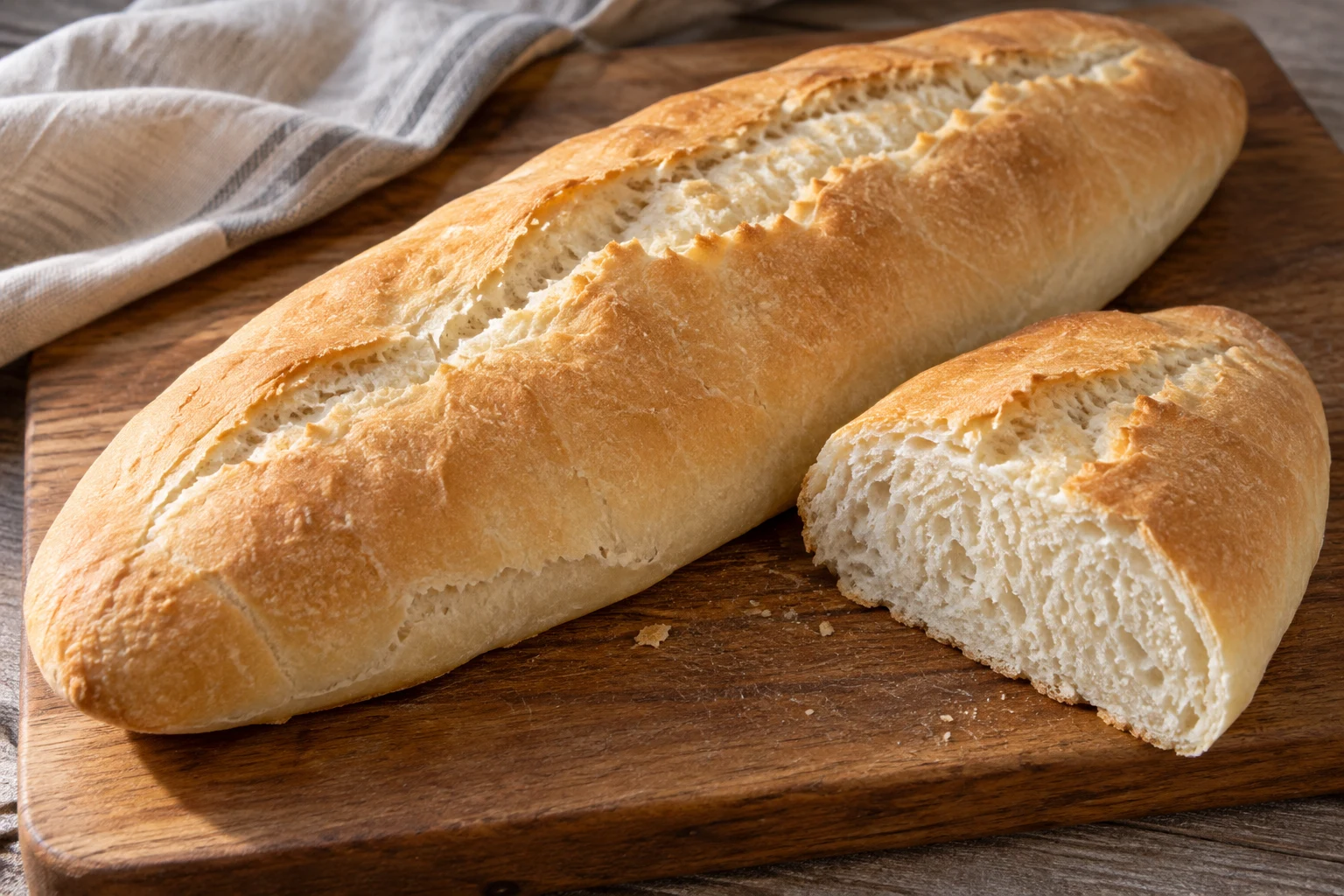
Read the loaf from the outside in
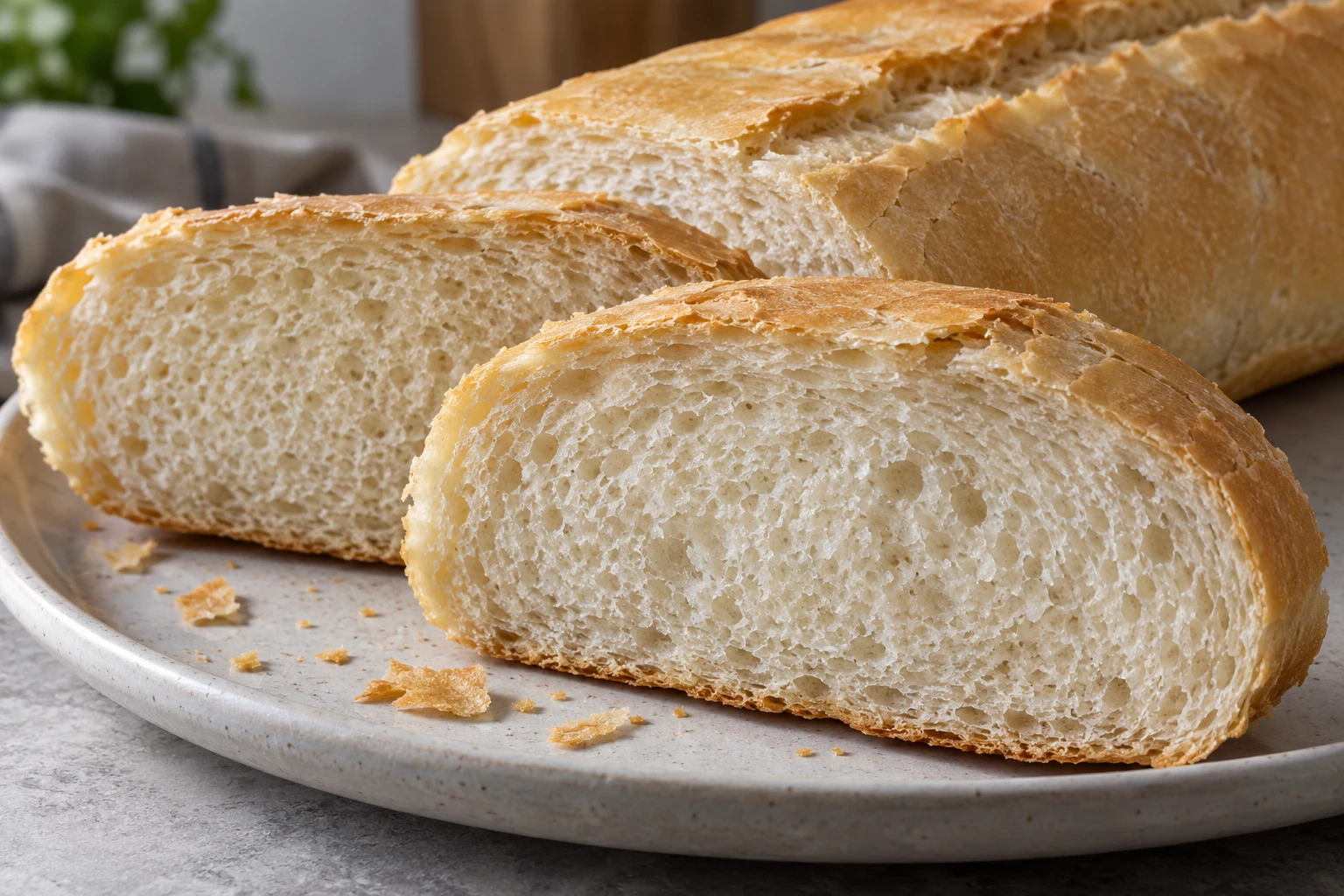
Pan cubano gives a sandwich two kinds of resistance: a thin crust that breaks and an interior that yields. The Three Guys From Miami describe that contrast as the defining goal of their home bread. It also explains why a loaf can look substantial while feeling comparatively light when sliced.
The long line along the top is another clue. It can come from a strip of palmetto leaf in a bakery or a deliberate score in a home kitchen. Look at that line together with the crumb and crust, rather than treating length alone as proof of a particular bread.
A Cuban history that crosses the water
In an excerpt from The Cuban Sandwich: A History in Layers, Andrew T. Huse, Bárbara C. Cruz and Jeff Houck trace bread through Cuba and its diaspora. They cite travelers discussing Cuban bread in the nineteenth century and describe the shift from squat loaves to a long, narrow form around the turn of the twentieth century.
Tampa’s La Segunda bakery opened in 1915. The Southern Foodways Alliance oral history with Anthony Moré Jr. and Copeland Moré connects founder Juan Moré’s journey through Cuba to his later work in Tampa. The family’s account of where he learned the palmetto technique is a recollection, not a reason to declare one bakery the inventor of all Cuban bread.
The leaf makes a particular bakery’s line
La Segunda describes placing a fresh palmetto strip along each shaped loaf before baking. Its account connects the leaf with retained moisture and the long split in the crust. This is a specific working bakery’s method, and the leaf is a useful part of its identity.
At home, the Three Guys From Miami use a shallow cut running down the loaf. King Arthur’s Cuban sandwich recipe likewise gives its bread a lengthwise slit. Both offer a practical route to a long opening without asking a home baker to source a plant from the garden.
Choose a complete dough method
Three Guys From Miami
Their large loaf uses a bread-flour and all-purpose-flour mixture with lard. Flour is added gradually to reach a pliable dough, and the rolled cylinder is placed seam down.
King Arthur
Its smaller sandwich rolls use all-purpose flour and offer butter or lard. The dough is kneaded until supple, rested in portions and shaped into slightly tapered logs.
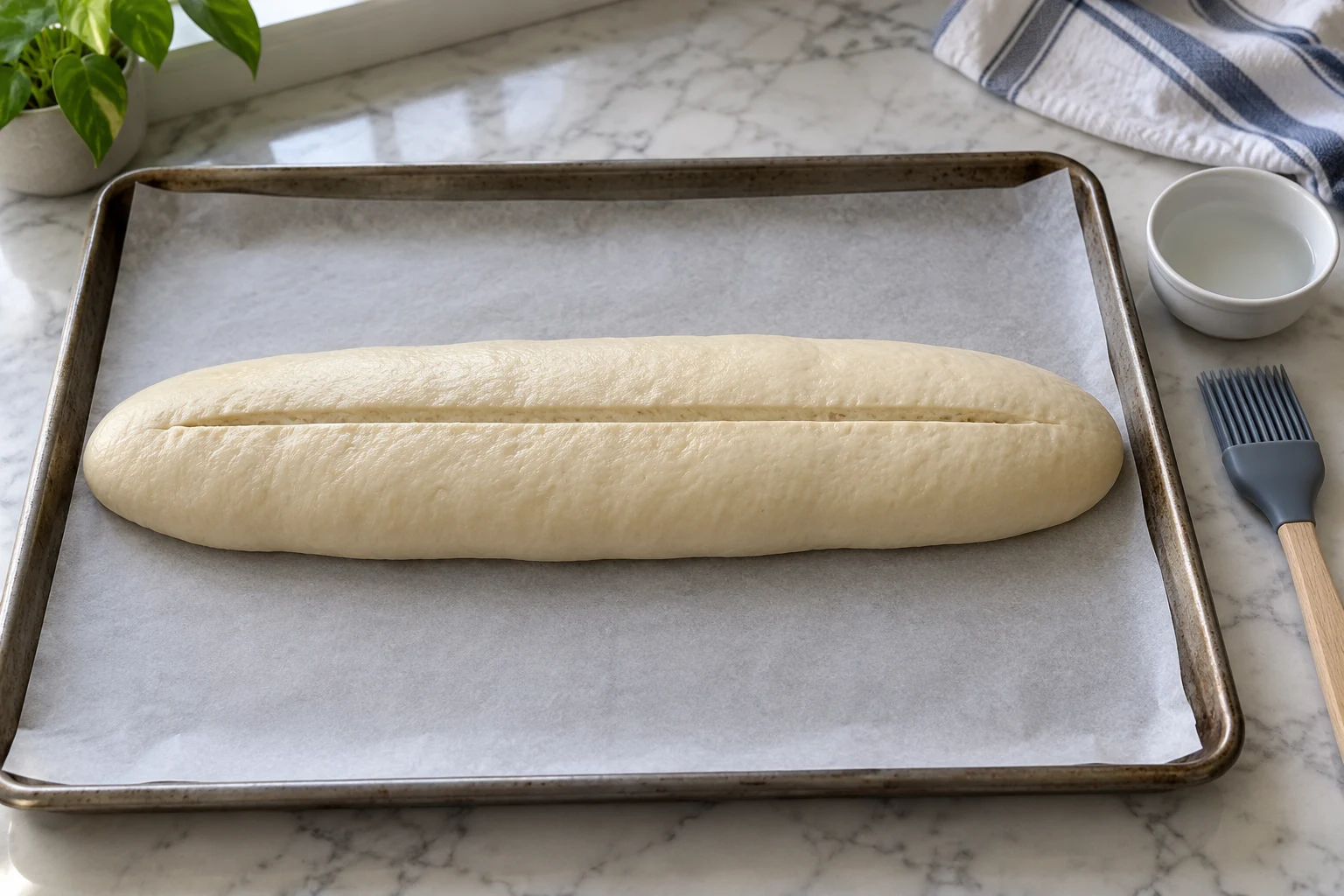
Shape for the tray; proof for the dough
The home formulas are useful precisely because they are different. A broad loaf rolled from a rectangle and several small sandwich logs need their own handling, oven settings and baking times. Keep the yield and method together when choosing one.
Pay attention to the dough description. King Arthur asks for a puffy first rise rather than insisting it must double. The Three Guys From Miami call for doubling at that stage and a larger expansion after shaping. Those cues belong to their respective formulas; one universal clock would conceal the difference.
The Miami authors also warn that too much flour gives a dense result. Add flour in the way the chosen recipe directs, instead of making a sticky dough dry simply because it is easier to touch.
Eat it for its changing texture
Fresh Cuban bread can be eaten with butter and café con leche, a combination documented in the historical excerpt’s account of the working day. A filled, pressed sandwich asks something different of the same loaf: the crumb gives way while the outside becomes part of the crisp bite.
These are wheat breads. Lard is integral to the Three Guys From Miami formula; King Arthur offers butter as an alternative in its home rolls. Ask a bakery about its actual ingredients if pork fat or dairy matters to you. The name alone does not answer that question.
Research notes
Sources for the loaf and its journeys
Two complete home recipes, a bakery’s account, an oral history and a historical book excerpt support this feature. Each recipe retains its own quantities and oven instructions.
- Three Guys From Miami: Pan Cubano Original home loaf, gradual flour addition, rolled shaping, lard and a lengthwise score.
- King Arthur Baking: Cuban Sandwich The bread portion gives a smaller roll method, butter-or-lard choice and puffy-rise cues.
- La Segunda: Our Story and Craft The bakery describes its fresh palmetto strips and split crust; its practice is identified as its own.
- Southern Foodways Alliance: Anthony Moré Jr. and Copeland Moré Sara Wood’s 2015 oral-history account connects the family bakery with Juan Moré’s travels.
- Boletín Martiano: The Cuban Sandwich, a History in Layers Fall2022 book excerpt by Huse, Cruz and Houck traces Cuban bread’s changing shape and everyday use.
Keep exploring
More stories for your table
Cuban cuisine Appetizer
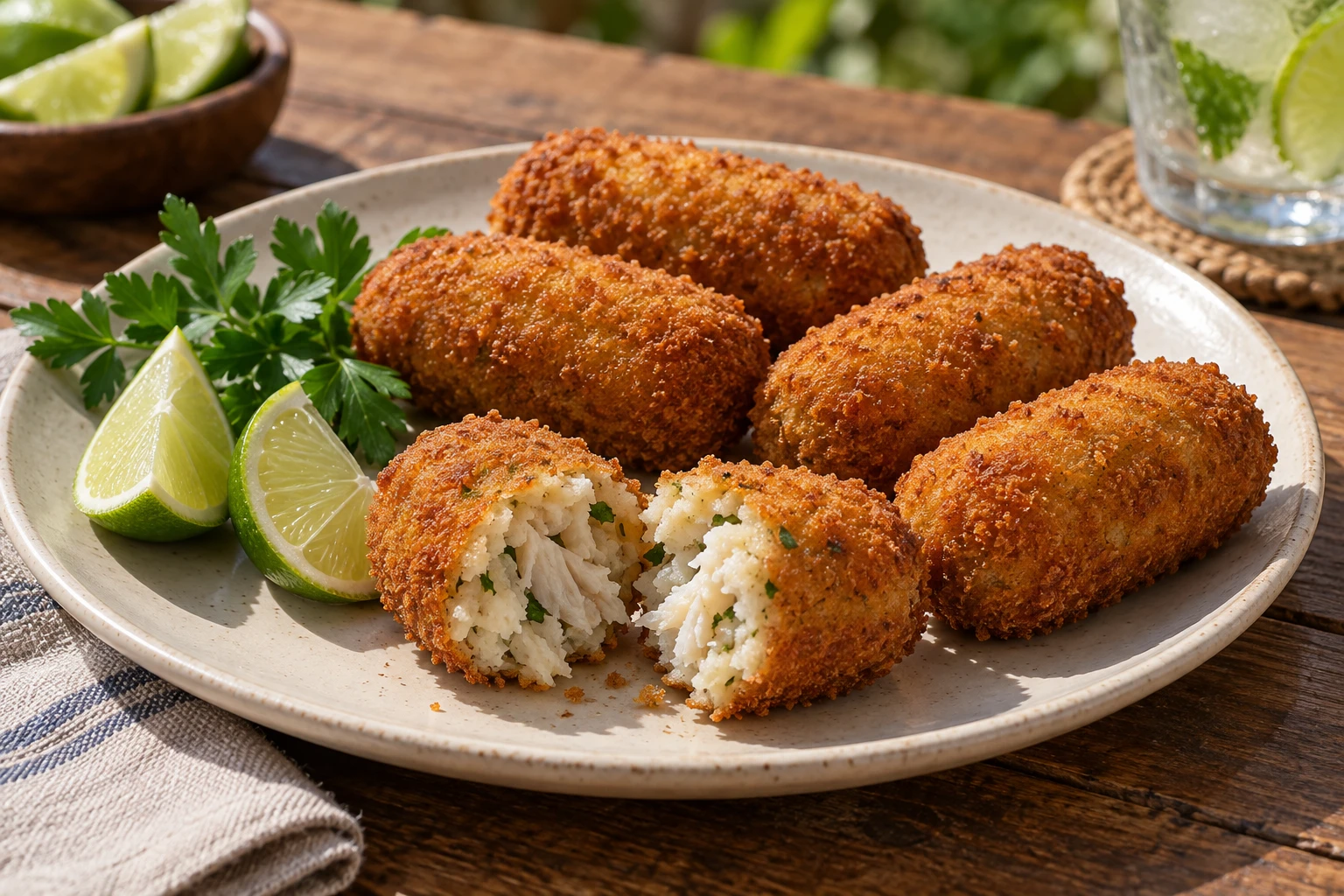
Fish Croquetas: Choose the Binder First
Cuban fish croquetas can be bound with fish-stock paste, milk-based paste or potato. Read the filling before choosing the shape and coating.
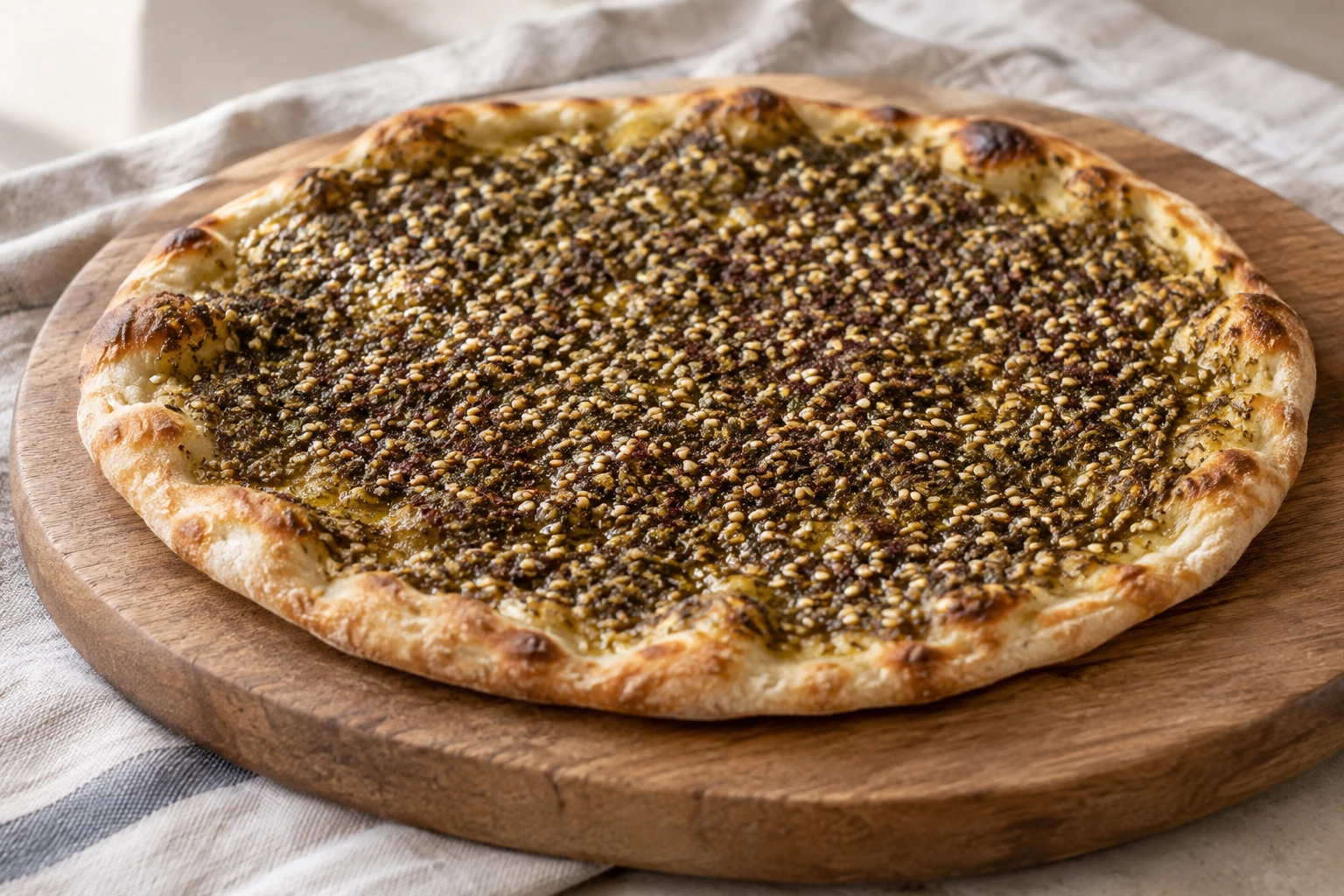
Lebanese cuisine Breakfast flatbread
Man’oushe: From Za’atar Paste to Breakfast
What makes Lebanese za’atar man’oushe work: the herb-and-oil topping, a supple bread, the heat beneath it, and the fresh accompaniments that turn it into breakfast.
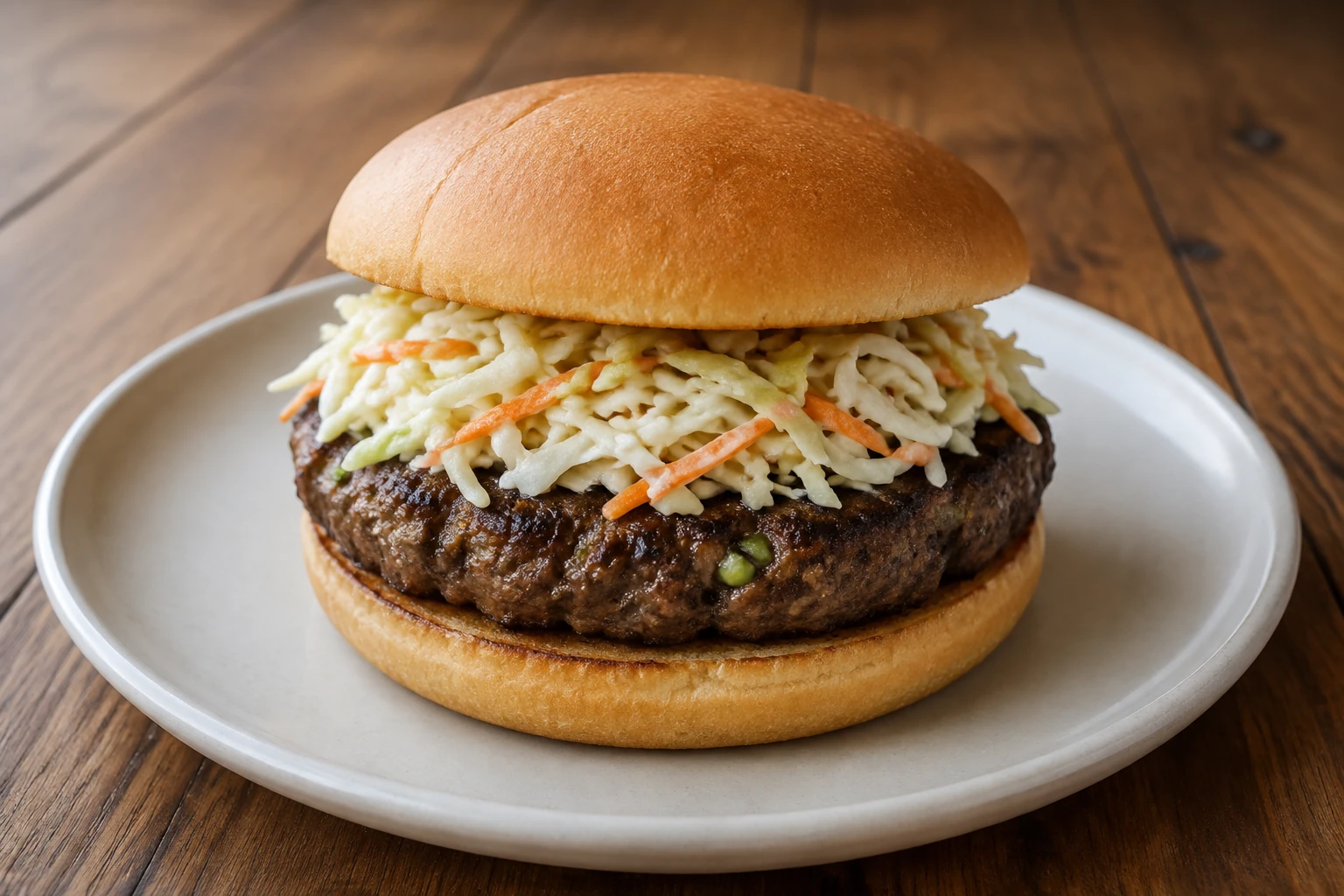
Jamaican cuisine Jerk burger
Jamaican Jerk Burger: Start with the Seasoning
Choose the right jerk seasoning for a beef burger, then make four skillet burgers with crisp cabbage slaw. A practical adaptation grounded in Jamaican flavours.