
Santander Arepas: The Pork Is in the Dough
Arepa santandereana
The savory character begins inside the corn cake. Chicharrón joins the dough before shaping, while the surface earns its color on the cooking plate.
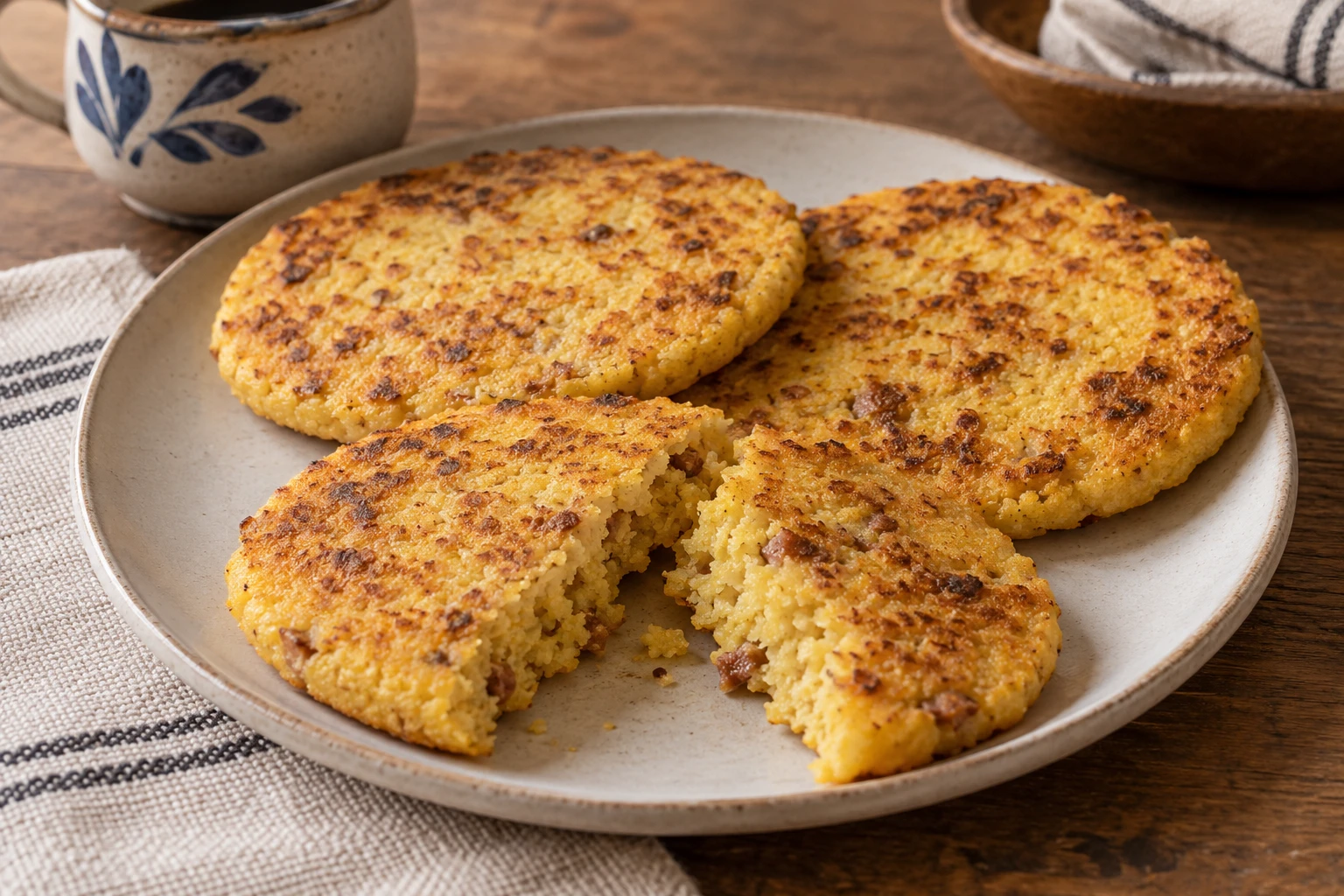
A savory cake before any topping
Santander Travel describes the regional arepa through an essential action: grind pork chicharrón with the corn. That puts the savory ingredient inside the cake. A photograph of a yellow round alone misses this distinction, just as a piece of pork laid on top of a plain arepa would.
The regional tourism site presents it at breakfast and as an accompaniment to soup later in the day. This is useful serving context: the arepa can contribute corn texture and pork flavor without needing a filled pocket or elaborate topping. Its dough already has a character of its own.
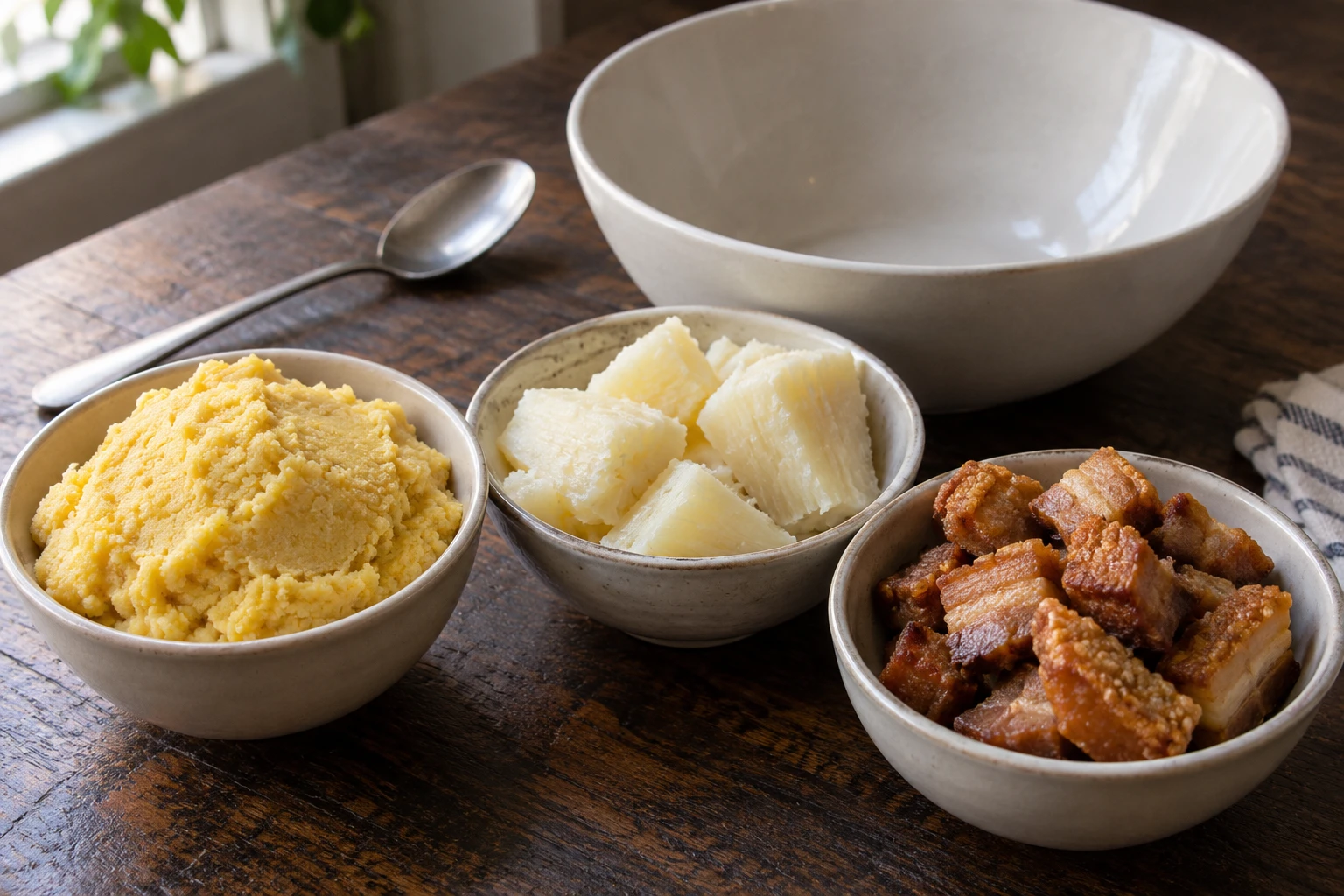
Read the ingredient states
Chef Carlos Yanguas's recipe in Semana combines ground corn and chicharrón with grated yuca, then shapes the dough between banana leaves. Chef Diana Acevedo's El Espectador version specifies cooked yuca, grinding it with corn and chicharrón before working in seasoning and pork fat.
The shared ingredients do not make the preparation stages interchangeable. Grated yuca in one method and cooked cassava in another are different starting points. Read the whole method before preparing a bowl of ingredients; matching the nouns in a list is only the beginning.
These published recipes also discuss preparing the corn before grinding. For the dough decisions here, begin with properly prepared corn intended for the chosen method. Identifying that ingredient is more useful than assuming any bag of yellow corn flour will reproduce the same result.
Two practical dough checks
Drain the cooked corn
Sweet y Salado's adaptation uses cooked yellow corn, cooked cassava and fried pork belly. It emphasizes draining the corn thoroughly before grinding, because excess water leaves the dough too soft. A rest follows before shaping.
Press a small portion
Acevedo works the dough until a small portion can be flattened without cracking. This is a useful shaping checkpoint: the edge shows how the mass behaves before an entire batch is formed.
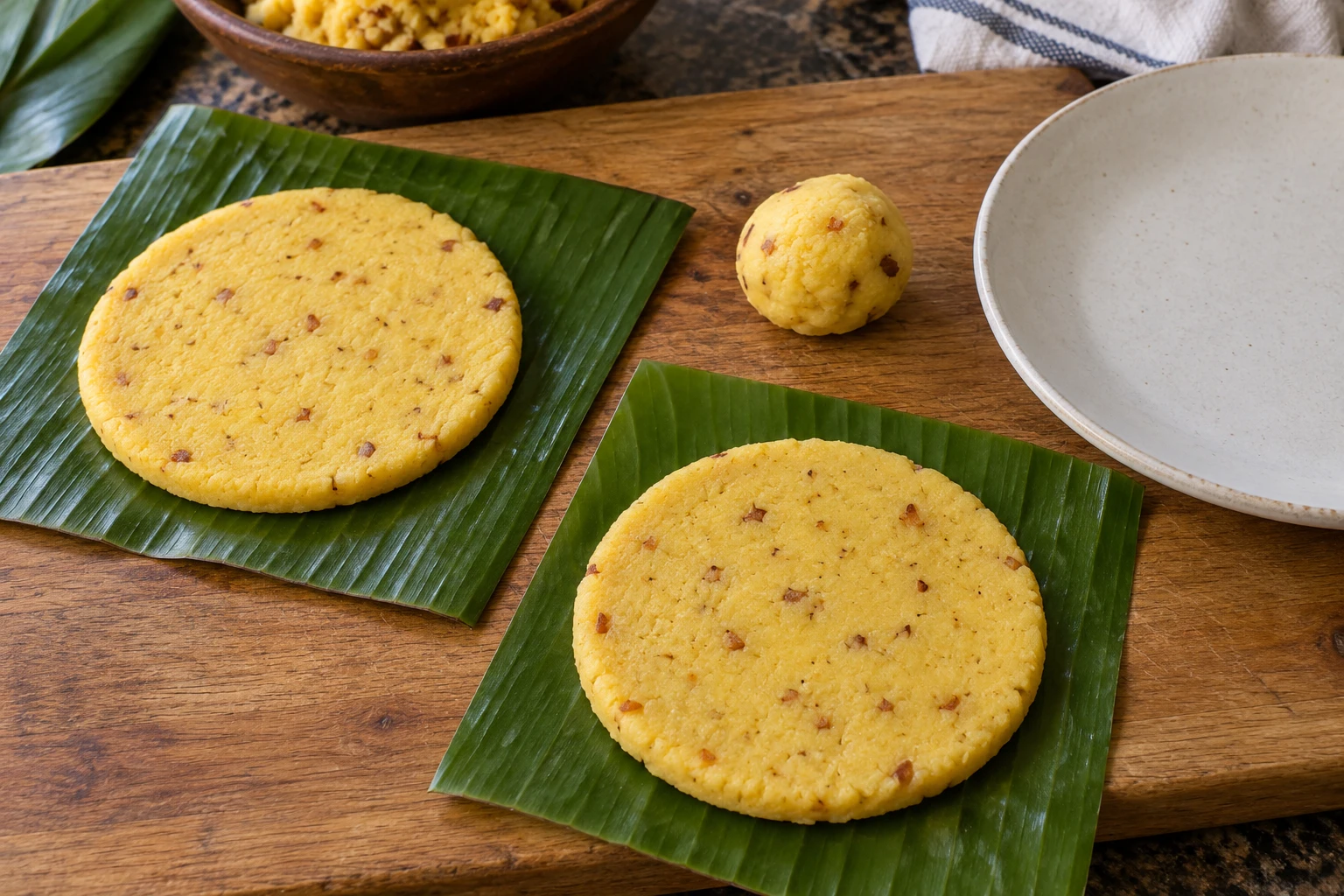
What to notice before cooking
These observations compare published methods; choose one complete recipe for its preparation and cooking instructions.
- 01
Find the pork throughout
The regional defining action is incorporation, rather than garnish. Check whether the chicharrón is distributed through the ground mixture before judging the arepa by the color of its surface.
- 02
Keep the shape repeatable
Yanguas uses banana leaves for pressing. Sweet y Salado suggests a press or the base of a plate or pot. Different tools can produce the same basic disc; consistent portions help you compare how the batch behaves.
- 03
Read moisture before adding water
A dough that cannot be handled may be carrying excess cooking water. Sweet y Salado addresses this at the draining stage. Adding more ingredients at random skips the specific problem its method asks the cook to prevent.
The cooking surface is part of the choice
Yanguas finishes the arepas on a clay tiesto until crisp. Acevedo also names a griddle or tiesto, with a low-heat approach. Sweet y Salado's prepared-ingredient version uses a lightly greased pan or griddle and a different heat setting. These instructions belong with their respective dough methods.
A griddle's browned patch is only one observation. Check the complete method's expected texture as well. A smooth formed disc, a browned face and a coherent interior are related, but they are not the same stage. Increasing the heat cannot repair a dough that failed its shaping check.
That is why this arepa rewards preparation before cooking. The corn must be ready, the pork incorporated and the dough workable before the cake meets the plate. Those are more informative distinctions than a generic promise that a regional flatbread is quick or easy.
Give the arepa room at the table
Acevedo suggests serving these arepas with regional meat dishes or enjoying them at breakfast with eggs. Santander Travel's soup accompaniment offers another scale of meal. The cake can be a substantial part of a breakfast or a supporting bite beside a bowl.
Try the arepa itself before adding anything. The corn, incorporated pork and browned surface should remain legible. From there, the meal can be simple: an egg, a soup or the accompaniment chosen by the cook. The dough has already done much of the seasoning work.
Research notes
Sources
A regional institution and attributed cooking methods support the dough and serving distinctions.
- Santander Travel: Arepa de maíz Regional chicharrón incorporation and breakfast or soup service.
- Carlos Yanguas: Arepa santandereana Grated yuca, banana-leaf shaping and a clay tiesto finish.
- Diana Acevedo: Santander arepas Cooked yuca, incorporated pork fat and the crack-free shaping check.
- Sweet y Salado: Santander arepas with pork belly and cassava A home adaptation emphasizing drained cooked corn and dough handling.
Keep exploring
More stories for your table
Colombian cuisine Corn cakes
Colombian arepas: choose the corn before the shape
Dried corn, precooked flour and tender fresh corn lead to different arepas. A practical guide to choosing a method and serving the finished cakes.
Colombian cuisine Chicken stew
Sudado de Pollo: Read the Potato Schedule
Cook a Colombian-style sudado de pollo with a tomato base and a separate potato stage. Includes a complete stovetop adaptation and documented household variations.
Cuban cuisine Bread
Pan Cubano: The Crust, the Crumb and the Line on Top
Cuban bread pairs a crisp, flaky exterior with a soft white interior. Follow the lengthwise split from Tampa’s palmetto leaves to practical home shaping.