
Mondongo: Give the Tripe Its Own Clock
Mondongo
Build Colombian mondongo around tender tripe, then time the potatoes and other vegetables separately. Four Colombian versions explain the choices.
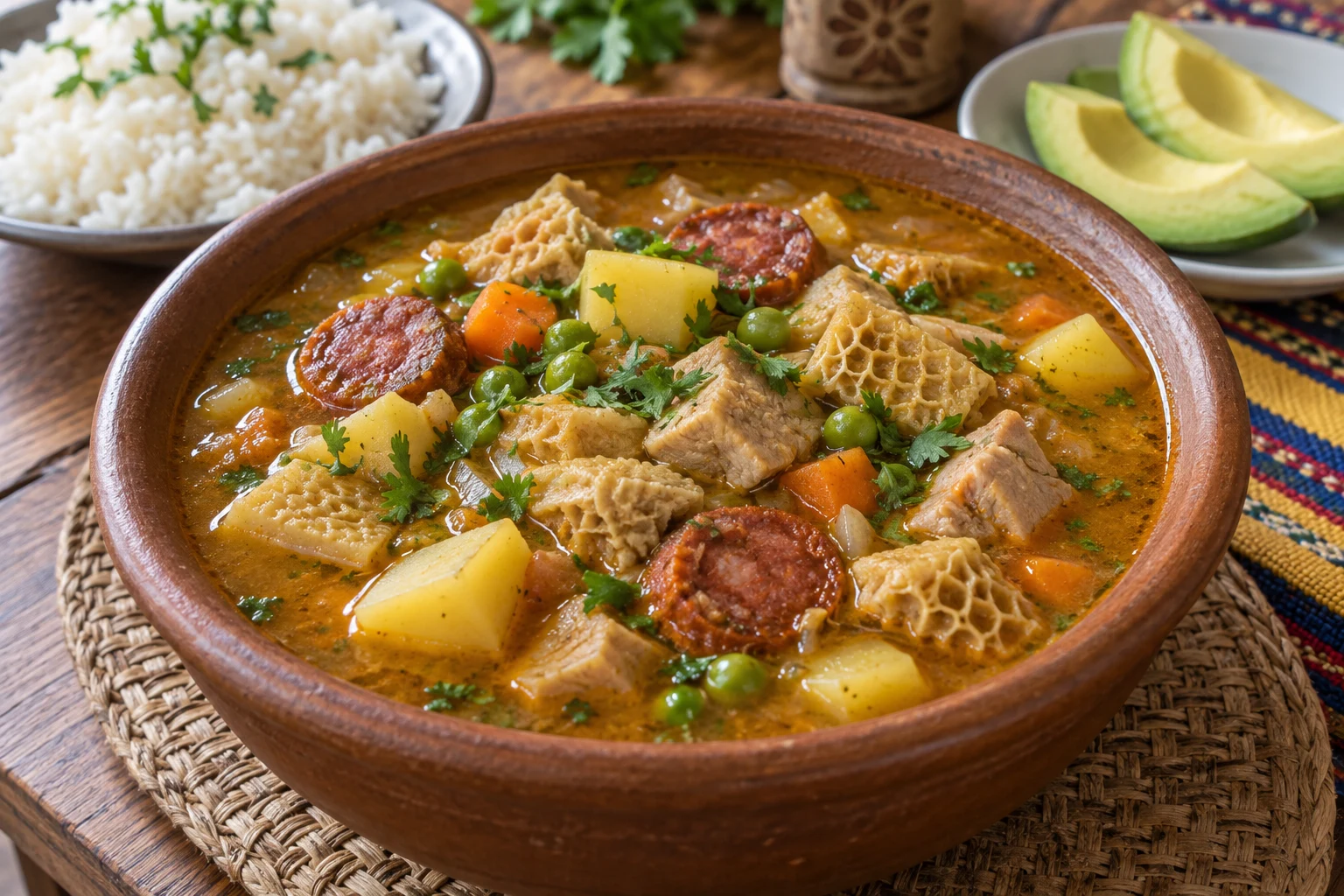
The piece that sets the pace
Honeycomb tripe brings mondongo its recognizable ridged texture. It comes from a cow’s stomach; it is a different ingredient from intestines. The honeycomb folds catch broth, but they need enough cooking to become pleasant to chew. Adding everything to a pot at once can leave the tripe firm while the potatoes collapse.
Colombian versions offer a useful solution: give the tripe a preliminary cook, then build the rest of the soup. What follows that first stage varies. Erica Dinho’s family recipe pairs it with lean pork, chorizo, potato and yuca. Chef Álvaro Molina uses potato, carrot and peas or beans. Sandra Sandoval’s Nestlé recipe includes pork and vegetables without chorizo. These are choices within the dish, not a requirement to buy every ingredient.
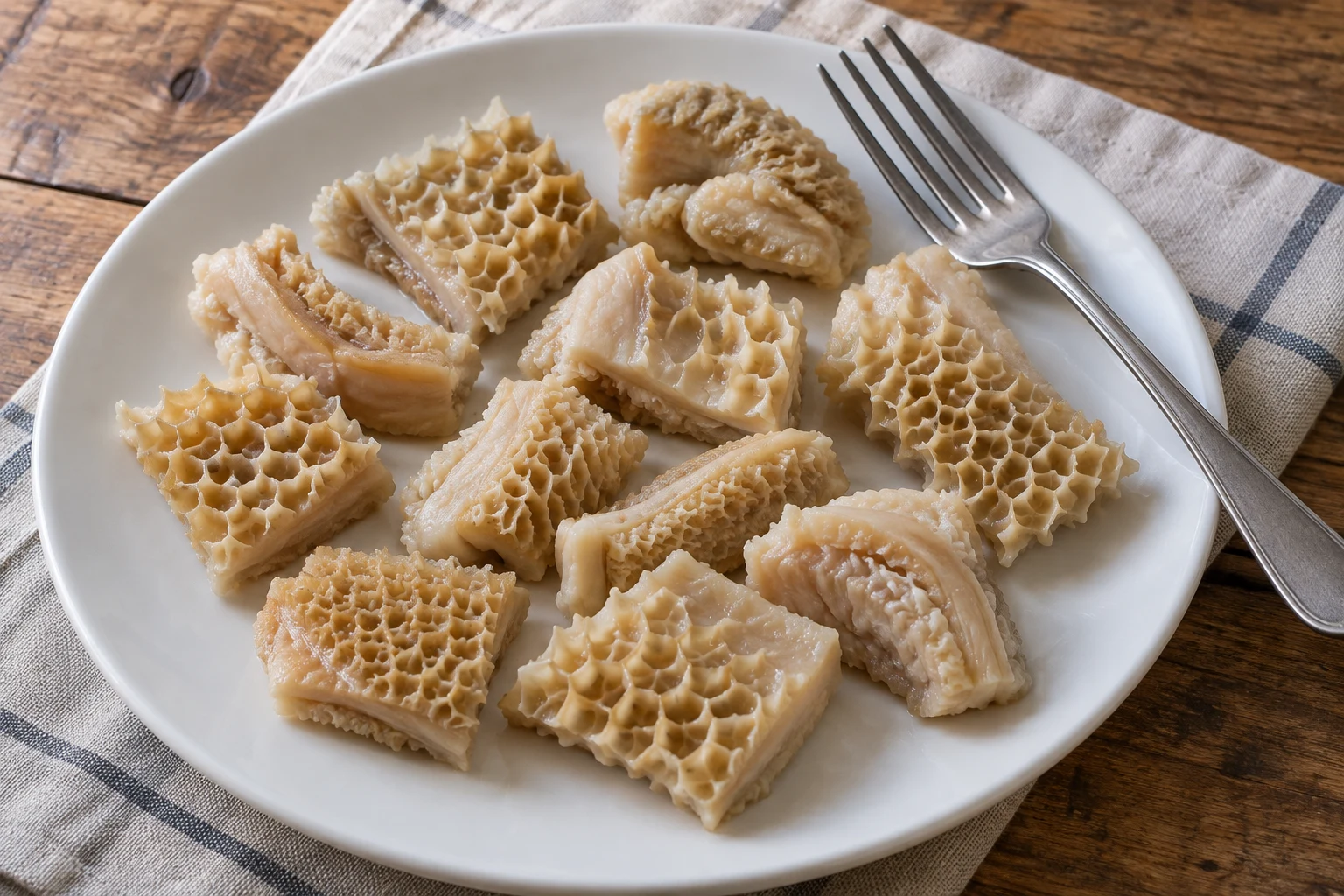
Read the tripe label before choosing a timer
Buy commercially cleaned tripe from a reliable supplier and establish whether it is uncooked, partly cooked or ready to eat. Those products do not start at the same point. Follow the package’s preparation and storage instructions. A preliminary simmer for raw tripe is different from reheating a fully cooked product.
Erica’s recipe allows a long conventional simmer; the Colombian recipes from Sandoval and Molina use pressure cooking. Their times belong to those particular methods and ingredients. Follow the pressure cooker’s filling and release instructions, and judge tenderness after safe opening. A fork should enter readily and a bite-sized piece should yield without a rubbery struggle. Rumba Meats specifies at least 160°F/71°C for its tripe, alongside tenderness.
Keep this first stage away from the potato clock. Citrus used in some family preparations contributes a customary preparation step; it does not sterilize raw meat. Avoid splashing raw-meat juices around the sink, and clean hands, utensils and work surfaces after handling uncooked tripe.
Two deliberate choices for the first cooking liquid
Drain it
Erica Dinho drains the preliminary tripe cooking water. Her soup then develops its flavor from the pork, chorizo, aromatics and a fresh cooking liquid. This creates a clear break between tenderizing the tripe and building the finished soup.
Reserve some
Rumba Meats keeps a measured portion of the tripe liquid for its recipe, combining it with chicken broth and other ingredients. Follow that complete formula if you want to retain the liquid; reserving everything changes the balance of a recipe that calls for draining it.
Build flavor before finishing the vegetables
Onion or scallion and tomato form a useful flavor base. Molina’s method cooks pork, chorizo and these aromatics before adding the vegetables and water. The tenderized tripe joins later. Sandoval likewise builds the pork and vegetable mixture before adding already cooked tripe. This order gives the vegetables a realistic chance of finishing intact.
Erica’s yuca-and-potato version and Rumba’s recipe take another route through the final simmer, but both start with pre-cooked tripe. Choose one version’s sequence. If you keep adding time because the tripe remains tough, the vegetables will eventually pay for that decision.
Cut potatoes into broadly similar pieces and check a piece through its center. Peas need less time than large potato chunks. Taste the broth after any chorizo, stock or seasoning mix has contributed its salt. Raw sausage must reach 160°F/71°C; pre-cooked sausage still needs handling according to its label. A tomato-colored broth can remain spoonable without making the potatoes disintegrate to thicken it.
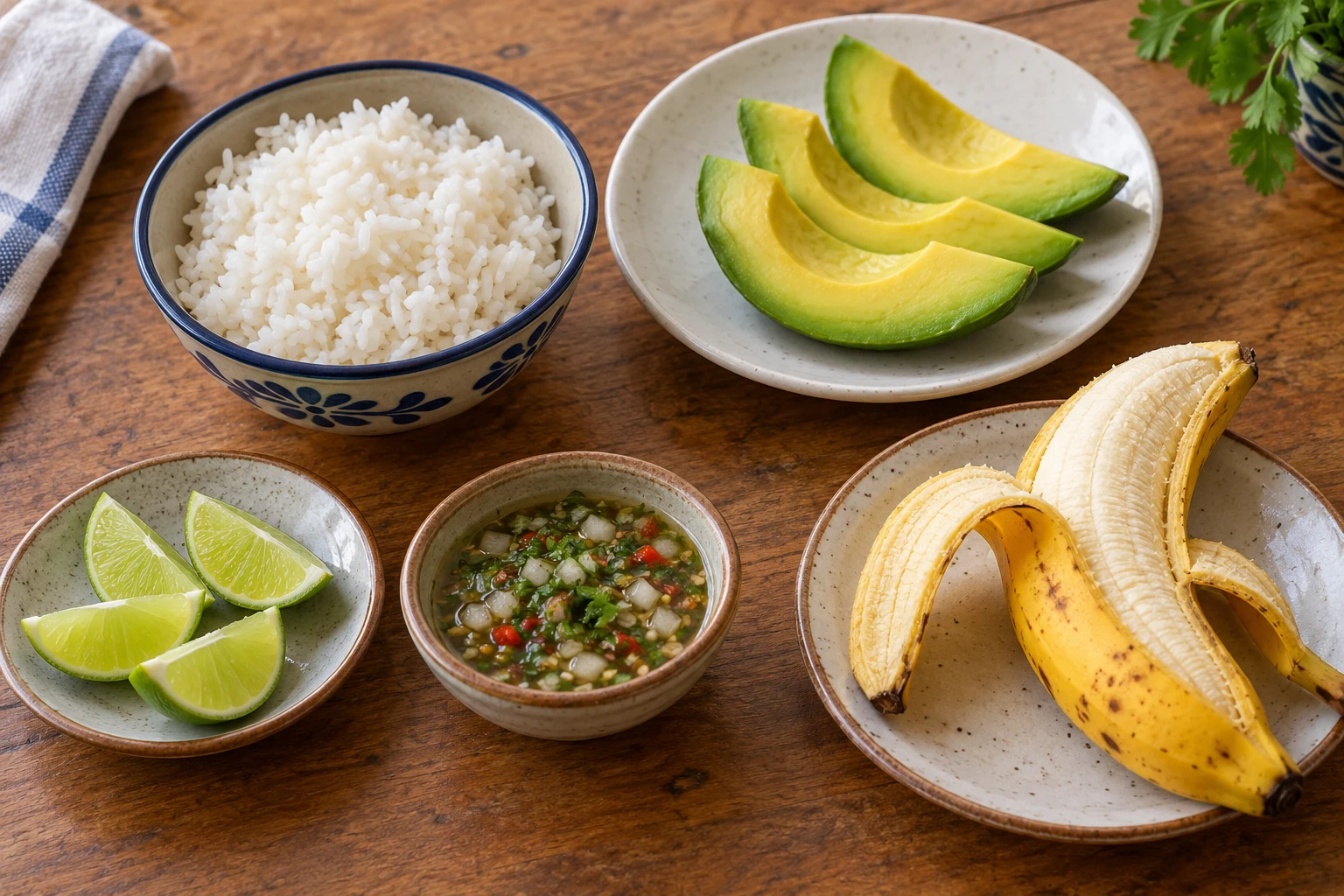
The accompaniments belong beside the bowl
White rice and avocado recur across these recipes. So does banano: a ripe dessert banana, rather than an instruction to fry plantain. Offer it separately so diners can alternate sweet fruit with the savory soup. Lime and ají supply acidity and heat at the table. Molina also lists arepa and other accompaniments; a serving does not need every option.
Mondongo is a moist, perishable soup even when it contains a cured sausage. Refrigerate leftovers in shallow containers within two hours, or one hour when the room or outdoor temperature exceeds 90°F/32°C. Keep the refrigerator at 40°F/4°C or colder. Reheat leftover soup to 165°F/74°C. For purchased stock and chorizo, check ingredient labels for allergens rather than assuming the finished soup suits every diet.
Research notes
Recipes and preparation references
These four recipes explain the separate tripe cook, the vegetable choices and the accompaniments. The food-safety references guide handling and leftovers.
- Erica Dinho — Mondongo Colombiano A Colombian family recipe with pre-cooked, drained tripe, pork, chorizo, potato, yuca and table accompaniments.
- Sandra Sandoval / Recetas Nestlé Colombia — Mondongo A pressure-cooked tripe version with pork, potato, carrot and peas, added to a separately built vegetable mixture.
- Álvaro Molina / El Colombiano — Mondongo The chef’s own column describes tripe, his vegetable-rich soup and customary serving options.
- Rumba Meats — Colombian Mondongo The tripe producer’s recipe reserves some preliminary cooking liquid and finishes with chorizo, yuca and potato.
- FoodSafety.gov — Safe minimum internal temperatures Cooking guidance for sausage and reheating leftovers.
- FoodSafety.gov — Four steps to food safety Handling raw meat, prompt refrigeration and safe refrigerator temperature.
Keep exploring
More stories for your table
Colombian cuisine Chicken stew
Sudado de Pollo: Read the Potato Schedule
Cook a Colombian-style sudado de pollo with a tomato base and a separate potato stage. Includes a complete stovetop adaptation and documented household variations.
Colombian cuisine Bread
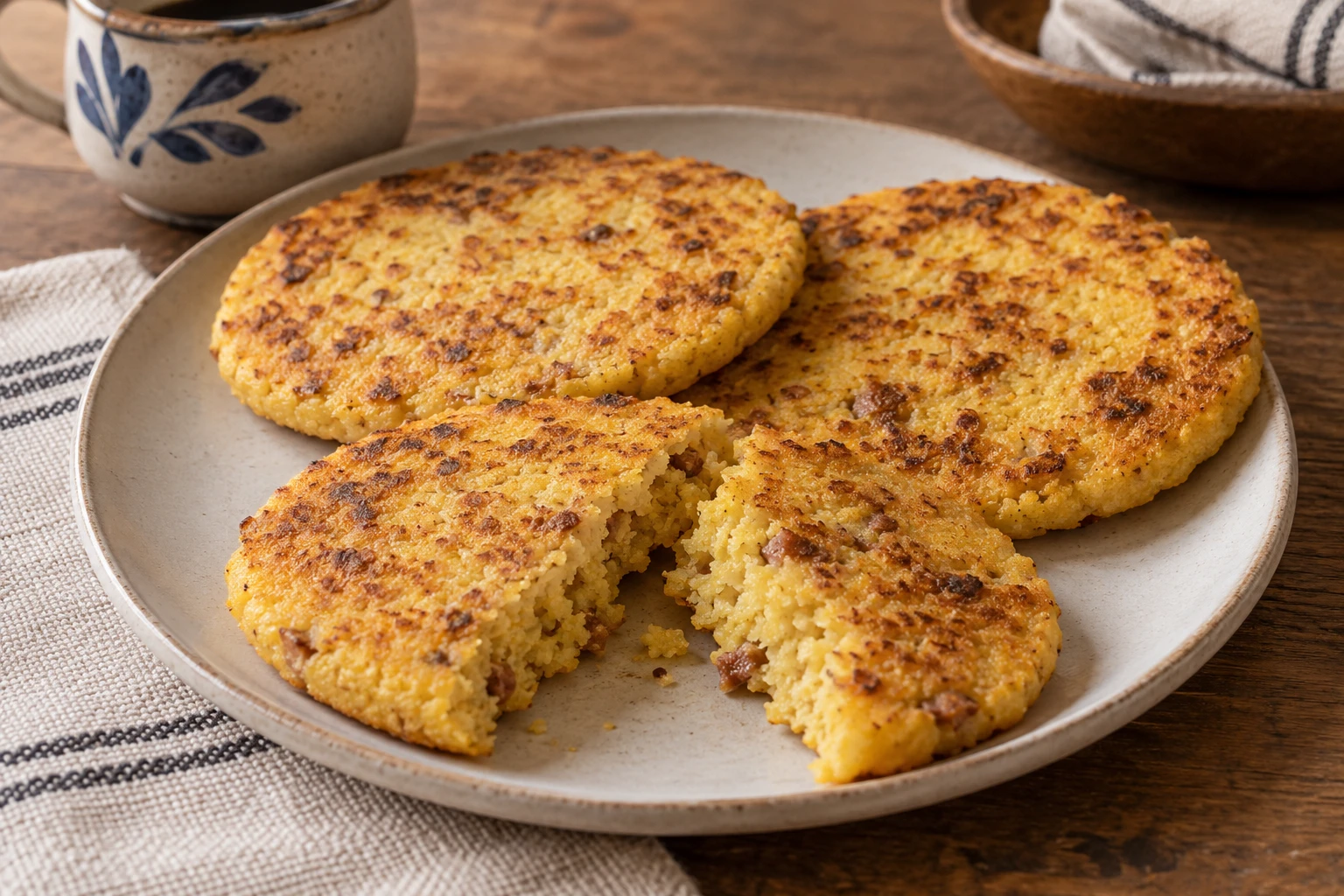
Santander Arepas: The Pork Is in the Dough
Santander’s corn arepas grind chicharrón into the dough. Cassava preparation, moisture and shaping distinguish the working methods behind the browned surface.
Peruvian cuisine Soup
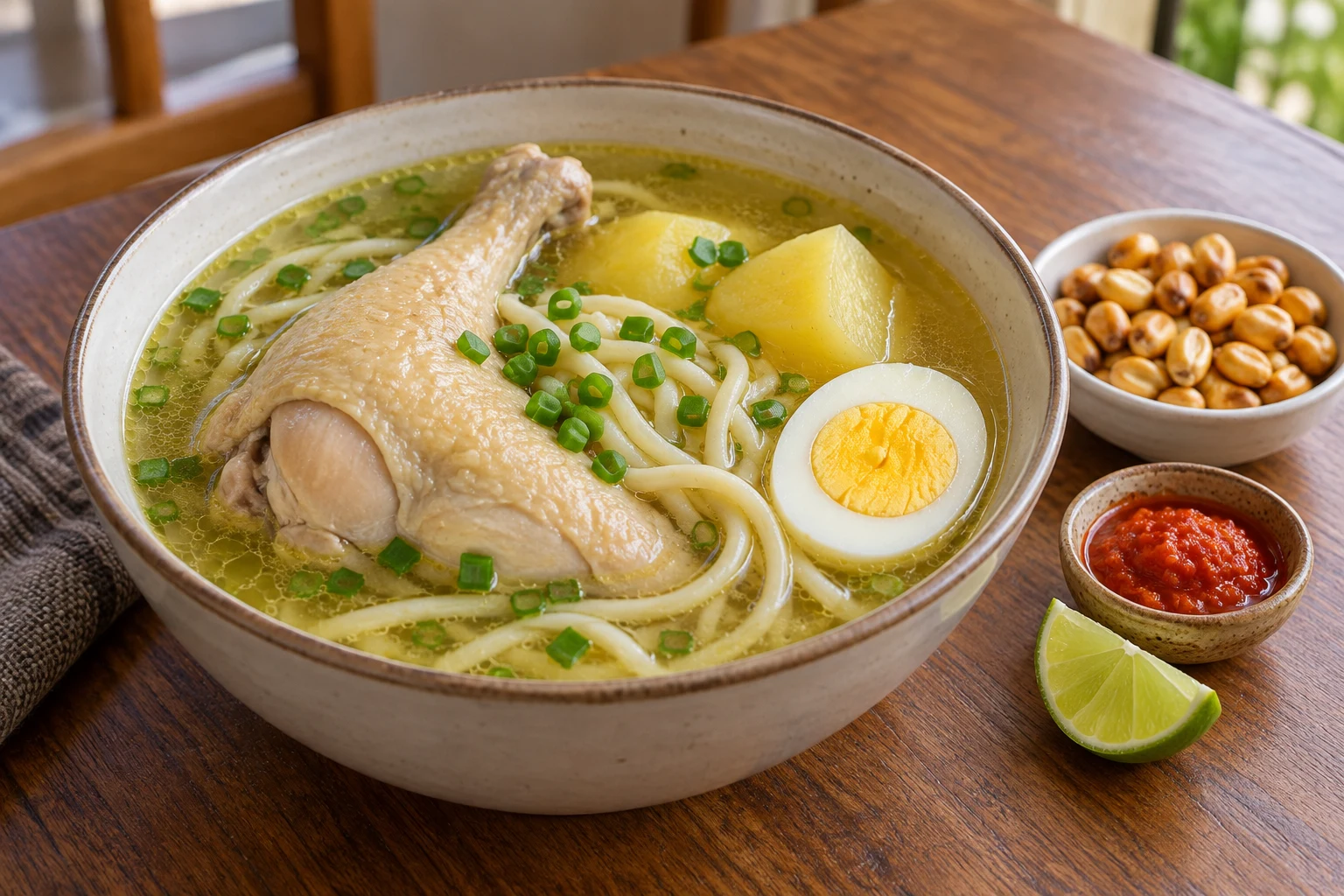
Caldo de Gallina: Let the Hen Set the Pace
A satisfying Peruvian hen soup depends on timing the meat, yellow potatoes and long noodles separately. The garnish belongs to the final minute.