
Sobrebarriga: tender beef first, bright sauce second
Sobrebarriga en salsa criolla
Understand the two stages of Colombian flank steak in tomato and onion sauce, with an ordinary-pot adaptation and practical tenderness checks.
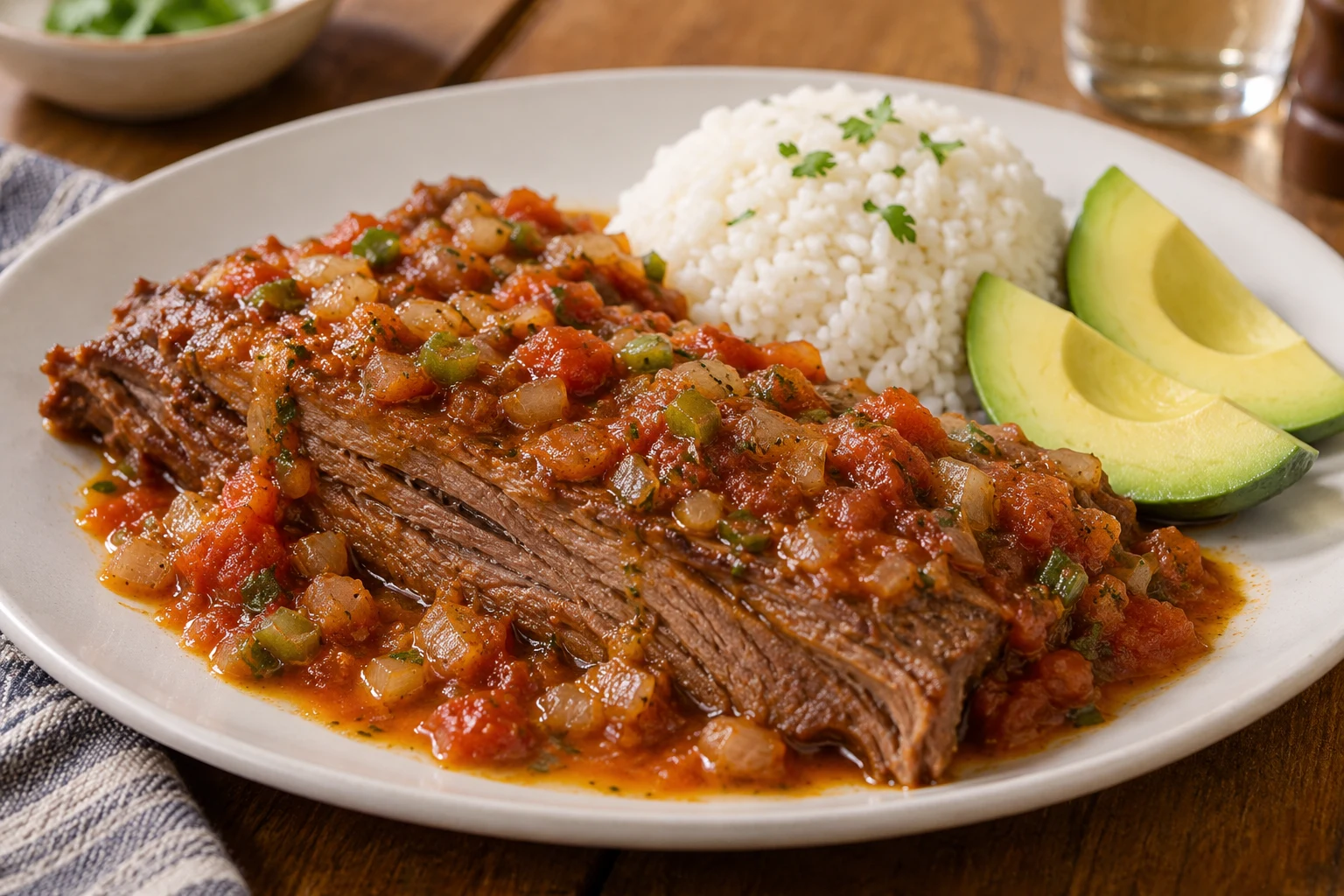
A stew with two clocks
Sobrebarriga en salsa criolla pairs a long-cooked cut of beef with a tomato and onion sauce. English-language recipes commonly call for flank steak; Spanish recipes also use the broader label carne de falda. The important buying decision is a cut suited to slow cooking, rather than a steak intended for a quick, rosy-centered sear.
The dish works best when you judge its two parts separately. The beef needs time to become yielding. The sauce needs enough cooking to soften the onions and concentrate the tomatoes, while keeping their character visible. A thick sauce cannot fix resistant meat, and tender meat does not require a watery sauce.
Erica Dinho describes an ordinary-pot version; B-Eats uses a pressure cooker and adds a brief sear after tenderizing. My Colombian Cocina begins with a vinegar and herb marinade. These are useful alternatives, rather than mandatory steps to combine into one increasingly complicated recipe.
Two decisions that change the plate
Tender meat, then sauce
Keep the beef in broad pieces during its long cooking stage. Check with a fork before moving it to the sauce. The post-braise sear in B-Eats is an optional browned finish; it does not replace tenderizing.
Chunky sauce, adjustable liquid
Onion, scallion and tomato give the sauce its body. Sandra Sandoval's Nestlé version adds retained cooking liquid. Add it gradually: a sauce that coats a portion is different from a pool of stock. Red pepper, achiote and a herb marinade appear in other versions, but are not universal requirements.
Cook it at home
Ordinary-pot sobrebarriga for four
An original editorial adaptation using water rather than a stock mix. Allow roughly three hours, with extra time if the beef remains resistant. The listed times are estimates.
Ingredients
For the beef
- 800 g flank steak, cut into two broad pieces
- 1.5 liters water, plus hot water as needed
- 200 g onion, peeled and halved
- 1 garlic clove, lightly crushed
- 1 bay leaf
- ¾ teaspoon fine salt
For the sauce
- 20 ml neutral cooking oil
- 120 g onion, finely diced
- 2 scallions, finely sliced
- 2 garlic cloves, minced
- 350 g ripe tomatoes, finely chopped
- ½ teaspoon ground cumin
- ¼ teaspoon ground achiote, optional
- 100 ml strained beef cooking liquid, plus more if needed
- ¼ teaspoon fine salt, adjusted after tasting
To serve
- Cooked white rice and sliced avocado, prepared separately
Method
- 1
Start the gentle braise
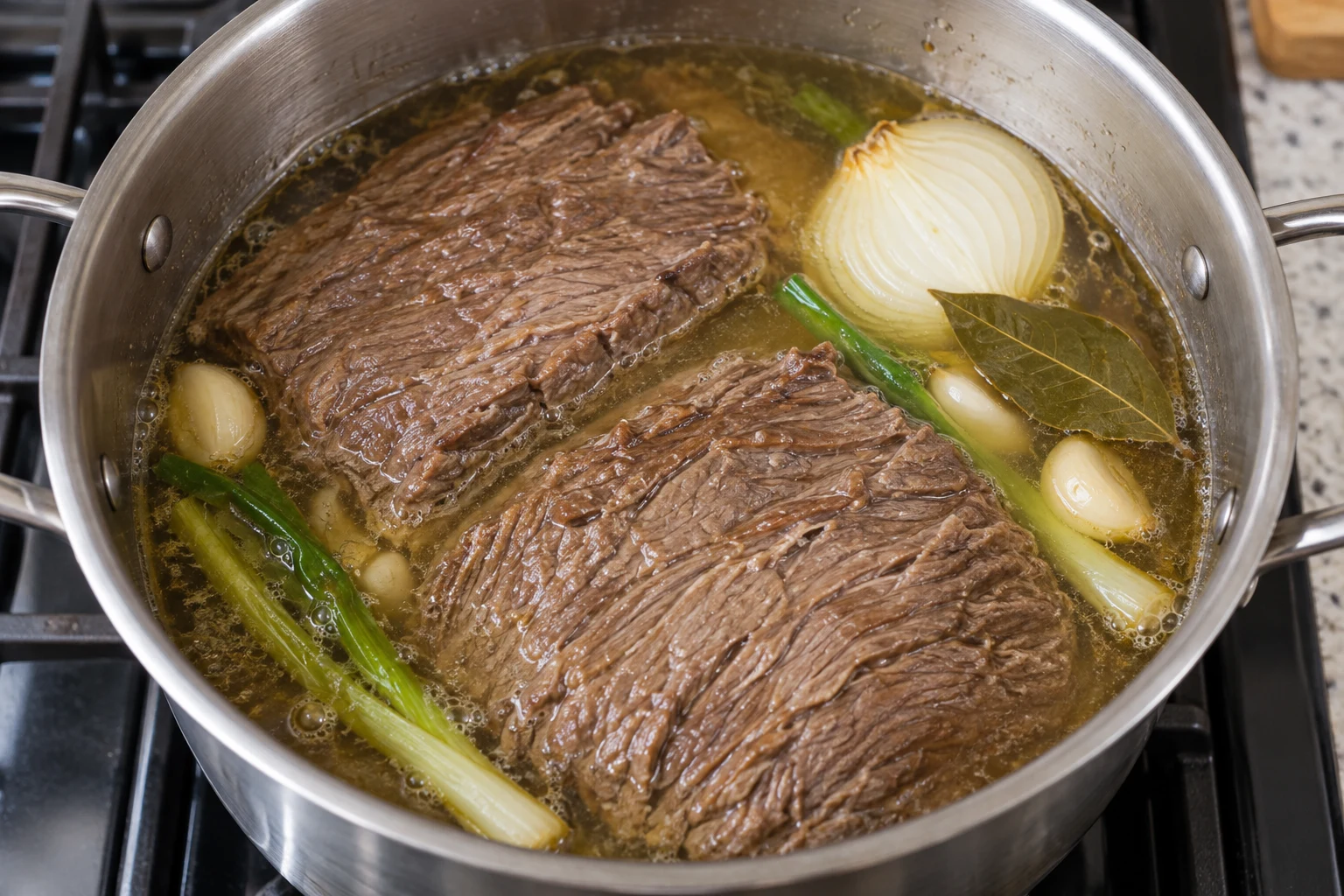
Place the beef, water, halved onion, crushed garlic, bay leaf and salt in an ordinary heavy pot. Add enough hot water to cover the beef if necessary. Bring to a simmer, cover and lower the heat to maintain gentle bubbling. Keep raw-beef utensils away from the finished food.
- 2
Check tenderness
Begin checking after two hours; continue as needed, topping up with hot water to keep the meat submerged. A fork should enter easily and separate the fibers. This adaptation also uses a thermometer target of at least 74°C/165°F in the thickest part, a conservative cooking target rather than the official minimum for whole-cut beef. Reserve the cooking liquid.
- 3
Build the sauce
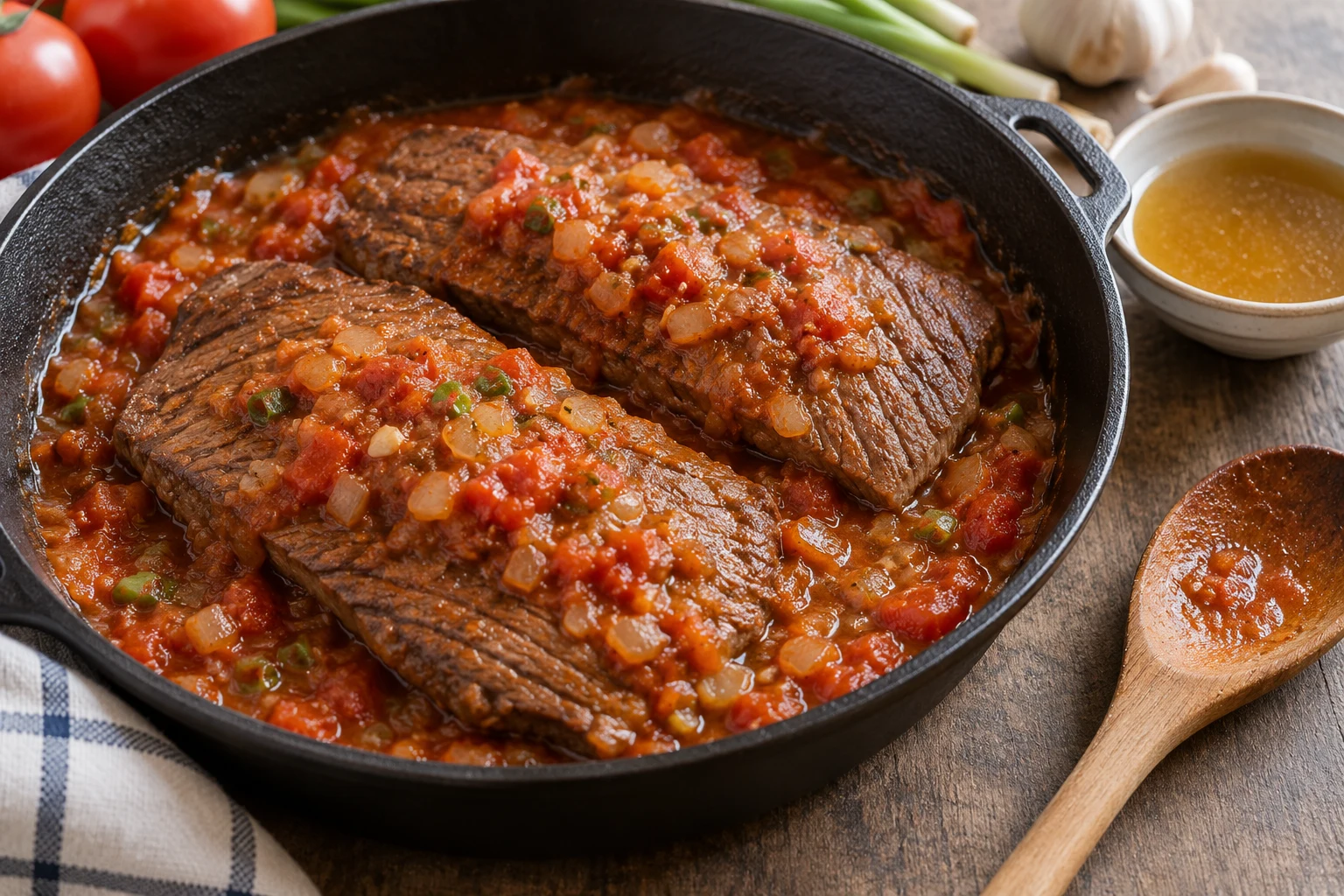
While the beef finishes, heat the oil in a separate skillet over medium heat. Cook the diced onion and scallions for about five minutes, stirring; add the minced garlic for thirty seconds. Add tomatoes, cumin and optional achiote. Lower the heat and cook for twelve to eighteen minutes until the vegetables soften and the sauce thickens. Stir to prevent sticking.
- 4
Bring the stages together
Lift the tender beef onto a clean board. Cut each broad piece across its grain into two portions. Strain the cooking liquid and stir 100 ml into the sauce. Add the beef and gently simmer together for five minutes. Add a little more liquid if the sauce becomes pasty; taste before adding the remaining salt.
- 5
Serve and reheat carefully
Serve with separately cooked rice and avocado. The sauce should cling to the beef while leaving some for the rice. Refrigerate leftovers promptly in shallow containers and reheat them to 74°C/165°F, checking with a thermometer.
Watch the beef and the sauce separately
Read the texture before changing the seasoning
If the beef still pulls back against a fork, leave it in the gentle braise. Cutting it thinner may make portions smaller, but does not replace the cooking it needs. Once tender, handle it carefully so the broad pieces survive the move into the skillet. Notice the direction of the grain before portioning.
If the sauce tastes diluted, lift out the tender beef and reduce the sauce on its own. If it catches on the pan, add a small splash of cooking liquid and lower the heat. Taste for salt after adjusting its concentration; the liquid already carries seasoning.
Rice and avocado make a practical plate here. Other documented accompaniments include yuca, plantain and potatoes. B-Eats puts a separate cream and cheese sauce on the potatoes, while My Colombian Cocina suggests plantain and salad. Choose sides deliberately instead of treating every accompaniment as essential.
Research notes
Sources behind this article
- Erica Dinho — My Colombian Recipes Ordinary-pot tenderizing, flank steak identity and a tomato sauce with optional cut variation.
- B-Eats — Sobrebarriga en salsa Pressure-cooked beef, optional post-braise sear, hogao and separately dressed potatoes.
- My Colombian Cocina — Sobrebarriga en salsa Vinegar and herb marinade, onion and tomato sauce, and plantain accompaniment.
- Sandra Sandoval — Recetas Nestlé Colombia Retained cooking liquid joins the tomato and scallion sauce; served with rice and avocado.
- FoodSafety.gov — Safe minimum internal temperatures Thermometer guidance, whole-cut beef minimum and leftover reheating temperature.
Keep exploring
More stories for your table
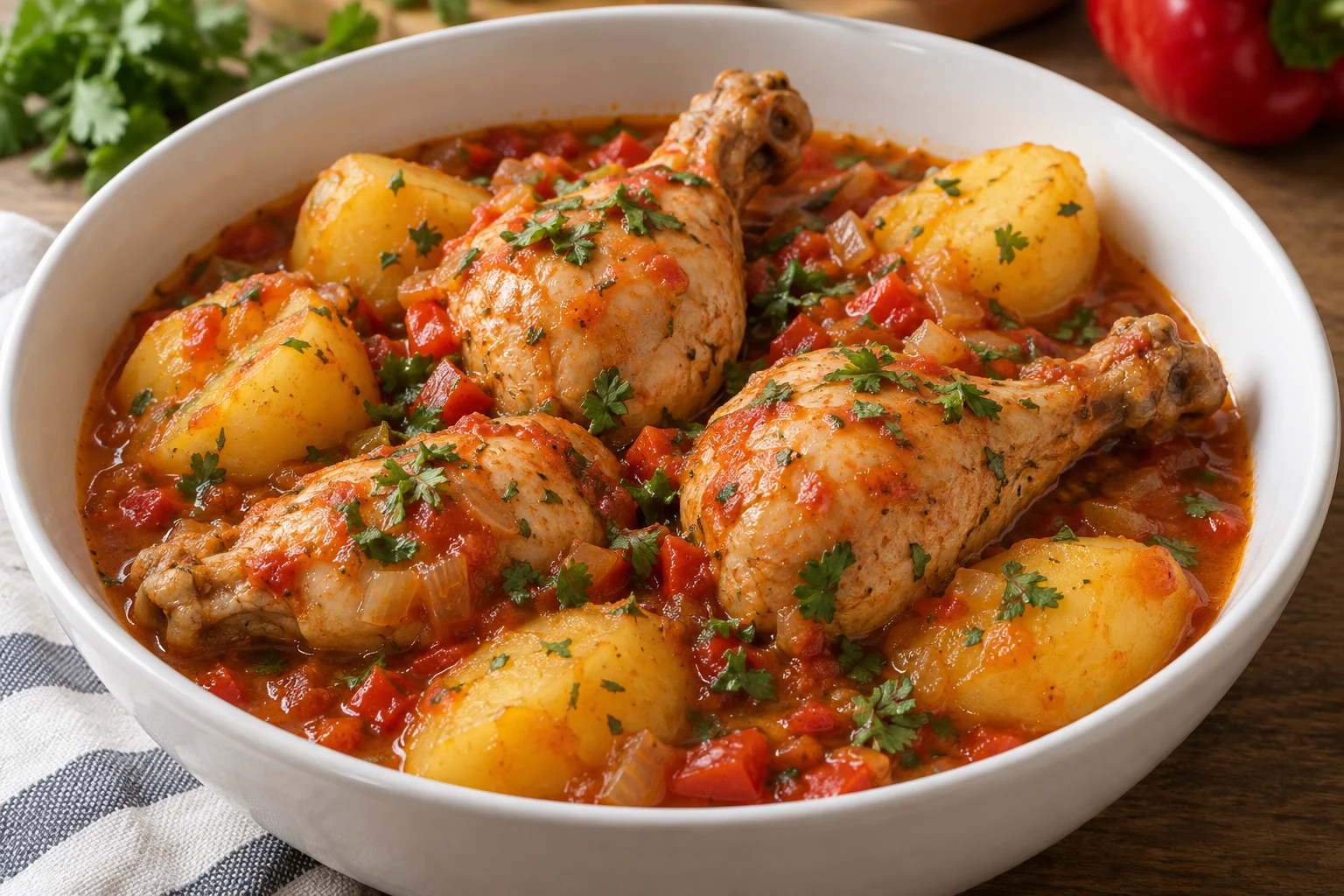
Colombian cuisine Chicken stew
Sudado de Pollo: Read the Potato Schedule
Cook a Colombian-style sudado de pollo with a tomato base and a separate potato stage. Includes a complete stovetop adaptation and documented household variations.
Colombian cuisine Tripe soup
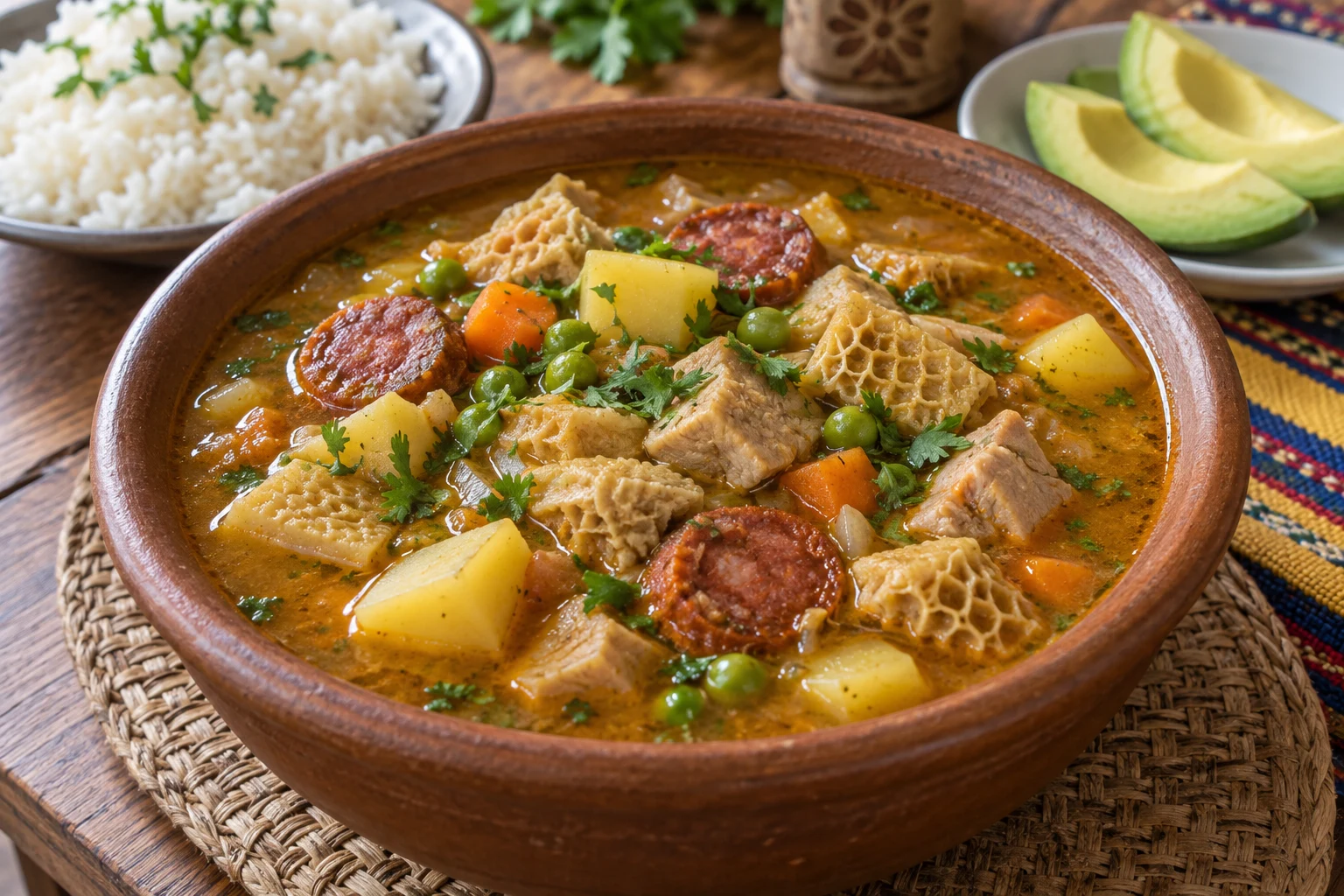
Mondongo: Give the Tripe Its Own Clock
Build Colombian mondongo around tender tripe, then time the potatoes and other vegetables separately. Four Colombian versions explain the choices.
Chilean cuisine Sandwich
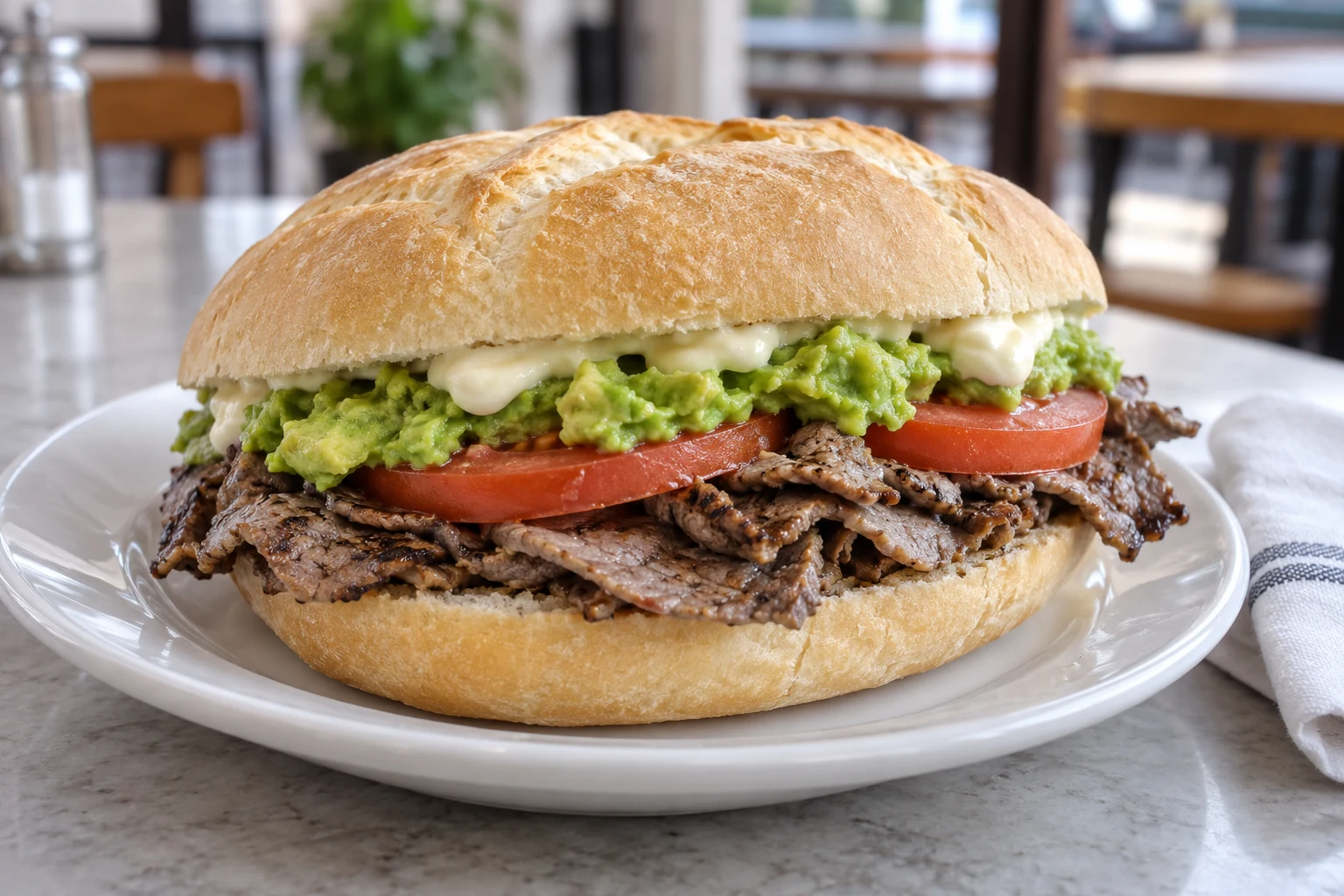
Churrasco italiano: thin beef, ripe avocado and warm bread
The practical details behind Chile's beef, tomato, avocado and mayonnaise sandwich, with bread choices and an original recipe for two.