
Colombian arepas: choose the corn before the shape
Arepas colombianas
Dried corn, precooked flour and tender fresh corn lead to different arepas. A practical guide to choosing a method and serving the finished cakes.
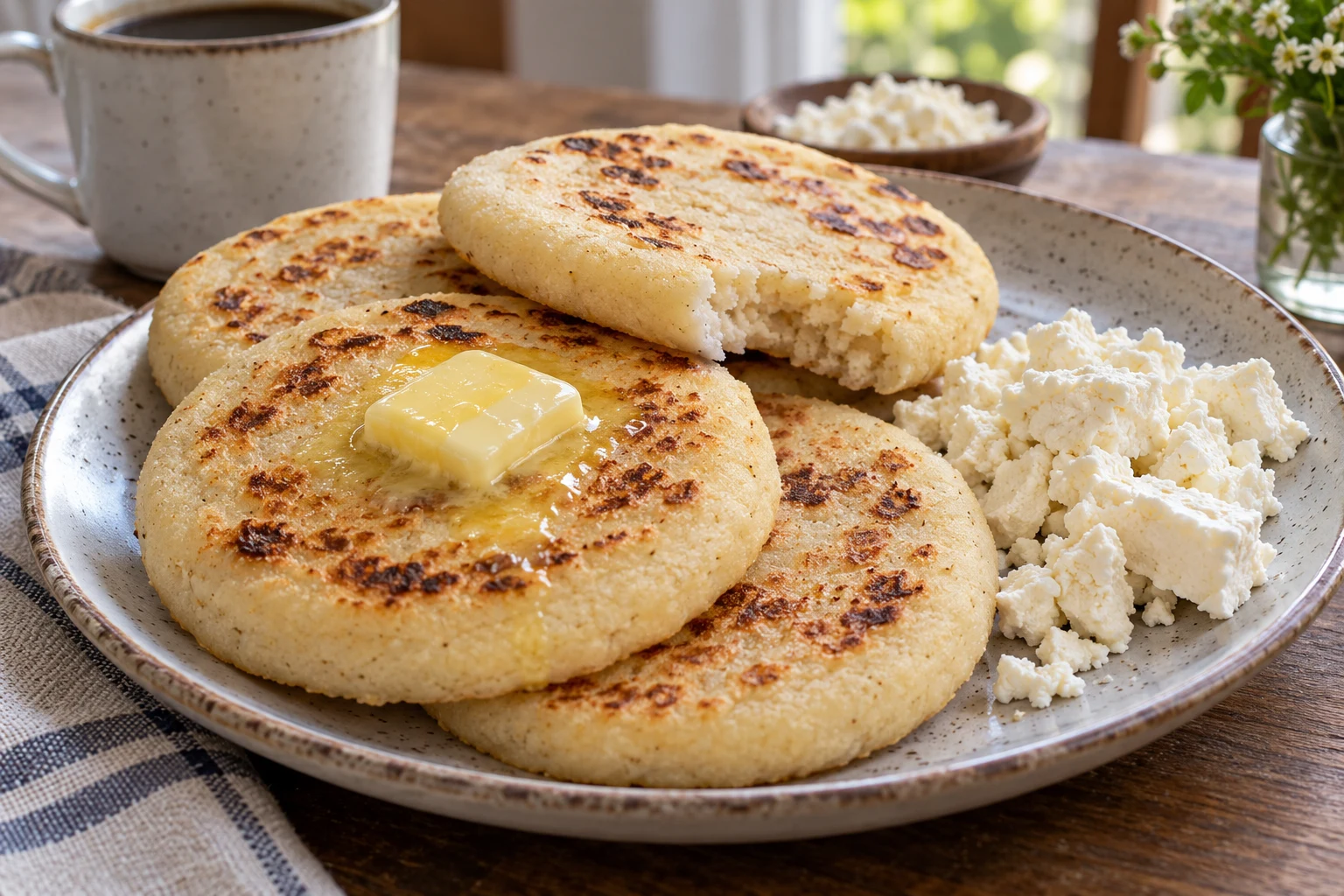
The ingredient tells you which journey to take
An arepa can look deceptively simple: a round corn cake, browned on its cooking surface, ready for butter, cheese or another topping. Yet the work behind that circle depends on how the corn arrives in the kitchen. Dried kernels must become dough through cooking and grinding. Precooked flour begins much closer to the shaping stage. Tender fresh corn belongs to another set of preparations.
Those starting points explain why a recipe is more useful when read from its first ingredient than from its final photograph. Choose the corn and the complete method together. A cake made from a bag of flour need not imitate every step in a grandmother's whole-kernel preparation to have a clear purpose at the table.
Two routes to a plain corn cake
Cook and grind dried corn
Erica Dinho's arepa paisa recipe begins with dried hominy, or maíz peto. She soaks, cooks and cools it before grinding it with butter into dough. The cooking of the kernels is its own substantial stage.
- Check the exact dried corn named by the recipe.
- Plan for cooking, cooling and grinding before shaping.
Hydrate a precooked flour
Juana's manufacturer recipe mixes its corn flour into salted water, kneads and rests the dough, then forms discs. Its product page identifies the flour as precooked white corn flour. This route starts with the prepared flour, not uncooked kernels.
- Match the product description to the method.
- Use that recipe's water ratio rather than borrowing one for kernels.
Whole corn puts the grinder in the story
Dinho places the dried-corn method in a family breakfast memory and also explains that she often uses masarepa for convenience. Her account is useful without turning one household's practice into a rule for every Colombian kitchen.
A separate firsthand lesson on Jennifer's Kitchen follows Angela, a Colombian friend, as she cooks dried corn, drains and cools it, then grinds it to a stiff dough. The equipment is part of that lesson: Angela uses a juicer setup and mentions a hand grinder as another option. Before choosing this route, check whether your chosen recipe and your own equipment actually fit together. Having a bag of kernels is only the beginning.
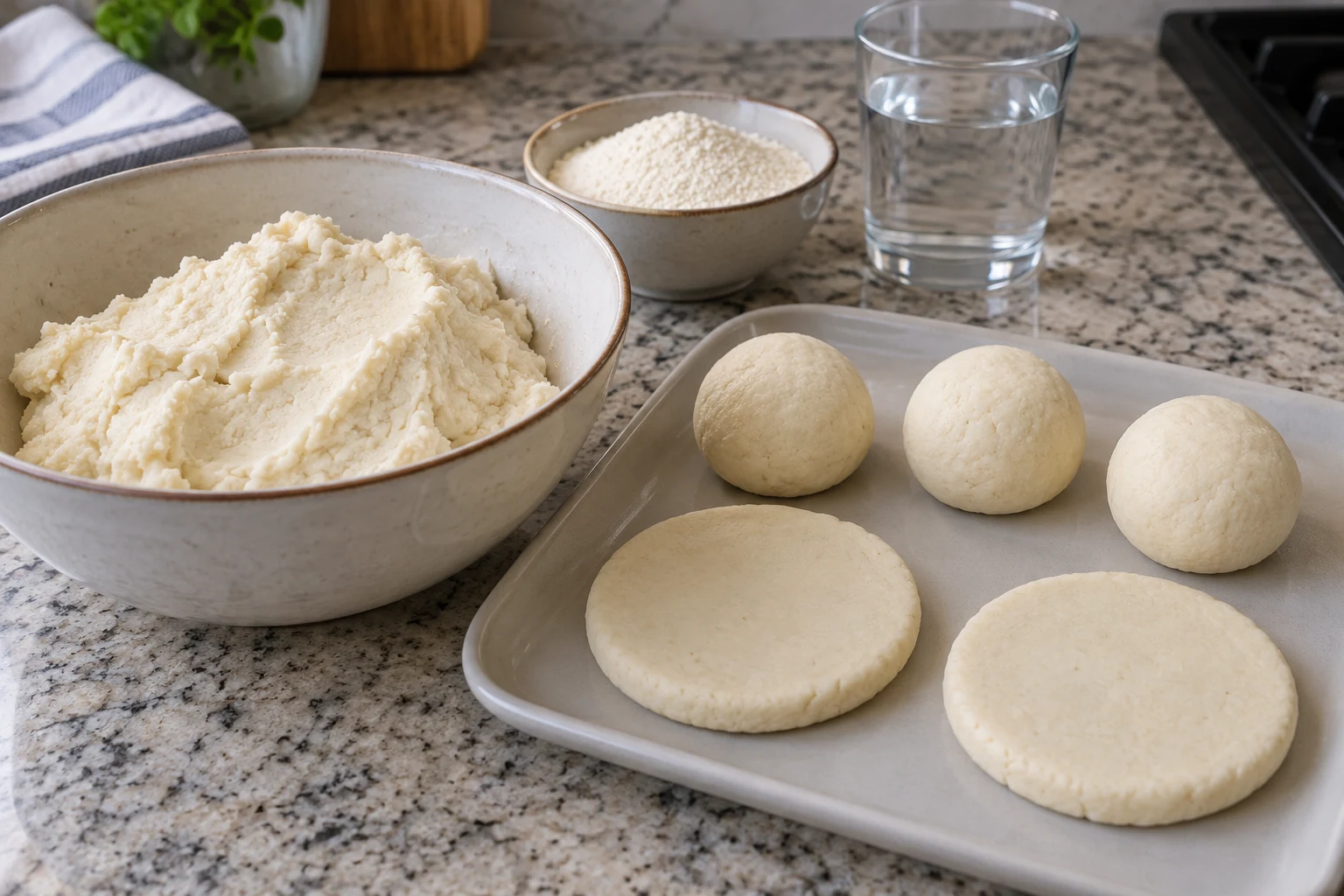
Make the shaping stage manageable
- 01
Finish the dough's own preparation
Follow the cooling and grinding sequence for a kernel recipe, or the mixing and resting sequence for a flour recipe. These are different routes to a shapeable dough, not interchangeable lines in a single formula.
- 02
Portion before flattening
Juana divides its rested dough and shapes balls before flattening them. Preparing a set of portions gives you a chance to compare the discs before cooking begins.
- 03
Choose a shaping aid if useful
In Angela's lesson, beginners flatten dough between two pieces of plastic using a lid and rolling pin. Dinho also describes plastic and a flat lid as an option. The aid is there to simplify handling, not to demand perfect industrial circles.
- 04
Keep thickness consistent
Compare the discs within your batch and with the selected recipe. Follow that method's heat and cooking guidance; the photograph of a browned cake cannot tell you whether a thicker version has finished cooking inside.
Decide whether the cake is a base or a side
Dinho serves her plain arepas with butter and fresh cheese, and suggests making smaller ones to accompany a main meal. Size changes the job on the plate: a small cake can sit beside other food, while a larger one gives a topping more space.
Angela describes eggs, onion and tomato as toppings in the Jennifer's Kitchen account. The same lesson ends with a very different home serving—jam. That range suggests a useful decision for the cook: let the corn cake be a base, then choose a topping that suits the meal. You do not need to split every arepa open or turn every one into a large stuffed sandwich.
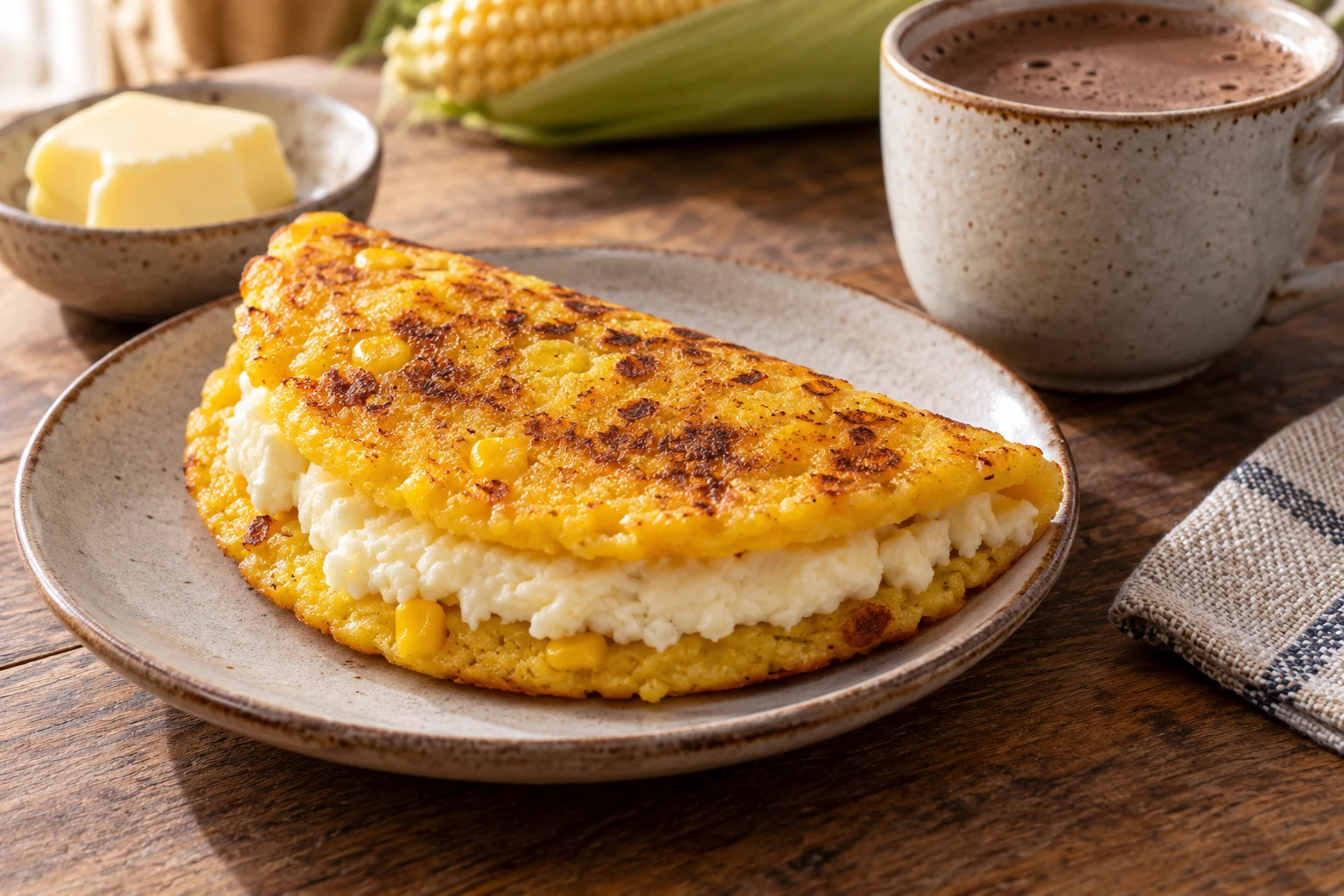
Leave room for fresh-corn versions
Isa Zapata's firsthand Antioquia report describes arepas de chócolo at Estadero Ricas Arepas: tender corn mixed with masarepa, baked in wood-fired ovens and filled with quesito. It is a concrete example of a sweeter, cheese-filled preparation, not a claim that all Colombian arepas share that method.
Start with the form you want to eat, then work back to its corn. A plain cake beside breakfast, a base for a savory topping and a fresh-corn cheese-filled version ask different things of the cook. Recognizing that variety makes it easier to choose one clear recipe and enjoy the result on its own terms.
Research notes
Sources and named methods
These accounts document distinct corn preparations, a manufacturer's flour method and a regional serving example. This guide is not a new tested recipe. Images are generated illustrations.
- Erica Dinho: Arepas Paisa Dried hominy preparation, dough shaping and butter-and-cheese serving, grounded in her family account.
- Jennifer's Kitchen: a lesson with Angela A firsthand cooked-corn grinding and shaping demonstration, with several topping choices.
- Juana: Arepa Colombiana Manufacturer's water-and-flour preparation, rest, portioning and griddle method.
- Juana: product description Identifies the flour in the linked method as precooked white corn flour.
- Isa Zapata: roadside food in Antioquia Firsthand description of a tender-corn, masarepa and quesito variation, published in 2023.
Keep exploring
More stories for your table
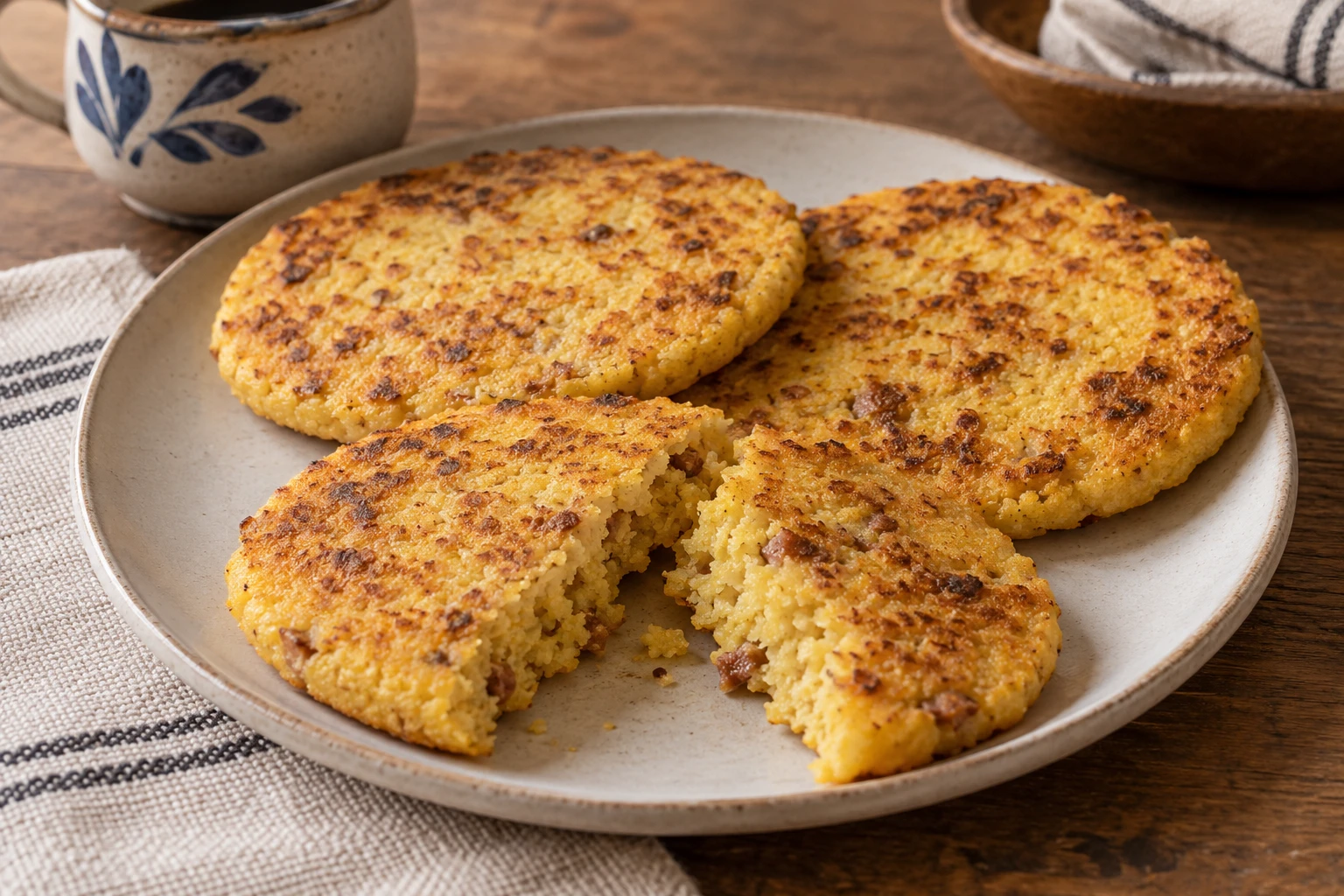
Colombian cuisine Bread
Santander Arepas: The Pork Is in the Dough
Santander’s corn arepas grind chicharrón into the dough. Cassava preparation, moisture and shaping distinguish the working methods behind the browned surface.
Colombian cuisine Tripe soup
Mondongo: Give the Tripe Its Own Clock
Build Colombian mondongo around tender tripe, then time the potatoes and other vegetables separately. Four Colombian versions explain the choices.
Georgian cuisine Cheese bread
Khachapuri: Choose the Shape Before the Dough
A closed Imeretian round and an open Adjarian boat ask different things of their dough. Start with the shape, then choose the cheese and method.