
West Lake Vinegar Fish: Gentle Poaching, Glossy Sauce
西湖醋鱼
Hangzhou’s West Lake vinegar fish pairs tender poached fish with a sweet, sour and savory glaze. Learn how gentle cooking and a pourable sauce work together.
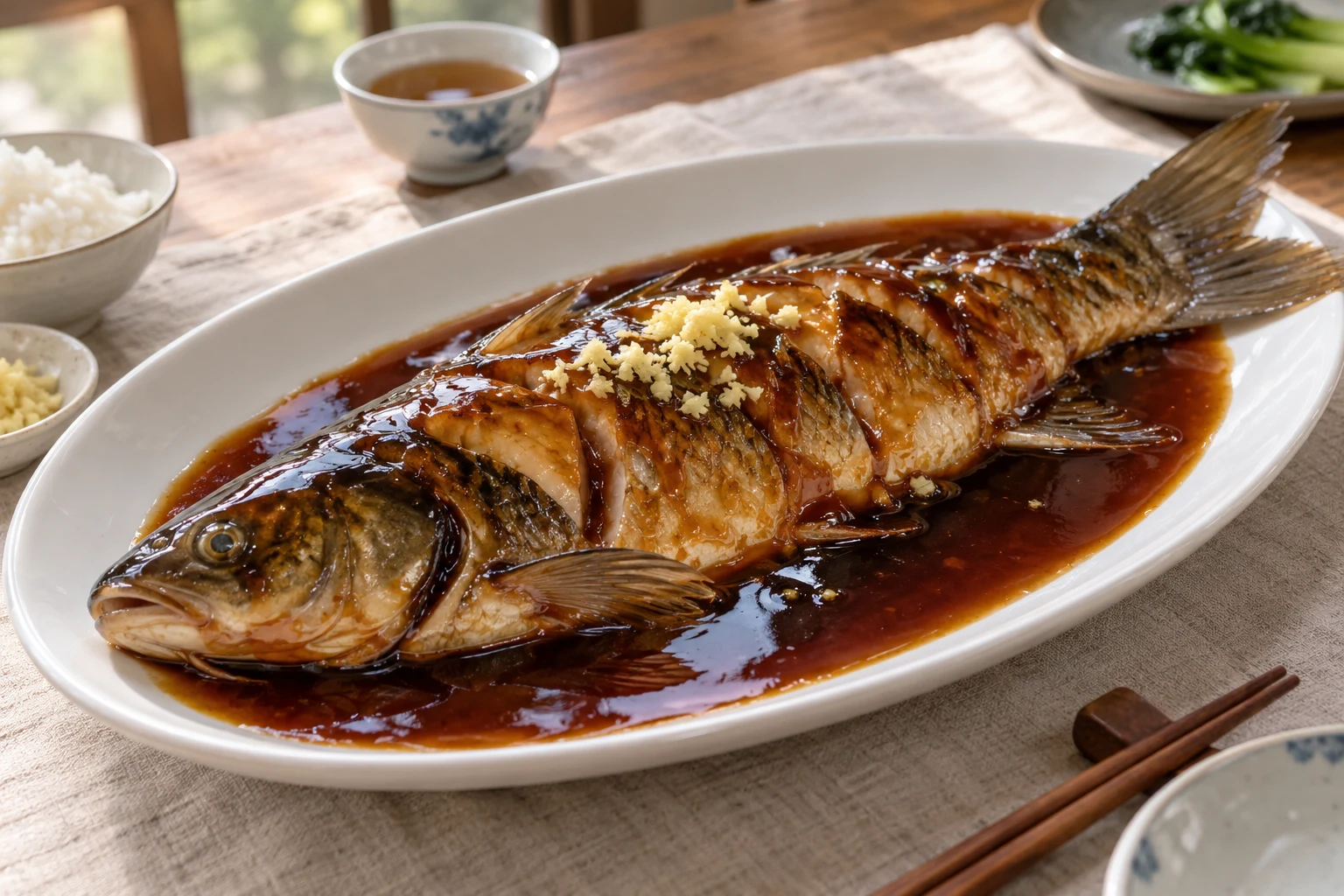
Hangzhou, Zhejiang
Tender fish carries the glaze
West Lake vinegar fish, xihu cu yu, is closely associated with Hangzhou. The preparation described here poaches the fish and finishes it with a sweet, sour and savory sauce. The interest lies in the contrast between soft white flesh and a glossy coating, rather than a thick fried crust.
Grass carp is a familiar choice, though documented home versions use other white fish or a cut instead of a whole fish. Hangzhou Daily’s report on chef Fu Yueliang describes repeated refinement of the sweetness and acidity. That is a useful starting point: the sauce is something to balance, not simply to make as sweet or as sour as possible.
Give the fish room and support
Choose the cooking vessel before choosing an impressive whole fish. A fish that fits flat is easier to cook and lift intact.
- 01
Use gentle water movement
Poaching keeps the flesh tender without adding a brittle coating. A quiet simmer is easier to control than vigorous bubbling, which can damage softened skin and delicate pieces.
- 02
Check the thickest flesh
Piece size changes the cooking time. Use a food thermometer to check for 63°C/145°F in the thickest part, away from bone. Sauce color and a short fixed cooking time cannot confirm doneness.
- 03
Lift, drain and plate
Support a whole fish with broad utensils when removing it. Let excess water drain before plating so it does not thin the sauce on the platter. Keep the fish supported as you transfer it.
Season first, then control the flow
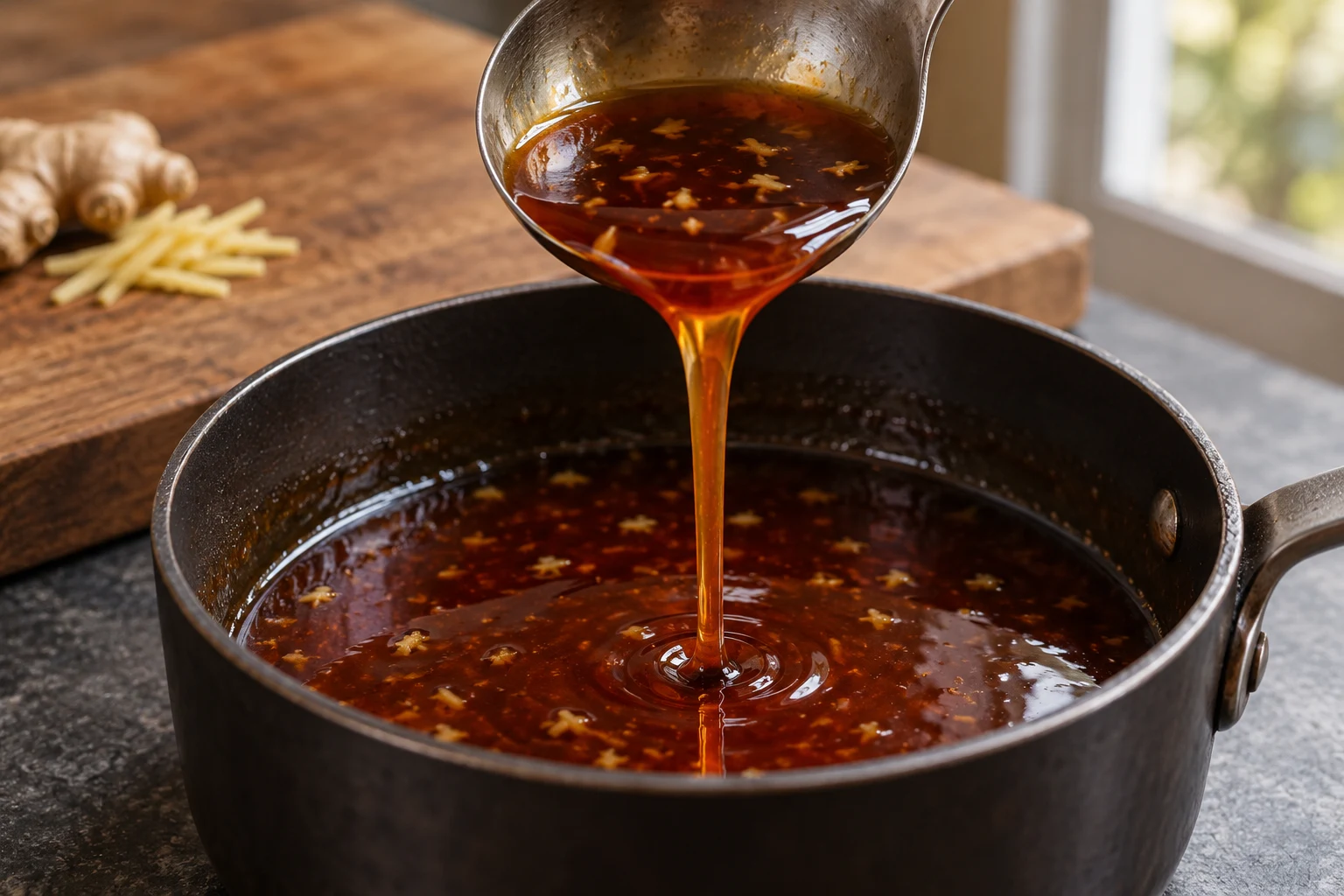
Vinegar provides acidity, sugar softens its sharp edge, and soy sauce adds salt and savory depth. Ginger connects those seasonings to the fish. The published methods use some of the poaching liquid in the sauce, so the coating remains tied to the base rather than becoming an unrelated glaze.
Taste the cooked sauce before making it thicker. More starch changes its texture, not the underlying sweet-sour balance. Mix starch with cool liquid separately, then stir it into the hot sauce gradually. Stop when the sauce coats lightly and still pours; adding every drop of a prepared slurry is not automatically necessary.
Taste Hong Kong’s first-person version uses a portion of grass carp and a ginger-and-wine sauce method. It is a practical documented home variation, rather than proof that every Hangzhou kitchen prepares the dish that way. Follow one full recipe for quantities, then use the flow of the sauce as a finishing cue.
Serve the texture you have protected
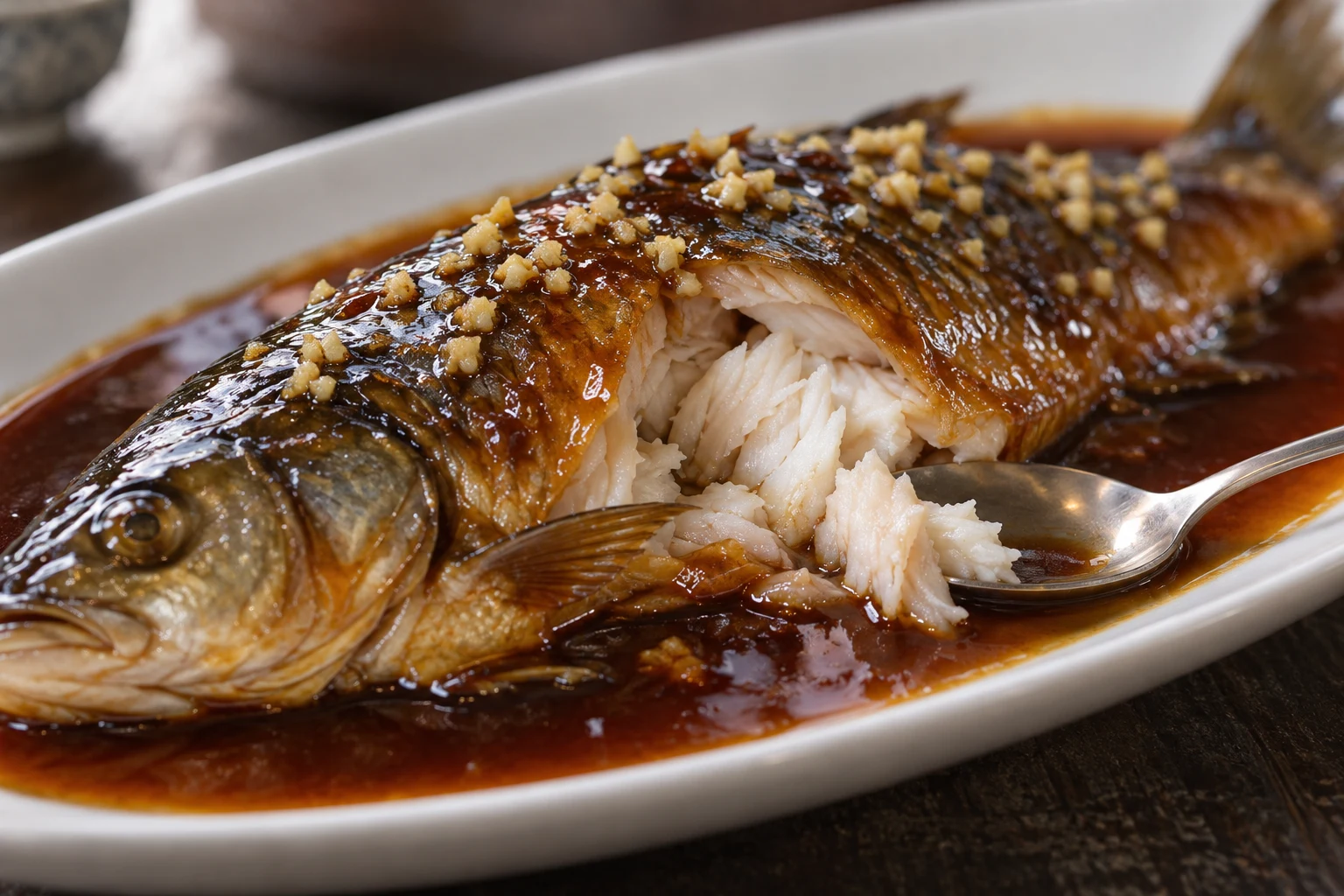
Bring the fish to the table soon after saucing. White rice makes a useful companion because diners can take small bites of fish and sauce without covering their flavor with another strong dressing. A lightly cooked vegetable can complete the meal without requiring more glaze.
For a whole fish, lift flesh carefully from the skeleton and watch for fine bones, including bones concealed by the sauce. A fish-cut version can be easier to portion, but the presence of a cut does not guarantee it is boneless. Fish and soy are relevant allergens, and many soy sauces contain wheat; check the actual ingredients instead of assuming the finished dish is gluten-free.
Research notes
Methods and context
The chef report documents Hangzhou context and sauce refinement. The two recipe sources show a whole-fish method and a personal fish-cut version; FoodSafety.gov supplies the fish temperature guidance.
- Hangzhou Daily: chef Fu Yueliang’s West Lake fish Chen Miaolin’s report on the dish’s Hangzhou setting and adjustment of sweetness and acidity.
- Whats4eats: Xihu Cu Yu A complete whole-fish poaching method with a lightly thickened vinegar, sugar and soy sauce.
- Taste Hong Kong: a home fish-cut version Original first-person preparation using poaching liquid, ginger, wine and a sweet-vinegar sauce.
- FoodSafety.gov: safe minimum temperatures 63°C/145°F guidance for cooking whole fish and fillets.
Keep exploring
More stories for your table
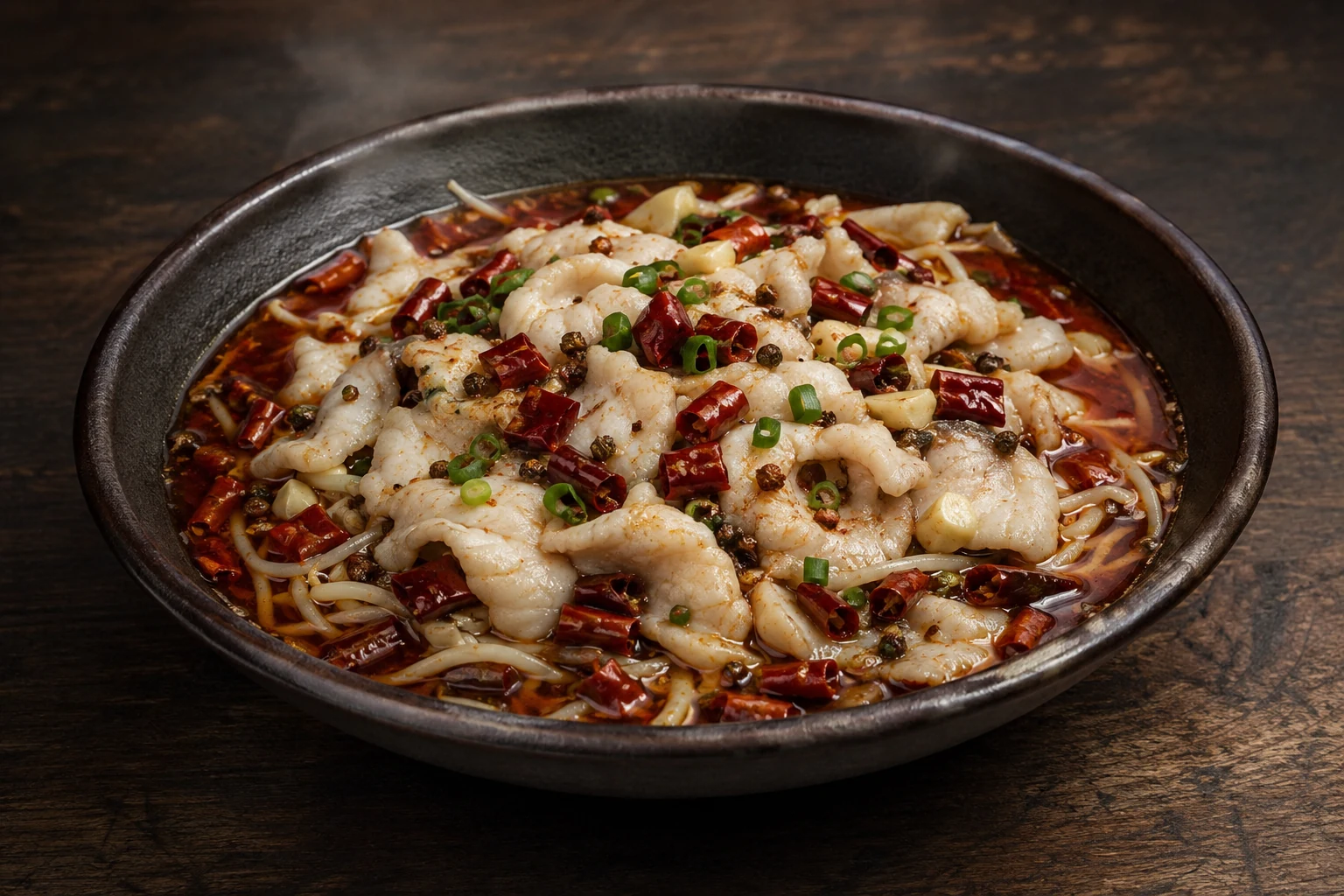
Chinese cuisine Fish dish
Shui Zhu Yu (Sichuan Water-Boiled Fish)
Why Sichuan water-boiled fish stays tender beneath its dramatic mala finish: a close look at the broth, hot-oil bloom, Chongqing context, and a practical home method.
Chinese cuisine Braised pork dishes
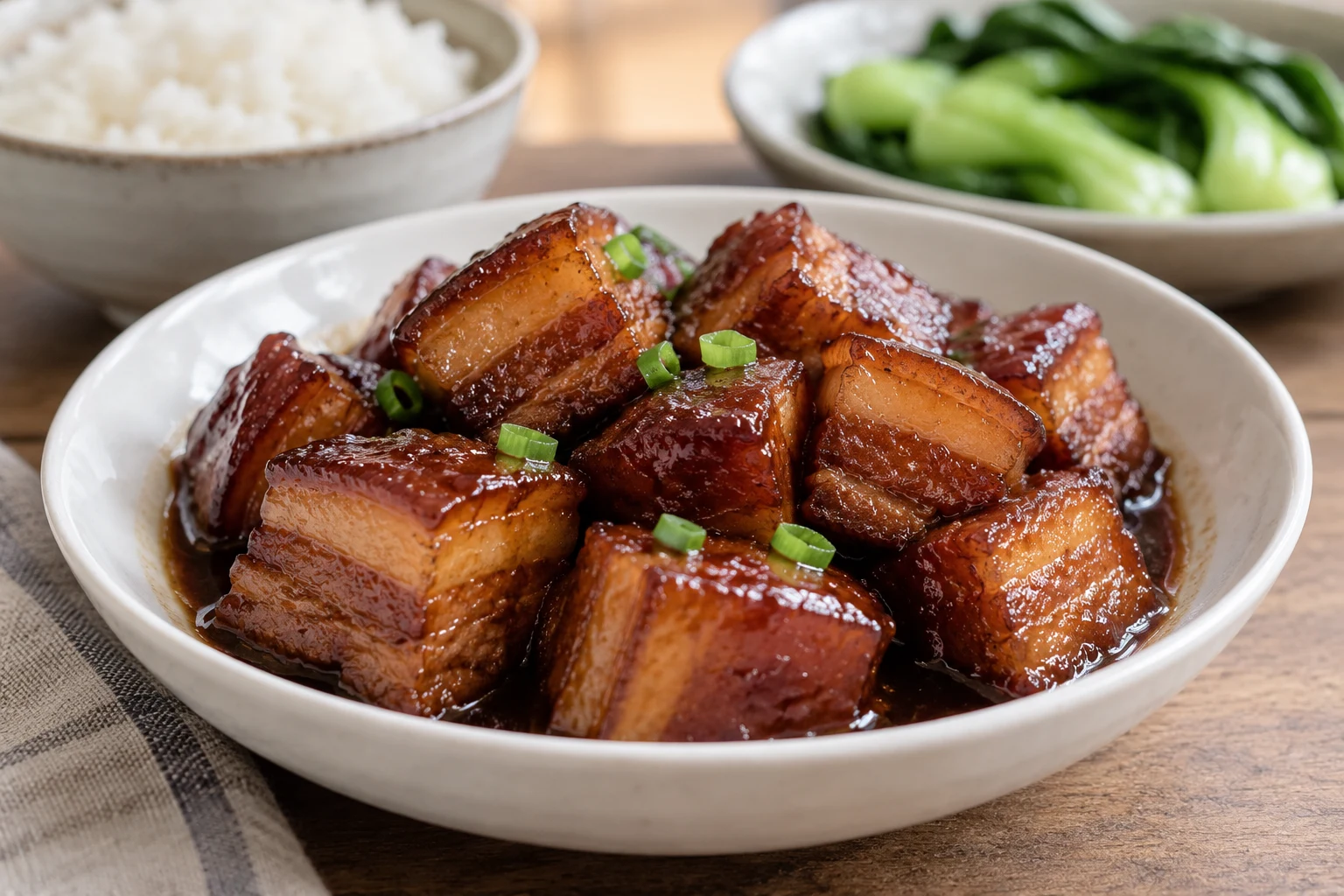
Hong shao rou: tenderness first, gloss at the finish
Understand red-braised pork belly through its layered cut, two sugar methods and the change from braising liquid to a glossy final sauce.
Portuguese cuisine Fish soup
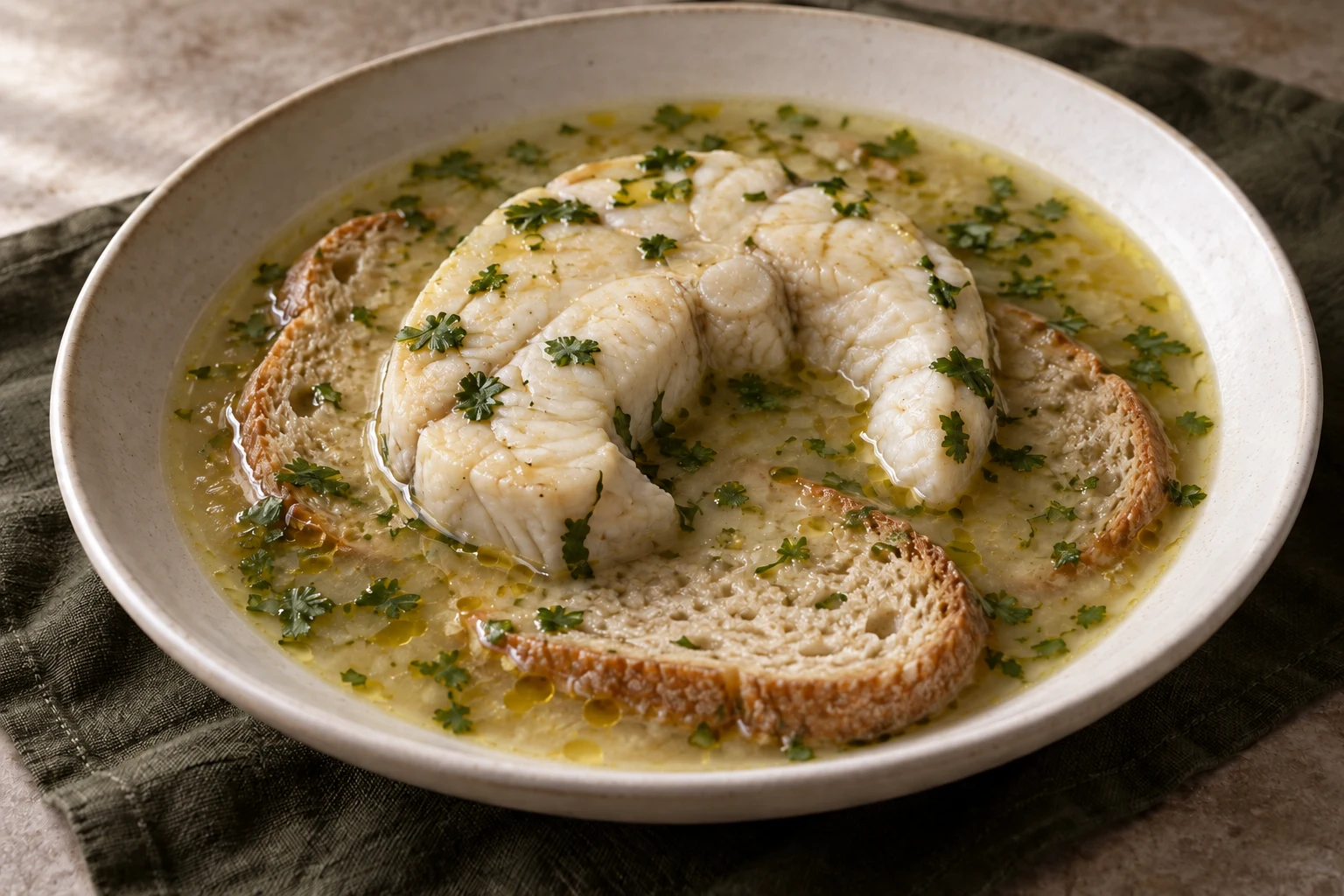
Sopa de Cação: Bread Beneath the Broth
Why Alentejo’s sopa de cação arrives over plain or toasted bread, or beside fried triangles—and how its vinegar-seasoned broth holds the dish together.