
Chinese spring rolls: the crisp shell starts with the filling
春卷
For crisp Chinese spring rolls, look inside first. Compare cooked fillings, moisture control, wrapper choice and sealing methods from four cooks.
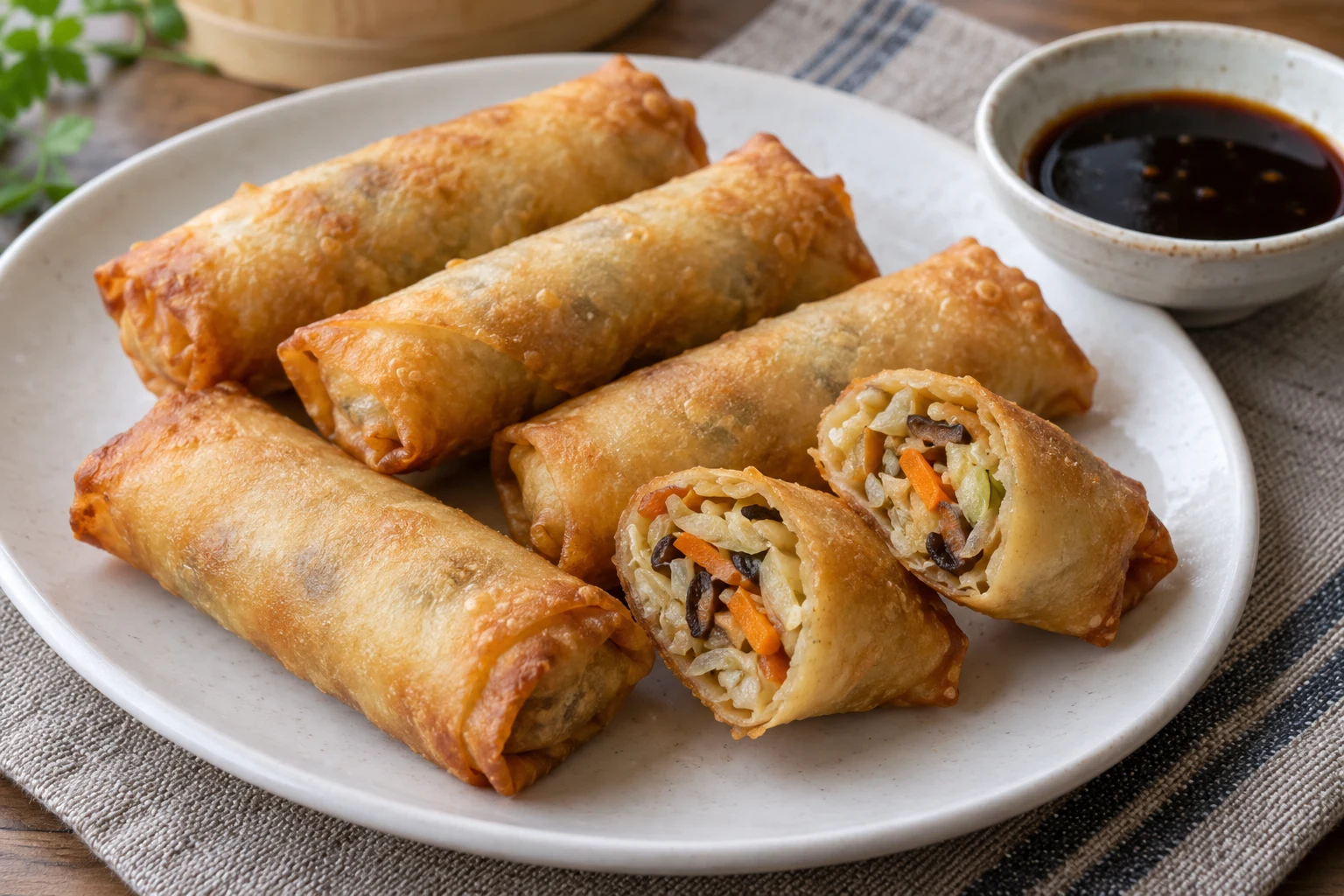
The shell gets the attention, but the filling deserves the first inspection. A spring roll needs to hold its vegetables and any meat inside a thin wrapper before it ever reaches the frying oil. How the filling is cut, cooked and drained shapes the work of closing that parcel.
The Chinese fried rolls discussed here use wheat-based wrappers and cooked fillings. The references include a Cantonese pork-and-vegetable version, a vegetable version with wood ear mushrooms and bean threads, and simpler shredded-vegetable combinations. They share a rolled shape while giving the cook different flavours and preparation steps.
Buy for the method, rather than the English name alone
Maggie Zhu’s Omnivore’s Cookbook recipe is titled “Vegetable Egg Rolls”, but she explains that she means fried chūn juǎn, Chinese spring rolls. Her method calls for thin, square, wheat-based spring-roll wrappers, which may be labelled spring-roll pastry or egg-roll shells. She specifically distinguishes them from Vietnamese rice-paper wrappers.
Read the package and the recipe together. A round rice-paper sheet, a thicker egg-roll wrapper and a thin square pastry sheet are different starting materials even when an English label uses the word “roll”. Check the shape, ingredients and preparation instructions before thawing or wetting anything.
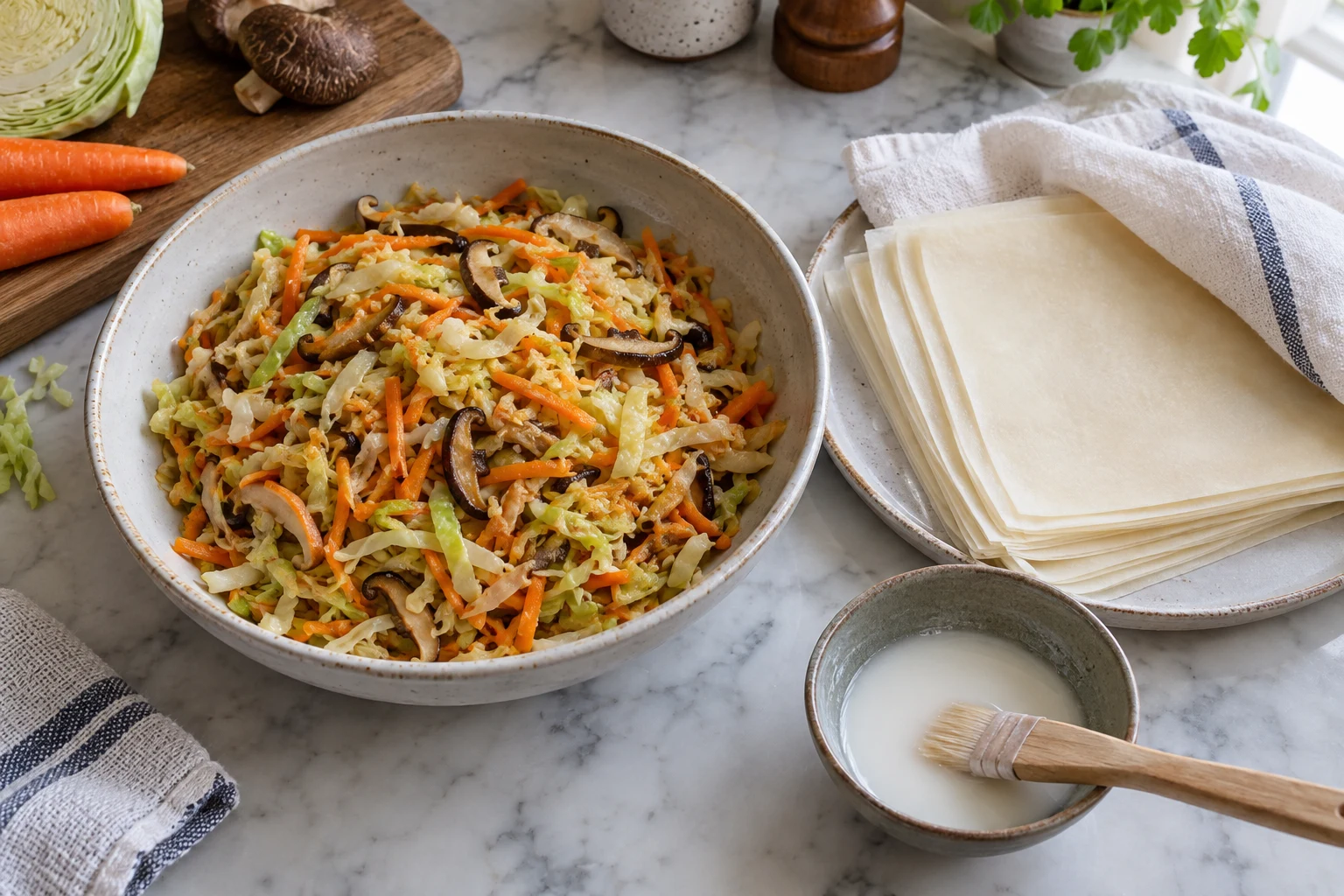
Three filling directions
Pork, mushrooms and bamboo shoots
Bill Leung’s Cantonese version at The Woks of Life combines shredded pork with shiitake mushrooms, carrot, bamboo shoots and napa cabbage. He asks for the vegetables to be cut to similar sizes so they mix evenly.
Vegetables and bean threads
Zhu uses cabbage, carrot, wood ear mushrooms and mung bean vermicelli. The noodles are prepared separately and drained before joining the cooked vegetables, giving this filling a different texture from the pork version.
A simpler vegetable mixture
Chef Mulan’s recipe at GialloZafferano uses cabbage, onion and carrot. Elaine at China Sichuan Food takes a pork, carrot and napa-cabbage direction. Neither filling requires every ingredient from the other versions.
Look for liquid before filling the wrapper
Leung’s method notes the moisture released by napa cabbage. It simmers the mixture, thickens it with a cornstarch slurry and specifies that there should be no standing liquid before the filling is cooled and refrigerated for wrapping. Chef Mulan instead drains cooked vegetables in a colander. These are distinct ways of preparing a manageable filling.
This is the stage to pause and inspect the bowl. If you are following a recipe, use its draining, reduction or thickening instruction before portioning the filling. Adding more mixture to compensate for a wet spoonful makes the parcel harder to close; it does not complete a missed preparation step.
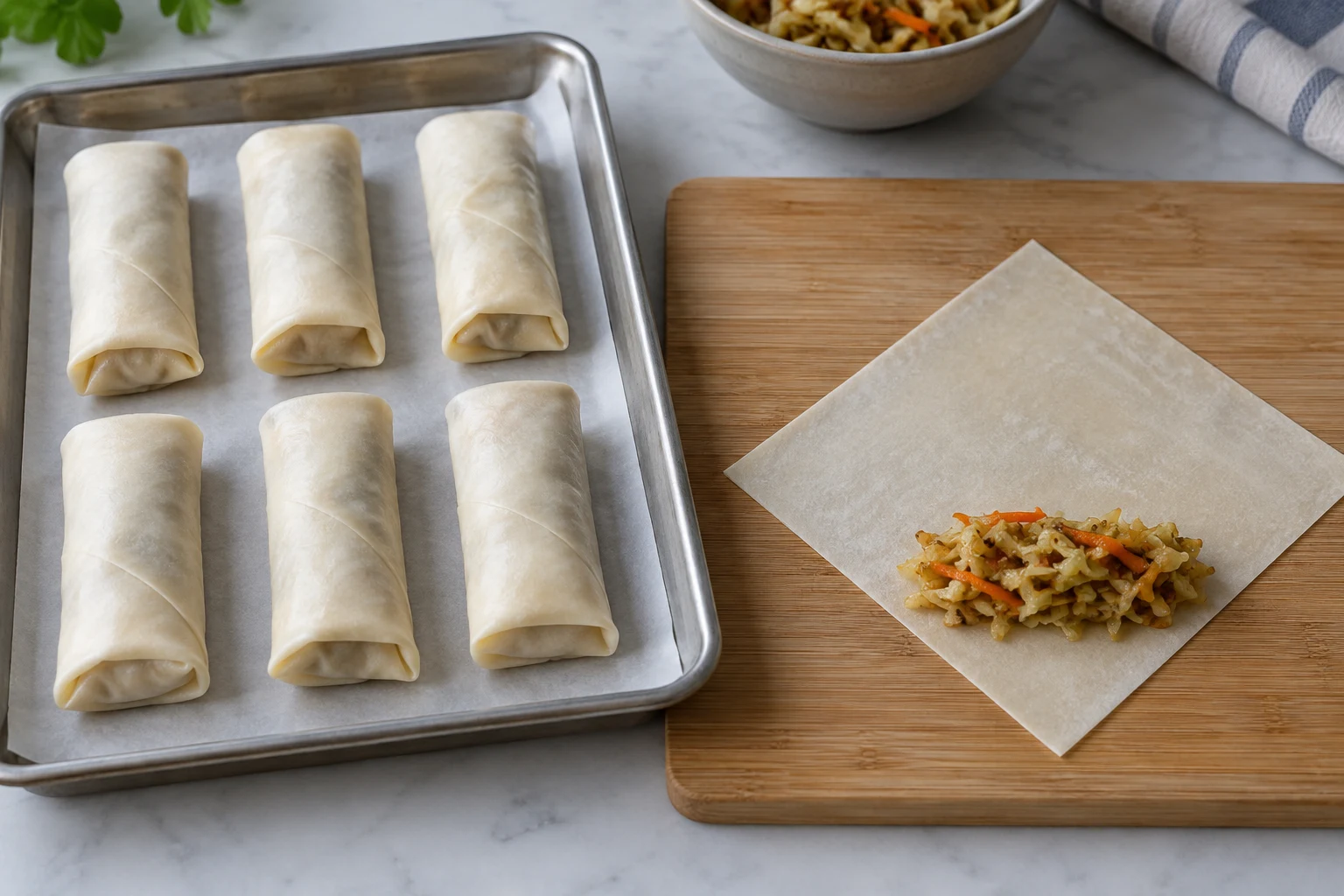
The seal depends on the recipe and the wrapper
The references do not use one identical sealing liquid. Leung uses a cornstarch mixture; Elaine uses flour and water; Chef Mulan brushes with egg white. Zhu seals her wrappers with water. That variety is a reason to keep the chosen wrapping method intact instead of automatically substituting whatever is nearest.
For square wrappers, the methods begin with a corner facing the cook, cover the filling, fold the sides inward and continue rolling toward the opposite corner. Keep the filling compact and leave enough wrapper to make the side folds. Leung stresses a tight parcel without overstuffing, while Chef Mulan warns against pressing hard enough to tear the wrapper.
Decide the frying plan before the rolls are ready
Elaine recommends two frying stages, a first pass followed by a brief hotter finish for the shell. The other linked recipes describe a single frying stage. This is a difference in method, not an extra step to append automatically to every recipe.
All four use small batches. Follow the selected recipe’s oil temperature and sequence, and set out a place to drain the cooked rolls before heating the oil. A recipe written for deep frying also provides a different starting point from an oven or air-fryer method; use a method designed for the equipment you plan to use.
Keep the sauce beside the first crisp bite
Chef Mulan suggests a spicy or sweet-and-sour sauce, while Leung offers a tangy Worcestershire-and-soy mixture. A separate dipping bowl lets each diner decide how much sauce to add. Taste one bite before dipping if you want to notice the shell and filling together first.
When ordering spring rolls, ask what fills them and whether they use a thin wheat wrapper. The answer helps distinguish a vegetable parcel from one with pork, mushrooms or noodles, and gives you a clearer idea of the crisp texture you are expecting.
Research notes
Sources for wrappers, fillings and methods
Four independently published cooks’ recipes support the specific preparation choices compared here.
- The Woks of Life — Bill Leung’s Cantonese spring rolls Pork-and-vegetable filling, moisture management, cooled filling, compact wrapping and starch seal.
- Omnivore’s Cookbook — Maggie Zhu’s vegetable rolls Wheat-wrapper naming, wood ear mushrooms, bean threads and water sealing.
- China Sichuan Food — Elaine’s Chinese spring rolls Pork, carrot and napa cabbage, flour seal and two-stage frying.
- GialloZafferano — Chef Mulan’s Chinese spring rolls Vegetable filling drained in a colander, egg-white seal and sauce choices.
Keep exploring
More stories for your table
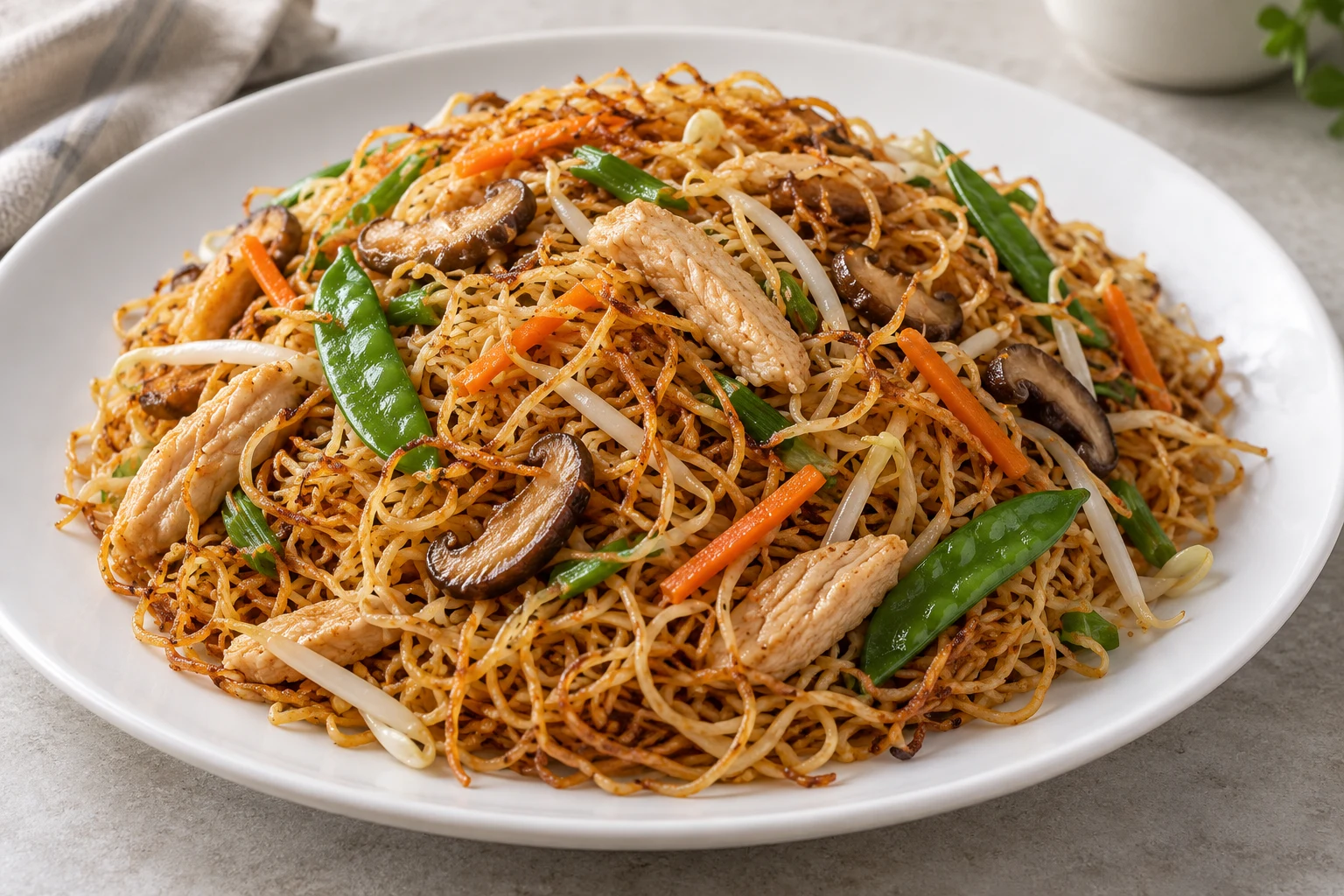
Chinese cuisine Fried noodle preparations
Chow mein: choose the noodle texture before the topping
Compare chow mein through crispness, sauce and noodle preparation, with specific examples from Chinese cooks and practical questions for a menu or recipe.
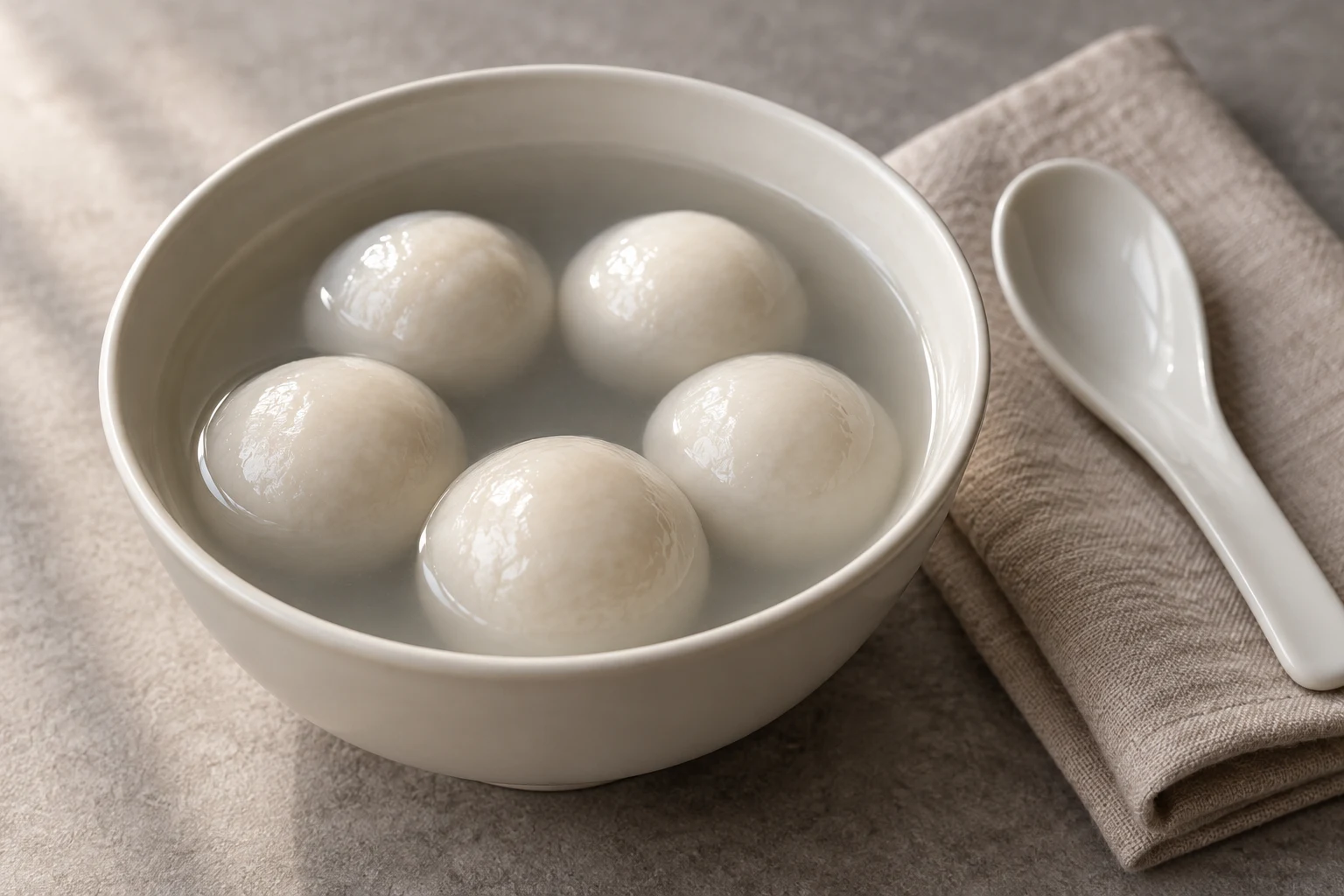
Chinese cuisine Sweet rice dumplings
Tangyuan: Keep the Dough Soft and the Filling Cool
Wrap black sesame tangyuan with pliable rice dough and chilled filling. A complete 20-ball home adaptation explains portioning, sealing and gentle simmering.
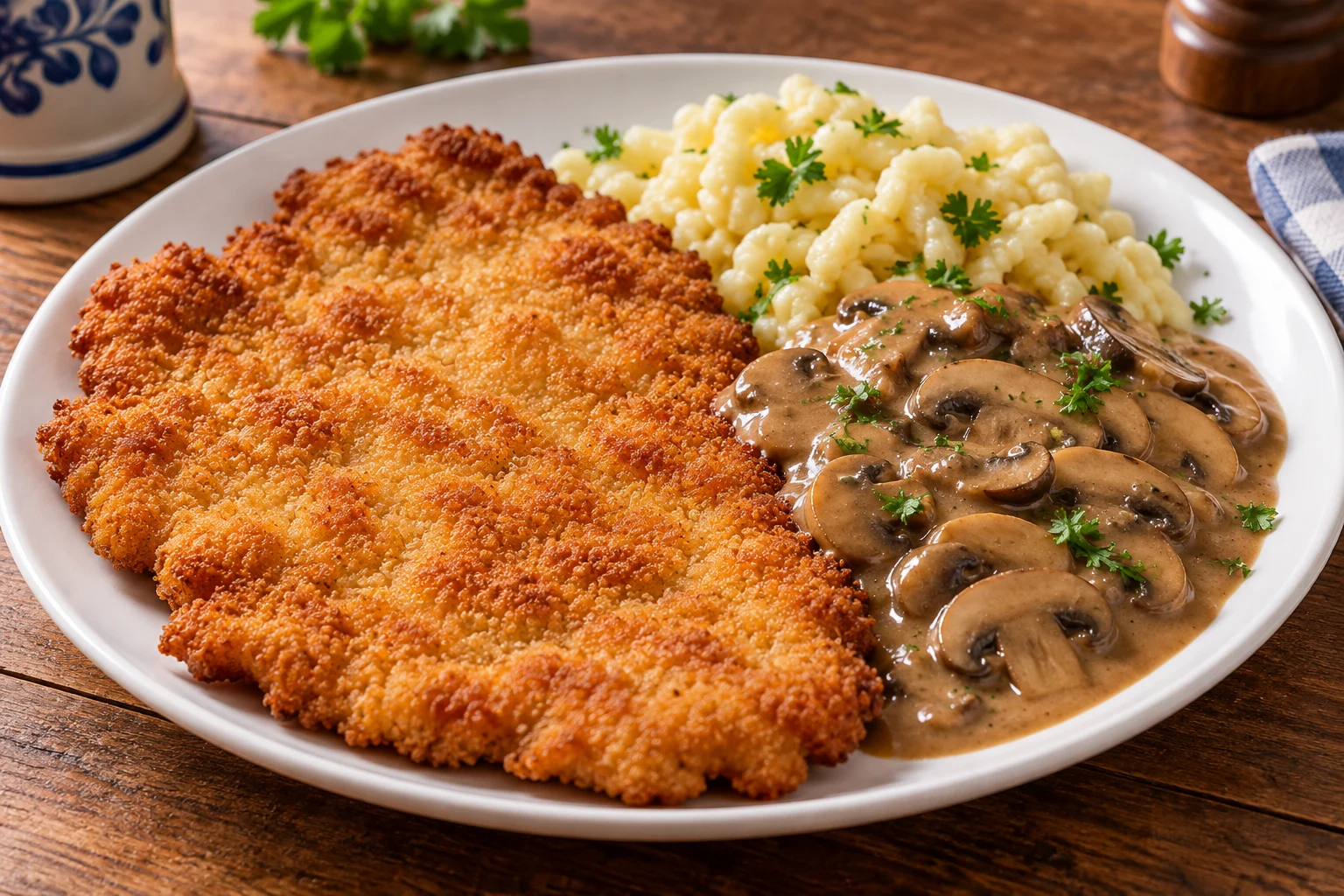
German cuisine Cutlets and mushroom sauces
Jägerschnitzel: choose the cutlet, then plan the sauce
Breaded or unbreaded, mushroom-sauce Jägerschnitzel rewards a clear plan: brown the mushrooms, prepare the sauce, and decide how much crust should stay crisp.