
Hong shao rou: tenderness first, gloss at the finish
红烧肉
Understand red-braised pork belly through its layered cut, two sugar methods and the change from braising liquid to a glossy final sauce.
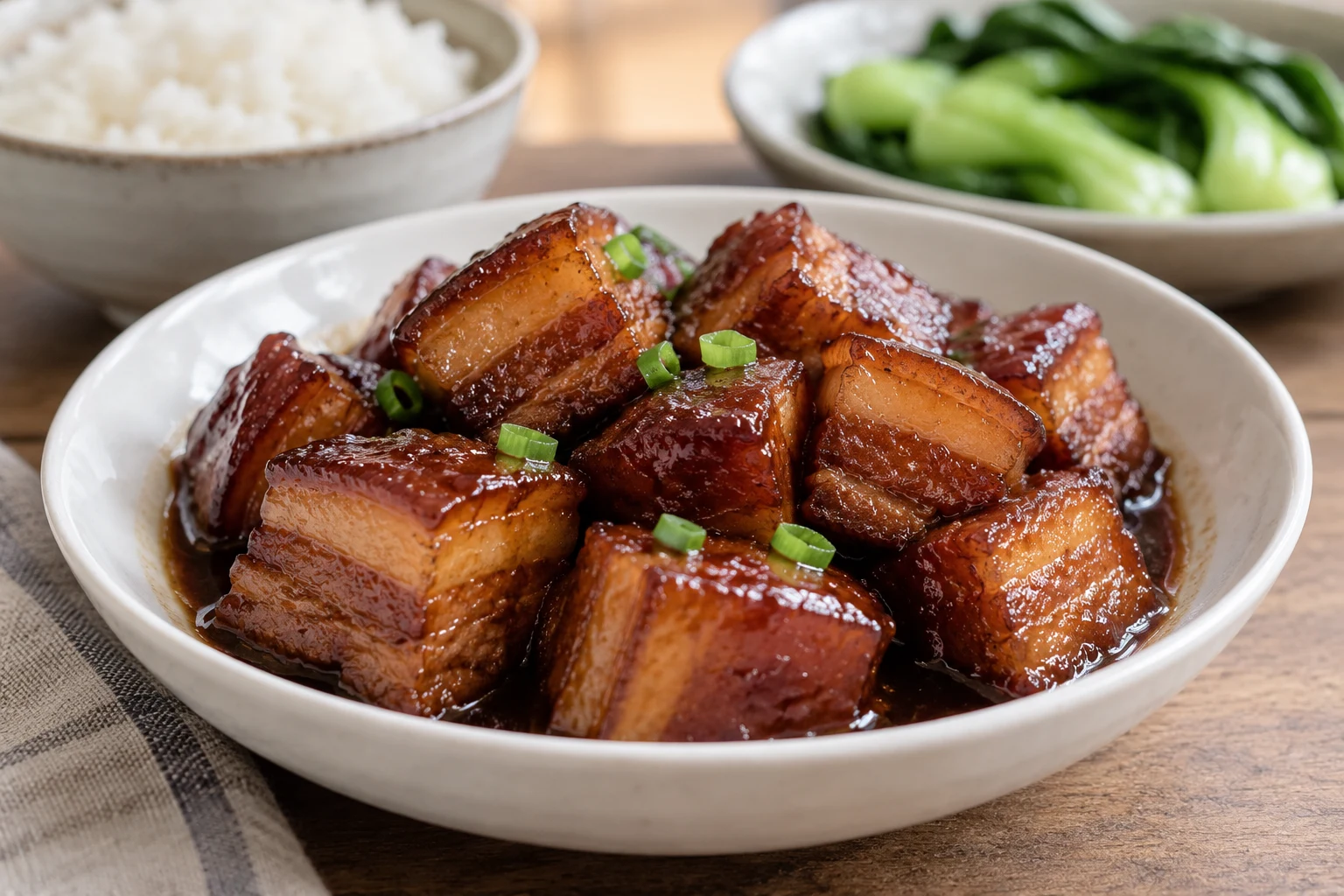
The shine of hong shao rou is easy to see. Its texture takes a bite to judge. A cube can be deeply coloured yet still resist the fork; another can be tender but sit in a liquid that has not become a coating. Red-braised pork belly asks the cook to solve those two problems in sequence.
The four recipes compared here share pork belly and a sweet-savoury braise, but disagree on how to begin the colour. That is useful information: a caramel step is one route to the dish, rather than a stage you can assume every author requires.
Where does the sugar enter?
Read the whole sequence before choosing a method.
Colour before the braise
Elaine’s China Sichuan Food version melts sugar to amber, coats the pork, then adds liquid and light soy sauce. She deliberately omits dark soy sauce in this recipe. Maggie Zhu also uses a sugar-browning stage, but includes both light and dark soy in the later braise.
Sugar at the finish
Wei Guo’s Red House Spice version skips frying and caramelizing. After the meat becomes tender in wine, water and seasonings, sugar enters during the uncovered reduction. Dark soy sauce is part of her approach to the colour.
Keep the belly’s layers together
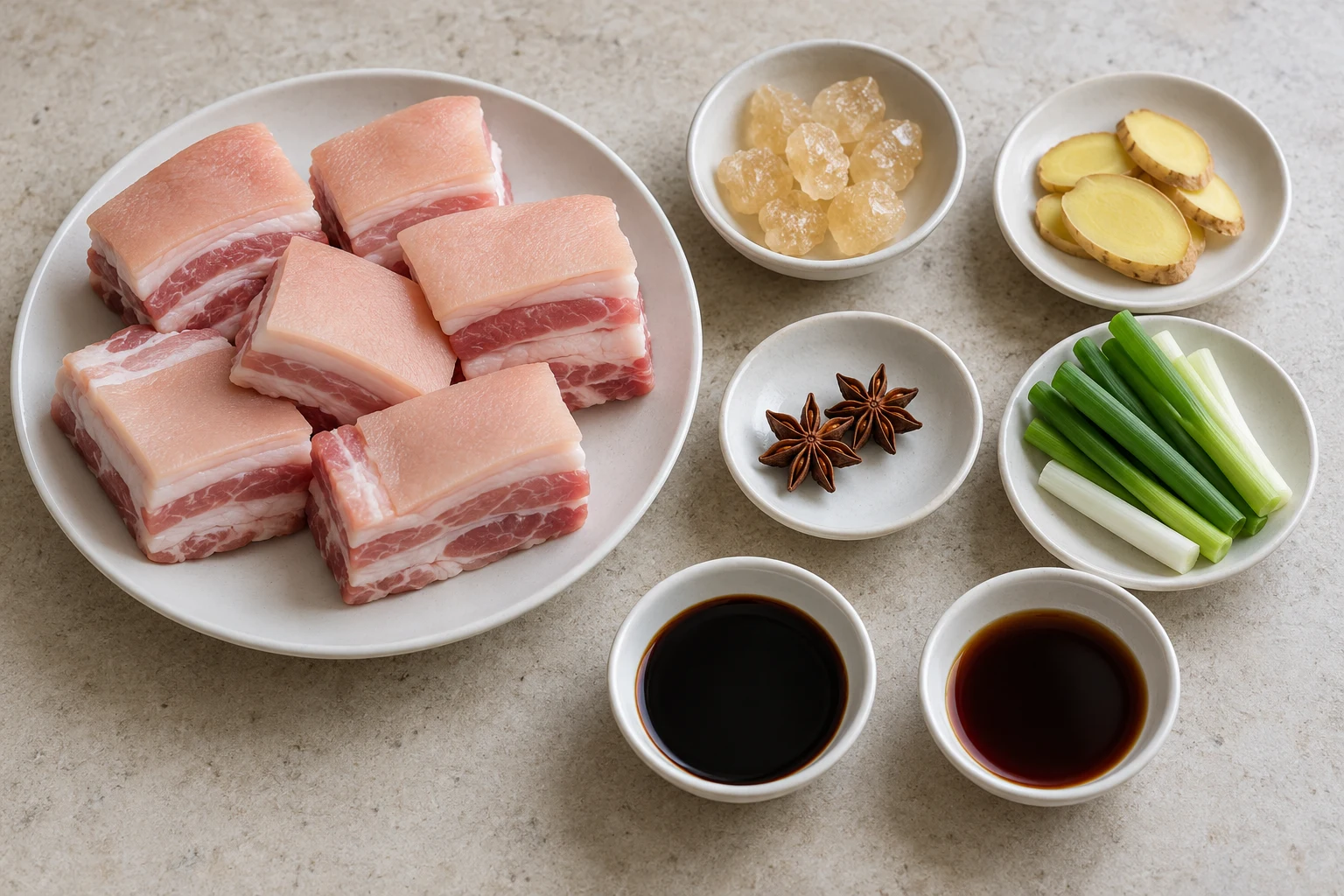
Judy at The Woks of Life looks for a skin-on belly with substantial bands of lean meat. She explains that braised skin becomes gelatinous and contributes to the sauce’s sticky character, while allowing skinless belly if that is what is available. The target is soft braised skin, rather than the brittle top of roast pork.
Maggie Zhu likewise discusses the cut before the pot. Her advice is to leave the lean meat attached to its fat and cut pieces that can hold their shape through the braise. A neat cube is not the only possible shape: a thick rectangle can preserve the layers of a particular strip better.
Preparation depends on the next stage
All four methods begin with blanching. Zhu then emphasizes draining and drying the pork before it goes into hot sugar, because surface water can cause splattering. That detail belongs with her particular next step; Guo’s version proceeds directly to the liquid braise instead.
When reading a recipe, connect each preparation instruction to what follows it. A draining step is easy to skim past when concentrating on the final glossy photograph, but it can matter just as much as choosing the right bottle of soy sauce.
Three checkpoints while reading a braise
These are ways to interpret a complete recipe, rather than a combined recipe of their own.
- 01
Start with the specified pieces
Keep the recipe’s cut and size in mind. A time written for one set of pieces is a poor guide after changing their thickness or using another cut.
- 02
Check tenderness before finishing
The Woks of Life reaches fork-tender pork before reducing excess liquid. Judge the meat separately from the colour already on its surface.
- 03
Watch the changing liquid
Guo warns against boiling the final sauce too far. As it becomes a small coating, the pot needs different attention from the earlier, liquid-rich simmer.
The pot changes the water question
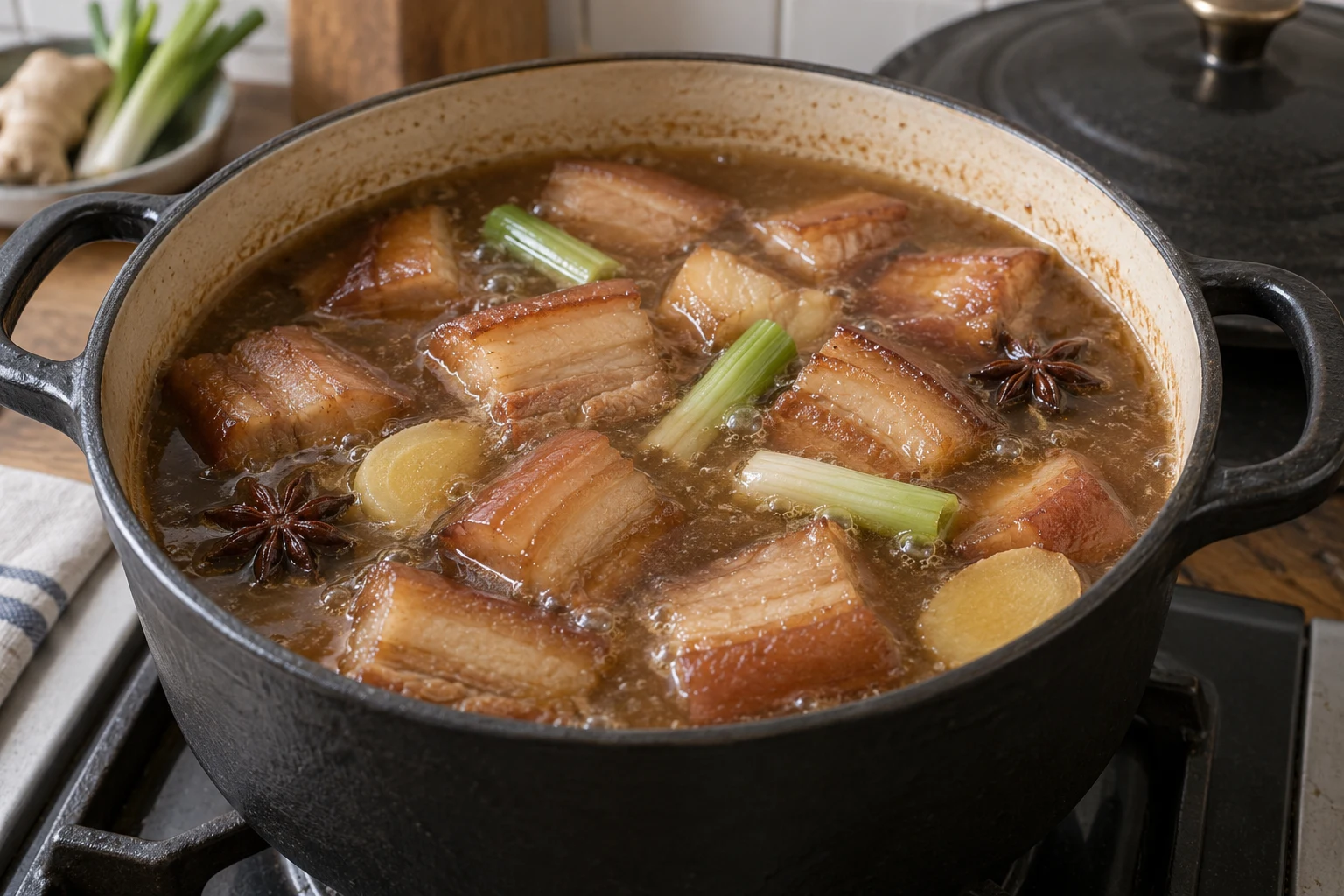
Guo recommends a compact pot so that covering the meat does not require excessive water. Judy’s recipe, meanwhile, specifies different starting water amounts for a wok and a thick-bottomed pot. Both details point to the same practical question: how much liquid surrounds this quantity of pork in this vessel?
Adding more water can keep meat submerged, but also gives the finishing stage more liquid to remove. Look at the cookware notes before treating a measured water quantity as independent of the pan. A recipe written around its own vessel often explains adjustments more clearly than a generic promise of a fixed cooking time.
The aroma is another choice
Judy’s Shanghai-style recipe uses a short list without the ginger, scallion and star anise found in Zhu’s version. Elaine’s recipe includes ginger and scallions and offers Sichuan peppercorns in the blanching liquid. These differences do not require a contest over one correct spice list. They tell you which recipe is closer to the flavour you want.
A diner can ask the same focused question: is this version mainly sweet and soy-rich, or does it carry a prominent spice aroma? “Red-braised” gives you a cooking family, not every detail of the seasoning.
Research notes
Four cooks, four methods
Each source contributes a distinct practical detail: cut and cookware, caramel preparation, a non-frying route, or sugar colour without dark soy.
- Judy, The Woks of Life — Shanghai-Style Braised Pork Belly Skin-on cut, short ingredient list, vessel-dependent water and tenderness before reduction.
- Maggie Zhu, Omnivore’s Cookbook — Hong Shao Rou Attached meat and fat layers, blanching preparation and caramel stage.
- Wei Guo, Red House Spice — Braised Pork Belly No frying, sugar at reduction, compact pot and serving choices.
- Elaine, China Sichuan Food — Red Braised Pork Belly Amber sugar provides colour without dark soy in this particular version; optional blanching aromatics.
Keep exploring
More stories for your table
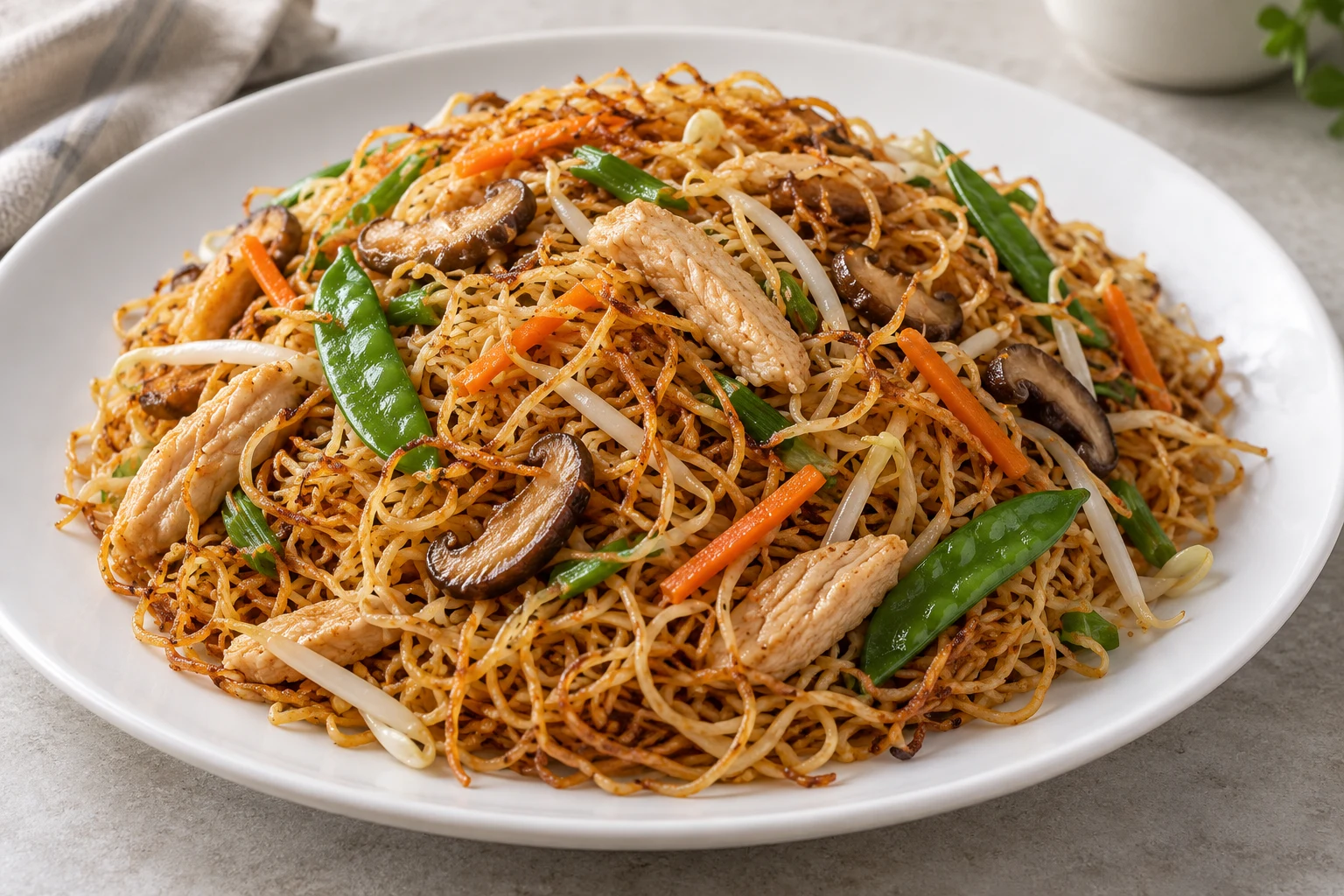
Chinese cuisine Fried noodle preparations
Chow mein: choose the noodle texture before the topping
Compare chow mein through crispness, sauce and noodle preparation, with specific examples from Chinese cooks and practical questions for a menu or recipe.
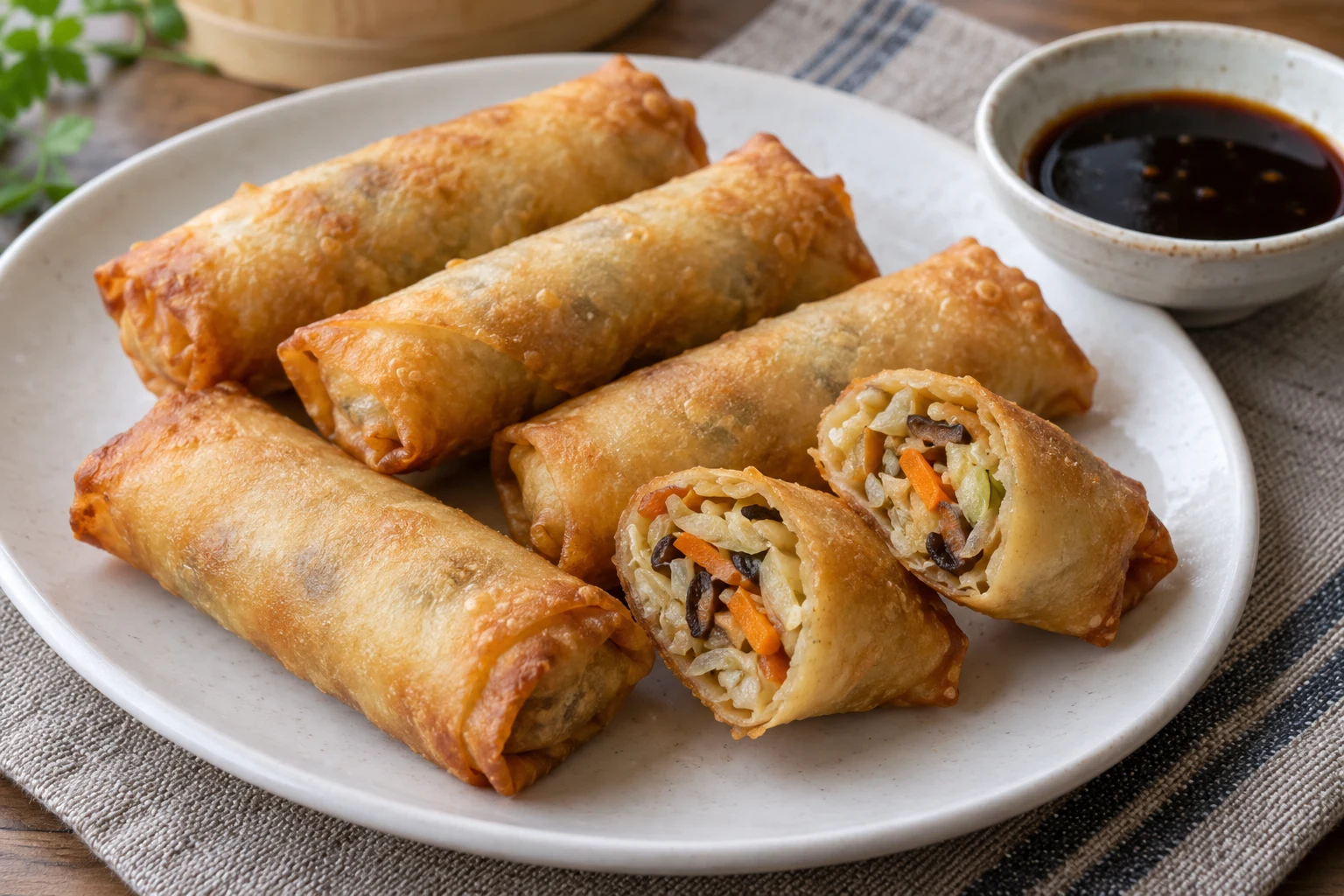
Chinese cuisine Fried rolls
Chinese spring rolls: the crisp shell starts with the filling
For crisp Chinese spring rolls, look inside first. Compare cooked fillings, moisture control, wrapper choice and sealing methods from four cooks.

Thai cuisine Pork braise
Moo Hong: Tender Pork Before a Rich Sauce
Phuket’s soy-braised pork rewards a patient simmer. Learn how to manage the liquid, understand its spice variations and cook a pepper-focused home adaptation.