
Tangyuan: Keep the Dough Soft and the Filling Cool
芝麻汤圆
A tender rice wrapper has to close around a filling that will soften in the pot. For black sesame tangyuan, the useful contrast comes before cooking: pliable dough outside, chilled paste within.
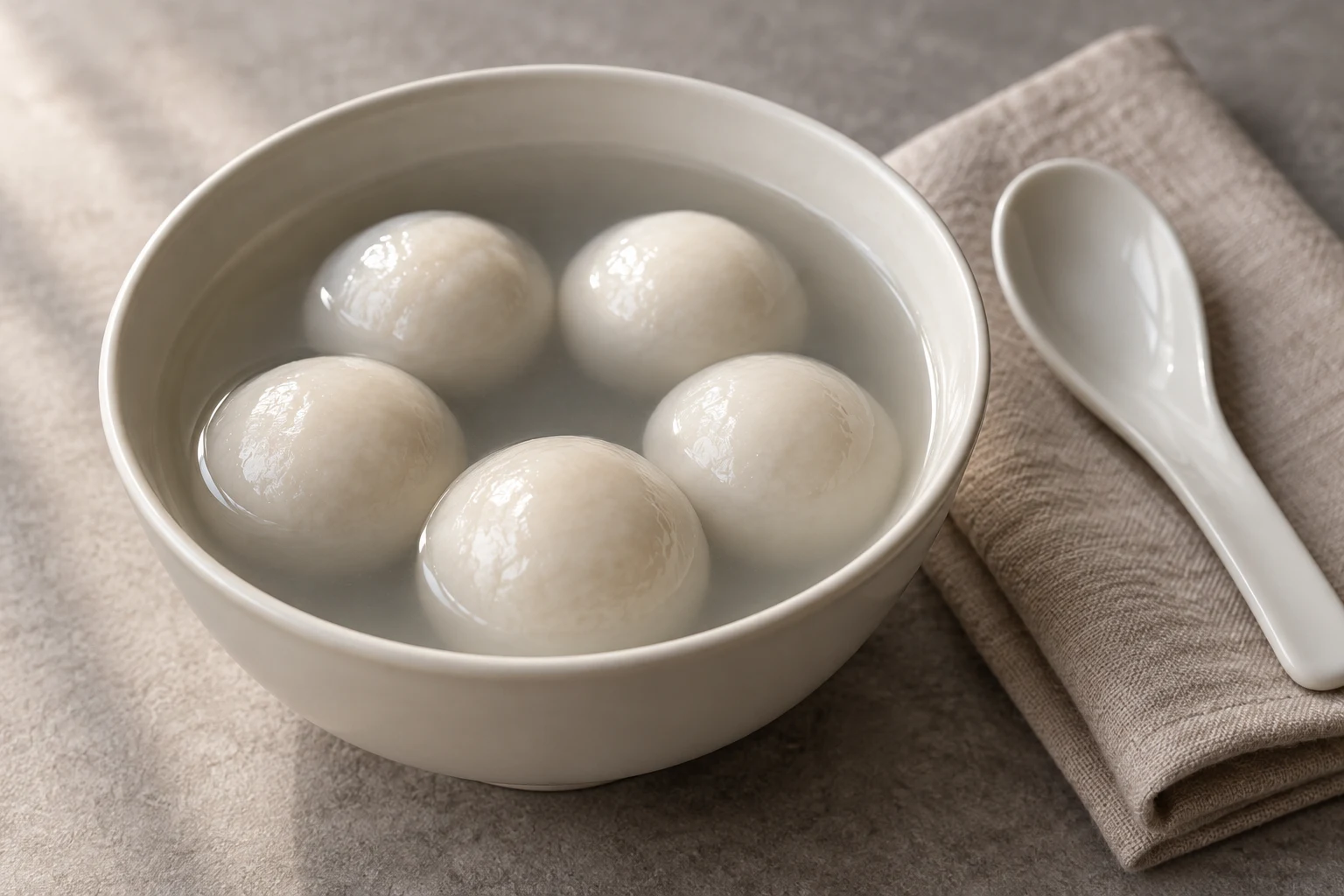
The seam is the real test
How do you seal a black sesame filling inside a wrapper that wants to crack? Start with glutinous rice flour, also sold as sweet rice flour. Ordinary rice flour will not give the same dough. Then pay attention to both parts: dry dough breaks as it closes, while soft filling smears into the seam.
Black sesame and pork fat are a classic pairing in Ningbo’s tangyuan, as local reporting documents. Butter is the home adaptation used here, also offered by Chinese recipe writers and the Museum of Chinese in America. The goal is a filling you can portion while cool, then soften inside the cooked shell.
Three decisions before the pot
- 01
Dough that bends
The museum’s method cooks a small portion of the rice dough and kneads it back into the rest. Water adjustments still matter: aim for a soft dough that closes without splitting, then keep it covered.
- 02
Filling that holds
Chill the sesame paste until it can be rolled. A filling ball that stays together is easier to wrap than a sticky spoonful; return it to the fridge if it softens while you work.
- 03
A seam that disappears
Bring the wrapper together without trapping sesame in the join. Smooth small surface cracks with a little water. A visibly open seam needs repair before cooking, regardless of how round the ball looks.
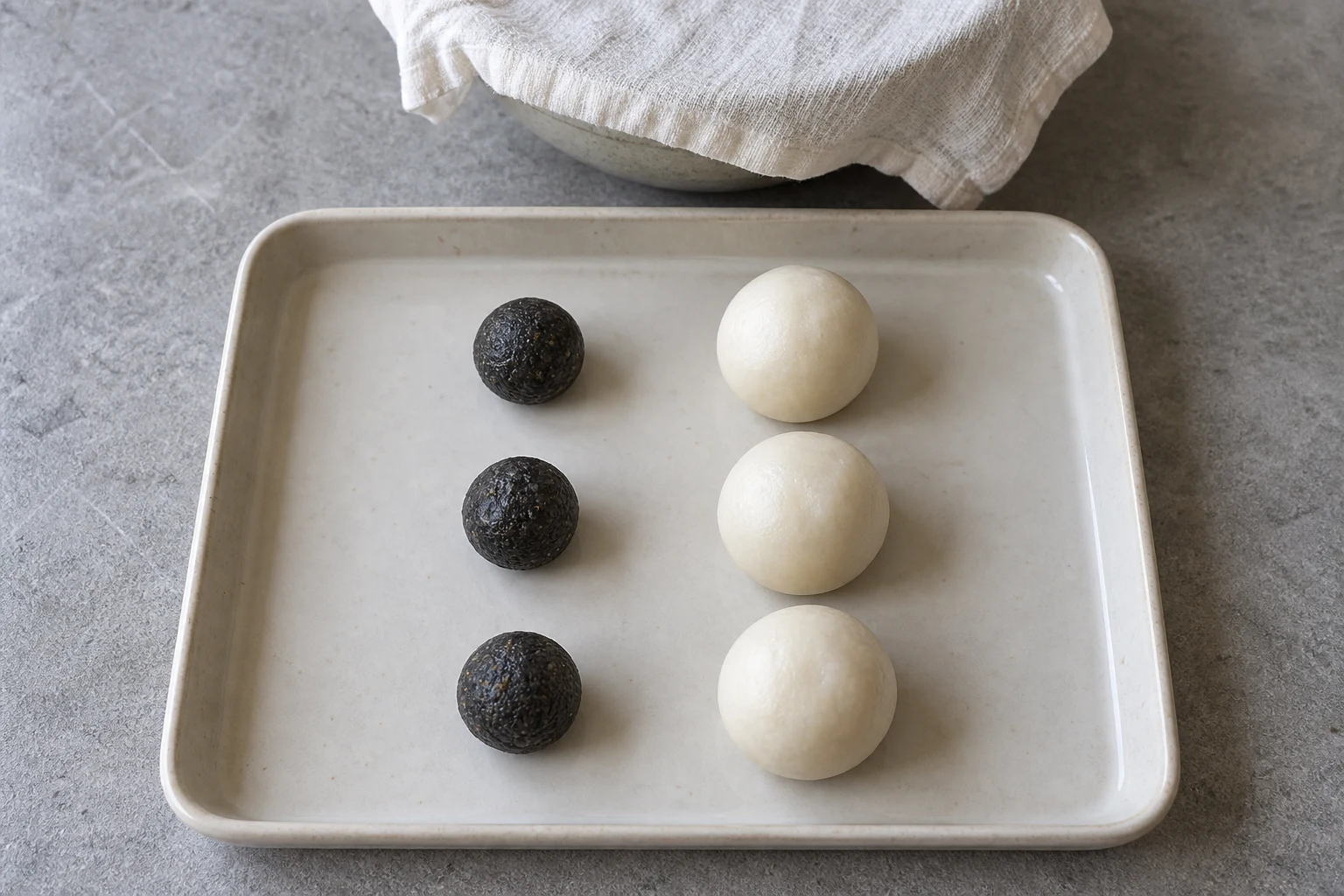
A matched batch
Black sesame tangyuan
Makes 20 balls, or 4 servings of 5. This home adaptation draws on the Museum of Chinese in America and Judy Leung’s methods, with cooking cues from Wei Guo. It uses butter, and scales filling and dough to finish together. Allow about 1 hour 20 minutes, including chilling; handling speed and flour absorption vary.
Ingredients
Sesame filling
- 30 g toasted black sesame seeds, cooled
- 45 g caster sugar (superfine sugar)
- 45 g unsalted butter, softened but not melted
Rice wrapper
- 200 g glutinous rice flour, plus up to 10 g for adjustments and a light dusting
- 160 ml warm water, plus up to 20 ml more as needed
Cooking and serving
- 500 ml water for cooking the small dough portion
- 2 litres fresh water for simmering the filled balls; ladle some into the serving bowls
Method
- 1
Chill the filling.
Grind the sesame finely in a small spice grinder. Mix with the sugar and butter to make a uniform paste. Refrigerate for about 30 minutes, until firm enough to roll. Divide all the filling into 20 balls, about 6 g each, and return them to the fridge.
- 2
Mix a pliable dough.
While the filling chills, gradually work the 160 ml warm water into the 200 g flour. Knead until cohesive. If it crumbles, add the extra water a teaspoon at a time; stop when the dough is soft and holds together. Keep covered with a clean damp cloth.
- 3
Cook a small portion, then knead it back.
Bring the 500 ml water to a boil in a small saucepan. Pinch off one-tenth of the dough, about 36 g, and flatten it to roughly 1 cm thick. Cook for about 2–3 minutes, until floating and cooked through. Drain, fold into the remaining dough with a spoon, then knead once cool enough to handle. If sticky, add a little of the extra flour. Cover and rest for 10 minutes.
- 4
Portion and close.
Divide all the dough into 20 equal pieces, roughly 18 g each before adjustments. Keep all but one covered. Flatten a piece into a disc about 5 cm wide. Centre a filling ball, bring the dough around it and pinch shut. Roll gently until smooth, with no sesame exposed. Moisten tiny cracks with a fingertip of water and reseal. Set on a lightly floured tray and cover; repeat. Rechill filling if it becomes difficult to handle.
- 5
Simmer and check.
Bring the 2 litres fresh water to a boil in a roomy pot. Add 10 balls and gently sweep a spoon along the bottom to release any that stick. Once the water returns to a boil, reduce to a gentle simmer. After the balls float, cook about 1 minute more; allow roughly 5–8 minutes per batch in total. Cut one to check that its wrapper is tender throughout with no dry, chalky layer; continue simmering if needed. Lift into two serving bowls with a ladle of cooking water. Repeat with the remaining 10 for the other two bowls.
- 6
Serve warm.
Serve the four bowls warm. The opened checking ball can go into one serving. Let the filling cool to a comfortable eating temperature before taking a bite.
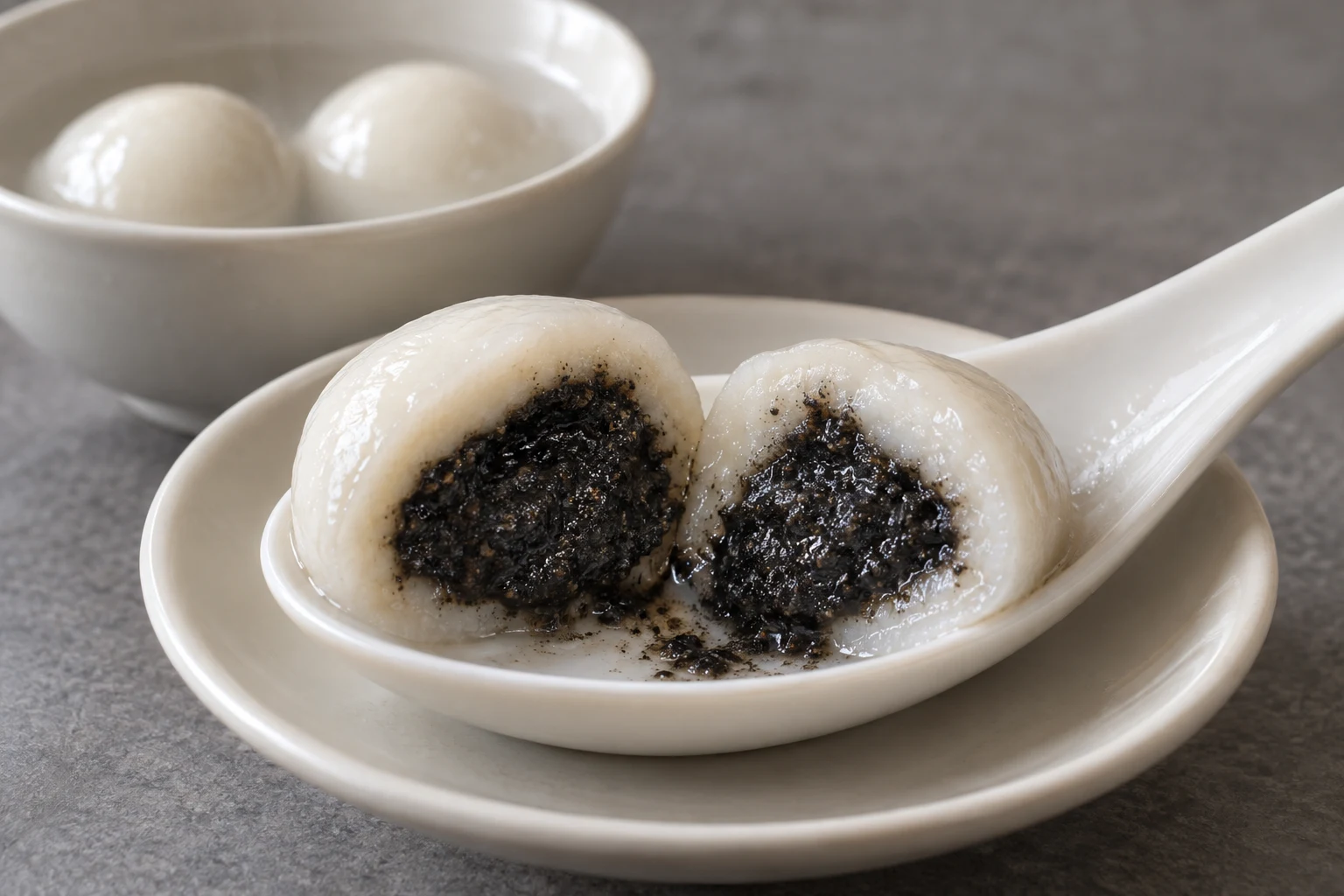
Tangyuan and yuanxiao: watch the making
Both names appear around the Lantern Festival, with its associations of family reunion. Hunan’s market regulator describes a traditional north–south distinction, while noting that both foods are now available in both regions. The preparation is the clearer guide.
Wrapped tangyuan
Water and glutinous rice flour first become dough. A piece of that dough is closed around the filling, producing a smooth outer surface. This recipe follows that wrapped method.
Rolled yuanxiao
Pieces of filling are repeatedly moistened and rolled through dry glutinous rice flour. The outer layer builds up around them. That is a different assembly process, even when the centres are sweet.
Research notes
Sources and method notes
The recipe is an adaptation of documented home methods. The sources below distinguish local context, flour handling, filling preparation and the wrapped-versus-rolled comparison.
- Museum of Chinese in America — Tang Yuan Recipe Cooked dough portion, covered rest, filling alternatives and serving in cooking water.
- Judy Leung, The Woks of Life — Tang Yuan Butter and sesame filling, chilling and wrapping. This adaptation scales the filling to match the dough yield.
- Ellen L., The Hong Kong Cookery — Tong Yuan Keeping rice dough covered, shaping gently and cooking the filled balls.
- Wei Guo, Red House Spice — Tang Yuan Glutinous rice flour, adjusting dough texture, repairing cracks and simmering after the balls float.
- Hunan Market Regulation — Yuanxiao and tangyuan The wrapped-versus-rolled preparation distinction and its qualified regional associations.
- Ningbo Evening News, via Haishu government — Lantern Festival tangyuan Local reporting on black sesame and pork fat as a classic Ningbo filling.
Keep exploring
More stories for your table
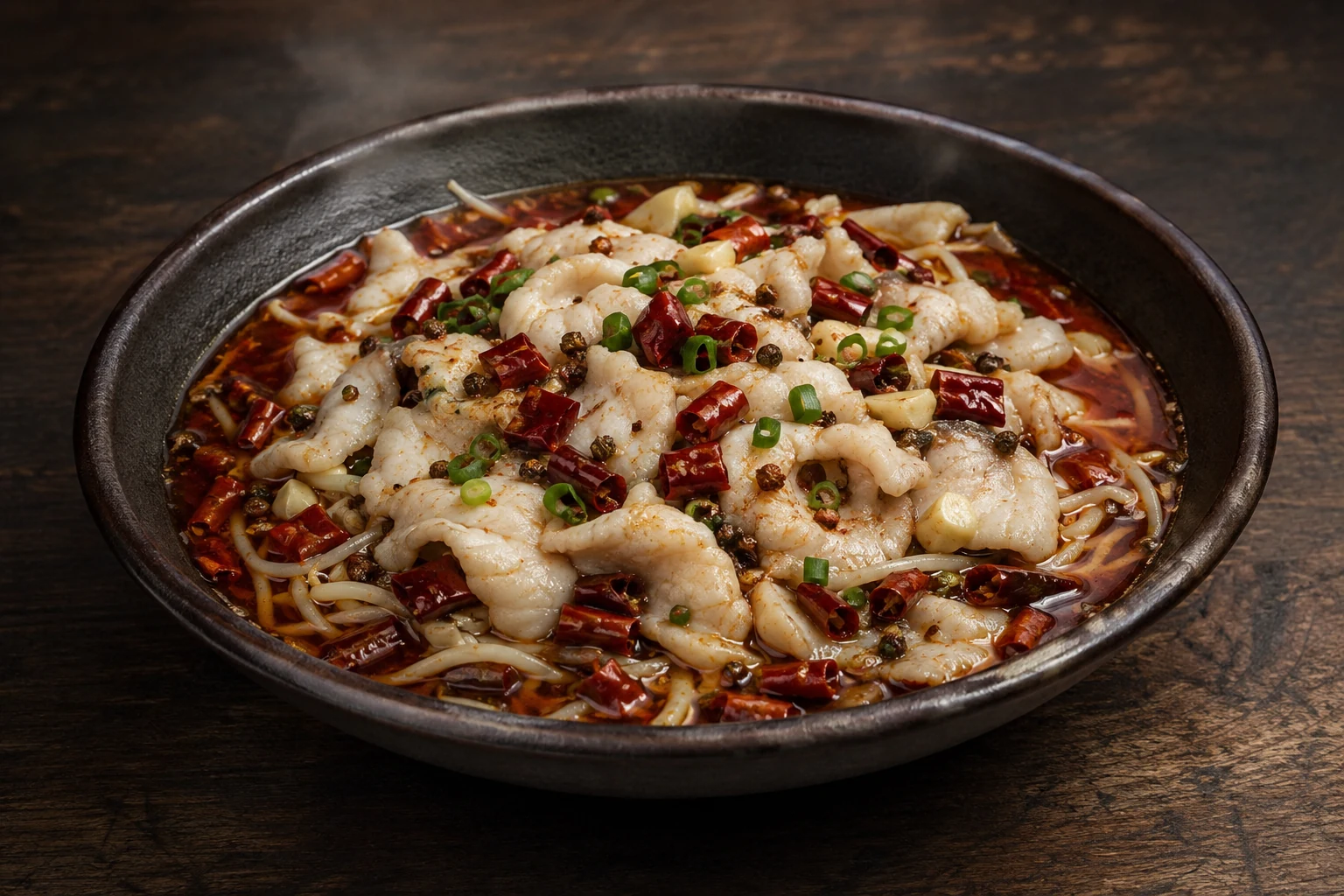
ChinaFish dish
Shui Zhu Yu (Sichuan Water-Boiled Fish)
Why Sichuan water-boiled fish stays tender beneath its dramatic mala finish: a close look at the broth, hot-oil bloom, Chongqing context, and a practical home method.
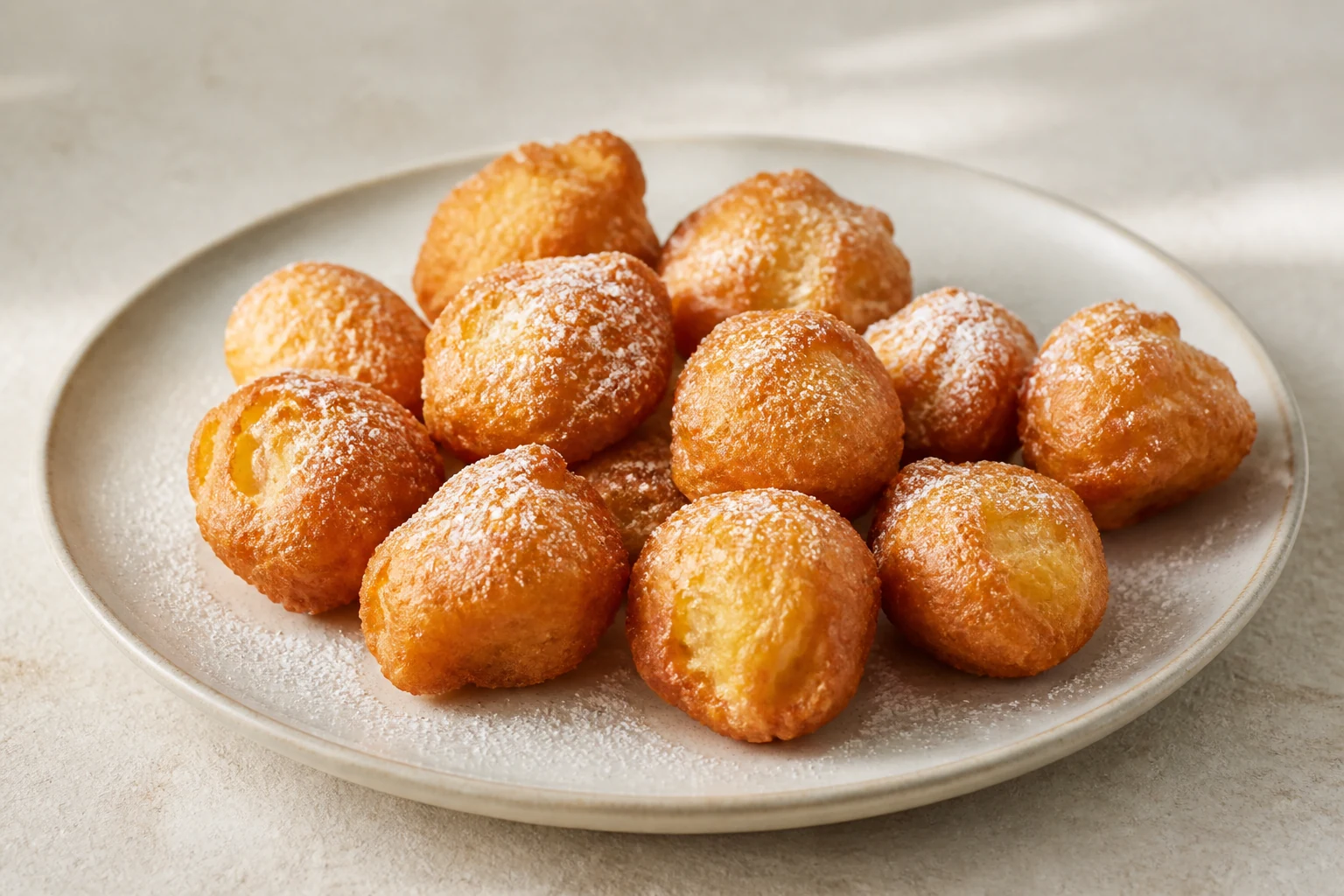
SpainSweet fritters
Buñuelos de Viento: How Spain’s Airy Fritters Rise
Why buñuelos de viento puff, when to serve them plain or filled, and how to make a small batch of Spain’s airy lemon fritters at home.
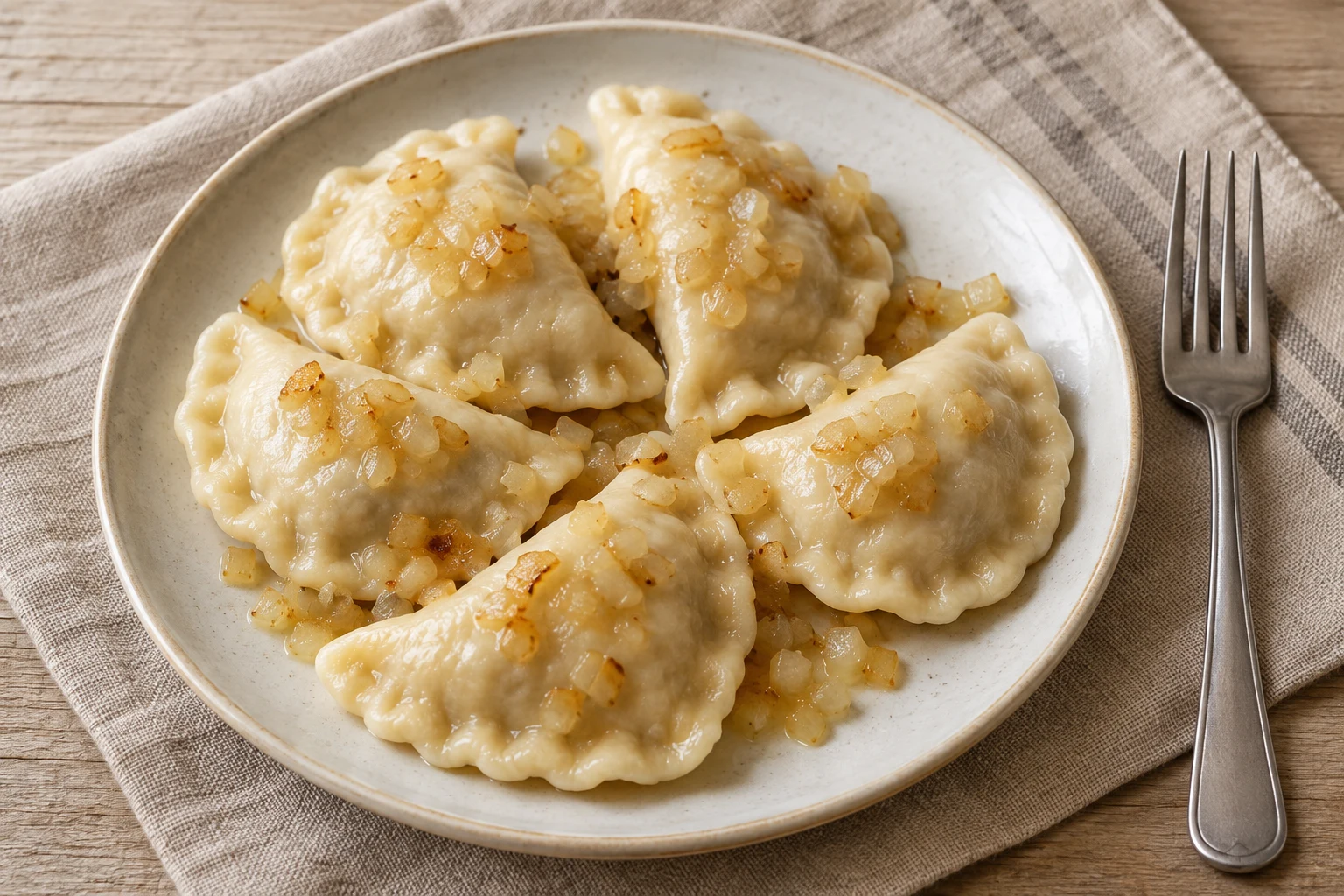
PolandDumplings
Meat Pierogi: Make the Filling Moist Before You Fold
Turn cooked soup beef into Polish meat pierogi. Learn how onion, carrot and a little broth soften the filling, then make a complete home adaptation.