
Egg Foo Young: Prepare the Filling Before the Egg
芙蓉蛋
A golden egg omelette can carry crisp sprouts, shrimp and a glossy sauce. The useful decisions happen before the first ladleful reaches the pan.
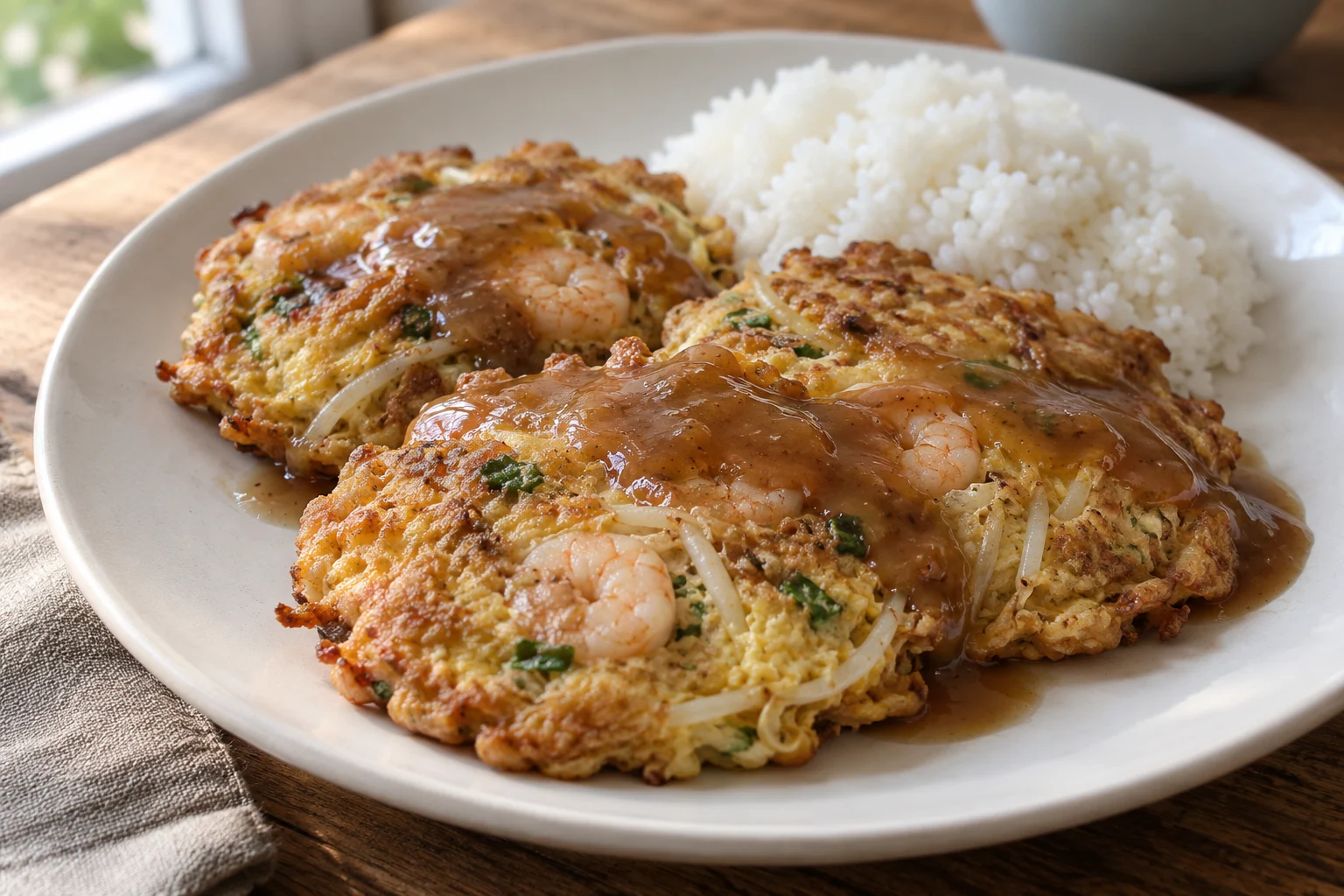
One name, several pans
Egg foo young is a filled egg omelette, but the name does not specify one frying method. Bill Leung of The Woks of Life distinguishes pan-fried Cantonese furong omelettes from the deep-fried patties he cooked at his parents’ Chinese American restaurant, Sun Hing. The latter arrive with brown gravy and rice; the former need not have that gravy at all.
This guide concentrates on the small skillet versions familiar from home recipes. They put the filling and the egg in the same mouthful: browned edges, a tender set middle, a sprout’s slight crunch and small pieces of shrimp. Preparing those pieces deliberately is more useful than treating the dish as a bowl into which every available ingredient can disappear.
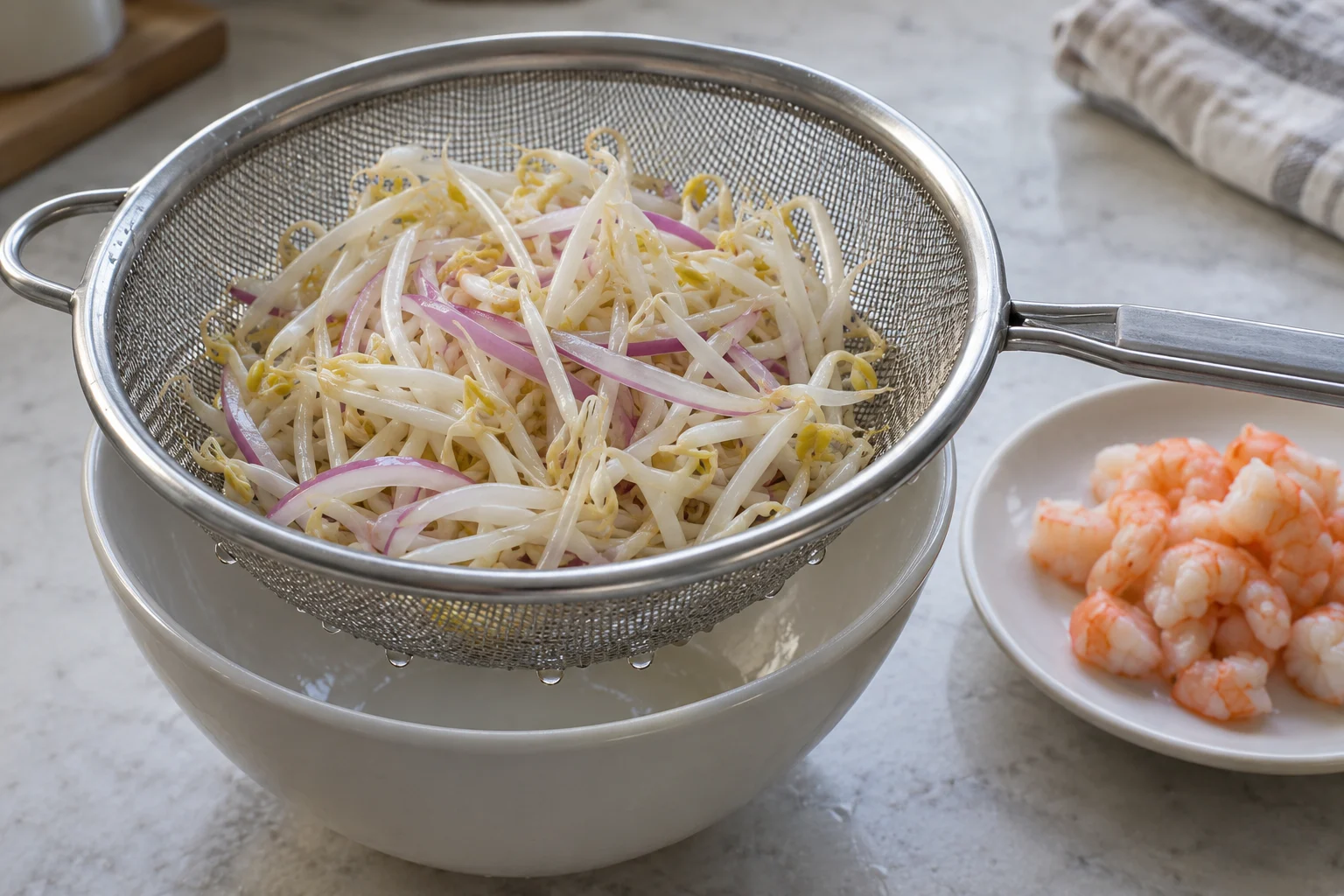
Make the filling ready first
Daddy Lau’s recipe takes an unusually clear route to this point. He briefly blanches bean sprouts and shortened red-onion strips, drains the vegetables in a strainer, and only then incorporates them into the eggs. He also prepares the shrimp separately. The drain is a real stage of the method, not a decorative pause between pot and bowl.
Other cooks get there differently. Nagi Maehashi at RecipeTin Eats uses finely cut vegetables that can cook quickly inside the omelette, while sautéing slower-cooking additions first. Her notes specifically tell cooks to thaw frozen shrimp and pat them dry. A drained blanched filling and a carefully prepared raw filling are two routes to readiness; they should not be combined into a rule that every ingredient must be blanched.
Protein deserves its own decision. Lee Kum Kee’s Australian recipe starts with peeled, pre-cooked prawns; Nagi’s shrimp option uses small chopped raw prawns. Read that line before mixing. “Shrimp” in an ingredient list does not establish whether a recipe expects it already cooked, nor does a shrimp method automatically transfer to cubes of raw chicken.
Choose the scale before pouring
The shape changes the handling. Follow one complete method rather than borrowing its timing for a different-sized omelette.
One large wok omelette
Daddy Lau pours the mixture into the wok as a single piece. That makes the flip a supported lift: the spatula needs to carry most of the omelette’s weight. It is a different task from turning one small patty.
Small skillet omelettes
Lee Kum Kee divides its mixture into four portions and gently draws the edges inward with a spatula. Nagi also cooks four smaller omelettes. Several modest portions give a home cook a manageable turning area.
Let the first side become a surface
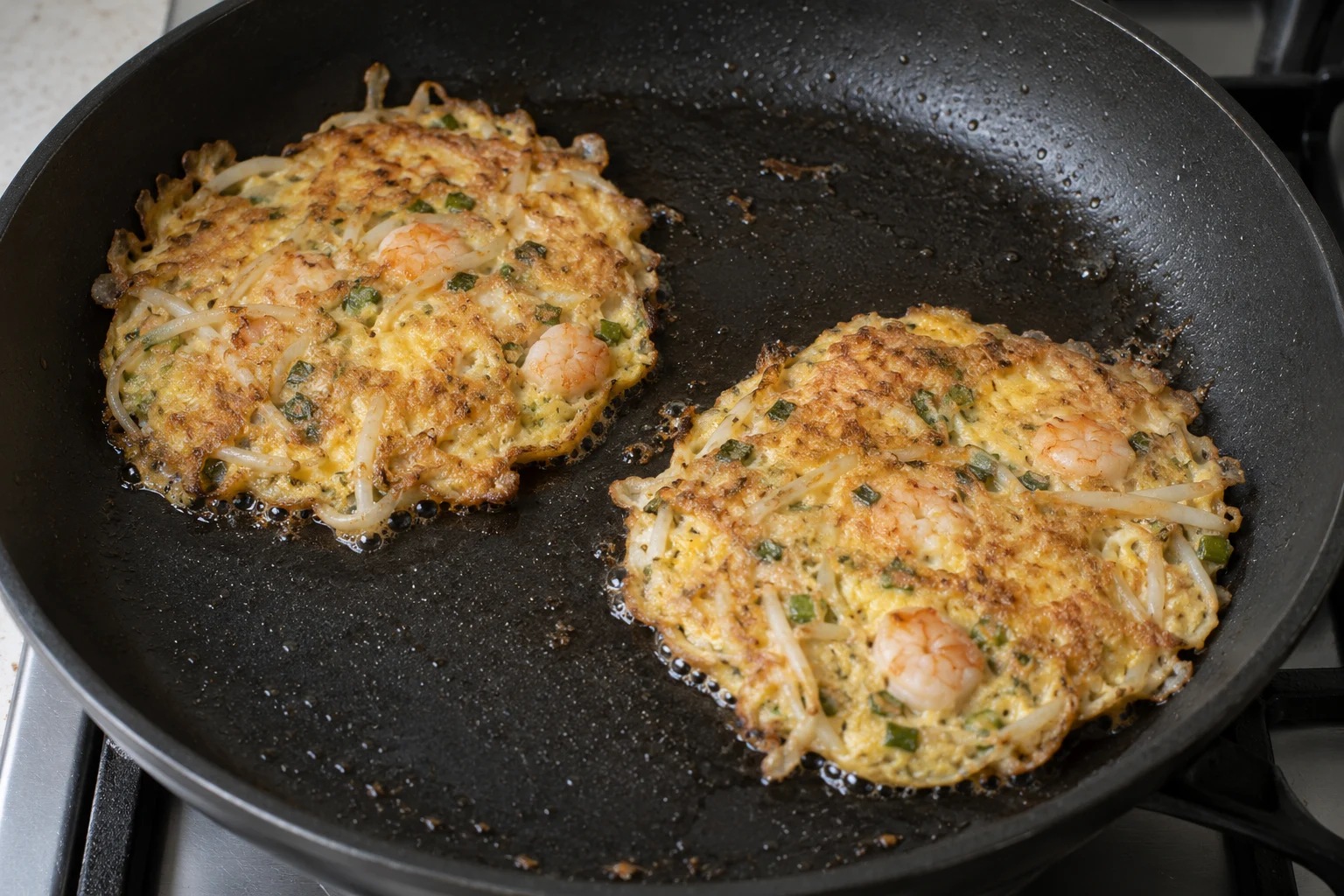
Lau warns against moving the omelette too soon. After distributing the filling, he leaves the bottom to form a golden layer before rotating or flipping it. It is a useful distinction: arranging loose ingredients at the start is not the same action as repeatedly nudging an egg mixture that is trying to hold together.
The restaurant texture is another choice. Leung’s deep-fried patties become puffier and crisper than his skillet alternative, which he describes as more like a regular omelette. A shallow-fried version does not need to imitate that deep-fried expansion to succeed. Judge it on its own set middle and browned exterior.
Give the sauce a place in the sequence
Lee Kum Kee makes its stock, oyster-sauce and soy-sauce gravy first, thickens it with a separate cornstarch slurry and holds it warm while the omelettes cook. Nagi likewise prepares sauce before frying. These sequences leave the cook free to watch the eggs rather than manage a thickening saucepan at the same moment.
Lau’s arrangement is different again: the omelette comes out, then the sauce cooks in the still-hot wok. His family serves it separately so diners can choose their amount. Either order can work when planned. At the table, leave enough uncovered egg to see the browned surface and taste the filling before adding more gravy. The sauce completes the mouthful; the prepared filling and patiently set egg give it something worth covering.
Research notes
Sources and cooking routes
Original recipes were read for their specific preparations and differences. This is a technique guide, not a newly kitchen-tested recipe; all three images are generated illustrations.
- Made With Lau — Daddy Lau’s egg foo young Cantonese family recipe with blanched, drained vegetables, one large wok omelette, a supported flip and sauce prepared after the eggs.
- The Woks of Life — Bill Leung’s restaurant and pan versions Firsthand family restaurant method distinguishes deep-fried patties from Cantonese pan-fried furong and the skillet alternative.
- RecipeTin Eats — Nagi Maehashi’s small skillet omelettes Original recipe and notes specify shrimp preparation, fast and slower-cooking vegetables, four omelettes and gravy made first.
- Lee Kum Kee Australia — prawn egg foo young Manufacturer’s original recipe uses pre-cooked peeled prawns, four pan-fried portions and gravy prepared before the eggs.
- FoodSafety.gov — safe minimum internal temperatures Government guidance supports the egg-dish and poultry temperature check and use of a food thermometer.
Keep exploring
More stories for your table
Belgian cuisine Shrimp omelette
Belgian Shrimp Omelette, Filled at the Finish
Explore Belgium’s North Sea shrimp omelette, compare simple and creamy versions, and make a two-omelette home adaptation with a filling added at the finish.
Korean cuisine Stuffed perilla leaves
Kkaennip Jeon: Keep the Filling Thin
How thin filling, well-drained tofu and gentle pan heat work together in Korean perilla-leaf jeon, with a complete pork-and-tofu home adaptation.
Japanese cuisine Steamed egg custard
Chawanmushi: Dashi Held in a Spoon
Why Japanese steamed egg custard tastes like broth, how gentle heat preserves its smooth texture, and what different fillings reveal about the dish.