
Chow mein: choose the noodle texture before the topping
炒麵
Compare chow mein through crispness, sauce and noodle preparation, with specific examples from Chinese cooks and practical questions for a menu or recipe.
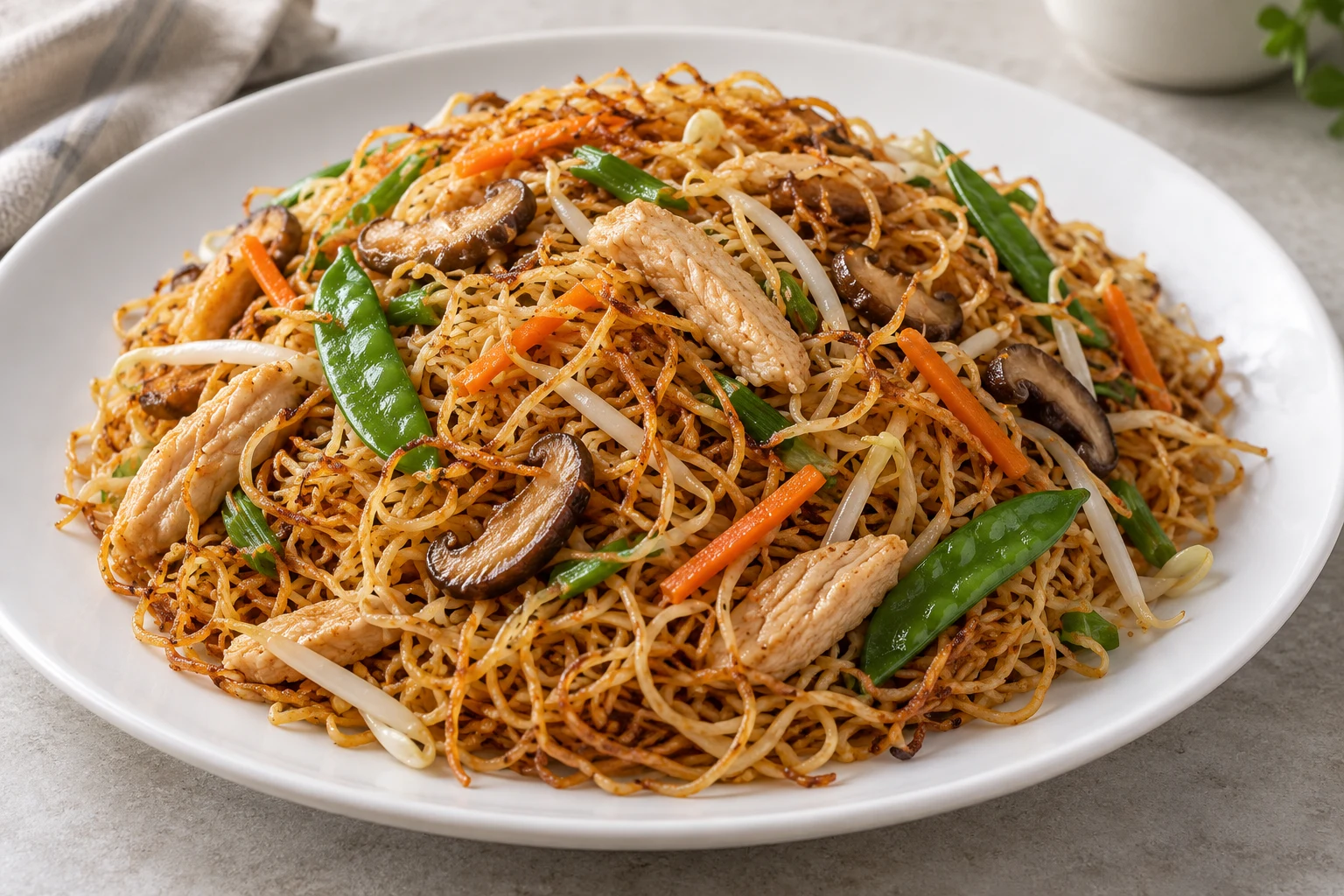
The dish name leaves a texture question open
Chow mein can bring more than one arrangement of noodles and toppings to the table. Bill at The Woks of Life explains the name through fried or pan-fried noodles, then distinguishes several dishes called chicken chow mein. For a diner, the useful next detail is texture: whether the noodles are lightly crisp, formed into a crisp cake or served with a more substantial sauce.
A menu photograph can help, but a short question helps more. Ask how the noodles are prepared and whether sauce is mixed through them or poured over them. Those answers give a clearer expectation than choosing only by the chicken, pork or vegetable topping.
Two structures described by the same cook
A crisp cake with sauce
The Woks of Life describes gai see chow mein as a round pan-fried noodle cake, topped with chicken strips, vegetables and white sauce. Sauce reaches some strands while other areas remain crisp.
A dry noodle mixture
Bill's separate dry homestyle version pan-fries thin Hong Kong-style egg noodles, then combines them with chicken and vegetables. He describes the finished dish as having no standing sauce.
The packet and the recipe must agree
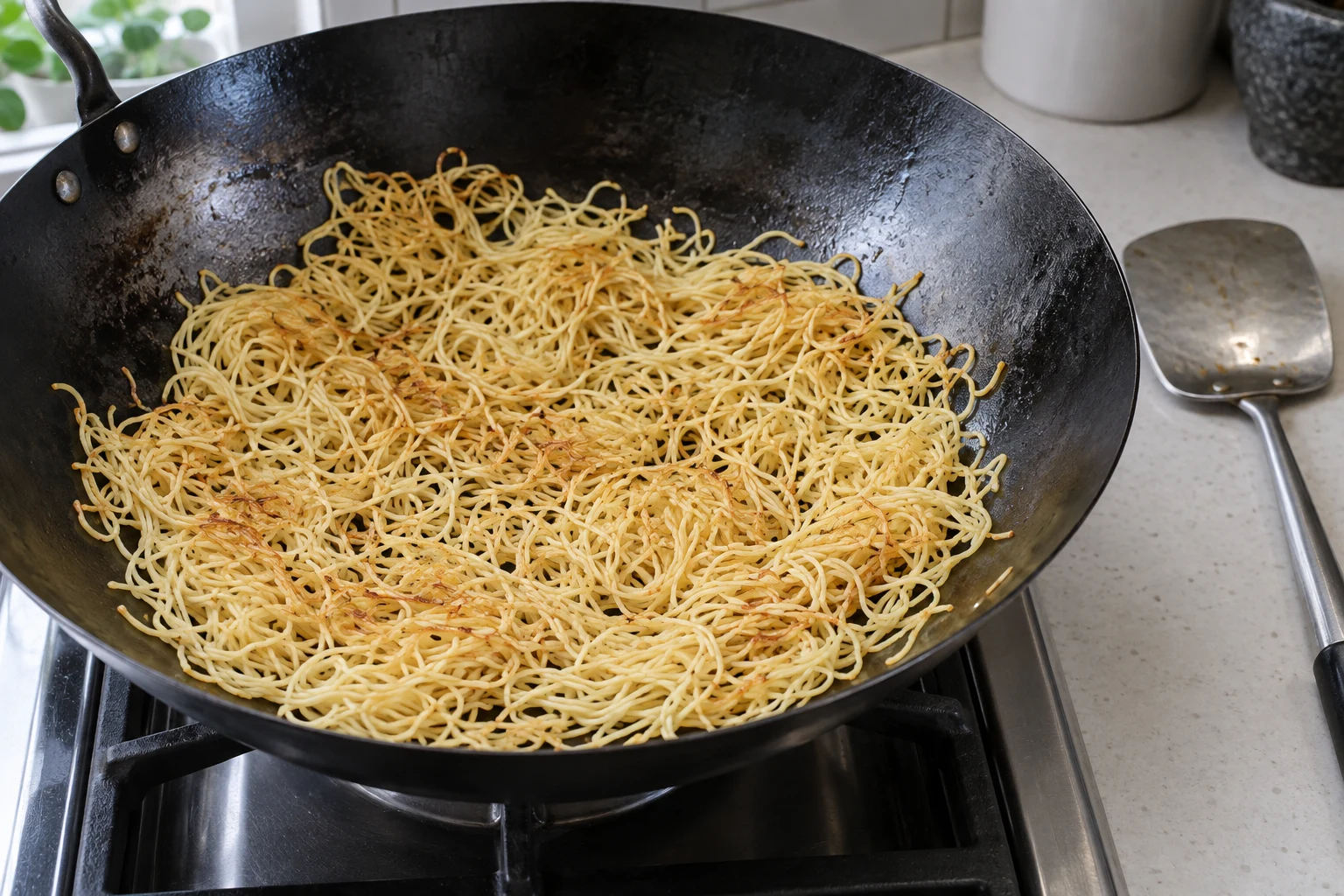
Made With Lau's chicken chow mein uses thick fresh yellow noodles and gives them a steaming stage followed by boiling. The page treats dried noodles differently, directing the cook to skip steaming and boil them according to their packet or desired texture. The word 'fresh' does not supply a complete preparation instruction on its own.
Maggie Zhu's soy sauce pan-fried noodles use fresh thin Hong Kong pan-fry noodles, with dried egg noodles offered as an alternative. Her method briefly boils the fresh product, drains it and then browns it in oil. This is a different noodle and a different formula, so the timings should remain with their own recipes.
When shopping for a recipe, match its noodle description before thinking about substitutions. Check thickness, whether the product is fresh or dried, and what the author says about preparation. A familiar yellow colour is not enough information to make two packets behave identically.
Browning is planned before the final mixture
Maggie Zhu stresses thorough draining and describes browning the noodles before adding the sauce at lower heat. Her bean sprouts and green onions enter near the end. The sequence gives the noodles their own cooking stage rather than placing every ingredient into the pan at once.
Use that observation when reading a method: identify what happens before the sauce, what happens with the sauce and what joins last. This is an organising tool, not a replacement set of cooking instructions. Your chosen author's complete formula tells you how those stages fit the particular noodle product.
A strip of cabbage can fit the noodle shape
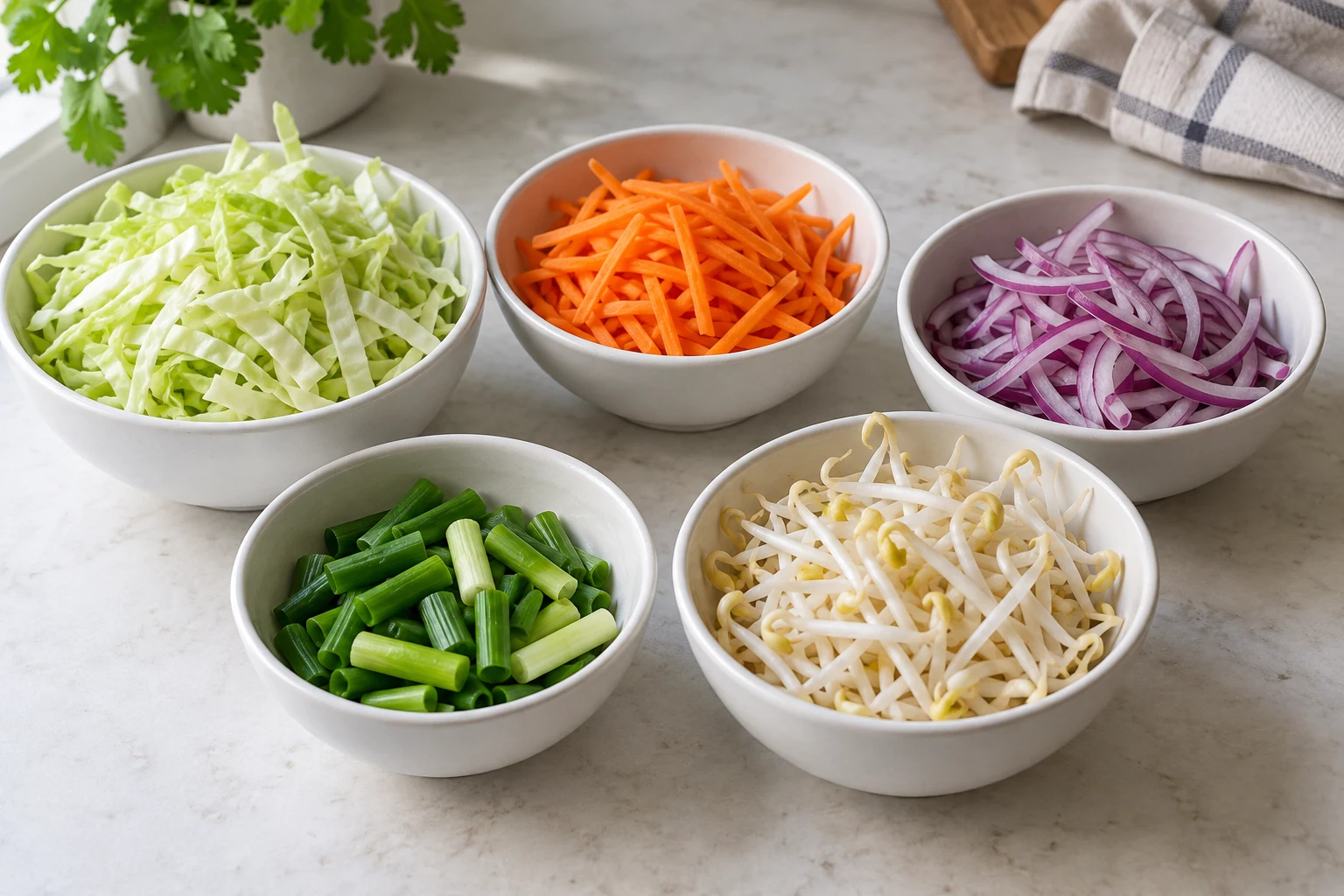
Made With Lau cuts its vegetables into long strips to harmonise with the noodles: red onion, carrot and cabbage, with green onion segments and bean sprouts also in the dish. The page branches its chicken-and-vegetable handling according to whether the cookware is a sloping wok or a flatter pan. Equipment is part of that recipe's sequence.
Lee Kum Kee's Rainbow Chow Mein offers a different ingredient set. It includes shredded red cabbage, carrot and pepper matchsticks, bean sprouts and watercress, alongside pork. Its method cooks the pork first, brings it back with the vegetables and noodles, then adds separately cooked bean sprouts. This published variation gives the vegetables a more prominent role.
Three details worth checking
- Noodle
- Match the specified product
- Sauce
- Mixed through or poured over
- Vegetables
- Read the cuts and entry order
Fresh versus dried and thin versus thick affect which published method you should follow.
The dry mixture and crisp-cake examples offer different distributions of sauce.
Long strips and a late bean-sprout stage are deliberate choices in the cited recipes.
Colour and sauce amount answer different questions
Maggie Zhu combines light and dark soy sauces and describes dark soy as contributing the brown colour. Lee Kum Kee's version also uses dark soy, but its sauce mixture includes chicken stock and oyster sauce. The two pages show why a dark noodle photograph alone cannot tell you the entire sauce composition.
For a first bite, lift some noodles without a large topping and notice their resistance and coating. Then try them with the vegetables or meat. If you prefer more contrast between crisp and softened strands, ask about the cake-style serving; if you want a mixture, ask whether it is served dry or with a noticeable pool of sauce.
Research notes
Sources for the preparation differences
Four opened original cooking pages provide distinct noodle, vegetable and sauce examples. The article compares their methods; generated images illustrate selected details.
- Bill at The Woks of Life — Chicken Chow Mein The cook's distinction between a sauced crisp cake and a dry homestyle noodle mixture.
- Made With Lau — Chicken Chow Mein Thick fresh noodle preparation, vegetable cuts and cookware-specific sequencing.
- Maggie Zhu — Soy Sauce Pan Fried Noodles Thin noodle preparation, drainage, staged browning and light/dark soy sauce.
- Lee Kum Kee — Rainbow Chow Mein The producer's pork-and-vegetable variation, bean-sprout stage and stock-based sauce.
Keep exploring
More stories for your table
Chinese cuisine Fried rolls
Chinese spring rolls: the crisp shell starts with the filling
For crisp Chinese spring rolls, look inside first. Compare cooked fillings, moisture control, wrapper choice and sealing methods from four cooks.
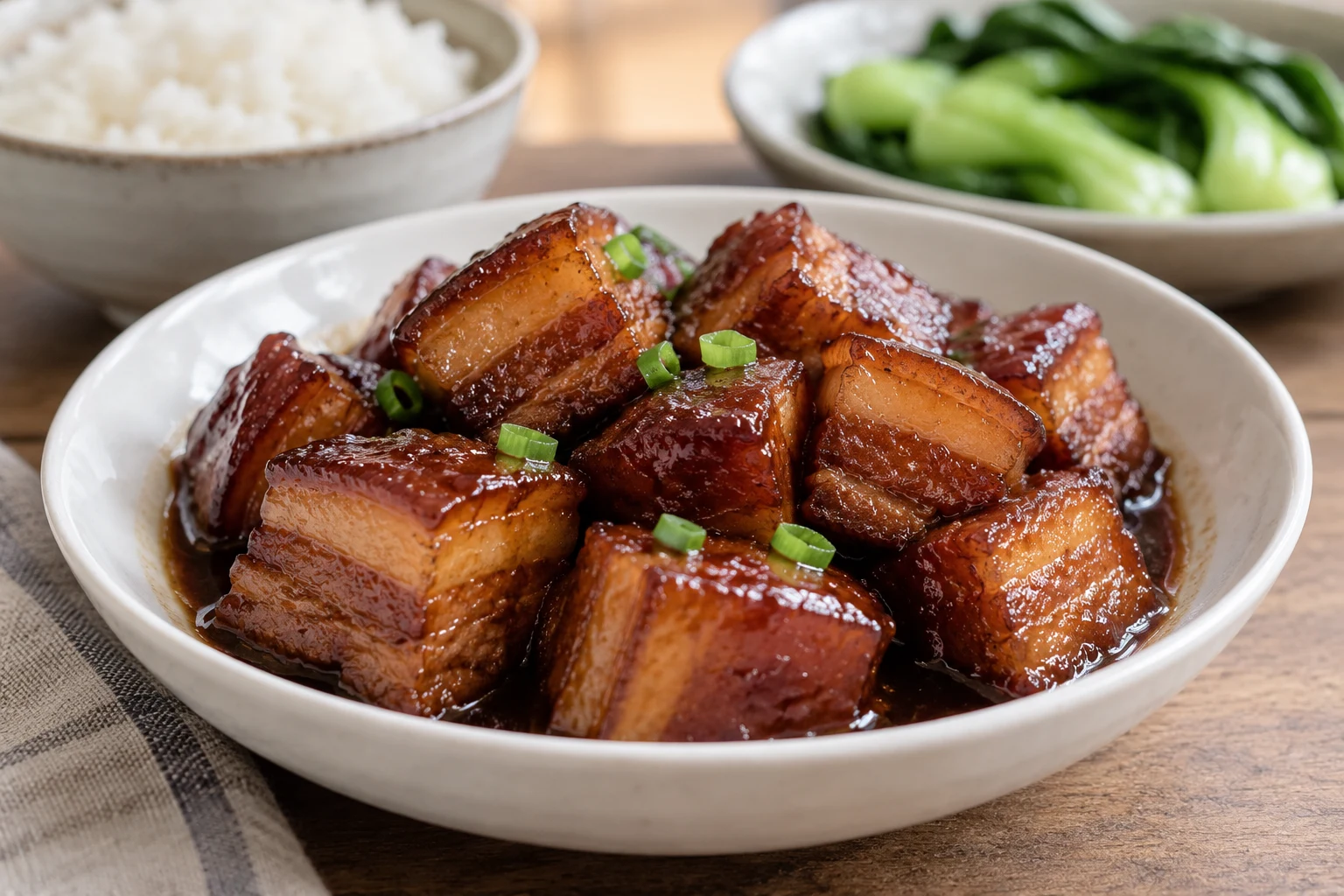
Chinese cuisine Braised pork dishes
Hong shao rou: tenderness first, gloss at the finish
Understand red-braised pork belly through its layered cut, two sugar methods and the change from braising liquid to a glossy final sauce.
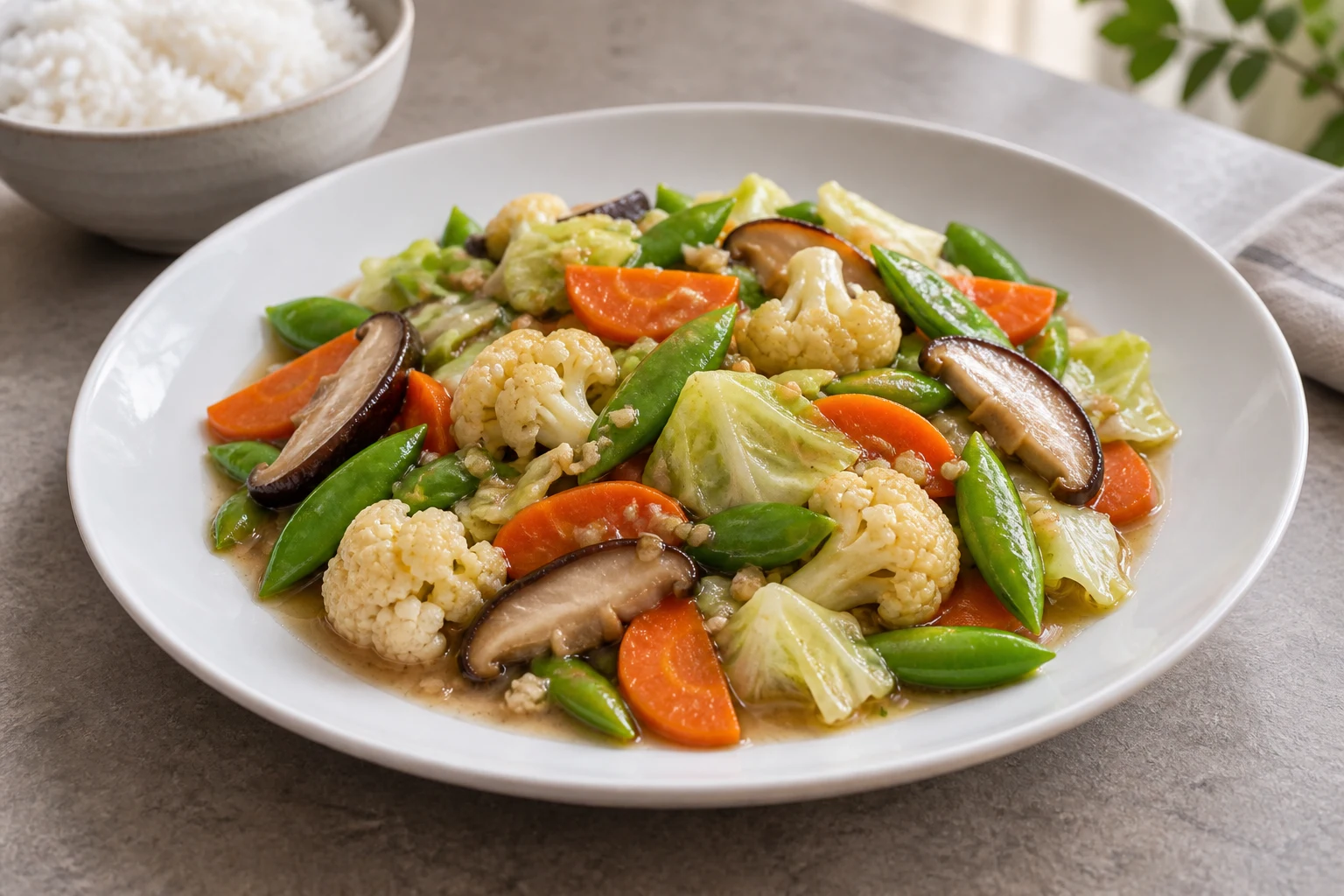
Thai cuisine Vegetable stir-fry
Pad Pak Ruam: Cut, Sort, Then Stir-Fry
Cook Thai mixed vegetables in stages so the carrot softens while the cabbage and snap peas keep their bite. Includes a complete five-vegetable home adaptation.