
Chinese quick pickles: keep the crunch, choose the method
泡菜
A practical guide to chilled Chinese vinegar pickles: cabbage and daikon cuts, salting, liquid preparation, spice choices and cold handling.
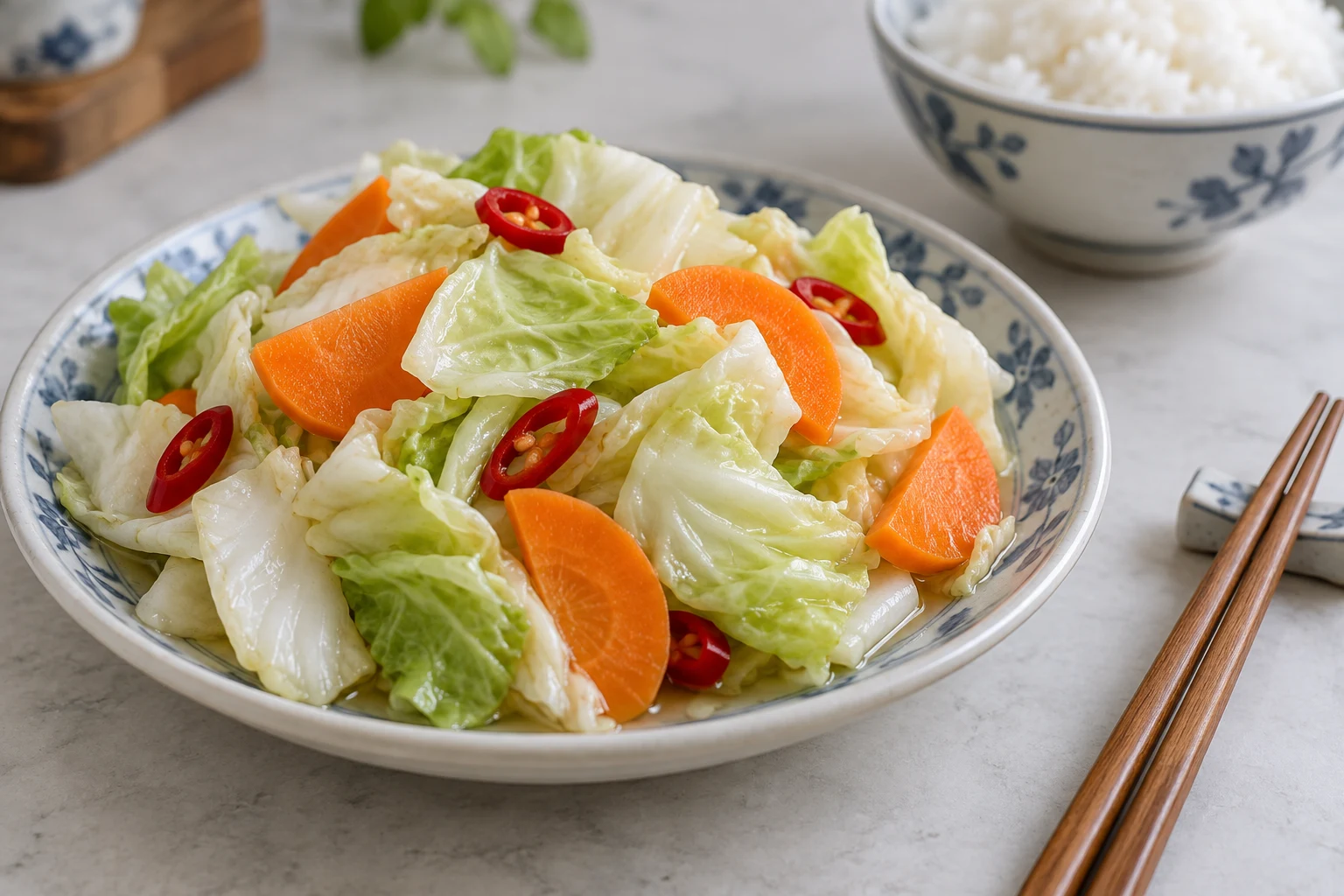
A little dish of Chinese pickled vegetables can bring a sharp, crisp bite alongside rice, noodles or a restaurant meal. This guide focuses on chilled vinegar preparations: torn cabbage with carrots, or strips of daikon and carrot. Maggie Zhu calls her quick pickled cabbage pào cài, 泡菜; the term also belongs to a wider pickle vocabulary, so the preparation method still needs reading.
Elaine at China Sichuan Food makes the distinction explicit. Her quick carrot-and-daikon version gets acidity directly from vinegar, while traditional fermented Sichuan vegetables follow a different process. Choose the style you want before borrowing its instructions. A jar, sour flavor or Chinese name alone does not establish that two methods use the same timing or handling.
Two textures, two useful cuts
Cabbage in broad pieces
Judy Leung tears cabbage by hand into fairly large pieces, with carrots alongside. The leaves shrink during preparation. Their ribs and folds give a different bite from a finely shredded slaw, and they remain easy to lift with chopsticks.
Daikon in small strips
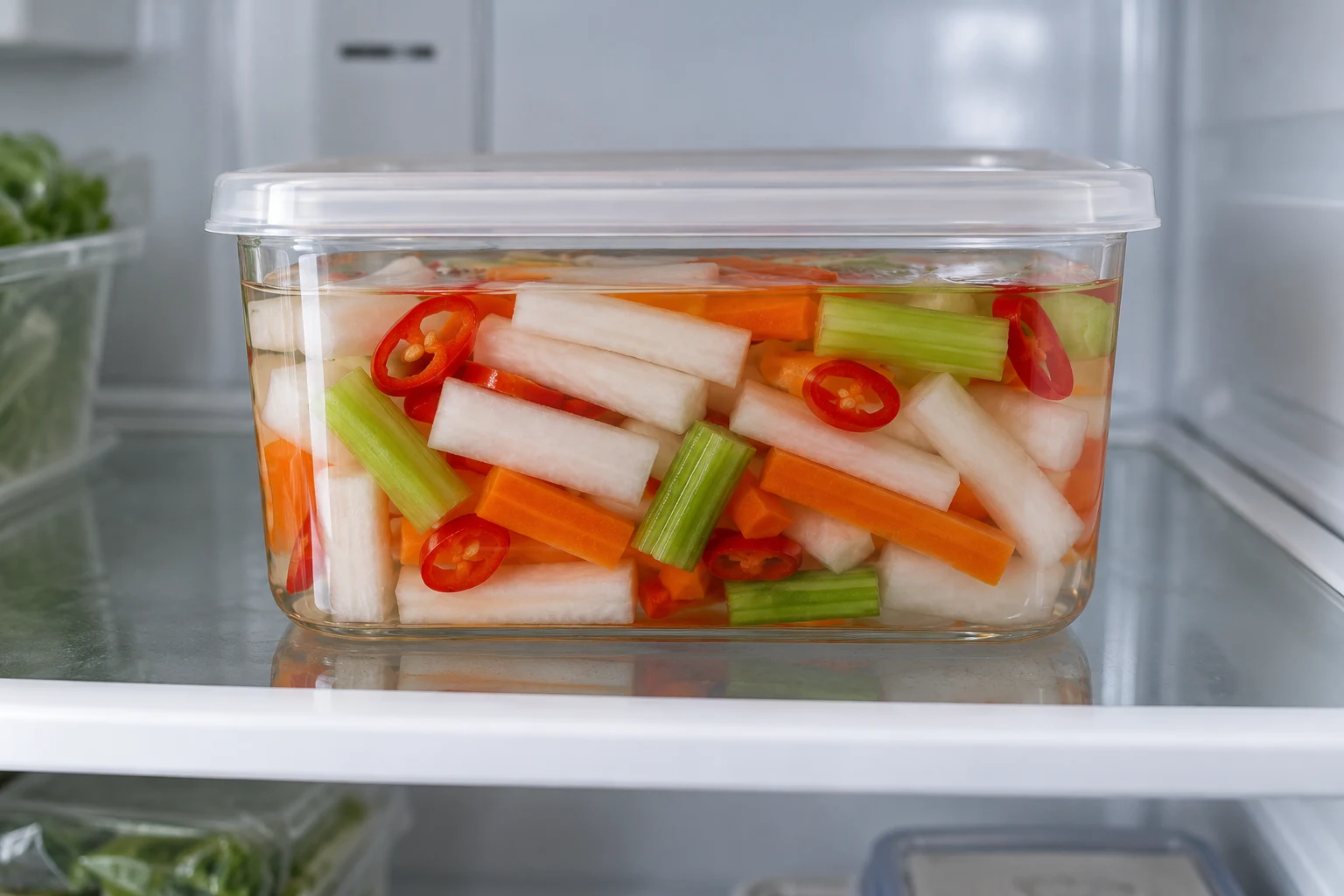
Elaine cuts peeled daikon and carrot into short strips, with small celery pieces and chili rings. She also allows small dice. Those shapes suit a spoonful beside congee or noodles, rather than demanding a large leaf in every bite.
The first liquid is usually discarded
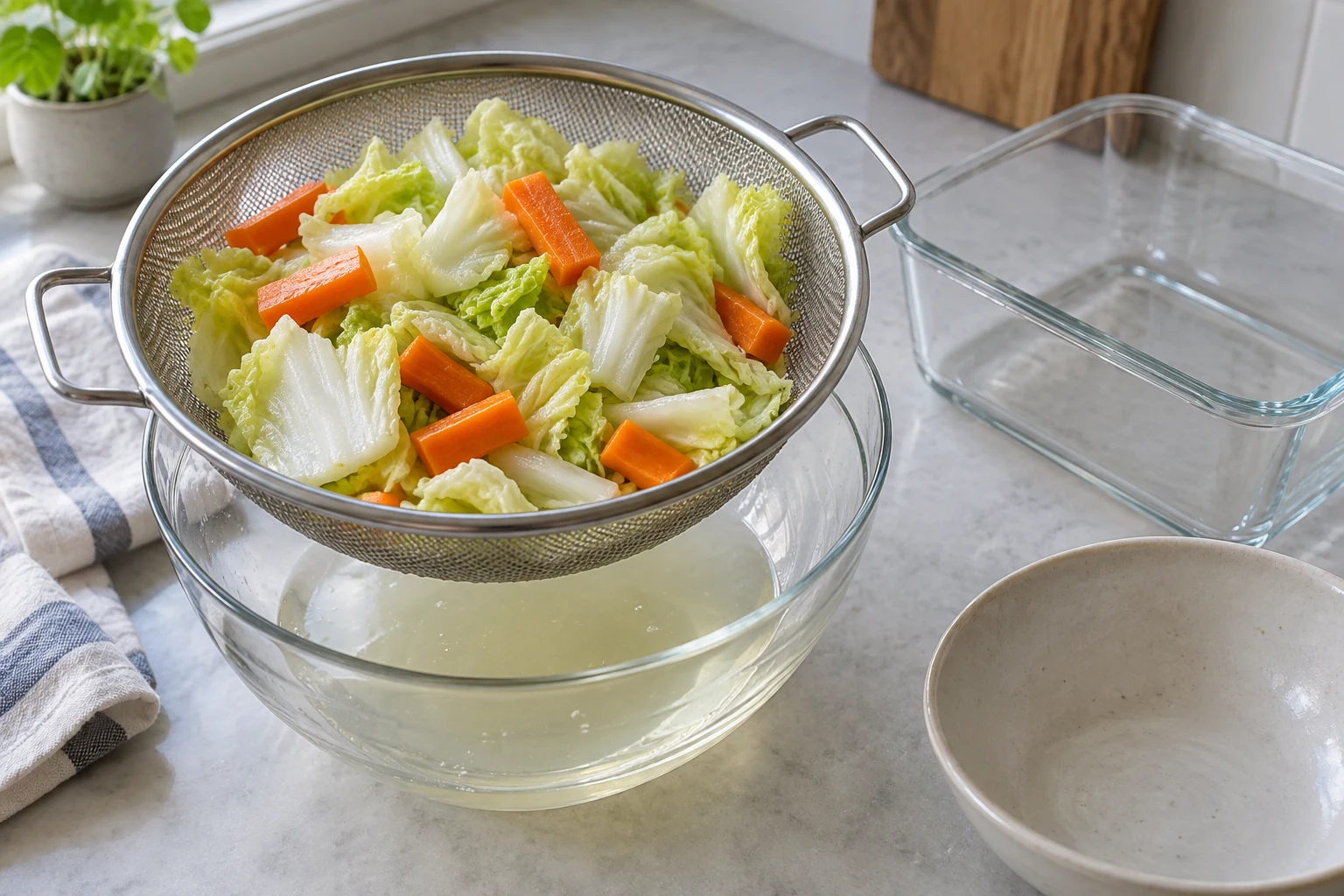
Both cabbage recipes use a salting stage to draw out water before adding their final vinegar liquid. Judy weights the vegetables and keeps this stage in the refrigerator. Maggie uses a shorter salt rest. In each method, draining, rinsing away the prep salt and removing excess water are distinct jobs; the initial salty liquid does not become the finished dressing.
That is a good place to slow down and read the recipe. Forgetting the rinse carries the prep salt forward, while leaving a great deal of rinse water behind changes what enters the container. Use clean hands, bowls and draining equipment. Follow the specified salt quantity and resting stage of the preparation you chose, rather than mixing the quantities from one with another's timing.
Drain first, then keep the finished batch cold
The vinegar liquid has its own sequence
Judy heats water with sugar, turns off the heat and then adds white vinegar; her ingredient list specifies 5% acidity. Maggie simmers her rice-vinegar mixture with sugar and chili before cooling it. Both cool the liquid before bringing it together with the prepared cabbage.
Those are different formulas, not alternate lines in one recipe. Check the bottle's vinegar type and acidity, and use the recipe's measured proportions of vegetables, vinegar and water. The National Center for Home Food Preservation explains that acidity and ingredient proportions matter to preservation safety. A pleasant sour taste is not a substitute for following the method.
Seasoning changes more than heat
Maggie uses Sichuan peppercorns for fragrance and points out that chili varieties differ in strength. A count of four mild peppers cannot be transferred directly to four much hotter ones. Elaine's preparation includes celery and optional fish sauce, and she suggests sesame oil when serving.
For a vegetarian serving, check whether fish sauce was included. Sesame oil also matters for diners with sesame allergies. Keep the first batch focused on one preparation so you can understand its cut, seasoning and texture together. The linked recipes supply complete ingredient lists and their own maturation times.
Start with a small separate portion alongside the meal. Elaine suggests congee, soups and noodles; Maggie also pairs pickles with simple rice dishes. Serving them separately preserves a clear contrast between the cold crisp vegetable and the warmer main dish, and lets diners decide how much sourness and chili they want in each bite.
Research notes
Sources behind this article
- Elaine · China Sichuan Food Original quick vinegar preparation with daikon, carrot, celery, optional fish sauce and a clear distinction from fermentation.
- Judy Leung · The Woks of Life Original cabbage preparation with refrigerated salting, rinsing, cooled vinegar liquid and clean serving utensils.
- Maggie Zhu · Omnivore's Cookbook Original cabbage recipe developed with Lilja Walter, including rice-vinegar liquid, chili-strength choices and Sichuan peppercorns.
- FDA · Fresh-produce handling Official guidance for plain-water rinsing before peeling, cabbage leaves and cold storage of perishable produce.
- National Center for Home Food Preservation Official distinctions between quick and fermented pickles, tested preservation proportions, vinegar acidity and processing.
Keep exploring
More stories for your table
Chinese cuisine Omelette
Egg Foo Young: Prepare the Filling Before the Egg
Egg foo young rewards prepared, well-drained fillings and a patient first side. Compare large wok omelettes, small pan patties and brown-gravy finishes.
Chinese cuisine Fried rolls
Chinese spring rolls: the crisp shell starts with the filling
For crisp Chinese spring rolls, look inside first. Compare cooked fillings, moisture control, wrapper choice and sealing methods from four cooks.
Thai cuisine Vegetable stir-fry
Pad Pak Ruam: Cut, Sort, Then Stir-Fry
Cook Thai mixed vegetables in stages so the carrot softens while the cabbage and snap peas keep their bite. Includes a complete five-vegetable home adaptation.