
Century Egg and Pork Congee: Finish the Rice Base
皮蛋瘦肉粥
The rice needs time to soften and break down. Fresh pork and preserved egg have shorter jobs near the end of the pot’s cooking sequence.
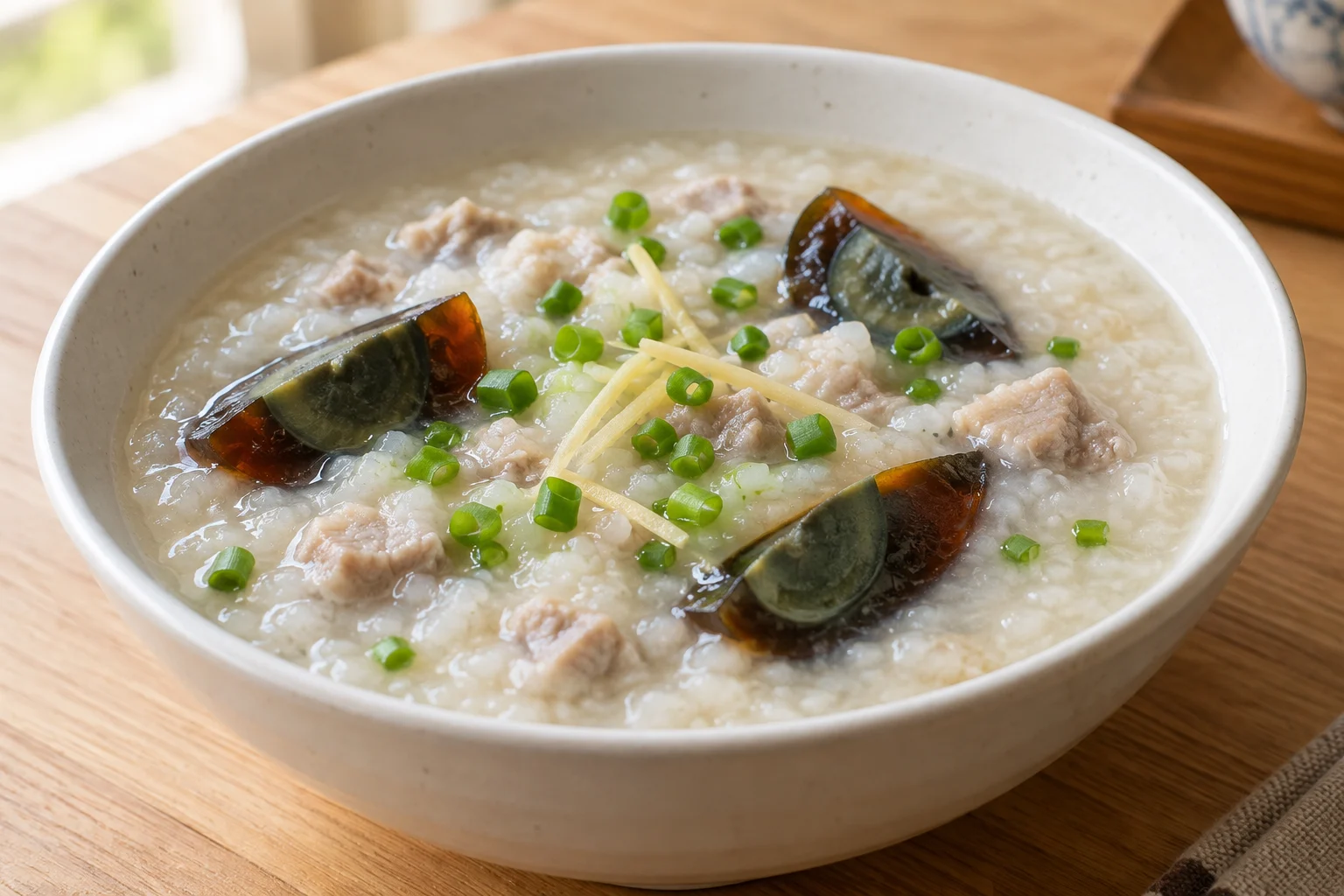
Build the base before its additions
Century egg and pork congee is a Cantonese rice porridge with an especially recognizable contrast: a pale rice base, tender pork and dark preserved egg. The Woks of Life identifies the combination with Cantonese cooking, while Made With Lau demonstrates it through the Lau family’s own method.
Their recipes develop the rice first, then finish with pork and egg. That sequence gives each ingredient an appropriate job. The rice needs to soften and break down enough to carry the bowl; fresh meat needs to cook through, and egg pieces need only the treatment chosen for the finish. Starting everything together would make those different stages harder to control.
Know the egg you are adding
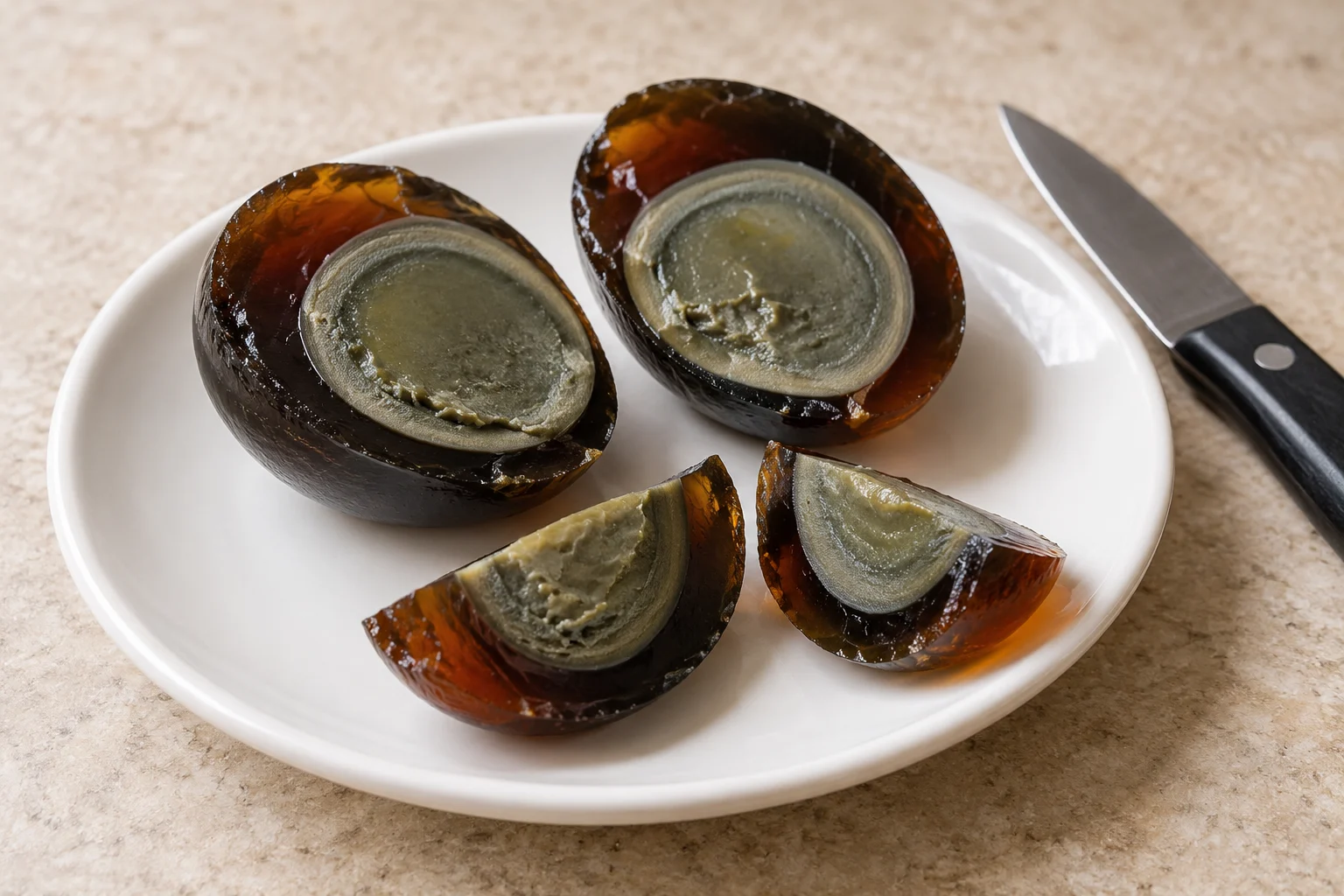
Wei Guo at Red House Spice describes century egg as a preserved ingredient whose outer portion is dark amber and translucent, with a gray-green creamy yolk. It can be peeled and used directly. The English name does not describe an egg that has literally waited a hundred years.
Use commercially prepared century eggs and follow their package instructions. Peel and cut them on a clean board, keeping the work separate from raw pork. Guo suggests wetting the knife when a soft yolk sticks to it. Decide now whether you want small pieces in the porridge, larger wedges on top, or both.
Choose one route for the rice
Shorter cooking times depend on preparation. Keep the water quantity, heat and timing from one complete recipe rather than combining the fastest line from each.
Soak, then simmer
Elaine at China Sichuan Food soaks rice for at least an hour, drains it, then gives it a brief salt-and-oil rest. Her method simmers until the grains are nearly broken down before minced pork and diced egg enter. The soaking time is part of the preparation.
Freeze in advance
Judy Leung’s 20-minute method for The Woks of Life starts with washed, drained rice frozen for at least eight hours. It goes into the boiling liquid without thawing. That freezer stage belongs in your schedule; the headline does not promise the same result from ordinary dry rice.
Whisk the cooked base
Daddy Lau soaks rice with a little salt and oil, cooks the base, then lowers the heat and uses a whisk to break down the softened grains. This step happens after cooking. He adjusts an overly thick base with boiling water before proceeding to the meat.
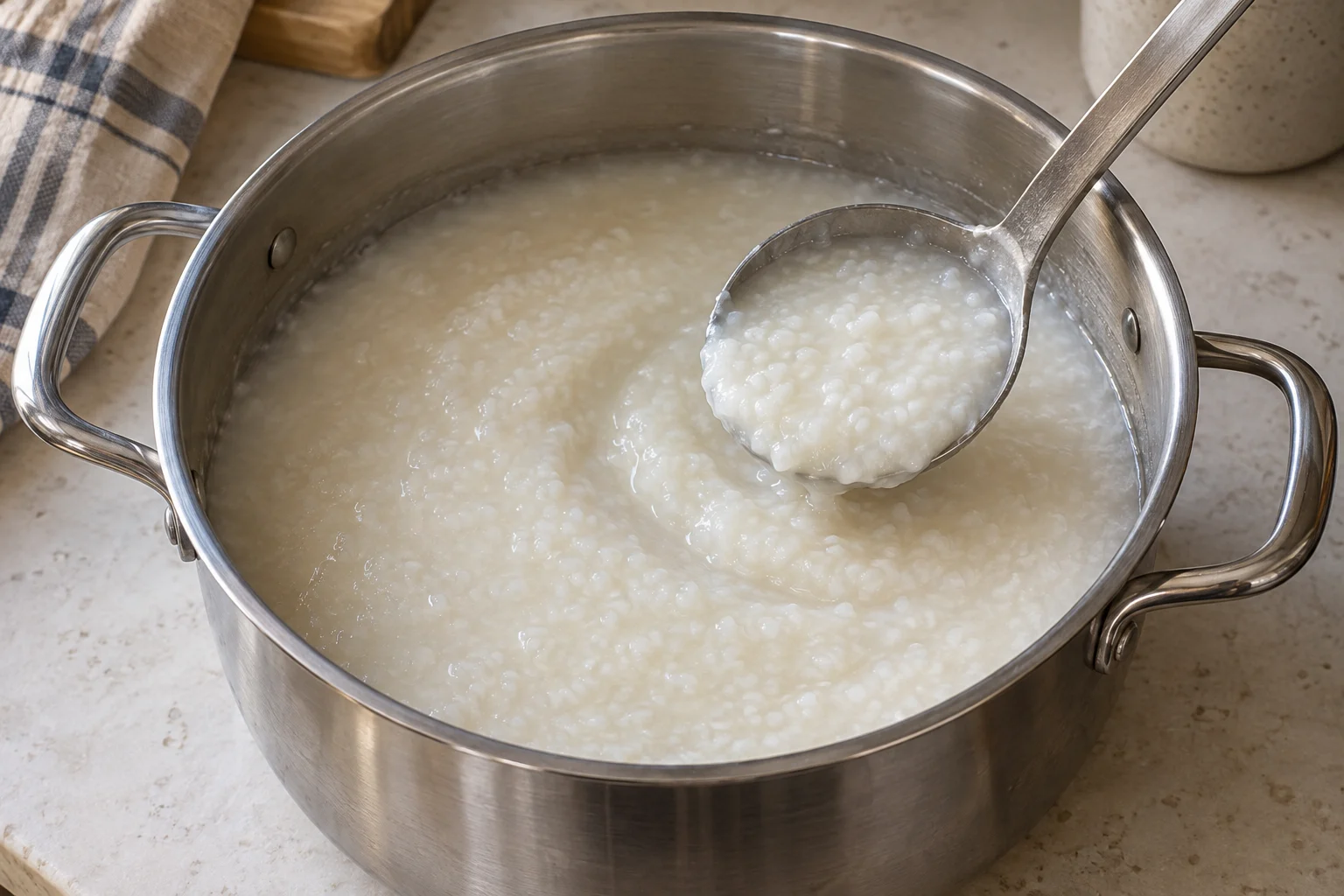
Look for a shared porridge texture
The useful checkpoint is how the rice and liquid move together. A spoonful should carry softened rice throughout the liquid, rather than a little mound of firm grains sitting beneath clear water. Choose how smooth you want the finished bowl, then use the appropriate simmering or whisking stage to get there.
Stir along the bottom as directed by the selected recipe. Leung specifically calls attention to this as her frozen-rice mixture thickens quickly. Give the pot enough attention to catch thickening at the base, and adjust the heat rather than letting an unattended hard boil decide the final texture.
Keep the pork pieces small and separate
The sources use different cuts: Leung’s pork is thinly julienned, Elaine uses mince, and Lau makes small chopped pieces. Prepare the meat in the form your chosen recipe specifies, including its marinade. Large unplanned chunks would need a different cooking allowance.
Add the meat with room for the pieces to separate and cook through. For a ground-pork version, FoodSafety.gov specifies 160°F/71°C checked with a food thermometer. A color change alone is not the cooking endpoint to rely on. Finish cooking the pork before tasting the bowl for seasoning.
Season the finished combination
Taste once the pork is cooked and the egg has joined the porridge. The final spoonful now contains the ingredients that will actually reach the table. Add salt or white pepper according to the selected method, and assess consistency before serving.
Keep sliced scallion and ginger proportions comfortable for a spoonful, and leave the congee visible between the toppings. The prepared rice remains the base of the dish; it should carry pork, preserved egg and a little fresh garnish together.
Research notes
Sources and preparation differences
Four independent cooking sources and the federal food-temperature chart were opened and read. This article compares methods rather than supplying a new quantified recipe. All images are generated illustrations.
- Made With Lau — Daddy Lau’s century egg and pork congee Original Cantonese family recipe supports cooked-base whisking, small pork pieces and late diced egg with reserved wedges.
- The Woks of Life — Judy Leung’s 20-minute congee Original recipe explicitly requires at least eight hours of rice freezing and adds thin pork, ginger and egg after developing the base.
- China Sichuan Food — Elaine’s pork and century egg congee Original method uses an hour-long rice soak, further seasoning rest and simmering before minced pork and egg enter.
- Red House Spice — Wei Guo’s century egg guide Firsthand ingredient guide describes the preserved egg’s dark gel, gray-green yolk, direct use after peeling and cutting tips.
- FoodSafety.gov — safe minimum internal temperatures Federal chart specifies 160°F/71°C for ground pork and recommends checking meat with a food thermometer.
Keep exploring
More stories for your table
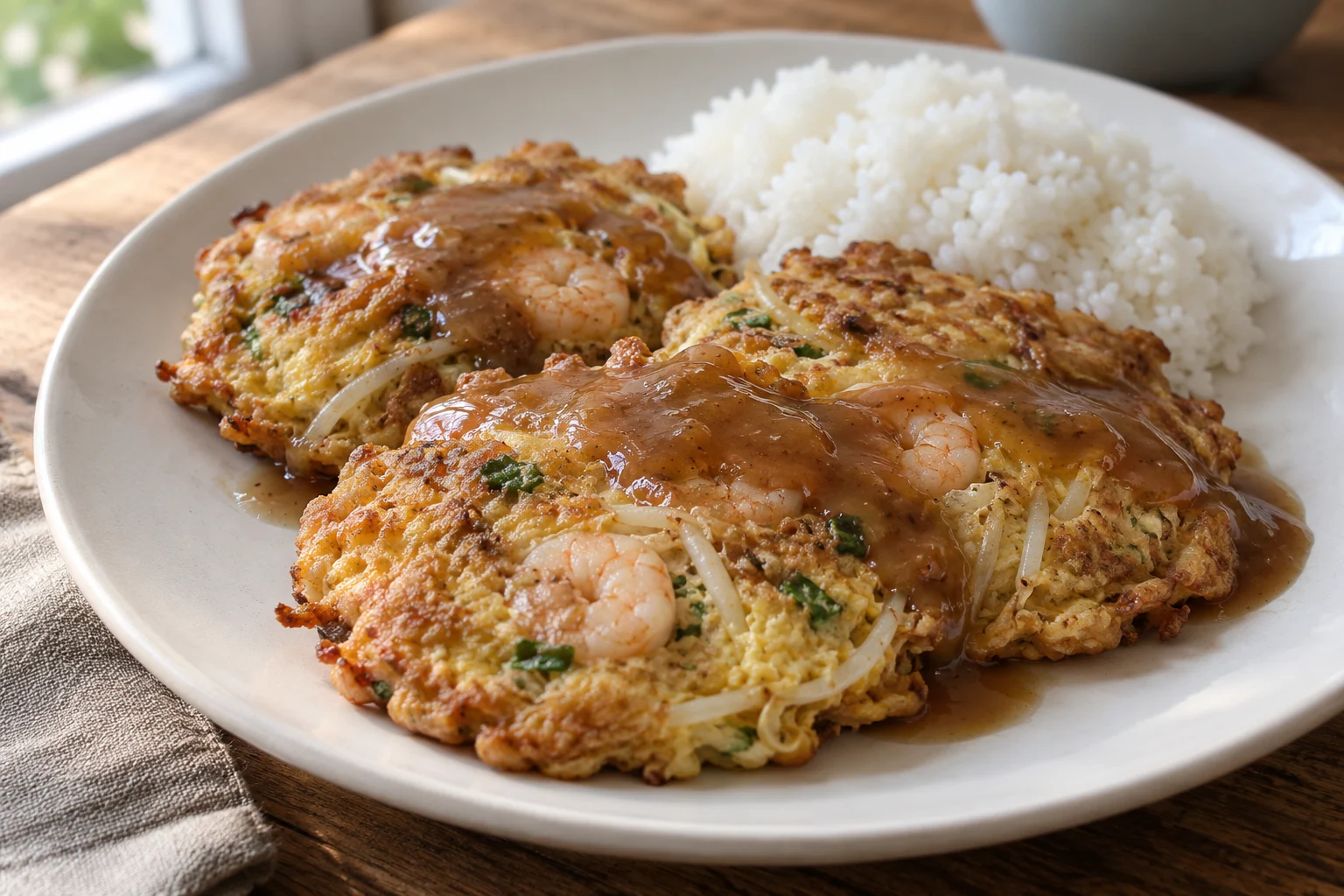
Chinese cuisine Omelette
Egg Foo Young: Prepare the Filling Before the Egg
Egg foo young rewards prepared, well-drained fillings and a patient first side. Compare large wok omelettes, small pan patties and brown-gravy finishes.
Chinese cuisine Braised pork dishes
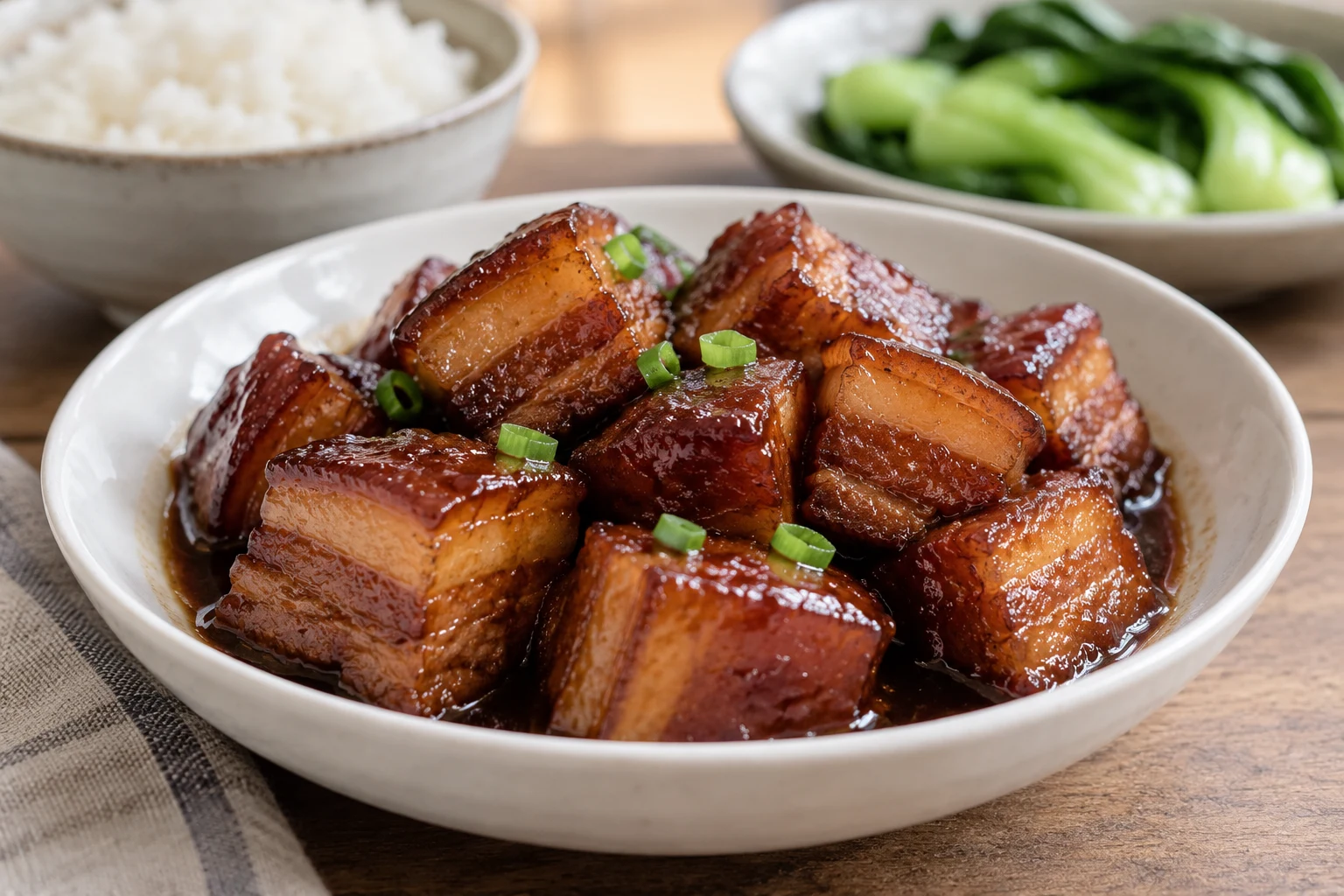
Hong shao rou: tenderness first, gloss at the finish
Understand red-braised pork belly through its layered cut, two sugar methods and the change from braising liquid to a glossy final sauce.
Japanese cuisine Fermented soybeans
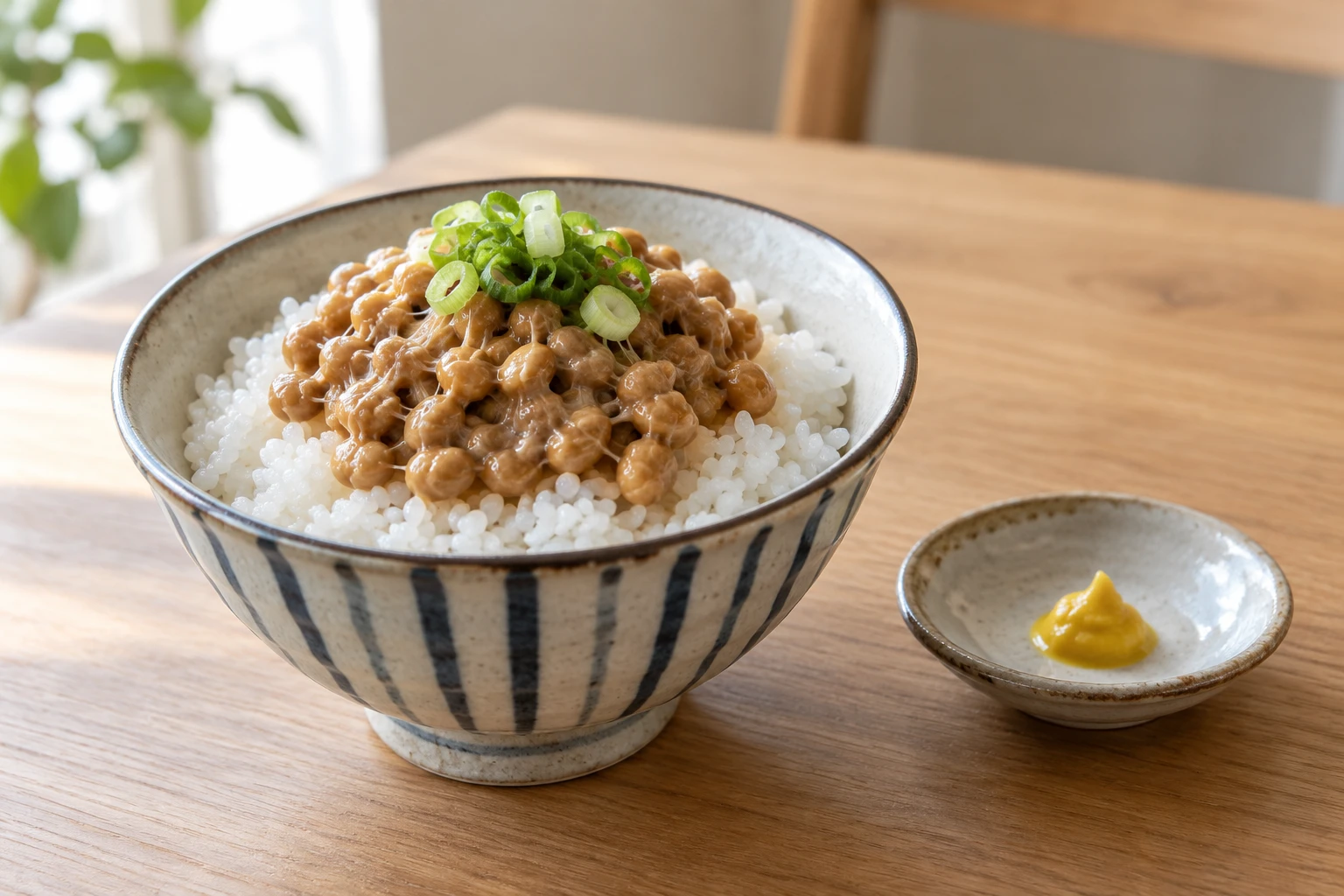
Natto: The Beans, the Stir, the Bowl
Whole or split soybeans, a sticky coating and a few seasonings shape a natto serving. Start with the product, then decide how to stir and pair it with rice.