
Pulmay: A Feast with Its Own Cup of Broth
Pulmay · Curanto en olla
In southern Chile’s pot-cooked curanto, the shellfish and meat are only part of the serving. The broth gets its own cup, while the potato accompaniments reveal how differently cooks can organize the same feast.
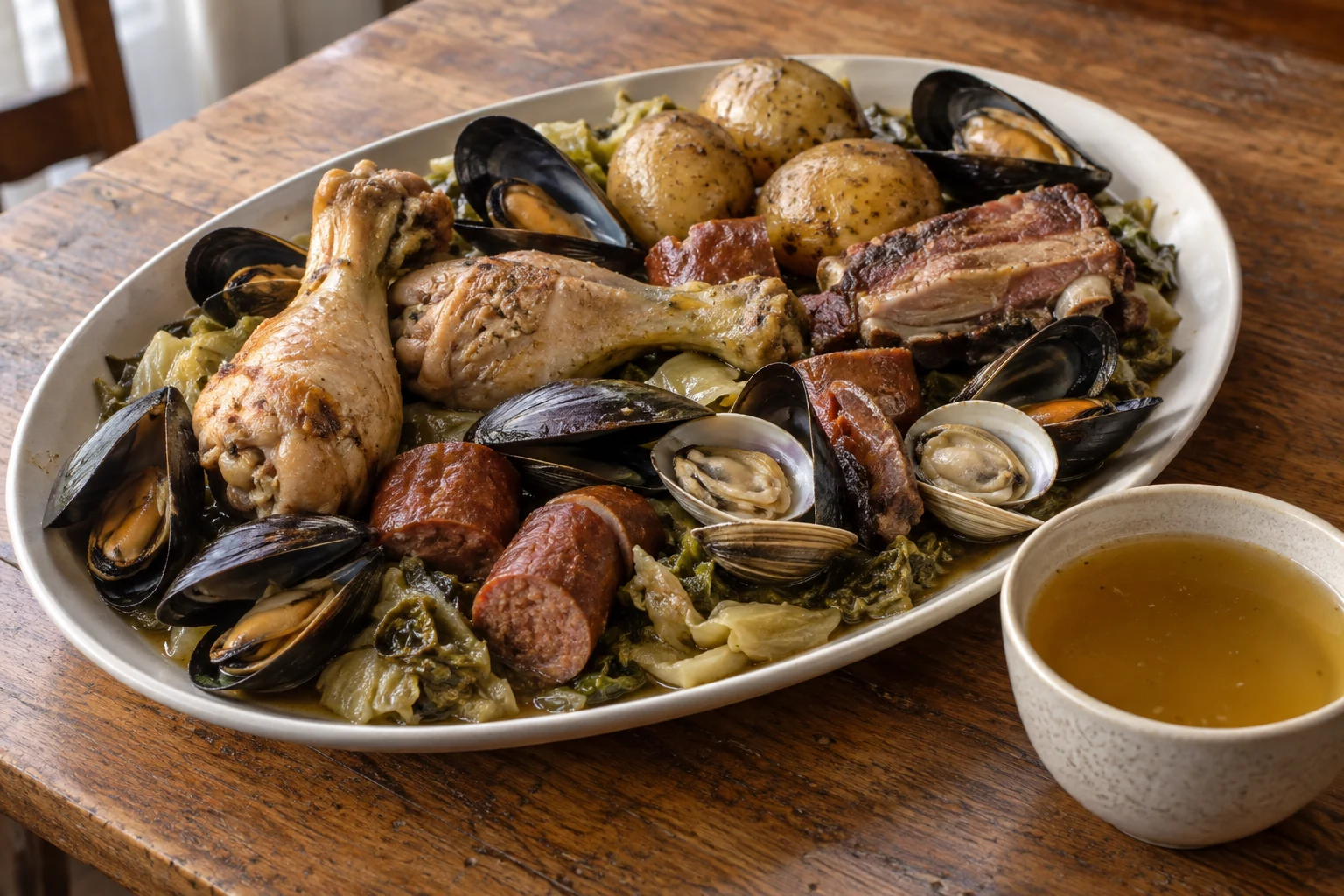
At the table
Make room for the broth
A platter of pulmay asks for more than a plate. Alongside the shellfish, chicken, smoked pork and potatoes, several Chilean recipes give each diner a cup or bowl of the cooking liquid. The broth is part of the serving, carrying the flavors gathered in the pot. Gourmet Chile makes the arrangement explicit: meat, shellfish and potatoes go onto a platter, with glasses of their broth alongside.
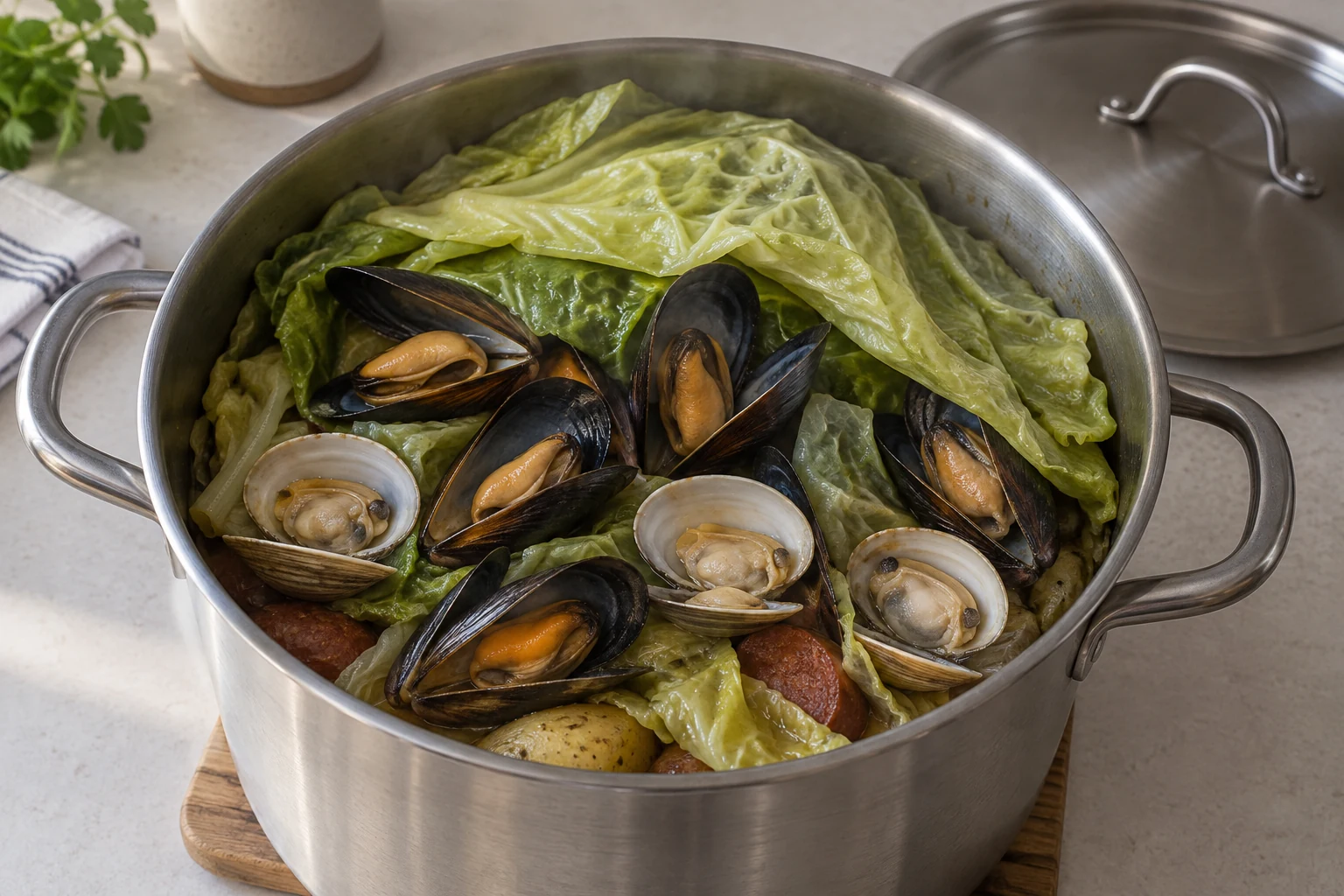
Pulmay is also called curanto en olla: curanto cooked in a pot. Chile’s patrimonial thesaurus places it in the south of the country and describes layers separated by cabbage leaves. ProCultura’s Patagonia Verde guide connects it with the coastal food traditions shared with Chiloé, including those of Chaitén and Hualaihué. What happens inside that pot, however, is not identical from one cook’s account to another.
Read the layers
The same dish, different arrangements
The potato accompaniments make the differences especially clear. These two published versions share layered cooking and a separate serving of broth, while organizing the meal differently.
The family menu: potatoes and doughs within
In the “De Puerto Montt con amor” menu in El Menú de Chile, smoked pork and longaniza are followed by chicken and whole potatoes. A covering separates these from the shellfish. Prepared milcaos and chapaleles occupy further layers above, with coverings between them. Wine and water supply the liquid; a bowl of the resulting broth accompanies each serving.
- Whole potatoes cook in the main pot.
- The potato doughs cook above the shellfish.
Marín’s version: accompaniments alongside
Roberto Marín Vivado describes a larger assortment of seafood and meat separated with cabbage. He keeps the whole potatoes in another pot and serves the milcaos and chapaleles fried. At the table, the cooked components fill separate platters, while the concentrated cooking liquor goes into a jug.
- Whole potatoes are cooked separately.
- Fried accompaniments join the meal at the table.
Inside and beside the pot
Layers describe an arrangement, not a single schedule
Pilar Rodríguez’s recipe for Enoturismo Chile offers another useful distinction: she starts cooking the chicken, then adds the sausage and smoked ribs, before putting the shellfish on top and covering them with cabbage. A layered dish need not mean that every ingredient enters the pot at the same moment. When following a recipe, its assembly and sequence belong together.
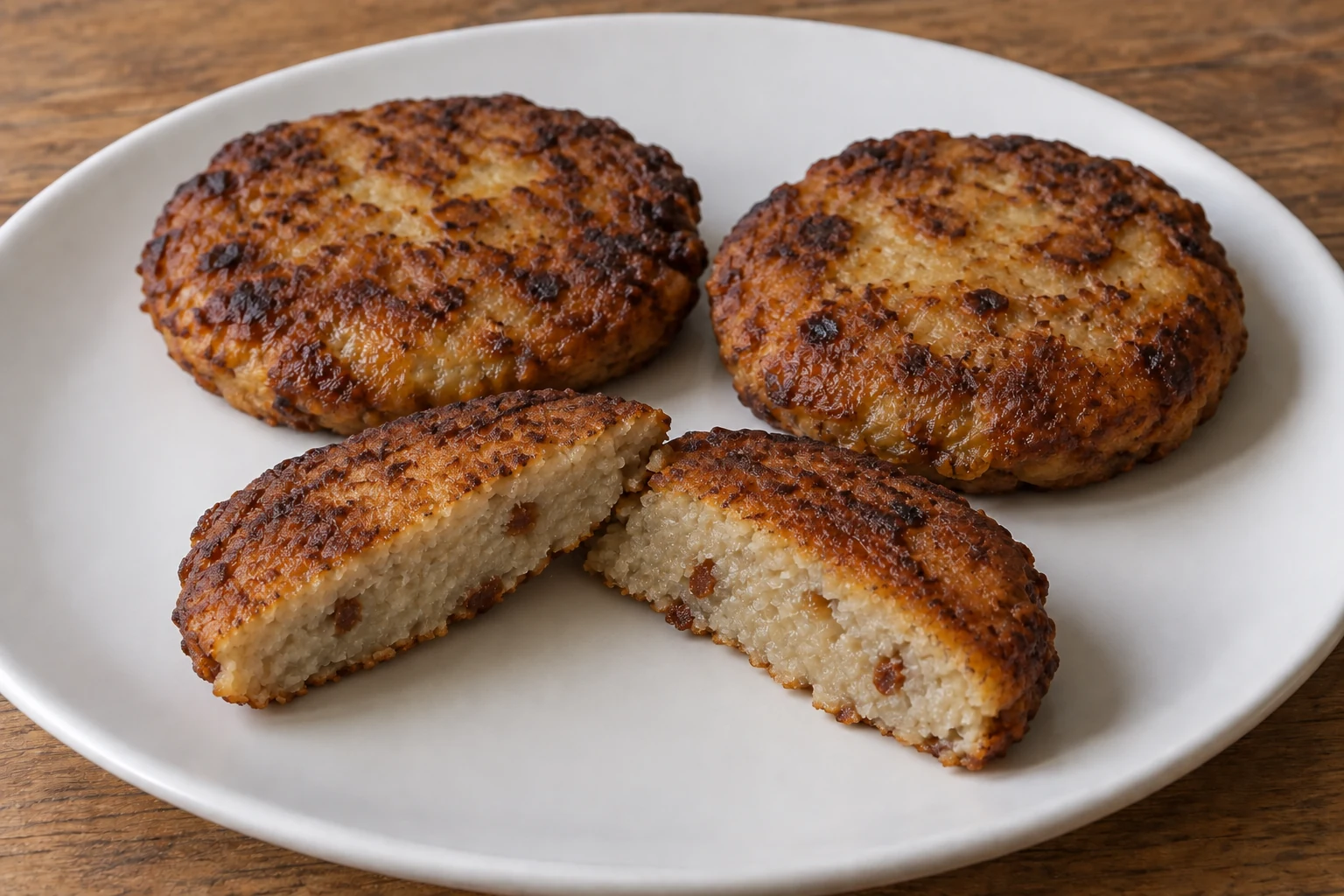
The potato doughs also deserve their own names. In Marín’s accompaniment recipes, milcao combines mashed cooked potato with squeezed, grated raw potato, lard and chopped pork cracklings. Chapalele uses cooked potato and wheat flour, with fat and cracklings in his version. They are different doughs, even when they appear at the same meal.
His milcao recipe allows frying, baking or cooking within the curanto. That range explains why the accompaniment can arrive with a browned crust in one version and cook among the covered layers in another. Whole potatoes, milcaos and chapaleles give the meal several expressions of the same staple; the method determines which ones share the pot.
Research notes
Sources behind the story
Chilean heritage records, local food writing and named recipes establish the dish and document its different arrangements. The accounts are attributed rather than combined into a single recipe.
- Servicio Nacional del Patrimonio Cultural — Pulmay Institutional definition of pulmay as curanto en olla, with southern Chilean context and cabbage-separated layers.
- ProCultura — Patagonia Verde Printed pages 17, 43 and 74 place pulmay in southern coastal foodways and describe its shellfish, meat and potato accompaniments.
- El Menú de Chile — De Puerto Montt con amor Printed pages 152–155 introduce Elfi Uribe Altamirano’s family menu; pages 172–173 give the layered pulmay and milcaos.
- Roberto Marín Vivado — El Curanto en Olla o Pulmay An authored account of separate potato accompaniments, serving platters, a jug of cooking liquor and cups for the diners.
- Roberto Marín Vivado — Milcaos The combination of cooked potato and squeezed grated raw potato, with lard and pork cracklings; several cooking options.
- Roberto Marín Vivado — Chapaleles A distinct dough of cooked potato and wheat flour, with fat and cracklings in this version.
- Gourmet Chile — Curanto en Olla o Pulmay Corroborates the platter service with separate glasses of cooking broth.
- Pilar Rodríguez, Enoturismo Chile — Pulmay A local chef’s variation that starts the meats before adding shellfish and a covering of cabbage leaves.
Keep exploring
More stories for your table
ChileBattered fish
Merluza Austral Frita: Flour First, Batter Second
A Chilean fried southern hake adaptation with two coating stages, an egg-free beer batter and separate checks for crisp crust and cooked fish.

PortugalSeafood
Polvo à Lagareiro: The Olive Oil Is the Sauce
Tender octopus, lightly cracked potatoes and a garlic-and-olive-oil finish: understand the separate cooking jobs behind Portuguese polvo à lagareiro.

ThailandPork braise
Moo Hong: Tender Pork Before a Rich Sauce
Phuket’s soy-braised pork rewards a patient simmer. Learn how to manage the liquid, understand its spice variations and cook a pepper-focused home adaptation.