
Caldillo de congrio: build the broth, protect the fish
Caldillo de congrio
A practical guide to Chilean caldillo de congrio, from fish cuts and stock choices to potatoes, shellfish, dairy finishes and gentle final cooking.
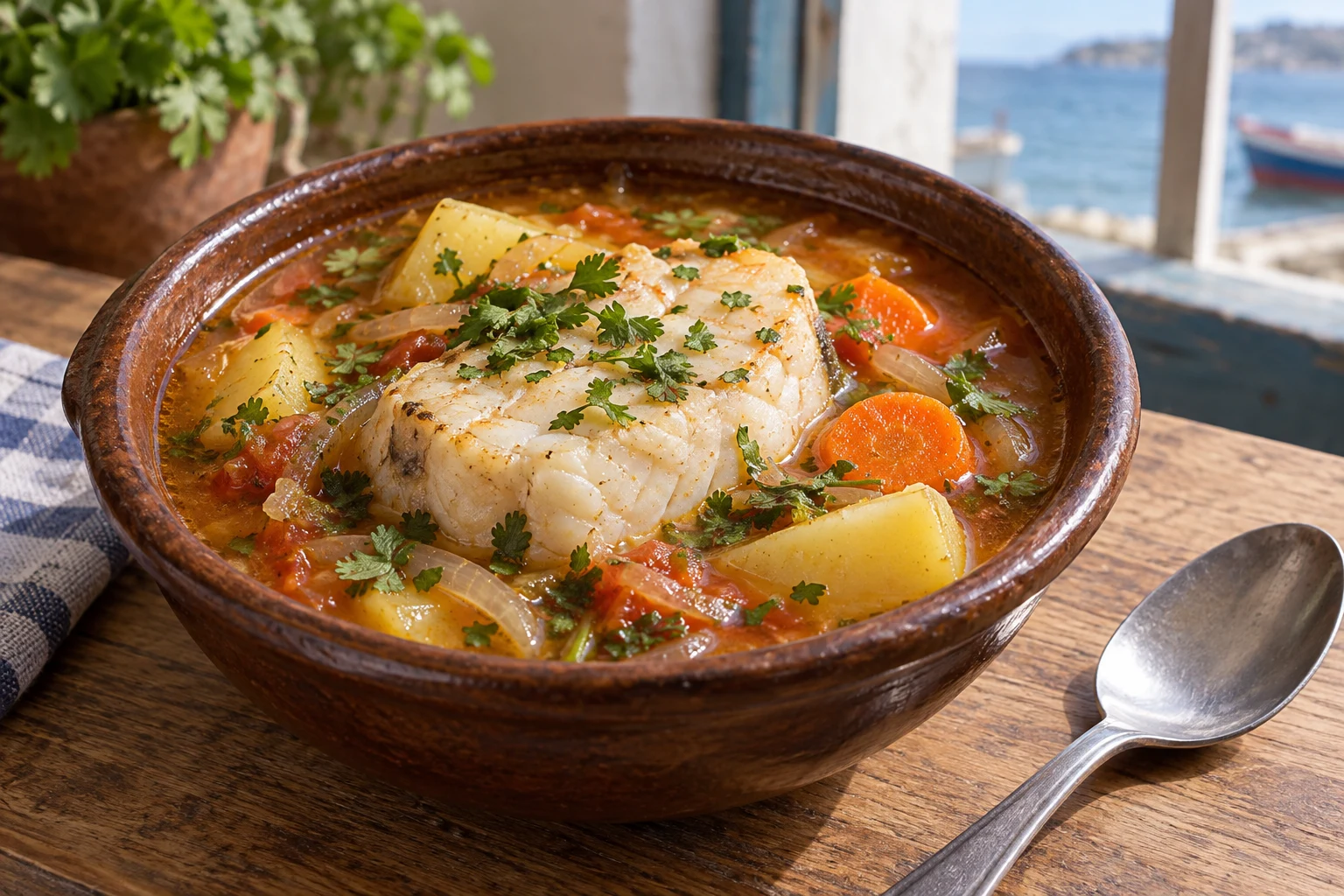
The best practical way into caldillo de congrio is to think about the broth and the fish separately. The Chilean preparations gathered here put a substantial piece of fish in a seasoned liquid, but differ over potatoes, dairy and additional seafood. A bowl can be a relatively simple fish-and-vegetable soup or a more elaborate mixed-seafood preparation.
Start by asking which congrio and which cut you are buying. Mauricio Navia Catalán names dorado, colorado and negro in his recipe. The FDA's fish-name reference identifies congrio negro as Genypterus maculatus, also called black cusk-eel or black kingklip. The local name therefore deserves attention when shopping; an English label containing the word eel alone is a poor specification for this dish.
Three choices to settle before cooking
- The cut
- Thick steak or fillet portion
- The liquid
- Fish or vegetable stock
- The body
- Potatoes or more seafood
Navia uses thick slices with skin and bones. Paula's version uses skinless medallions. Decide whether each diner will receive a bone-in portion, and ask the fishmonger to prepare it accordingly.
Navia builds his stock from the fish head. Virginia Demaría's ingredient list instead names vegetable stock. These choices give different foundations; a homemade fish stock is not compulsory in every published version.
Potatoes are prominent in Navia and Demaría. Chef Pilar Rodríguez's Enoturismo preparation takes another route, adding mussels, shrimp and scallops. Choose the meal's shape before filling the pot.
Finish the liquid before finishing the fish
- 01
Give the vegetables a head start
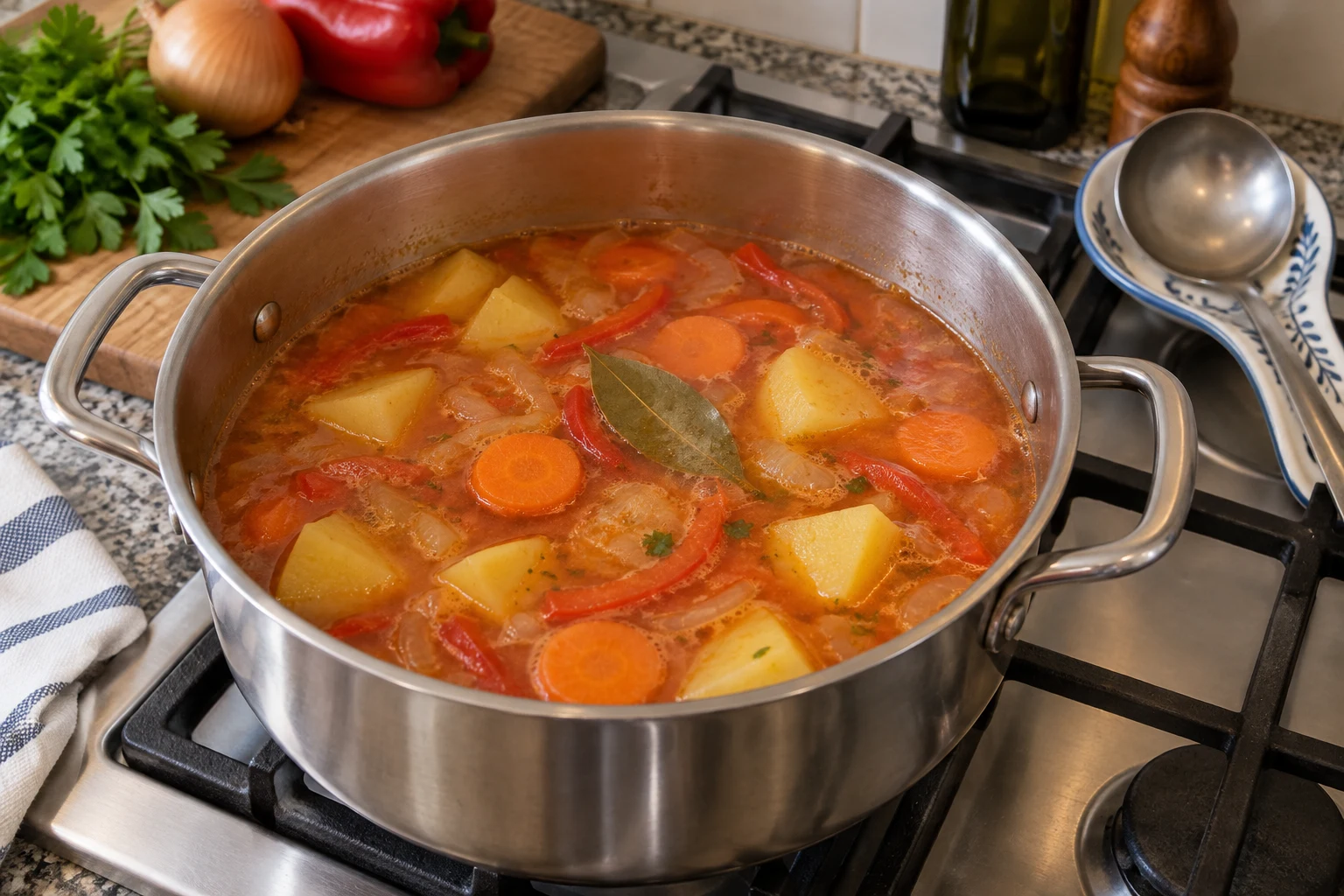
Onion, garlic, carrot and pepper form an aromatic base in the preparations. Rodríguez softens them with ají de color, adds wine and then builds the tomato-and-stock liquid. Navia's potatoes and vegetables cook before his final fish slices are added.
- 02
Check the slowest ingredient
When potatoes belong to your chosen recipe, test a piece with a knife before expecting the fish to finish the job. A large potato chunk can need longer than a fish portion. Similar-size vegetable pieces make that decision easier.
- 03
Add portions with room around them
Lower the fish into the prepared liquid rather than burying it under ingredients still needing a long cook. Paula specifies a low heat and no stirring during this stage. A broad pot and gentle handling help preserve identifiable portions.
- 04
Treat shellfish as another cooking stage
Rodríguez adds her shellfish after the fish has entered the broth. A mixed pot requires checking each seafood component's doneness; one ready fish portion does not prove that every mussel or scallop is ready too.
The pot's order changes the bowl
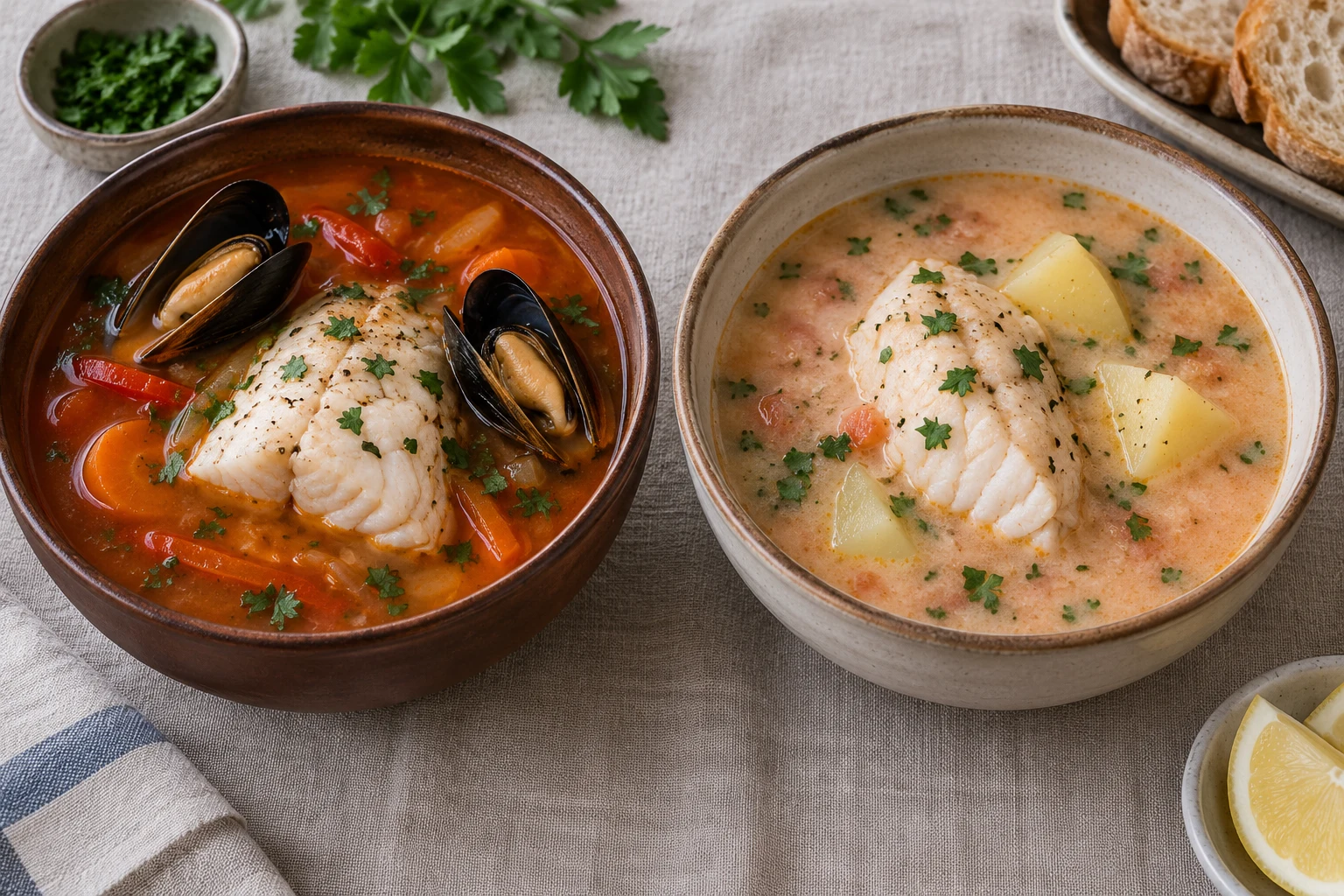
One view shows the vegetable stage; the other shows two distinct finishing directions.
Colour and richness are choices
Ají de color brings a red seasoning note to Navia's preparation. Rodríguez explicitly allows paprika, while Demaría's ingredient list uses a small amount of chili paste. Read those ingredients as specific seasonings, with different concentration and heat, rather than replacing them spoon for spoon simply because they share a colour.
Rodríguez leaves cream out and describes tomato acidity coming through clearly. Paula includes milk, creating a different finish, with cooked potatoes optional. Choose the effect you want: visible broth and tomato brightness, or a softer dairy-enriched liquid. Adding both every rich garnish and every extra seafood would change the balance of a simpler version.
Lift the portion, then ladle the broth
Use a broad spoon or fish slice to move the main piece into the serving bowl, then add the vegetables and liquid around it. That order avoids repeatedly fishing around with a narrow ladle and breaking the flesh. Leave enough visible broth for a spoon, and let diners handle any remaining bones deliberately.
Navia finishes with finely chopped parsley; Demaría names cilantro for serving. Either source offers a useful reminder that the fresh herb arrives at the table rather than disappearing into a long simmer. Fish is present throughout these versions; mixed seafood adds shellfish, while butter or milk introduces dairy. Ask about the actual bowl's ingredients when ordering.
Research notes
Sources behind this article
- Pilar Rodríguez · Enoturismo Chile Original chef preparation with tomato, fish stock, mixed shellfish and a cream-free finish.
- Mauricio Navia Catalán · Típico Chileno Original potato-based preparation with fish-head stock and thick skin-and-bone fish slices added near the end.
- Virginia Demaría Original ingredient list documenting vegetable stock, potatoes, butter, chili paste and cilantro.
- Paula · La Tercera Published 2011 preparation documenting milk, optional cooked potatoes and gentle cooking without stirring.
- FDA · Seafood List Official fish-name record linking congrio negro, black cusk-eel and black kingklip to Genypterus maculatus.
- FoodSafety.gov · Safe internal temperatures Official fish and shellfish cooking endpoints.
Keep exploring
More stories for your table
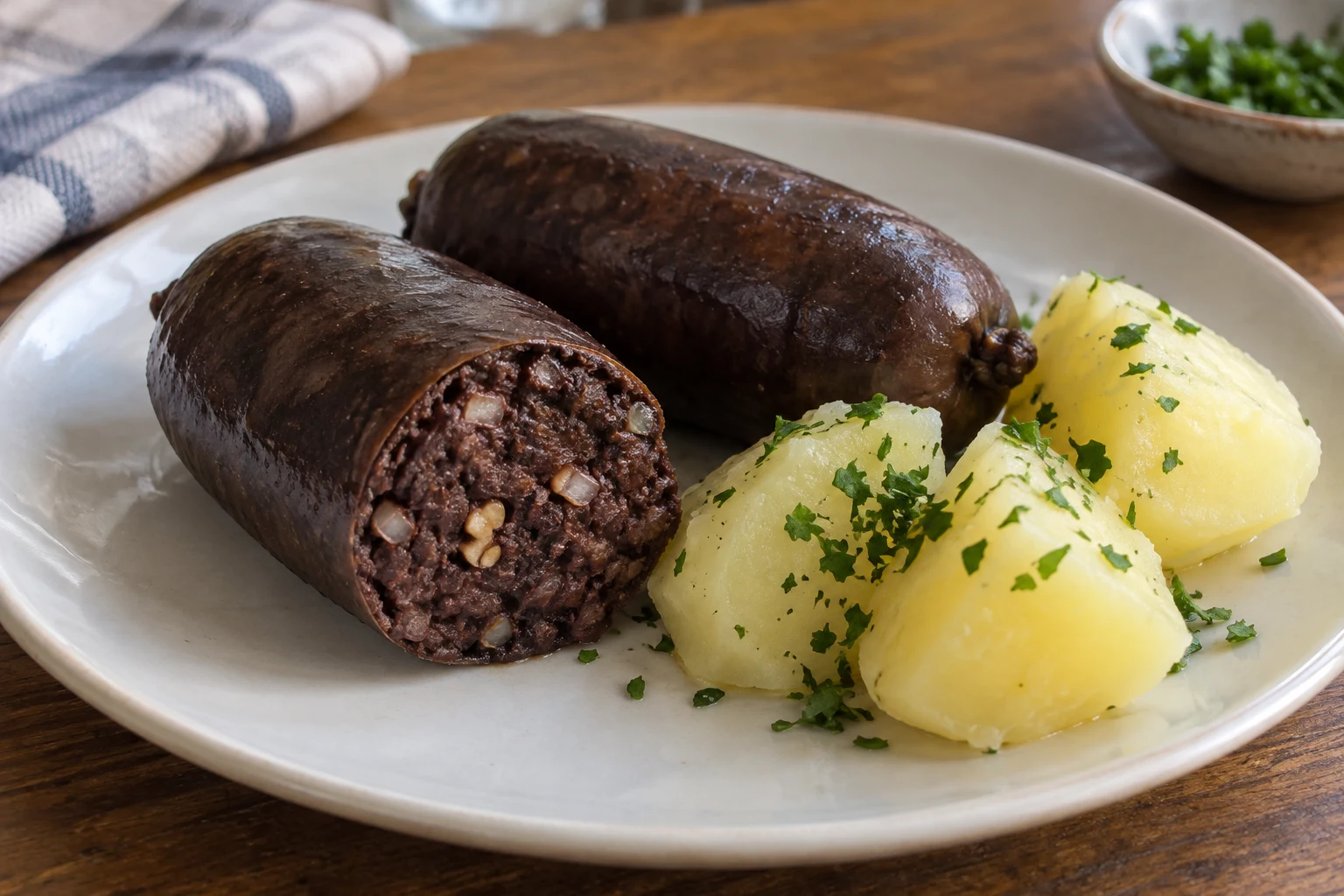
Chilean cuisine Blood sausage
Prietas: serve the soft filling three different ways
A practical guide to commercially cooked Chilean prietas: whole with potatoes, gently grilled, or removed from the casing for a walnut-rich filling.
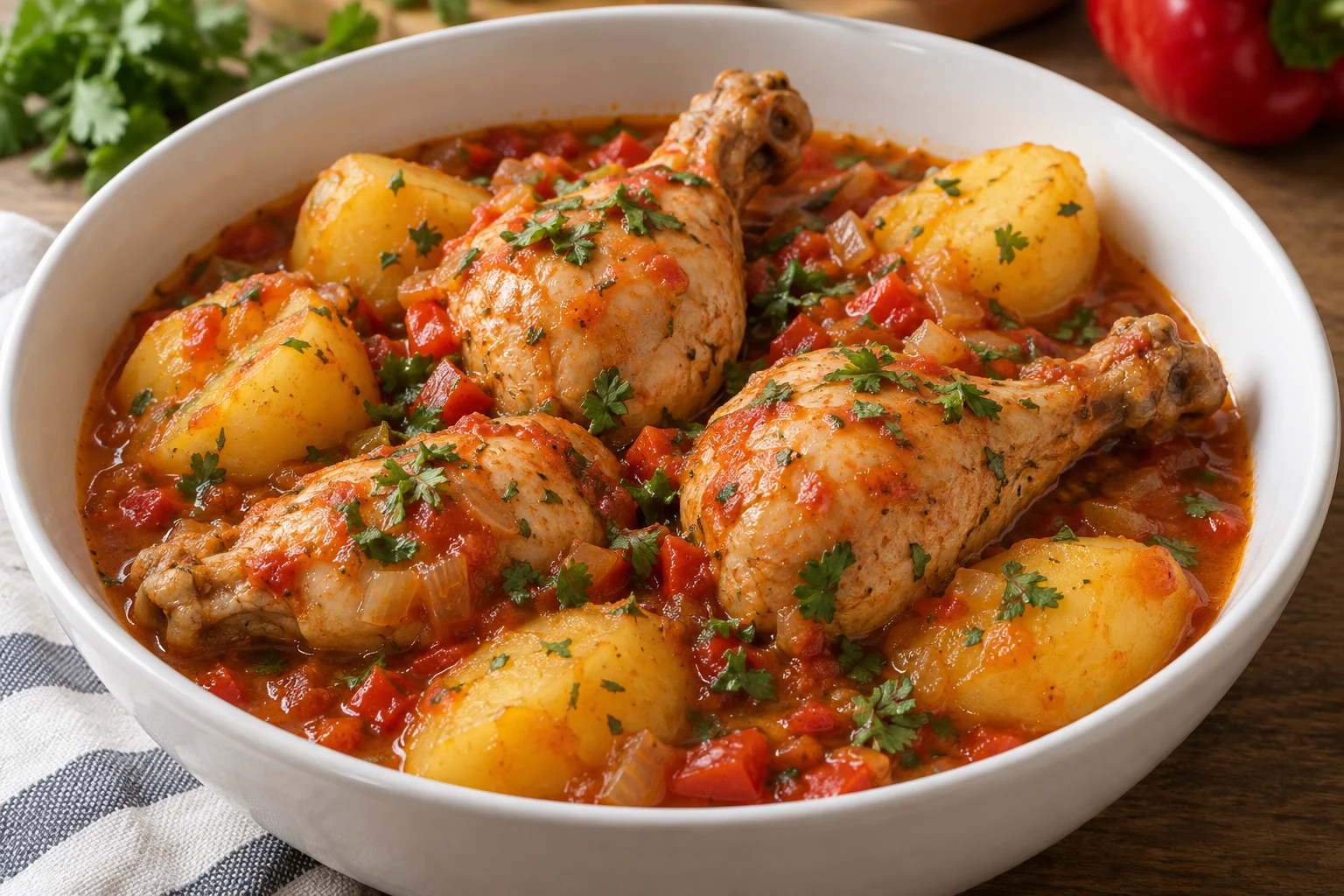
Colombian cuisine Chicken stew
Sudado de Pollo: Read the Potato Schedule
Cook a Colombian-style sudado de pollo with a tomato base and a separate potato stage. Includes a complete stovetop adaptation and documented household variations.
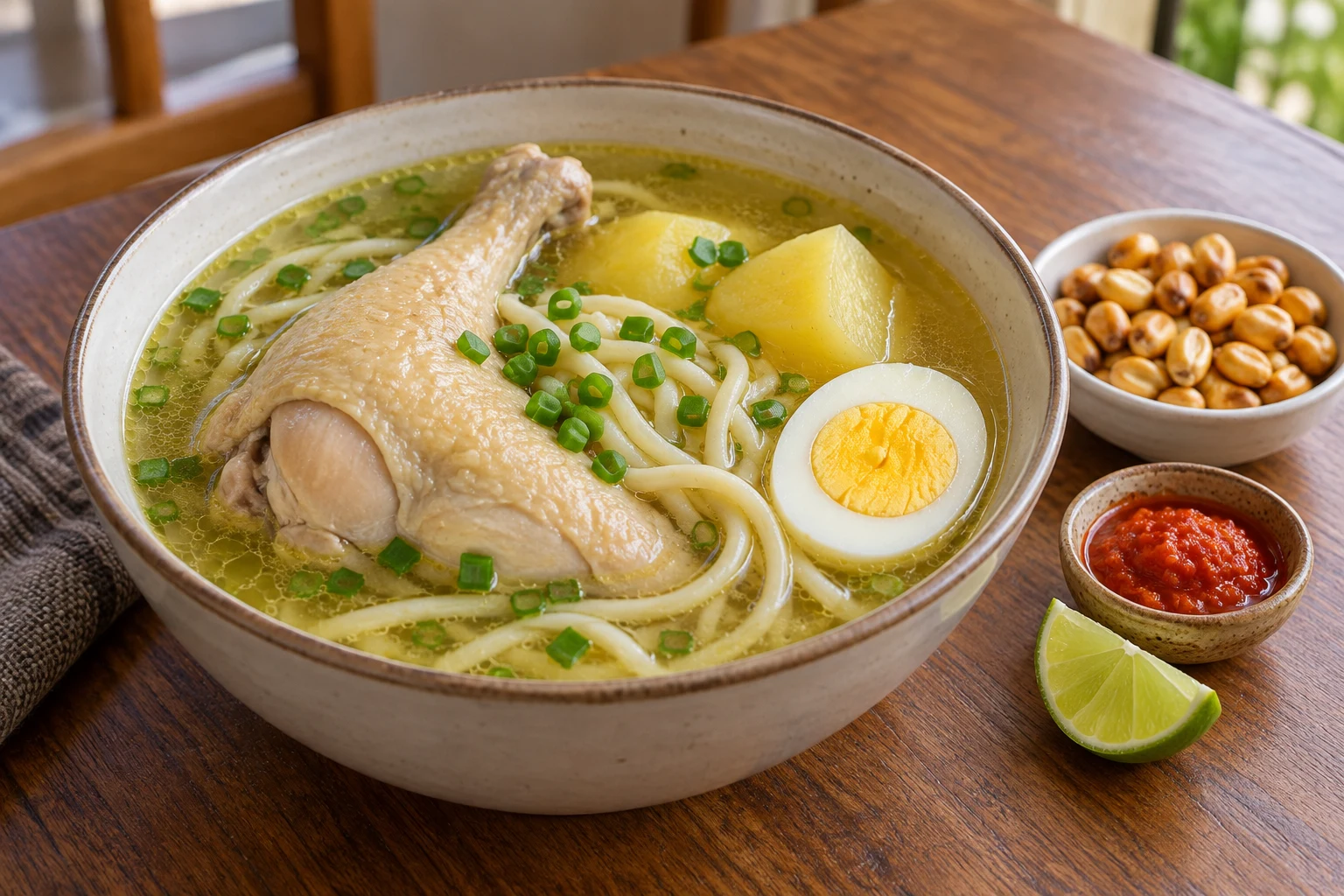
Peruvian cuisine Soup
Caldo de Gallina: Let the Hen Set the Pace
A satisfying Peruvian hen soup depends on timing the meat, yellow potatoes and long noodles separately. The garnish belongs to the final minute.