
Prietas: serve the soft filling three different ways
Prietas
A practical guide to commercially cooked Chilean prietas: whole with potatoes, gently grilled, or removed from the casing for a walnut-rich filling.
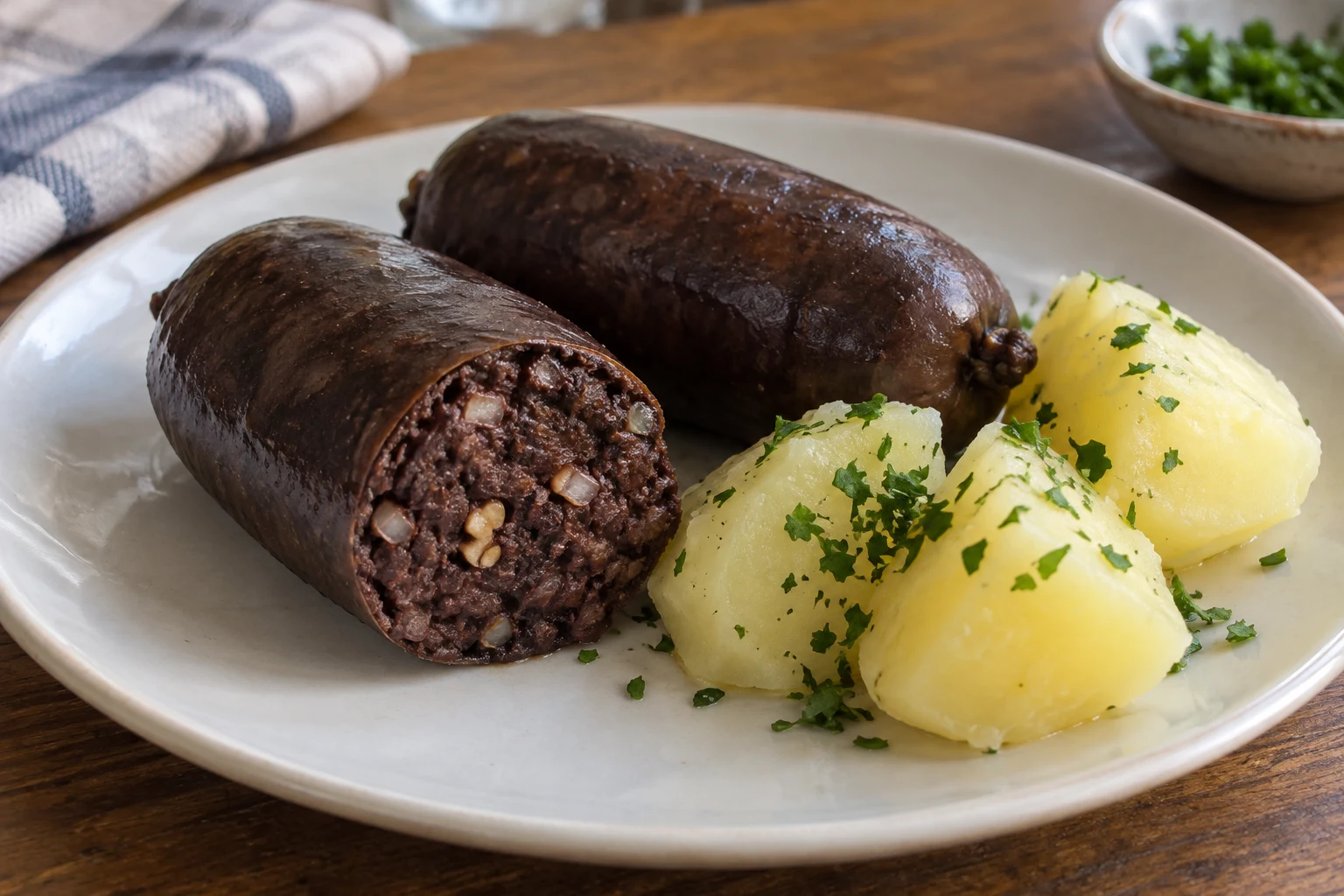
Prietas are Chilean blood sausages whose dark casing holds a soft, seasoned filling. Blood, onion, fat and seasoning form a familiar foundation, but the name does not promise one fixed mixture. Some versions include rice or walnuts; others add different ingredients. The sausage you buy, and the way you intend to serve it, matter more than a single imagined national formula.
The contrast is useful: a whole link gives a portion with a defined outer skin, while the removed filling can spread over bread or combine with another dish. This guide concerns commercially made, fully cooked prietas. Check that status and the maker's instructions before using these serving examples; the colour of blood sausage cannot establish how it was processed.
Choose the form before heating
- Whole with potatoes
- A simple plate
- Gently grilled
- Casing contrast
- Without the casing
- A spoonable filling
Boiled potatoes sit beside the link, with a little parsley or cilantro. The filling stays contained until the diner opens it.
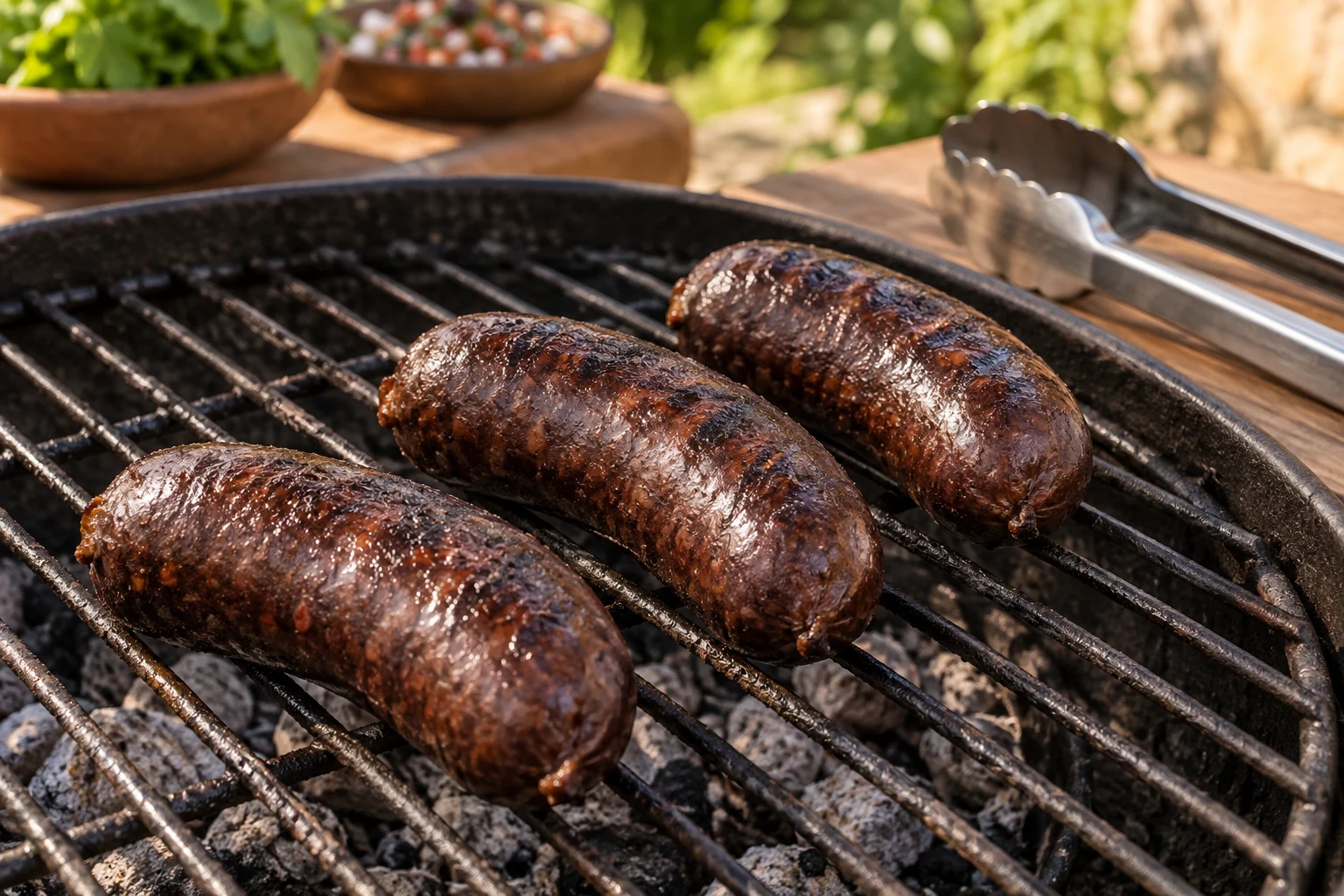
Light surface marking gives the outside more definition while the filling stays soft.
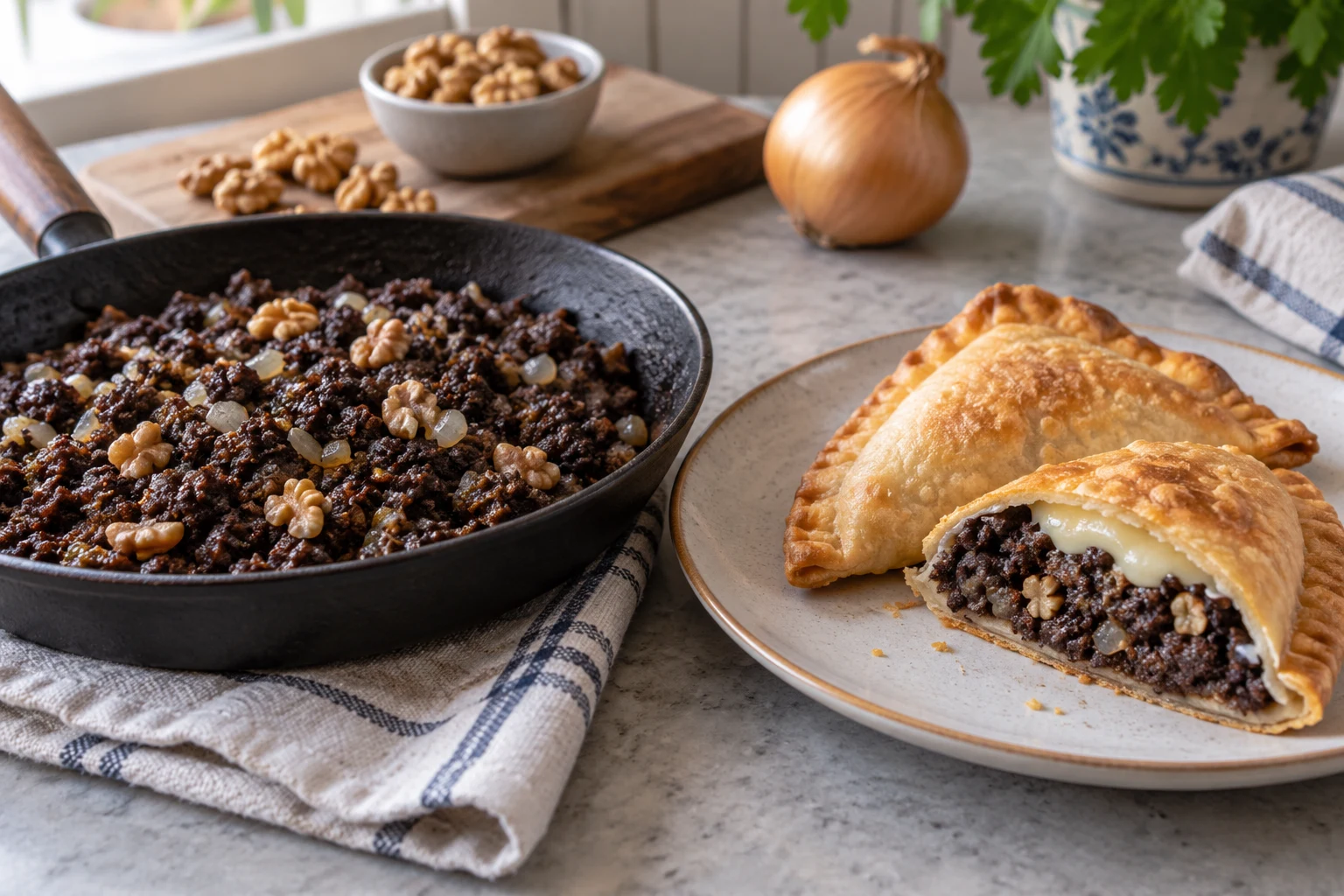
The cooked interior can combine with walnuts and onion, or enter a pastry preparation.
Two heating paths serve different purposes
Water, then a pan finish
Silvana Cocina's recipe for Sal Lobos heats the links in water, drains and dries them, then browns them in a pan. The potatoes cook separately. Drying is the useful transition: a wet link enters the pan carrying water as well as filling. Her herb finish goes over a plate served hot, rather than a sauce hiding the sausage.
Gentle grill warming
Álvaro Peralta Sáinz describes Chilean prietas sold already cooked and recommends gentle heat and delicate handling on the grill. He values the slightly firmer casing against the soft interior. This method asks for restraint. A dramatic split may look rustic, but it releases the filling that a whole-link presentation was meant to keep inside.
Keep a method's instructions in context
Published recipes give different handling instructions. Silvana's water-heating method pierces the links before they enter the pot; Peralta's grill discussion focuses on avoiding broken casings. Those directions address different cooking situations. Follow the product's instructions and the complete method you have chosen, rather than turning one detail into a rule for every prieta.
Decide whether you want an intact skin or a loose filling before reaching for the knife. There is little reason to protect a whole link through heating if the final dish deliberately uses its interior. Equally, repeatedly cutting a sausage to inspect it can spoil a presentation based on a complete portion.
Walnuts can belong to the next preparation
Norma's home recipe serves prietas with boiled potatoes and also gives a variation in which cooked sausage filling is removed and mixed with chopped walnuts in a skillet. The nuts become part of that preparation; their presence does not prove that the original sausage contained them.
Gourmet Chile takes the filling in another direction: uncased prieta joins softened onion and walnuts before becoming an empanada filling with cheese. It is an example of the sausage doing more than sitting on a grill. Use the complete pastry recipe if you want that dish, including its assembly and cooking instructions, rather than treating a photograph as a formula.
Research notes
Sources behind this article
- Álvaro Peralta Sáinz, La Tercera Chilean prieta varieties, gentle warming of cooked sausages and casing/filling contrast.
- Silvana Cocina with Sal Lobos A water-heating, draining and pan-browning path with separately cooked potatoes.
- Cocina Chilena e Internacional Norma Home-cooked prietas with potatoes and a separate uncased walnut variation.
- Gourmet Chile: empanada de prieta An example using the removed filling with onion, walnuts and cheese in pastry.
- FoodSafety.gov temperature chart Food thermometer guidance and the 74°C/165°F reheating temperature for leftovers.
Keep exploring
More stories for your table
Chilean cuisine Fish soup
Caldillo de congrio: build the broth, protect the fish
A practical guide to Chilean caldillo de congrio, from fish cuts and stock choices to potatoes, shellfish, dairy finishes and gentle final cooking.
Chilean cuisine Baked savory pastries
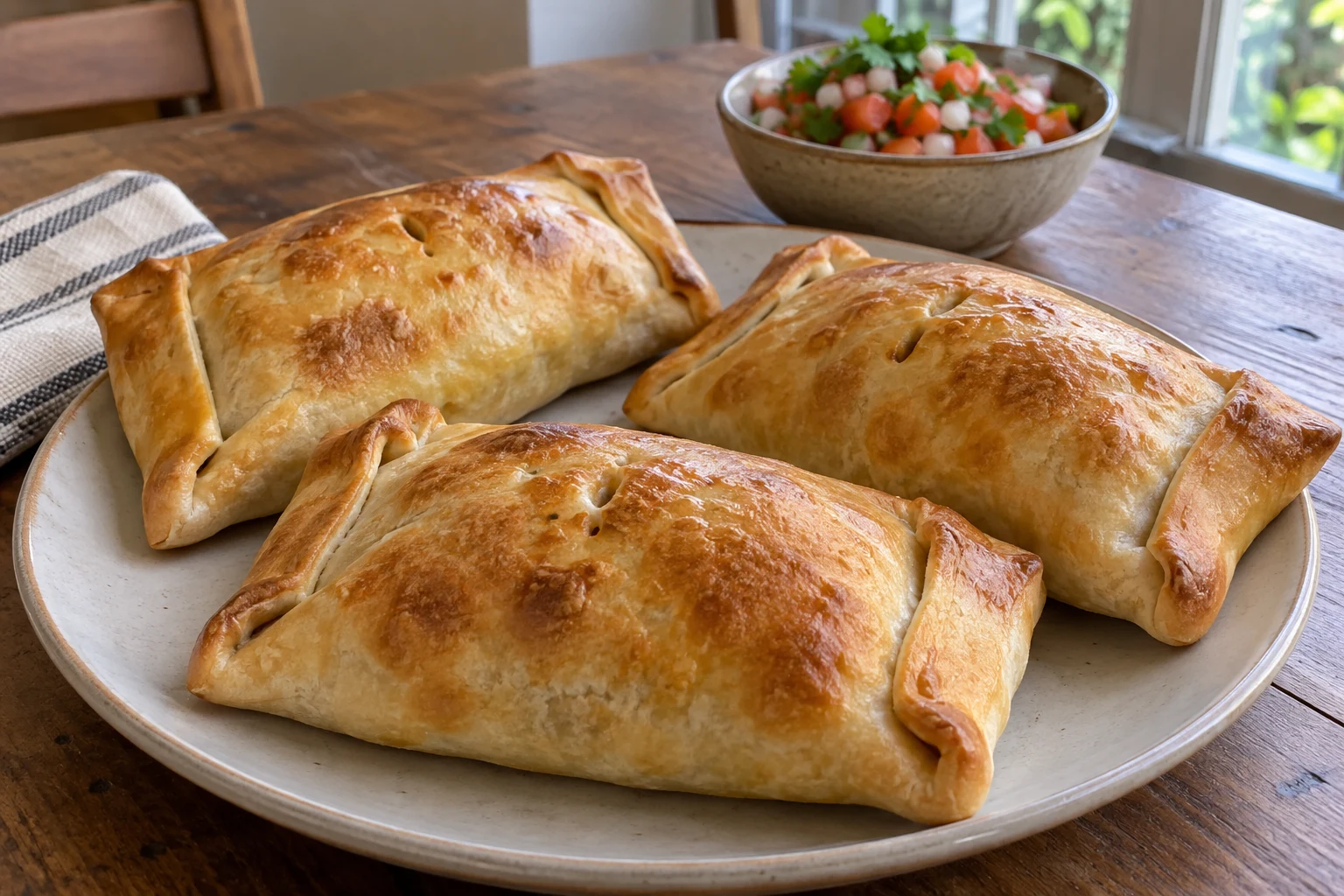
Empanadas de Pino: The Filling Comes Before the Fold
A Chilean oven empanada begins with cooked beef-and-onion pino. Compare filling methods, chilled assembly, folded edges and the separate egg-and-olive pieces.
Colombian cuisine Tripe soup
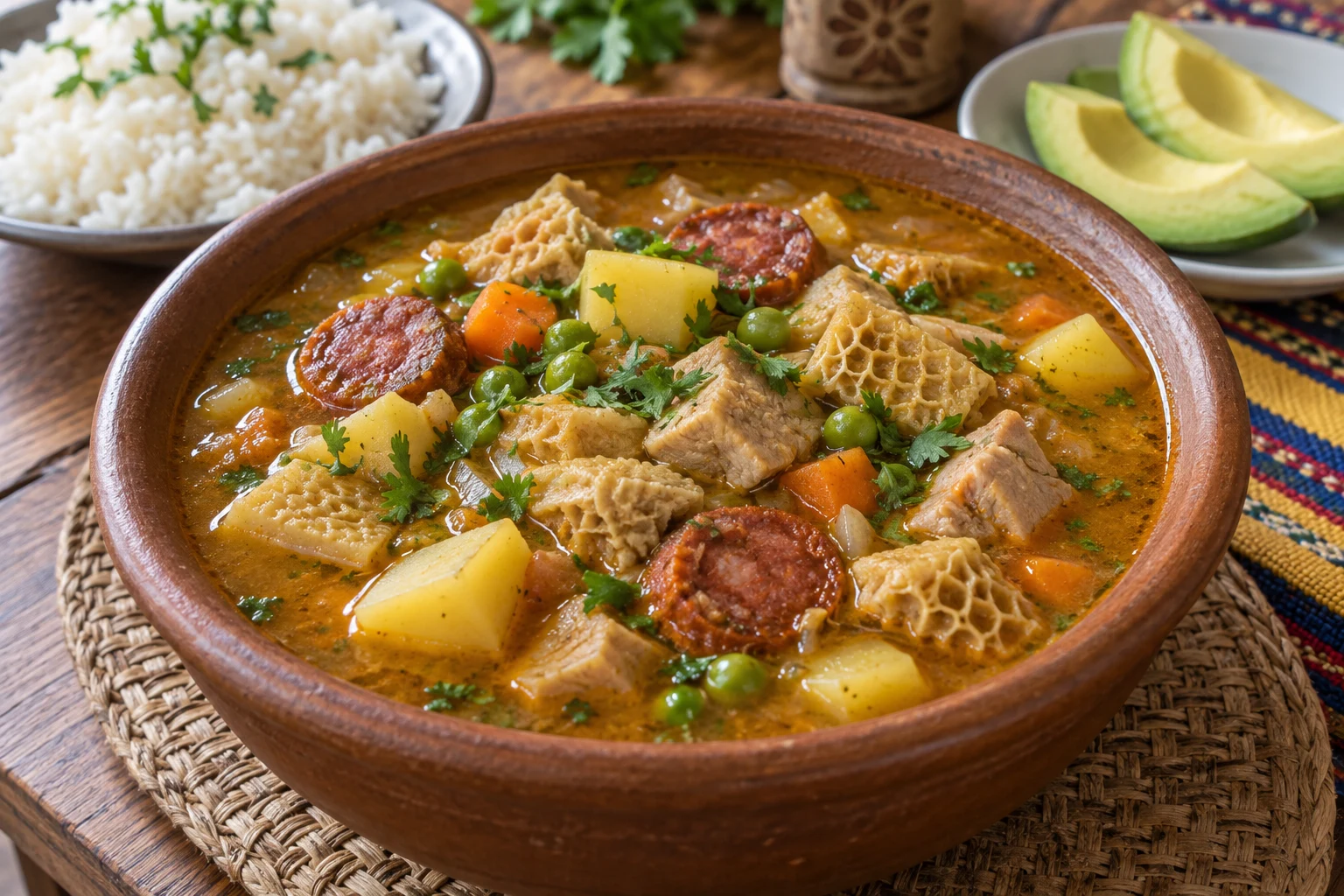
Mondongo: Give the Tripe Its Own Clock
Build Colombian mondongo around tender tripe, then time the potatoes and other vegetables separately. Four Colombian versions explain the choices.