
Empanadas de Pino: The Filling Comes Before the Fold
Empanadas de pino al horno
A Chilean oven empanada begins with cooked beef-and-onion pino. Compare filling methods, chilled assembly, folded edges and the separate egg-and-olive pieces.
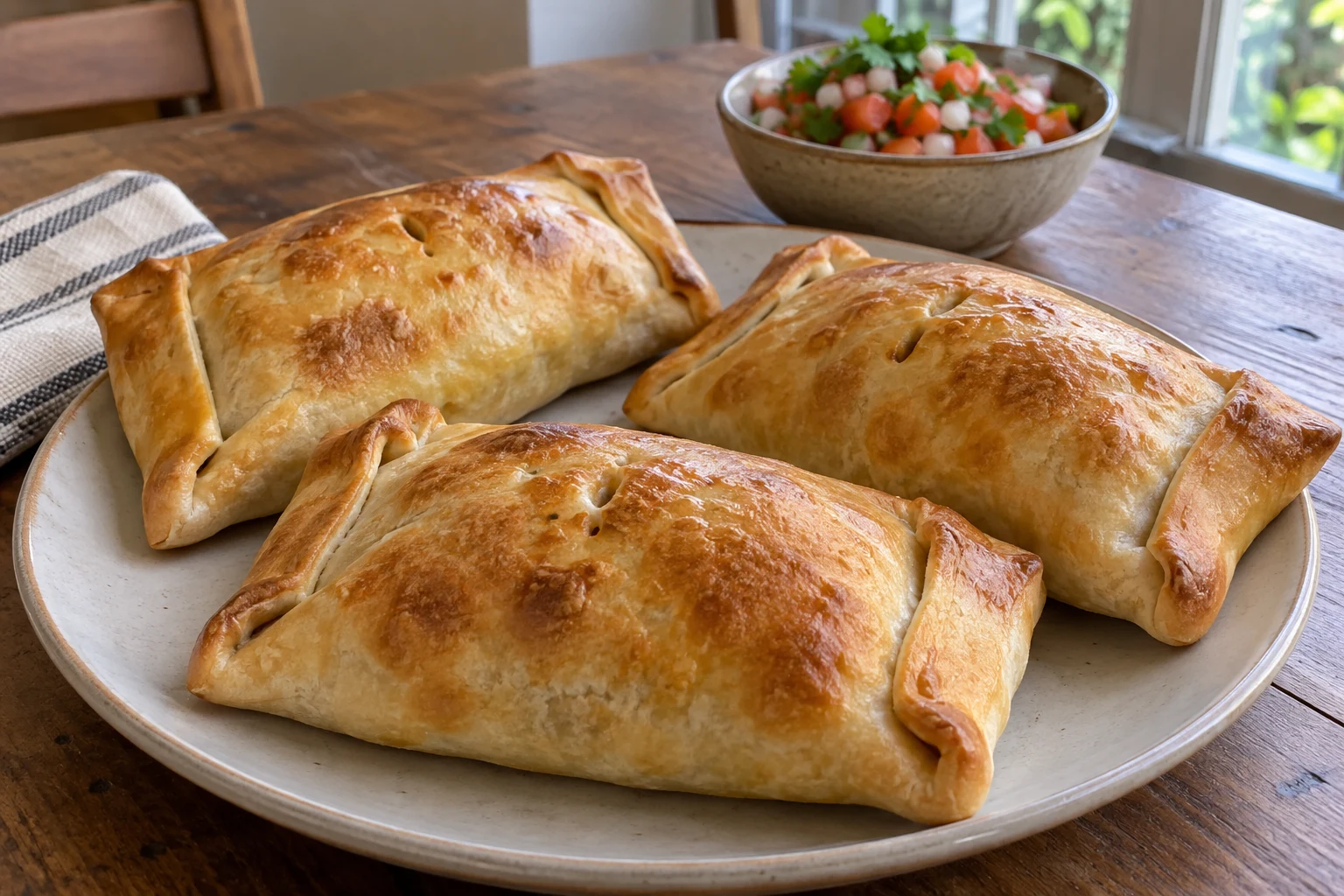
Plan the pino before the pastry
The golden shell gets the first glance, but the filling determines much of the work in a Chilean oven empanada. Pino is a cooked mixture of beef and onion, seasoned before it is enclosed in dough. Hard-boiled egg, a black olive and sometimes raisins are placed with that mixture as the parcel is assembled.
Chile Travel places empanadas at both everyday tables and the September Fiestas Patrias celebrations. Pilar Hernández’s recipe carries that connection into a particular family kitchen: she learned from her grandmother and describes making them around September 18 after moving to the United States. Preparing the filling ahead makes a batch easier to organize.
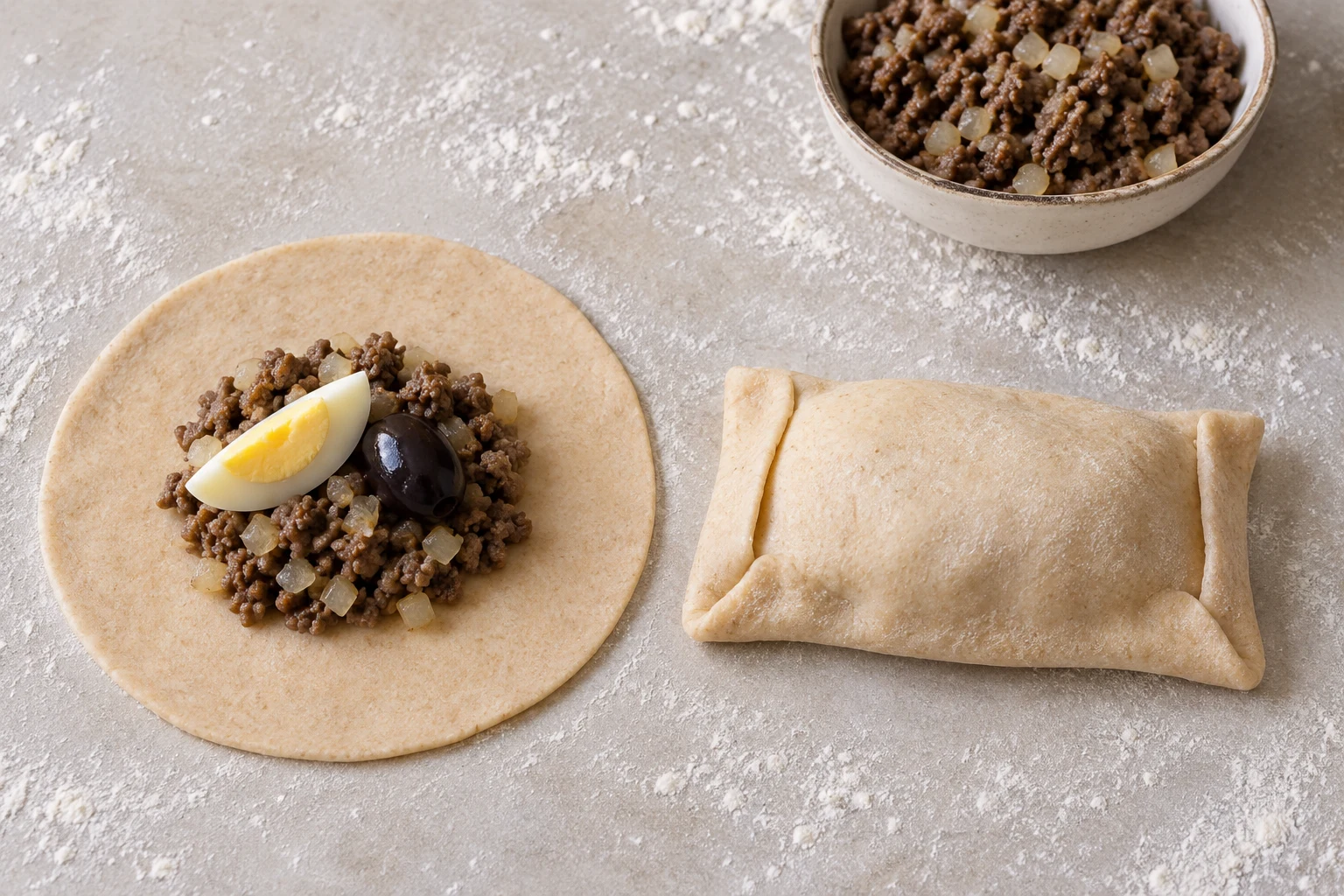
Three routes to cooked beef and soft onion
Hernández allows ground or finely chopped beef. Her method cooks the meat first, then adds onion and finally a little flour to bind the mixture. She directs cooks to make the pino the previous day and refrigerate it before assembly.
Unilever Food Solutions takes a different route: cook the finely diced onion separately, sauté chopped beef, combine them, then bind with dissolved cornstarch and cool. Its recipe is an example of a wheat-and-cornstarch dough as well as a bound filling, rather than a formula to mix into Hernández’s proportions.
Gourmet’s Chilean recipe cooks the onion until translucent without browning it, then adds small beef cubes and seasonings. It cools that filling before using it and does not list the same flour or cornstarch addition. The useful shared goal is cooked meat and softened onion in a filling suited to enclosing; the linked methods reach it differently.
The pino and the pieces added around it
Cooked together
Beef, finely cut onion and the recipe’s seasonings form the spoonable pino. Choose ground or chopped meat according to the whole method you are following.
Placed during assembly
A piece of hard-boiled egg and a black olive remain distinct inside the pastry. Gourmet marks raisins optional, and Hernández also lets the cook choose them.
Give the border room to close
A generous filling still needs a bare edge of dough. Gourmet moistens the disk’s border with water, closes it and folds the edges. Unilever seals with egg white; Hernández uses milk at the edge. These are separate recipe choices with one practical purpose: join the dough securely around the filling.
Portion size belongs with disk size and dough thickness. Gourmet’s spoonful and Hernández’s larger filling allowance appear in different formulas and yields. Keep those details together instead of assuming any circle of dough can hold the same mound.
Hernández also rolls portions individually, explaining that repeatedly rolling scraps makes her dough harder to handle. That gives the cook a useful batch plan: cover portions that are waiting, roll and fill one at a time, then continue.
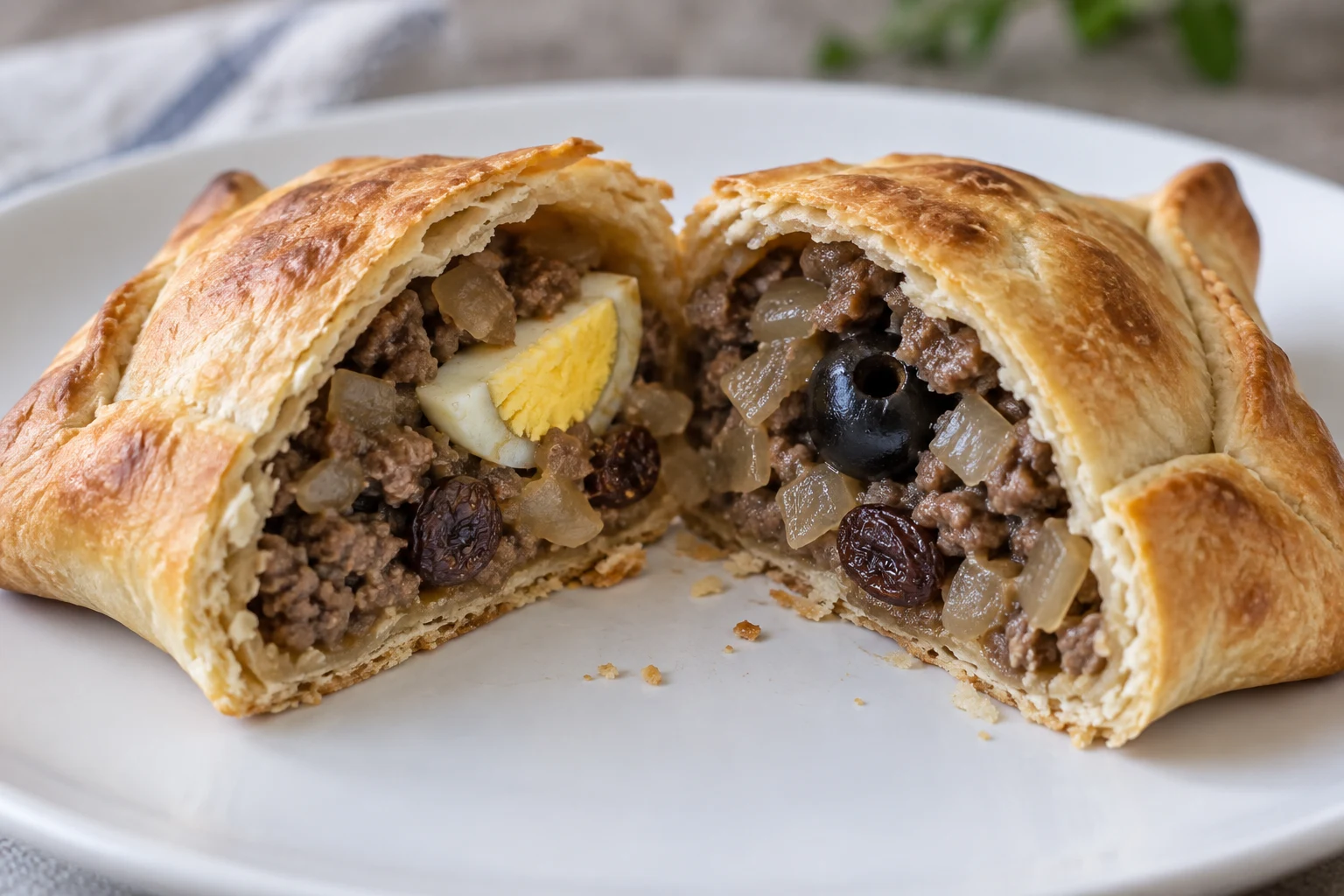
The finish adds color; the filling needs its own check
The named recipes brush the empanadas before baking, though their washes differ. A browned exterior is a useful pastry cue, while the cooked filling still needs appropriate heating. Follow the complete recipe’s dough, filling amount and oven instructions together.
If using ground beef, FoodSafety.gov gives 160°F (71°C) as its minimum cooking temperature. For reheating previously cooked, refrigerated filling or leftover empanadas, its guidance is 165°F (74°C), checked with a thermometer. Crust color cannot tell you the temperature at the center.
Serve the parcel while its layers are distinct
Chile Travel suggests pebre alongside a freshly prepared empanada. The chopped sauce stays outside the pastry, where a diner can add it as they eat. Inside, the beef and soft onion make a continuous filling interrupted by egg, olive and the optional sweet accent of raisin.
Choose a version deliberately, including its dough. These are wheat pastries containing egg; Hernández’s formula also uses milk, and other recipes or prepared doughs may bring different ingredients. When buying empanadas, ask about the filling and pastry rather than relying on the name alone.
Research notes
Sources for pino and pastry
An original Chilean family recipe, two Chilean recipe publishers, the official travel account and government temperature and cooling guidance support the feature. Complete recipes keep their own quantities.
- Pilar Hernández: Empanadas de Pino Chilenas Original family method; ground or chopped meat, chilled filling, individual dough portions and folded closure.
- Unilever Food Solutions Chile: Empanada de Pino Separate onion and chopped-beef cooking, cornstarch binding, cooled assembly and egg-white seal.
- Gourmet Chile: Empanadas de Pino Cooked translucent onion, small beef cubes, optional raisins and water-moistened folded edges.
- Chile Travel: La Empanada, Sabor Único de la Tradición Chilena Official account of everyday and September celebration service, including pebre.
- FoodSafety.gov: Safe Minimum Internal Temperatures Ground beef and reheated leftovers require their own thermometer checks.
- FoodSafety.gov: Four Steps to Food Safety Prompt cooling in shallow containers and refrigerated handling.
Keep exploring
More stories for your table
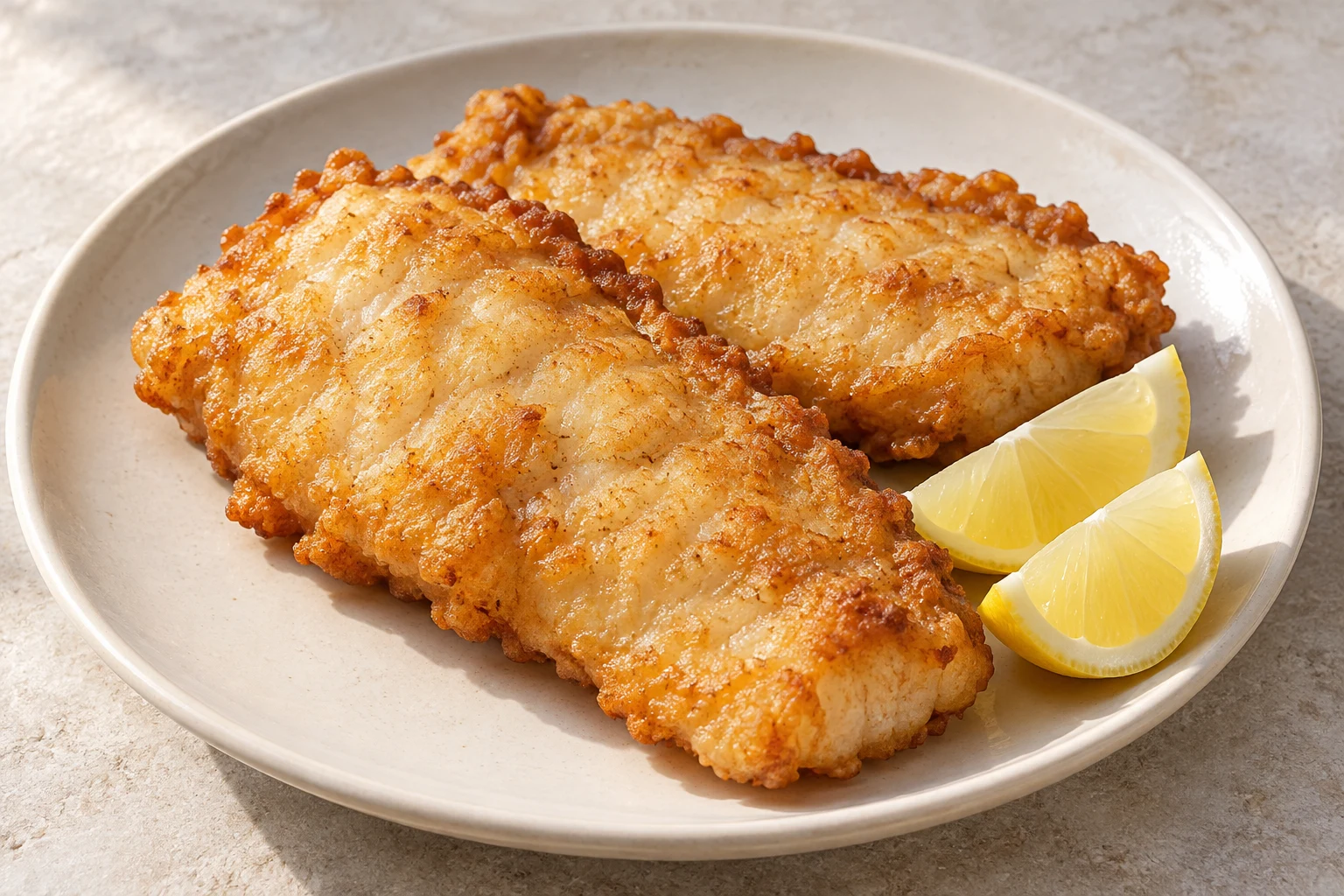
Chilean cuisine Battered fish
Merluza Austral Frita: Flour First, Batter Second
A Chilean fried southern hake adaptation with two coating stages, an egg-free beer batter and separate checks for crisp crust and cooked fish.
Polish cuisine Dumplings
Meat Pierogi: Make the Filling Moist Before You Fold
Turn cooked soup beef into Polish meat pierogi. Learn how onion, carrot and a little broth soften the filling, then make a complete home adaptation.
Moroccan cuisine Pastry
Briouats: A Small Filling, a Closed Fold
Savory Moroccan briouats depend on a compact cooked filling and a closed triangular fold. Read the wrapper and finishing method together before adapting a batch.