
Roast Duck: Three Checks Before Carving
Roast duck
A British-style roast duck dinner asks for rendered fat, crisp skin and properly cooked meat. Choose a complete roasting method before building the sides.
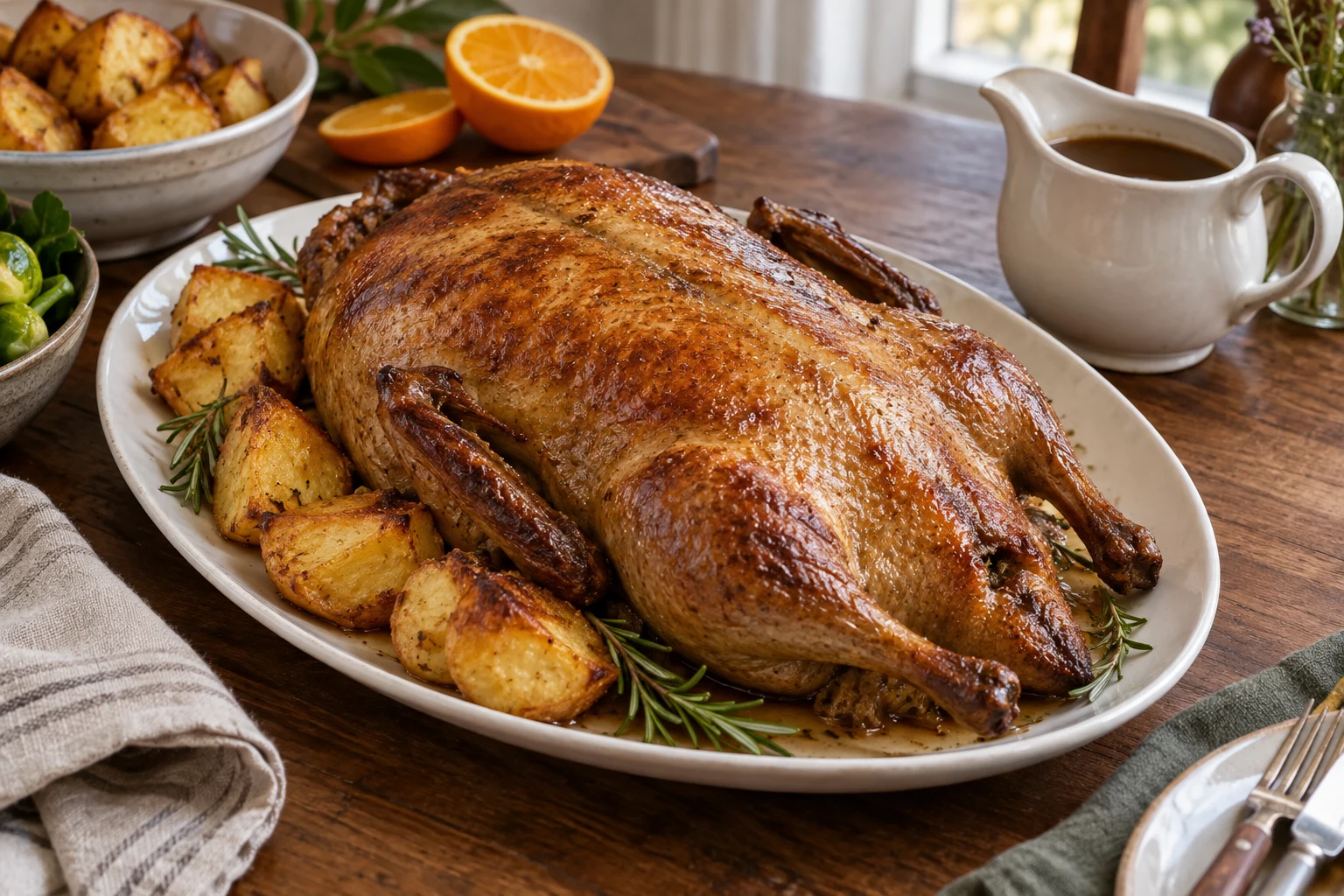
Color, fat and the meat need separate attention
A bronzed duck is an attractive centerpiece, but skin color alone cannot tell you whether the bird is ready to carve. A successful whole roast also needs the fat beneath the skin to render and the meat to cook through. Treat those as three related checks rather than assuming a brown surface answers every question.
The British cooks and producer cited here use different routes. Gressingham offers a straightforward salted roast on a rack. Jamie Oliver builds a festive dinner around potatoes and port gravy. Nigella Lawson separates an initial cook from a hotter finish, while River Cottage uses a covered, slower stage for very tender meat. Roast duck belongs to many cuisines; this is a guide to these particular British-published preparations, not a claim that the dish has one national origin.
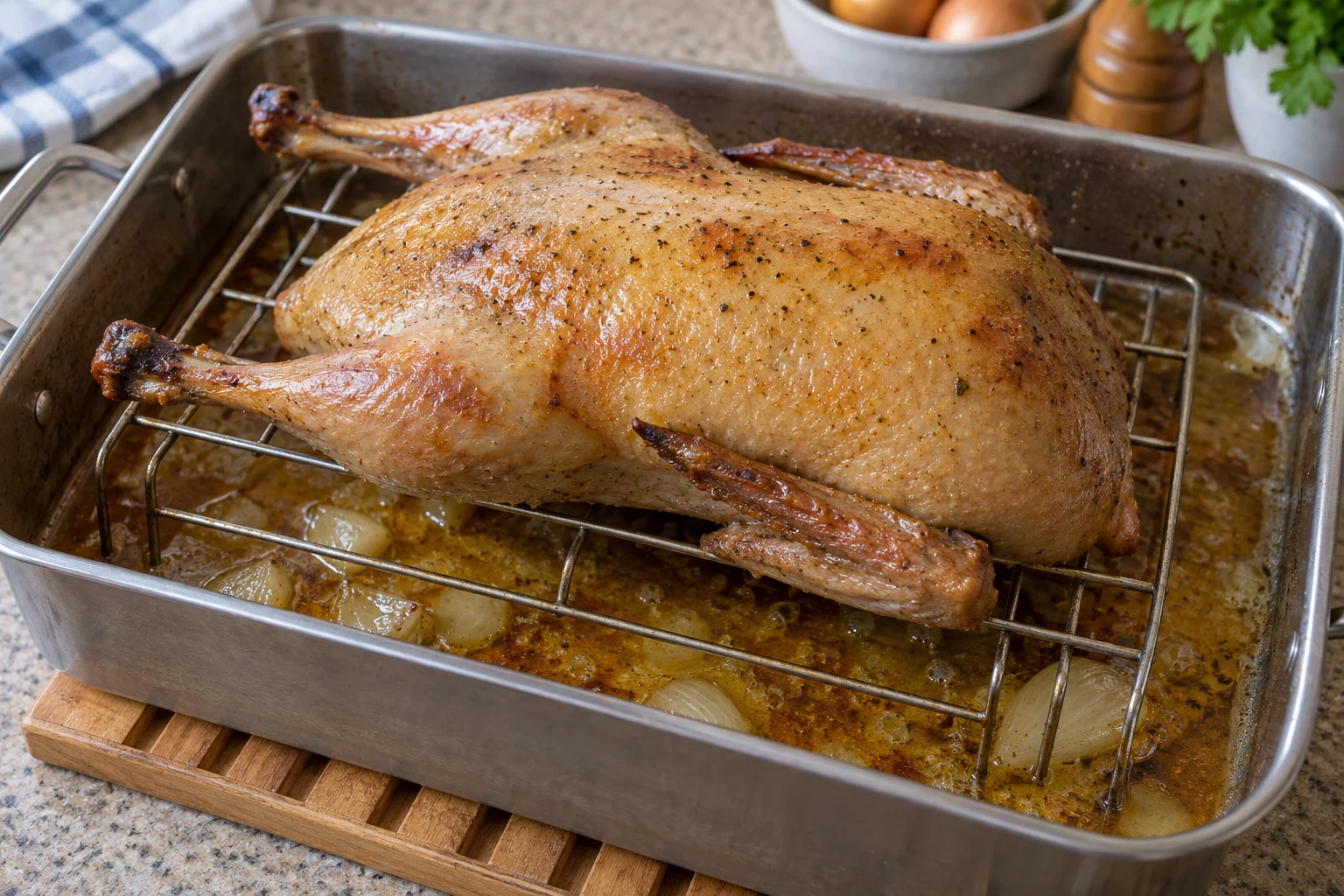
First, establish what is going into the oven
Follow the supplier’s thawing and preparation instructions. Remove packaging and check the cavity for a bag of giblets before cooking. Gressingham explicitly weighs the bird without those giblets because its roasting estimate uses the duck’s cooking weight. A number printed on the bag may include items you have removed.
Keep preparation clean and dry rather than washing raw poultry. Patting with kitchen paper removes surface moisture without splashing raw juices around the sink. Discard the paper and clean hands and equipment after handling the bird.
When a chosen recipe calls for pricking the skin, use a light touch so the openings release fat without cutting deeply into the meat. Set the bird on a stable rack that fits its tray. Give the collecting tin enough depth for drippings, and plan a safe way to handle it; a shallow baking sheet is a different tool from a deep roasting tin.
Choose one complete route
The plain roast
Gressingham’s retail method seasons the skin with salt and uses a rack, a weight-based roasting estimate and a rest. Its conventional and fan oven settings are different. Read the applicable setting and use the time as a guide, not proof of doneness.
Potatoes and port gravy
Jamie Oliver’s festive method flavors the duck with orange and rosemary, catches drippings over vegetables, and uses the fat for parboiled potatoes. The vegetables and juices become a separate gravy with stock, flour and port.
A tender fruit-sauce version
River Cottage starts hot, then covers the bird and reduces the oven heat for a long, tender cook. It separates excess fat from the dark juices before building a blackberry sauce. That covered stage pursues a different texture from an uninterrupted crisp-skin roast.
Second, let fat leave the bird
The rack provides space for fat to collect below instead of holding the duck in its own pool. Nigella’s method uses a rack over a tin with shallow water during the first stage, followed by a separate hotter finish. That is a complete two-stage plan; borrowing its first-stage time for a different oven temperature or bird size would not reproduce it.
When making gravy, distinguish the floating fat from the darker juices and cooked vegetable flavor underneath. Both Jamie Oliver and River Cottage deliberately remove excess fat before finishing their sauce. Adding all the collected fat to a gravy can overwhelm the liquid you meant to season.
Handle the tray with oven gloves on a stable surface. If reserving rendered fat, use a suitable heatproof container, cool it promptly and refrigerate it. A jar of fat or meat covered by fat is not a room-temperature preserve.
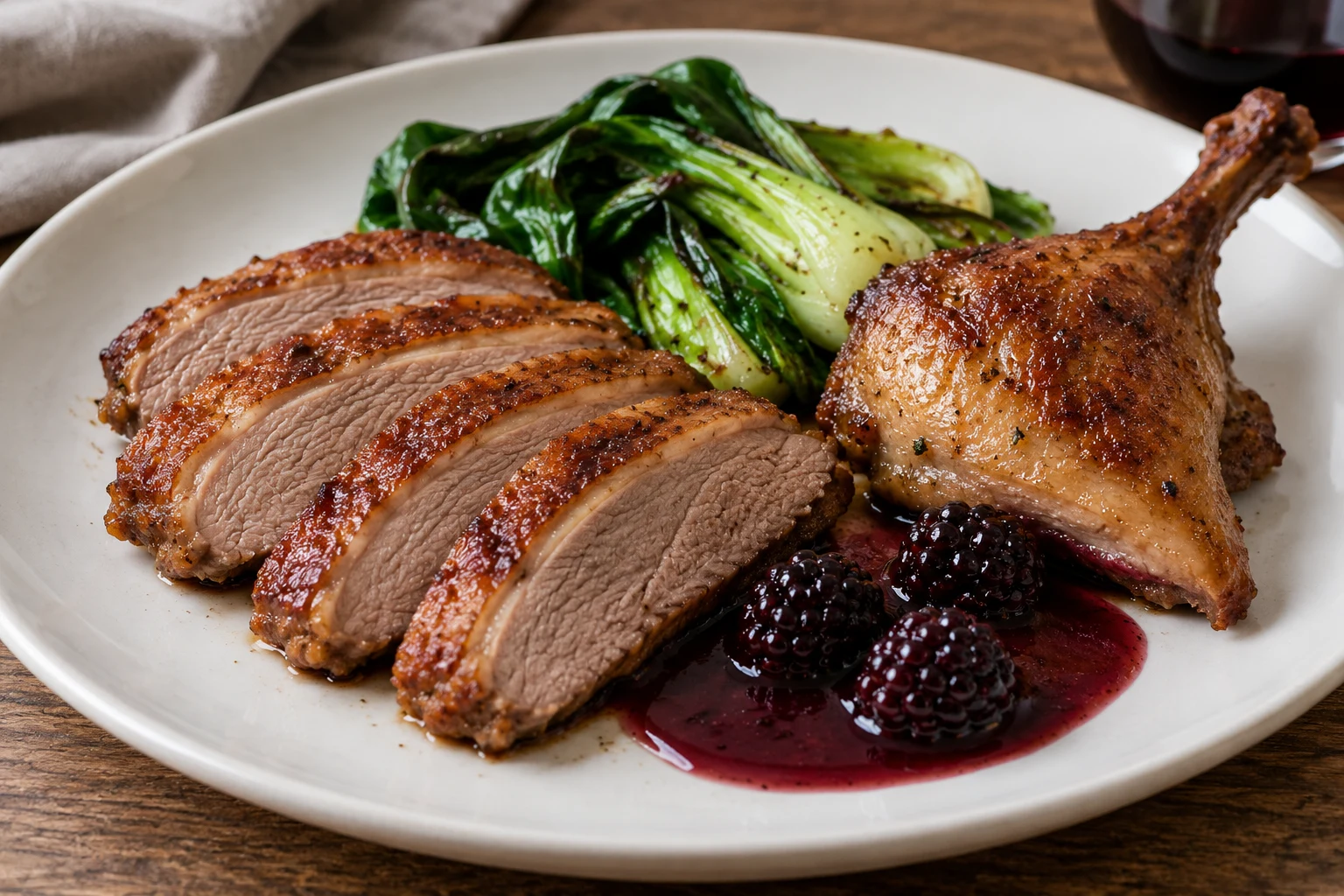
Finish the dinner around the chosen texture
A whole bird cooked through is a different project from separately searing a breast for a pink center. For a tender roast, the leg meat should also yield readily; temperature establishes safety, while tenderness answers a texture question. If the bird needs more cooking, continue and check again rather than relying on its appearance.
Rest according to the selected recipe while the sides and sauce finish. Keep some skin free of sauce when plating so diners can appreciate the contrast. The potato-and-gravy route and River Cottage’s blackberry sauce with greens are alternatives, not mandatory parts of one enormous dinner.
For a make-ahead plan, complete the poultry cook before cooling; do not refrigerate a partly cooked bird for later finishing. Refrigerate leftovers in shallow containers within two hours, or one hour above 90°F/32°C, at 40°F/4°C or colder. Reheat leftovers to 165°F/74°C. Check sauces individually for wheat, soy or other allergens: a plain roast and a flour-thickened gravy do not have the same ingredient list.
Research notes
Whole-duck methods and cooking guidance
These four primary cooking sources explain distinct roasting and serving plans. Government guidance supplies the poultry endpoint and handling rules.
- Gressingham — Roast Duck The British producer’s retail method explains cooking weight, rack, oven settings and rest.
- Jamie Oliver — Roast duck with potatoes and port gravy The chef’s British-style festive dinner separates dripping fat, vegetables, potatoes and gravy.
- Nigella Lawson — Roast duck with orange, soy and ginger Her own two-stage method pairs a first cook with a hotter finishing roast.
- River Cottage — Roasted duck, blackberries and greens A covered slow stage, separation of excess fat and a fruit sauce distinguish this preparation.
- FoodSafety.gov — Safe minimum internal temperatures The 165°F/74°C poultry and leftover endpoint.
- FoodSafety.gov — Four steps to food safety Avoid washing raw poultry; cool promptly and refrigerate safely.
Keep exploring
More stories for your table
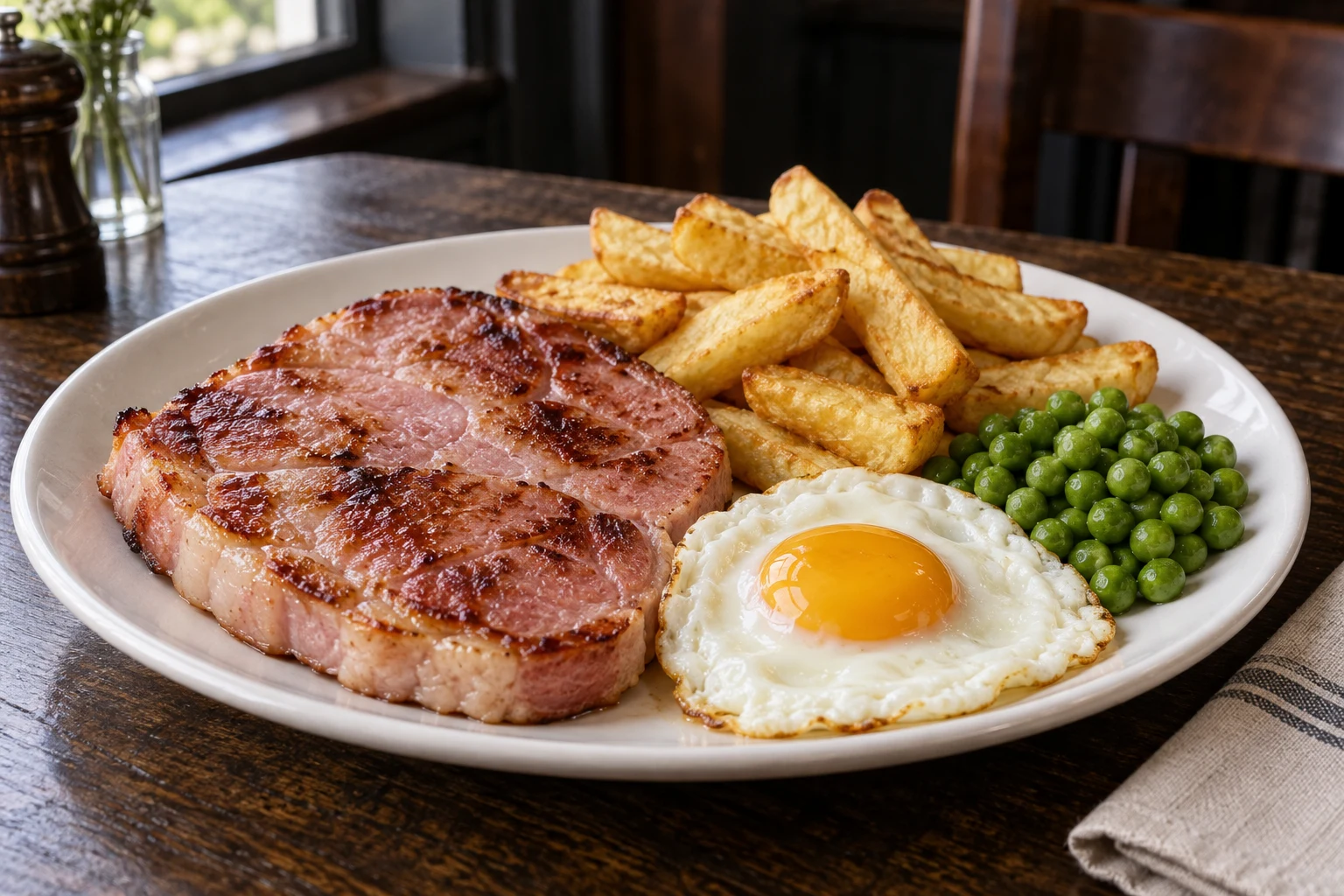
British cuisine Cured pork
Gammon Steak: Choose What Goes Beside It
A British gammon steak can take egg and chips, sticky pineapple or a sharp gribiche. Understand the cured pork and plan its cooking before choosing the finish.
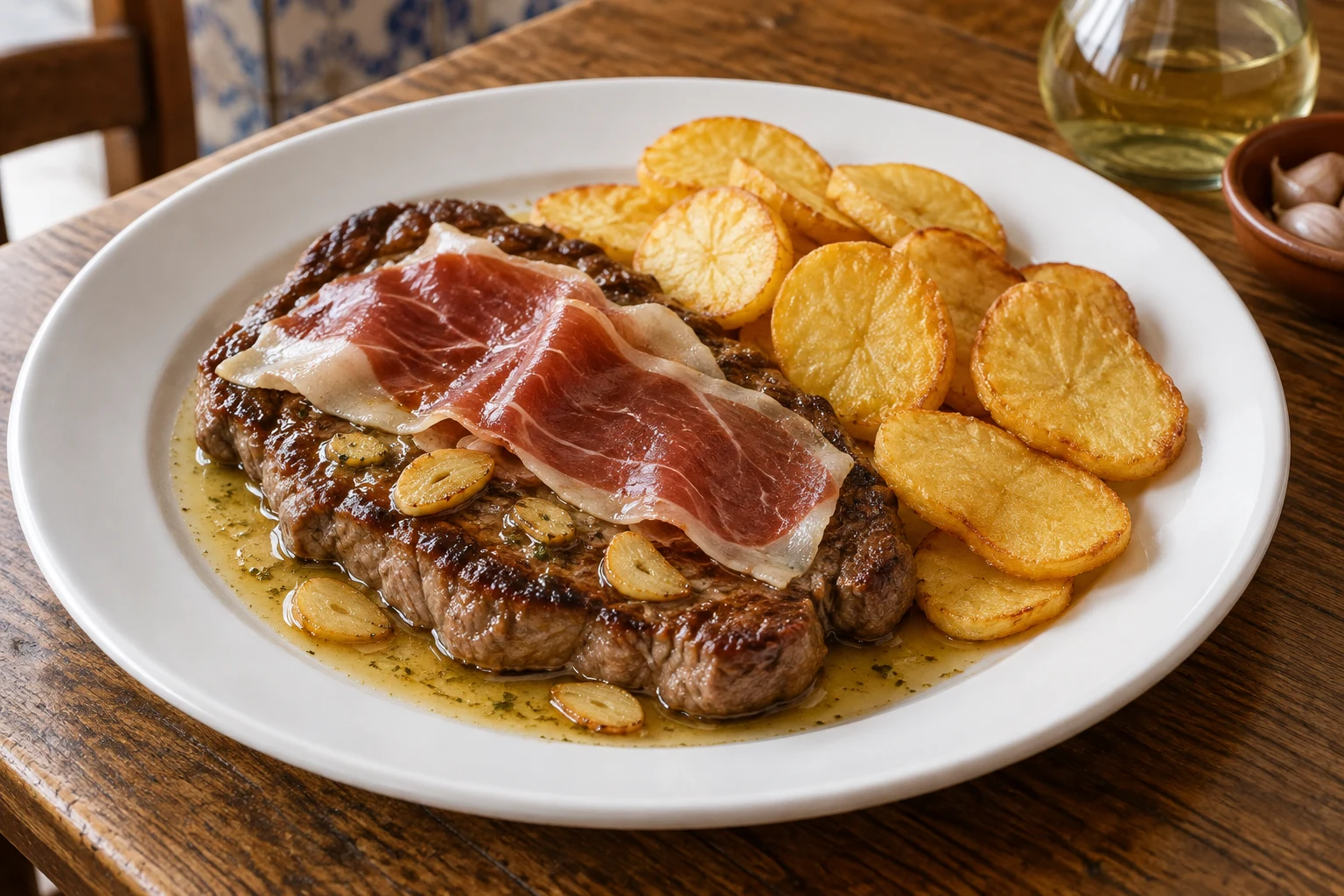
Portuguese cuisine Steak
Bife à Portuguesa: Follow the Sauce, Then Choose the Extras
Garlic-wine sauce, presunto, egg or mustard: Portuguese-style steak has several forms. Read the plate before treating one version as a rule.
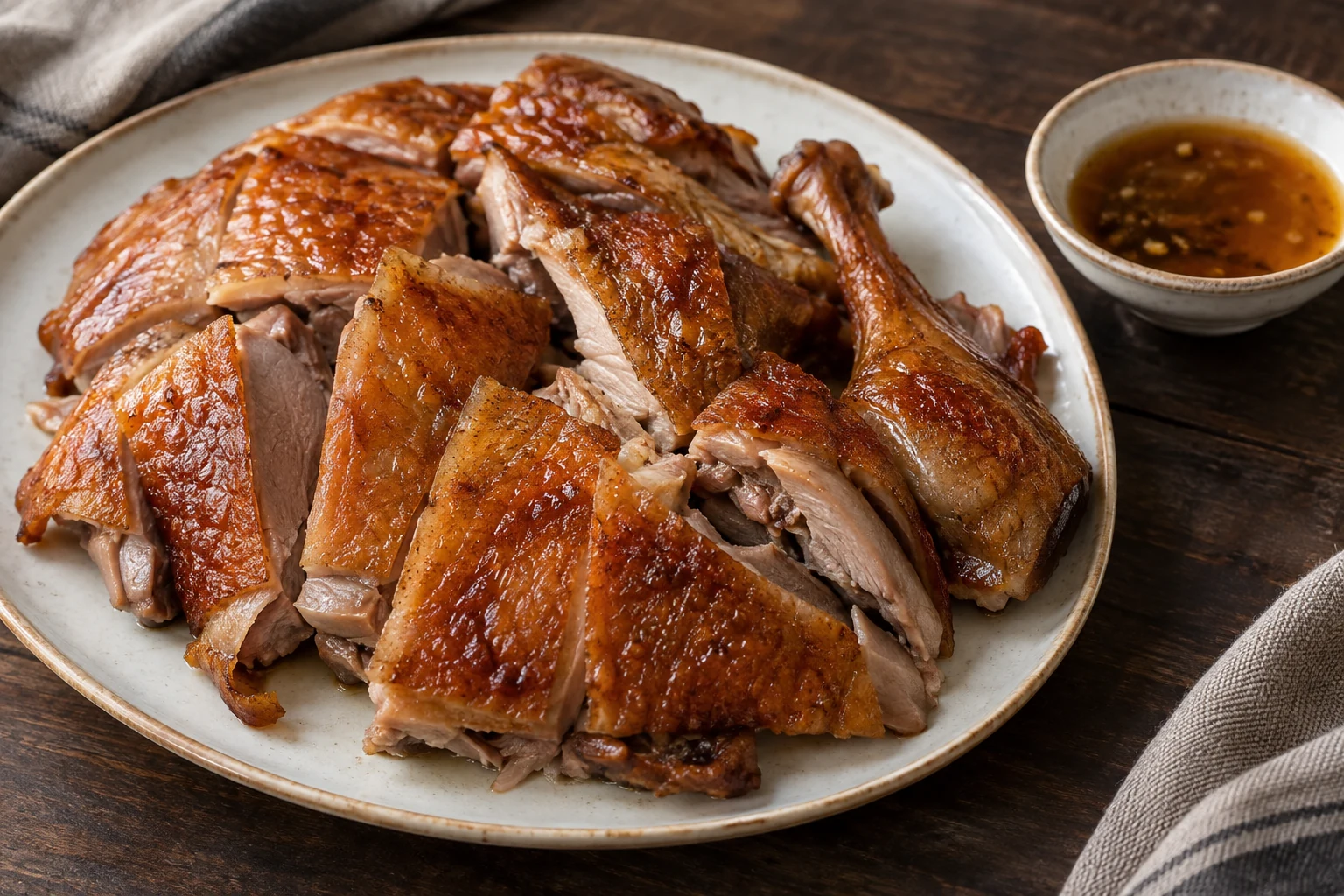
Vietnamese cuisine Roast duck
Vịt Quay Lạng Sơn: The Leaf, the Skin, the Sauce
How Lạng Sơn's mắc mật roast duck builds flavor inside the bird, browns its skin, and reaches the table as chopped duck or phở vịt quay.