
Arroz Carreteiro: Before the Rice Enters
Arroz carreteiro
Rice cooks with the flavor already built in the pan. In arroz carreteiro, that makes the preparation of the charque and the first browning stages as revealing as the finished grains.
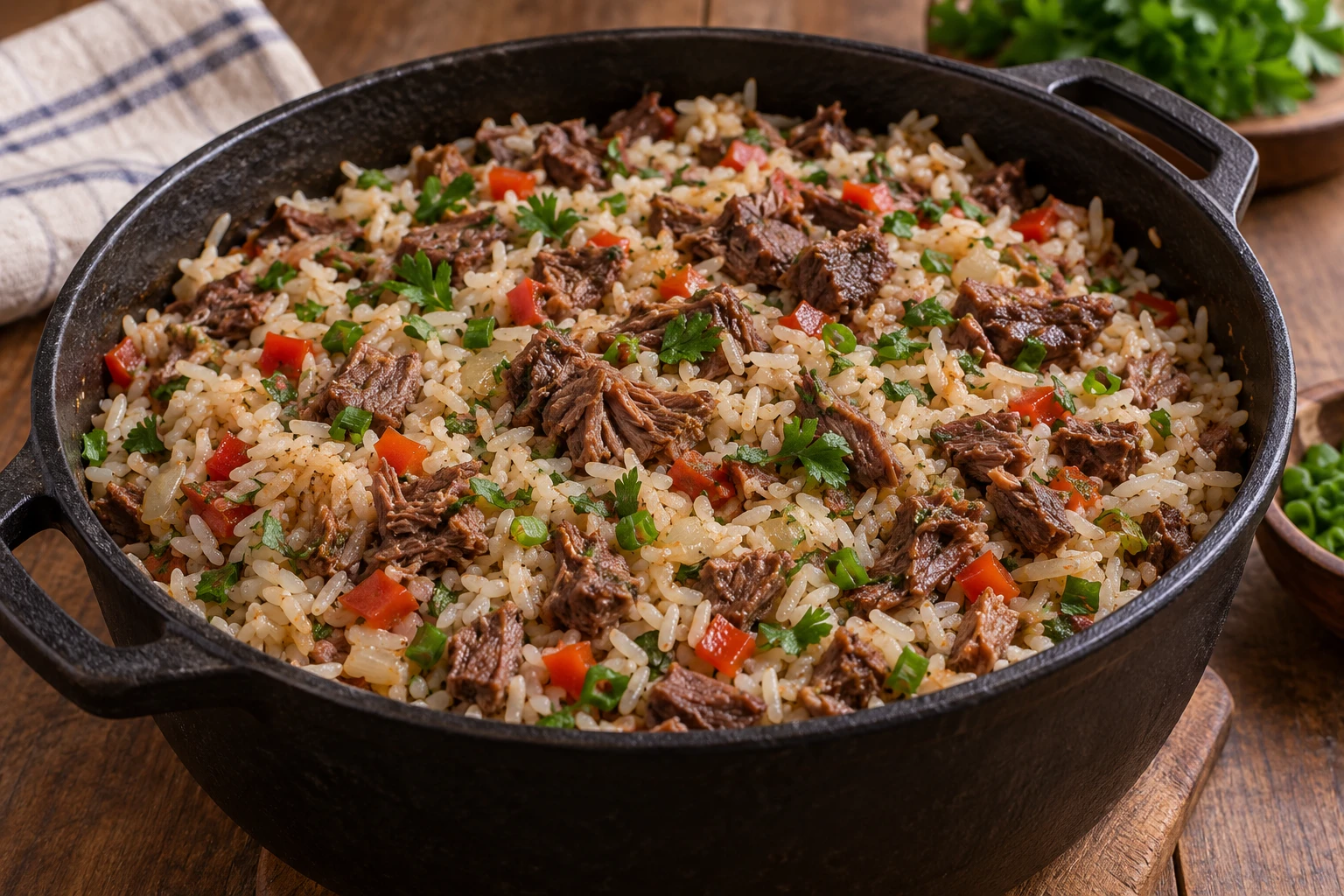
The flavor is waiting for the rice
Arroz carreteiro puts rice and meat into the same conversation. In the versions considered here, prepared charque—the salted, dried meat named in Brazilian recipes—meets the pan before the uncooked rice. Browning, onions and garlic build the base; the grains then cook with what is already there.
Galvão Bueno’s version, published by Globo’s É de Casa, places the dish in southern Brazilian cooking. It uses charque in small cubes, white rice, red pepper and chopped green herbs. Other cooks introduce bacon, sausage, tomato or a different finishing accent. The shared name does not mean those additions enter at the same moment.
Two fairly direct routes through the pan
Galvão Bueno: charque and red pepper
His recipe begins by frying prepared charque, then softening onion and garlic. Raw rice follows, with red pepper and hot water. The listed meat is charque alone, so bacon and sausage are not requirements for recognizing this version.
Edu Guedes: bacon before the charque
For Band’s The Chef, Guedes begins with bacon, then adds charque to take on color. Onion and garlic follow; rice is mixed through the fat before tomato and water arrive. That initial bacon stage changes both the ingredient list and the base in which the rice cooks.
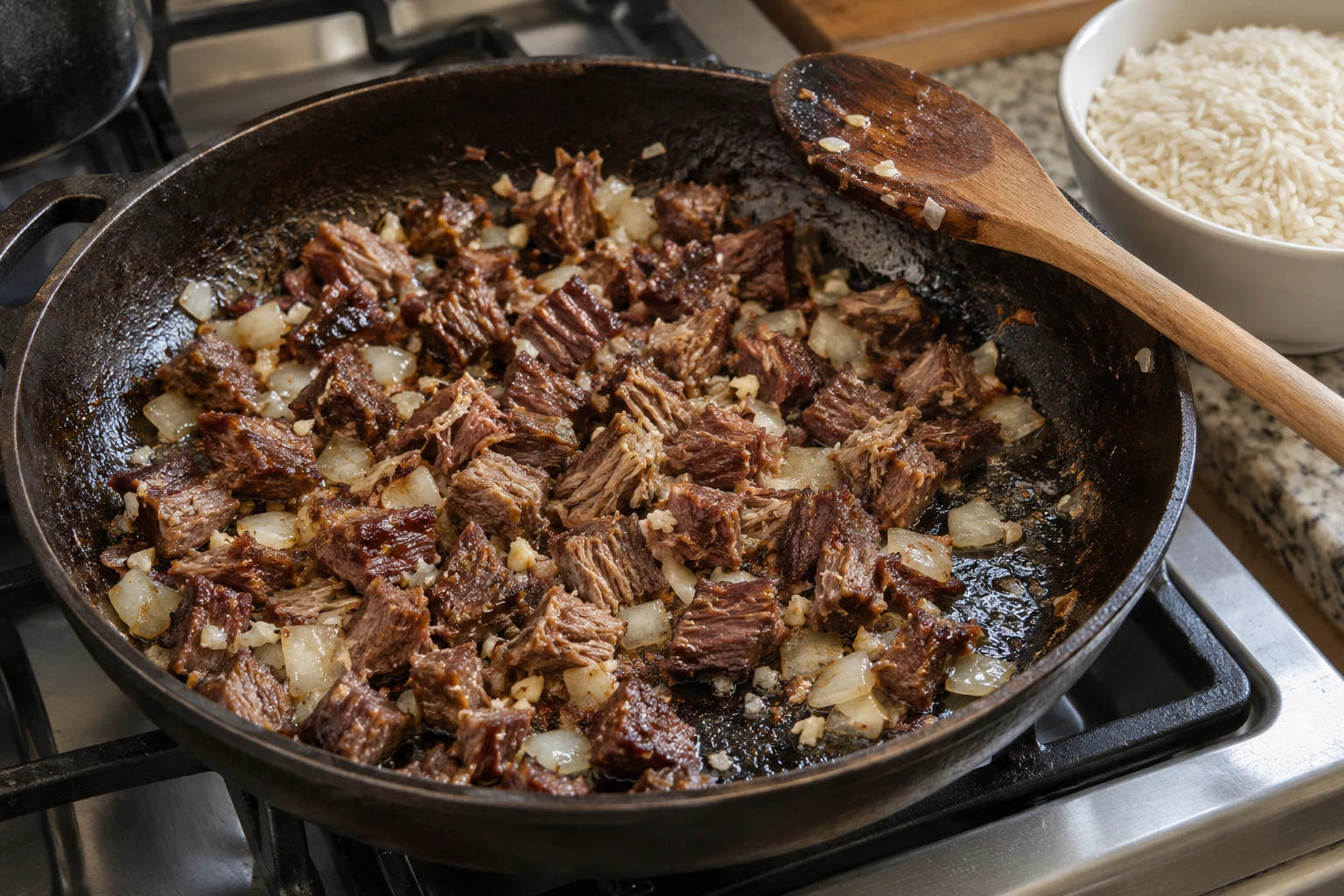
Prepared charque is a starting condition
Both recipes specify charque that has already been desalted. That small word in the ingredient list matters: the published pan sequence is not beginning with meat straight from an unopened packet. Browning and rice cooking are later stages in its preparation.
Raquel Novais’s version for Band makes the earlier work explicit. Her method refrigerates the meat during desalting, then cooks it before it is cut into strips and browned with the other meats. Follow the preparation directions for your particular charque and chosen recipe rather than treating every packet as ready for the rice pan. The meat’s preparation belongs in the cooking plan, even when the visible recipe seems to begin with a quick sauté.
Keep the additions distinct
- Red pepper
- Galvão’s rice stage
- Tomato
- Guedes’s base
- Tomato and biquinho
- Bronze’s later stage
It joins after the raw rice, before the hot water.
It follows the rice being coated in the cooking fat.
They enter when the rice is nearly cooked in his published preparation.
Tomato timing is visible in the recipe
In Guedes’s sequence, chopped tomato enters before the cooking water, so it participates in the rice-cooking stage. The pan already contains bacon, charque and the aromatics by that point. In Bronze’s sequence, the rice is nearly cooked when tomato and biquinho arrive. This is a concrete difference to keep when choosing between their preparations. Moving tomato earlier or later changes the sequence the cook actually described; the ingredient list alone does not capture that choice.
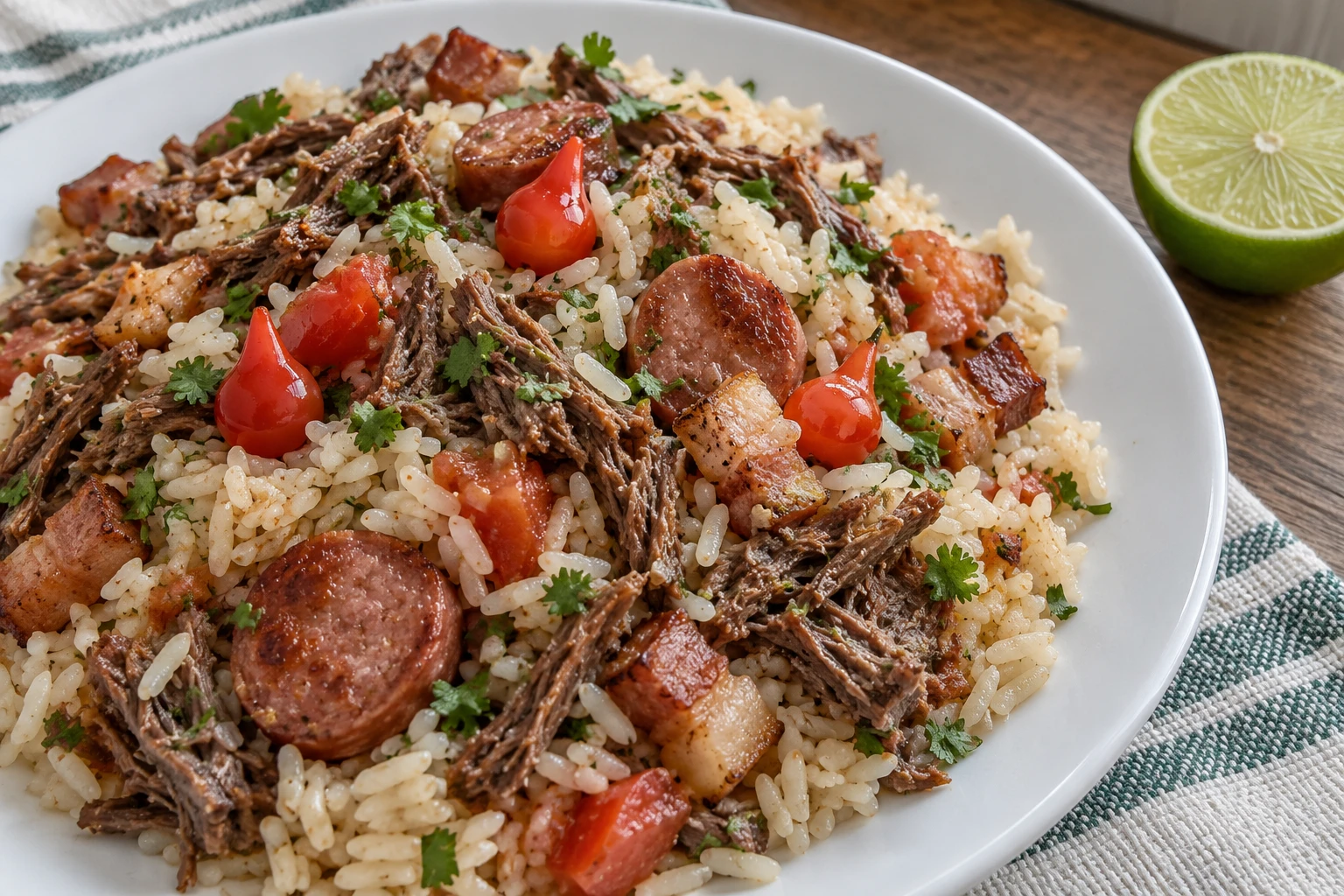
Reserve some of the browned meat
Felipe Bronze’s Hackeando a Cozinha version uses bacon, two kinds of sausage and shredded carne-seca. He browns the meats, reserves some, and cooks the rice with the rest. Tomato and biquinho peppers arrive late; the reserved browned pieces return after the rice has finished cooking.
This creates a clear reading of the method: some meat contributes during rice cooking, while some returns at the end as separate pieces. His final coriander and lime juice are another deliberate stage. They are details of Bronze’s preparation, rather than ingredients to insert automatically into Galvão’s simpler charque-and-pepper pot.
Novais also uses a mixture of meats, but her order is different. Bacon, calabresa and charque are browned in sequence before the aromatics and rice. Parsley finishes her rice. Read the actual sequence along with the ingredient list; similar meats can lead to different cooking decisions.
Research notes
Sources
Four separately credited Brazilian cooks document the methods compared here.
- Globo É de Casa — Galvão Bueno: Arroz carreteiro Prepared charque, red pepper, raw white rice and green-herb finish.
- Band The Chef — Edu Guedes: Arroz carreteiro Bacon before charque, followed by aromatics, rice, tomato and water.
- Globo Hackeando a Cozinha — Felipe Bronze: Arroz carreteiro Reserved browned meats, late tomato and biquinho, coriander and lime.
- Band MasterChef Para Tudo — Raquel Novais: Arroz carreteiro Explicit prior charque preparation and sequential browning of several meats.
Keep exploring
More stories for your table
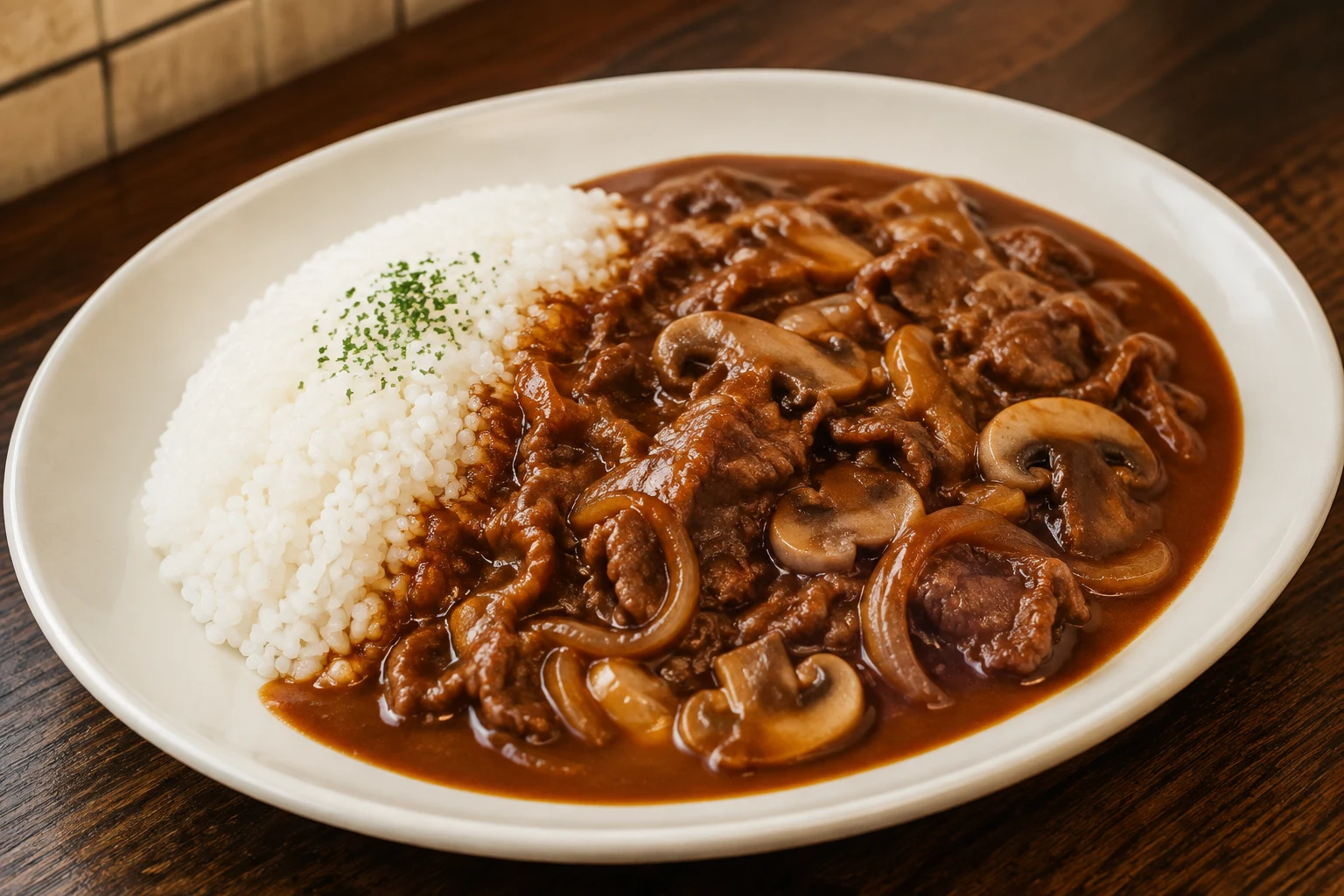
Japanese cuisine Yōshoku rice dish
Hayashi Rice: A Sauce Translated for Rice
Hayashi rice turned a Western-style brown meat sauce into Japanese yōshoku by changing the plate, the seasoning, and eventually the home pantry.
Afghan cuisine Meat stews
Afghan Qorma: One Braise, Several Pots
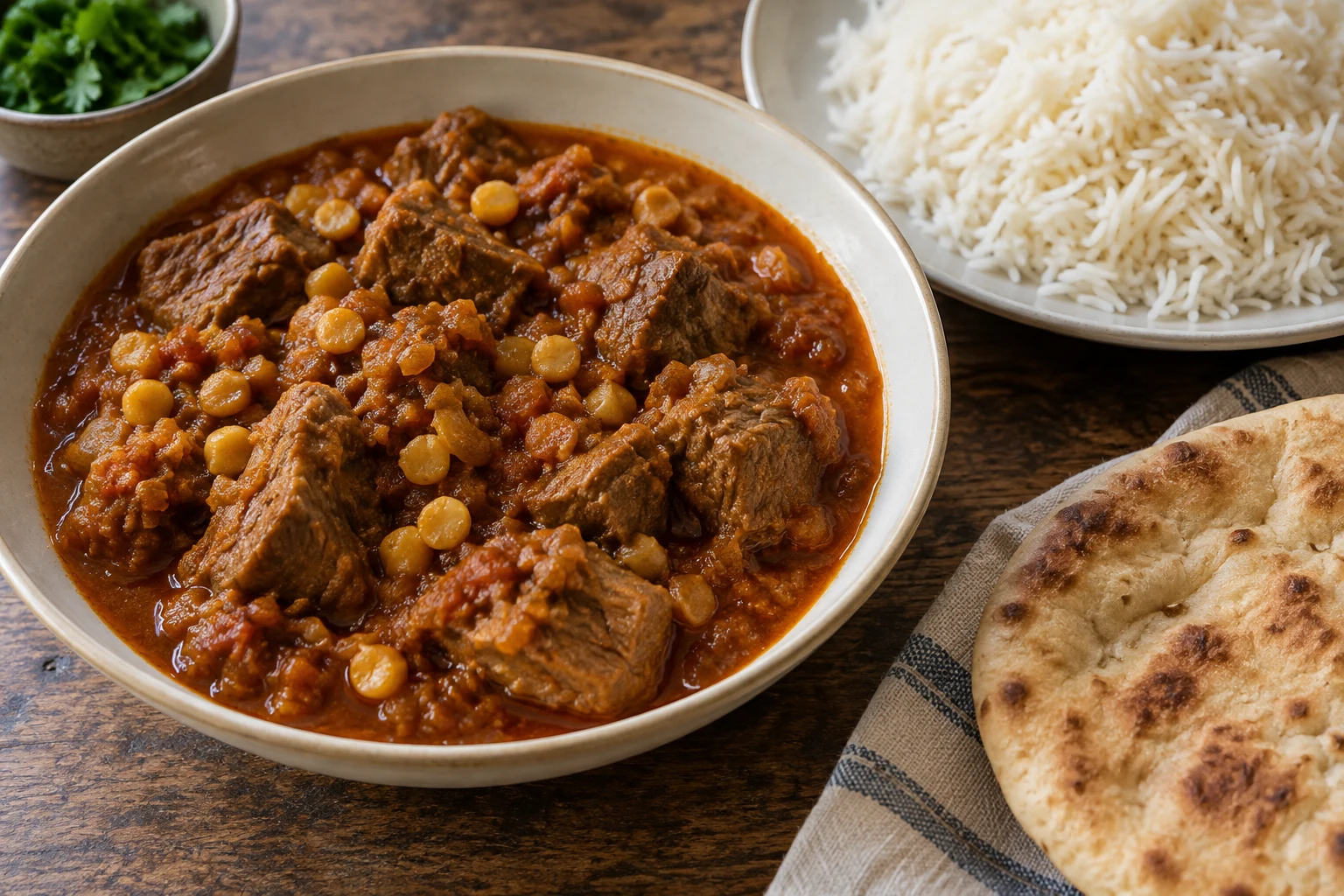
Afghan cooks make meat qorma with potatoes, tomato, pulses or fruit. Their recipes show how to choose a whole preparation and read beyond a familiar curry name.
Persian cuisine Turmeric rice
Dam Pokhtak: Match the Beans to the Rice
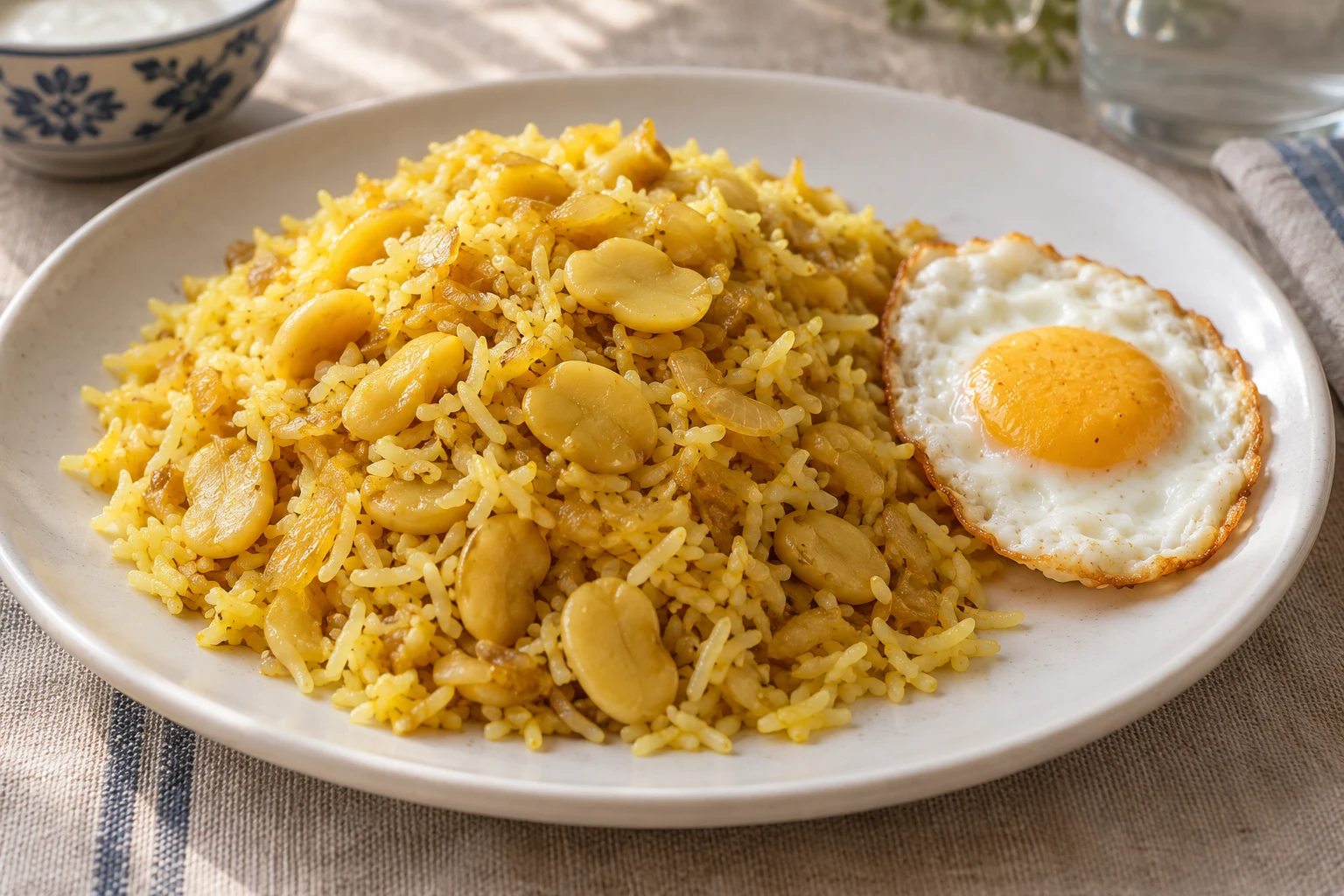
Iranian turmeric rice depends on getting the beans tender before the rice dries out. Understand split fava beans, the covered finish, and simple accompaniments.