
Cueca Virada: A Strip Turned Through Itself
Cueca virada
A central slit gives this Brazilian fried pastry its distinctive turn. The shape is shared by recipes whose doughs, rests and frying instructions differ.
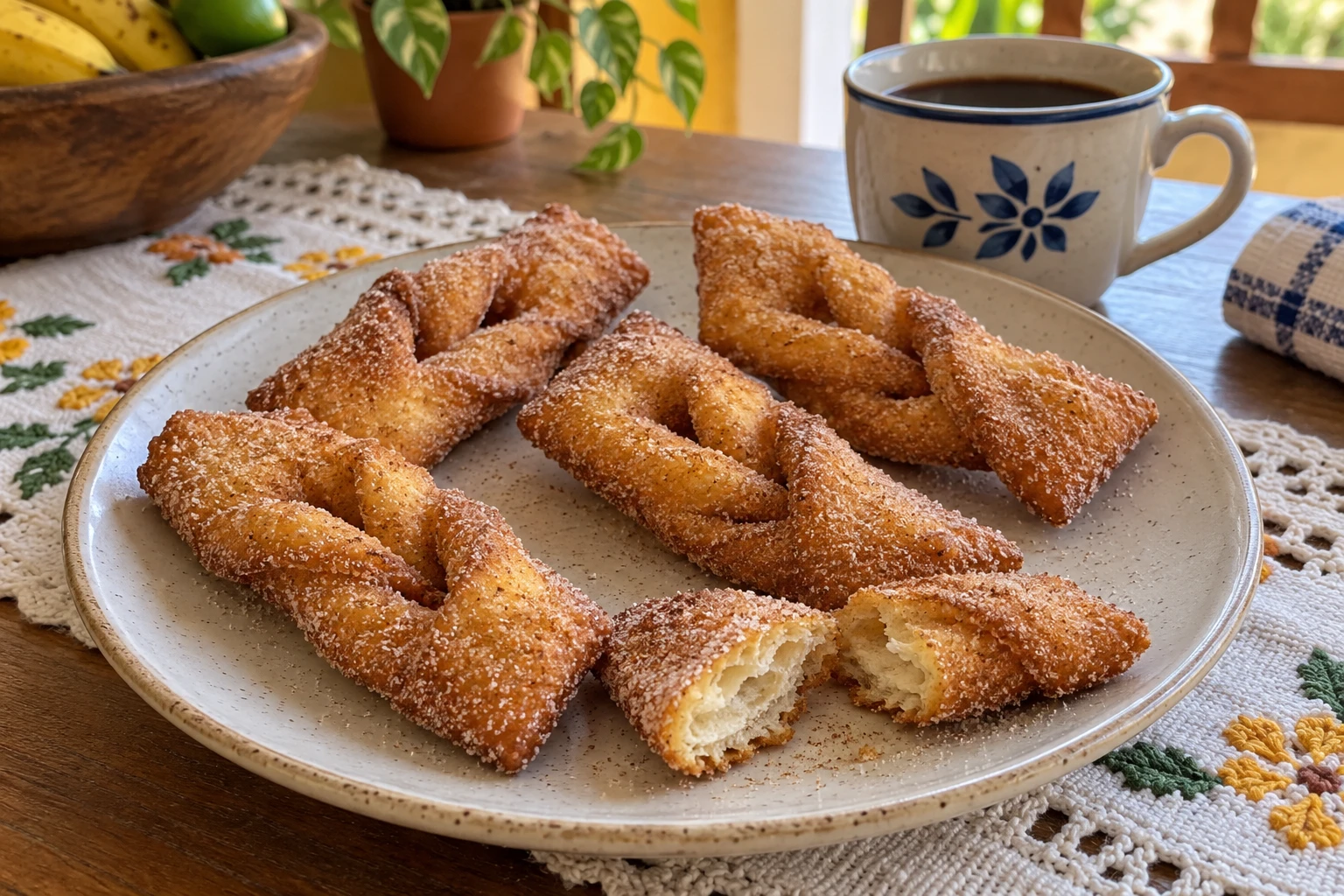
The turn starts with a slit
Cueca virada is easy to recognise by its turned strip of fried dough. Before it reaches the oil, a rectangle receives a small cut in its centre. One end passes through that opening, changing a flat strip into a loose twist. Sugar and cinnamon finish the golden pastry.
The shaping step provides a useful way into the dish because the dough itself varies. Camila Vitalino, Pedro Cavalcanti, Mari Schurt and the recipe published by Nídia Figueira describe different mixtures under the same name. Reading their methods together reveals a shared construction without making their formulas interchangeable.
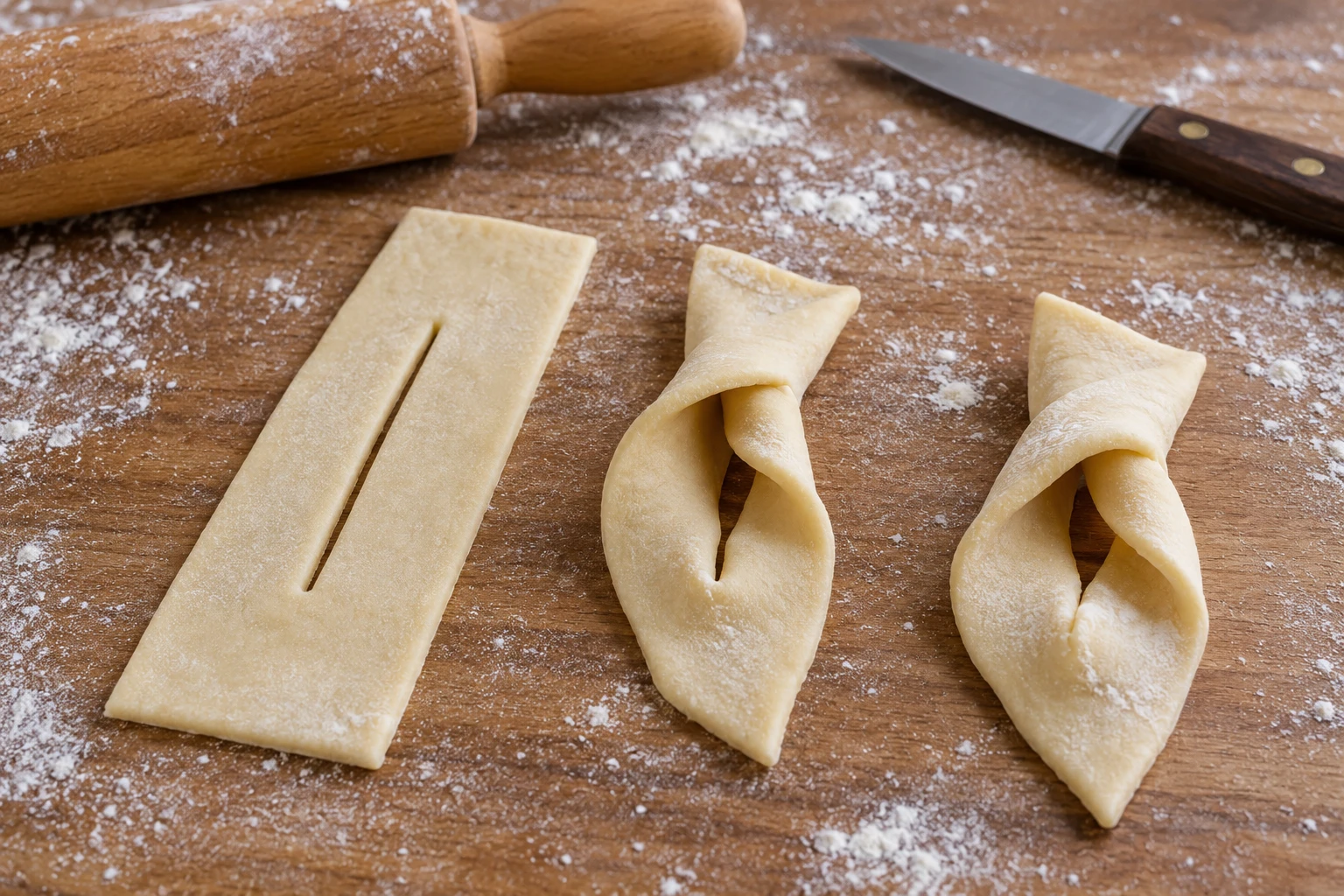
Keep the cut inside the rectangle
In Camila Vitalino's version on É de Casa, the mixed and kneaded dough is divided before each portion is rolled. The sheet is trimmed into a rectangle and cut into smaller rectangular pieces. A cut in each piece's middle gives an end somewhere to pass through; the shaped pieces wait on a floured tray.
That sequence keeps rolling, cutting and turning as distinct jobs. A strip does not need to become a rope before it can twist. The opening is inside the piece rather than a cut dividing it into two separate strips. The finished raw form makes the transformation easier to understand than its name alone.
Rest belongs to the chosen dough
Pedro Cavalcanti's Comidinhas do Chef recipe uses butter and warm milk in a dough that also includes eggs and baking powder. His instructions bring it to a smooth mixture and give it a covered rest before rolling, cutting and turning.
This is a specific preparation with a resting stage, not a universal requirement to let every cueca virada dough rise. His leavening is baking powder. The timing in that recipe should be read with its ingredient list, especially when comparing it with a version that uses yeast instead.
Two different bases beneath the same turn
Oil and cachaça
Vitalino's published dough includes oil and cachaça with eggs, sugar, flour and baking powder. Its instructions proceed from kneading to rolling and shaping.
Milk and butter
Schurt's recipe includes milk and butter as well as cachaça, eggs, sugar, flour and baking powder. The familiar central cut follows a different dough formula.
A yeast version has its own sequence
Figueira's TudoReceitas version uses fresh yeast dissolved in warm milk, together with eggs, margarine, sugar and flour. It calls for a first rest to let the dough grow, then rolls and cuts the dough before another rest for the shaped pieces.
It also describes passing an end through the slit once or twice. That variation is attached to this recipe's handling, rather than a demand for multiple twists in every piece. Its use of yeast is the larger distinction: replacing another recipe's baking powder with yeast while keeping all the other instructions would discard the sequence this source actually gives.
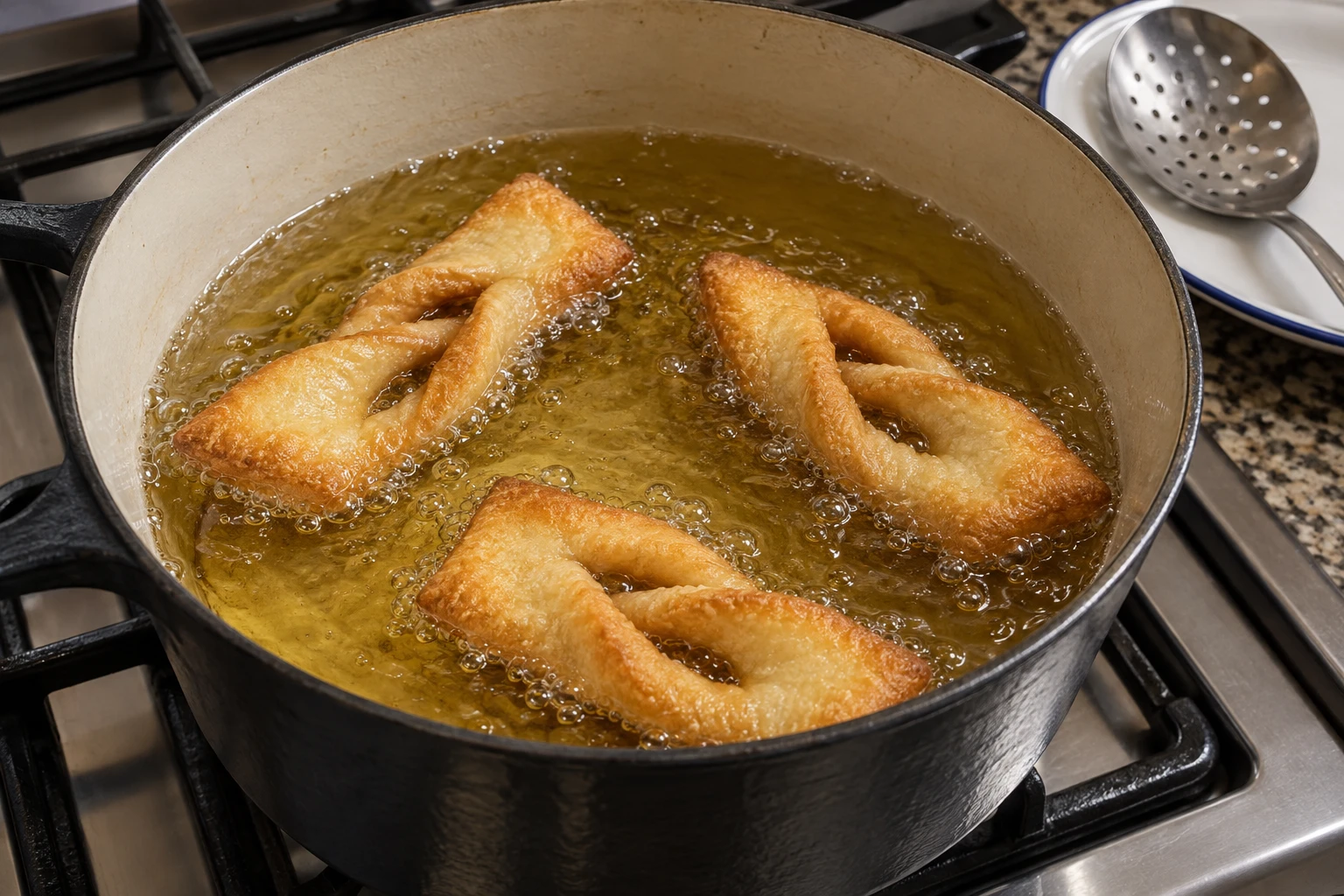
Read the frying instruction with the shape
Schurt's version specifies approximately 170°C for the oil, while Vitalino's gives 180°C. Both then finish the fried pieces with sugar and cinnamon. Those temperatures belong to the respective preparations; they are useful evidence that the name alone does not supply every cooking setting.
Cavalcanti also ends with a sugar-and-cinnamon sprinkling. The finishing mixture is added after frying rather than worked into the surface of the raw twists. Keep a clear place for that final stage, so shaping the next batch and coating the cooked one remain separate tasks.
Research notes
Sources and distinct recipe lineages
These are four separately authored preparations. The two Globo pages record different cooks; they are not duplicates of one recipe.
- Camila Vitalino, É de Casa: cueca virada Oil-and-cachaça dough, staged rolling, central turn and its stated frying temperature.
- Pedro Cavalcanti, Comidinhas do Chef: cueca virada Milk-and-butter dough with baking powder, a covered rest and sugar-cinnamon finish.
- Mari Schurt, Estúdio C: cueca virada A separate chef's milk, butter and cachaça formula, shaping and stated oil temperature.
- Nídia Figueira, TudoReceitas: yeast version Fresh yeast, rests before and after shaping, and the central slit-and-turn technique.
Keep exploring
More stories for your table
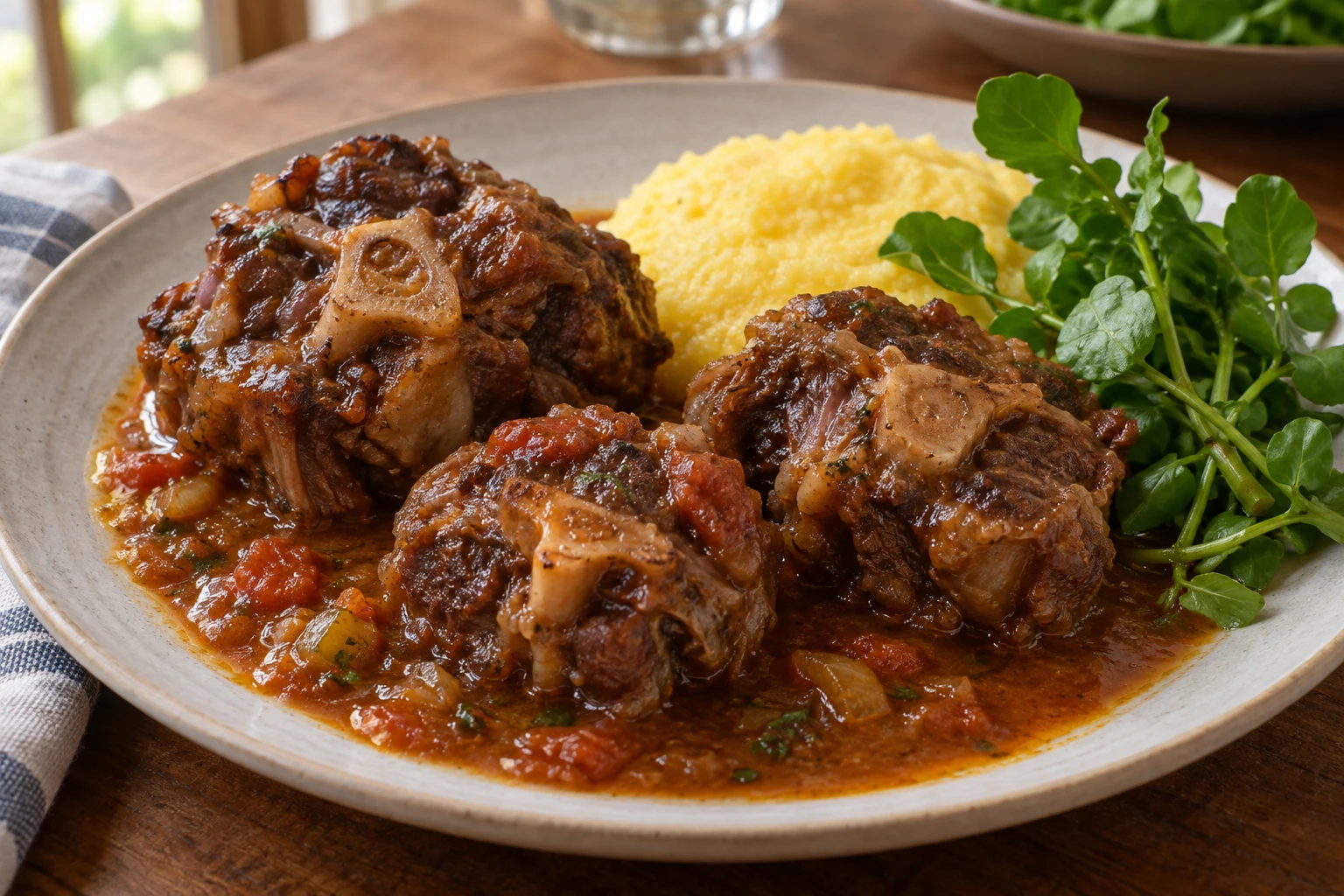
Brazilian cuisine Stews
Rabada: Keep the Watercress for the Finish
Brazilian oxtail stew has more than one route to tender meat. Follow the braise, then see why watercress and creamy cornmeal belong at the finish.
Spanish cuisine Pastry
Ensaïmada: The Layers Inside Mallorca’s Spiral
How thin dough, pork lard and a long rest shape Mallorca’s ensaïmada—and why squash preserve and cream become part of the pastry in different ways.
Polish cuisine Baked cheesecakes
Sernik: read the cheese before choosing the cake
Polish sernik begins with twaróg. Compare crustless and pastry-based cakes, folded egg whites and cooling choices before picking a recipe.