
Belgian pralines: reading the chocolate box
Pralines
A shell gives the first impression; the filling changes the story. Belgian pralines reward a closer look at both.
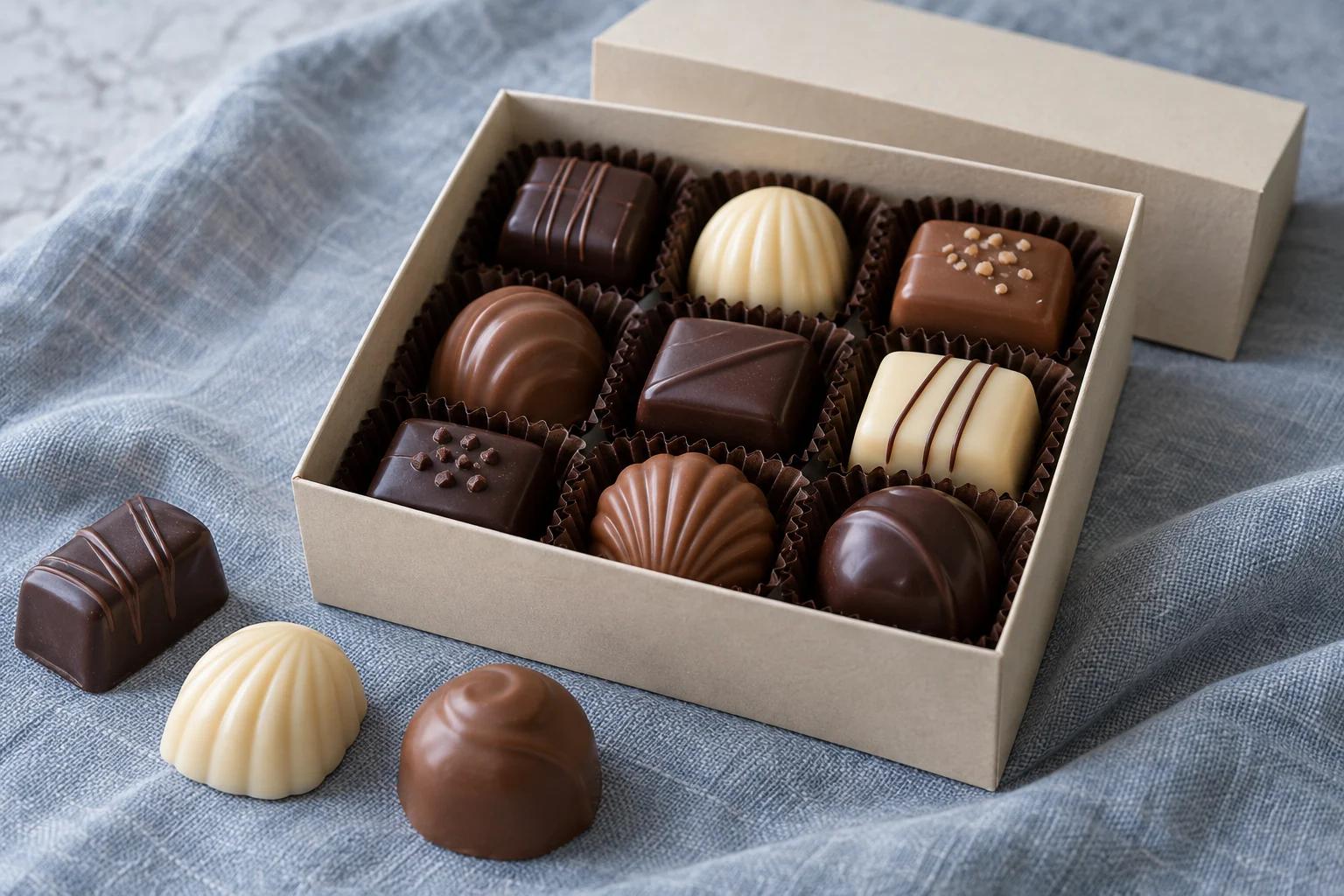
Inside the box
One word, two useful meanings
In Belgian chocolate shops, a praline is a small filled chocolate. Its centre might be nutty, chocolate-rich, caramel-flavoured or layered. The word tells you the kind of confection, but does not identify everything inside it. You need the maker’s description to finish that picture.
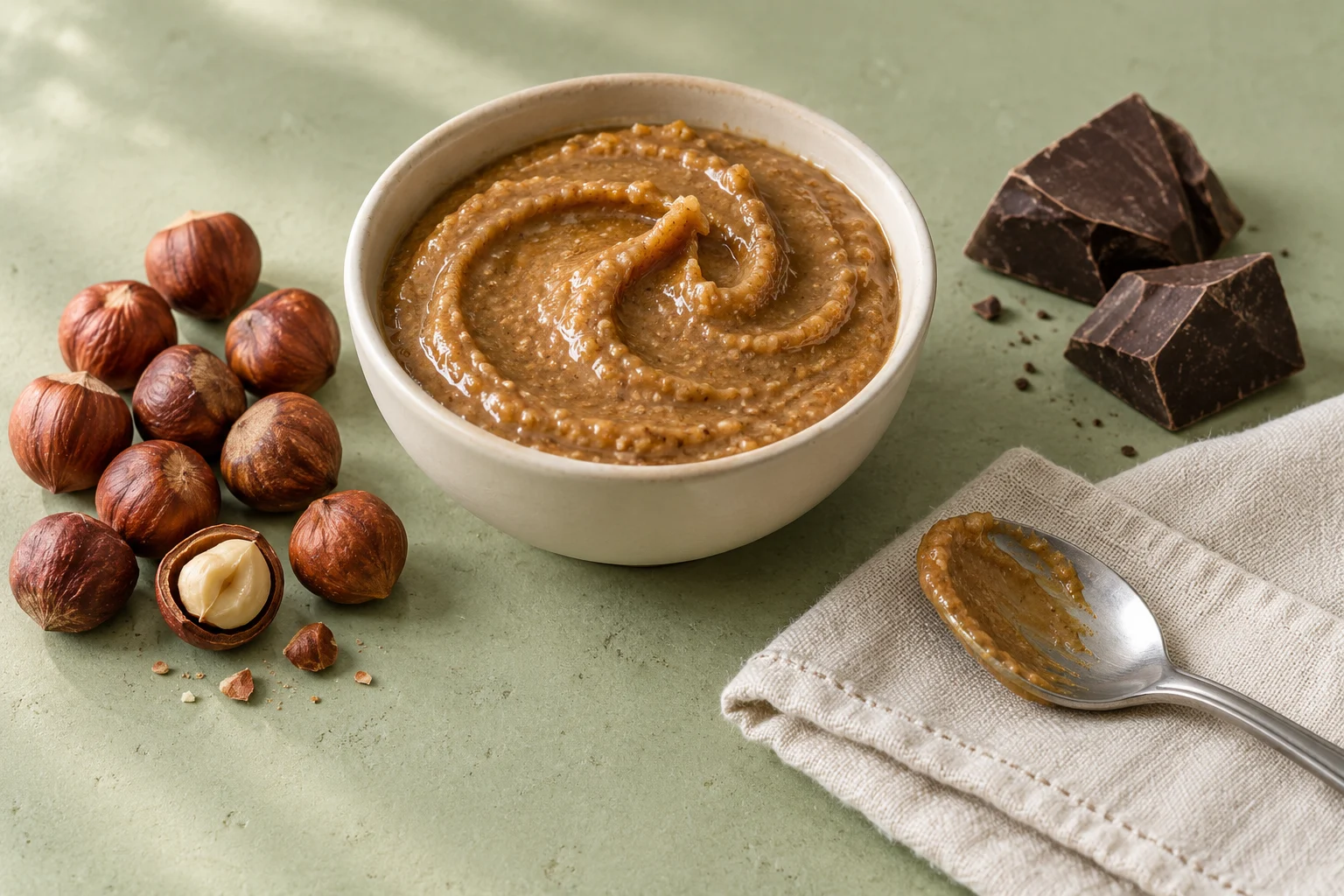
Nut praliné is a different thing: a sweet nut preparation used as an ingredient. Callebaut’s hazelnut praliné, for example, is a smooth paste made with roasted, caramelised hazelnuts, which the company recommends mixing with chocolate for fillings. A praline can contain praliné, but a box of Belgian pralines need not be entirely nut-filled.
The box belongs to the story
Neuhaus traces its filled Belgian praline to Jean Neuhaus Jr. in 1912, following the family’s earlier Brussels pharmacy. In the company’s account, his wife Louise Agostini introduced the protective ballotin box in 1915. That history helps explain why a compact box of assorted chocolates carries so much meaning as a Belgian gift.
Belgian chocolate culture also continues to change. VISITFLANDERS describes chocolatiers exploring flavours such as Earl Grey tea and wasabi, alongside bean-to-bar work. Neither an old-fashioned shell shape nor a striking modern decoration tells you the whole recipe. Read the filling description before choosing.
Choose the centre before the decoration
These three broad families offer a starting point for comparing an assortment. Makers can combine them within one piece.
Nut praliné
Expect a nut-led centre, often with roasted and caramelised notes. Check which nuts are used and whether the texture is smooth or deliberately crunchy. Hazelnut and almond are different flavours, not interchangeable labels.
Chocolate ganache
A chocolate-rich centre can echo or contrast with its shell. Neuhaus’s collection includes dark-chocolate ganache, coffee ganache and ganache layered over praliné; the centre’s description is more informative than the outside colour.
Caramel and layers
Caramel can appear as a smooth centre or alongside crunchy pieces and another filling. Neuhaus describes both caramel ganache and a milk-chocolate piece with salted-butter caramel and crunchy caramel. Ask about texture as well as flavour.
The shell is a piece of construction
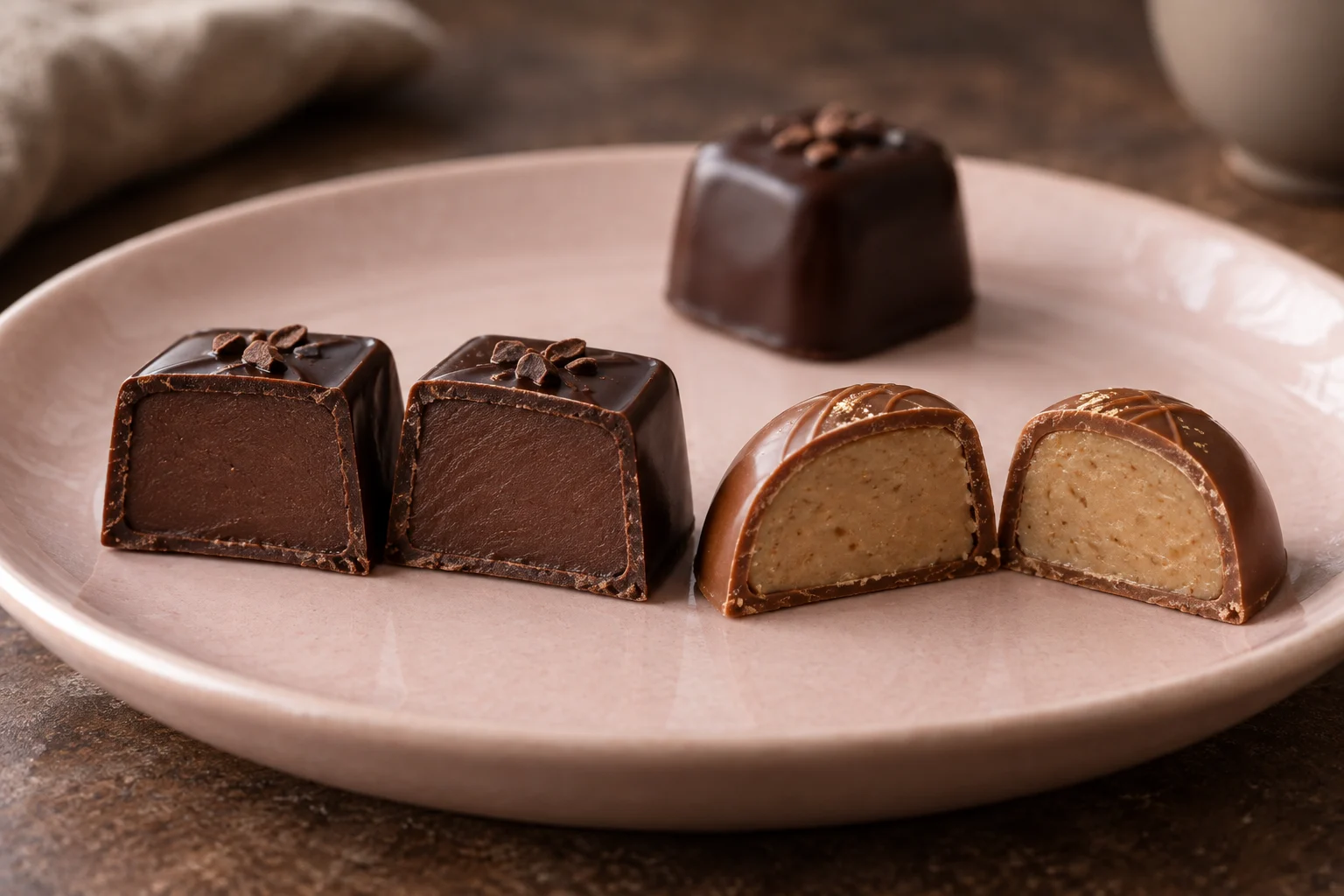
Moulded chocolates begin with a shell that will receive a filling and a closing layer of chocolate. Callebaut’s filling tutorial emphasises clean rims, filling cool enough to preserve the shell, and space left for the final seal. These small details matter because a smudged edge or an overfilled cavity can interfere with closure.
Enrobed chocolates take another route: a firm prepared centre is coated with chocolate. Callebaut’s hand-dipping guide shows how a dipping fork removes excess coating before the piece sets. This can produce a different outline from a moulded dome, without making one method inherently better.
When tasting, compare the shell and centre separately. Does the coating break easily, and does its thickness suit the filling? Is the centre smooth, crunchy or layered as described? A glossy surface is attractive, but the balance of the whole mouthful is a more useful question than shine alone.
Build a small comparison
For a first assortment, choose a few contrasts: a nut praliné, a chocolate ganache and a caramel piece. Keep the paper guide or the shop’s descriptions beside the box. Taste a small bite, pause for the filling, and notice which flavour remains after the shell melts.
If you enjoy one centre, compare it in a different shell on another occasion. This keeps the question manageable: does milk chocolate soften the overall impression, or does dark chocolate make the contrast more pronounced? The answer depends on the particular chocolate and filling, so record the maker and piece rather than treating every dark or milk praline alike.
Keep the ingredient information with the gift
Dark chocolate on the outside does not establish that the whole praline is dairy-free. The filling and shared production equipment matter too: Leonidas specifically notes possible milk traces in some dark chocolates. Nuts, milk and other allergens require the maker’s current ingredient and cross-contact information.
For a gift, ask about alcohol, dietary needs and the recipient’s allergies before the assortment is packed. Include the chocolate guide and storage advice with the box. The most useful selection is one the recipient can identify, enjoy and keep in suitable conditions.
Research notes
Sources and chocolate craft
Maker histories, product descriptions and technical tutorials support the distinctions here. Storage and ingredient information should always be checked for the particular chocolates purchased.
- Neuhaus — Our Story The company’s account of the 1912 filled praline and Louise Agostini’s 1915 ballotin.
- Neuhaus — History Collection Illustrations of ganache, nut praliné, caramel and layered centres.
- VISITFLANDERS — Belgian Chocolate Belgian chocolate craft and contemporary flavour exploration.
- Leonidas — Frequently Asked Questions Maker-specific storage, odours, tasting and allergen information.
- Callebaut — Filling Moulded Chocolates The relationship between a shell, its filling and a clean closing seal.
- Callebaut — Hand-dipped Chocolates Coating a firm centre as an alternative to filling a moulded shell.
- Callebaut — Fine Hazelnut Praliné Caramelised hazelnut paste used as an ingredient for fillings.
Keep exploring
More stories for your table
Belgian cuisine Chocolate confectionery
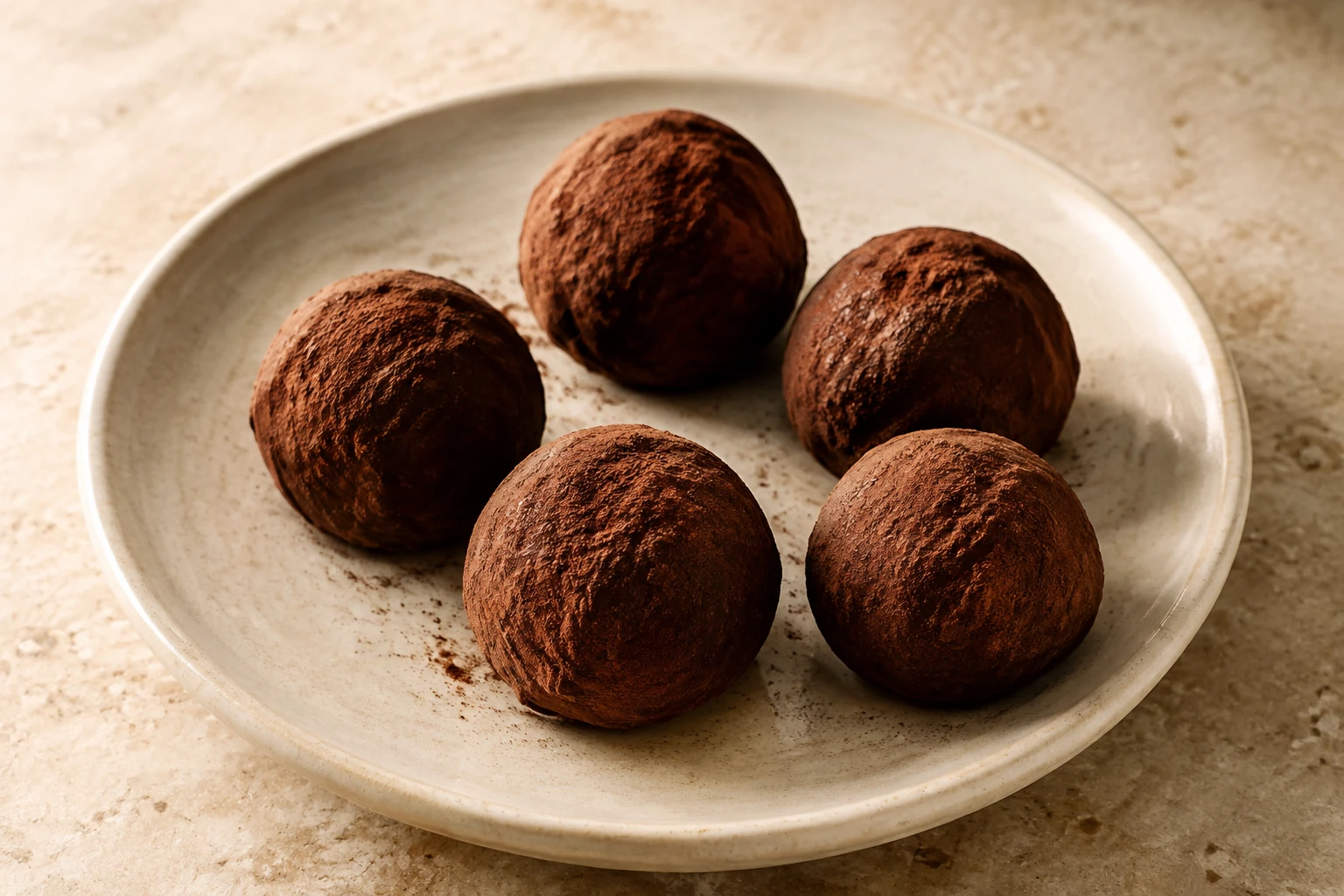
Belgian Chocolate Truffles, Beneath the Cocoa
Look beneath the cocoa on Belgian chocolate truffles: compare buttercream and ganache centers, decode the shell and finish, and understand the Belgian origin label.
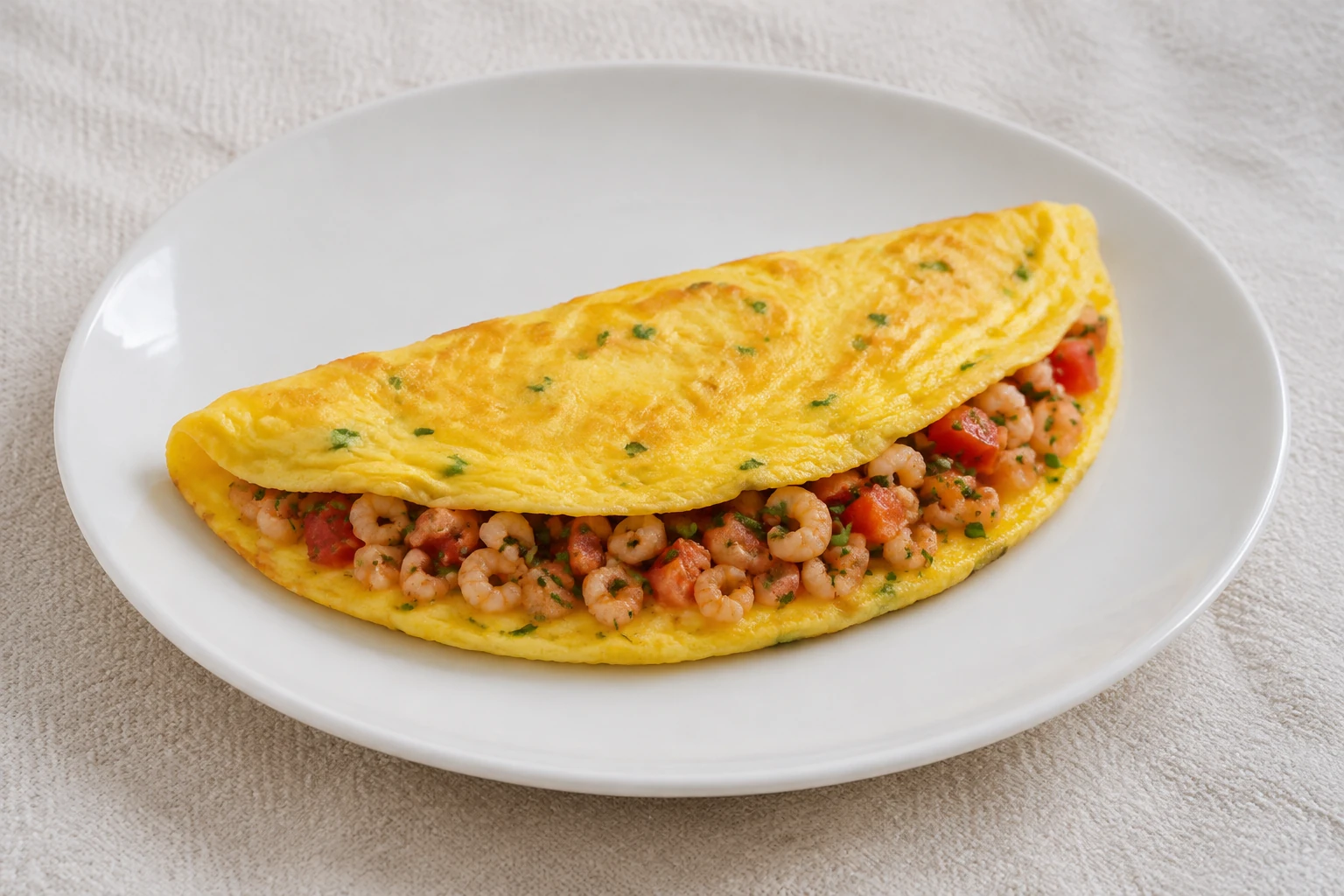
Belgian cuisine Shrimp omelette
Belgian Shrimp Omelette, Filled at the Finish
Explore Belgium’s North Sea shrimp omelette, compare simple and creamy versions, and make a two-omelette home adaptation with a filling added at the finish.
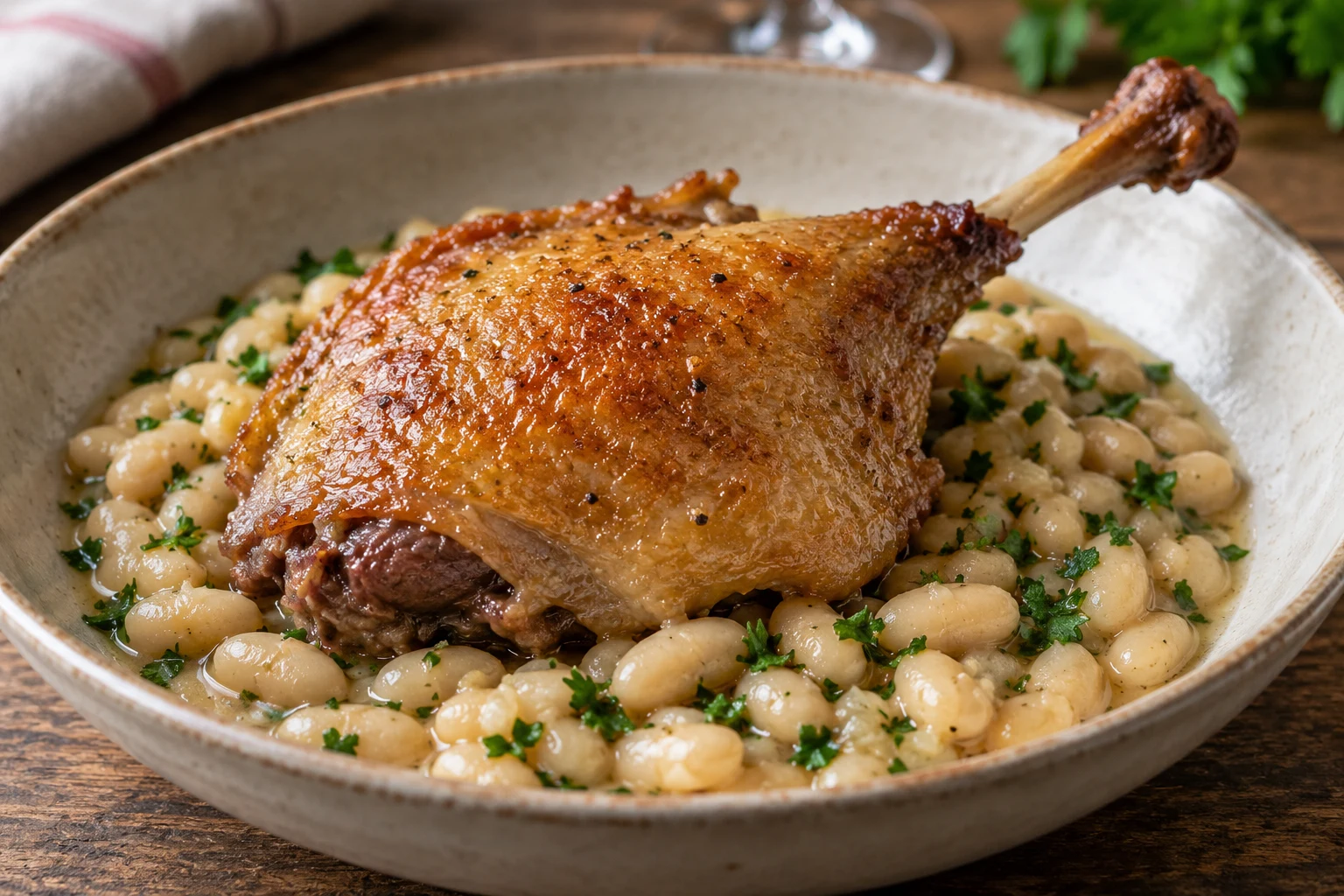
French cuisine Slow-cooked duck
Duck confit: tender meat first, crisp skin second
Duck confit makes more sense as two cooking goals: gentle fat cooking for the leg, then a separate finish that crisps the skin.