
Shutki Bhaji: Let the Fish Season the Vegetables
Shutki bhaji
Shutki is an ingredient with several destinations. In vegetable bhaji, it works through the pan’s onion, garlic and spice coating rather than becoming a separate mound of fried fish.
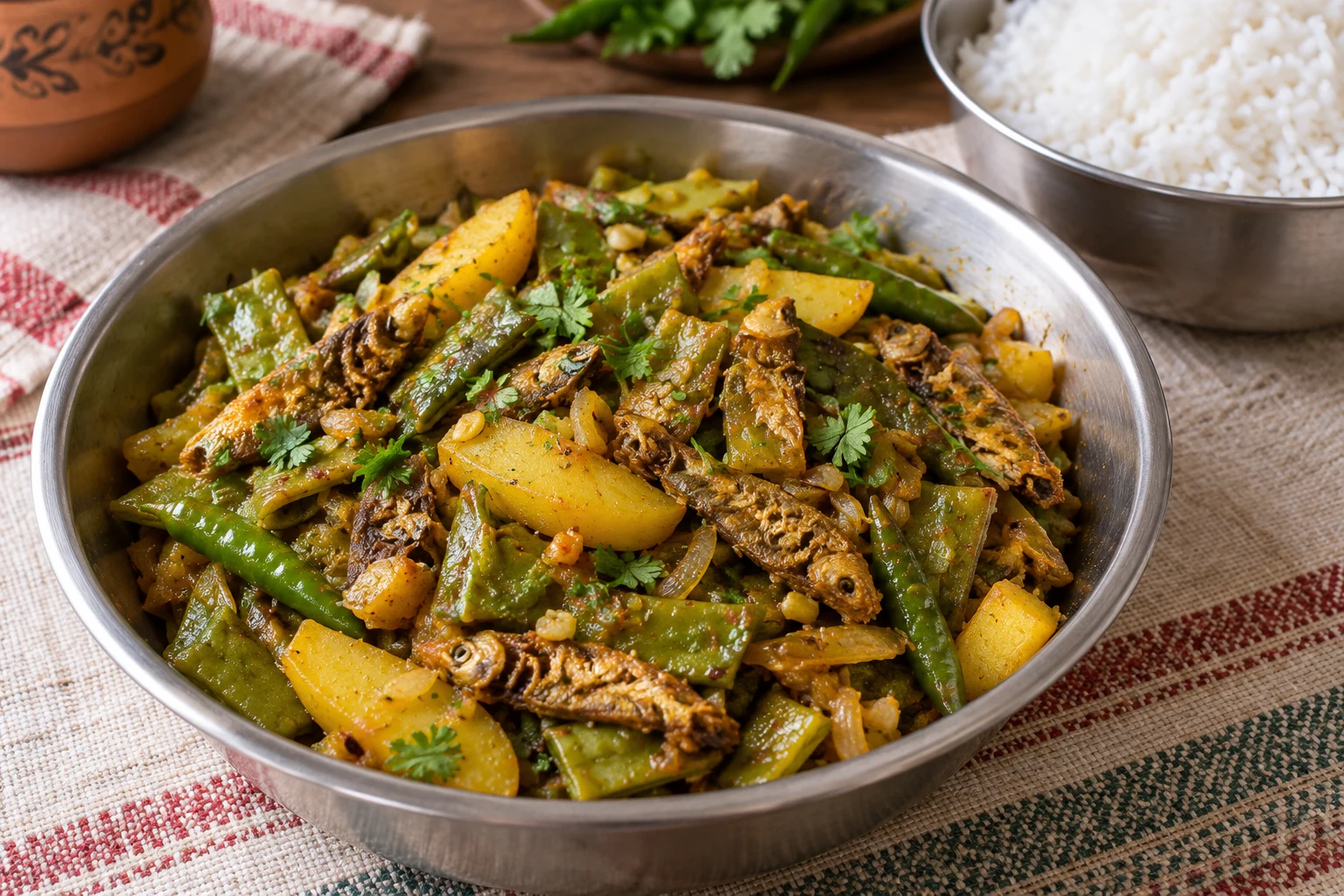
Shutki names the ingredient, not one recipe
Dried or fermented fish sold as shutki appears in several Bangladeshi preparations. A bhaji can bring it into a pan with vegetables; a bhorta turns it into a mash, and a shira carries it through a broth. The shared ingredient does not make those finished dishes interchangeable.
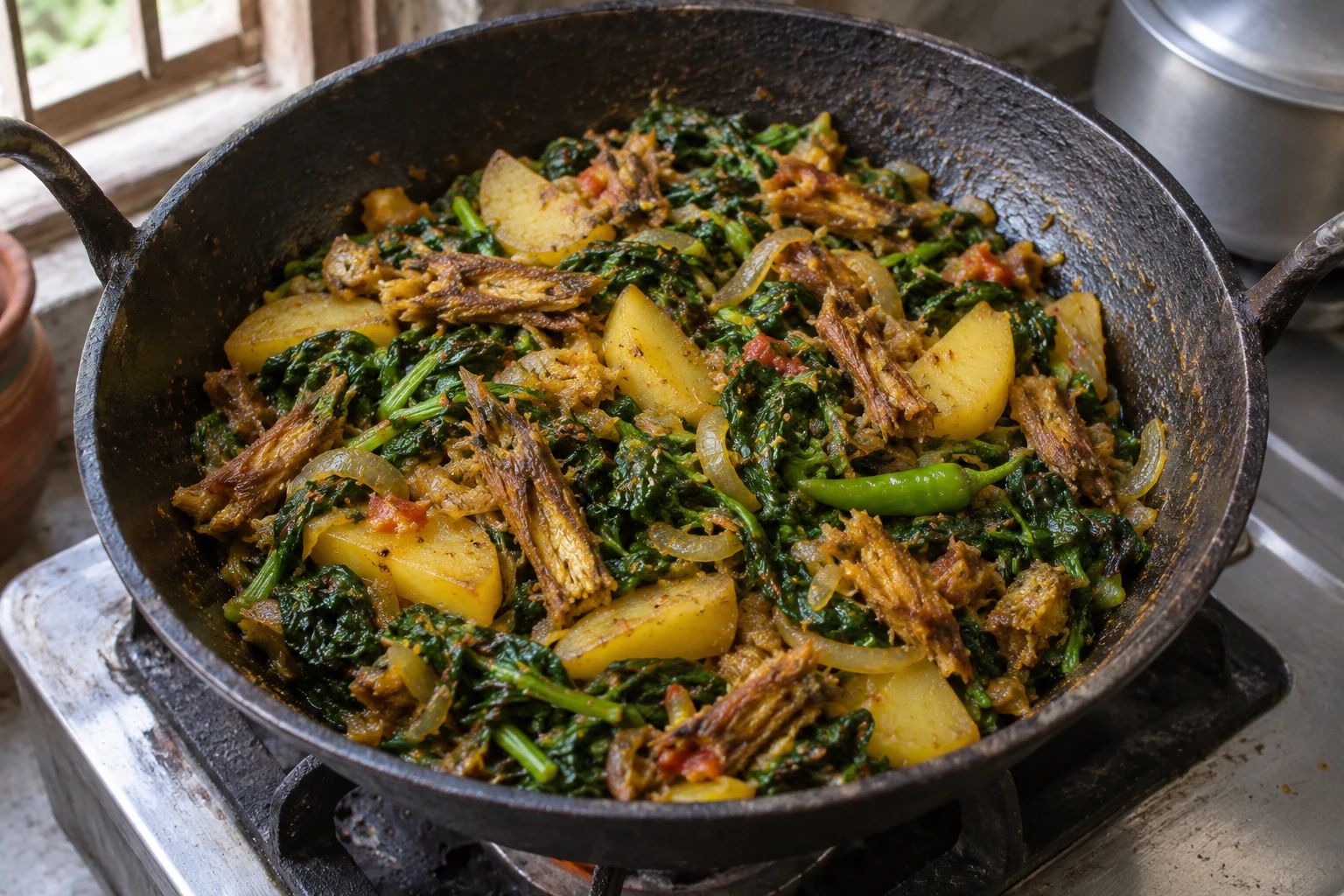
Kumkum, the Bangladesh-born cook behind Your Lil Cook, publishes a sheem aloo shutki bhaji with flat beans and potatoes. Smita Dey pairs dried loitta, also called Bombay duck fish, with potatoes and leafy greens. Those accounts show why a useful starting question is which fish and which vegetables your version uses.
Match preparation to the product
Small dried fish, larger cut dried fish and dried prawns have different bones and textures. Dey chooses loitta for her leafy preparation and removes heads and tails before cutting it. Dina Begum’s separate shira recipe starts instead with dried shrimp, which she soaks before building a vegetable broth.
Buy a labeled product from a reliable food supplier and follow its preparation and storage instructions. Ask what bones need removing. A strong characteristic aroma is part of the ingredient’s appeal to its fans, but aroma alone cannot establish that a package is safe.
Prepare any required soaking or cleaning without splashing seafood water over ready-to-eat food. Keep utensils and work surfaces clean, and do not treat a rinse or a quick toast as a guarantee of safety. This guide concerns cooking purchased shutki, rather than making a dried-fish product at home.
Choose the vegetable sequence
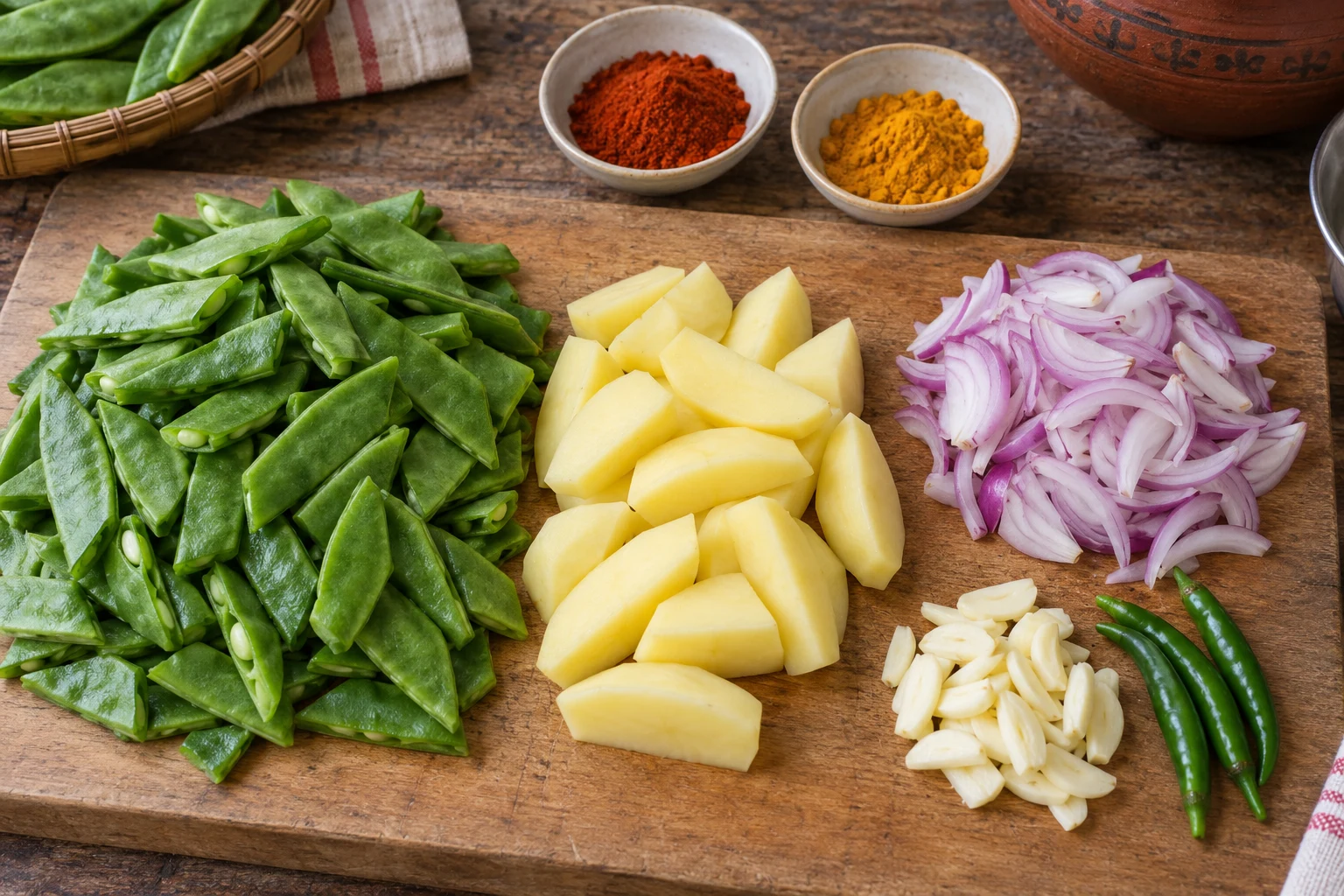
For the flat-bean approach, Kumkum begins by coloring the potatoes, then adds onion and garlic before the spices and fish. The beans join later, with enough moisture and a lid to finish cooking the vegetables. Her endpoint is tender potatoes and sheem, not fish surrounded by uncooked vegetables.
Dey’s leafy preparation follows another route: aromatics and tomato precede potatoes and cut loitta, with greens added after the earlier water has reduced. She also allows sliced onion and garlic in place of pastes, while adjusting how they are cooked.
Both versions make room for cooking liquid even though their finish is reduced. Add enough water to soften what is still firm, then let excess moisture evaporate. Pushing the pan dry before the potatoes yield only risks scorched spices. A reduced coating and a cooked interior are separate checks.
Keep these other shutki dishes distinct
Bhorta: a mash
Rownak Jahan’s dried-prawn bhorta roasts and powders the prawns, then combines them with separately fried chili, onion and garlic. Its deliberately broken-down texture differs from the vegetable pieces in a bhaji.
Shira: a broth
Dina Begum’s Sylheti shira uses dried shrimp, vegetables and naga chili in a light broth, without added oil. Preserve that broth if making her dish; reducing it into a fry changes the intended result.
Finish the meal with some space around it
Taste the fully cooked pan before adding more salt. Dried-fish products vary, and a reduced sauce can become more intense as water leaves it. Decide how much chili you want at the start; adding every kind from several recipes can obscure the fish and vegetables.
Plain steamed rice accompanies the cited bhaji, mash and broth preparations. Serve the bhaji as one part of that meal, with the fish distributed among the vegetables. Tell diners if small bones remain; cooking does not make every dried-fish bone harmless.
The dish contains fish, and a prawn version contains crustacean shellfish instead. Mustard oil, used in some of the cited preparations, adds another ingredient to check when planning for allergies. Use oil labeled for culinary use and check other packaged seasoning ingredients.
Once cooked, this moist vegetable-and-fish dish needs normal leftover handling. Refrigerate it in shallow containers within two hours, or within one hour in temperatures above 90°F/32°C, with the refrigerator at 40°F/4°C or below. The fact that its starting ingredient was dried does not make the finished pan a pantry food.
Research notes
Four cooks and two different endpoints
The vegetable preparations guide this article. The dried-prawn mash and Sylheti broth are included to clarify neighboring dishes, with government advice supporting handling and cooling.
- Kumkum: sheem aloo shutki bhaji The Bangladesh-born cook’s flat-bean and potato version, with a staged covered finish.
- Smita Dey: dried fish with leafy greens Her loitta-and-potato preparation adds greens later; this article does not repeat the page’s health claims.
- Dina Begum: Sylheti shutki shira A distinct oil-free dried-shrimp broth, useful for separating shira from the pan-cooked vegetable dish.
- Rownak Jahan: Bangladeshi recipe book Printed pages 18–19 describe dried-prawn bhorta, its powdered texture and rice service.
- FoodSafety.gov: food handling and cooling Clean equipment, avoiding seafood cross-contamination, prompt shallow cooling and refrigerator temperature.
Keep exploring
More stories for your table

Pakistani cuisine Chicken
Pakistani Chicken Shawarma: From Pan to Pita
Explore Pakistani home versions of chicken shawarma: pan versus oven cooking, two sauce approaches, and a complete adaptation for soft pita pockets.
Sri Lankan cuisine Sweet onion relish
Seeni Sambol: Give the Onions Room to Soften
Sri Lankan seeni sambol turns sliced onions into a sweet, tangy relish. A small-batch recipe explains the pan, moisture endpoint and optional Maldive fish.
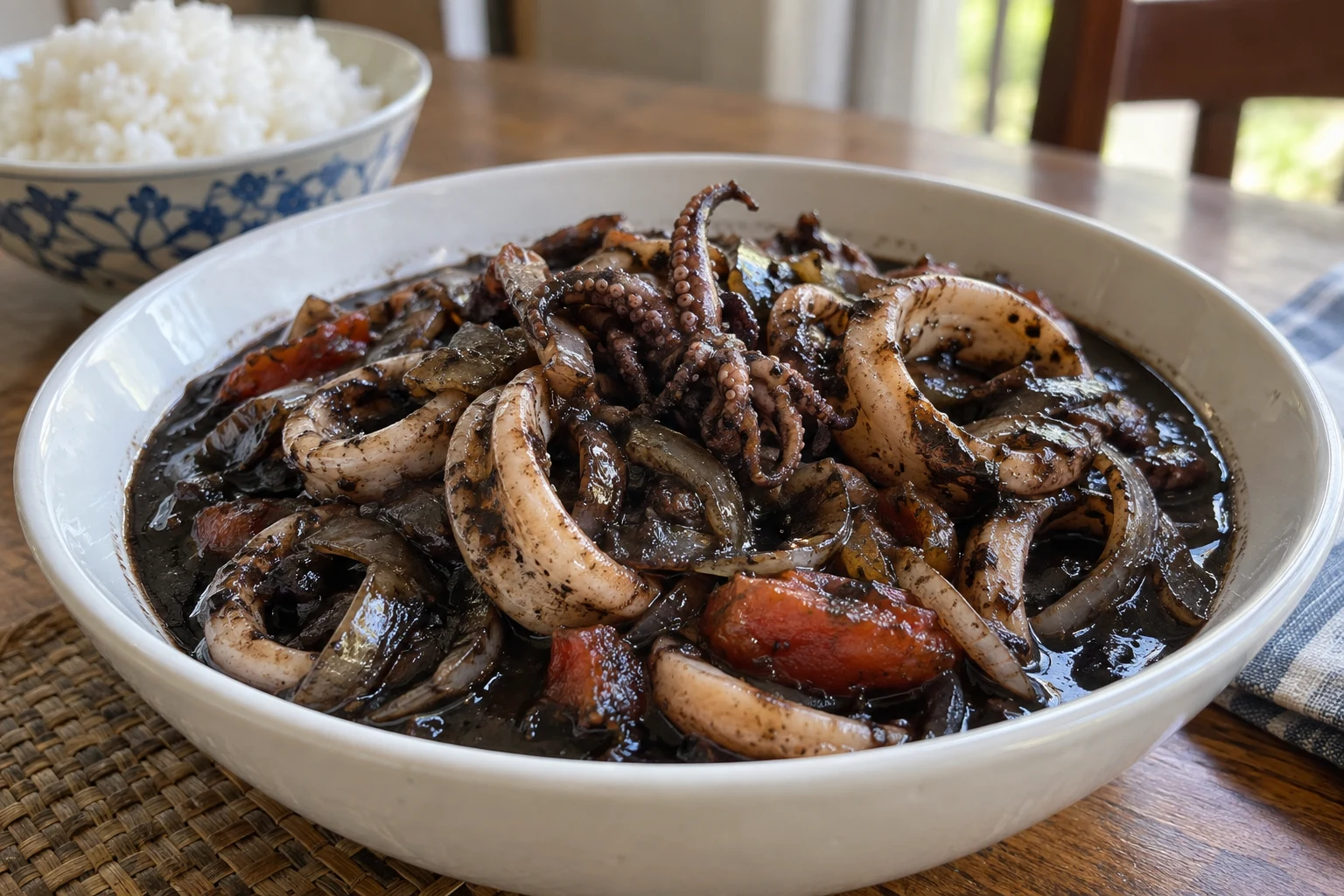
Filipino cuisine Squid dishes
Adobong pusit: finish the sauce without losing the squid
Squid adobo varies in ink, seasoning and vegetables. Compare the ways Filipino cooks finish its sauce while keeping the squid’s texture in view.