
Kakra Bhuna: Cook the Masala Before the Crab
কাঁকড়া ভুনা
Bengali crab bhuna depends on a well-reduced spice base. Compare shell-on versions with a complete, clearly labeled cooked-picked-crab adaptation.
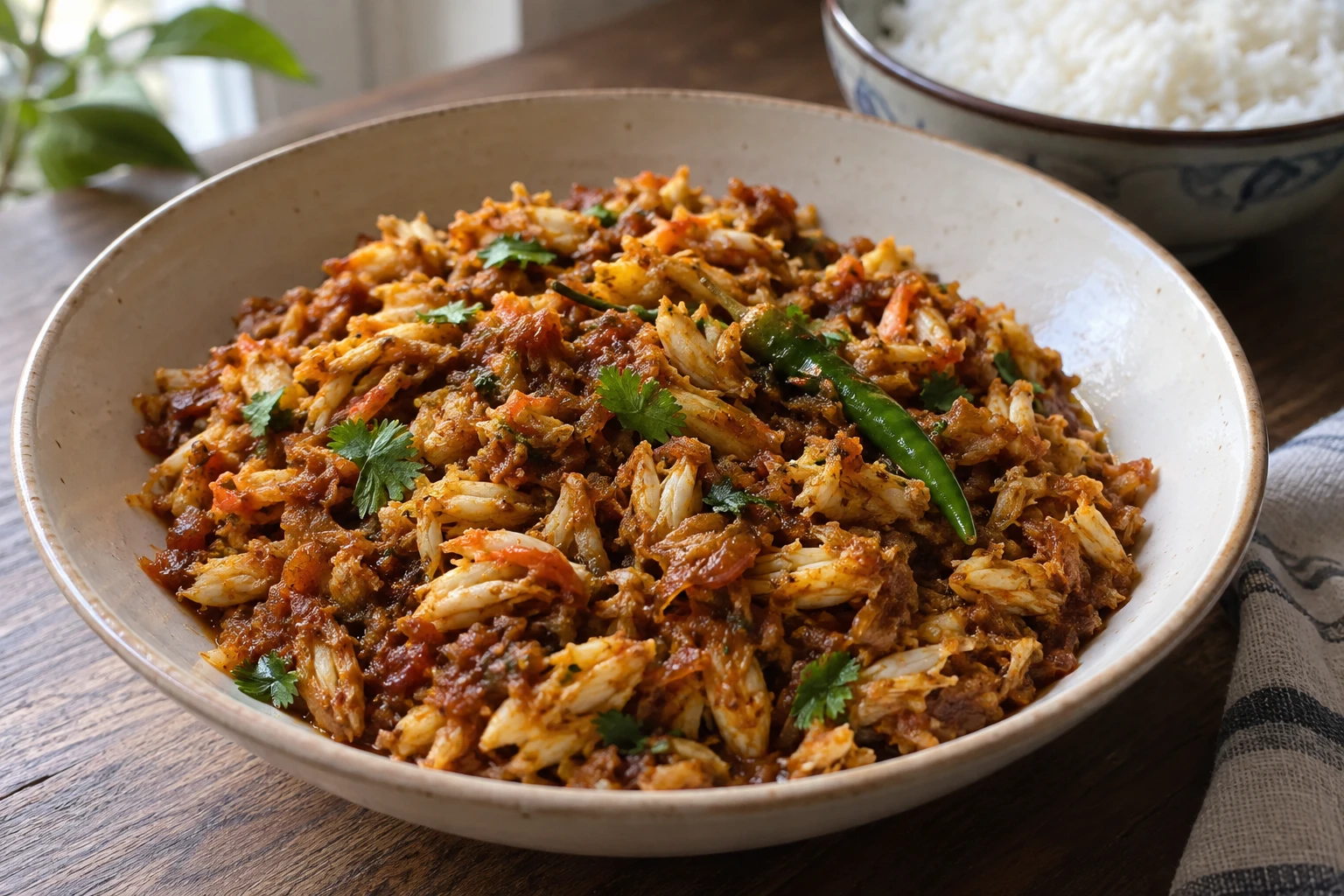
A coating with concentration
A spoonful of kakra bhuna should give you crab and seasoning together. The onion and spice base supplies warmth and depth; the crab still needs room to taste sweet. That balance depends as much on when liquid evaporates as on how much chili enters the pan.
Published Bengali versions do not share one fixed formula. In Bangladesh's Ajker Patrika, culinary artist Omam Rayhan cooks an onion, tomato and spice base before adding cut crab. Banglar Ranna first fries shell-on crab, then works it into a reduced masala with small additions of water. Both give the base sustained attention before the final serving.
Choose the method for the crab you have
Shell-on crab
Omam Rayhan and Banglar Ranna start with prepared crab pieces in their shells. Their cooking stages include cooking that crab. These are dishes to eat patiently, extracting meat as you go; their timings cannot simply be transferred to a tub of already cooked meat.
Picked cooked meat
Nadiya Hussain's personal crab bhuna uses drained tinned meat, peppers and green beans. She expressly says she did not grow up eating crab. Her method shows a useful modern route: remove excess liquid before the meat enters. The recipe below takes the cooked-meat route with a different onion-tomato spice base.
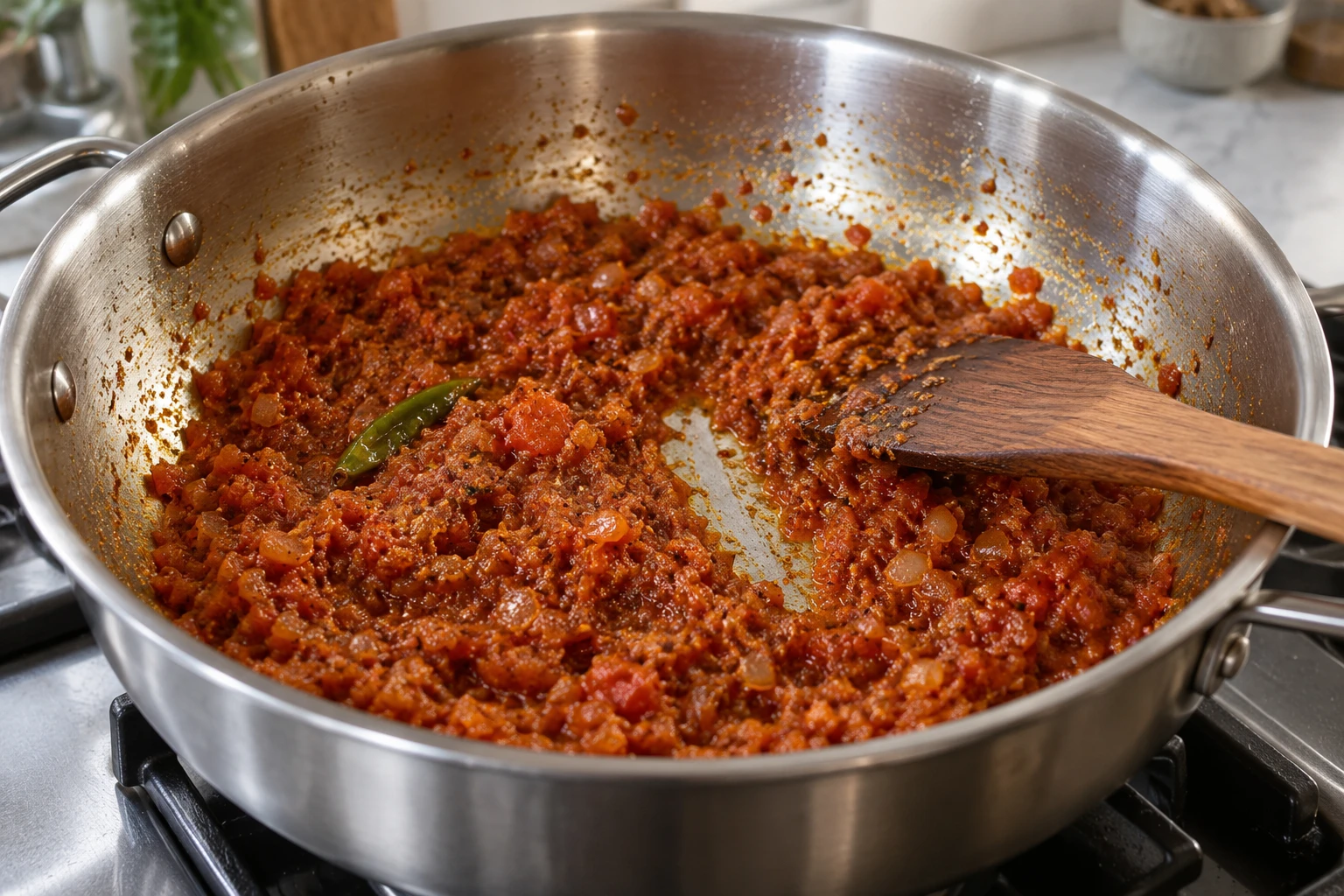
Read the pan, then add the meat
Onion should soften and take on some gold before the wet tomato goes in. Ground spices need moisture to cook without scorching: a small splash lets you stir them through, then evaporates. Once the tomato collapses, the mixture changes from bubbling wet vegetables to a cohesive coating. A spatula drawn across the bottom leaves a brief clear path.
That is the moment to add cooked crab. If the base is still soupy, reducing it with the meat already inside means prolonged heating and repeated stirring. If it is scorched or stiff, forcing it through delicate flakes tears them up. Adjust the base first; after that, fold only enough to distribute heat and seasoning.
A modern cooked-meat adaptation
Picked Crab Bhuna for Four
Use fully cooked, ready-to-eat picked crab, not raw or merely cleaned crab. This original onion-tomato version makes four modest portions alongside rice. Allow about 15 minutes to prepare and 25 minutes to cook; these are estimates.
Ingredients
Crab and base
- 400 g fully cooked ready-to-eat picked crab meat, drained weight
- 2 tbsp neutral cooking oil
- 200 g onion, finely chopped
- 150 g ripe tomato, finely chopped
- 1 tbsp each finely grated ginger and crushed garlic
- 1 green chili, slit, or less to taste
- 60–100 ml water, added in small splashes
Seasoning and finish
- 1 tsp each ground coriander and ground cumin
- ½ tsp each ground turmeric and mild chili powder
- ¼ tsp garam masala
- ¼ tsp to start salt, then adjust after adding the crab
- 2 tbsp chopped fresh coriander
- Freshly cooked plain rice, to serve
Method
- 1
Drain without crushing
Check the crab's label and storage instructions. Drain it in a fine sieve without squeezing; inspect gently for shell fragments, then keep refrigerated while preparing the base. Brined meat can already be salty.
- 2
Soften the onion
Heat the oil in a wide 24–26 cm pan over medium heat. Add onion and cook about 8–10 minutes, stirring, until soft with lightly golden edges. Add ginger and garlic; stir for another minute without letting either brown darkly.
- 3
Cook the spices and tomato
Stir in coriander, cumin, turmeric, chili powder and the initial salt with 2 tablespoons of water. Cook for a minute, then add tomato and green chili. Cook uncovered for about 6–8 minutes, stirring and adding a tablespoon of water if the spices catch. The tomato should collapse and the base become cohesive, with no watery pool.
- 4
Fold and heat
Fold in the drained crab and garam masala gently. Add a small splash of water only if needed to loosen the coating. Heat over medium heat, folding occasionally, until hot throughout; allow about 4–6 minutes, longer if needed. For this cooked-meat adaptation, use a conservative endpoint of 74°C/165°F in several places, then stop heating.
- 5
Finish at the table
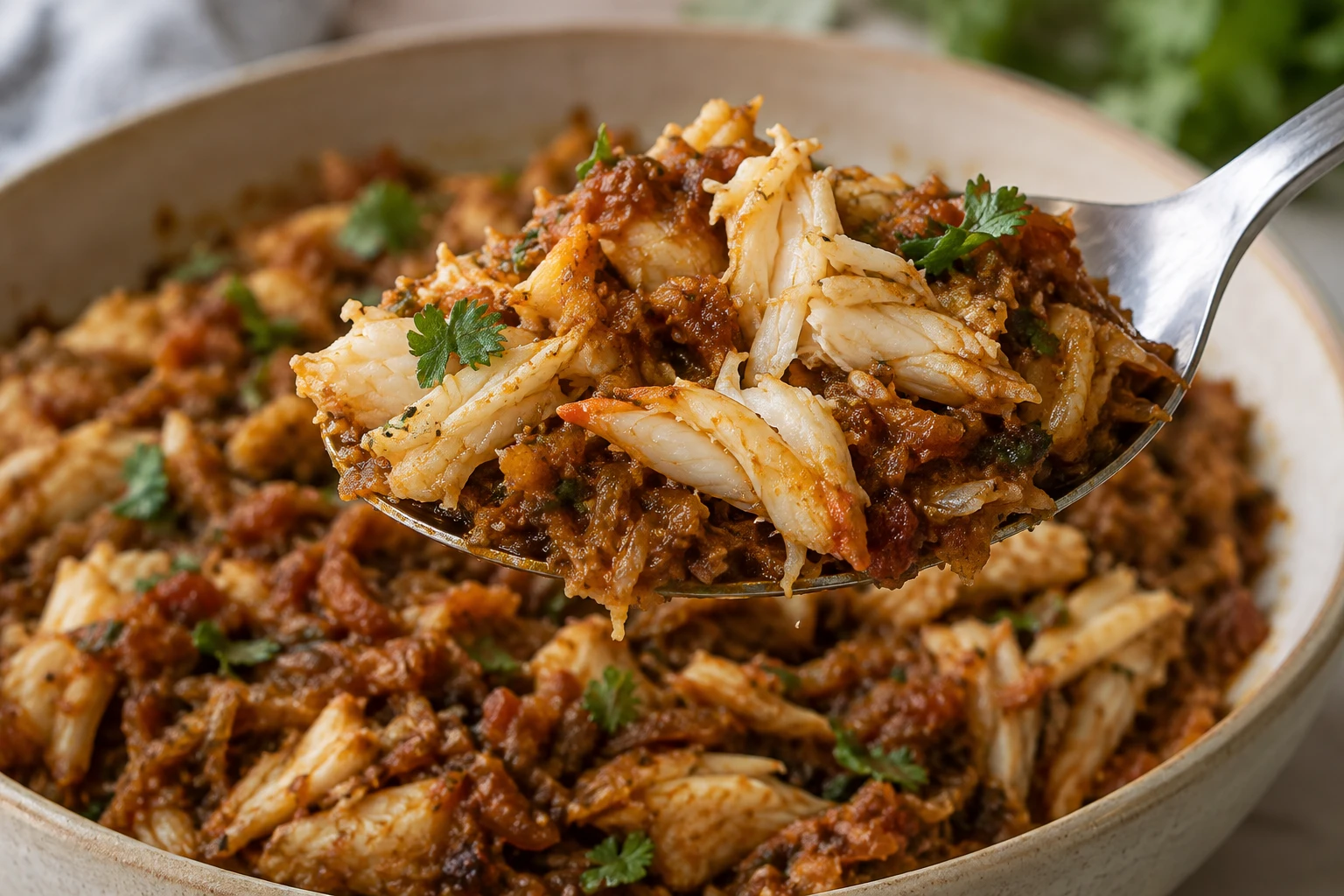
Taste and adjust salt, then fold in fresh coriander. Serve immediately with plain rice. The mixture should be moist enough to spoon easily, with masala clinging to visible flakes rather than surrounding them in a thin gravy.
Related names, different pans
Across the border, Meghna Chakraborty's West Bengal kakrar jhal includes potatoes. Anandabazar's separate Bengali jhal account uses whole aromatic spices and no potatoes. These neighboring preparations help explain the family resemblance without turning bhuna, jhal and every crab curry into interchangeable recipes. Look at the ingredient list and the actual cooking sequence.
For this picked-meat version, keep the rice separate so you can decide how much concentrated masala accompanies each bite. Refrigerate leftovers promptly in shallow containers within two hours, or one hour above 32°C/90°F. Keep at 4°C/40°F or colder, follow any shorter crab-label limit, and reheat leftovers throughout to 74°C/165°F.
Research notes
Sources behind this article
- Ajker Patrika: Omam Rayhan's kakra bhuna Bangladesh recipe with a cooked onion-tomato spice base and prepared shell-on crab.
- Nadiya Hussain: Crab Bhuna The chef's expressly personal modern tinned-crab version and moisture control.
- Banglar Ranna: কাঁকড়া ভুনা Original bilingual method with fried crab and small water additions while cooking the masala.
- Meghna Chakraborty: Kakrar Jhal A separately identified West Bengal counterpart with potatoes and restrained gravy.
- Anandabazar: কাঁকড়ার ঝাল রেসিপি An independent Bengali jhal account with whole aromatic spices and no potatoes.
- FDA: Selecting and Serving Seafood Safely Seafood cold-chain, preparation and prompt refrigeration guidance.
- FoodSafety.gov: Storage and Reheating Shallow cooling, refrigeration limits and the 74°C/165°F reheating endpoint.
Keep exploring
More stories for your table
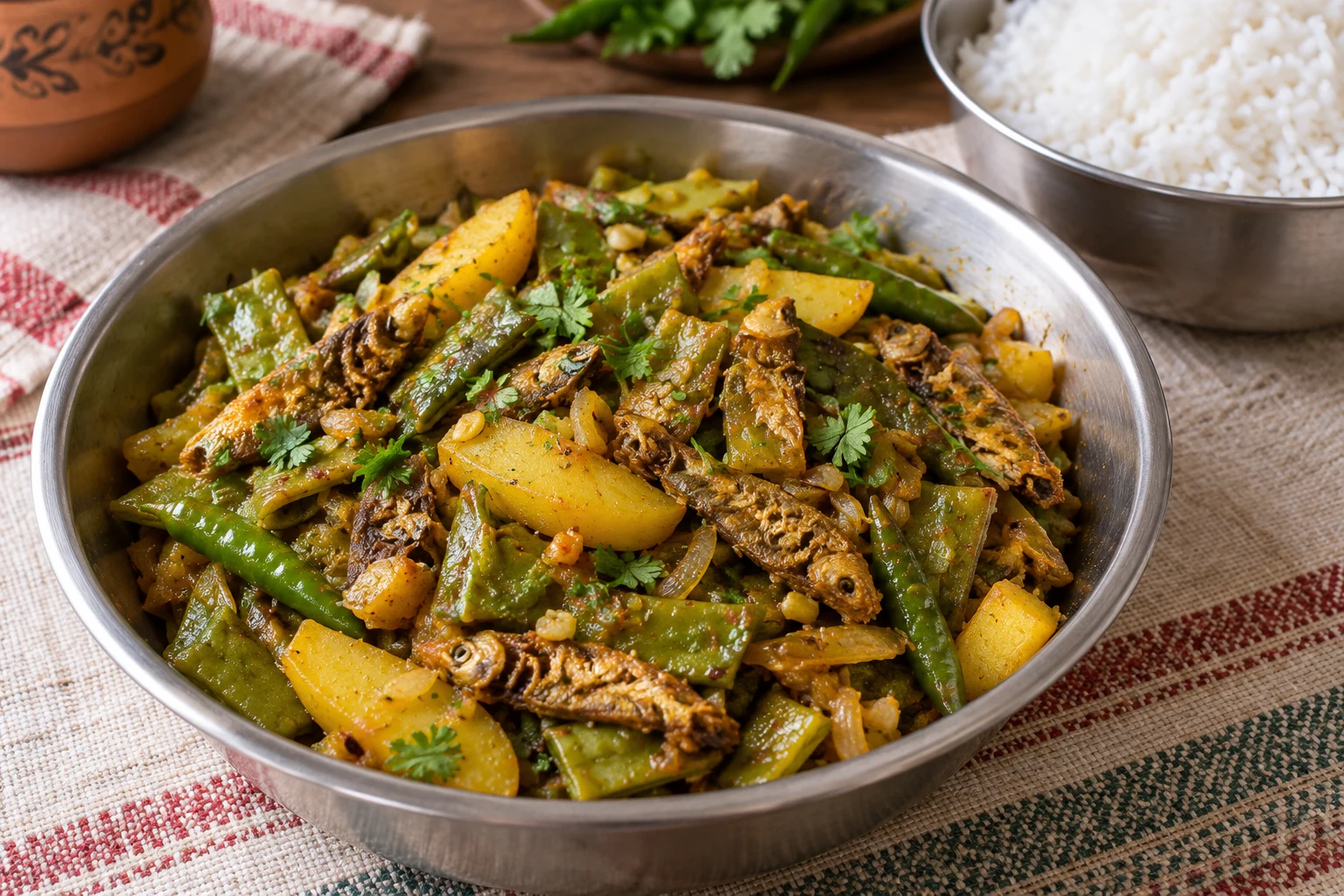
Bangladeshi cuisine Dried-fish side
Shutki Bhaji: Let the Fish Season the Vegetables
Bangladeshi shutki bhaji can bring dried fish together with potatoes, flat beans or greens. Choose the fish and control the water before finishing the pan.
Moroccan cuisine Seafood tagine
Shrimp Tagine: Give the Tomatoes a Head Start
Build a Moroccan shrimp tagine by developing the tomato sauce first, then adding shellfish. Learn chermoula choices and a complete skillet adaptation.
Chilean cuisine Fish soup
Caldillo de congrio: build the broth, protect the fish
A practical guide to Chilean caldillo de congrio, from fish cuts and stock choices to potatoes, shellfish, dairy finishes and gentle final cooking.