
Picante de Pollo: The Ají and the Sides
Picante de pollo
The chicken sits in a fragrant ají sauce; the rice and potatoes keep their own places on the plate. In documented Jujuy versions, that arrangement matters as much as the heat.
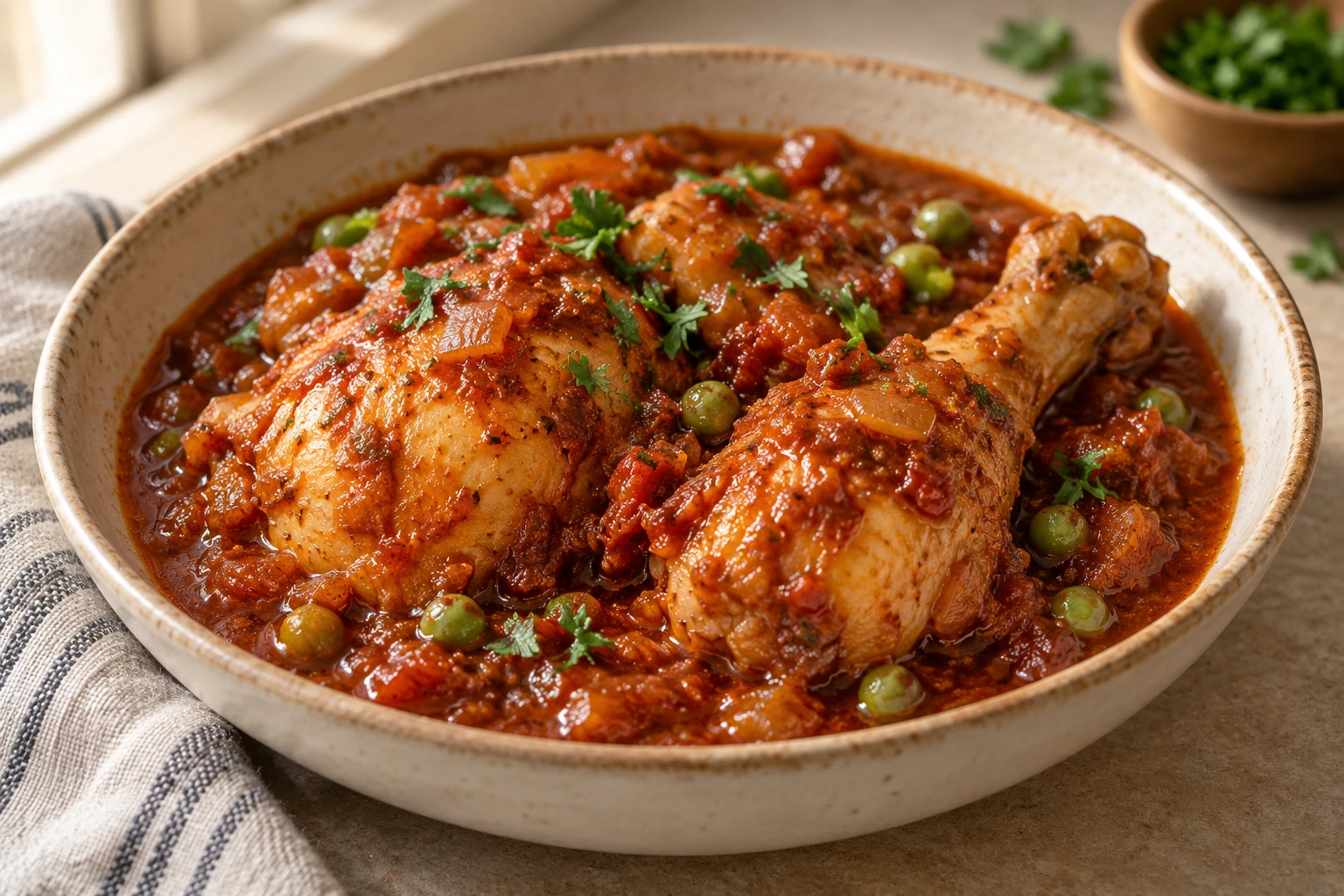
A plate associated with Jujuy celebrations
Picante de pollo appears in Jujuy reporting around Carnaval and Jueves de Comadres. Somos Jujuy published the Rodríguez family's version for that occasion in 2022. Todo Jujuy's separate market report in 2024 followed the ingredients for a household meal, including chicken, ají, rice, potatoes and chuño.
Those accounts document a regional table rather than a single fixed recipe. Antonella Crespo, a Jujuy home cook, describes learning her version from her mother-in-law. Her plate includes chuño with peanuts and a tomato-and-onion salad, with locoto added separately for people who want it. The accompaniments and the way heat is offered can change between households.
Two published cooking routes
Poached chicken, blended sauce
Cocineros Argentinos cooks the chicken in stock first, then combines it with sautéed vegetables and a sauce of hydrated mirasol ají and roasted yellow pepper.
Browned chicken, red ají
The Rodríguez family version browns chicken pieces, builds an onion-and-garlic base and cooks the chicken with ají colorado and stock. Peas join the pot, with the starches served separately.
Give the ají a clear role
Dried ají needs enough water to soften before blending. The resulting paste contributes chili flavor and body as well as heat. The household red version below also uses tomato; it is a practical interpretation of the documented preparations, not a claim to represent every picante.
Choose a dried culinary red ají of known heat, sold for sauces or picantes. Pure cayenne powder is not an equivalent weight-for-weight substitute. If your chilies are especially hot, use the smaller amount in the recipe. Keep additional heat at the table so diners can choose their own balance.
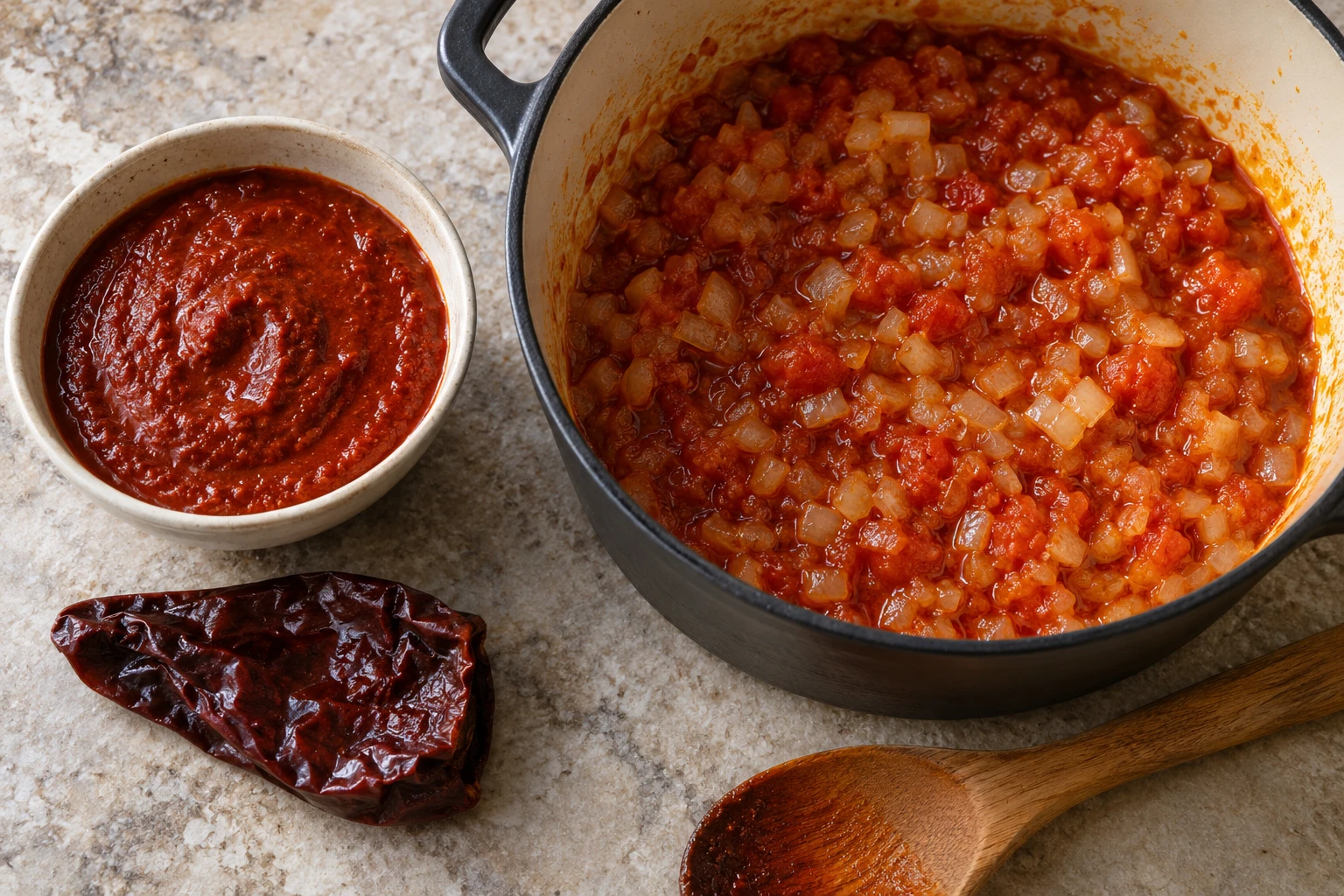
A household red version
Picante de pollo with rice and potatoes
Serves four. Estimated time is 20 minutes to prepare and 75 minutes to cook, with the sides cooking alongside the chicken. A food thermometer determines poultry doneness.
Ingredients
Chicken and sauce
- 4 skinless bone-in chicken leg quarters, about 1.2–1.4 kg total
- 15–25 g dried red culinary ají, stems removed; choose a known, moderate heat
- 200 ml hot water, for soaking the ají
- 2 tbsp neutral cooking oil
- 300 g onion, finely diced
- 3 cloves garlic, finely chopped
- 250 g ripe tomatoes, chopped
- 1 tsp ground cumin
- 500 ml low-salt chicken stock, plus extra water if needed
- 100 g frozen green peas
- 1 tsp fine salt, divided, then adjusted to the stock
- ¼ tsp ground black pepper
- 2 tbsp chopped parsley
Separate sides
- 600 g potatoes, peeled and cut into 3 cm chunks
- 180 g ordinary long-grain white rice
- 360 ml water, for the rice
- salt for the side dishes
- tomato-and-onion salad, optional
Method
- 1
Soften and blend the ají
Open the dried chilies and shake out loose seeds. Cover with the 200 ml hot water and leave for about 20 minutes, until pliable. Blend the chilies and soaking water into a smooth paste. Start with 15 g if their heat is strong; removing seeds does not remove all the heat.
- 2
Lightly brown the chicken
Pat the chicken dry with clean kitchen paper; do not wash raw poultry. Season with half the salt and the black pepper. Heat the oil in a wide, heavy pot over medium-high heat and brown the chicken in two batches, about 10 minutes total. Transfer to a plate reserved for the partially cooked chicken.
- 3
Build the base
Lower the heat to medium. Cook the onion in the same pot for about eight minutes, stirring until softened. Add garlic and cumin for one minute, then tomatoes for five minutes. Stir in the ají paste and cook gently for two minutes. Add a splash of water if the bottom begins to catch.
- 4
Simmer until cooked
Return the chicken with its accumulated juices and add the stock and remaining salt. Bring to a gentle simmer, cover partly and cook for about 35–45 minutes, turning once. Add the peas for the final 7–10 minutes. Check each chicken quarter in the thickest meat, avoiding bone: it must reach at least 74°C / 165°F. Continue cooking if needed, regardless of the estimated time.
- 5
Cook the sides alongside
While the chicken simmers, cover the potatoes with lightly salted water in a separate pan. Bring to a simmer and cook for about 15–20 minutes, until a knife enters easily; drain. For the rice, bring the 360 ml water and a pinch of salt to a boil, add the rice, cover and cook over very low heat for about 18 minutes. Turn off and rest covered for five minutes. Check that the grains are tender; if needed, add a little hot water and continue cooking.
- 6
Adjust and assemble
When the chicken is fully cooked, taste the sauce. If watery, remove the chicken to a clean plate and simmer the sauce uncovered for a few minutes; if too thick, add hot water. Return the chicken briefly, add parsley and divide among four plates. Put rice and potatoes beside it, spooning sauce over the chicken. Serve optional tomato-and-onion salad separately.
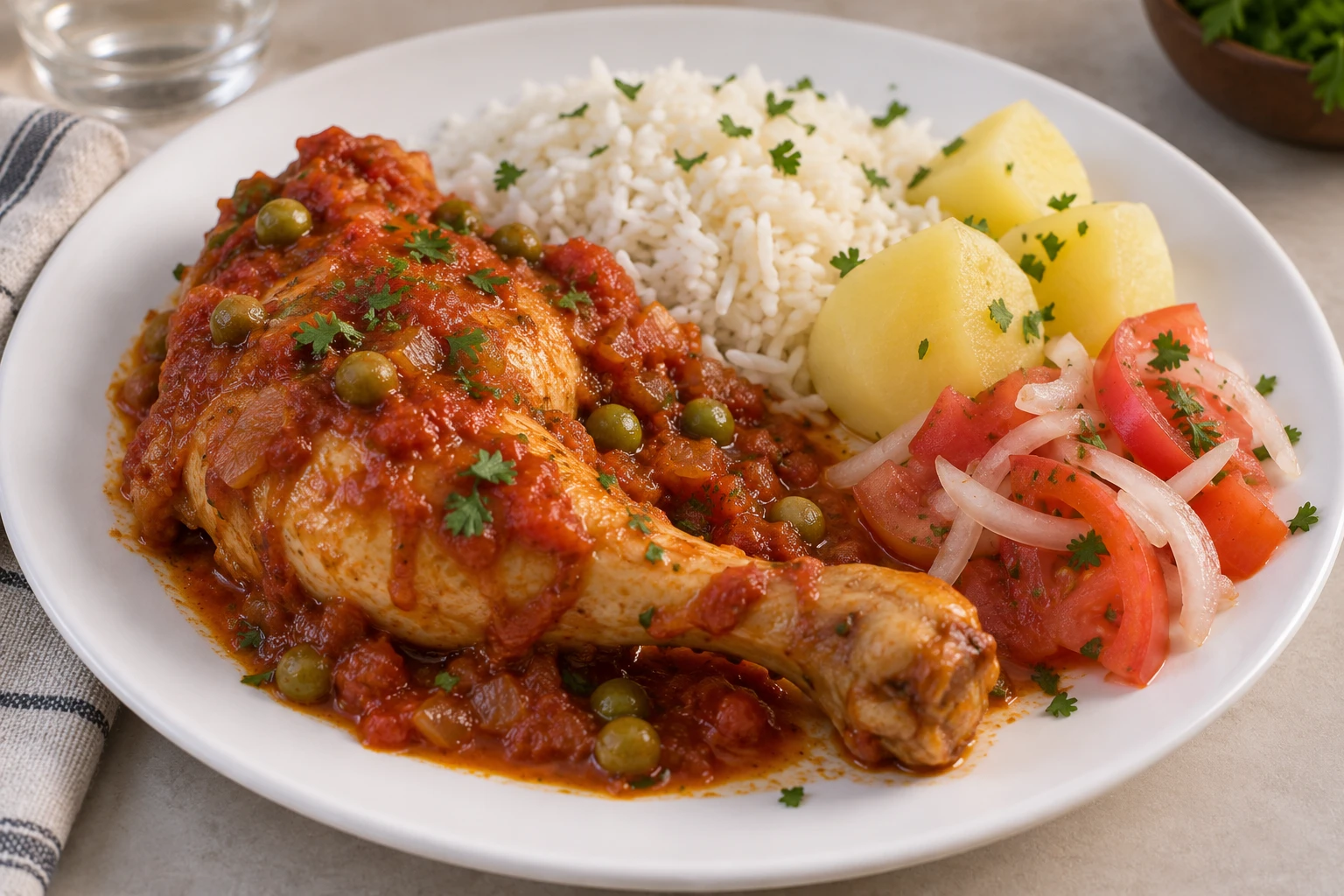
Leave room for the accompaniments
Rice catches the sauce without disappearing into the pot, and boiled potato supplies a softer bite. Serving them separately gives the dish a different rhythm from an all-in-one rice stew. A fresh tomato-and-onion salad adds coolness alongside the warm sauce.
Chuño is another documented accompaniment, with its own preparation. Plain boiled potato is a useful side in its own right; it should not be described as producing the same ingredient or texture. A complete plate can stay simple while leaving those distinctions intact.
Research notes
Sources behind this article
- Cocineros Argentinos — Picante de pollo, receta regional Original cookery-program method using poached chicken, hydrated mirasol ají and roasted yellow pepper.
- Antonella Crespo — Picante de pollo A named Jujuy home cook's family preparation, with separate accompaniments and optional locoto.
- The Rodríguez family, Somos Jujuy — Picante de pollo A family recipe published for Jueves de Comadres, with browned chicken, red ají and peas.
- Todo Jujuy — Cazadores de precios: picante de pollo Original 2024 market reporting documents a regional household ingredient list; historical prices are not used.
- FoodSafety.gov — Safe minimum internal temperatures Official poultry thermometer guidance: all chicken reaches 74°C / 165°F.
- FoodSafety.gov — Four steps to food safety Official guidance on avoiding raw-meat washing and separating cooked food from raw-food equipment.
Keep exploring
More stories for your table
Colombian cuisine Chicken stew
Sudado de Pollo: Read the Potato Schedule
Cook a Colombian-style sudado de pollo with a tomato base and a separate potato stage. Includes a complete stovetop adaptation and documented household variations.
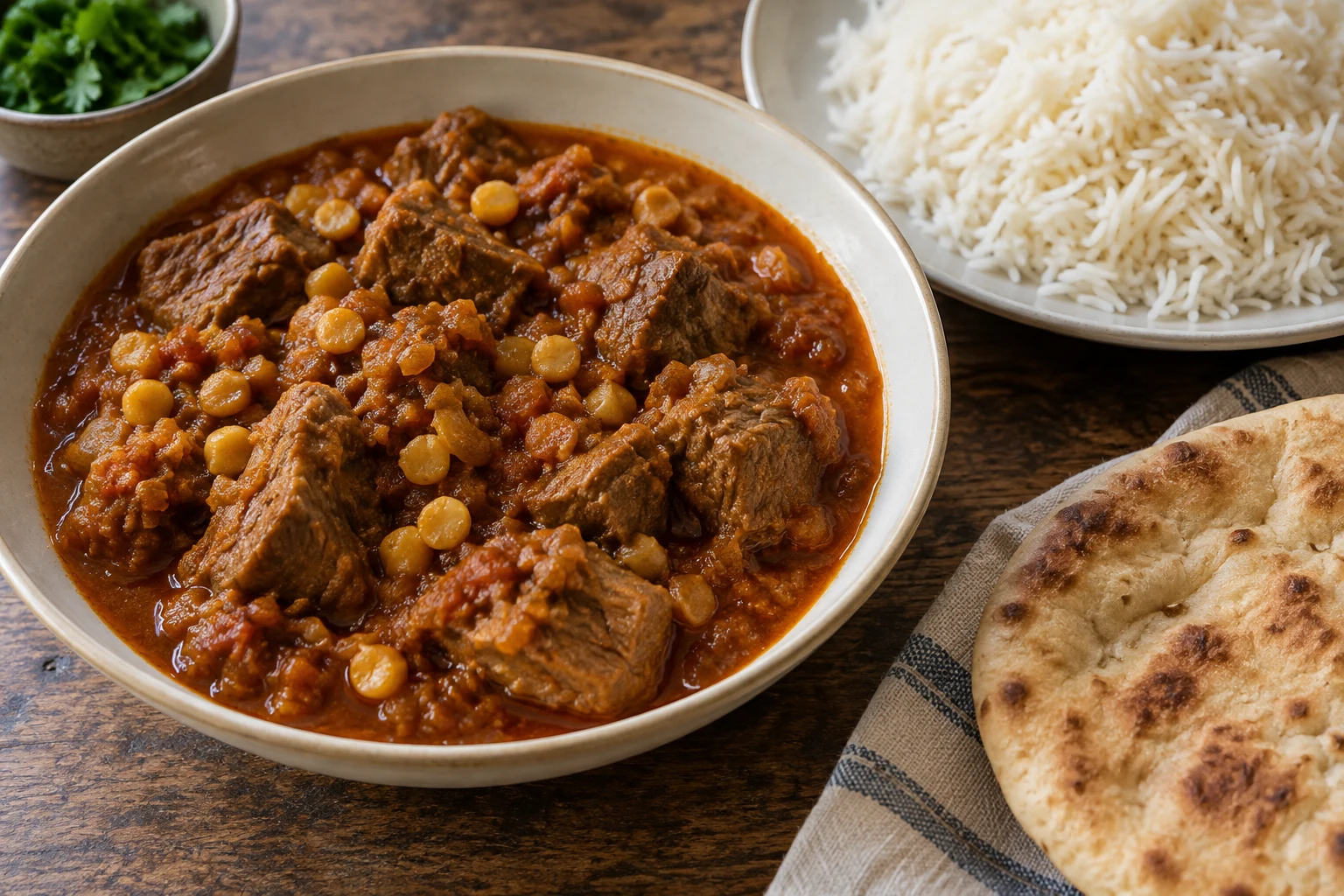
Afghan cuisine Meat stews
Afghan Qorma: One Braise, Several Pots
Afghan cooks make meat qorma with potatoes, tomato, pulses or fruit. Their recipes show how to choose a whole preparation and read beyond a familiar curry name.
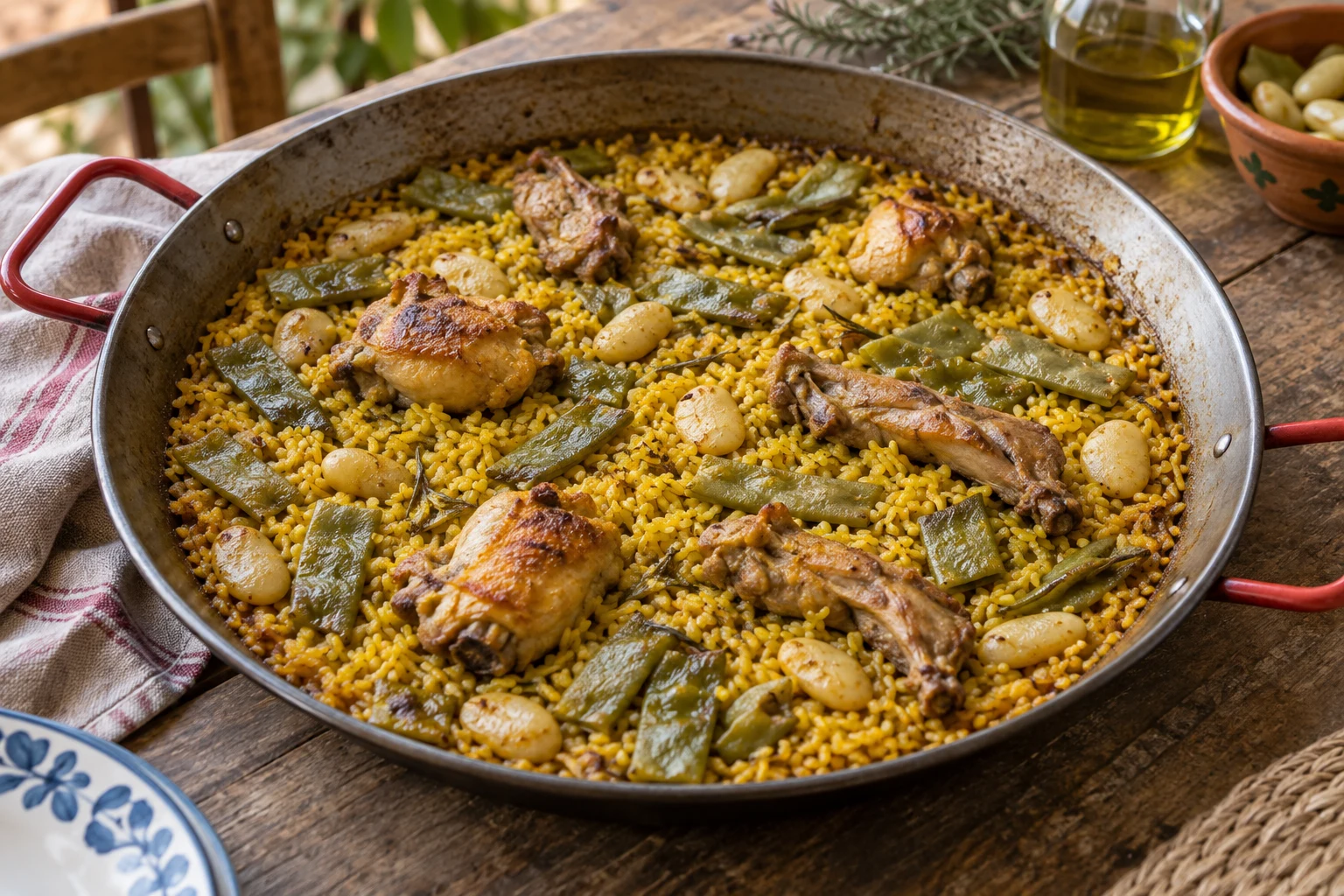
Spanish cuisine Rice dishes
Paella Valenciana: Meat, Beans, and a Thin Layer of Rice
Understand paella valenciana through its chicken and rabbit, flat green beans, garrofó, rice layer and careful sequence of cooking.