
Argentine Ensalada Rusa: Keep the Vegetable Cubes Intact
Ensalada rusa
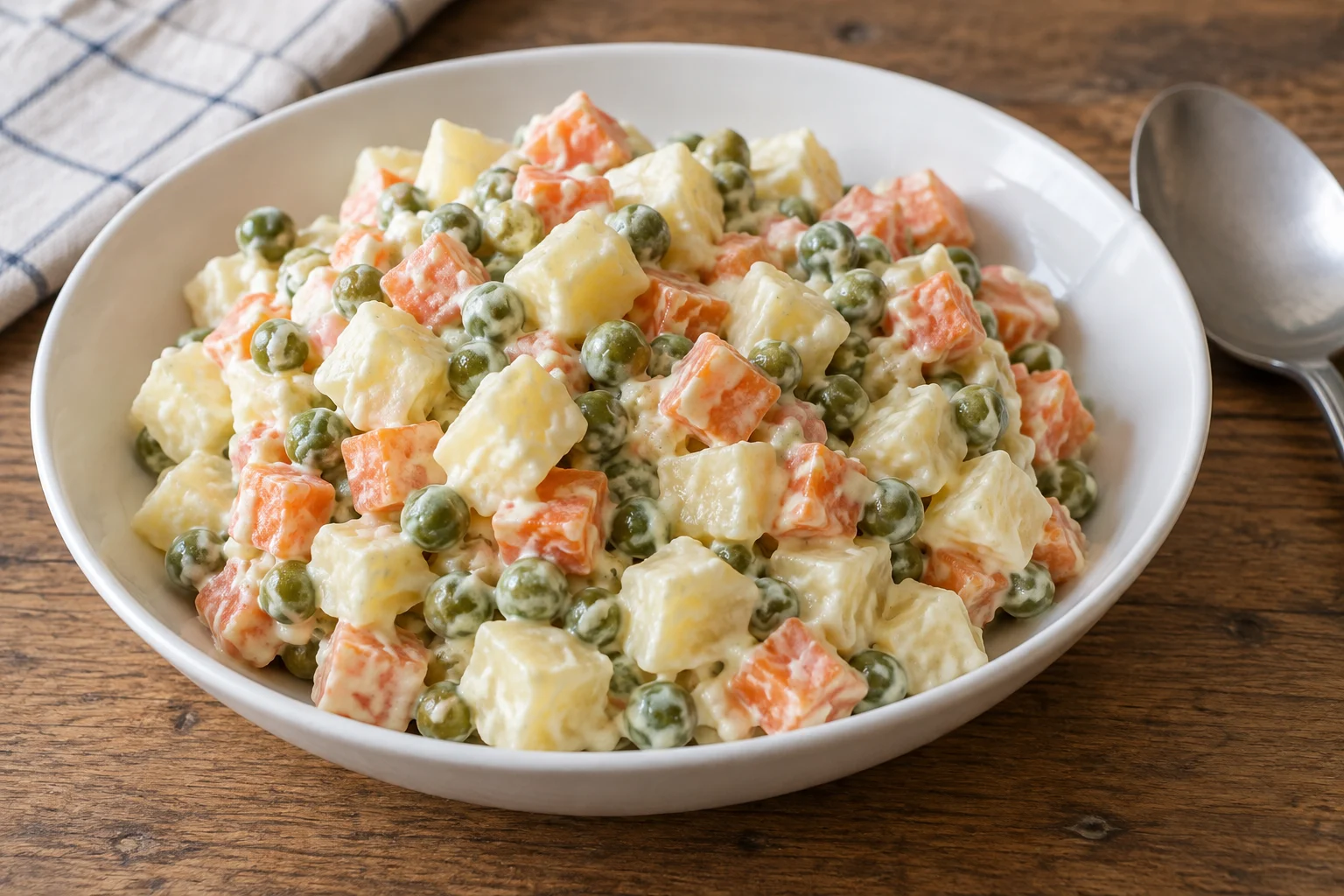
The mayonnaise brings the salad together. Its texture begins earlier, with tender potatoes and carrots that still hold their shape when the spoon moves through them.
A cold side for the table
Recognizable pieces in every spoonful
In Argentina, ensalada rusa often means a cold salad of potato, carrot and peas bound with mayonnaise. Paulina Cocina presents a simple version for festive gatherings, while Cocineros Argentinos serves it alongside matambre, a rolled beef preparation. A modest bowl can take its place beside the main dish without needing elaborate decoration.
The cooking is straightforward, but the vegetables have different needs. A potato can become fragile while a similarly sized carrot still resists the knife. Once the dressing goes in, stirring will reveal that difference: soft potato smears, firm carrot remains hard, and the salad loses the even texture you wanted.
Three decisions before the mayonnaise
- Cut evenly
- About 1 cm cubes
- Cook separately
- Test each vegetable
- Drain thoroughly
- No water in the bowl
Consistent pieces within each vegetable make it easier to judge doneness.
A knife should enter easily while the cube keeps its shape.
Liquid carried over from cooking loosens the finished dressing.
Separate pots make the endpoint easier to control
Both Cocineros Argentinos and elGourmet cook the vegetables separately. That approach lets you lift each out when it is ready, instead of adjusting carrot size to match a potato’s cooking time. Begin checking a few pieces before they look fully soft, and taste a carrot as well as testing the potato. Tenderness matters inside the cube.
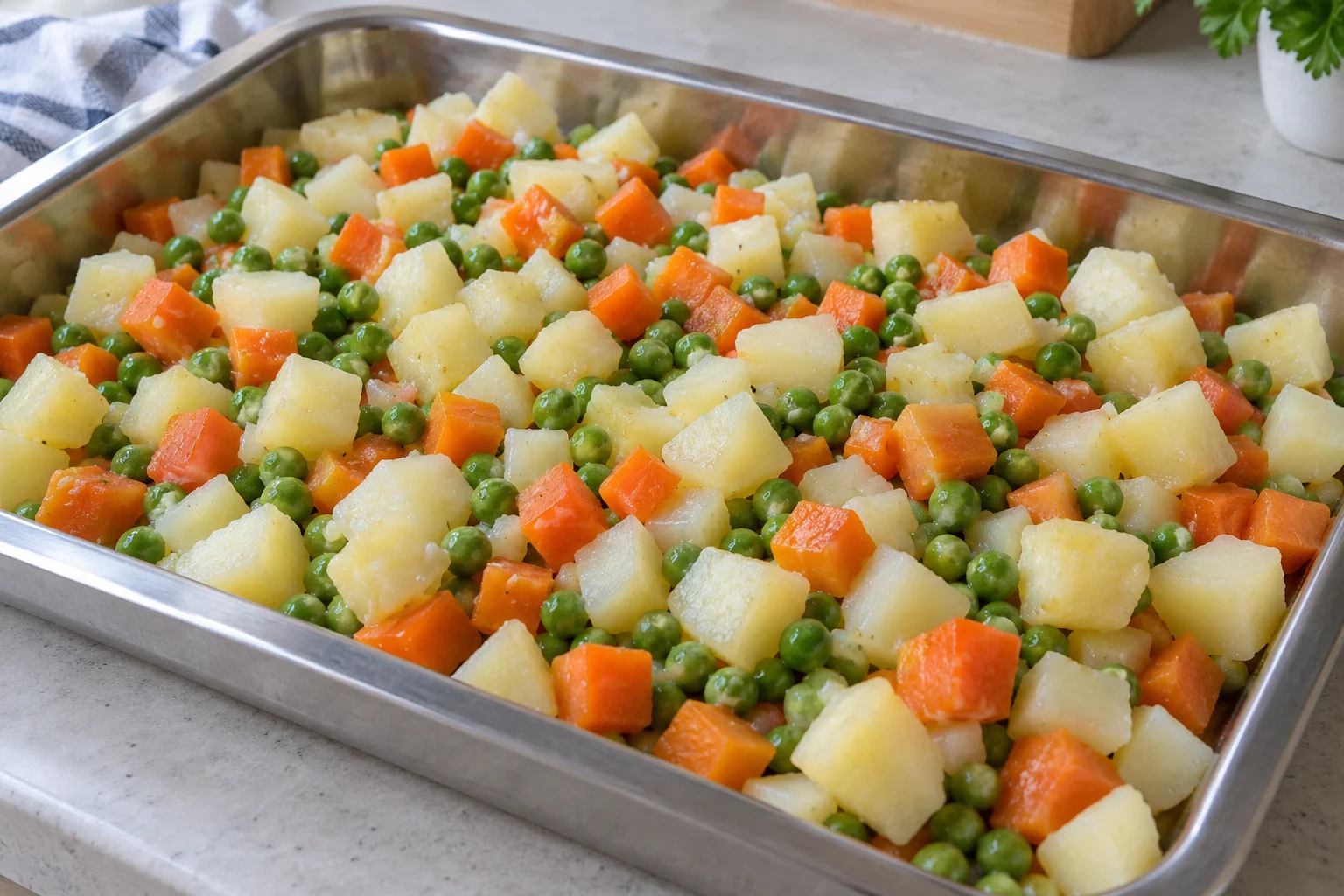
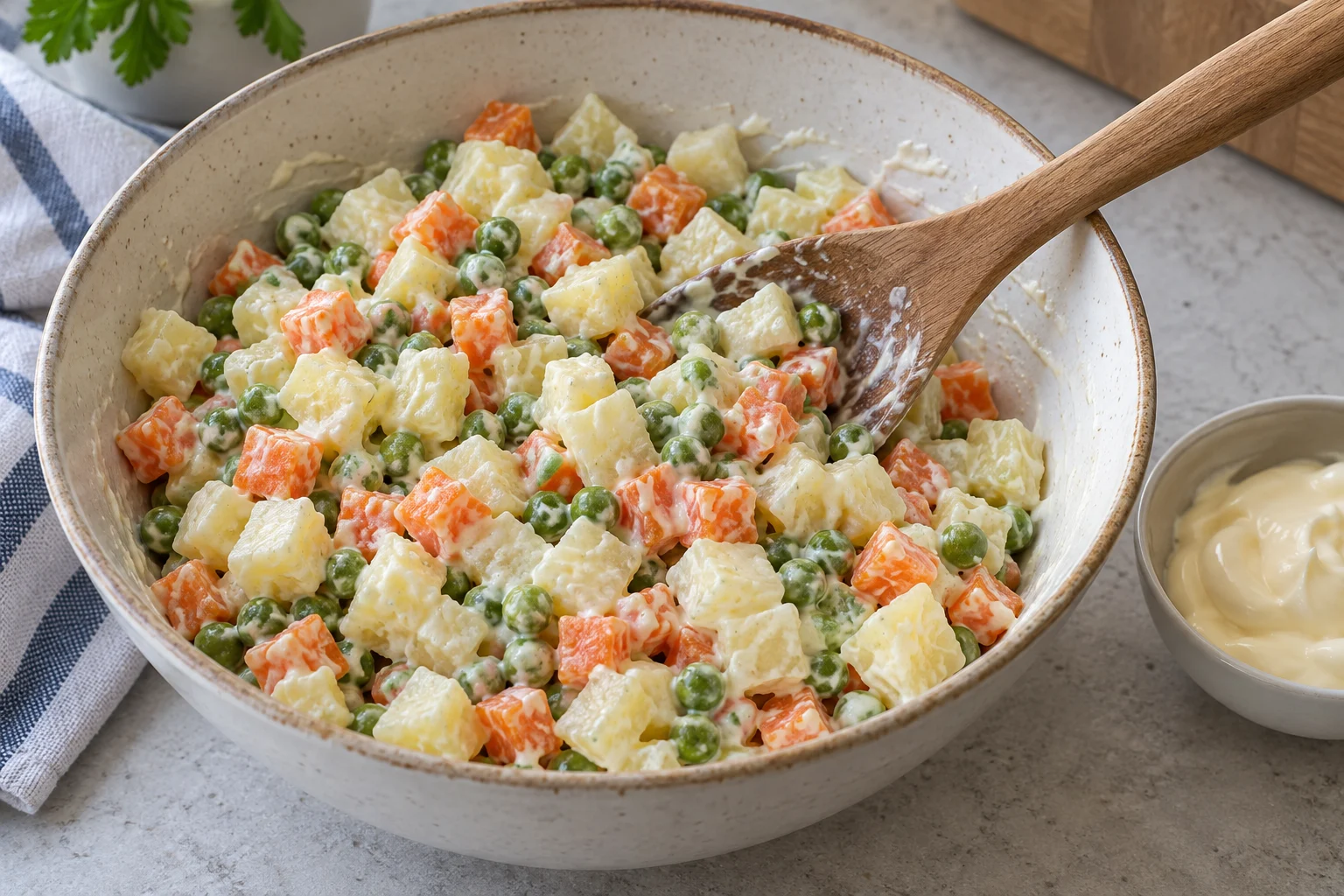
Drain with care and spread the cooked vegetables in a shallow container for cooling. A pile left sitting in cooking liquid continues to carry water into the salad. Once cooled, use a broad spoon to lift and turn the pieces through the dressing. The small number of ingredients makes the condition of each one especially visible.
From drained vegetables to a light coating
Four generous side servings
Simple Argentine ensalada rusa
This editorial adaptation uses separate cooking for the vegetables and commercial mayonnaise. Allow about 15 minutes to prepare, 20 to cook and an hour for cooling and chilling; add time if the vegetables need longer to become cold.
Ingredients
Vegetables and dressing
- 500 g potatoes, weighed after peeling, cut into 1 cm cubes
- 250 g carrots, weighed after peeling, cut into 1 cm cubes
- 100 g frozen peas, or canned peas drained well
- 120 g commercial mayonnaise
- To taste salt and freshly ground black pepper
Method
- 1
Start the potatoes
Rinse the whole potatoes and carrots before peeling and cutting. Place the potato cubes in a saucepan, cover with cold water and add a little salt. Bring to a boil, then reduce to a gentle simmer. Check after about 8 minutes of simmering; they may need 10–15 minutes. Drain as soon as a knife enters easily and the cubes remain intact.
- 2
Cook the carrots and peas
In a second pan, bring lightly salted water to a boil. Add the carrot cubes and simmer until tender, checking after about 8 minutes. Drain separately. Cook frozen peas according to their packet instructions and drain thoroughly; well-drained canned peas can be used directly.
- 3
Drain and cool promptly
Spread the vegetables in a clean shallow container. Let the strongest steam subside briefly, then refrigerate promptly until cool, allowing about 30 minutes or longer as needed. Keep the refrigerator at 4°C/40°F or below. Avoid leaving a deep bowl on the counter to cool for hours.
- 4
Fold and chill
Place the cooled vegetables in a mixing bowl. Add the mayonnaise and gently lift and turn with a broad spoon until coated. Taste and season with salt and pepper. Cover and refrigerate for about 30 minutes more, or until cold throughout, then spoon into a serving bowl.
Additions change the bowl, so add them deliberately
The simple combination is only one documented version. Paulina Cocina’s richer variation adds tuna, boiled egg, pickle and olives. The La Cabrera recipe published by LA NACION includes boiled eggs and discusses hearts of palm. Those choices add different tastes and textures; they also change what must be accounted for in the dressing and allergen information.
Begin with the vegetable texture before expanding the ingredient list. A small amount of mayonnaise should reach each cube; more additions do not repair an overcooked potato. Serve a spoonful alongside the rest of the meal and adjust the next batch to the balance you enjoy.
Research notes
Recipes and handling guidance consulted
Four culinary publishers establish the simple combination, cooking choices and documented variations. Official guidance supports prompt cooling and cold serving. This adaptation has not been kitchen tested.
- Paulina Cocina — Ensalada rusa fácil y nivel Dios Original Argentine recipe presents a simple holiday side and a richer variation with tuna, egg, pickle and olives.
- Cocineros Argentinos — Matambre clásico con ensalada rusa Original program recipe pairs the salad with matambre and cooks the cubed vegetables separately, with careful draining.
- elGourmet — Ensalada Rusa, ABC Gourmet Ensaladas Original program recipe uses potato, carrot, peas and mayonnaise; potatoes and carrots are cooked separately and cooled before mixing.
- LA NACION — La Cabrera’s ensalada rusa recipe Accessible published chef-book recipe includes boiled eggs and discusses hearts of palm as a variation; used for documented additions.
- FoodSafety.gov — Four steps to food safety Official guidance supports shallow containers, prompt refrigeration at 4°C/40°F or below, and time limits for perishable food at serving.
Keep exploring
More stories for your table
Argentinian cuisine Vegetable salad
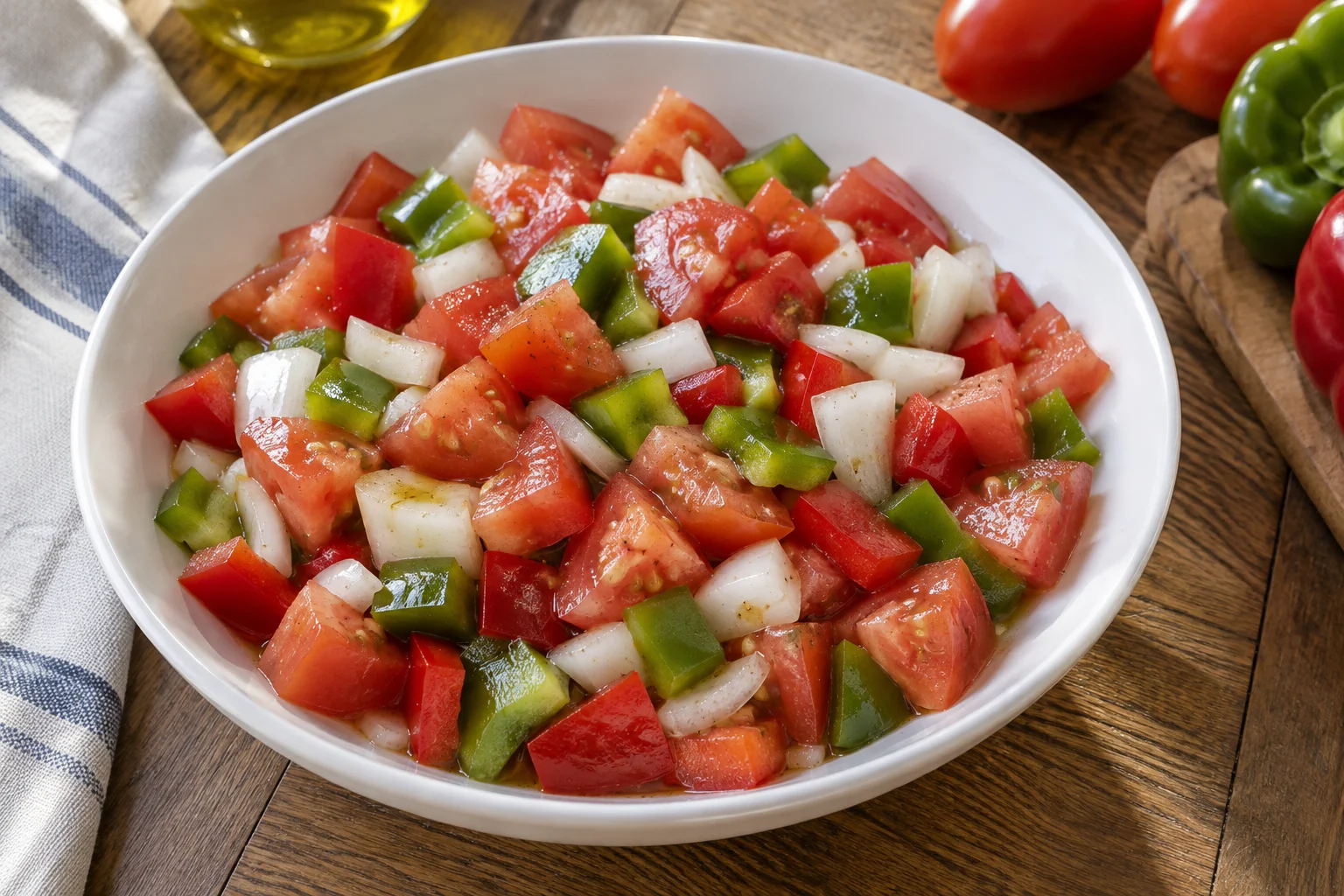
Ensalada Criolla: Let the Pieces Share a Fork
Make a lightly dressed Argentine ensalada criolla with matched vegetable pieces, and understand how it differs from finer salsa criolla preparations.
Nepalese cuisine Potato salad
Aloo ko Achar: Dress the Potatoes in Two Stages
Make Nepali potato achar with toasted, ground sesame and a final spice-oil dressing. Learn the sequence, then try a complete potato-and-cucumber adaptation.
Georgian cuisine Beet salad
Charkhlis Chogi: When Tart Fruit Dresses Beets
Roasted beets, tart fruit and fresh herbs make Georgian charkhlis chogi. Explore two sauce textures, then cook a complete dried-sour-cherry adaptation.