
Polenta con Tuco: Spoon It, Slice It, Bake It
Polenta con tuco
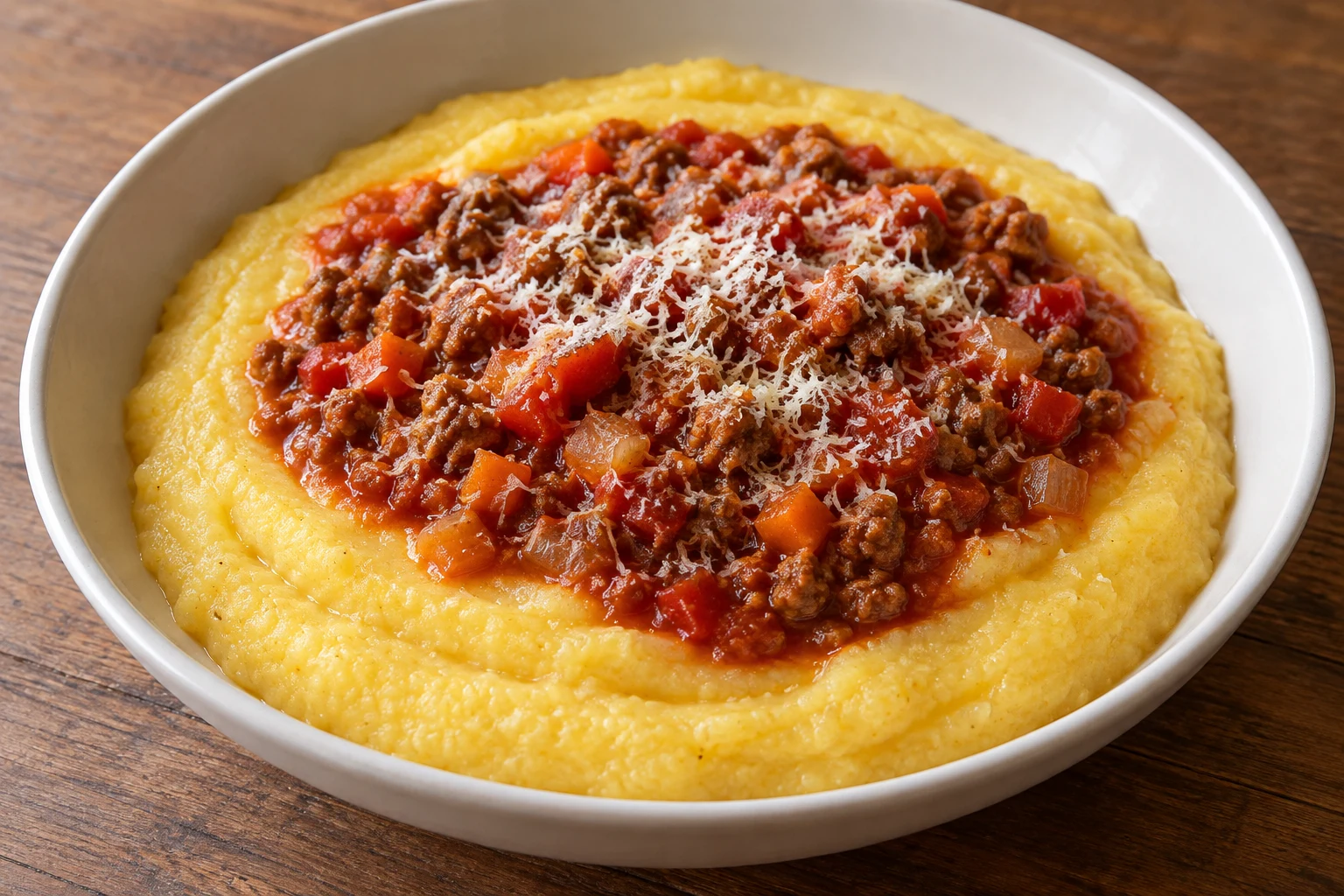
A bowl, a cut square or a dish of melted cheese: Argentine polenta with tomato sauce takes more than one shape. Choosing the texture first makes the cornmeal, sauce and finish easier to bring together.
One family’s polenta
Before the squares came the stirring
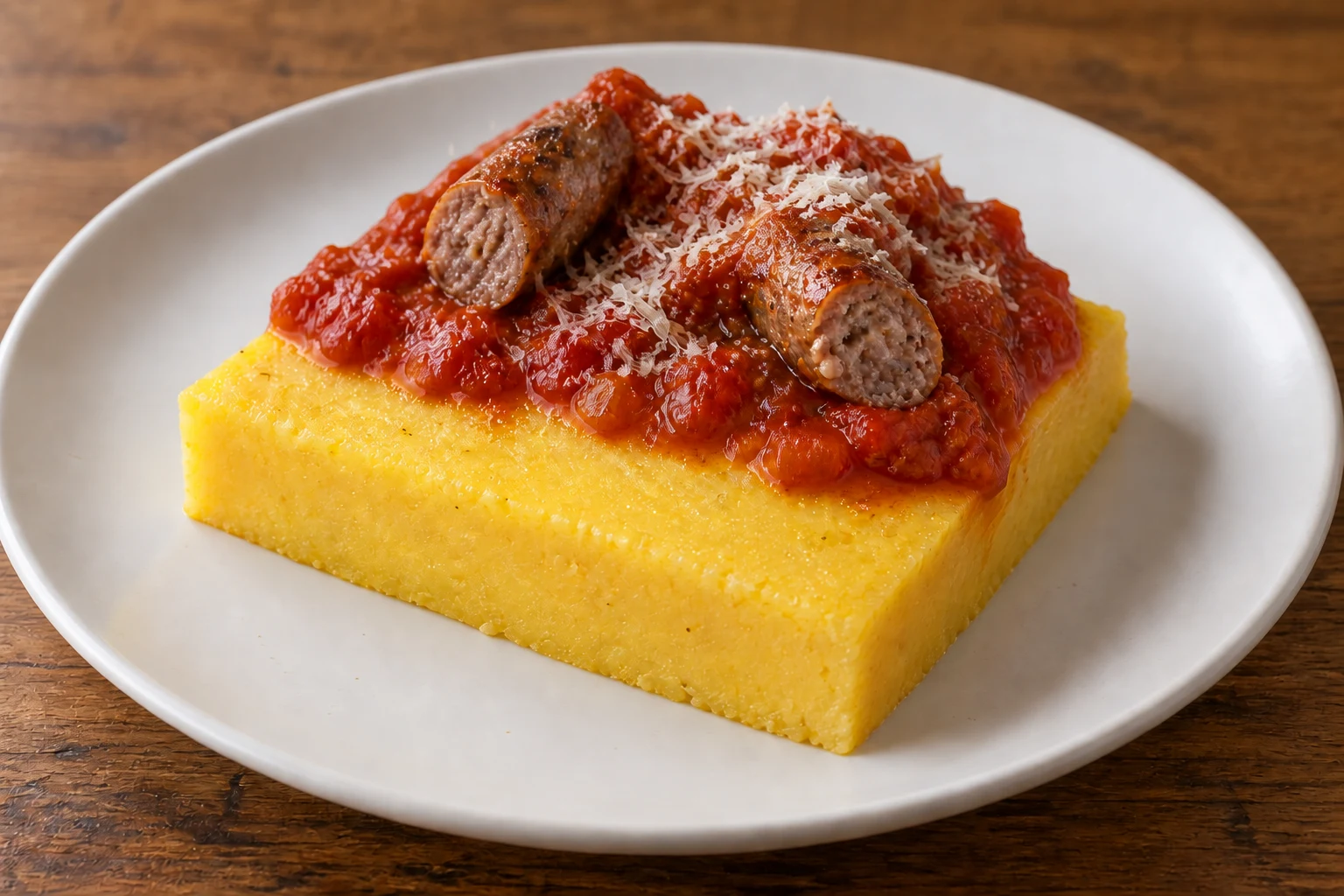
In a collection from UNLa/CAM gastronomy workshops for older adults, Carlos Calvente remembers his Italian grandfather’s polenta al mantel. Carlos had the stirring job. His grandfather used a polished branch as the implement, and Carlos recalls the long work of keeping the bubbling mixture smooth. The reward was a family meal he had helped make.
His grandfather spread the cooked polenta on a white tablecloth in a layer two or three centimetres thick. Once a thin skin formed, he cut large squares and served them on plates with tuco, butcher’s sausage stew and grated cheese. Carlos remembers being proud of the absence of lumps. He also writes that, after his grandfather died, the family stopped gathering as it had before.
That personal recollection, preserved on page 18 of Todo está cargado en la Memoria, gives a cut portion a context beyond its shape: shared work followed by a shared table.
The sauce
Tuco leaves room for a household’s choice
ASALE’s Diccionario de americanismos records the culinary word tuco in Argentina and several other South American countries. It describes a tomato sauce with onion and seasonings, served with foods including polenta. The name identifies a sauce family; it does not by itself require ground beef.
A Corrientes recipe in the national Primeros Años collection, Recetas del Noreste argentino, puts an onion, ground-meat and tomato sauce over yellow polenta. It also allows garden vegetables such as pepper or carrot and makes soft cheese optional. In Azul, Buenos Aires province, cook Yoli Palazzo documents another household choice on Cookpad: fresh butcher’s sausage cut into pieces and cooked with vegetables and tomato purée. Both give the cornmeal a substantial topping.
Choose the serving texture
A soft bowl or an oven finish
The cut square is one possibility. These two preparations put the emphasis elsewhere.
Spoonable polenta
In eltrece’s account of Jimena Monteverde’s demonstration, she uses milk and broth and adjusts the consistency as she cooks. She also points out that adding cheese thickens it. Choose this approach when you want a soft base that mingles with the sauce on the spoon.
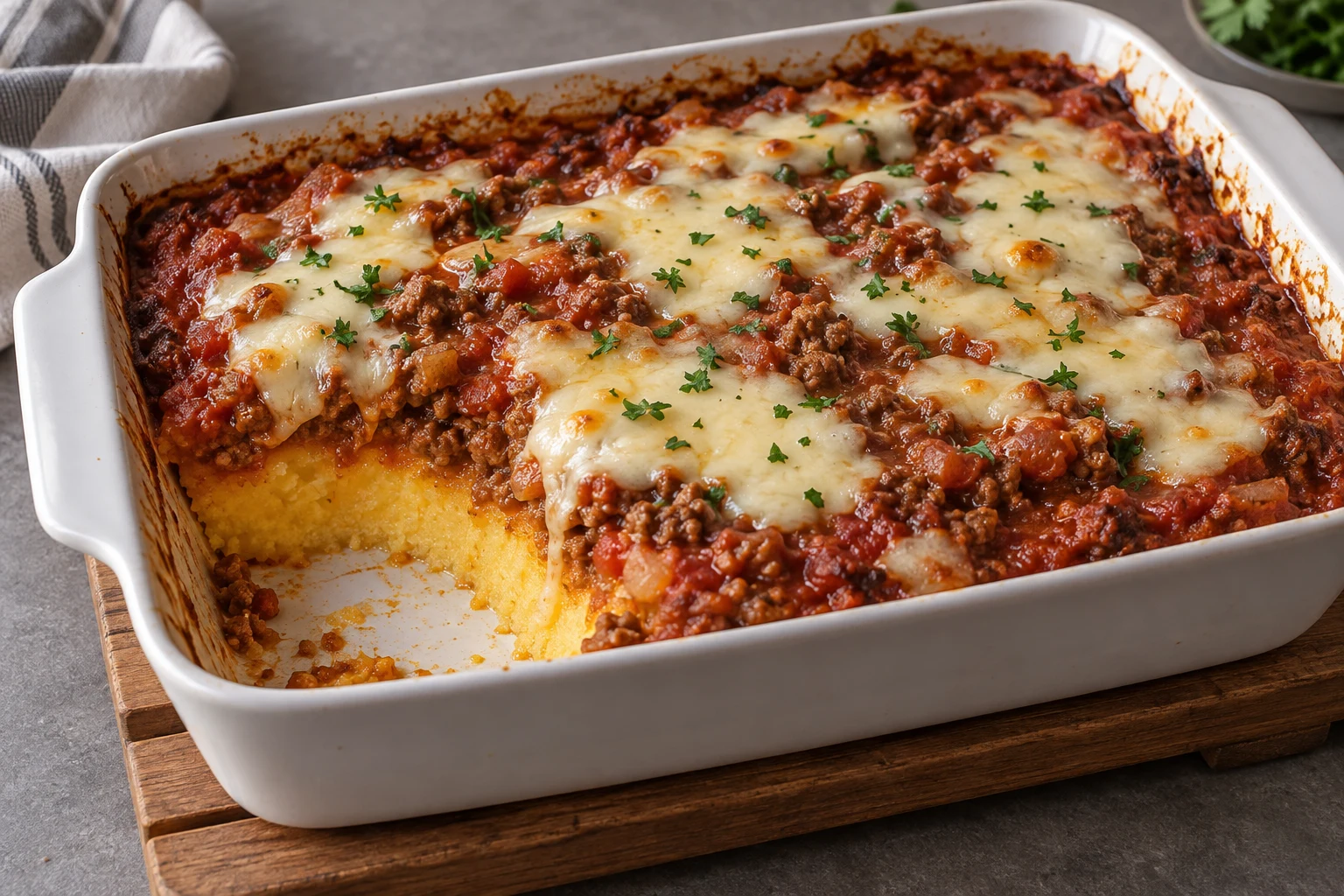
Polenta finished in the oven
The recipe published by Paulina Cocina transfers cooked instant polenta to a buttered baking dish, adds prepared sauce, then tops it with pieces of queso cremoso and parsley. The oven melts the cheese. Grated cheese goes into the polenta itself, so the two cheeses do different jobs. This finish is about a melted topping; it need not produce rigid squares.
Three useful decisions
Read the cornmeal packet before the clock
Use the linked preparations for their quantities. These choices help explain why their methods differ.
- 01
Choose the product.
Monteverde distinguishes the instant polenta she uses from the longer-cooking kind her grandmother made. Their timings are not interchangeable. Follow the cooking time and liquid guidance for the polenta you buy, rather than borrowing a minute count from a different product.
- 02
Disperse it as it goes in.
Monteverde recommends a whisk to prevent lumps. If using a wooden spoon, her advice is to add the cornmeal very slowly in a fine stream while stirring. The goal is an even mixture before it thickens.
- 03
Plan the last step.
For the oven version, the polenta and sauce are already cooked before assembly; the final heating melts the topping. For a spoonable serving, judge the consistency after any cheese addition. Decide which finish you want before choosing a recipe’s proportions.
Research notes
Sources and serving notes
A recorded family memory, a dictionary and Argentine cooking accounts support this comparison. The recollection describes one household; the linked recipes provide the quantities for their own versions.
- UNLa/CAM — Todo está cargado en la Memoria Page 18: Carlos Calvente’s personal recollection of his grandfather, stirring polenta, cut portions and family gatherings.
- ASALE — Diccionario de americanismos: tuco Culinary sense II identifies a tomato sauce used with polenta and records its use in Argentina.
- Primeros Años — Recetas del Noreste argentino PDF page 48, Corrientes: Polenta amarilla with ground-meat tomato sauce, optional garden vegetables and soft cheese.
- Yoli Palazzo — Polenta con tuco y salchicha fresca de carnicería A cook in Azul documents her own preparation with fresh sausage, vegetables and tomato purée.
- eltrece — Jimena Monteverde’s polenta demonstration The broadcaster’s account covers whisking, gradual addition, cheese and the distinction between instant and ordinary polenta.
- Paulina Cocina — Cómo hacer polenta con tuco Cooked instant polenta and prepared sauce are finished in the oven with queso cremoso and parsley.
Keep exploring
More stories for your table
ArgentinaSteak sandwich
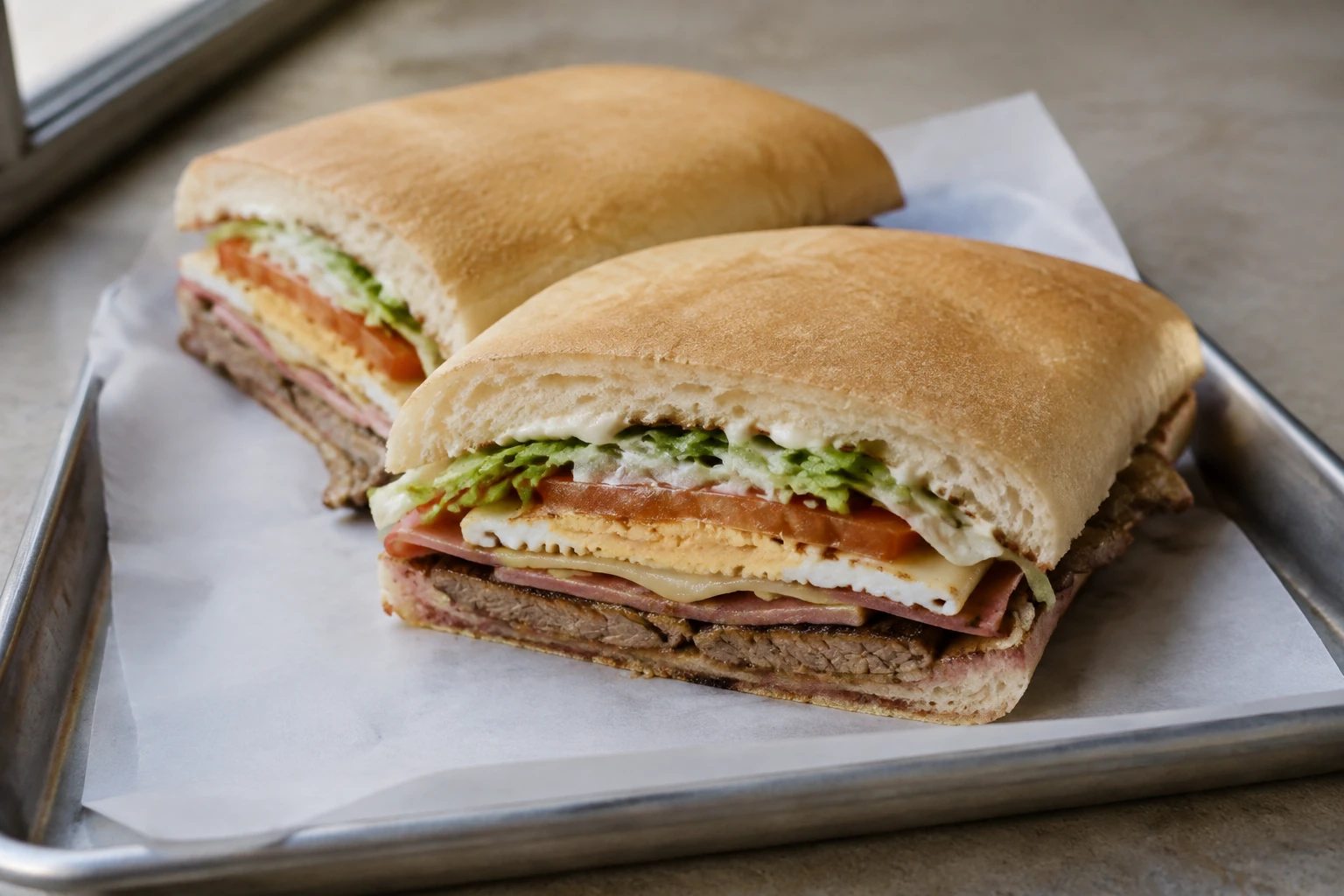
Córdoba’s Lomito: Start with the Bread
Explore Córdoba’s Argentine steak sandwich through its soft bread, thin beef and complete filling, with a practical lomito recipe for two.
PortugalSeafood stew
Cuttlefish Feijoada: Tender Seafood, Intact Beans
A Portuguese cuttlefish-and-bean stew explained through its cooking sequence: tenderize the seafood, add cooked beans, and use a little bean mash to bring the sauce together.
JapanMeat & potato simmer
Nikujaga: Keep the Potatoes in One Piece
A gentle simmer, thin beef and a lid resting on the food help nikujaga’s potatoes stay intact. Learn the technique and make a complete four-serving home adaptation.