
Matambre a la Pizza: Cook the Meat Before the Cheese
Matambre a la pizza
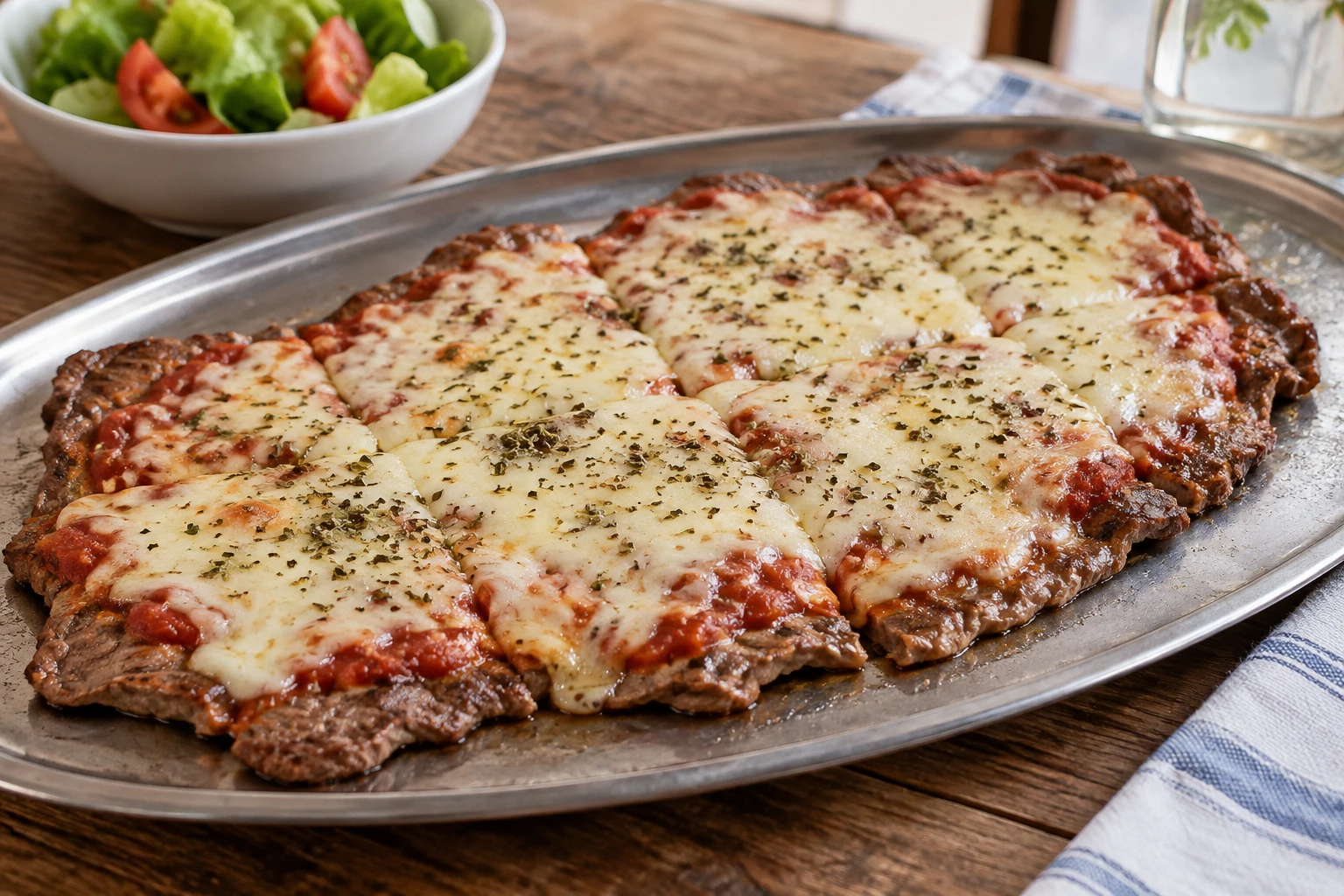
Tomato and melted cheese give matambre a la pizza its familiar surface. The harder task happens underneath: cooking a broad, thin piece of beef until it is tender, then giving its topping a brief finish.
Start with the butcher's name
Ask for matambre when buying the Argentine cut. Argentina's beef-cut nomenclature describes it as a broad, flat muscle beneath the skin, extending over the outer rib area and along the trunk. That anatomical description matters more than a loose translation such as flank steak.
A butcher elsewhere may offer a substitute, but its thickness and structure can change the cooking. Describe the dish and discuss the available cut before borrowing a timetable. The Argentine recipes here concern matambre itself; their long tenderness stages are not instructions to simmer every steak sold under an English flank label.
For this preparation, the beef stays spread out rather than being rolled around a filling. Its wide surface receives tomato, cheese and optional additions. A useful serving has a bite of tender meat under that topping, not a cheese blanket hiding an unresolved texture problem.
Two routes to tenderness
The saucepan route
Paulina Cocina cooks matambre gently in milk or broth before transferring it to an oven tray. Her roughly two-hour stage comes before browning and topping. It is a method for preparing the meat, not simply a way to warm the cheese.
The covered oven route
Cocineros Argentinos begins with matambre, milk and aromatics in a covered tray in a low oven. The recipe checks tenderness with a fork, then moves the meat onto a plancha. Its shorter printed estimate illustrates why a clock should be read alongside the actual cut.
These methods share an order: cook the meat with moisture, assess it, and finish its surface afterward. Milk appears in several versions; broth also appears. Neither liquid makes every piece ready at the same minute. Piece size, thickness and the chosen method still matter.
Tenderness and food safety are separate checks. FoodSafety.gov gives 63°C/145°F with a three-minute rest as the minimum for whole-muscle beef steaks and roasts, measured with a thermometer. A matambre intended for this moist-cooking style may need considerably more cooking to become tender. Melted cheese proves neither condition.
Give the top its own heat
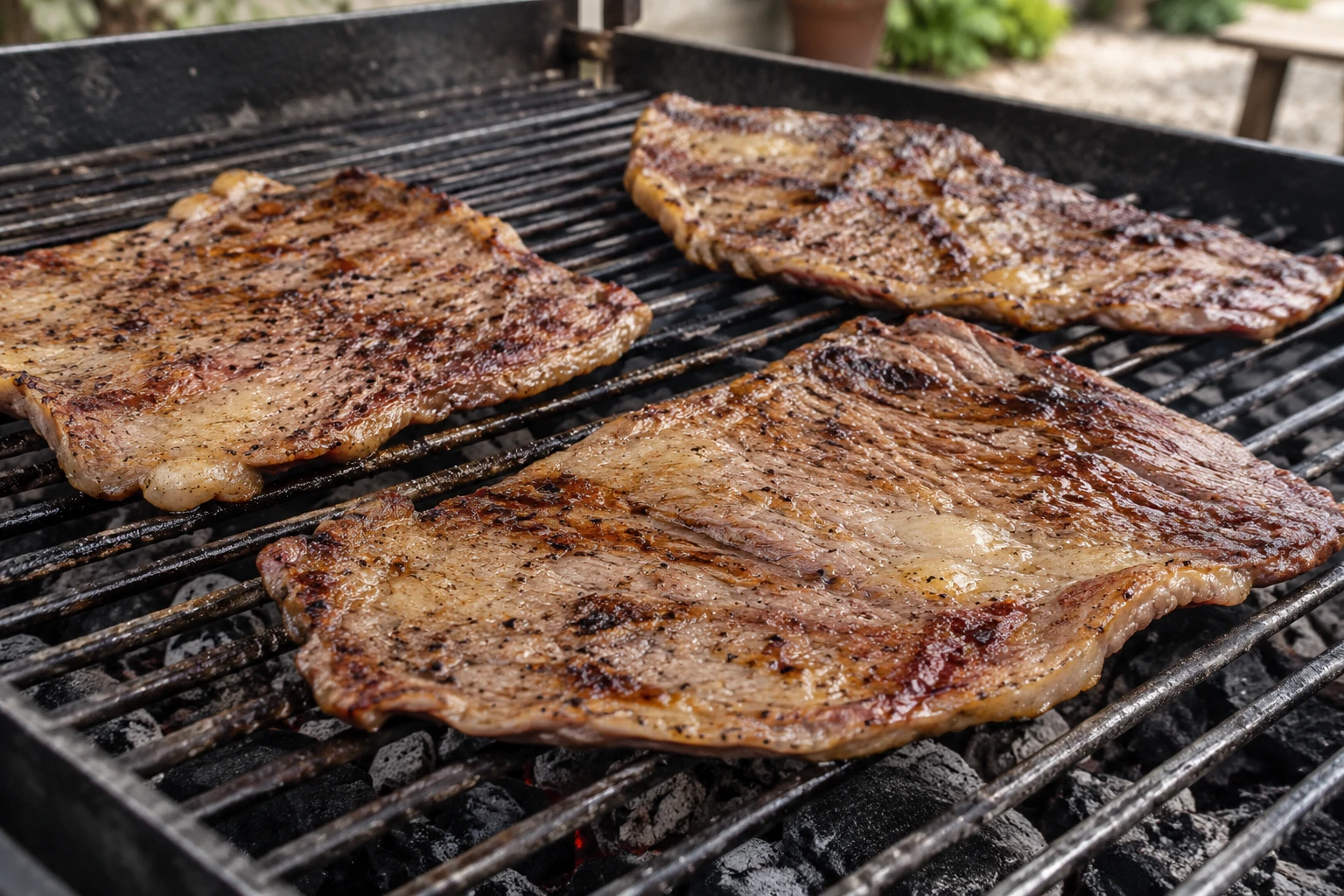
The grill supplies strong heat underneath. Christian Petersen's version first browns previously cooked pieces, turns them over and then adds their toppings. He provides heat above the cheese too, covering the meat with a metal tray heated by embers. The useful principle is heat reaching the topping while the beef is already prepared.
That explains a common mismatch: a busy fire can darken the underside while cheese on top remains firm. An oven gives the topping a different surrounding heat. Paulina's oven version also separates a short browning stage from the final cheese melt. In either setting, the topping is the finish rather than the main tenderness treatment.
Three distinct topping directions
- Tomato sauce and mozzarella
- A familiar base
- Tomato slices and different cheeses
- Petersen's comparison
- Pomarola and salsa criolla
- Pechar's version
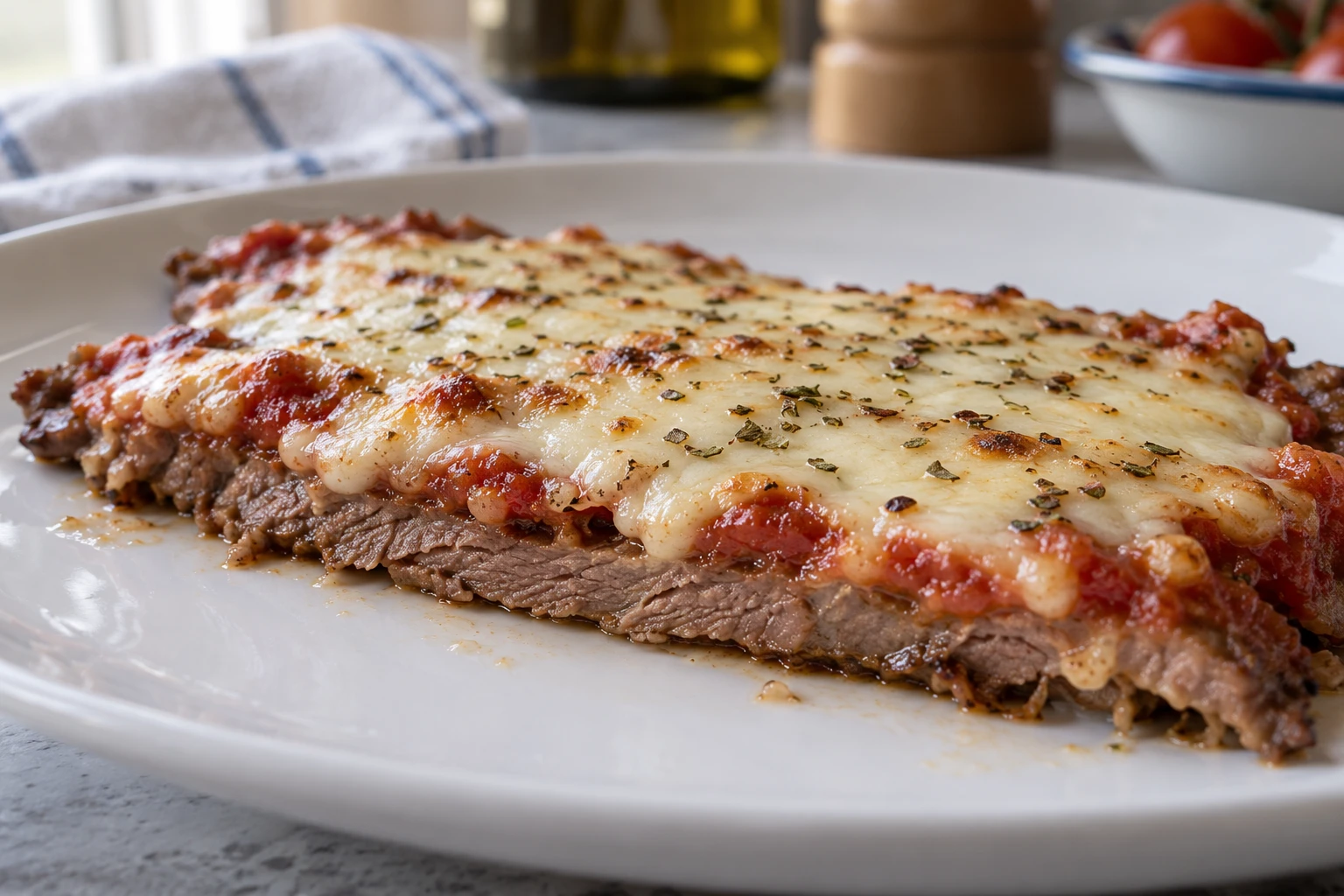
Cocineros Argentinos uses crushed tomato and mozzarella; oregano and garlic appear among its ingredients.
His three pieces try Pategrás, mozzarella fior di latte, and a combination, with tomato slices and fresh greens at the end.
Emi Pechar adds an optional onion, red pepper and parsley mixture after the cheese melts.
Finish with a clear choice
Ham, peppers or olives are possibilities in Paulina's account, not a checklist that every version must contain. Choosing one direction keeps the topping legible: tomato and mozzarella for simplicity, a cheese comparison, or a fresh chopped vegetable finish. Cheese contributes milk allergens; milk used in the cooking liquid does too.
Pechar's recipe, published in Tiempo Argentino's 2014 cooking supplement, belongs to a La Serenísima collection and adds salsa criolla as an option. That detail puts freshness at the end rather than beneath a long cheese melt. A salad or potatoes alongside can make the plate complete without crowding the beef.
Before serving, look beneath the surface. The cheese should be melted, the tomato should belong to the chosen topping, and the meat should be tender enough to eat comfortably. Matambre a la pizza succeeds through that sequence of decisions: identify the cut, prepare the beef, then finish its top.
Research notes
Sources behind this article
- Paulina Cocina — Matambre a la pizza Gentle cooking before oven browning, tomato sauce, cheese and optional toppings.
- Cocineros Argentinos — Matambre napolitano Covered milk-and-aromatics oven stage, fork check and plancha finish.
- Christian Petersen — elGourmet Previously cooked beef, grill browning, upper heat and three cheese combinations.
- Emi Pechar — Tiempo Argentino, 28 November 2014 Cooking supplement, PDF page70: La Serenísima recipe with pomarola, mozzarella and optional salsa criolla.
- Argentina — Beef-cut nomenclature, item2317 Anatomical description of matambre as a flat cut beneath the skin.
- FoodSafety.gov — Minimum internal temperatures Thermometer guidance and whole-muscle beef minimum temperature with rest.
Keep exploring
More stories for your table
Argentinian cuisine Polenta
Polenta con Tuco: Spoon It, Slice It, Bake It
Explore Argentine polenta with tuco through a family recollection and three serving textures, from a soft bowl to firm squares and an oven-melted cheese topping.
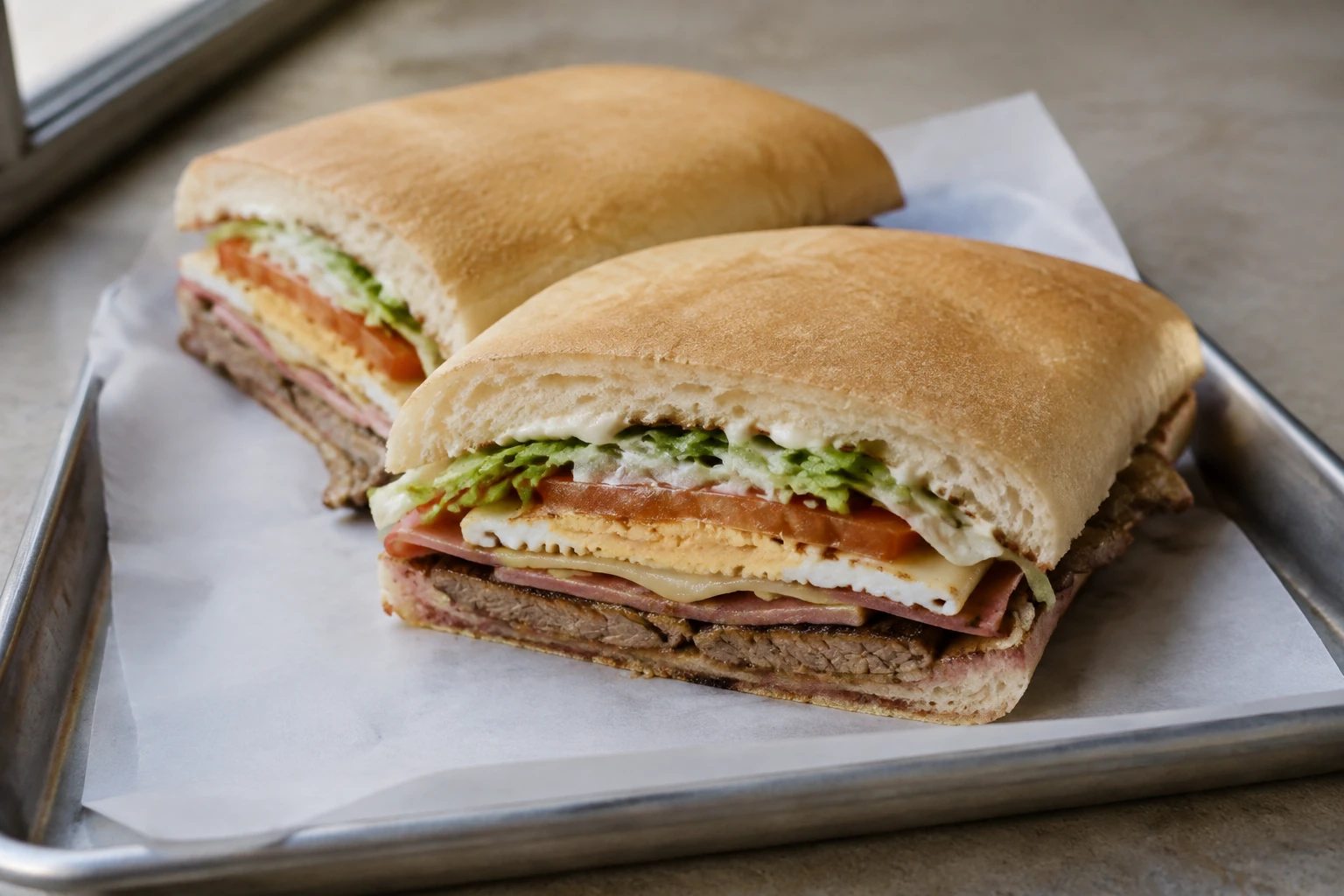
Argentinian cuisine Steak sandwich
Córdoba’s Lomito: Start with the Bread
Explore Córdoba’s Argentine steak sandwich through its soft bread, thin beef and complete filling, with a practical lomito recipe for two.
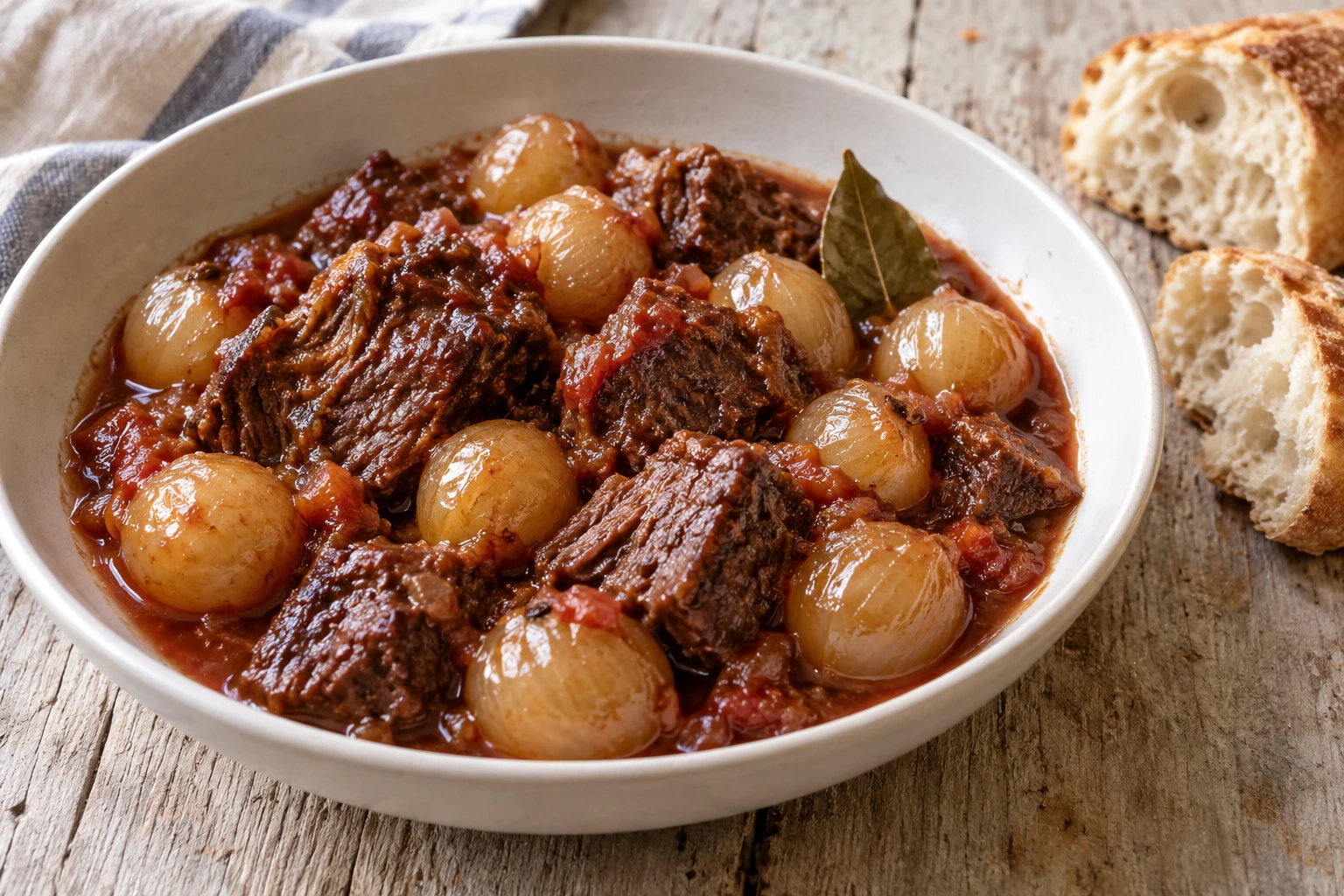
Greek cuisine Onion stew
Stifado: The Small Onions That Shape a Greek Stew
Whole small onions give stifado its sweetness and texture. Explore beef, rabbit and mushroom versions, and see why the onion timing and sauce belong to the recipe you choose.