
Picada Argentina: Build a Platter for Sharing
Picada
A good picada gives everyone a choice of bites: something savory, something creamy, something sharp, and bread to bring them together.
Around the table
A spread with room for choice
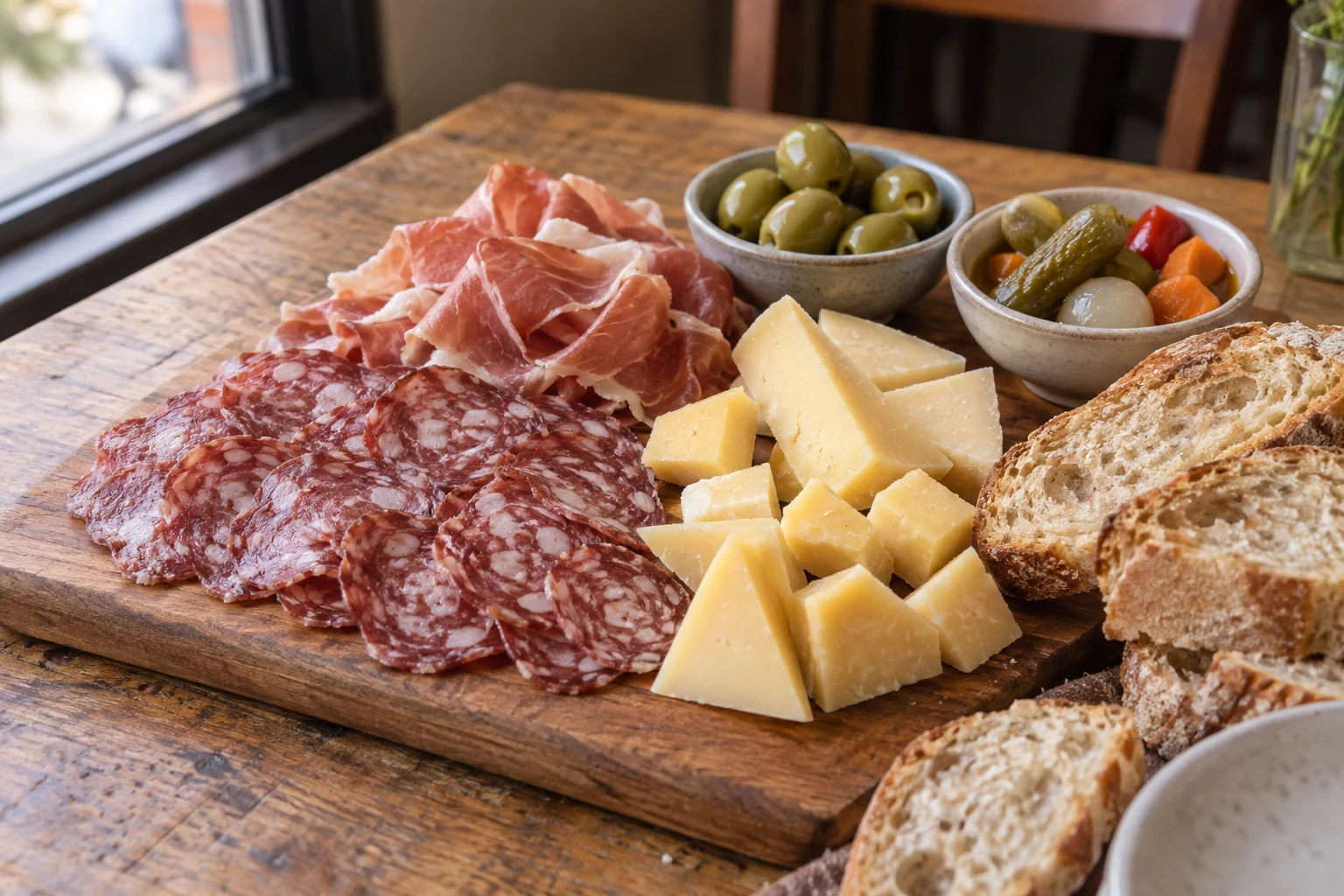
Picada is an invitation to take a little of this and a little of that. In Argentina, a cold version can bring together sliced salame, cured ham, cheese, bread and olives. A picada parrillera offers a different experience, with grilled meat and hot cheese. Neither needs to become an overloaded board or a checklist of every possible ingredient.
Argentina's official tourism material connects cheese and charcuterie with places including Córdoba, Colonia Caroya and Tandil. Those regional products help explain the variety found on a picada, but they do not establish one compulsory national formula. Choose a few foods you enjoy and give each enough space to be tasted.
Choose the direction of the meal
Cold picada
Use meats sold as ready to eat, alongside cheese and bread. Thin cured-meat slices are easy to share; small cheese pieces let guests combine flavors without committing to a large portion.
- Salame and cured ham are examples, not requirements.
- Keep olives and pickles in small bowls to contain their brine.
Picada parrillera
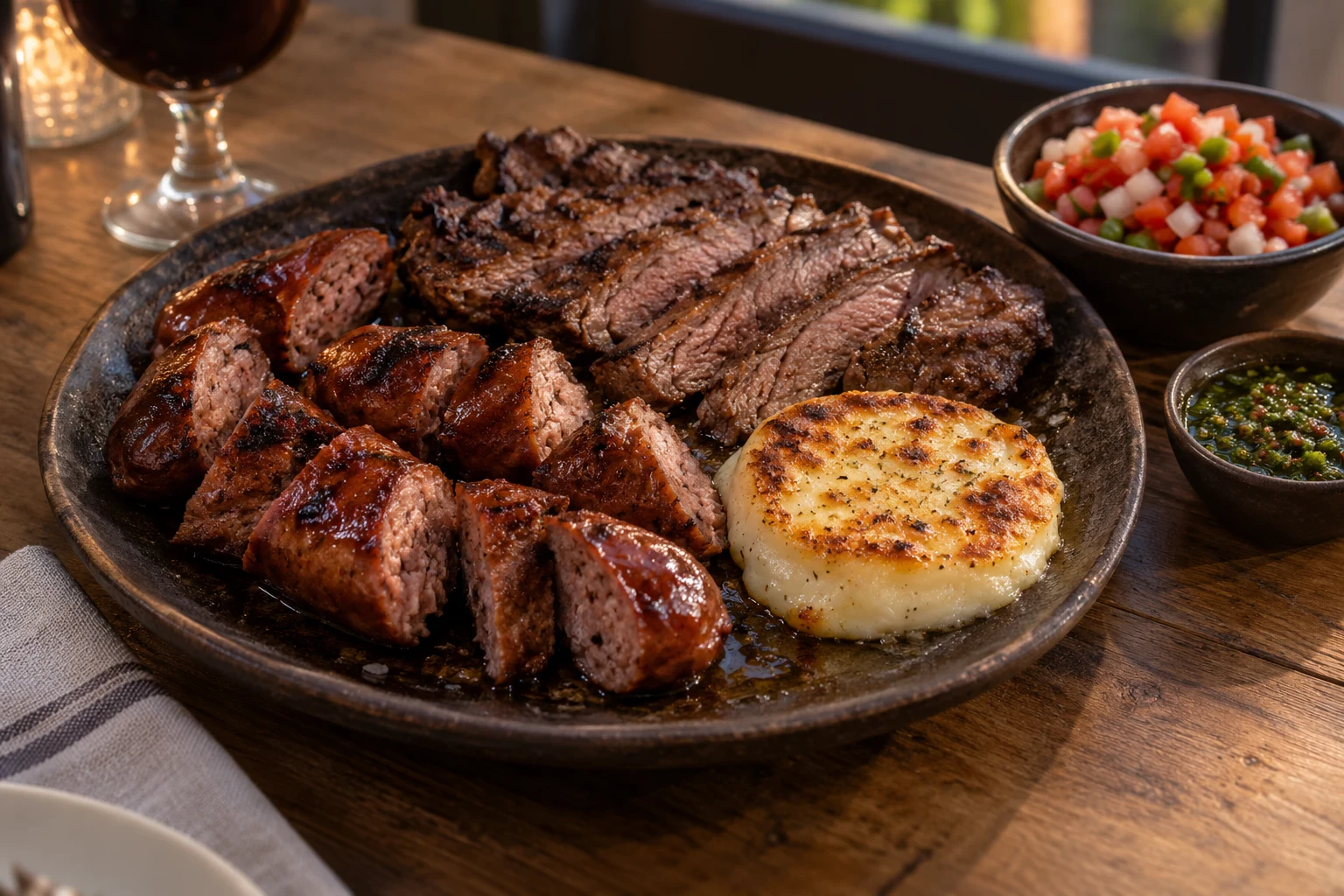
Cocineros Argentinos presents a grilled variation with meat, provoleta and sauces. Treat it as a cooked sharing plate and bring it out hot, rather than mixing fresh raw sausage into the cold spread.
- Browned provoleta adds a hot cheese element.
- Salsa criolla and chimichurri bring fresh, sharp contrast.
Build contrast before adding quantity
- 01
Start with a small core
For a simple cold board, choose one or two cured meats and two cheeses. A milder cheese and a firmer, more assertive one give guests different bites. Add another variety only when it offers something distinct.
- 02
Provide a sharp counterpoint
Olives, pickled vegetables or a little mustard can interrupt a rich sequence of meat and cheese. Serve strong accompaniments separately so they season a chosen bite instead of soaking the whole platter.
- 03
Make the bread useful
Slice rustic bread into pieces that can hold a little meat or cheese. Put extra bread nearby rather than covering the board with it. Small bowls and accessible pieces make the spread easier to share.
Let each bite have a clear flavor
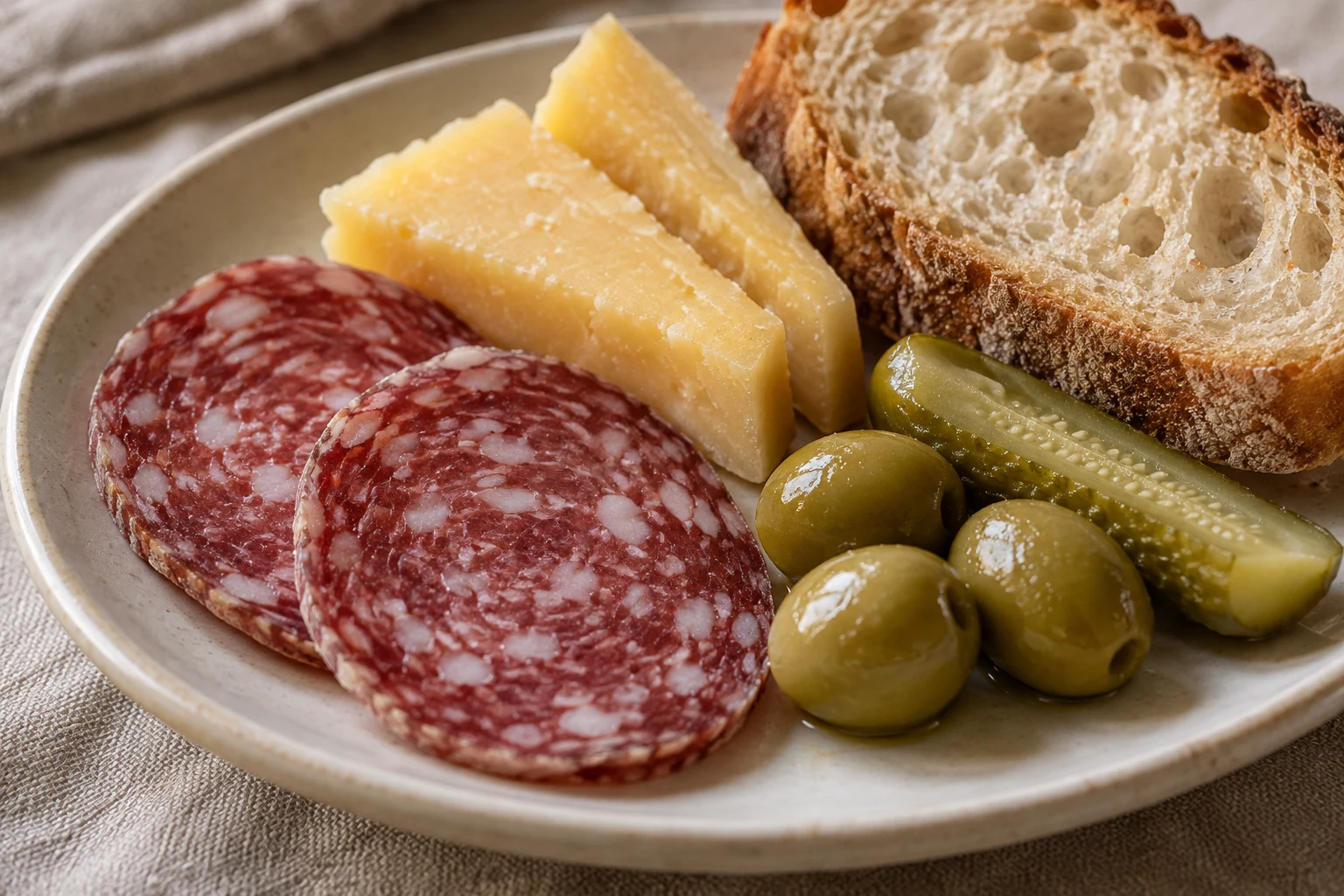
Cheesemaker Mauricio Couly describes a picada with cheeses of different intensities, cured meats, acidic accompaniments and good bread. His approach offers a useful organizing principle: variety should create contrast. A very strong cheese can be a small optional element rather than the dominant flavor of every bite.
Keep damp pickles away from bread, slice firm cheese into manageable pieces, and provide separate utensils for soft cheese or dips. If the spread comes before dinner, begin modestly and replenish what people actually eat. For a longer meal, add substance deliberately instead of filling every empty space with another salty snack.
Bring out a little, then replenish
Keep perishable meats, cheeses and dips refrigerated at 4°C/40°F or below before serving, and follow each product's label. Put out smaller amounts with clean utensils. Refrigerate perishables within two hours, or within one hour when the surrounding temperature exceeds 32°C/90°F. A curing process does not mean every packaged meat can sit out indefinitely.
Cheese brings milk allergens, and bread usually brings wheat. Dips or accompaniments can add egg, mustard or nuts, so check their ingredients and give guests a way to avoid them. Serve the hot variation on its own clean plate, with sauces beside it, and let the table settle into small combinations rather than one crowded mouthful.
Research notes
Sources and further reading
Original culinary preparations and a cheesemaker's guidance inform the platter choices; official sources supply regional context and food-safety limits.
- Cocineros Argentinos — Picada parrillera criolla Original grilled variation with meat, provoleta and sauces; the guide uses official cooking endpoints instead of relying on blanching or surface color.
- Mauricio Couly — A cheesemaker's picada First-person guidance on cheese intensity, cured meats, acidic accompaniments and bread, published by Río Negro.
- Gastón Oranges — Receta de picada tradición Independent culinary author's cold spread with cheeses, cured meats, olives and bread.
- Argentina Turismo — Quesos y chacinados Official substantive account of regional cheese and charcuterie, including Colonia Caroya and Tandil.
- FoodSafety.gov — Four steps to food safety Cold storage, clean handling and two-hour or hot-weather one-hour limits for perishables.
- FoodSafety.gov — Safe minimum internal temperatures Thermometer endpoints for fresh sausage and whole cuts of beef.
Keep exploring
More stories for your table
Argentinian cuisine Steak sandwich
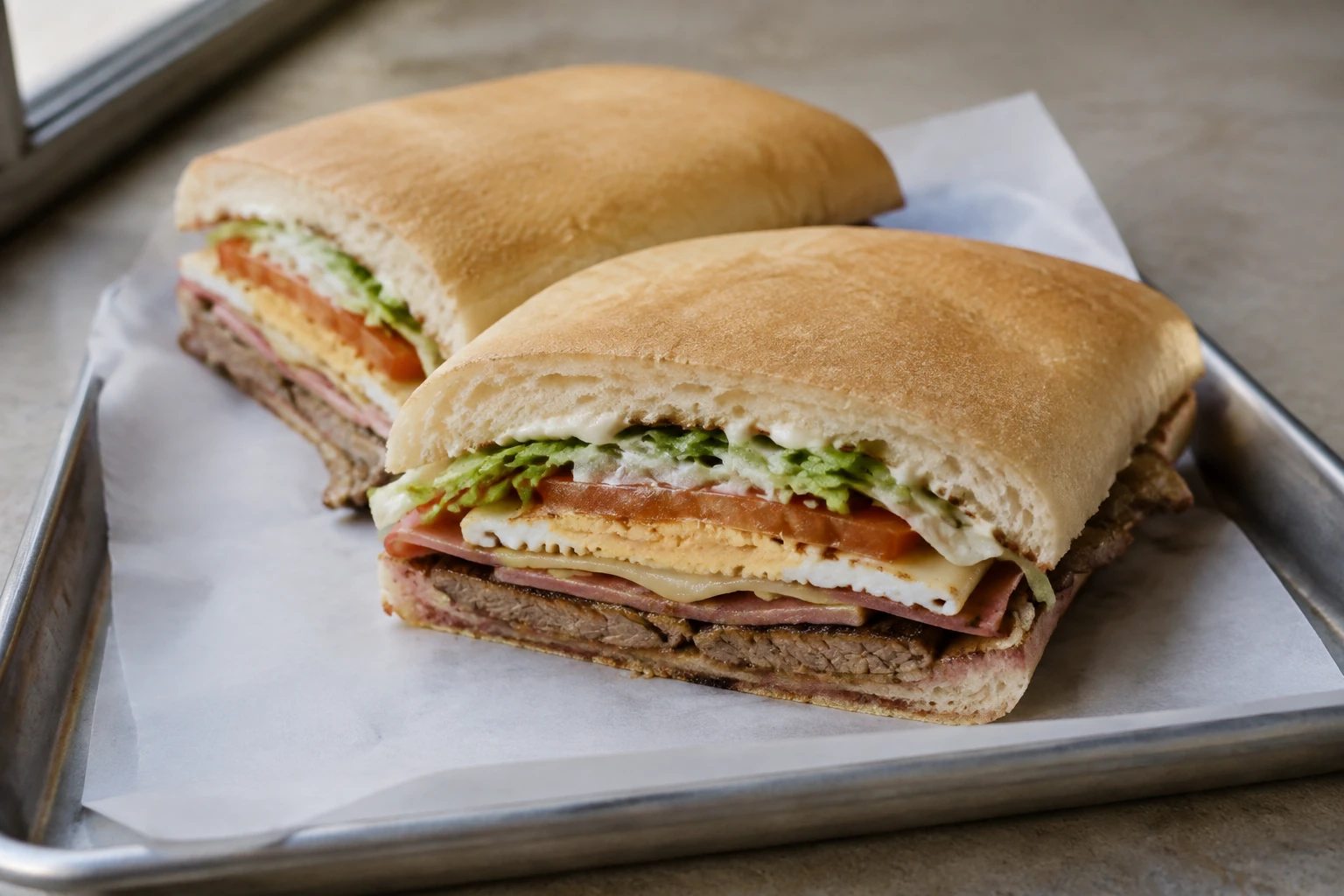
Córdoba’s Lomito: Start with the Bread
Explore Córdoba’s Argentine steak sandwich through its soft bread, thin beef and complete filling, with a practical lomito recipe for two.
Argentinian cuisine Cheese and quince dessert
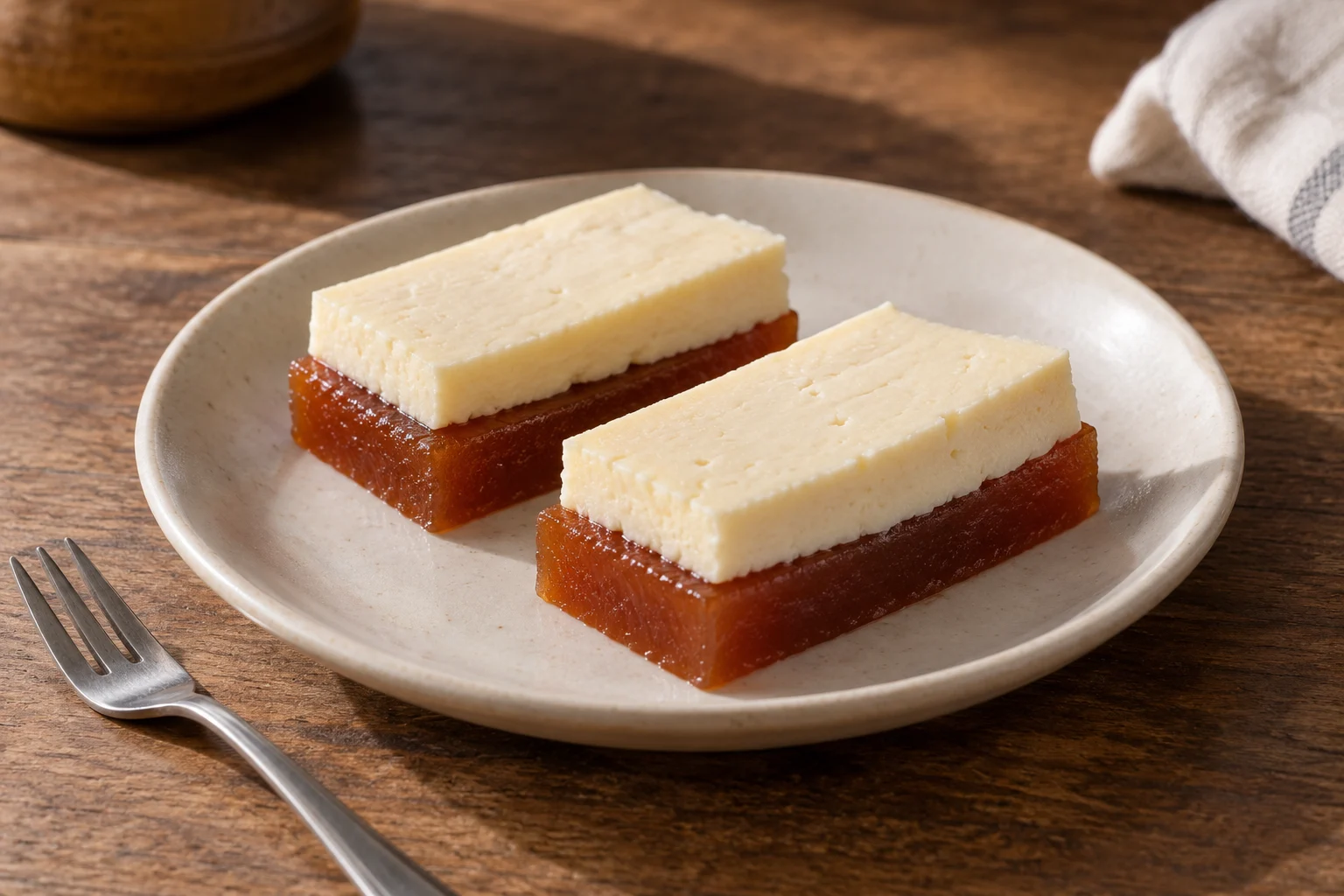
Queso y Dulce: Cut for One Forkful
Argentine queso y dulce pairs cheese with a sliceable sweet. Choose quince paste, shape a balanced forkful and understand a warm provoleta variation.
Chilean cuisine Sandwich
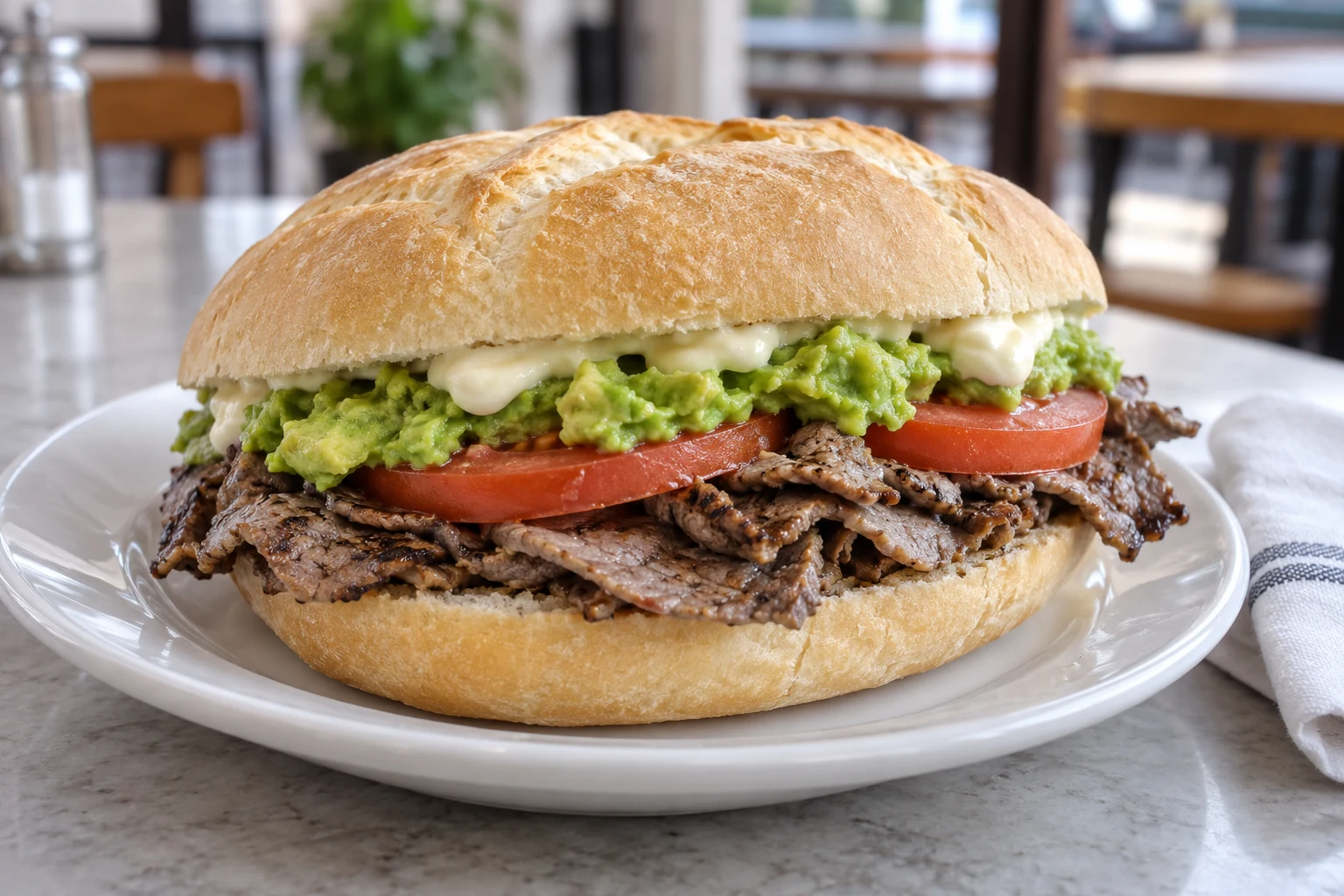
Churrasco italiano: thin beef, ripe avocado and warm bread
The practical details behind Chile's beef, tomato, avocado and mayonnaise sandwich, with bread choices and an original recipe for two.