
Queso y Dulce: Cut for One Forkful
Queso y dulce · Postre vigilante
Two slices make the dessert. Choosing their texture, lining up their edges and tasting them together gives the small plate its point.
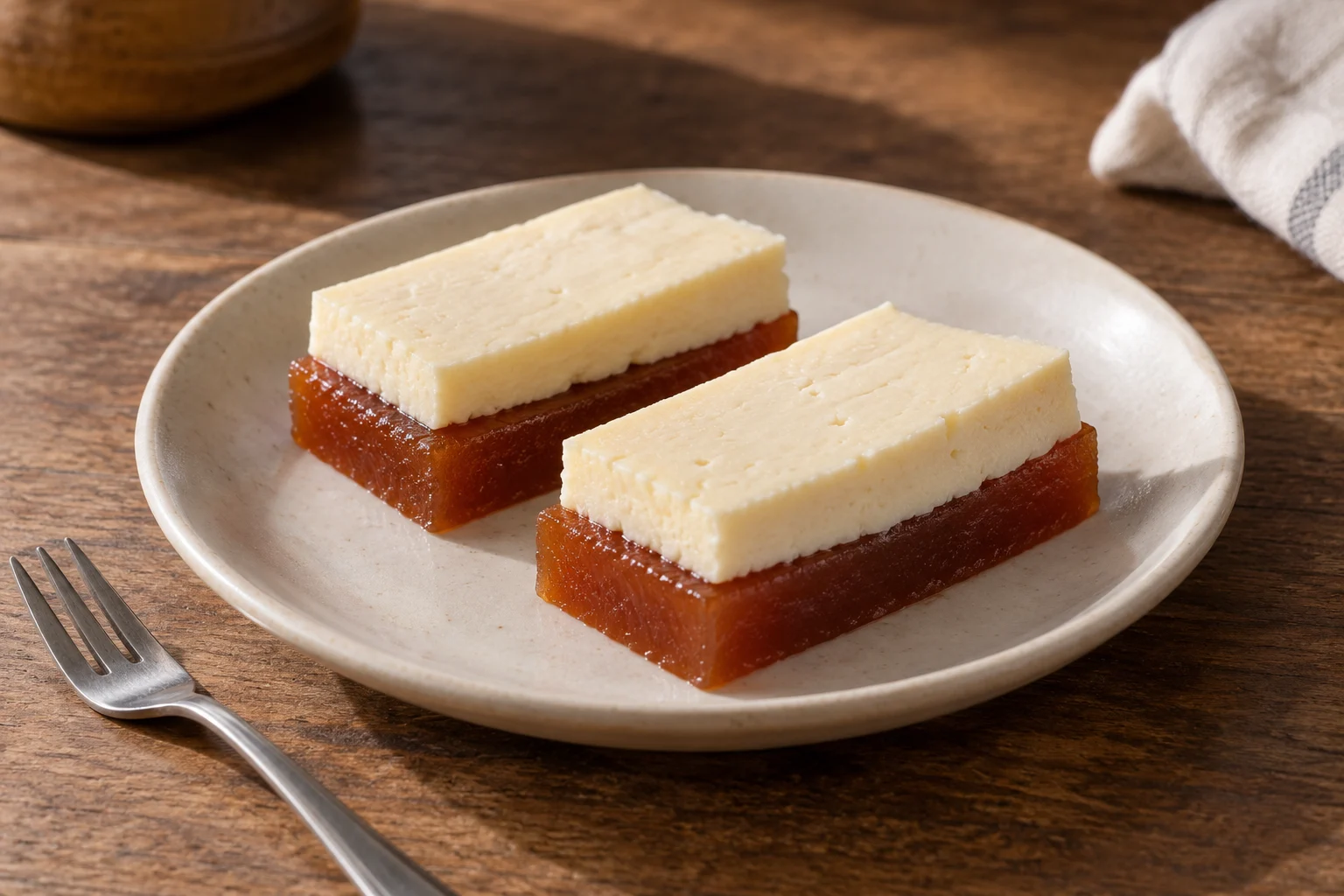
Two slices, deliberately together
Queso y dulce means cheese and a sweet, and Argentina’s postre vigilante makes the pairing remarkably direct. Visit Argentina describes a slice of fresh cheese stacked with dulce de membrillo or dulce de batata: quince paste or a sweet-potato confection. It is a complete dessert whose assembly can be brief because the work is already in the ingredients.
This version concentrates on membrillo. A pale cheese slice and a reddish-amber slice of quince bring separate textures to the same forkful. The useful decision is how to make them comfortable to cut and taste together. Matching the width of the pieces is a practical place to start; equal-looking layers need not be a permanent rule about how much sweetness you prefer.
Look for a set sweet
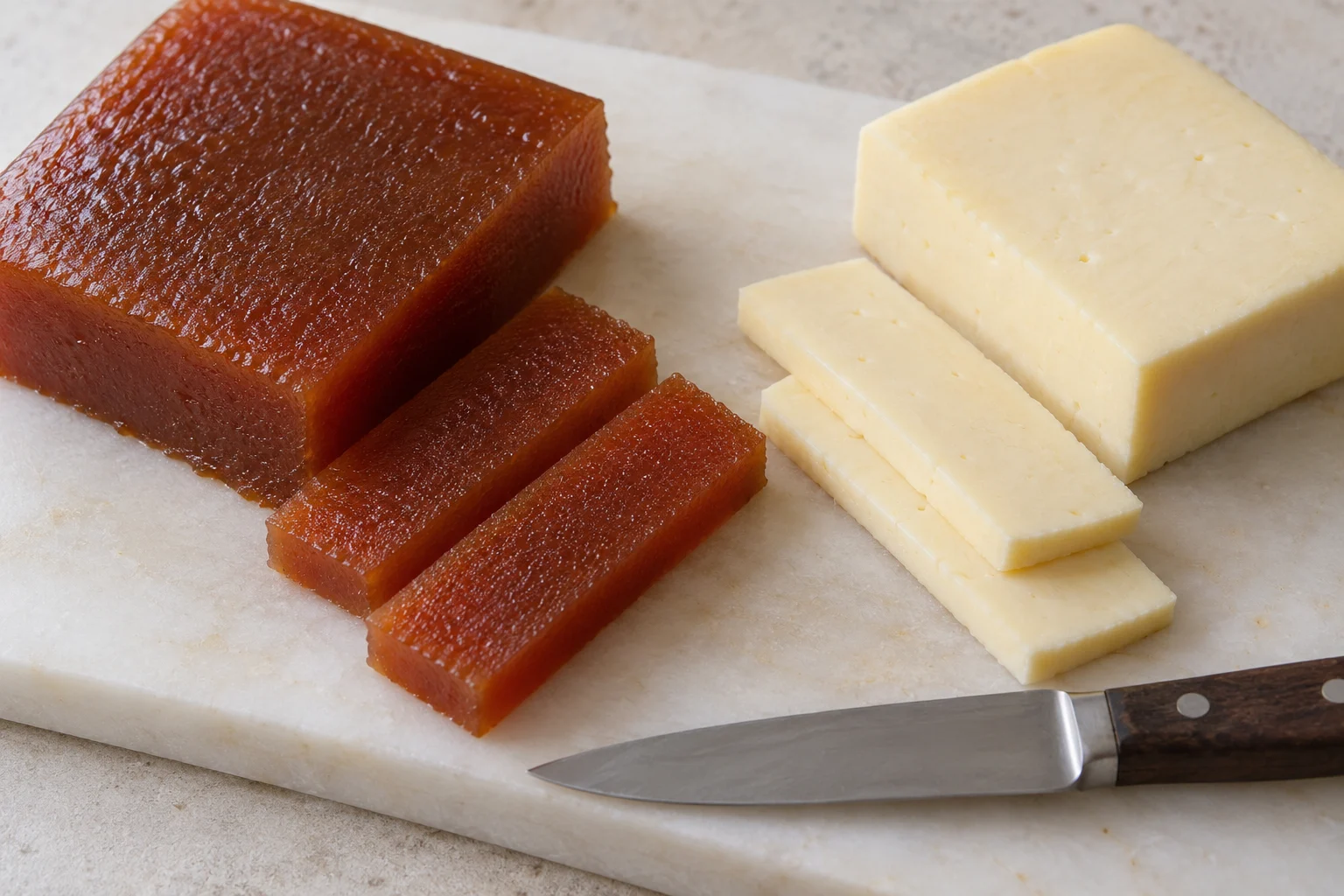
Dulce de membrillo is a cooked quince preparation that can be molded and sliced. Paulina Cocina’s original home method softens the fruit, cooks it with sugar, blends the mixture and continues reducing it before pouring it into a mold. It is cut only once cold and firm. That final set is what makes the familiar stacked serving possible.
For this small dessert, a purchased block is a sensible starting point. Look for paste that holds a clean edge when sliced, and follow its package directions for handling and storage. A homemade batch is a separate cooking project: it needs enough reduction and setting time before you can judge whether it will support a neat slice. Making the paste and assembling the dessert are two different tasks.
Choose the cheese with the serving in mind
The sources offer more than one acceptable route. The name does not force every cook to use one cheese.
A fresh-cheese plate
Visit Argentina describes queso fresco. It gives a straightforward unheated serving: cut the cheese, add the sweet and eat them together. Choose a piece firm enough to lift yet pleasant to cut with the dessert fork.
A Chubut-cheese plate
La Serenísima’s own recipe specifies slices of Chubut cheese with either membrillo or batata, putting cheese over the sweet. That documented choice is a useful reminder that the familiar dessert also accommodates a different cheese texture.
Build a balanced forkful
Use this as a small tasting exercise before arranging a whole serving. These are assembly choices, not claims about one mandatory Argentine ratio.
- 01
Match the footprint
Cut one modest slice of each ingredient with similar width and length. Stack them so a cut through the plate can include both layers, rather than leave an overhang of sweet at one end.
- 02
Taste through both layers
Take a small bite containing cheese and quince. Notice whether the cheese remains distinct alongside the concentrated sweetness. If you mostly taste paste, try a thinner slice of it for the next bite.
- 03
Repeat the useful shape
Once the pairing suits you, cut the rest to similar proportions. Two small aligned pieces can be easier to share and adjust than one thick slab. Keep the plate clear enough to see and cut the layers.
A warm variation changes the job
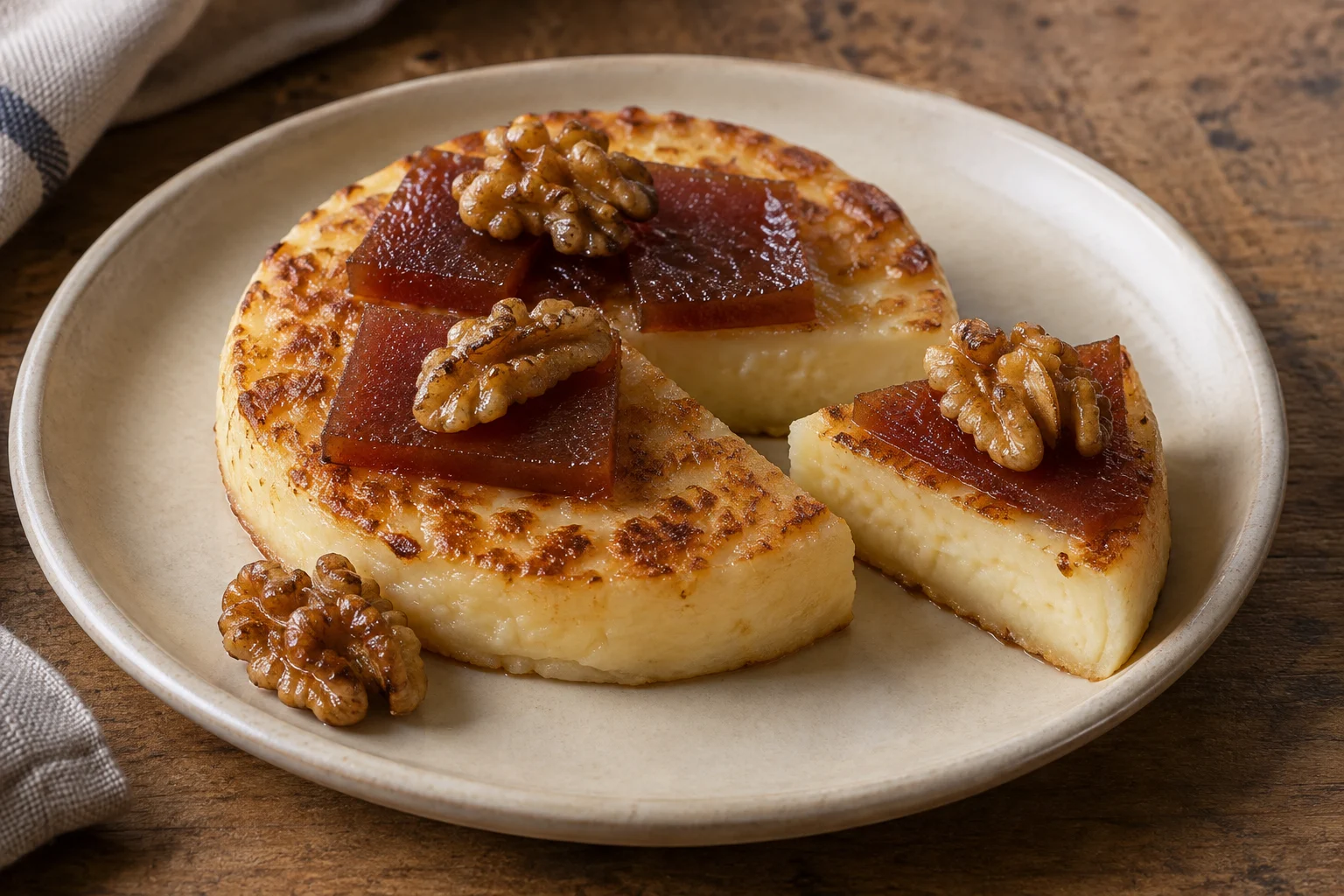
A recipe published by LA NACION presents Gastón Riveira’s version with warmed provoleta, quince and caramelized walnuts. The cheese is heated on a grill, griddle or in the oven; quince is placed over it and the serving is cut into wedges. The published tips specifically say to keep the provoleta from melting away. This is an attributed variation with a cooked-cheese texture and a crisp nut finish.
That choice adds timing and heat control to a dessert that can otherwise be assembled directly. Follow the complete warm method if that is the plate you want. With the simple sliced version, the immediate pleasure is the clean meeting of cheese and sweet; with the warm version, the cheese surface and walnut finish become part of the mouthful.
Research notes
Sources and serving choices
Four independent sources were opened and read, including a producer’s assembly recipe, an original quince recipe, official tourism guidance and the published chef variation. No origin legend or kitchen-testing claim is made. All images are generated illustrations.
- Visit Argentina — vigilante in its Argentine dessert guide Official tourism description identifies stacked fresh cheese with quince or sweet-potato confection.
- La Serenísima — postre vigilante Producer’s original recipe specifies Chubut cheese slices and either membrillo or batata; the assembly places cheese over the sweet.
- Paulina Cocina — homemade dulce de membrillo Original recipe supports the cooked, reduced, molded and fully set texture needed for sliceable quince paste; historical and medicinal claims are not used.
- LA NACION — Gastón Riveira’s warm provoleta variation Published named-chef method uses warmed provoleta, quince and caramelized walnuts, with a tip to retain the cheese’s shape.
Keep exploring
More stories for your table
Argentinian cuisine Steak sandwich
Córdoba’s Lomito: Start with the Bread
Explore Córdoba’s Argentine steak sandwich through its soft bread, thin beef and complete filling, with a practical lomito recipe for two.
Argentinian cuisine Polenta
Polenta con Tuco: Spoon It, Slice It, Bake It
Explore Argentine polenta with tuco through a family recollection and three serving textures, from a soft bowl to firm squares and an oven-melted cheese topping.
Lebanese cuisine Sweet cheese dessert
Halawet el Jibn: When Cheese Becomes the Wrapper
How halawet el jibn turns cheese and semolina into a cream-filled sheet, with documented Tripoli serving styles and a practical mozzarella adaptation.