
Hash Browns: Choose the Shreds and the Shape
Hash browns
Loose shreds, a skillet cake and small patties ask different things of the potato. Compare drying, rinsing and partly cooked starts before frying hash browns.
Decide what should come out of the pan
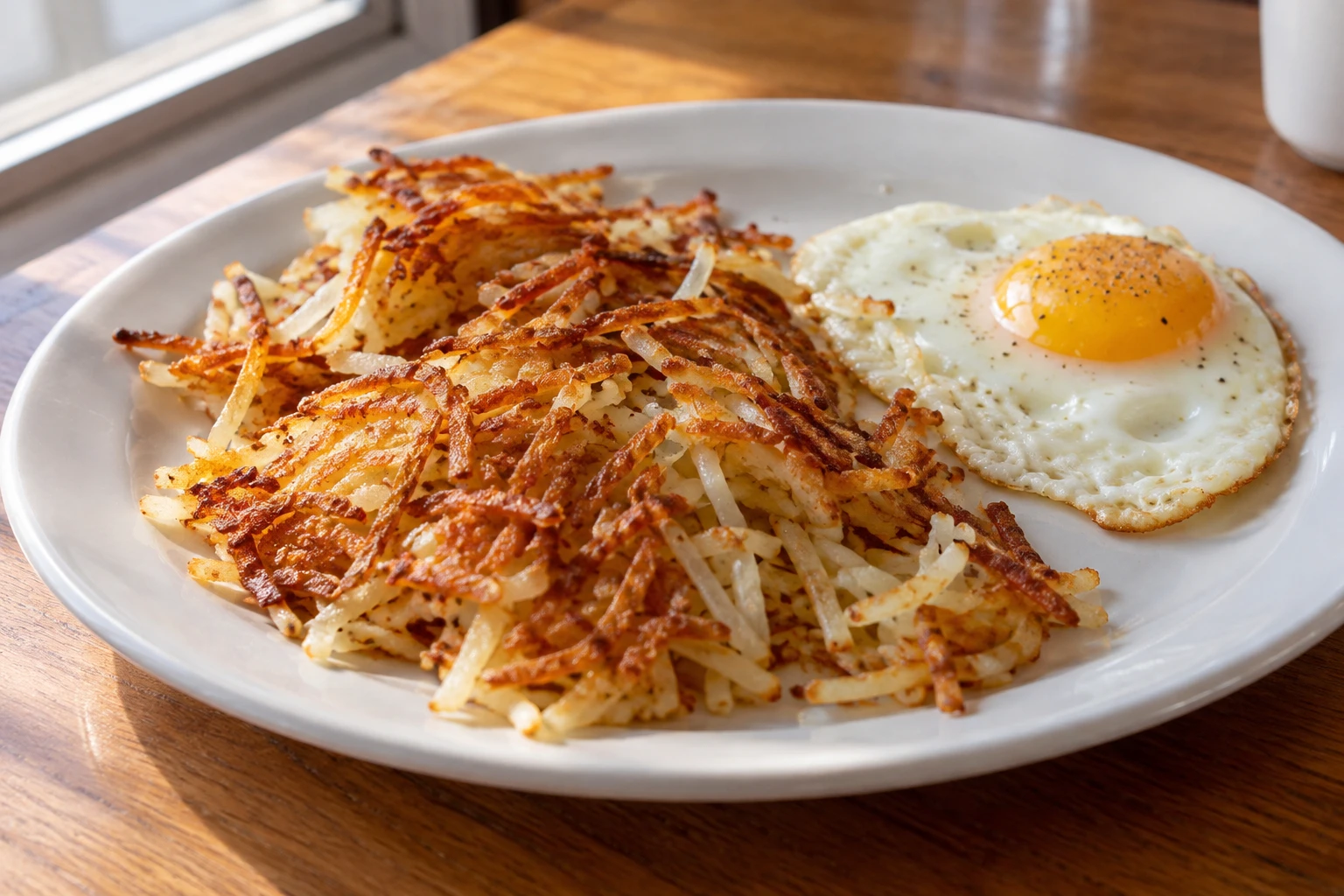
A serving of hash browns might be loose browned potato strands, a large cake cut into wedges or a pair of small patties. All can belong at breakfast, yet choosing the shape matters before the grater comes out. A recipe built to produce a cohesive disc asks something different of the potato from one that breaks the finished hash into sections.
This comparison starts with shredded potato. Its useful questions are practical: does the recipe begin with raw or partly cooked potatoes, does it rinse the shreds, and how does it turn the browned layer? Read those instructions together. Swapping one isolated tip into another method can change the result the author was trying to achieve.
Make drying an actual step
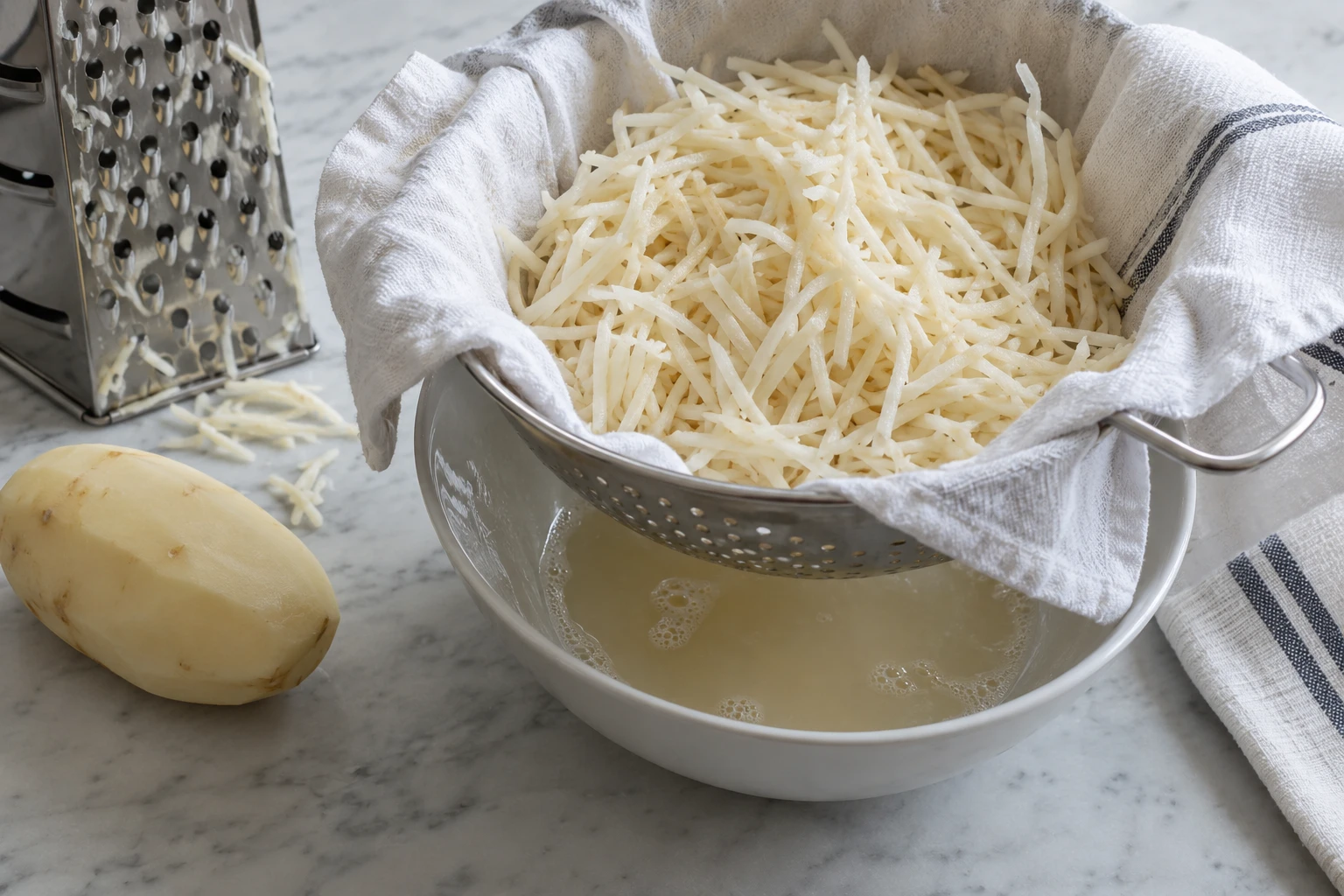
Coryanne Ettiene’s recipe for the Idaho Potato Commission starts with raw russets, rinses the grated potato until the water is clear and drains it. She then gathers the shreds in a large kitchen towel, squeezes, opens the towel to redistribute them and squeezes again. The second pass makes the drying instruction concrete.
Elise Bauer’s Simply Recipes version offers a ricer as another pressing tool. The aim is to extract liquid without pushing the raw shreds completely through the holes. Work in manageable batches. Her potatoes then go into a thin, even layer; she checks the underside before turning it once it has browned.
Rinsing is a recipe choice
The published methods do not agree on removing starch. Keep the choice with the method it supports.
Rinse and turn in sections
Ettiene rinses, dries thoroughly and leaves the potatoes undisturbed while the first side forms a crust. She then breaks them up and turns them. The resulting portions need not remain a single neat cake.
Retain starch for a cohesive cake
Sally Abé’s Great British Chefs recipe expressly avoids washing the peeled potatoes, preserving the starch that helps hold the hash brown together. Her coarsely grated, squeezed potato becomes one disc, reaching the edges of the pan.
A tested microwave start
Nick Kindelsperger’s Serious Eats tests favoured squeezed shreds followed by a brief microwave cook. Rinsing made his tested version difficult to flip intact. His result supports that particular method rather than proving rinsing wrong in every preparation.
Small patties can start with whole potatoes
Barney Desmazery’s Good Food preparation offers another route: partly cook whole potatoes, let them cool enough to handle, then grate them coarsely. The potato should retain some resistance rather than becoming soft mash. Melted butter is mixed into the grated potato before it is divided into patties or squares.
He fries these portions in butter and oil, working in batches when needed. This is a useful choice when individual shapes matter on the plate. It also explains why raw-shred instructions cannot simply be copied into a partly cooked preparation: the potato arrives at the frying stage in a different condition.
Choose a turning method you can manage
- 01
Sections on a spatula
Loose hash browns can be turned in portions, as in the Idaho example. Wait for the first side to form its browned crust before disturbing it; constant stirring is a different treatment.
- 02
A cake supported by a plate
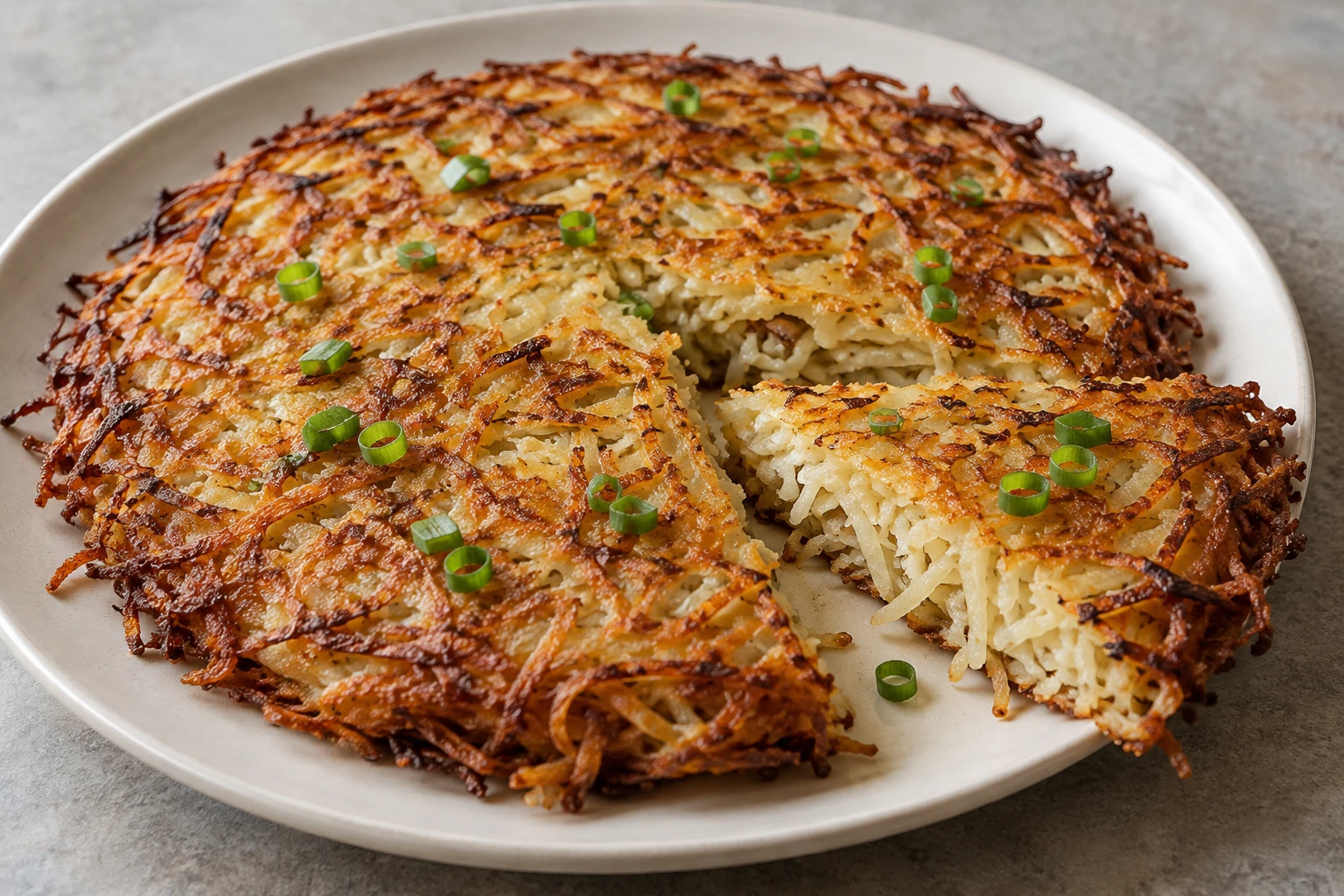
Abé’s single-disc method uses a plate to help turn the cake and slide it back into the pan. Have the supporting plate ready, handle the hot cookware carefully, and keep the cake’s second side against the pan until crisp.
- 03
A layered scallion version
Bon Appétit’s Joseph Leonard recipe places scallion whites between two potato layers, turns the cake with a plate and finishes with scallion greens before cutting wedges. Its shape and garnish are deliberate parts of that version.
Research notes
Sources and method differences
The American raw-shred examples are compared with named British patty and cake preparations. Quantities, timings and storage instructions remain with each source recipe.
- Idaho Potato Commission: Coryanne Ettiene’s classic hash browns Raw russets, rinse, repeated towel squeeze and undisturbed crust before turning sections.
- Simply Recipes: Elise Bauer’s crispy hash browns Ricer pressing, thin pan layer and checking the underside before turning.
- Great British Chefs: Sally Abé’s hash brown cake Unwashed peeled potato, squeezed shreds and a single disc turned using a plate.
- Serious Eats: Nick Kindelsperger’s shredded hash brown tests Squeezing and microwave preparation; rinsing result specific to the tested method.
- Good Food: Barney Desmazery’s crispy hash brown patties Partly cooked whole potatoes, cooling, grating and individual butter-bound shapes.
- Bon Appétit: Joseph Leonard’s skillet hash browns Scallion-layered cake turned with a plate, then cut into wedges.
Keep exploring
More stories for your table
Swiss cuisine Grated potato cake
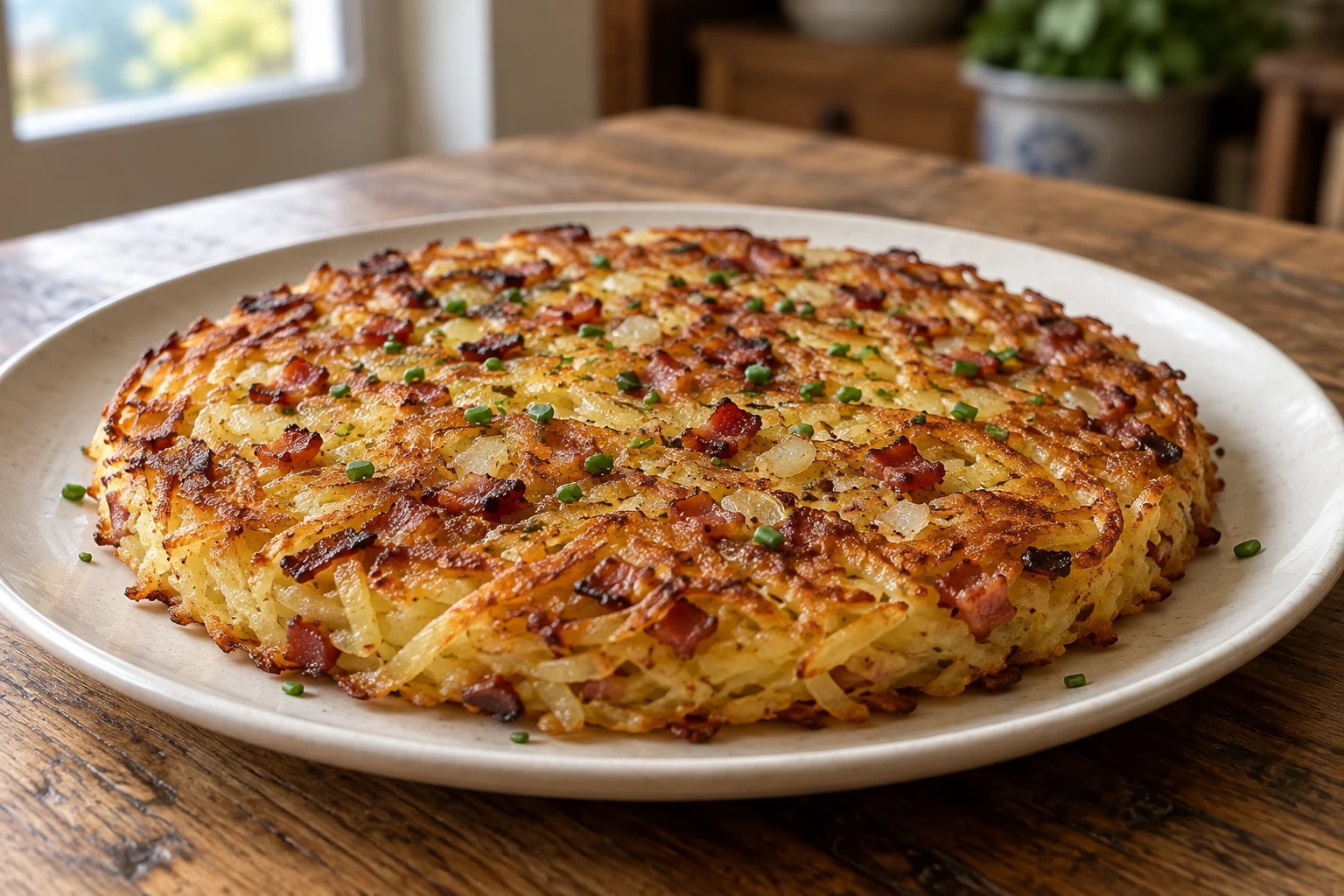
Bacon Rösti: Choose the Potato Before the Crust
Bacon adds savor to Swiss rösti, but the potato and the pan build its shape. Compare raw and cooked potatoes, regional additions and the technique behind a crisp connected cake.
Swedish cuisine Beef and potatoes
Biff Rydberg: A Swedish Lesson in Timing
Crisp potatoes, soft onions and browned beef need different treatment. Learn the timing behind Sweden’s Biff Rydberg, compare two mustard creams and cook a home adaptation.
Georgian cuisine Cheese bread
Khachapuri: Choose the Shape Before the Dough
A closed Imeretian round and an open Adjarian boat ask different things of their dough. Start with the shape, then choose the cheese and method.