
Samaroq: follow the mushroom liquid to the sauce
Samaroq
A guide to cultivated mushrooms, sauce consistency and the distinct spice choices behind Afghan mushroom qorma.
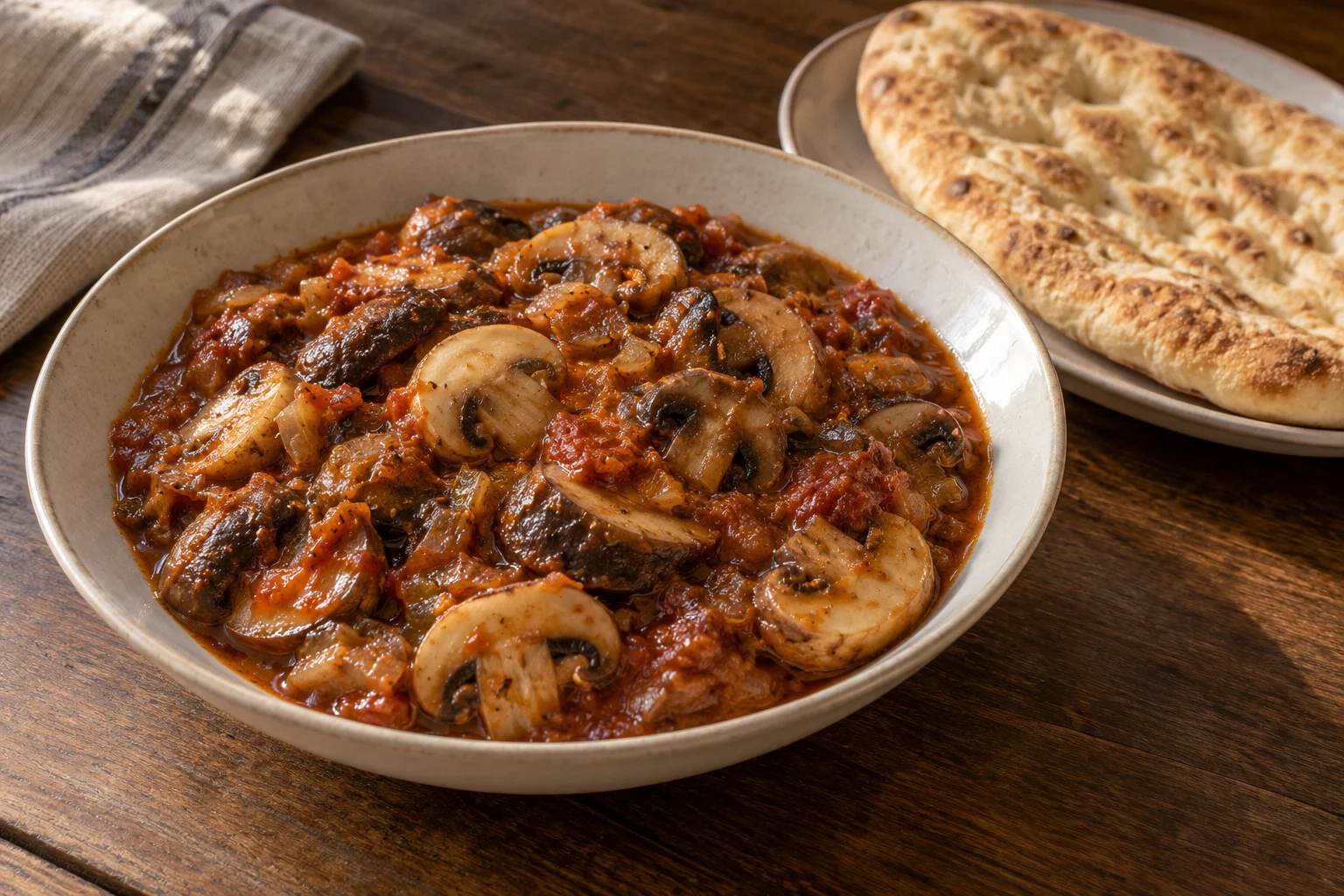
The wet stage is part of the method
Parwana’s Samaroq method anticipates a wet stage: mushrooms release liquid into an onion and tomato base, and cooking continues as that liquid evaporates. The finished dish can look quite different from the mixture halfway through cooking.
Leah Colins’ separate mushroom technique at Serious Eats also follows released moisture through to evaporation. For this qorma, the useful observation is the changing liquid level. Check the pan before deciding that the sauce needs extra water.
Prepare the mushrooms before the sauce
- 01
Select cultivated mushrooms
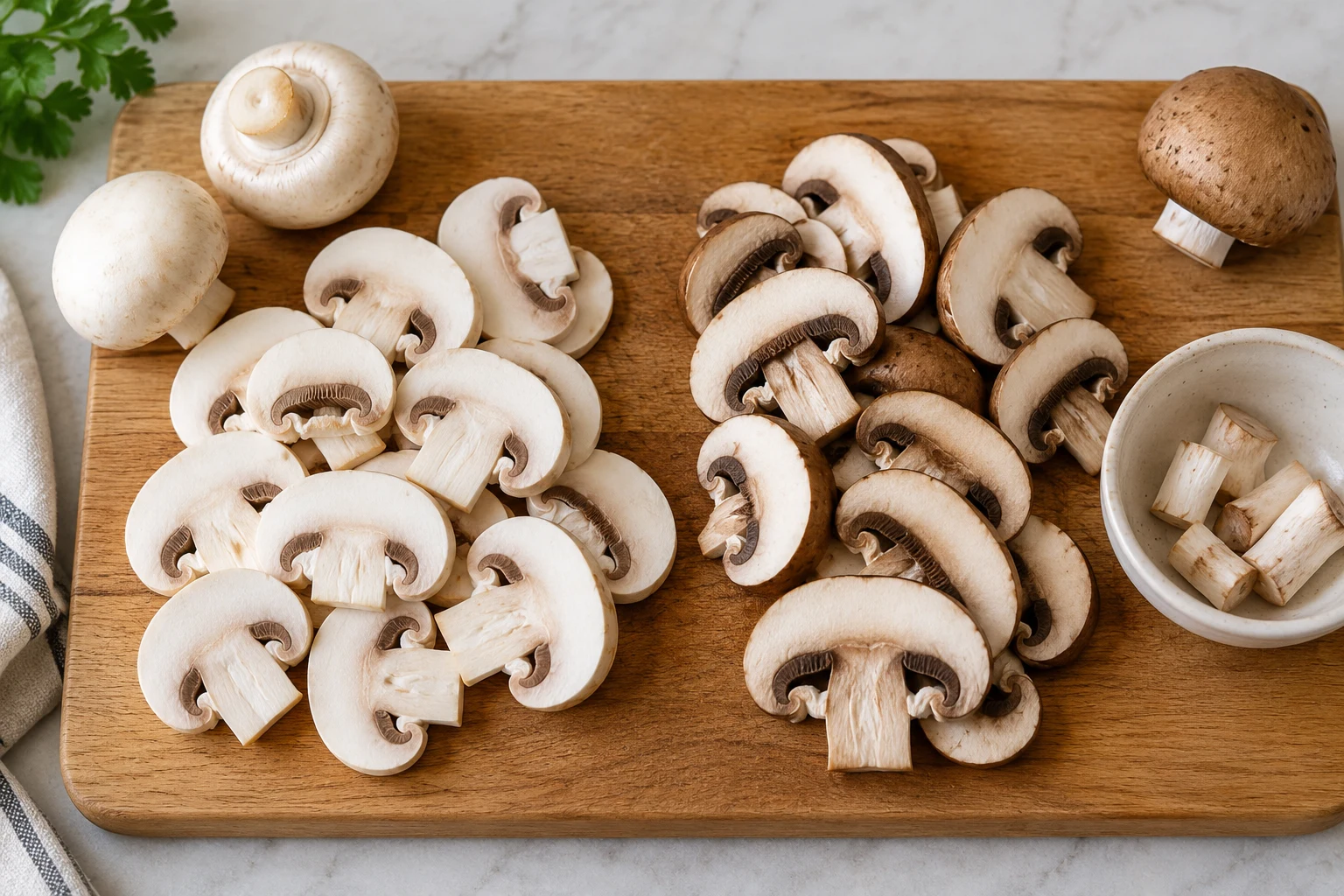
The Mushroom Council recommends firm, plump mushrooms with a fresh, smooth appearance. White button and brown mushrooms are practical options here. Keep the shopping decision separate from the seasoning decision: a different cap colour does not require a completely different spice mixture.
- 02
Clean and trim
Wipe away debris with a damp towel, or briefly rinse under running water and pat dry. Trim a tough stem before cutting. Preparing the mushrooms when you are ready to cook keeps this task close to the moment they enter the pan.
- 03
Choose a consistent cut
Aim for pieces of broadly similar thickness, as Colins recommends for even cooking. Inspect several slices together on the board. Avoid leaving one mushroom in large chunks while slicing the next very thinly.
Read the sauce, not only the clock
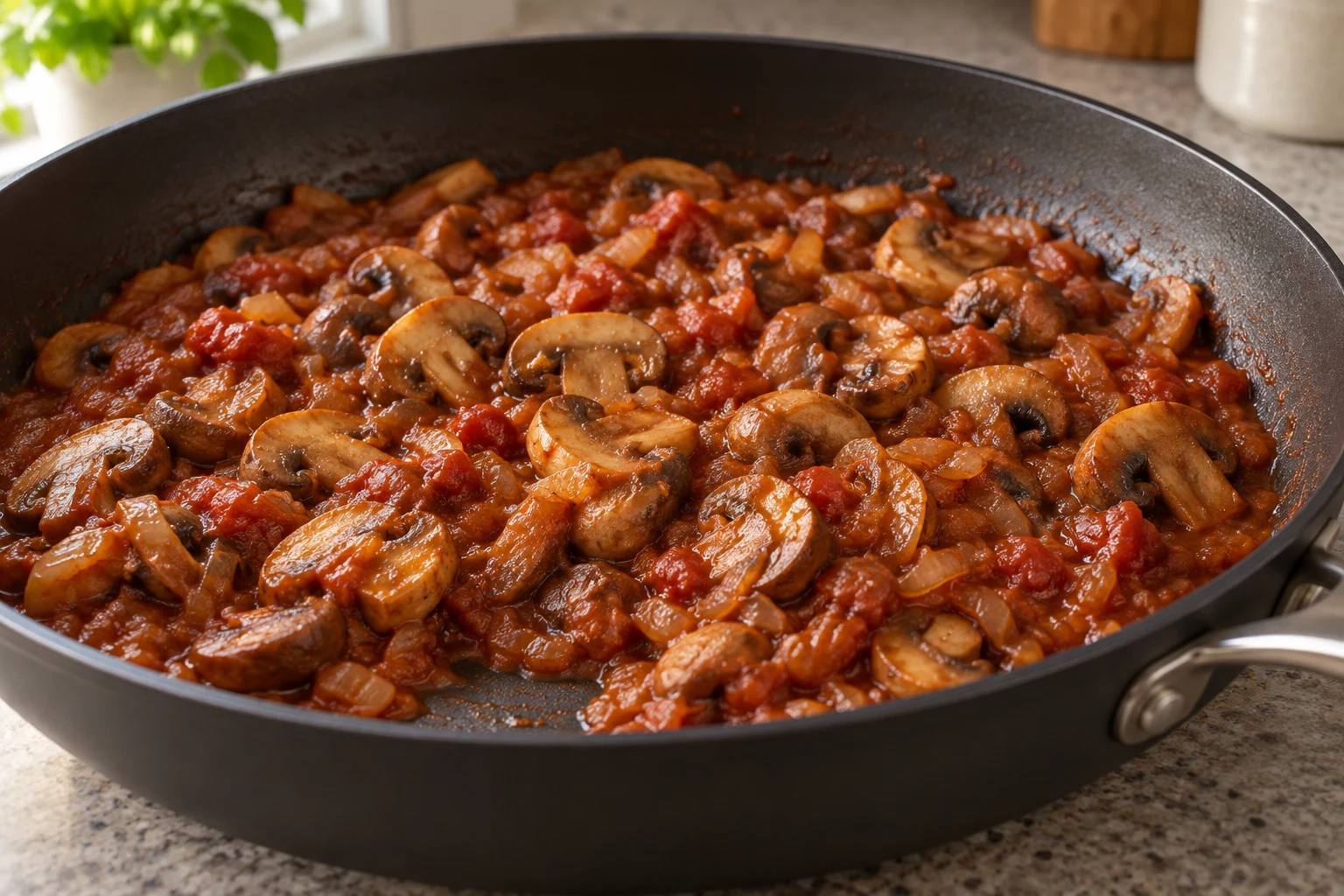
Parwana adds chaar masalah near the finish. As the mixture reduces, mushroom pieces remain visible in the sauce. The pan photograph illustrates that relationship: a shallow coating, with the cooked vegetables still easy to identify.
The Mushroom Council describes searing and roasting as ways to develop other flavours. Changing to those methods would change the preparation. For a first attempt at qorma, keep the sauce method coherent and follow one complete recipe.
Two cooks, two four-spice mixtures
The name char masala is useful, but it does not identify one universal jar. Ghilzai also distinguishes black cardamom’s stronger scent from the gentler green cardamom she uses elsewhere. Read the actual ingredient names on a packet or in a recipe: a familiar blend name alone does not tell you which cardamom is inside.
Mursal Muradi’s Qurma Chalau
In her Project Feast booklet, Muradi combines black peppercorns, cloves, cinnamon and black cardamom. She briefly toasts the whole spices, cools them and grinds them. Her qorma also includes ground coriander separately. The blend and the rest of the seasoning list therefore need to be read together. Her directions also describe onions becoming soft and golden before the other sauce ingredients join them, giving the cook a clear early checkpoint.
Humaira Ghilzai’s Maash Palau
Ghilzai describes variation between families and specifies black cumin, black cardamom, coriander and black pepper for her rice dish. This is evidence of a different named mixture, rather than an instruction to add that rice dish’s full seasoning quantity to mushrooms. Choose the mixture appropriate to the recipe you are actually making. Ghilzai learned this dish through cooking with her aunt, then clarified the notes afterwards. Her account gives the comparison a particular family and cooking occasion, rather than an anonymous formula.
Place the mushroom dish within qorma
Muradi’s Qurma Chalau offers a broader view of the cooking family. Her recipe starts with softened, golden onions, follows with aromatics and tomato puree, and finishes as a thick sauce. She explains that vegetables can be used in place of the meat.
That context helps a reader recognise mushroom qorma as a substantial sauced vegetable dish. It also leaves room for a particular cook’s choices. A tomato-based mushroom preparation, a meat qorma and a rice dish seasoned with char masala each have their own ingredient list and sequence.
Give the sauce something to meet
Both Parwana’s mushroom method and Muradi’s qorma instructions suggest rice or naan. Serve an accompaniment alongside, with the mushrooms in their own dish.
For a first attempt, follow one complete mushroom recipe and keep notes on the pan size, mushroom cut and final consistency. Those observations are more useful for your next batch than adding several extra spices at once: they tell you which cooking decision changed the result.
Research notes
Sources behind this article
- Parwana — Samaroq Original mushroom preparation, liquid reduction and serving choices.
- Mursal Muradi — Traditional Afghan Recipes Qurma Chalau and her four-spice mixture, pages 10–11.
- Humaira Ghilzai — Maash Palau First-person account of family spice variation and a specified blend.
- Mushroom Council — preparation tips Selection, cleaning and trimming of cultivated mushrooms.
- Leah Colins — mushroom technique Consistent cutting and released moisture in a separate cooking method.
Keep exploring
More stories for your table
Afghan cuisine Meat stews
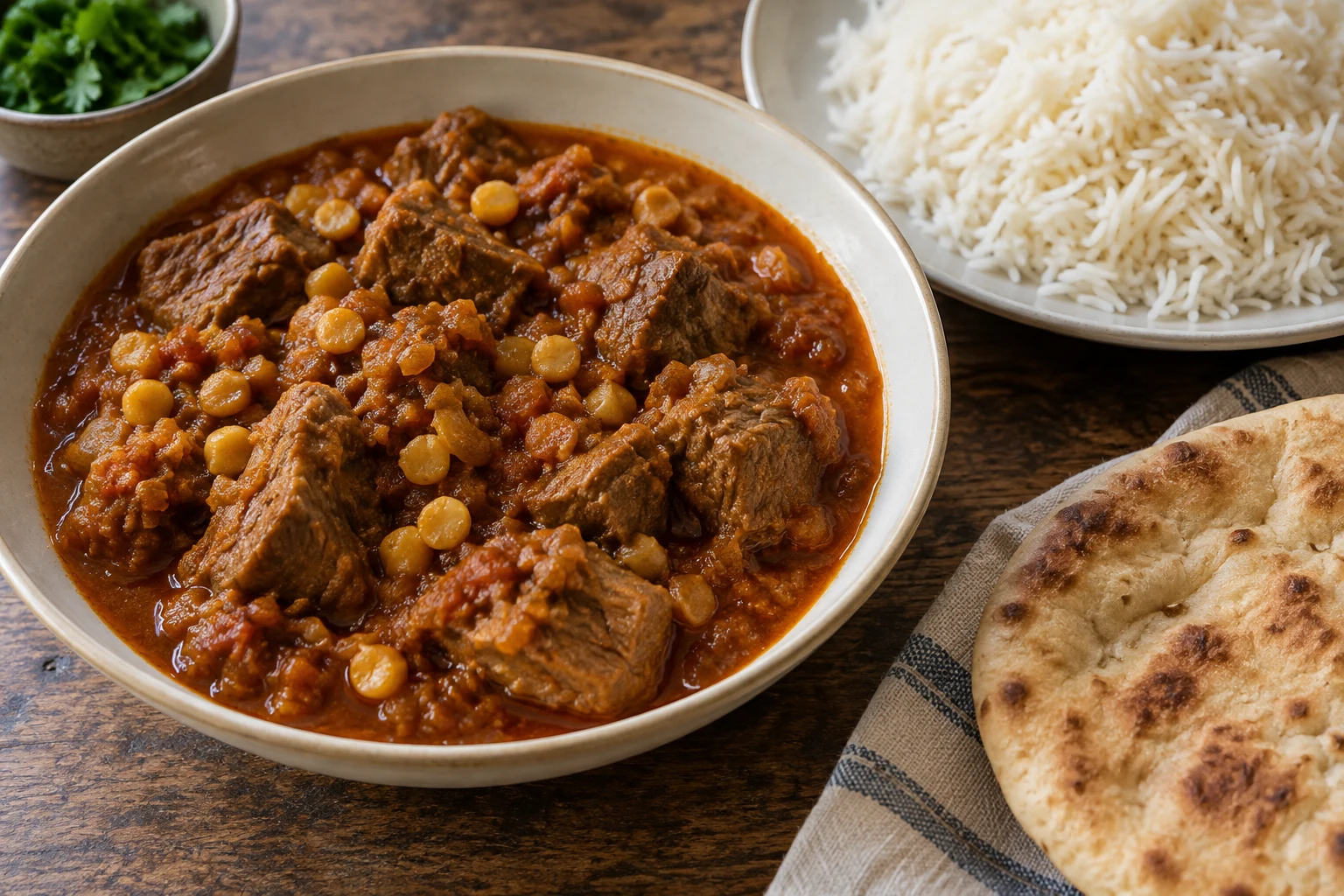
Afghan Qorma: One Braise, Several Pots
Afghan cooks make meat qorma with potatoes, tomato, pulses or fruit. Their recipes show how to choose a whole preparation and read beyond a familiar curry name.
Afghan cuisine Meat stews
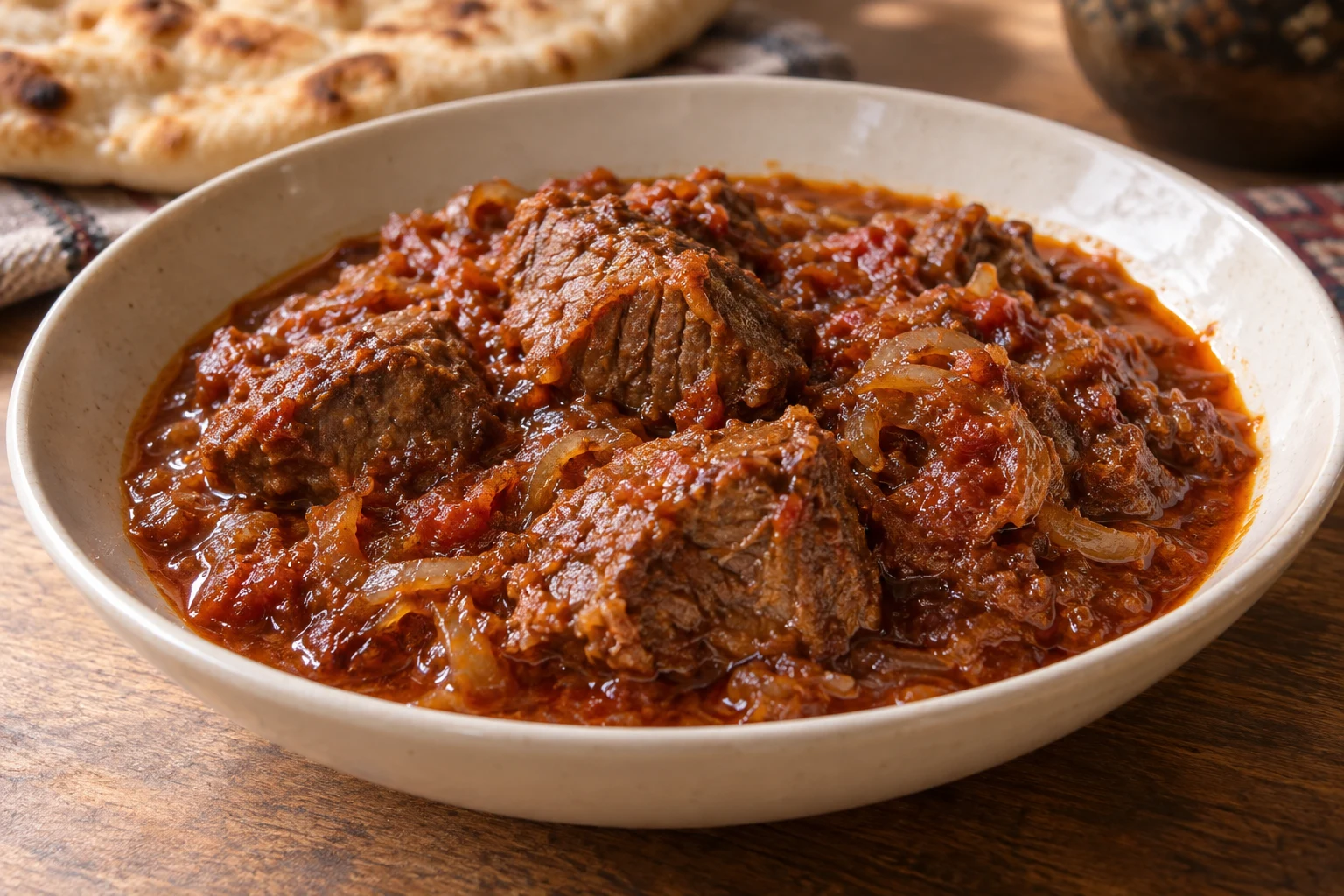
Afghan Meat Qorma: An Onion Base, Many Home Versions
Afghan meat qorma has several home forms, from tomato-and-onion braises to potato or chickpea versions. Choose a method around the cut and the cooking vessel.
Nepalese cuisine Fermented vegetables
Sinki: The Radish Root Behind the Sour Broth
Fermented radish root gives sinki its sour character. Learn how it differs from leafy gundruk, why drying matters, and how prepared sinki becomes soup.