
Afghan Qorma: One Braise, Several Pots
قورمه گوشت
Afghan cooks make meat qorma with potatoes, tomato, pulses or fruit. Their recipes show how to choose a whole preparation and read beyond a familiar curry name.
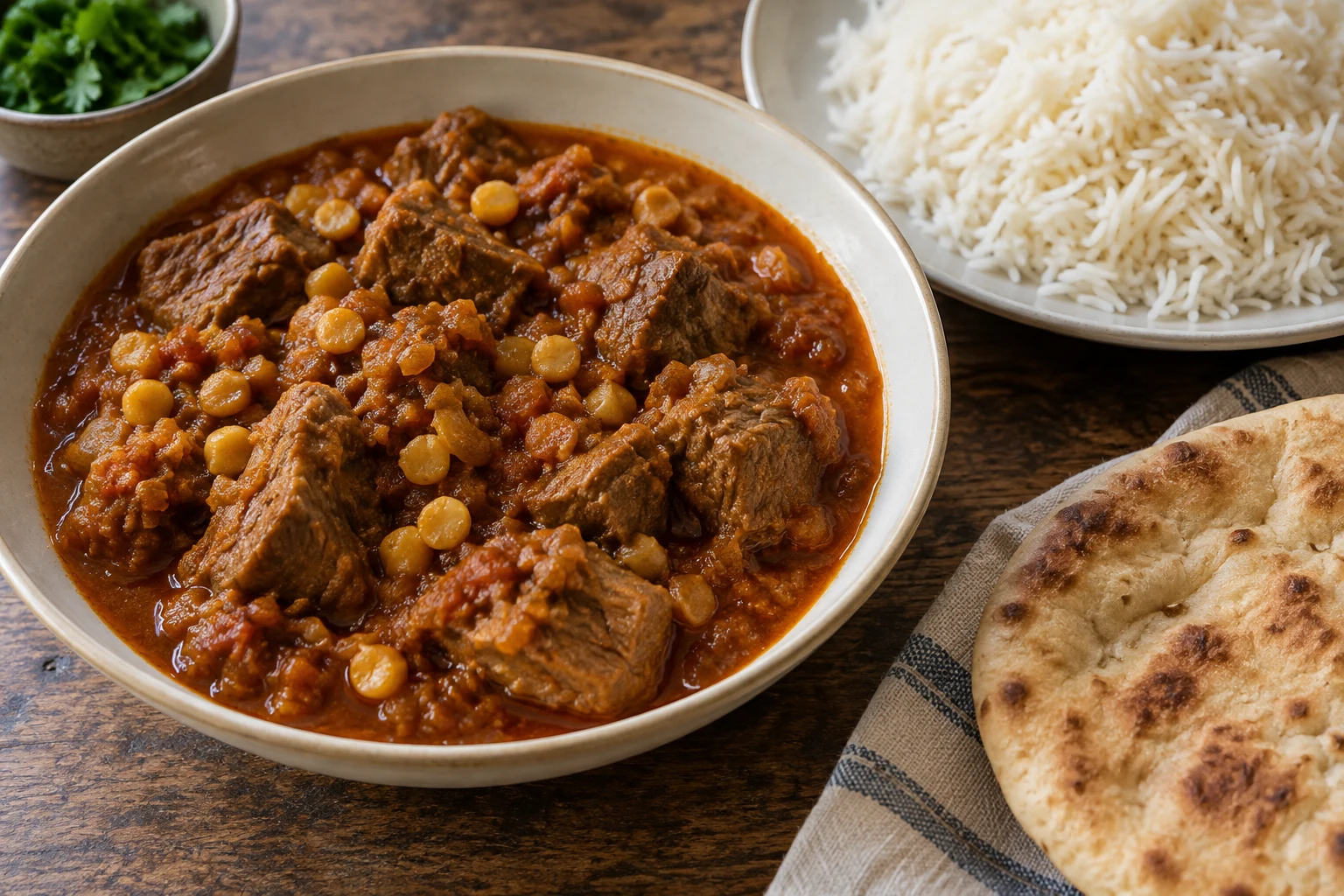
Ask what is in this qorma
A menu that says qorma gives a useful starting point, but it does not tell the whole meal. Afghan cooks publish meat preparations with potatoes, tomato and pulses, or a sweet-sour fruit sauce. The shared name makes more sense as a family of braised dishes than as a promise of one fixed ingredient list.
For the diner or home cook, the next question is specific: which meat, which sauce, and what accompanies it? Four Afghan cooking and restaurant accounts make those choices visible. Reading them together is useful precisely because their dishes differ. None needs to be flattened into a single formula to make the others legitimate.
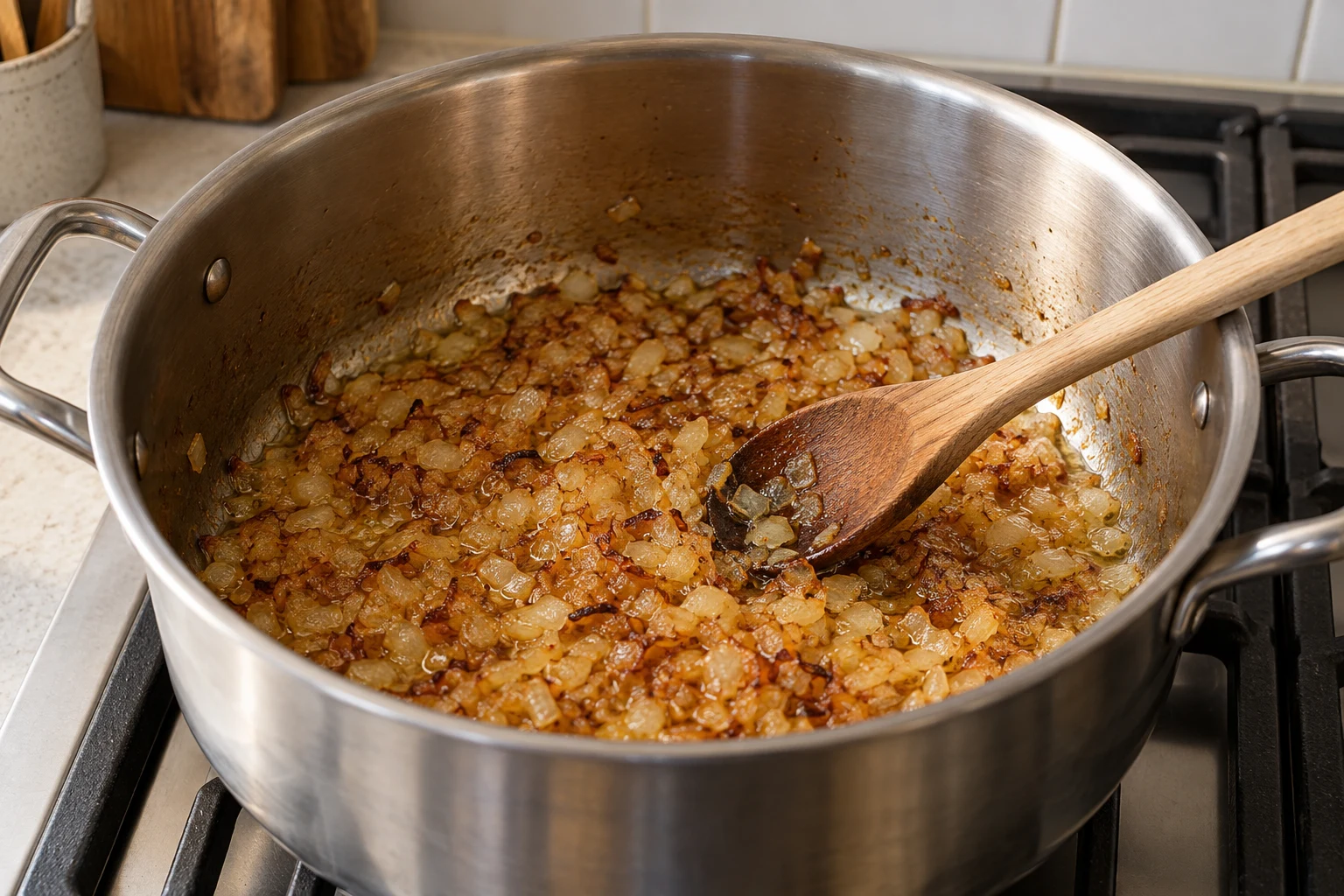
Muradi’s pot starts with the onions
In the cookbook published by Project Feast, Mursal Muradi begins her Qurma Chalau by frying finely chopped onions until soft and golden. Ginger and garlic follow, then the meat is browned. Tomato puree enters before the liquid and spice mixture. This ordered sequence is the practical detail to notice: the sauce has work done to it before the simmer begins.
Muradi’s ingredients include pulses and a char masala made from peppercorns, cloves, cinnamon and black cardamom. Her serving suggestion is rice and naan. These details belong to her documented preparation. They are useful choices for a reader seeking that kind of qorma, rather than rules that every Afghan meat stew must contain those same four spices or a pulse.
Three documented directions
Beef and potatoes
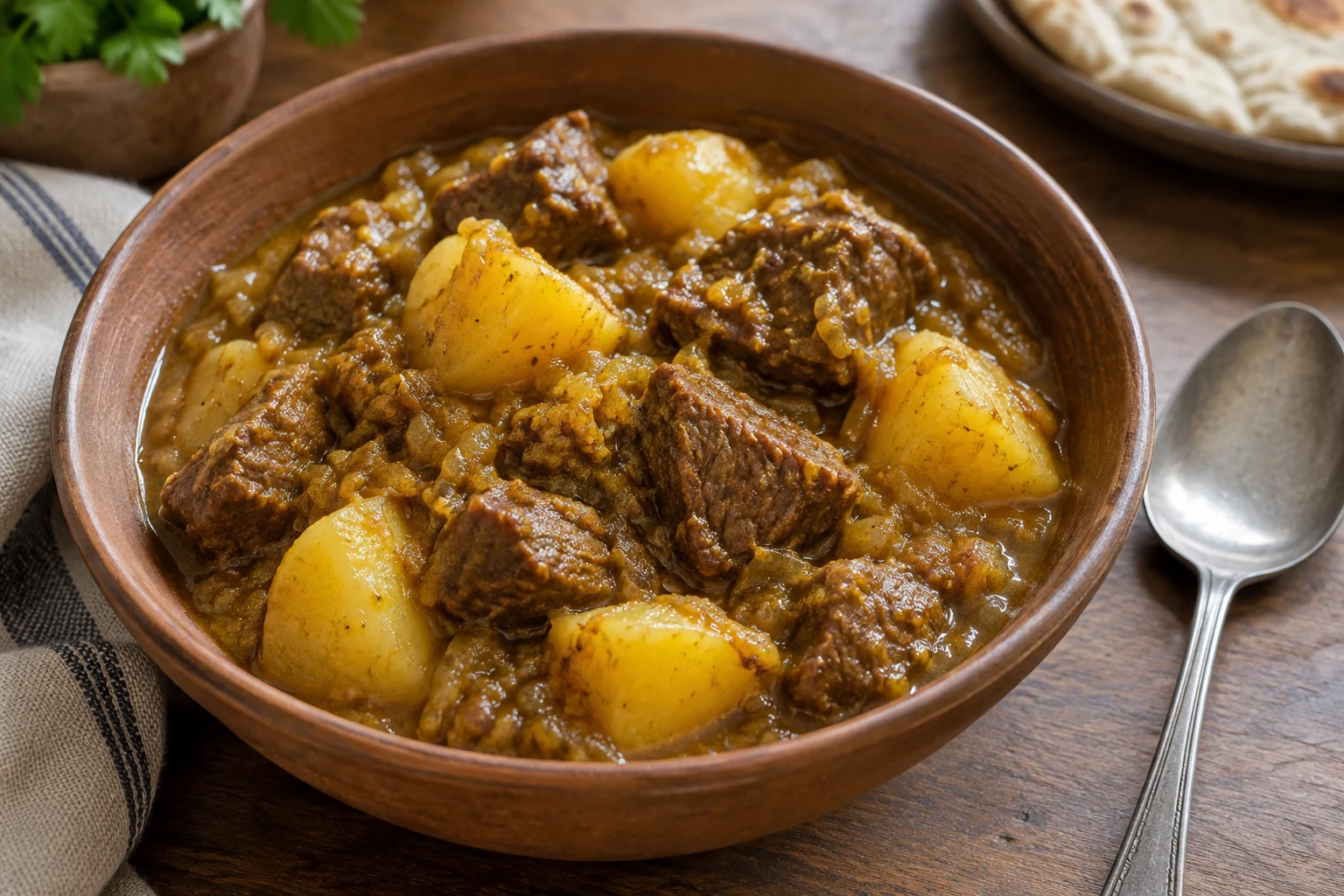
Mirriam Seddiq’s Afghan Cooks preparation uses chuck, potatoes, onion and garlic, with cumin, coriander and turmeric. It is cooked with pressure rather than treated as the same stovetop schedule as every other stew.
Meat, tomato and pulses
Mursal Muradi’s Qurma Chalau builds a browned onion and meat base with tomato, pulses and char masala. This is the direction represented by the opening image.
Lamb and sour cherries
Humaira Ghilzai’s Qorma-e-Aloo Baloo uses lamb with Morello cherries. The fruit enters after an initial covered simmer; it is part of the sauce, rather than a decorative topping.
Choose the recipe before changing the equipment
Seddiq presents her beef-and-potato dish as a pressure-cooker preparation, while Ghilzai’s cherry dish uses a heavy lidded pot and changes from covered cooking to an uncovered finish. Those choices control different stages of the meal. A pressure-cooking interval cannot simply become an equal-length stovetop simmer; cut size, liquid and equipment all belong to the method being followed.
This feature therefore compares preparations rather than supplying a combined recipe. Pick the linked version whose ingredients and equipment fit your kitchen, then keep its sequence together. Adding cherries to a tomato-and-pulse recipe would be a new adaptation, not an instruction supplied by these cooks.
A restaurant menu makes the choice explicit
Afghan Kitchen in Salt Lake City describes a shank qorma with tomato, ginger and garlic, and a separate chicken qorma with boneless thigh meat. Its menu also has kidney-bean and chickpea qormas. These are descriptions of that restaurant’s dishes, not a national ingredient standard. They illustrate why it helps to read the words following qorma instead of relying on the name alone.
Rice can provide a comparatively plain partner for a sauce-rich dish. Seddiq serves her beef ghorma with rice and salata; Ghilzai pairs her cherry version with challaw and suggests salad or yogurt alongside. Ask whether yogurt, bread or other accompaniments are included when ordering, since they change both the plate and its allergens.
Research notes
Sources for these qorma preparations
Three original Afghan cooking accounts and an Afghan restaurant’s own menu support the distinctions. Similar charity recipe wording was not counted as independent confirmation.
- Mirriam Seddiq: Afghan Beef Ghorma Afghan cook’s original beef, potato and pressure-cooker method, with rice and salata service.
- Mursal Muradi: Traditional Afghan Recipes Project Feast’s cookbook, Qurma Chalau on pages 11–12: browned onion base, tomato, pulses and her char masala.
- Humaira Ghilzai: Qorma-e-Aloo Baloo Original lamb and sour-cherry preparation showing staged fruit addition and rice accompaniments.
- Afghan Kitchen: Restaurant Menu Restaurant’s own shank, chicken, chickpea and kidney-bean qorma descriptions; used as specific menu examples.
Keep exploring
More stories for your table
Afghan cuisine Kebab techniques
Afghan Lula Kebab: Grilled Skewers, Fried Rolls
Afghan lula and lola kebab recipes take two distinct paths. Compare grilled mince with fried meat-and-potato rolls, their ingredients, texture and cooking order.
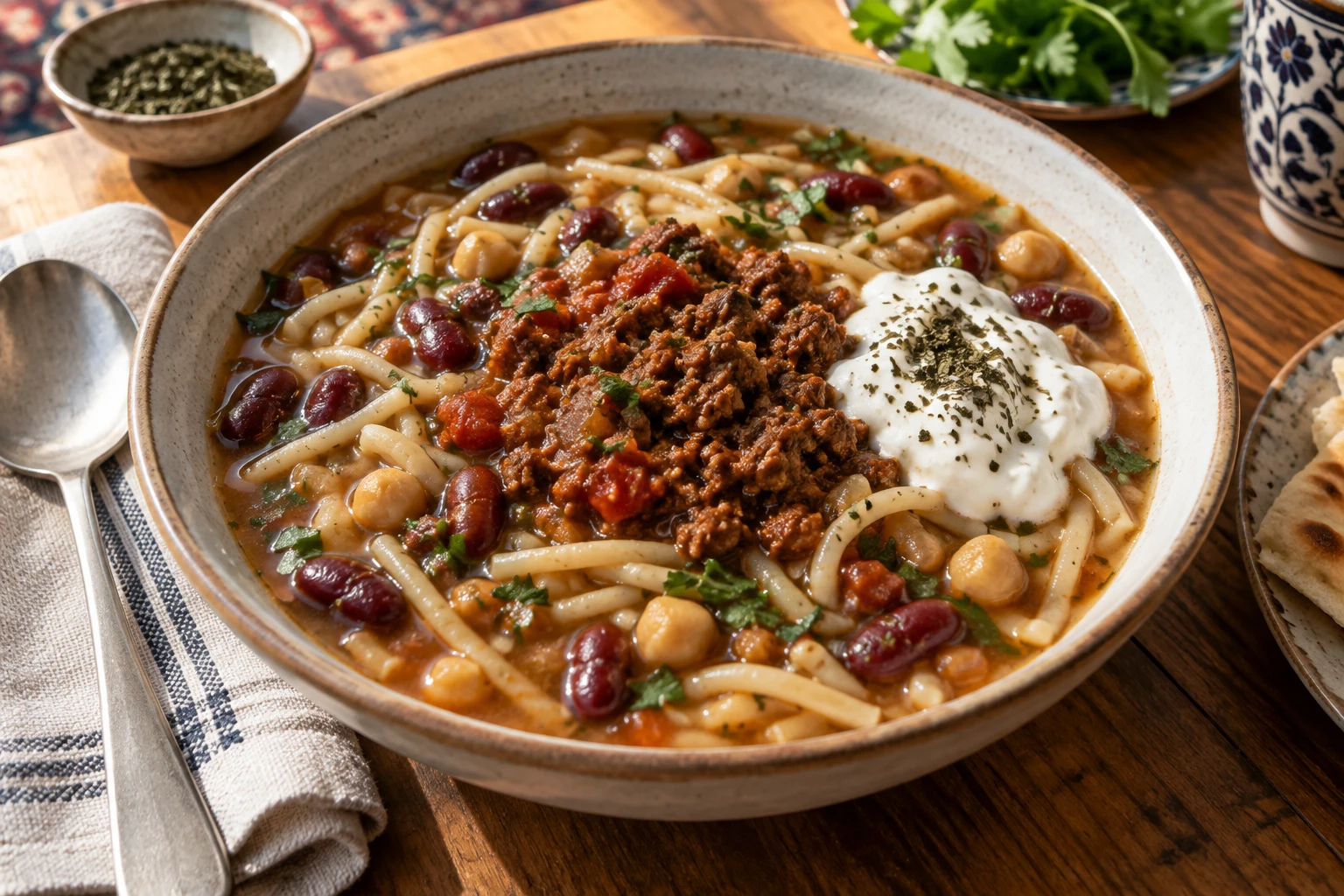
Afghan cuisine Soup
Aush: Keep the Layers in View
Afghan aush brings noodles, legumes, savory meat and tangy dairy together. Different family methods make the final assembly as important as the pot.
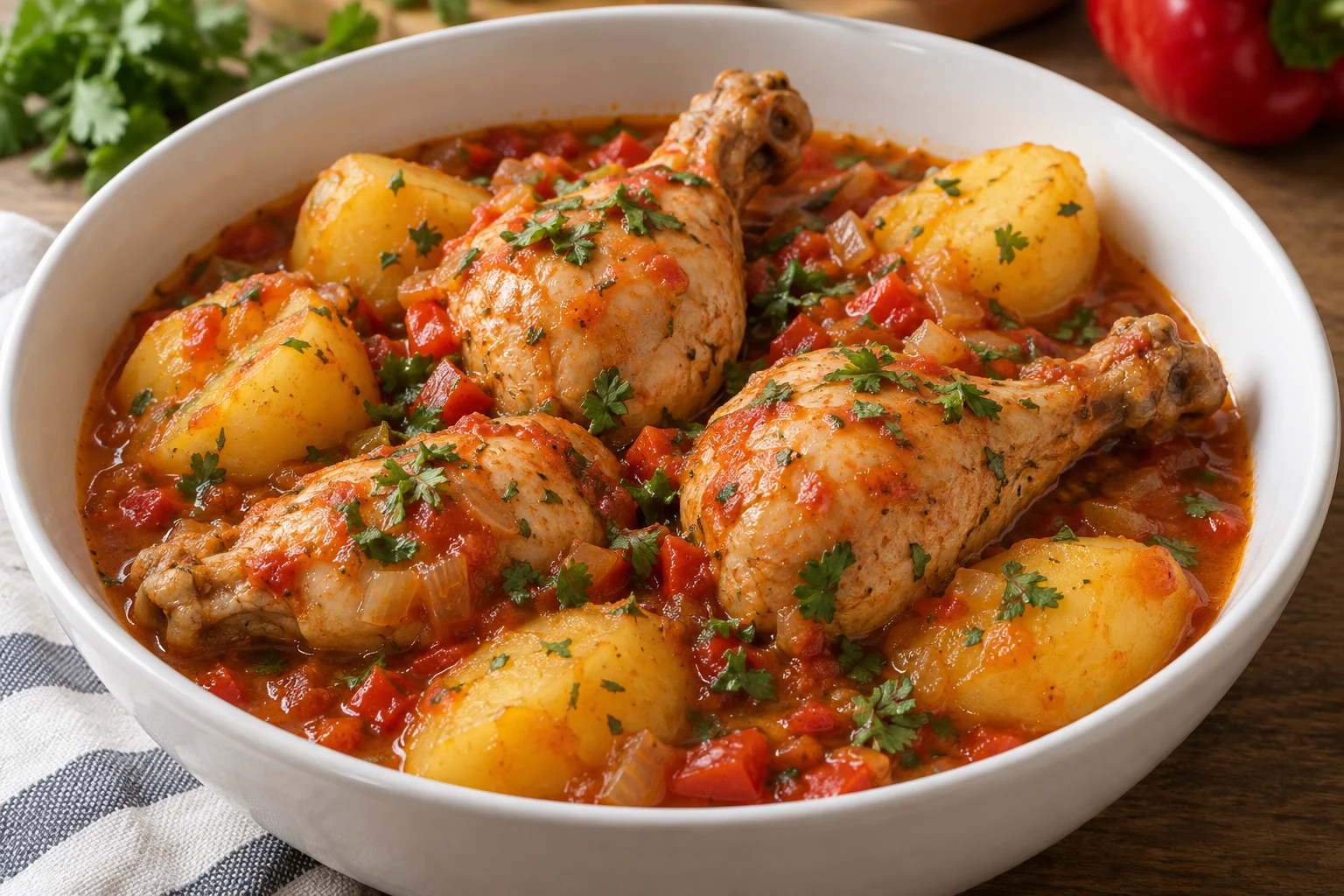
Colombian cuisine Chicken stew
Sudado de Pollo: Read the Potato Schedule
Cook a Colombian-style sudado de pollo with a tomato base and a separate potato stage. Includes a complete stovetop adaptation and documented household variations.