
Aush: Keep the Layers in View
آش
A bowl of noodles and beans becomes something more when savory meat sauce and tart dairy meet it. Read the assembly before deciding what belongs in the soup pot.
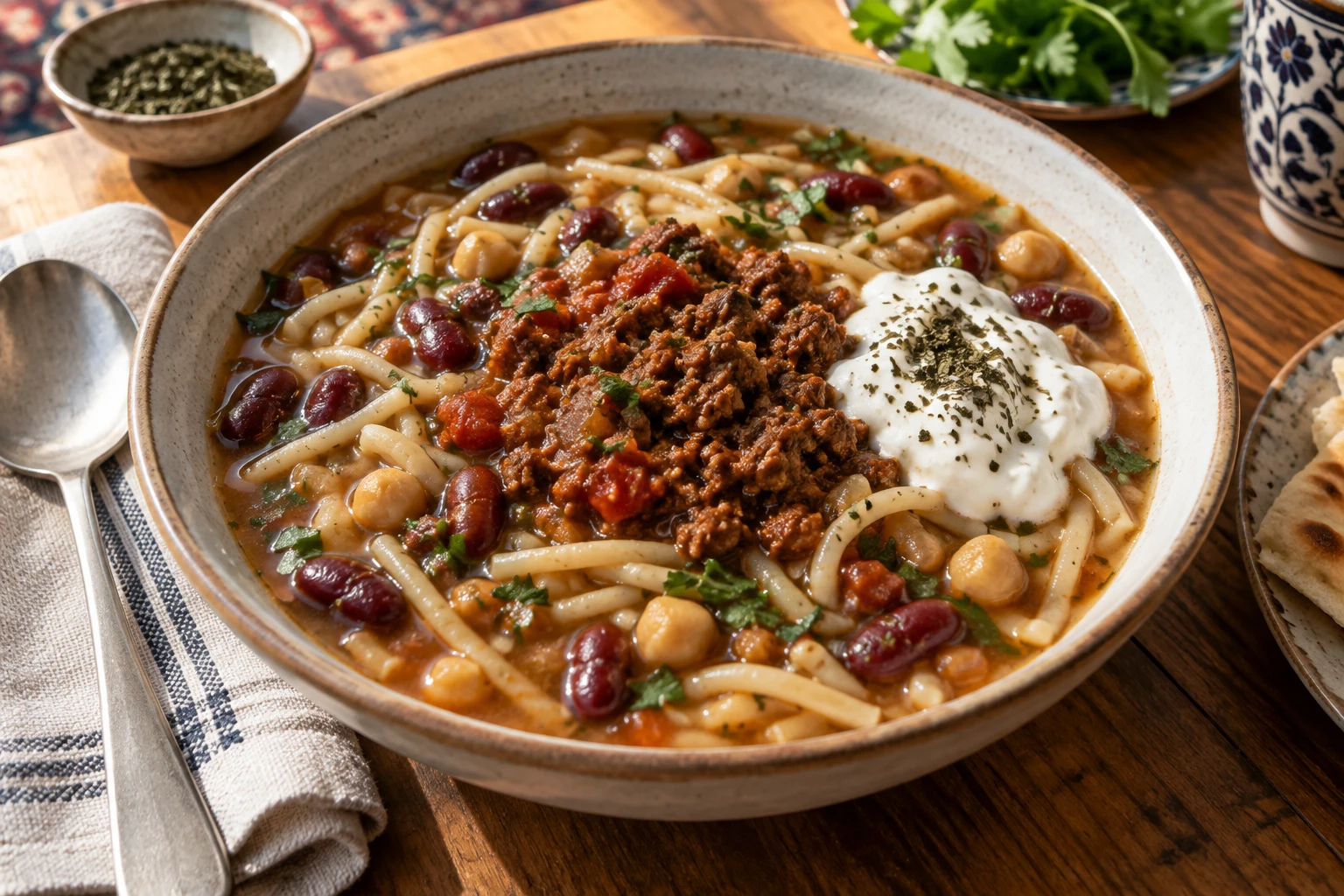
Start with the assembly
Katie Morford learned aush from Afghan cook Humaira Ghilzai and describes three components: noodle broth, seasoned ground meat and yogurt. In her adaptation, they meet in individual bowls. That structure is a useful way to understand the dish before reading any ingredient list.
The broth gives the noodles room, the legumes provide distinct bites, and the meat and dairy change the flavor as you stir. Yet aush is not tied to a single order of operations. Other home cooks combine more of those components in the pot, retaining toppings for the final surface.
Where the components meet
Part in the pot, part on top
Mirriam Seddiq's Afghan Cooks version stirs some yogurt sauce and some savory sauce into the noodle-and-bean pot, then uses the remainder as toppings. Her accessible adaptation also offers plant-based ground meat, tofu or vegetables as alternatives.
An adapted one-pot method
Amina Al-Saigh developed her Hungry Paprikas version with Afghan friend Soreiya, who normally cooks the beef separately. Their published adaptation starts the meat and tomato base in the soup pot, adds broth and legumes, and finishes with yogurt and dried mint.
Dairy through the soup
Imanistan's family version blends quroot or yogurt with garlic, cilantro and mint, then adds that sauce to noodles and legumes with separately prepared cooked beef. A turmeric-oil finish replaces the conspicuous white dollop seen in other bowls.
Two noodle policies, both deliberate
In her published adaptation of Homayon Karimy's family recipe, Padma Lakshmi cooks the noodles separately to preserve a distinction between their texture and the vegetables. She also gives Karimy's direct-in-the-soup option. These are two coherent methods, not a disagreement to resolve by declaring one authentic.
Seddiq instead retains the noodle cooking water as broth. Her instructions leave the noodles underdone at the first stage because they keep cooking during assembly. A separate-boil method and a retained-water method cannot share every timing or draining instruction.
When choosing a recipe, mark the moment the noodles enter and what happens to their water. That one detail prevents the familiar mistake of draining away liquid that the next step expects to become the soup.
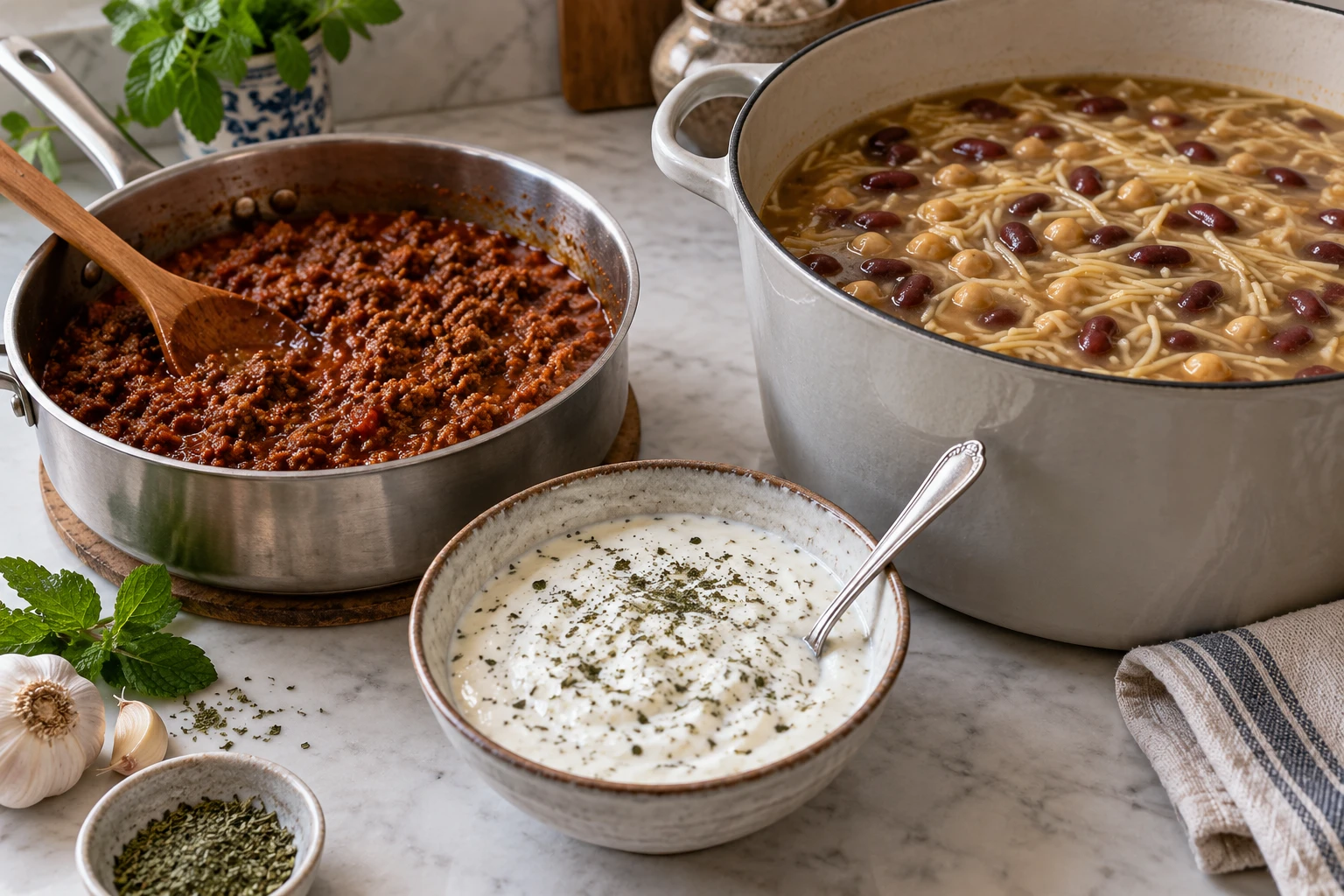
Give the dairy its own attention
Lakshmi and Karimy's yogurt sauce includes garlic, mint and lemon. The recipe explains the lemon as a way to approach the sourness of their homemade yogurt. That is a specific flavor choice, rather than a direction to make every aush sharply lemony.
Al-Saigh mixes a little hot broth into a small portion of yogurt before returning it to the pot, keeping the remaining yogurt for garnish. Follow that tempering sequence when using her method. Pouring the whole finishing bowl into the soup would remove the contrast her instructions preserve.
Finish a layered bowl with purpose
- 01
Keep the meat loose
Morford breaks ground lamb or beef into small, separated pieces as it cooks. This creates a spoonable topping that can disperse through the bowl, rather than one large lump sitting over the noodles.
- 02
Let the sauce develop
Her meat mixture continues cooking with tomato paste and spices after its initial browning. That stage belongs to the sauce's flavor development. A quick color change at the start is not the complete method.
- 03
Add the visible finish
Ladle noodle broth and legumes first, then use the meat and dairy toppings specified by your recipe. Morford assembles each portion separately; Lakshmi presents a large serving bowl with additional sauces alongside. Either arrangement makes the finishing choices easy to see.
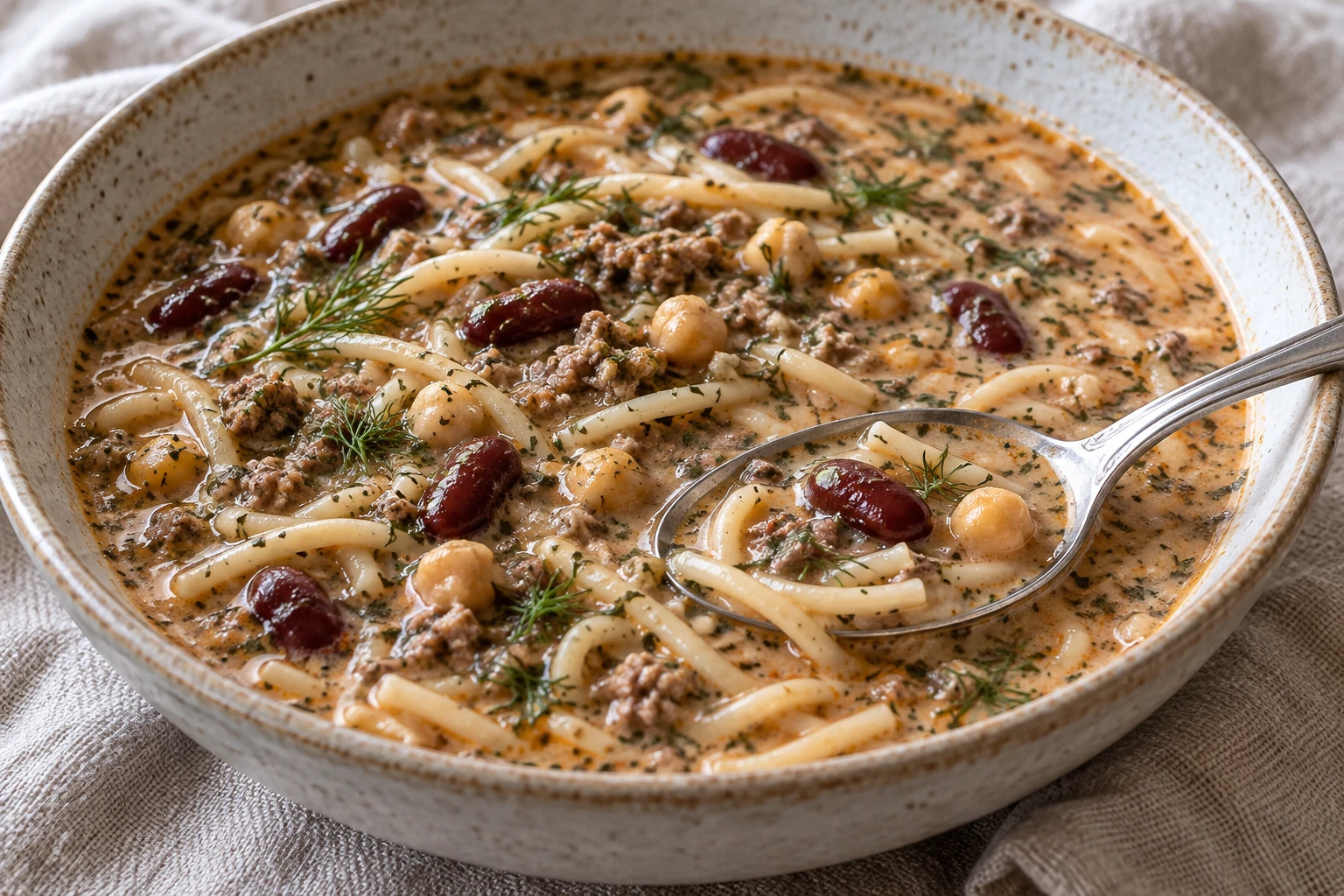
A family bowl, not a fixed formula
Imanistan recalls aush served by their mother during Ramadan, between breaking the fast and the later dinner. The writer also describes a family connection to Kabul and Herat and differences between the versions they have eaten. Those memories belong to that household; they should not be turned into a rule for every Afghan table.
The practical lesson is generous: understand the noodle liquid, the sauce and the dairy before combining them. Then serve while the components are still distinct enough to recognize. Aush rewards the final stir, but the pot and the toppings each have work to do first.
Research notes
Sources
Family recipes and explicitly described adaptations support the different assembly choices.
- Katie Morford and Humaira Ghilzai: Aush A layered adaptation with individual-bowl assembly and loose meat topping.
- Mirriam Seddiq: Afghan aush Retained noodle water, partly mixed sauces and meat-free alternatives.
- Padma Lakshmi and Homayon Karimy: Aush Official recipe PDF comparing separate and direct noodle cooking.
- Amina Al-Saigh and Soreiya: Aush Explicit one-pot adaptation, yogurt tempering and prepared legumes.
- Imanistan: Family aush First-person Ramadan context and quroot-or-yogurt assembly.
Keep exploring
More stories for your table
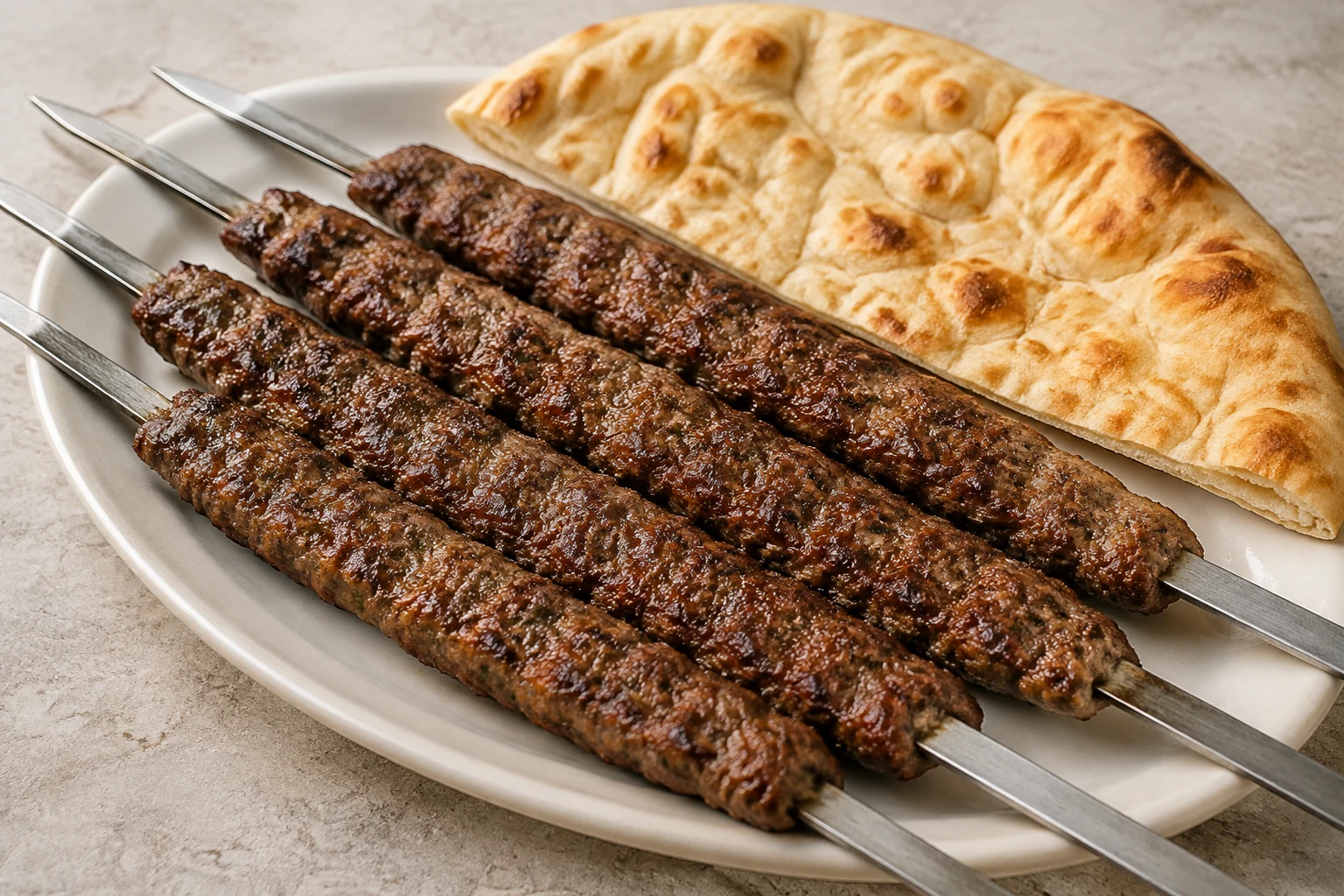
Afghan cuisine Kebab techniques
Afghan Lula Kebab: Grilled Skewers, Fried Rolls
Afghan lula and lola kebab recipes take two distinct paths. Compare grilled mince with fried meat-and-potato rolls, their ingredients, texture and cooking order.
Peruvian cuisine Soup
Caldo de Gallina: Let the Hen Set the Pace
A satisfying Peruvian hen soup depends on timing the meat, yellow potatoes and long noodles separately. The garnish belongs to the final minute.
Polish cuisine Soup
White Borscht: Read the Starter First
Polish white borscht brings sour starter, savory broth and substantial garnishes together. Its name varies, while the flour sediment and cream finish need deliberate handling.