
Nikujaga: Keep the Potatoes in One Piece
肉じゃが
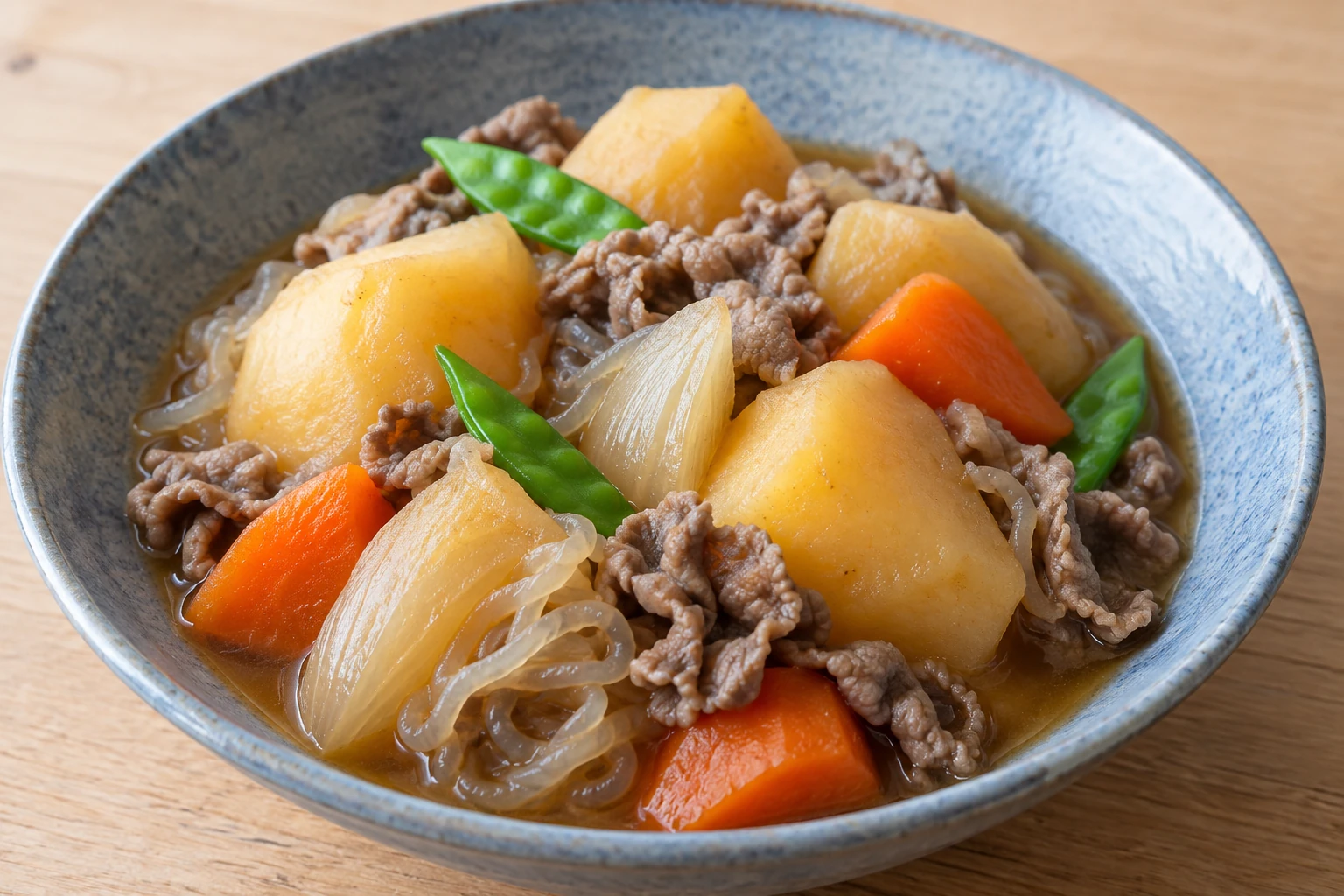
Nikujaga asks for a gentle touch: tender potato chunks, thin folds of meat and enough sweet soy broth to bring them together. A drop lid helps the simmer do its work while the spoon stays out of the pan.
The small tool that changes the simmer
Put the lid on the food
Nikujaga takes its name from niku, meat, and jagaimo, potato. Nippon.com describes it as a staple of Japanese home cooking and includes both beef and pork among its possibilities. Here the potatoes get the larger share, accompanied by thin beef, onion, carrot and shirataki. The aim is to soften those potato pieces without losing their shape along the way.
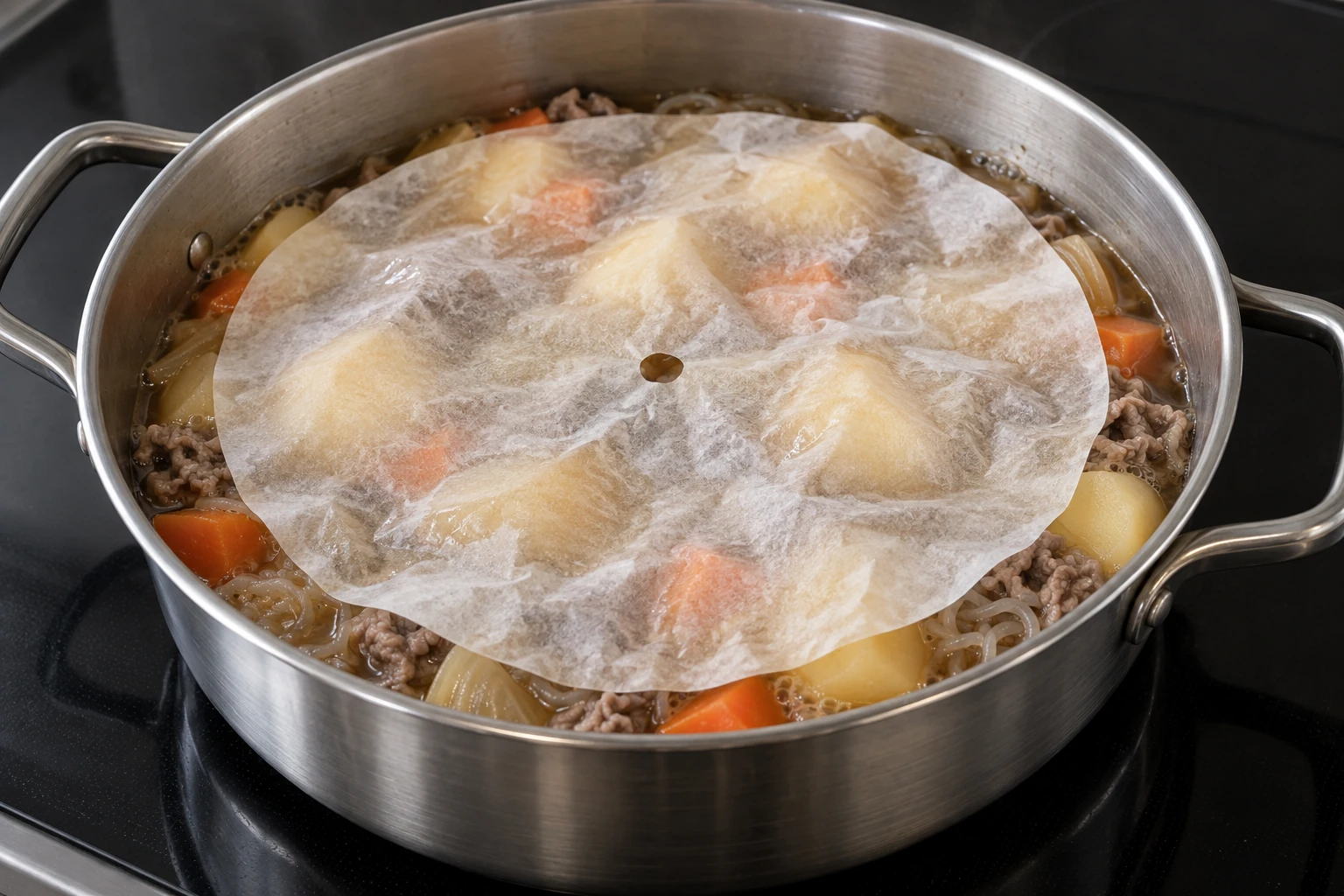
The otoshibuta, or drop lid, is smaller than the pan and rests directly on its contents. Kikkoman’s tool guide describes how it helps distribute the simmering liquid and limits the movement that can break up delicate ingredients. A circle of parchment gives home cooks a simple way to use the same arrangement. It sits inside the pan, touching the food, with a small opening for steam.
This is a short simmer built around vegetables and sliced meat. In chef Shogo Tsutsumi’s recipe for Japan’s consulate in New York, the beef is separated and cooked before the potatoes are simmered under a drop lid; the potato center decides when the lid comes off. That is a useful order of attention for the home version below.
Three choices before serving
Tender centers, recognizable pieces
- 01
Choose a potato that holds its shape.
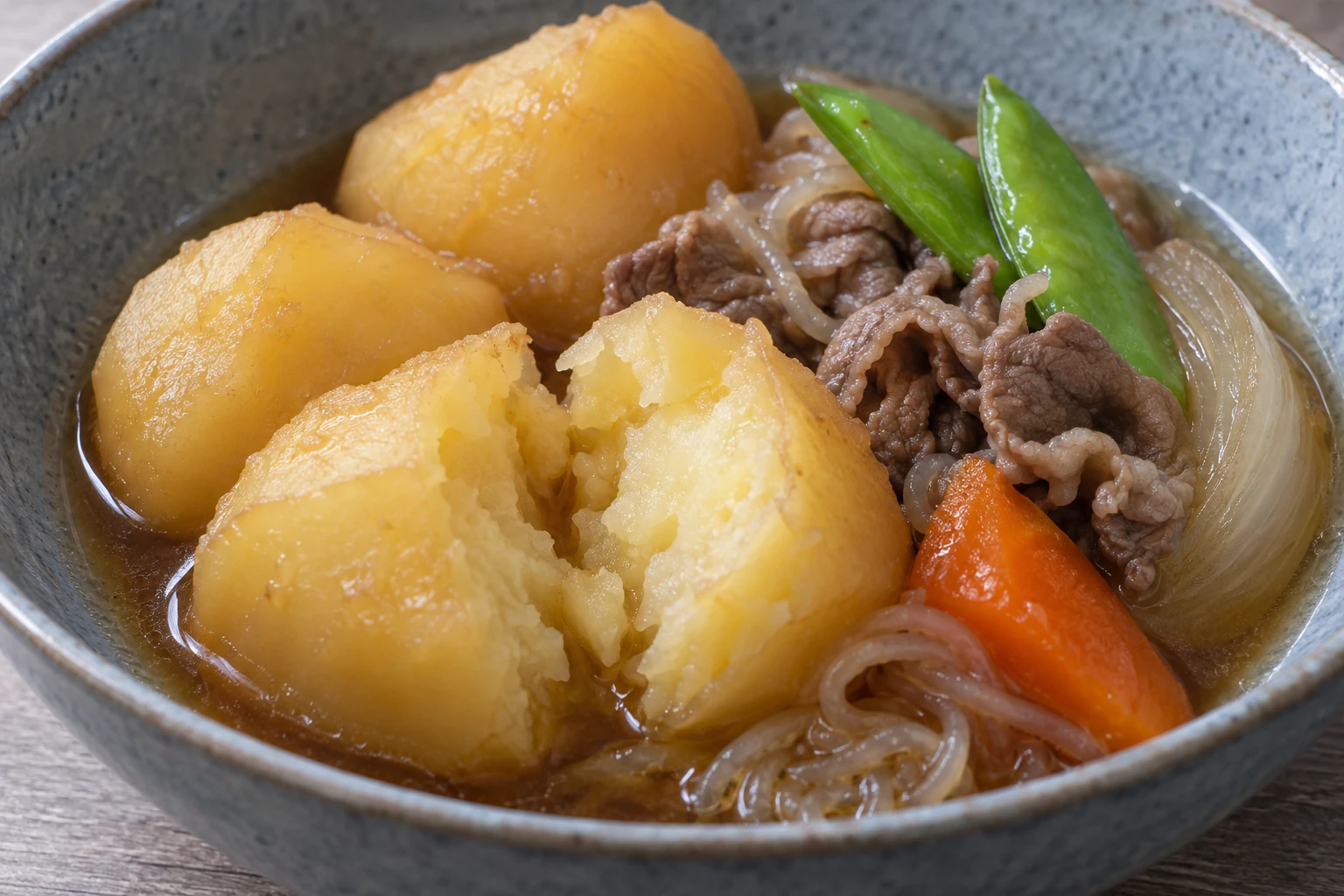
Namiko Hirasawa Chen uses Yukon Gold for nikujaga and notes that russets break more easily. Yellow-fleshed potatoes suit this adaptation. Keep the chunks similar in size, and cut the carrot smaller so it can soften in the same simmer.
- 02
Give the pieces room.
Use a wide pan rather than a deep stack of ingredients. Once the potatoes are softening, avoid repeated stirring. The drop lid and gentle bubbling let the cooking liquid move around them; a slow swirl of the pan can redistribute it near the finish.
- 03
Keep the greens for the end.
Kirin’s nikujaga recipe prepares snow peas separately and adds them just before serving. Their brief final warming gives a fresh green finish without asking the delicate pods to endure the potato’s full cooking time.
A home adaptation
Beef nikujaga with shirataki
This four-serving adaptation combines the short-simmer approach in the cited Japanese recipes with a parchment drop lid. It uses water rather than dashi. Allow about 20 minutes to prepare, 35 minutes at the stove and a 5-minute pause; potato size and pan width can change the simmer time.
Ingredients
Meat and vegetables
- 600 g peeled yellow-fleshed potatoes, such as Yukon Gold
- 250 g beef ribeye, sliced 1–2 mm thick, cut into pieces about 5 cm long
- 250 g peeled onion
- 150 g peeled carrot
- 200 g drained plain shirataki (konjac) noodles
- 50 g snow peas, trimmed
- 1 tbsp / 15 ml neutral cooking oil
Simmering liquid
- 450 ml water, plus small additions if the pan needs them
- 1 tbsp / 12 g granulated sugar
- 2 tbsp / 30 ml sake
- 2 tbsp / 30 ml mirin
- 3 tbsp / 45 ml Japanese soy sauce
Method
- 1
Prepare the cuts.
Cut the potatoes into 3–4 cm chunks, the carrot into pieces about 2 cm across, and the onion into thick wedges. Pare away only the sharpest potato corners. Keep the beef slices separated rather than bundled together. Cut a parchment circle slightly smaller than the inside of a 22–24 cm wide, deep pan, with a small vent in its center; keep all paper inside the rim when cooking.
- 2
Prepare noodles and greens.
Blanch the snow peas in boiling water for 1 minute, then drain, cool under cold running water and cut diagonally. Set aside. Rinse the shirataki, boil in fresh water for 2 minutes, then drain well and cut into roughly 10 cm lengths.
- 3
Separate the meat in the pan.
Heat the oil over medium heat in the wide pan. Cook the onion for 2 minutes, then add the beef and stir to separate the slices. Cook for about 2 minutes until the meat loses its raw appearance; it will cook further during the full simmer. Add the potatoes, carrot and shirataki and turn gently for 1 minute.
- 4
Set a quiet simmer.
Add the 450 ml water, sugar, sake, mirin and soy sauce. The liquid should reach nearly to the top of the ingredients; add water a tablespoon at a time only if needed. Bring to a boil, skim off foam, then reduce to a gentle simmer. Lay the parchment directly on the food and cook for 15–20 minutes, without stirring. Check occasionally that liquid remains; add a little water if the pan is drying.
- 5
Test the potato, then adjust.
Lift the parchment carefully, keeping clear of steam. Push a thin skewer into the center of a large potato chunk: it should slide in with little resistance. If the center is firm, replace the paper and simmer a few minutes more. Once tender, remove the paper. If much liquid remains, simmer uncovered for 2–4 minutes; keep enough broth to spoon into the bowls. Swirl the pan gently instead of stirring the soft pieces.
- 6
Settle, finish and serve.
Turn off the heat and let the pan stand for 5 minutes. Add the blanched snow peas and return to low heat for about 1 minute to warm them. Divide among four bowls with a little broth in each. Serve with steamed rice if desired; rice is a separate accompaniment and is not included in the recipe quantities.
Research notes
Sources behind the method
Japanese recipes establish the dish and its cooking choices. The recipe here is an editorial home adaptation; the official food-safety references govern leftovers.
- Nippon.com — Nikujaga: meat and potato Japanese home-cooking context, name, thin meat, smaller carrot pieces and the optional noodle variation.
- Consulate General of Japan in New York — Chef Shogo Tsutsumi’s nikujaga Separating and cooking thin beef, using a drop lid, and testing a potato’s center before finishing.
- Kirin Recipe Note — Nikujaga Meat-to-potato proportions, shirataki, sweet soy seasonings, gentle simmering and separately prepared snow peas.
- Kikkoman — Beef and potato stew for spring A water-based nikujaga preparation using thin beef, vegetables and an otoshibuta.
- Kikkoman — Otoshibuta / Drop Lid Placement directly on the ingredients and the use of parchment or foil substitutes.
- Just One Cookbook — Namiko Hirasawa Chen’s nikujaga Potato choice, wide-pan cooking, limited stirring and late addition of green vegetables.
- Just One Cookbook — Using and making an otoshibuta Fitting a drop lid inside the pan, placing it on food and providing a steam vent.
- FoodSafety.gov — Four steps to food safety Prompt chilling in shallow containers and the two-hour or hot-weather one-hour limits.
- FoodSafety.gov — Cold food storage chart Refrigerator temperature and the three-to-four-day storage limit for meat and vegetable stews.
- FoodSafety.gov — Safe minimum internal temperatures The 74°C / 165°F reheating temperature for leftovers.
Keep exploring
More stories for your table
JapanYōshoku rice dish
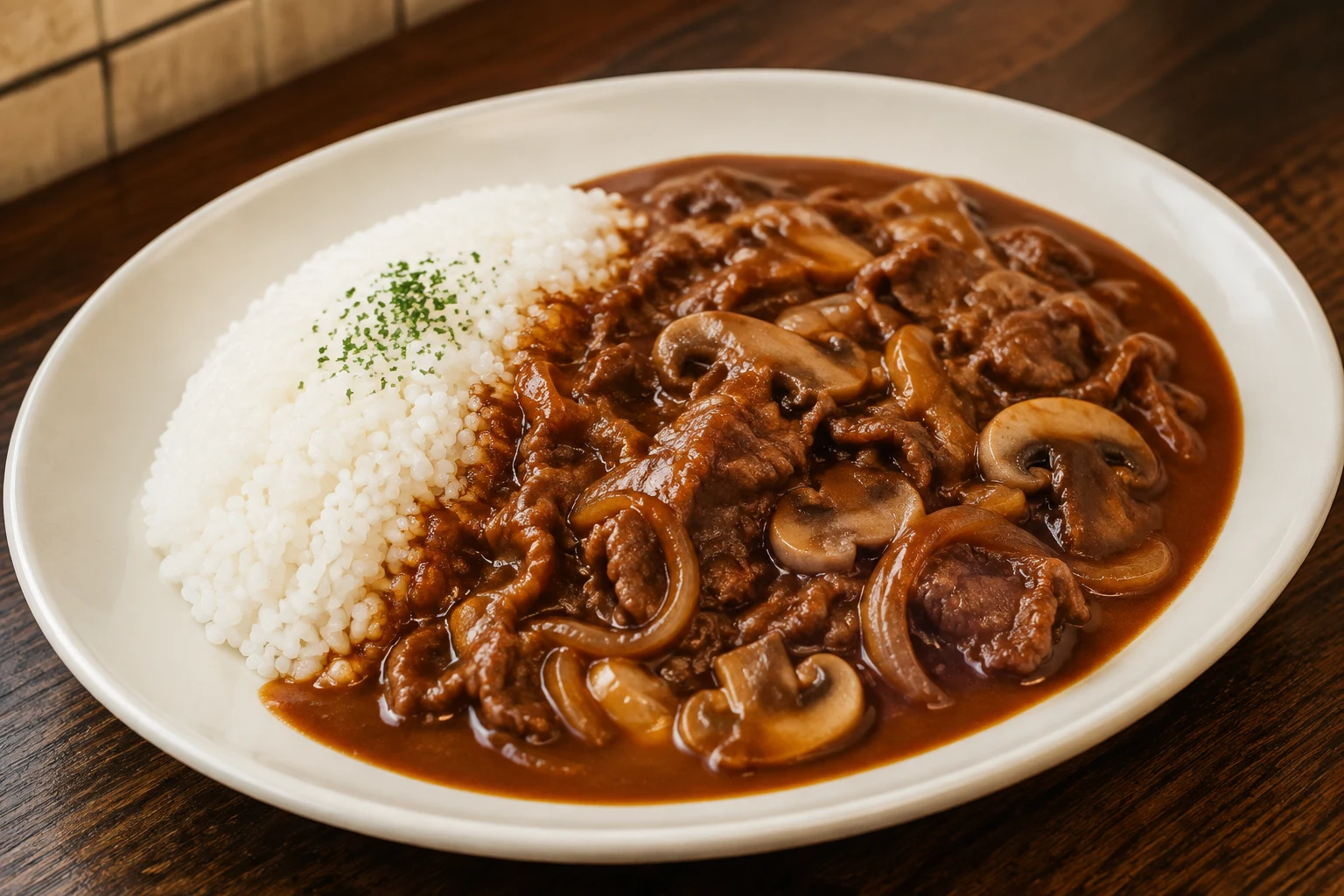
Hayashi Rice: A Sauce Translated for Rice
Hayashi rice turned a Western-style brown meat sauce into Japanese yōshoku by changing the plate, the seasoning, and eventually the home pantry.
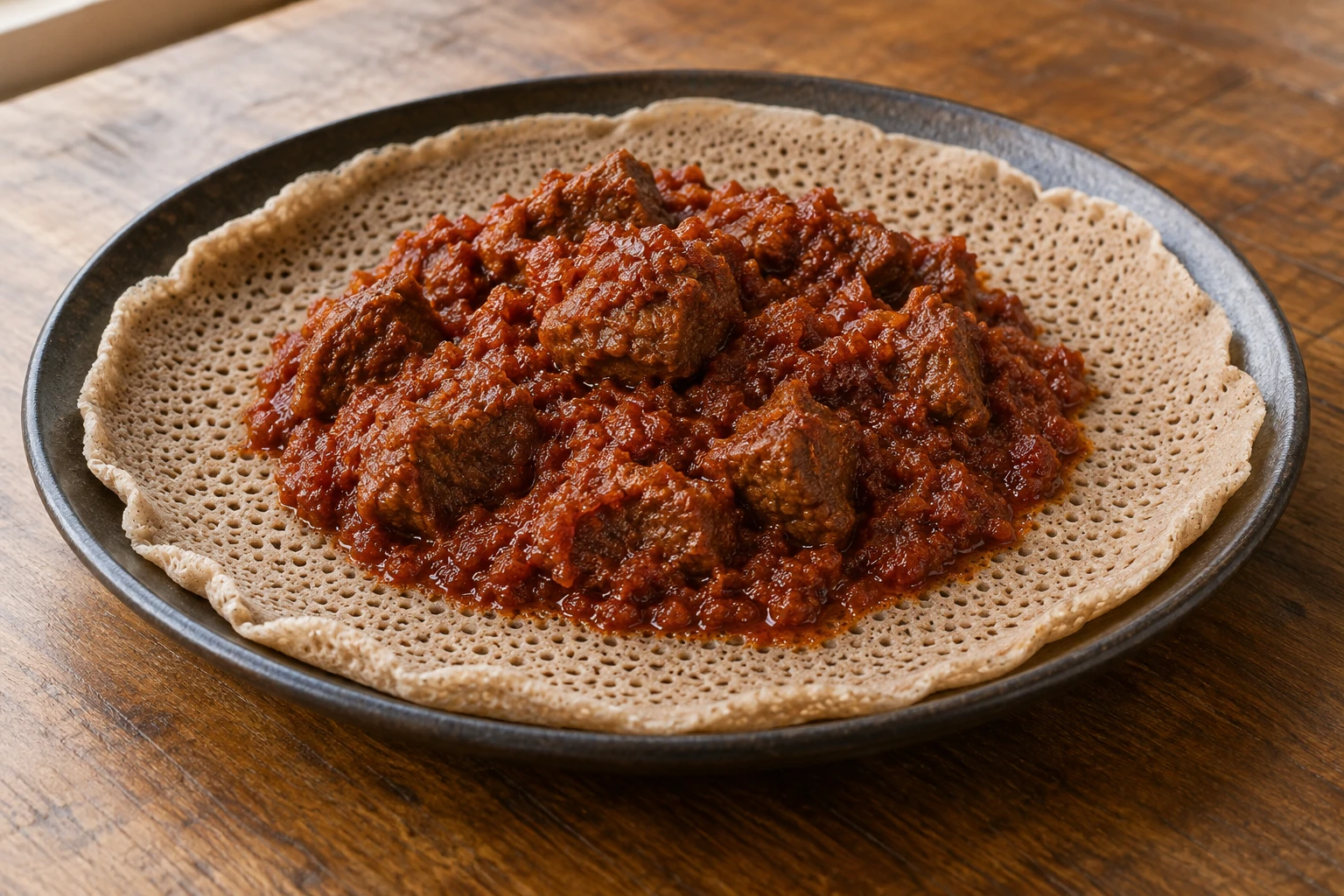
EthiopiaBeef stew
Sega Wot: Build the Sauce Before the Beef
Learn how cooked onions, gently heated berbere and a patient simmer build sega wot, with a home adaptation of Ethiopia’s spicy beef stew.
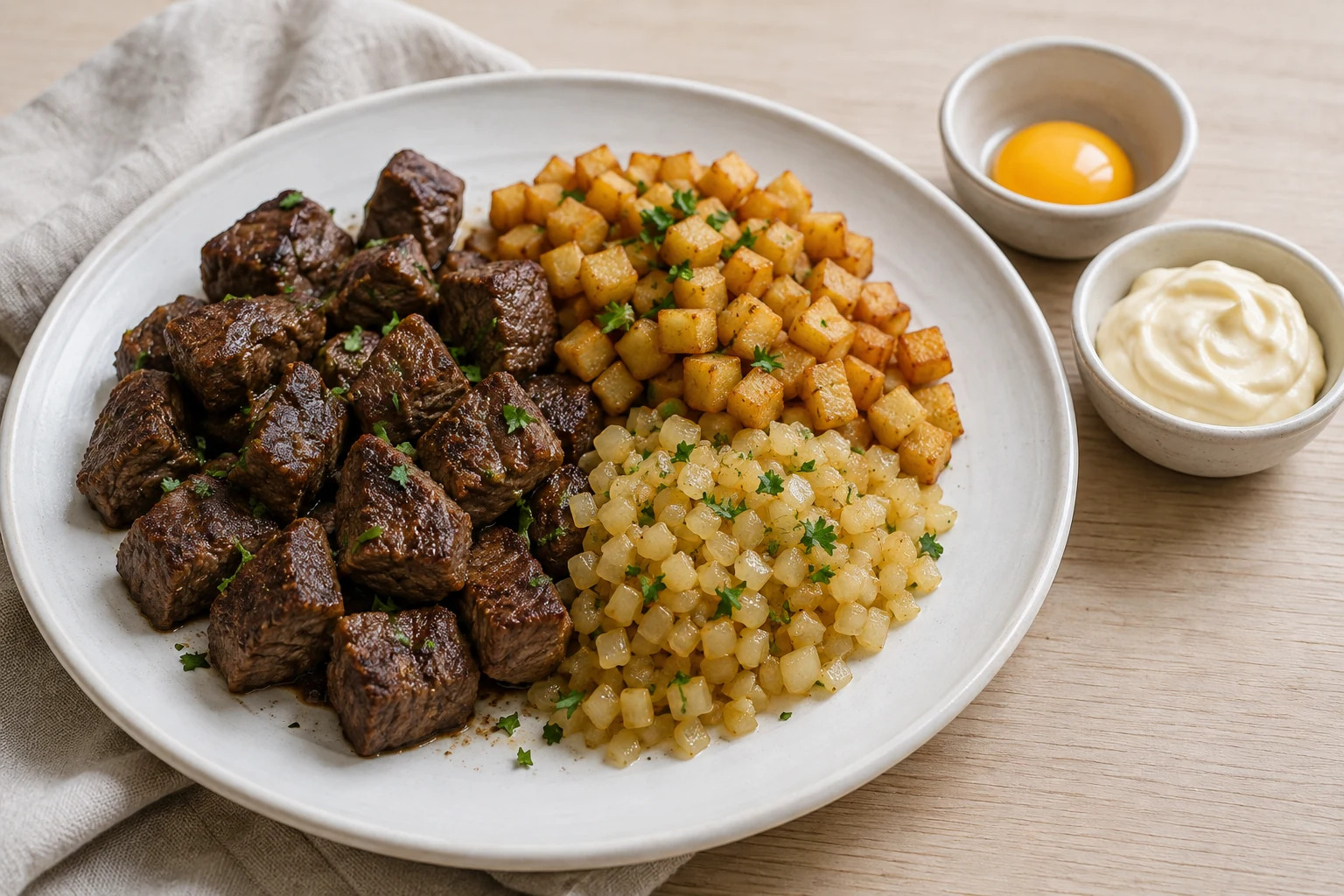
SwedenBeef and potatoes
Biff Rydberg: A Swedish Lesson in Timing
Crisp potatoes, soft onions and browned beef need different treatment. Learn the timing behind Sweden’s Biff Rydberg, compare two mustard creams and cook a home adaptation.