
Biff Rydberg: A Swedish Lesson in Timing
Biff Rydberg
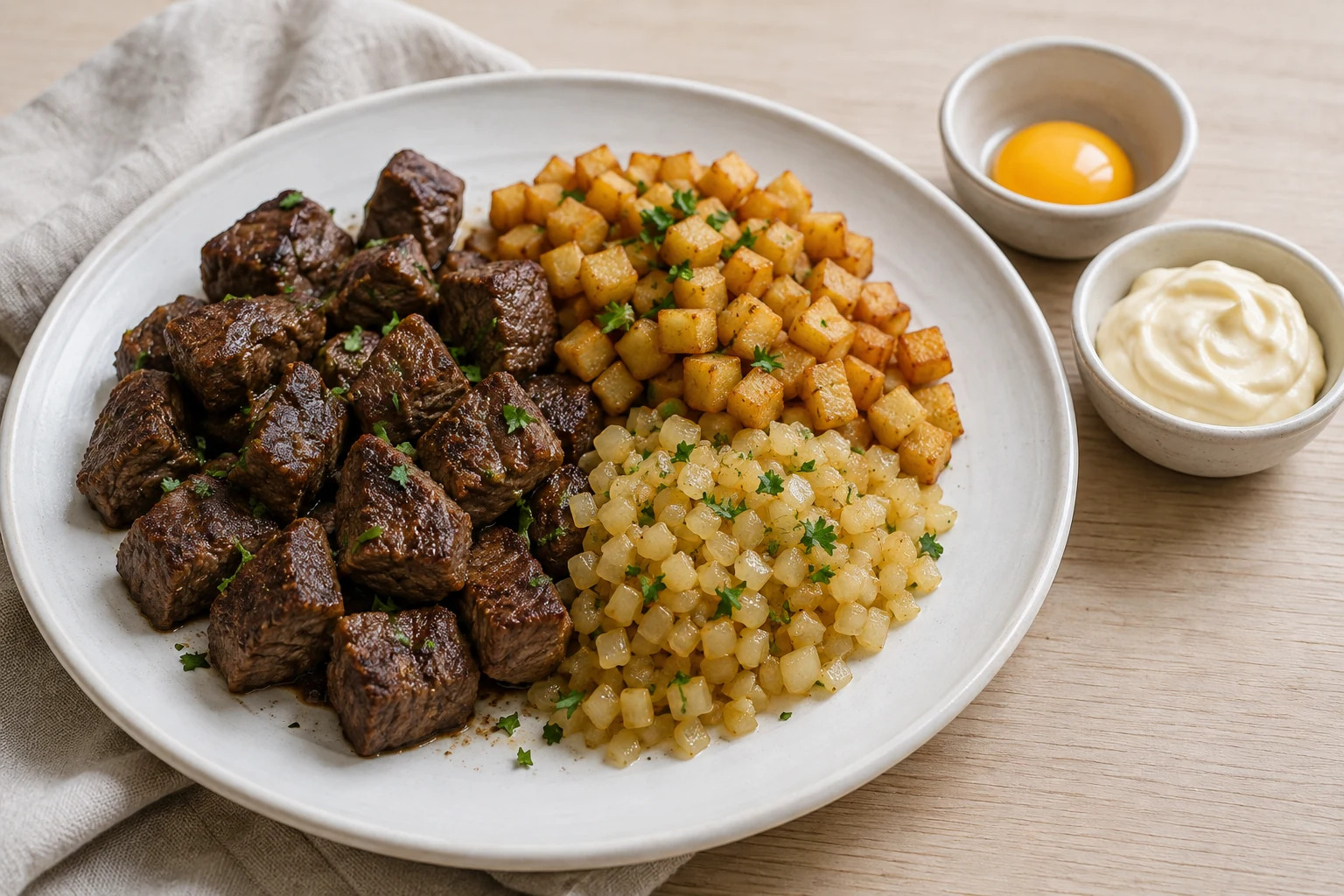
The ingredients are familiar: beef, potatoes and onions. The skill is bringing their different textures to the table at the same moment, with a cool spoonful of mustard cream waiting beside them.
The idea on the plate
Let each ingredient finish in its own time
Biff Rydberg belongs to Swedish cooking: substantial pieces of beef and potato, softened onion, and mustard cream, often accompanied by an egg yolk. Svenskt Kött describes it as a more luxurious relative of pyttipanna, with larger pieces. The useful distinction at the stove is that the potato needs time to become tender, the onion needs gentler heat to soften, and the beef needs an uncrowded hot pan. Combining their cooking schedules too early makes that balance harder.
The name points to Stockholm’s Hotell Rydberg. Svenskt Kött attributes the dish to its kitchen, while presenting the creation account as something “said” about the dish. Stockholm’s municipal history resource, Stockholmskällan, independently documents the hotel’s construction in 1857 and closure on September 30, 1914. Those dates describe the hotel’s life; they do not establish the dish’s exact birthday. Its enduring cooking lesson is easier to demonstrate: prepare the slower components first, then give the beef your attention.
Read the finish
Three ingredients, three different cues
Swedish recipes do not all use the same sequence. Göran Nilsson’s Sveriges Radio version adds onion to the beef; ICA cooks the onion separately. The home method below follows the separate route, so each component can reach its own finish.
- 01
Potato: color outside, tenderness inside
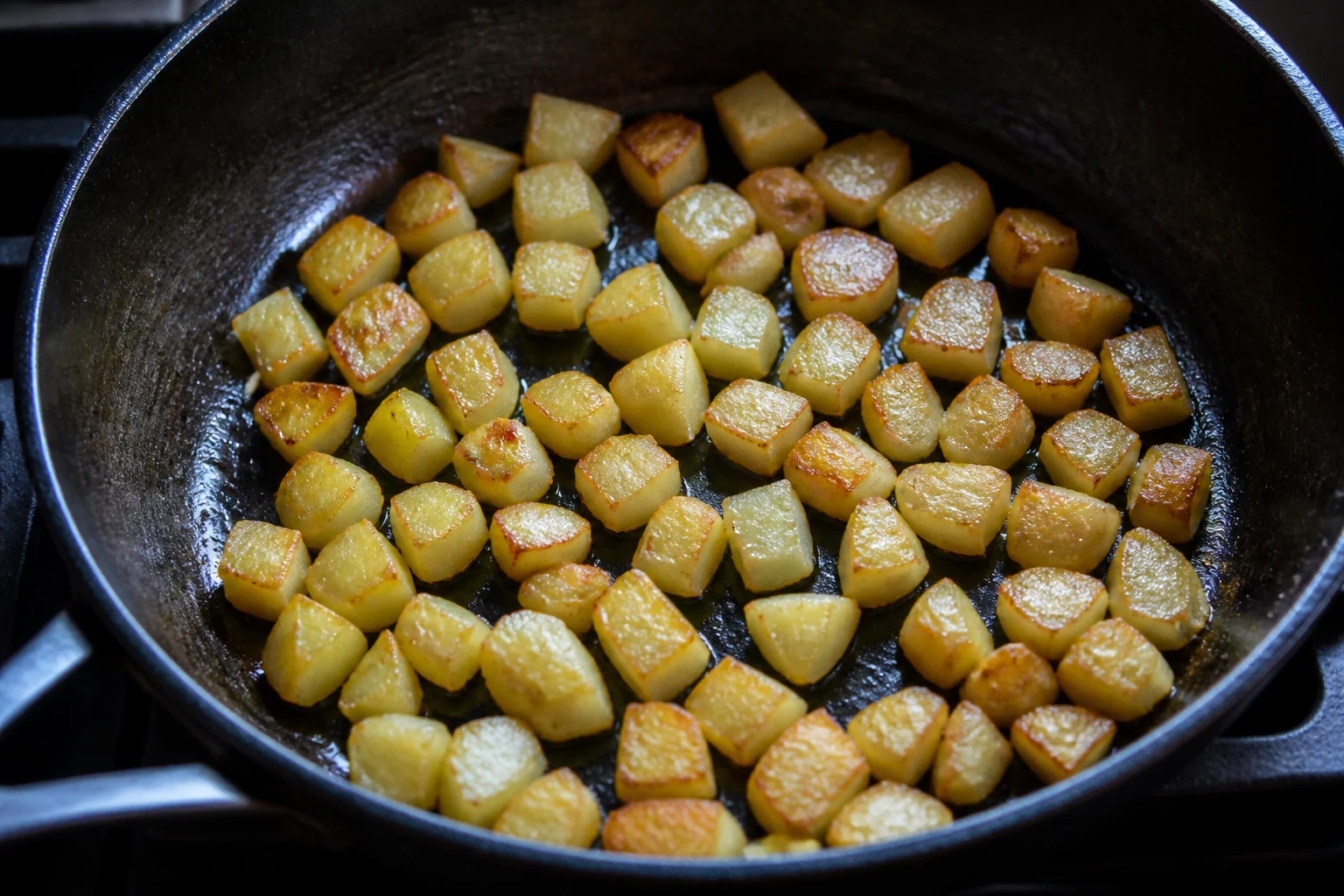
Svenskt Kött rinses the diced potato before frying and looks for a golden exterior with a soft center. A browned face alone is insufficient: try a piece with a knife. If the surface is ready first, ease the heat and continue cooking.
- 02
Onion: softness before deep color
Catarina König’s version in ELLE asks for golden, soft, glossy onion without burning. Keep its pan gentler than the beef pan. Finely chopped onion should yield easily, giving a soft contrast to the potato crust.
- 03
Beef: space before speed
ICA explicitly explains batch frying: a large load cools the pan and weakens browning. Leave gaps, let a surface brown before turning, and cook the beef last. The recipe uses a thermometer and a three-minute rest rather than judging safety from a pink center.
Choose the accompaniment
Two documented ways to make mustard cream
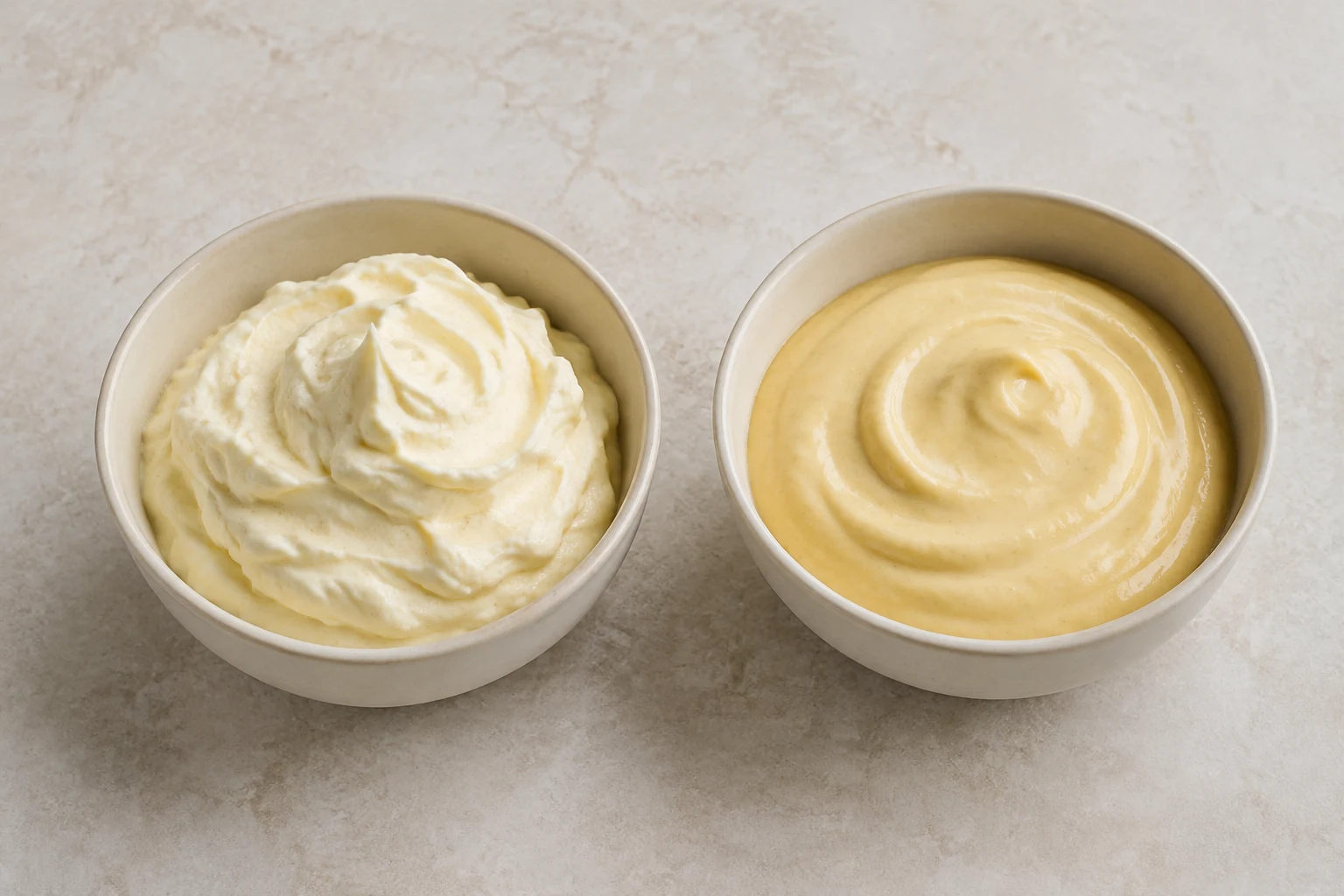
The Swedish sources offer more than one dairy base. Choose the texture you want alongside the hot food; neither sauce needs to be cooked with the beef.
Whipped cream: airy and spoonable
Svenskt Kött folds Swedish mustard into whipped cream. Göran Nilsson whips cream with mustard powder, sugar and mustard seeds; Catarina König uses Dijon and a little honey. These are different published formulations. Their common feature is a light, whipped texture.
- Our recipe uses cream and prepared Swedish mustard.
- Serve it cold, alongside the hot components.
Crème fraîche: dense and tangy
ICA mixes crème fraîche with prepared mustard, without whipping cream. It makes a compact accompaniment with the tang of cultured dairy. To use that option for four, stir 100 ml crème fraîche with 1 tablespoon mustard and chill it; replace the recipe’s cream-and-mustard mixture with this alternative.
- An option documented by ICA.
- No whipping step is needed.
Cook it at home
Biff Rydberg with whipped mustard cream
An editorial home adaptation for four, drawing on the Swedish recipes cited below. It uses two wide frying pans and a low oven to manage the timing. Allow about 20 minutes to prepare and 45 minutes to cook and rest, roughly 65 minutes overall; the finish cues matter more than the estimates. The optional uncooked yolks require pasteurized shell eggs. This adaptation has not been kitchen-tested.
Ingredients
Beef, potatoes and onions
- 600 g beef tenderloin, trimmed, cut into roughly 2 cm cubes
- 800 g firm potatoes, weighed after peeling, cut into roughly 1 cm cubes
- 300 g yellow onions, weighed after peeling, finely chopped
- 40 g unsalted butter, divided: 20 g for potatoes, 10 g for onions, 10 g for beef
- 2 tbsp / 30 ml neutral rapeseed or canola oil, divided equally between potatoes and beef
- 1 tsp fine salt, divided: ½ tsp for potatoes, ¼ tsp for onions, ¼ tsp for beef
- ½ tsp ground black pepper, divided equally between onions and beef
Mustard cream and serving
- 150 ml cold heavy whipping cream
- 2 tsp / 10 ml prepared Swedish mustard
- 2 tbsp finely chopped parsley
- 4 pasteurized shell eggs, yolks only, optional; omit if pasteurized eggs are unavailable
Method
- 1
Set up the finish.
Heat the oven to 100°C / 210°F. Set out a shallow ovenproof tray for potatoes, a small ovenproof dish for onions, two wide frying pans and clean serving plates. Rinse the diced potatoes in cold water, drain and dry thoroughly. Keep the prepared beef refrigerated until its cooking step.
- 2
Whip the accompaniment.
Whip the 150 ml cold cream until it holds soft peaks, then fold in the 2 teaspoons Swedish mustard. Cover and refrigerate. If using the optional pasteurized eggs, separate them with a clean egg separator into four small serving bowls, cover and refrigerate; reserve the whites for another use. Wash equipment and work surfaces after egg preparation.
- 3
Give the potatoes both pans.
Divide the potatoes between the two pans. In each pan, heat 10 g butter and ½ tablespoon oil over medium heat, then add its potatoes in one layer. Fry for about 20–25 minutes, turning periodically, until golden on several faces and tender to a knife at the center. Lower the heat if they color too quickly. If they cannot fit in one layer, work in batches and allow extra time. Season the full quantity with ½ teaspoon salt and transfer to the tray. Hold uncovered in the oven.
- 4
Soften the onion.
In one emptied pan, melt 10 g butter over medium-low heat. Add all the onion and cook, stirring regularly, for about 12–15 minutes until soft and lightly golden. Season with ¼ teaspoon salt and ¼ teaspoon pepper. Transfer to the small dish and hold in the oven if it finishes before the beef. Keep it separate from the potatoes until plating.
- 5
Brown the beef in two batches.
While the onion cooks, pat the beef dry and season with the remaining ¼ teaspoon salt and ¼ teaspoon pepper. Heat the second pan over medium-high heat. For each batch use ½ tablespoon oil, 5 g butter and half the beef. Leave spaces between the pieces. Let the first face brown before turning, then brown the other sides, reducing the heat if the butter starts to scorch. Allow roughly 4–6 minutes per batch, but continue as needed to reach the temperature in the next step.
- 6
Check and rest each batch.
Use a thin-tip food thermometer inserted sideways into the center of several of the largest beef pieces. Follow FoodSafety.gov’s beef guidance: reach at least 63°C / 145°F before removing from the heat, then rest for at least 3 minutes. Transfer cooked beef to a clean warm plate, not the raw-meat dish. Rest the first batch while cooking the second, and give the second its own full rest before serving. Color alone cannot confirm doneness.
- 7
Plate the different textures.
Divide the potatoes, onion and rested beef among four warm plates, keeping them in adjacent portions. Scatter the 2 tablespoons parsley over the servings. Bring out the mustard cream and, if using, the pasteurized yolks in their small bowls. Serve immediately, letting each diner add the accompaniments to the hot food.
Research notes
Sources behind the story
Swedish recipes establish the ingredients and document the different cooking and sauce choices. The municipal history source supports the hotel context; FDA and FoodSafety.gov guide the safety details in the home adaptation.
- Svenskt Kött — Biff Rydberg Swedish meat-industry source for the pyttipanna comparison, qualified hotel attribution, separate frying, serving bowls and whipped mustard cream.
- ICA — Biff Rydberg med senapskräm Separate potato, onion and beef cooking; a 100°C holding oven; crème fraîche with mustard. ICA’s kitchen explains why it fries in batches.
- Sveriges Radio — Göran Nilsson’s Biff à la Rydberg Chef recipe published November 20, 2015: 600 g beef and 800 g potatoes for four, side-by-side service, and a mustard-powder whipped cream.
- ELLE — Catarina König’s Biff Rydberg Documented modern version with 2 cm beef cubes, soft golden onion, oven-roasted potatoes and a whipped Dijon-and-honey cream.
- Stockholmskällan / Stadsmuseet — Baren, Hotel Rydberg Municipal history entry accompanying a 1903 photograph. Records the hotel’s 1857 construction and September 30, 1914 closure; accessed September 5, 2026.
- FDA — What You Need to Know About Egg Safety Guidance to use pasteurized eggs in dishes served with raw or undercooked egg, and to clean equipment after egg preparation; accessed September 5, 2026.
- FoodSafety.gov — Safe Minimum Internal Temperatures Beef steak guidance of 145°F / 63°C followed by a three-minute rest, verified with a thermometer; accessed September 5, 2026.
Keep exploring
More stories for your table
IcelandEveryday cooking
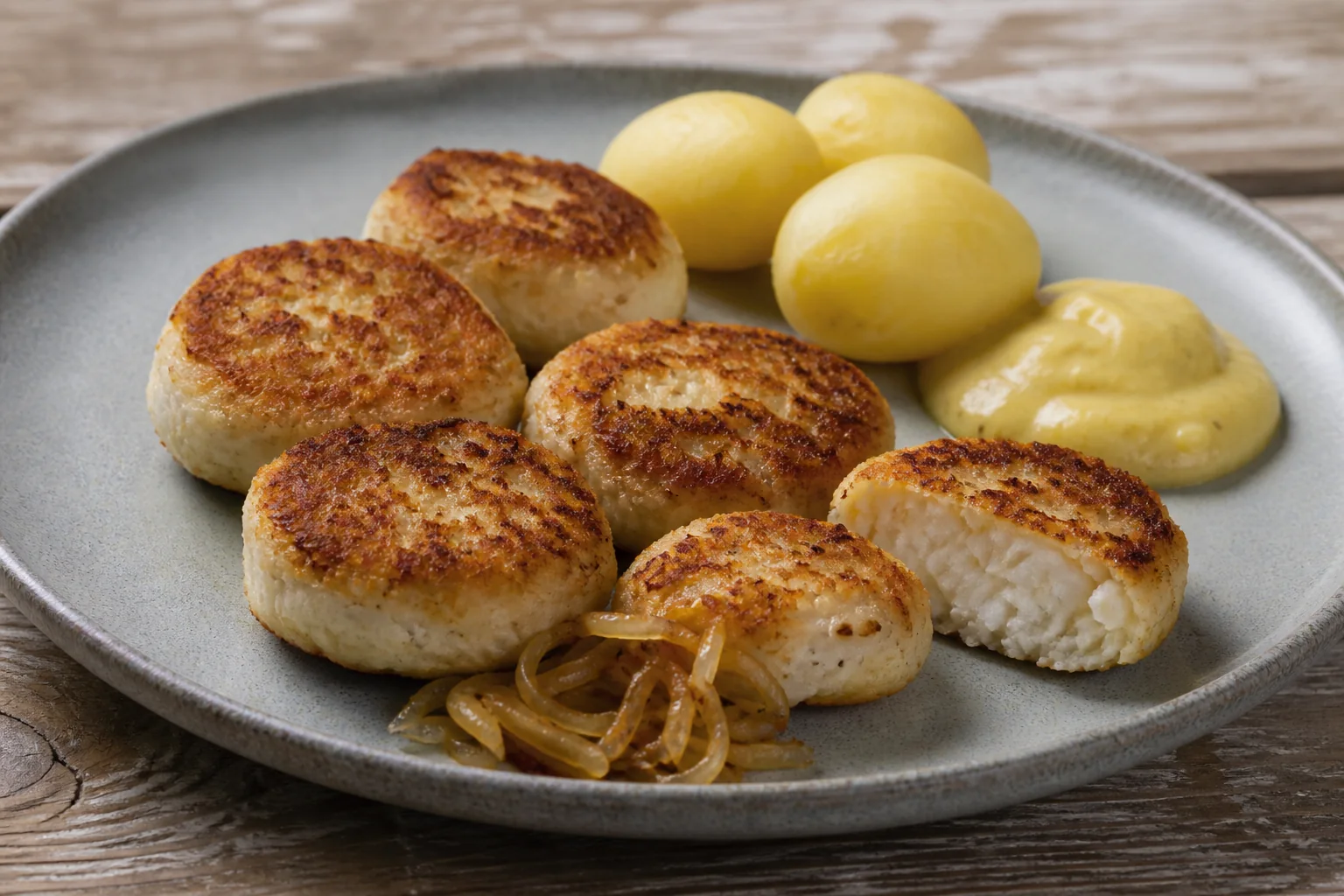
Icelandic fish balls
A crisp, golden crust around tender white fish, served with boiled potatoes, soft onions, and mild curry sauce.
JapanYōshoku rice dish
Hayashi Rice: A Sauce Translated for Rice
Hayashi rice turned a Western-style brown meat sauce into Japanese yōshoku by changing the plate, the seasoning, and eventually the home pantry.
SwitzerlandPotato dish
Rösti with Raclette Cheese
A crisp Swiss potato cake meets molten raclette in a cross-regional pairing that separates documented tradition from a practical home adaptation.