
Hayashi Rice: A Sauce Translated for Rice
ハヤシライス
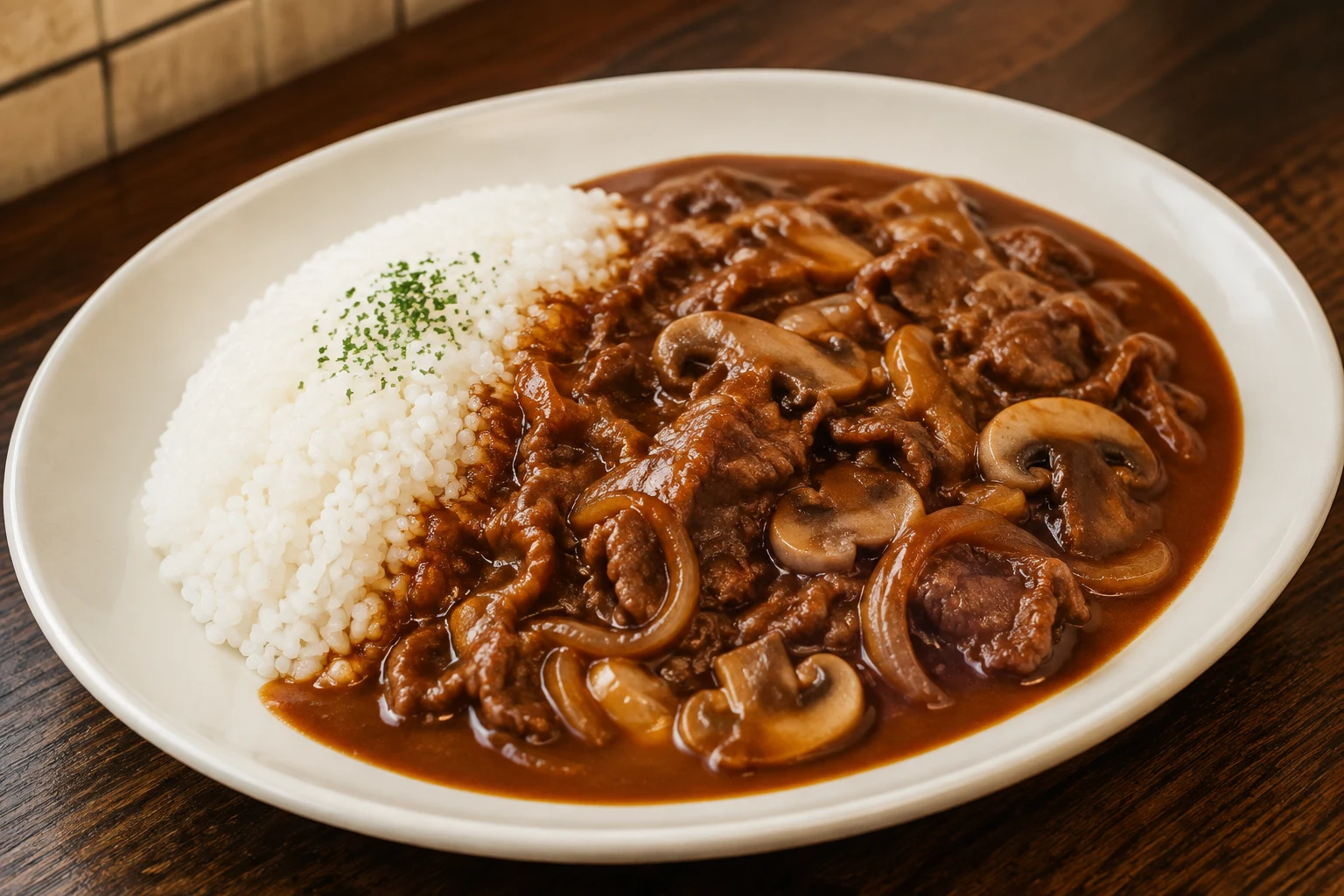
Its name sounds borrowed and its sauce looks European, yet hayashi rice makes sense only as yōshoku: Western technique reorganized around Japanese rice, appetite, and home cooking.
The useful comparison
The dish crossed a border; the plate changed its logic
Food historian Yo Maenobo connects hayashi rice to English hashed meat, but the Japanese dish is more than a translated name. The decisive adaptation is how the sauce is built to meet rice.
English hashed meat
In Maenobo's account, leftover meat was diced, sautéed with onion and flour, loosened with stock, and served with boiled potatoes or toast.
- A use for cooked meat
- Stock-and-flour gravy
- Potatoes or toast alongside
Japanese hayashi rice
Japanese cooks paired the meat sauce with rice and a spoon. Butter-sautéed onion, tomato, demi-glace-style depth, and eventually beef became familiar coordinates rather than a fixed universal formula.
- Rice defines the plate
- Sauce is poured beside or over it
- Thin beef and onion are the modern center
A Japanese category
Yōshoku is adaptation with a memory
Japan's treaty ports saw Western-style restaurants open in the 1860s. Early formal meals were expensive and unfamiliar, while cookbooks offered a more practical route into the new cuisine. Hayashi rice emerged inside that negotiation: meat and brown sauce carried Western associations, but rice made the meal legible at a Japanese table.
The Government of Japan describes yōshoku as Western cooking modified for Japanese tastes, and identifies Ueno Seiyoken among the early restaurants associated with the style. A photographed Seiyoken serving of hayashi rice is recognizably modern: deep brown sauce and white rice share one plate. The Plenus Rice Culture Institute traces the broader move from elite restaurant food into Taishō-era home recipes and Shōwa-era family dining.
What the record supports
From new restaurant food to an everyday sauce
The record is clearer about hayashi rice's changing form and audience than it is about a single moment of invention.
- 1860s
Western restaurants open in treaty ports
Hakodate, Nagasaki, and Yokohama became early points of encounter; Tokyo followed near the 1868 Meiji Restoration.
- 1872 onward
Cookbooks widen access
Kanagaki Robun's Seiyo Ryori-tsu was among the early Japanese Western cookbooks; food historian Yo Maenobo places it within a four-decade publishing boom that produced more than 100 cookbooks overall.
- Around 1910
Hayashi rice had not settled on beef alone
Recipes from the period called for beef, veal, lamb, or chicken, evidence that the category was still flexible.
- 1920s
Prepared roux points toward standardization
An advertised hayashi-rice roux served several yōshoku dishes, mostly beef-based, suggesting the shift from hashed meat toward hashed beef.
- 1932
Hayashi rice appears in family-facing department-store dining
Plenus records it among foods offered to children at Mitsukoshi, part of yōshoku's movement into shared family occasions.
Read the transformation
A sauce built to cling, then yield
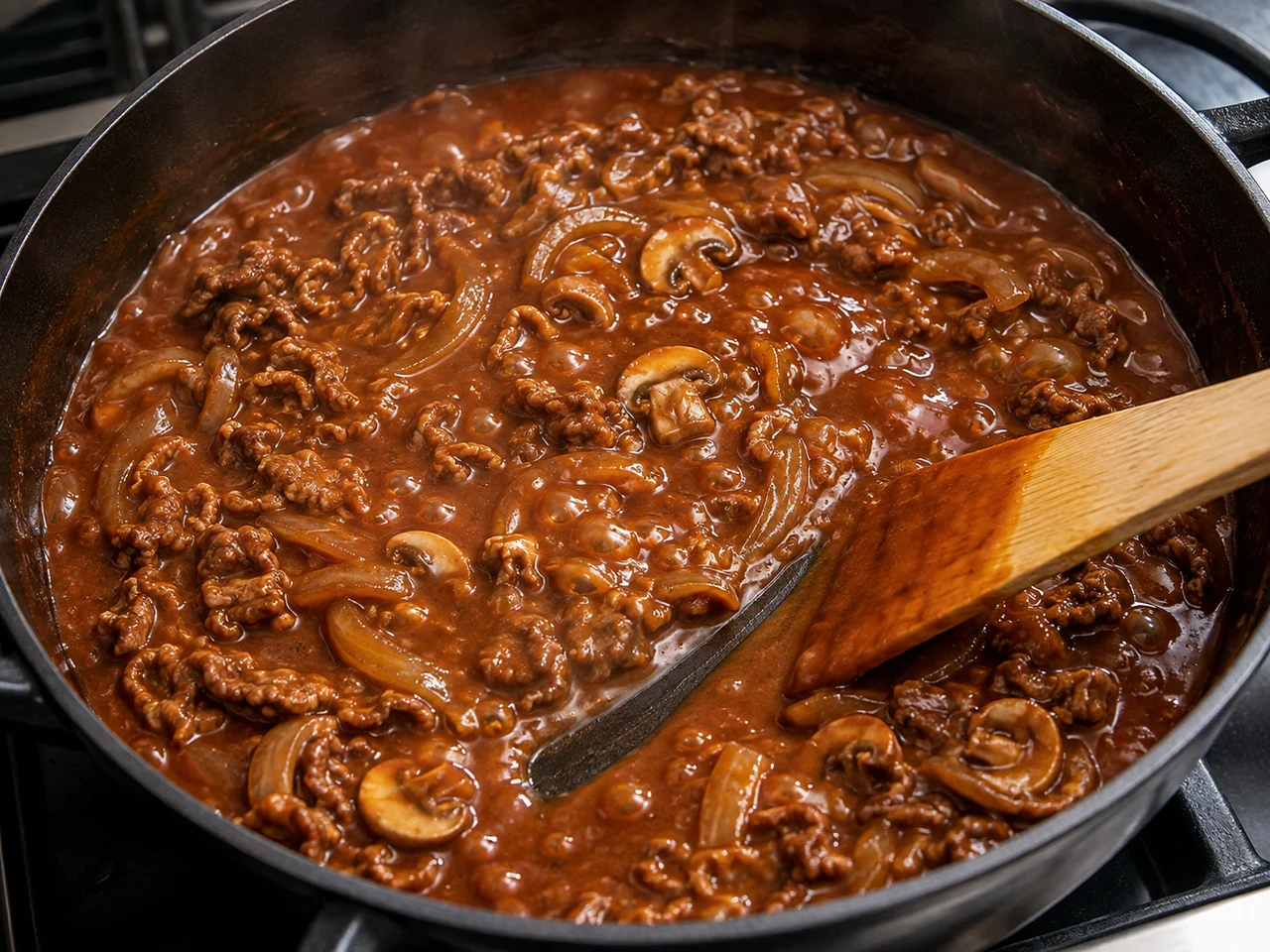
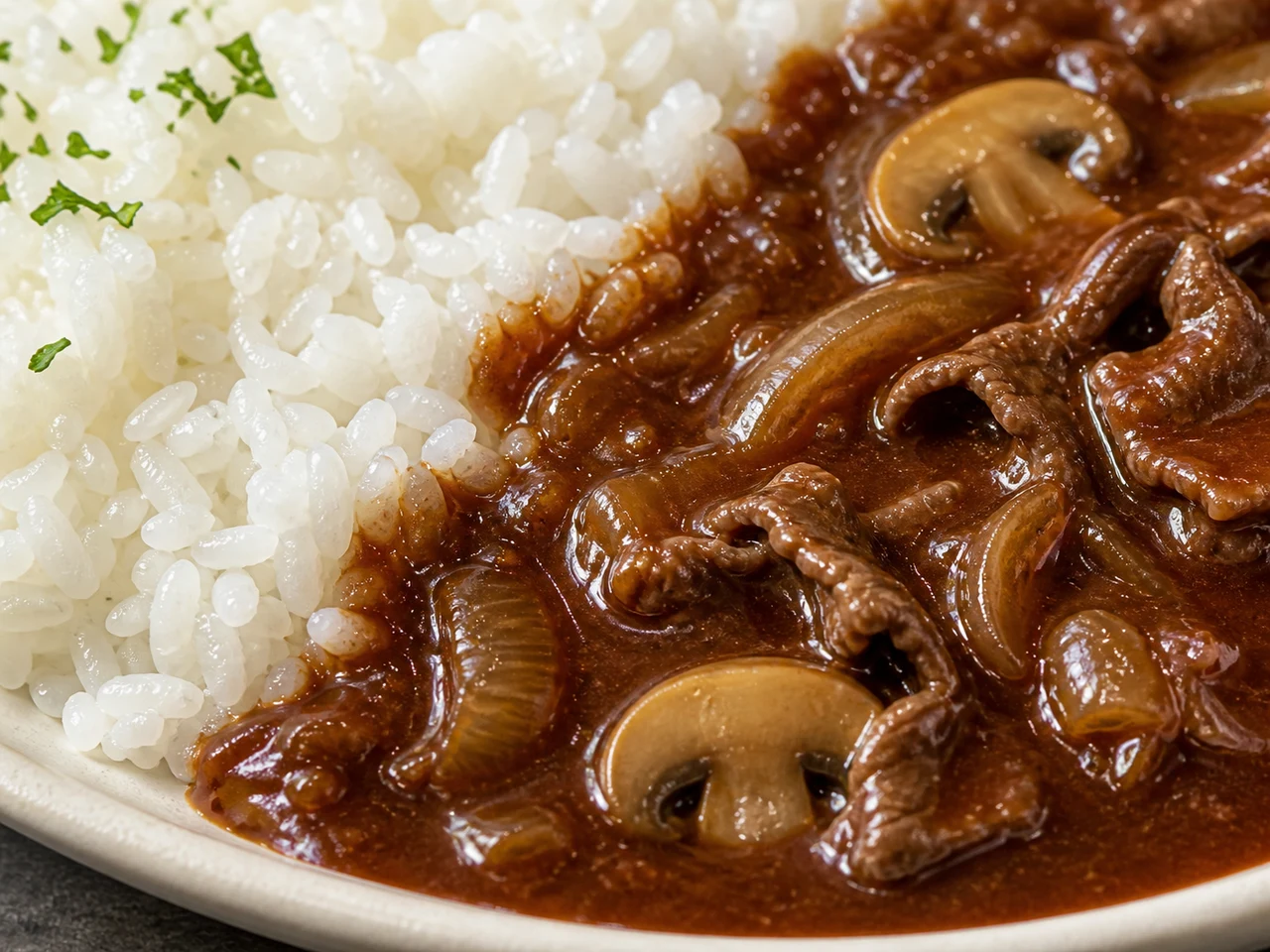
The pan and plate reveal the same target at different scales: a cohesive sauce that holds beef and onions but still moves easily into the rice.
The practical translation
Build demi-glace-style depth without making classical demi-glace
Kikkoman's Food Forum documents a home method using red wine, stock, tomato paste, and soy sauce. It is a shortcut with its own balance, not a claim that those ingredients are classical French demi-glace.
- 01
Brown briefly, then make room
Color thin beef in small batches and remove it. Cook sliced onion and mushrooms in the same pan, then remove them too; this preserves the beef's tenderness while keeping the browned residue available to the sauce.
- 02
Use two cuts of onion for two jobs
Sliced onion remains visible in the finished dish. Finely chopped onion melts into butter and flour, creating a dispersed thickening base that can accept liquid smoothly.
- 03
Add wine gradually
Stir the wine into the flour base in several additions before adding stock. Boil briefly, then add tomato paste, soy sauce, and bay; the simmer is gentle once the beef and vegetables return.
- 04
Judge the boundary, not just the clock
The sauce is ready when a spatula leaves a trail that closes slowly. It should coat the beef and flow into rice, not stand like a mound.
Cook it at home
Hayashi rice with red wine, tomato, and soy
This four-serving adaptation follows Michiko Yamamoto's Food Forum method, specifying the divided butter and using less soy sauce with unsalted stock so the final seasoning remains under the cook's control.
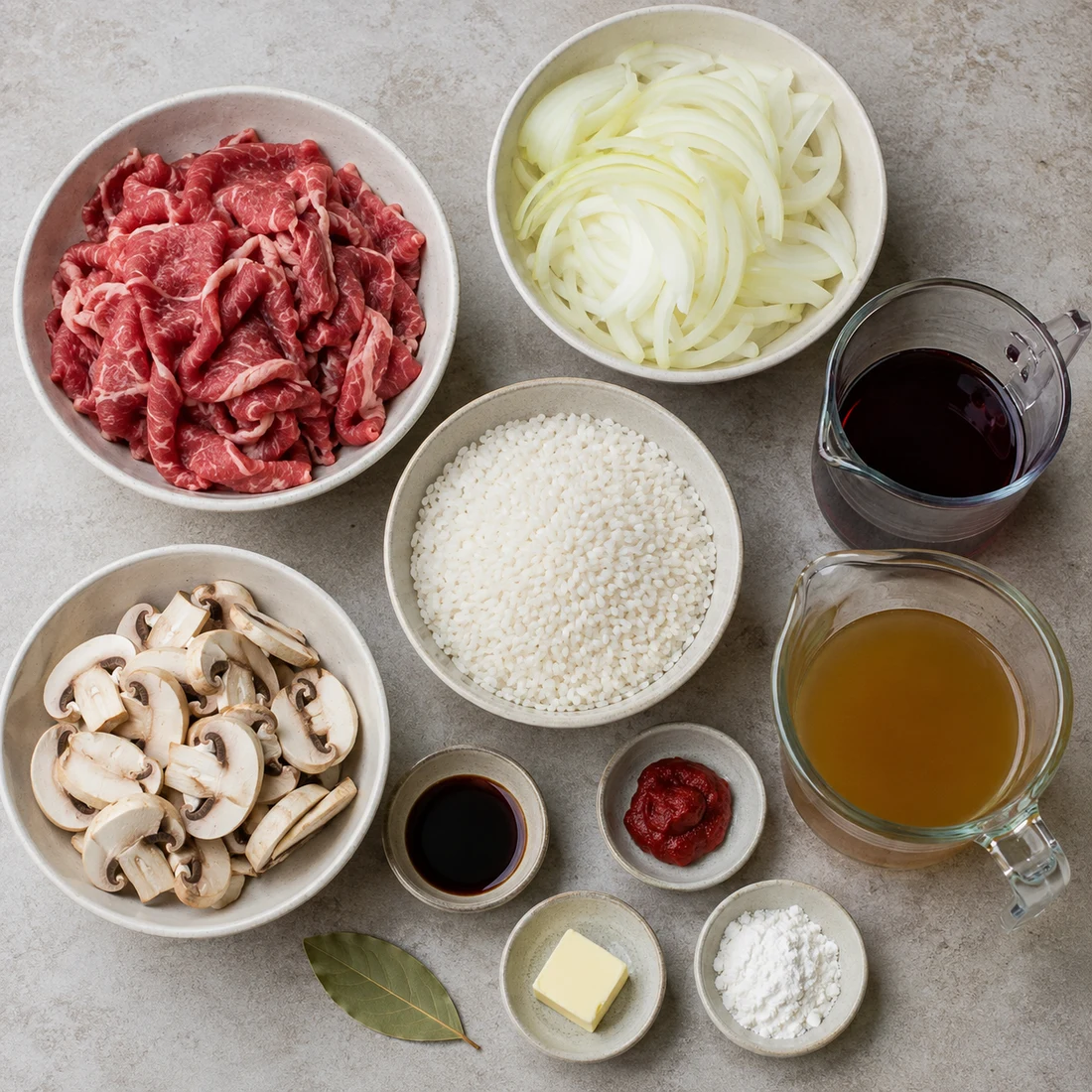
Ingredients
Rice and main ingredients
- 600 g / about 4 cups hot cooked Japanese short-grain rice
- 400 g / 14 oz thinly sliced beef chuck eye or rib loin, cut into bite-size ribbons
- 450 g / 1 lb yellow onions (about 3 small); finely chop one-third and slice the rest 5 mm / 1/4 inch thick
- 150 g / 5 oz white button mushrooms, sliced 3 mm / 1/8 inch thick
- 1 small clove garlic, finely grated
Brown sauce
- 45 g / 3 Tbsp unsalted butter, divided
- 1/2 tsp neutral vegetable oil
- 2 Tbsp all-purpose flour
- 300 ml / 1 1/4 cups dry red wine
- 300 ml / 1 1/4 cups unsalted beef stock
- 3 Tbsp tomato paste
- 3 Tbsp regular soy sauce
- 1 bay leaf
- 1/2 tsp freshly ground black pepper, plus more to taste
- as needed fine salt
- 1 Tbsp finely chopped flat-leaf parsley, optional
Method
- 1
Prepare every component.
Cut the beef into bite-size ribbons. Slice the mushrooms. Divide the onions so one-third is finely chopped and the rest is sliced. Measure the wine, stock, tomato paste, and soy before heating the pan.
- 2
Brown the beef in two batches.
Heat 5 g butter with the oil in a wide sauté pan over medium-high heat. Add half the beef in one loose layer, season lightly with pepper, and cook only until lightly browned; transfer to a plate. Repeat with another 5 g butter and the remaining beef.
- 3
Soften the visible vegetables.
Reduce to medium-low and add 15 g butter, the sliced onions, and garlic. Cook, stirring, until tender and lightly golden, 8 to 10 minutes. Add mushrooms and cook until softened, about 3 minutes. Transfer them to the beef plate.
- 4
Make the thickening base.
Melt the remaining 20 g butter in the pan. Add the finely chopped onion and cook over low heat until translucent, 5 to 7 minutes. Sprinkle in the flour and stir continuously for 1 to 2 minutes; it should smell toasted but remain pale.
- 5
Build the sauce gradually.
Add the wine in three portions, stirring each addition smooth before adding the next. Bring to a boil for 1 to 2 minutes, then stir in the stock. Return the beef, sliced onions, and mushrooms to the pan.
- 6
Season and simmer.
Stir in tomato paste and soy sauce, then add the bay leaf. Simmer gently, uncovered, for 10 to 15 minutes, stirring occasionally, until the beef is cooked through and the sauce coats a spatula but still flows. Remove the bay leaf. Taste before adding salt and more pepper.
- 7
Let sauce meet rice.
Divide the hot rice among four plates. Spoon the hayashi sauce beside the rice and just over its edge. Add a restrained scattering of parsley if using, and serve immediately.
The dish keeps adapting
Demi-glace is a reference point, not the only road home
A long restaurant sauce can build depth from demi-glace. Home versions compress the work in different ways: Food Forum uses wine, stock, tomato paste, and soy; Kikkoman also publishes a 20-minute ketchup version; the Japan International Training Cooperation Organization teaches another ketchup-and-soy preparation while identifying demi-glace as the more formal reference. Packaged roux makes the shortcut even more explicit.
Those versions should not be collapsed into one supposedly original recipe. They document what yōshoku does best: preserve the memory of foreign technique while repeatedly adjusting cost, time, seasoning, and service to the life around it. Hayashi rice did not merely arrive in Japan. It learned how to belong on rice.
Research notes
Sources behind this article
Institutional history supports the yōshoku chronology and the competing name accounts; Japanese recipe sources document both brown-sauce and quick home methods. The inventor question remains unresolved.
- Government of Japan — The Birth of Yoshoku Explains yōshoku's development during Japan's modernization and identifies hayashi rice at Ueno Seiyoken.
- Kikkoman Institute for International Food Culture — Japanese Fusion Cuisine Food historian Yo Maenobo traces hashed meat, rice service, early cookbook recipes, and the 1920s roux evidence.
- Plenus Rice Culture Institute — The Popularization of Yōshoku Documents yōshoku's movement into home cooking, department stores, and family dining from the Taishō through Shōwa eras.
- National Diet Library Collaborative Reference Database — Hayashi Yūteki recipe inquiry Records a library search that found no Hayashi Yūteki recipe and no concrete recipe in the Maruzen company history examined.
- Maruzen Junkudo — Hayashi Day and Hayashi Yūteki Presents Maruzen's founder tradition and the company's later restaurant and retail relationship with hayashi rice.
- Kikkoman Food Forum — Hayashi Raisu Provides Michiko Yamamoto's red-wine, stock, tomato paste, and soy method used as the basis for the home recipe.
- Kikkoman Cookbook — 20-minute Hayashi Rice Documents a contemporary quick version built with thin beef, onion, flour, ketchup, soy sauce, and rice.
- Japan International Training Cooperation Organization — Hayashi Rice Offers a bilingual seasonal home recipe and distinguishes its ketchup shortcut from a demi-glace-based preparation.
Keep exploring
More stories for your table
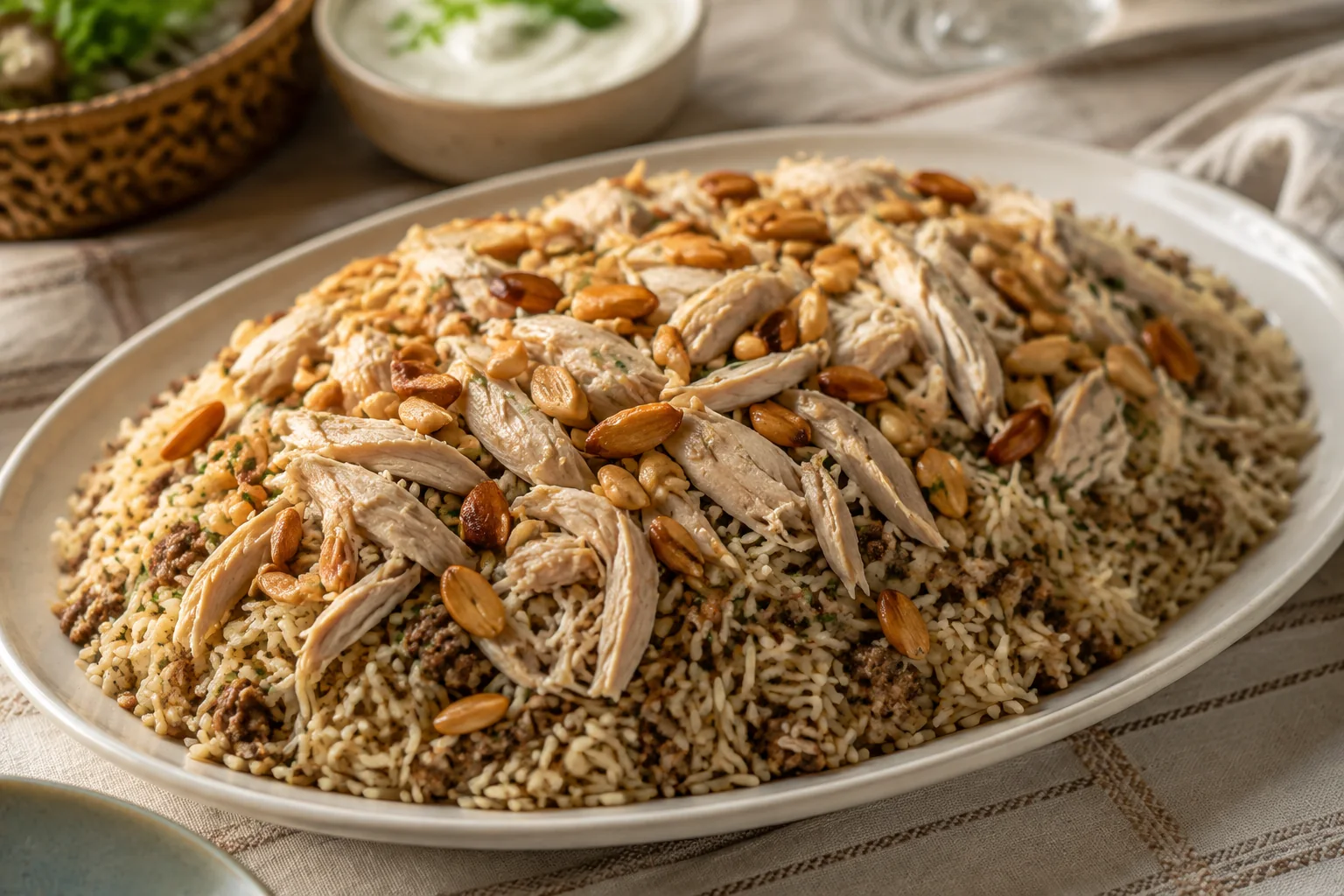
LebanonGathering table
Riz bi Djej
Fragrant rice and finely browned meat, crowned with tender chicken and a generous scatter of toasted nuts.
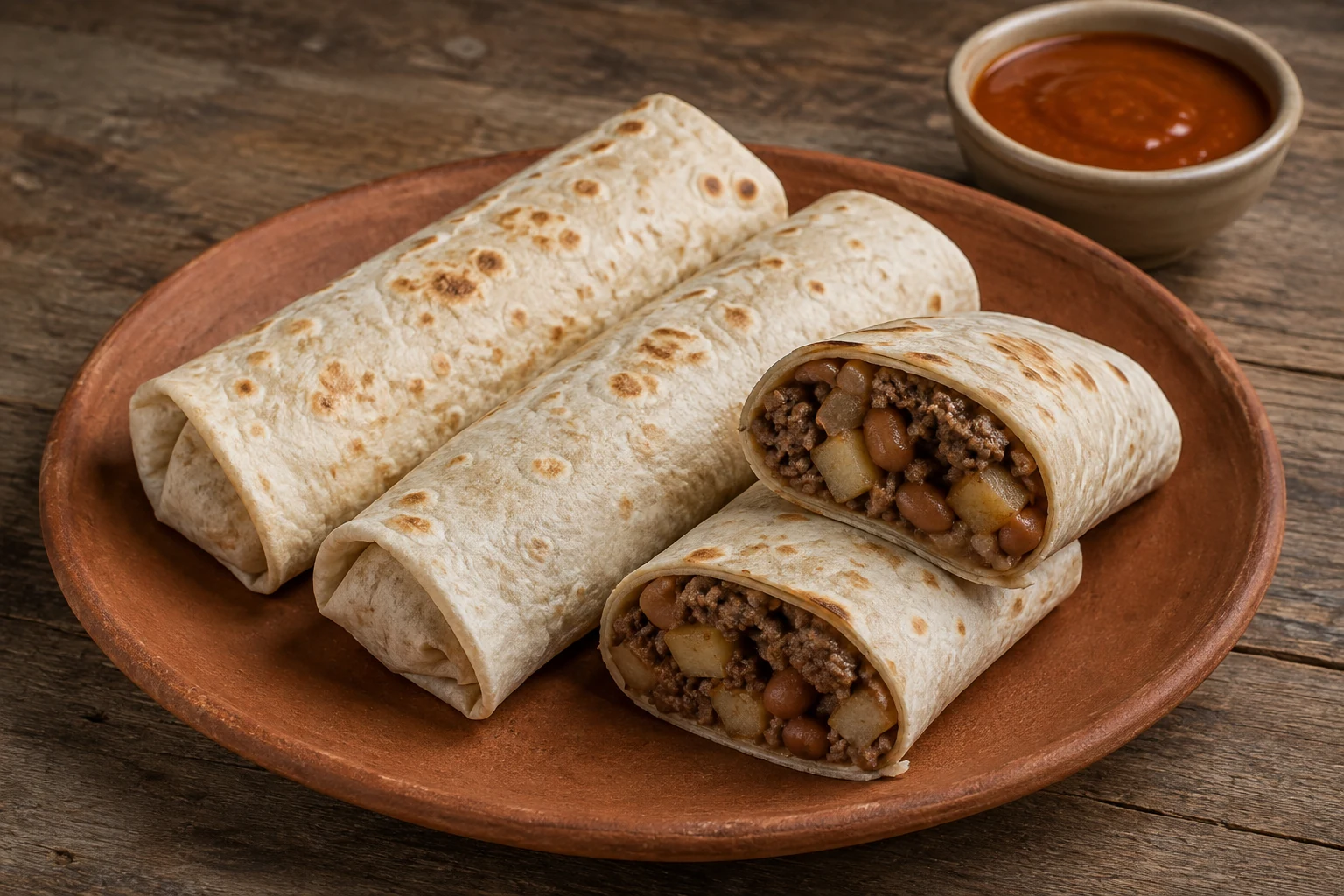
MexicoFilled tortilla
Mexican Burrito
A guide to the slender flour-tortilla burritos of northern Mexico, their varied regional fillings, and a practical beef, potato, and bean recipe.
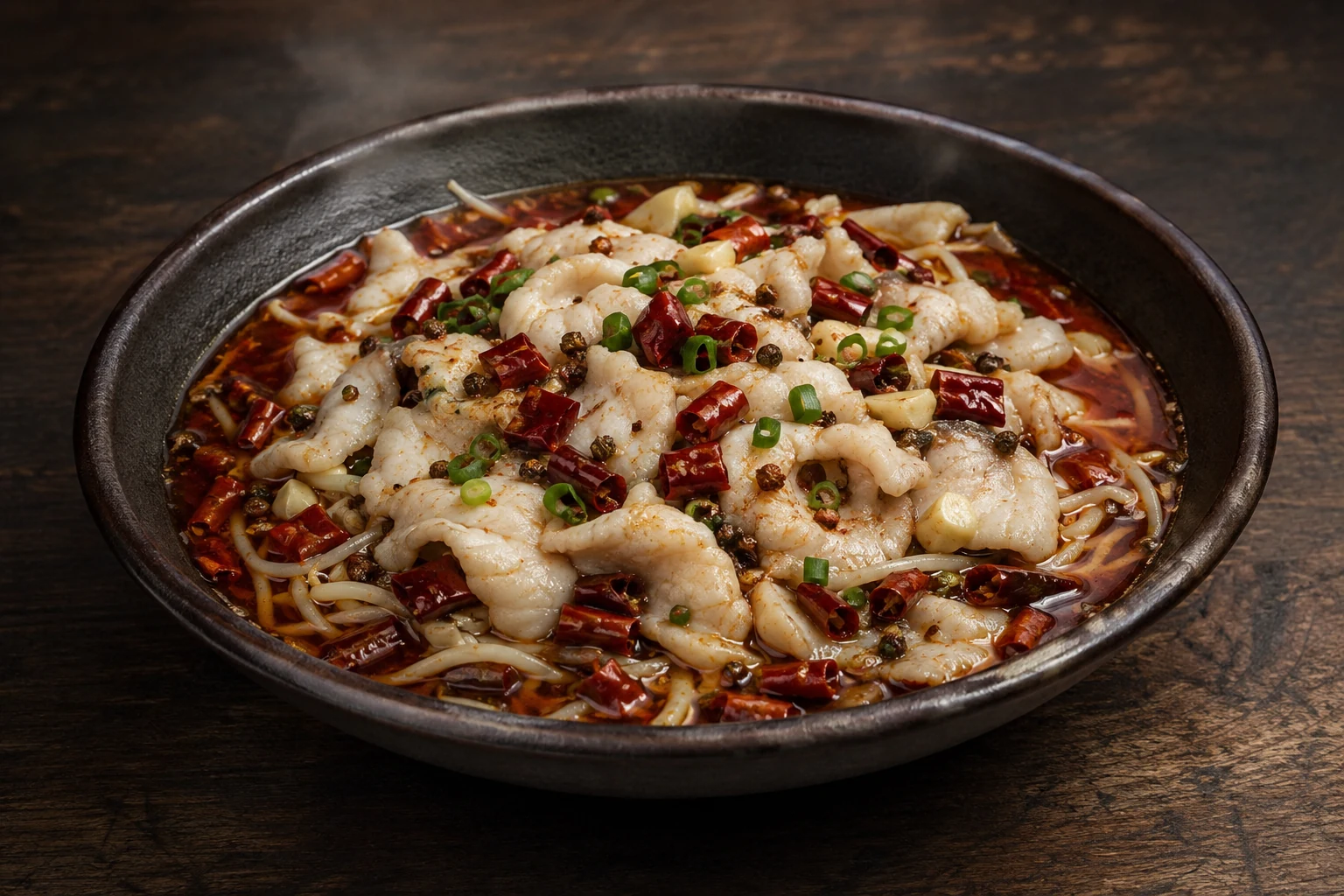
ChinaFish dish
Shui Zhu Yu (Sichuan Water-Boiled Fish)
Why Sichuan water-boiled fish stays tender beneath its dramatic mala finish: a close look at the broth, hot-oil bloom, Chongqing context, and a practical home method.