
Riz bi Djej
رز عَ دجاج
Fragrant rice and finely browned meat, crowned with tender chicken and a generous scatter of toasted nuts—a Lebanese platter made for sharing.
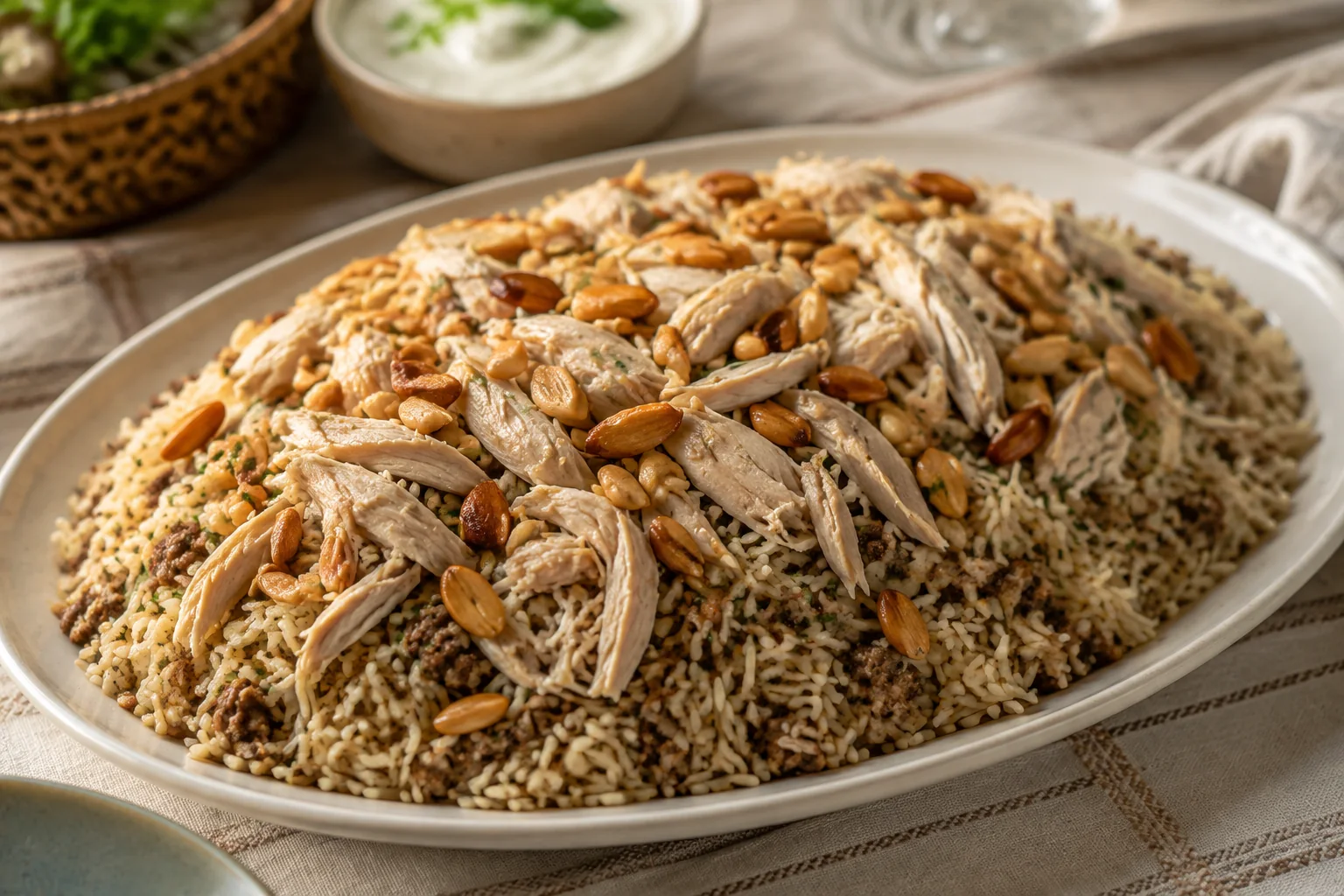
The first spoonful explains why this dish travels under so many beloved spellings. Beneath the chicken is rice enriched with stock and little crumbles of beef or lamb; above it is a bronze-and-gold layer of almonds, cashews, or pine nuts. Cinnamon and Lebanese seven spice perfume the platter without turning it sweet or fiery.
One dish, several names
The Arabic Wikipedia page supplied for this revival calls the dish رز بالدجاج, literally rice with chicken. Lebanese cooks and English-language recipes also write riz bi djej, riz a djej, roz a djej, and riz ala dajaj. The vowels and spacing shift with dialect and transliteration; the family resemblance on the platter is much clearer.
There is no single official ratio. Some cooks poach a whole bird and present large pieces; others use thighs and pull the meat into soft shreds. Beef and lamb both appear in the rice. One kitchen reaches for only almonds and pine nuts, while another adds cashews. Vermicelli, herbs, or an inverted, cake-like presentation may appear too.
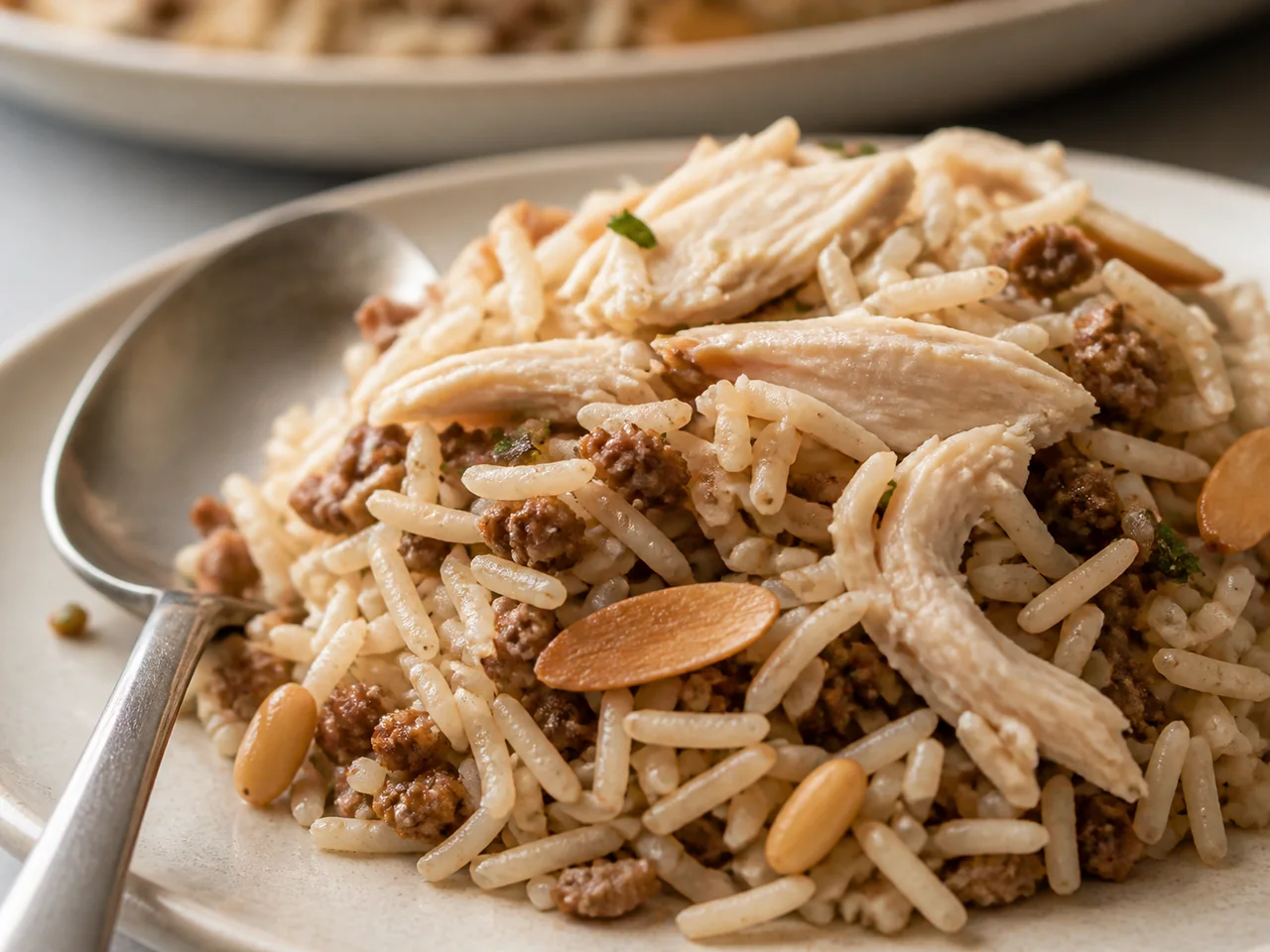
The dish is built in layers, but eaten as one: savory rice, soft chicken, aromatic spice, and toasted nuts in every serving.
At home on a generous table
Riz bi djej works as both family food and celebration food. In an SBS profile of Melbourne restaurateur Abla Amad, the dish is described as a special-occasion centerpiece: spiced lamb and long-grain rice, cinnamon-dusted shredded chicken, pine nuts, and almonds, presented with the drama of a cake. Home recipes tend to be looser, but the spirit is the same—a large platter everyone can reach.
That is a firmer and more useful history than attaching the dish to a single origin story. The available sources document a living Lebanese cooking tradition with many household versions; they do not establish one inventor or a precise birth date.
Anatomy of the platter
Four layers, each doing a different job
Chicken broth
The poaching liquid seasons the rice from within and connects the whole dish.
Hashweh-style rice
Long grains, fine meat crumbles, seven spice, and cinnamon form the savory base.
Tender chicken
Poached gently, then pulled or arranged in pieces so it stays moist on the platter.
Toasted nuts
Almonds, pine nuts, and sometimes cashews bring fragrance, color, and crunch.
Cook it at home
Lebanese chicken and seven-spice rice
This version combines the recurring structure in the Lebanese recipes we researched. It uses chicken thighs for manageable poaching and plenty of broth, with beef or lamb left as the cook’s choice.
Ingredients
Chicken and broth
- 8 bone-in, skin-on chicken thighs (about 1.5 kg / 3⅓ lb)
- 1 medium yellow onion, halved
- 2 cinnamon sticks
- 2 bay leaves
- 1 tsp fine salt
- ½ tsp black pepper
- 2 L / 8 cups water, or enough to cover
Rice and topping
- 45 g / 3 tbsp butter or ghee, divided
- 120 g / about 1 cup mixed almonds, cashews, and pine nuts
- 1 medium yellow onion, finely chopped
- 450 g / 1 lb lean ground beef or lamb
- 2 tsp Lebanese seven spice
- ½ tsp ground cinnamon
- 1 tsp fine salt, plus more to taste
- 370 g / 2 cups long-grain white rice, rinsed
- 720 ml / 3 cups reserved hot chicken broth
- Flat-leaf parsley, plain yogurt, or fattoush, to serve
Method
- 1
Poach gently.
Put the chicken in a large pot with the halved onion, cinnamon sticks, bay leaves, 1 teaspoon salt, pepper, and enough water to cover. Bring just to a boil and skim any foam. Lower the heat and simmer gently for 25–35 minutes.
- 2
Check, strain, and shred.
Cook the chicken until the thickest pieces reach 74°C / 165°F. Lift it out, strain the broth, and reserve at least 720 ml / 3 cups. When the chicken is cool enough to handle, discard the skin and bones and pull the meat into generous shreds.
- 3
Toast the nuts.
Melt 1 tablespoon butter or ghee in a wide, heavy pot over medium-low heat. Toast the nuts until fragrant and golden. Pine nuts color fastest, so remove them early if needed. Transfer everything to a plate.
- 4
Brown the meat finely.
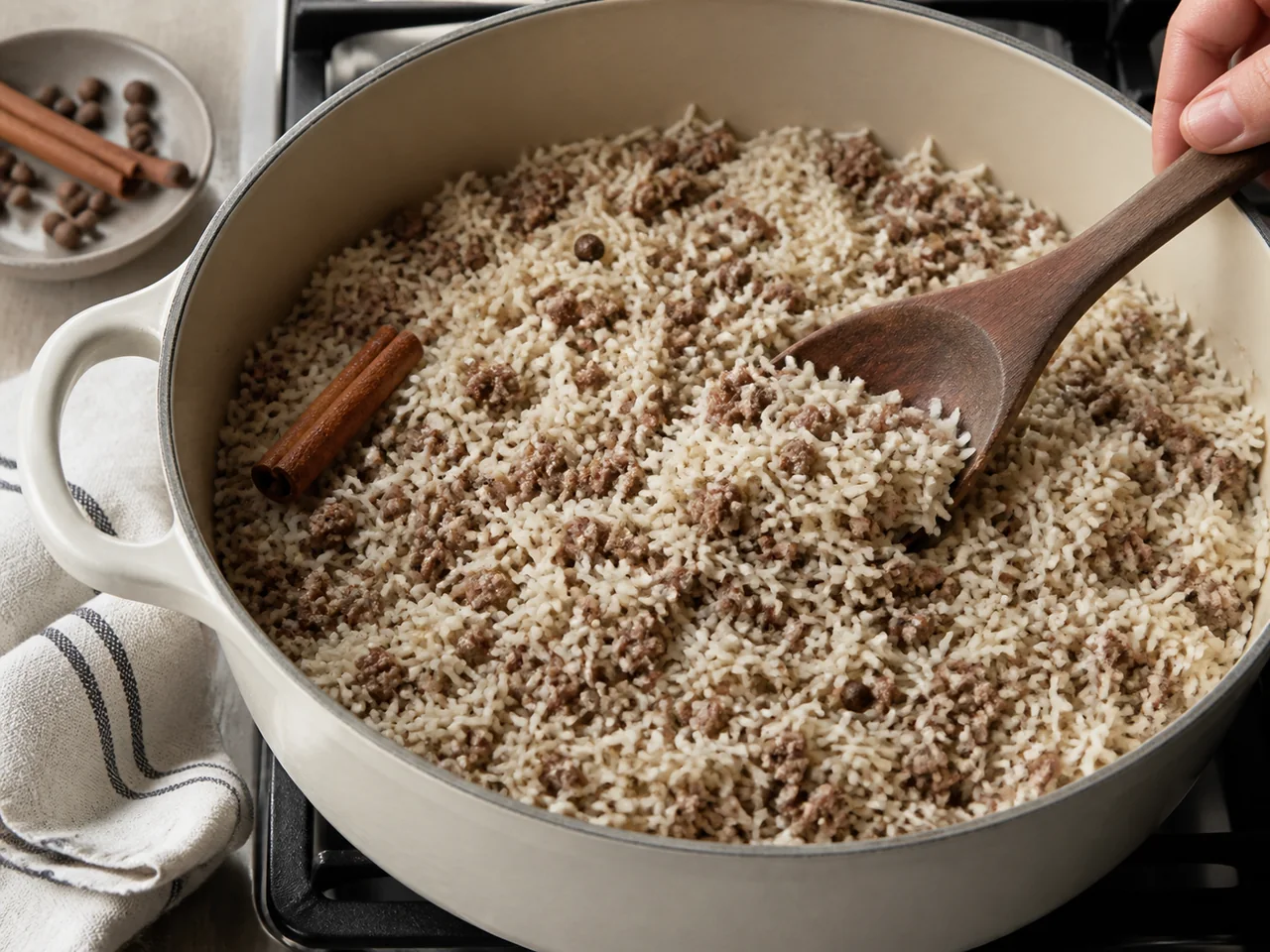
Add the remaining fat and chopped onion to the pot. Cook until soft, then add the beef or lamb. Brown for 8–10 minutes, breaking it into small, even crumbles.
- 5
Bloom the spices.
Stir in the seven spice, ground cinnamon, and remaining teaspoon salt. Add the rinsed rice and turn it through the spiced meat for about a minute so every grain is coated.
- 6
Steam the rice.
Pour in 720 ml / 3 cups hot broth. Bring to a boil, cover tightly, reduce the heat to low, and cook for 15 minutes. Remove from the heat and leave covered for 10 minutes.
- 7
Build the platter.
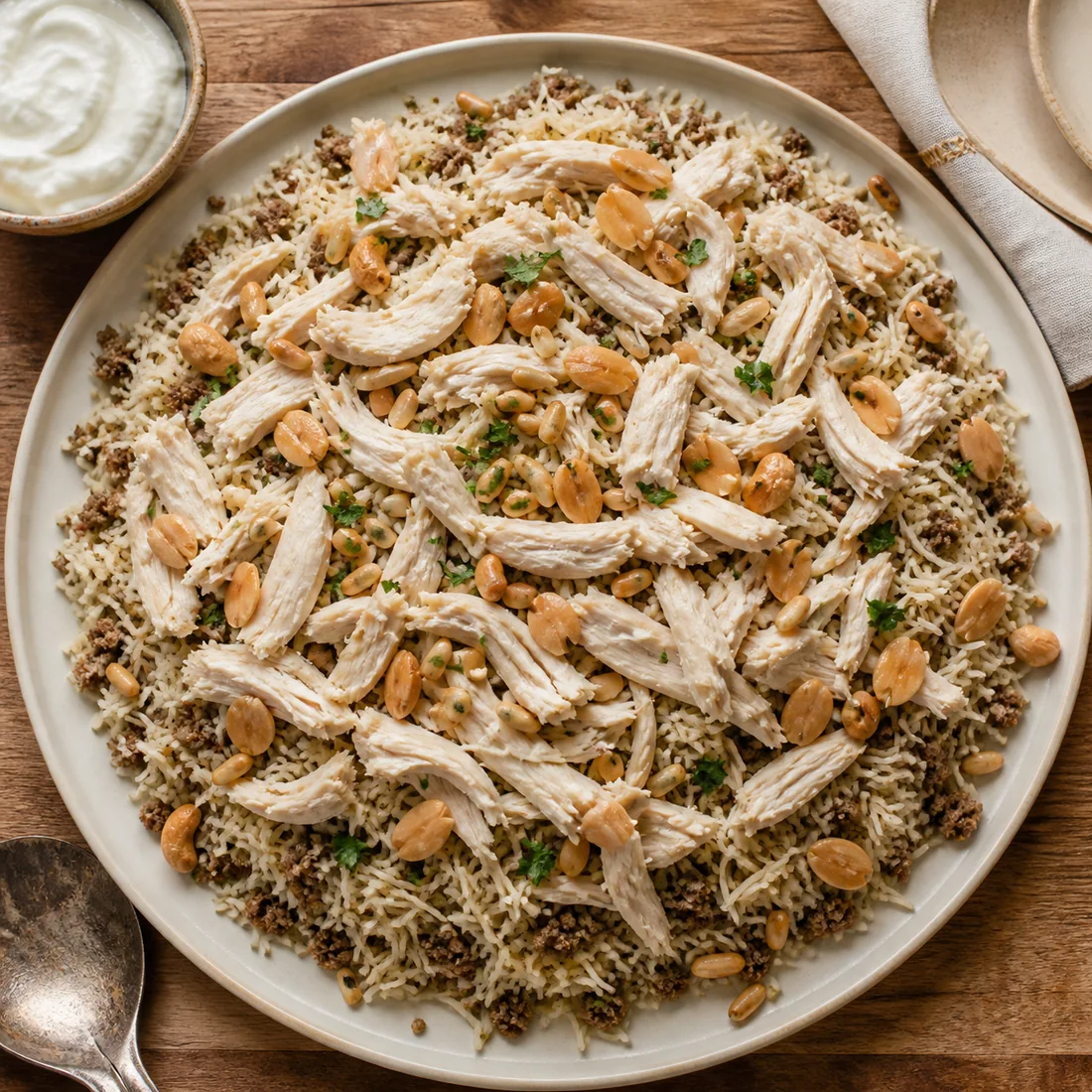
Fluff the rice with a fork and taste for salt. Spoon it onto a warm platter, top with the chicken, and scatter over the toasted nuts and parsley. Serve with plain yogurt or a sharp, crunchy fattoush.
Kitchen notes
Three details that keep every layer distinct
Keep the poach quiet
A hard boil tightens chicken and clouds the broth. After the first bubbles appear, lower the heat to a gentle simmer; the resulting stock will taste cleaner in the rice.
Rinse, then rest
Rinsing removes loose surface starch. The covered rest after cooking is just as important: it lets moisture settle so the rice fluffs instead of clumping.
Toast each nut at its own pace
Almonds and cashews take longer than pine nuts. Start the larger nuts first or lift the pine nuts out early; a pale-gold topping tastes far better than a dark, bitter one.
Research notes
Sources behind this article
The supplied Wikipedia entry was used as a starting map, not as sole evidence: one of its citations points back to SmartRestro’s retired article, so we cross-checked the dish with independent Lebanese cooks and culinary publishers.
- أرز بالدجاج — Arabic Wikipedia The supplied overview of Arabic naming, recurring ingredients, and method.
- SBS Food: four decades at Abla’s Abla Amad’s Lebanese special-occasion presentation and place at the gathering table.
- Feel Good Foodie: Lebanese chicken and rice Yumna Jawad’s ingredient ratios, chicken-thigh method, seven spice, and serving cues.
- The Matbakh: Lebanese chicken and rice Mariam Nabbout’s whole-chicken version, spice profile, nut choices, and molded presentation.
- Simply Lebanese: Lebanese rice with chicken A Lebanese home recipe supporting the rice, minced-meat, broth, and nut structure.
- SBS Food: riz bi djaj recipe Shane Delia’s variation with lamb, basmati rice, vermicelli, baharat, herbs, and yogurt.
- FoodSafety.gov: safe minimum internal temperatures The 74°C / 165°F safe cooking temperature for poultry.