
Rösti with Raclette Cheese
Rösti mit Raclettekäse
This golden potato cake and molten cheese look inevitable together. Their real story is more interesting: two Swiss traditions from different regional contexts, joined here with the difference made explicit.
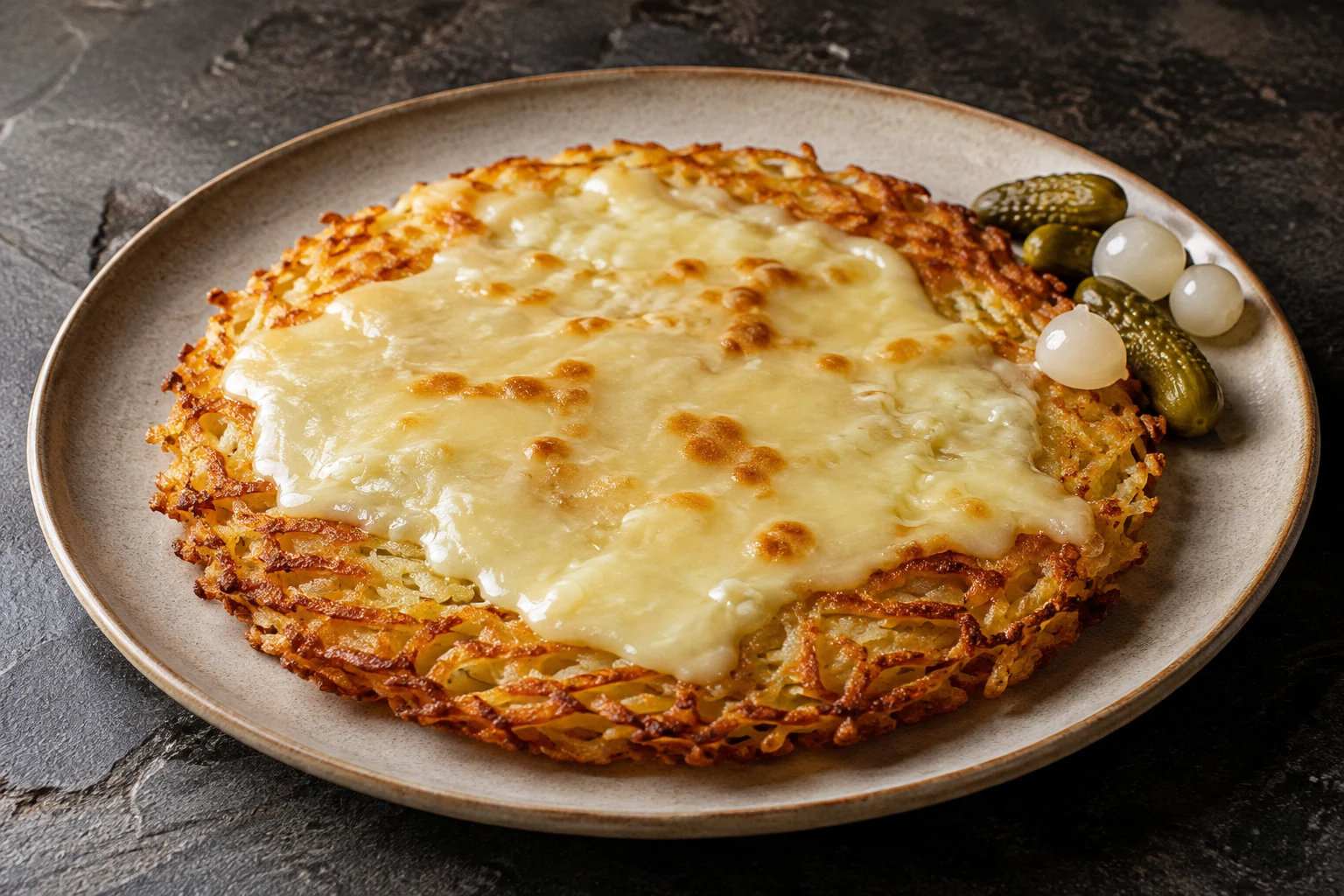
Two Swiss coordinates
A persuasive pairing is not automatically an old tradition
The first bite offers a neat piece of kitchen logic: crisp, irregular potato strands under supple melted cheese, with a sharp pickle ready to reset the palate. Rösti supplies the browned surface that a boiled potato does not; raclette supplies warmth and richness without turning the potato cake into a gratin.
The documentary record does not make rösti crowned with raclette a single ancestral specialty. Switzerland Tourism describes rösti as grated raw or cooked potato fried into a flat cake, while it describes raclette with jacket potatoes, gherkins, onions, and pickled fruit. This recipe therefore treats the combination as a modern cross-regional composition, not a recovered historical formula.
Each half has a history of its own. The Swiss National Museum traces the potato's slow acceptance in Switzerland and rösti's rise from farmers' breakfast to a national culinary symbol. In Valais, melted cheese is documented in 1574; the word raclette appears in later nineteenth-century sources and derives from the act of scraping the softened surface.
Read the plate
Four facts keep the story straight
- Rösti
- A Swiss pan-fried potato cake
- Raclette
- A melted-cheese dish and a cheese style
- Customary potato
- Boiled jacket potatoes
- Protected name
- Raclette du Valais AOP
Both raw potatoes and cooked jacket potatoes are established approaches; potato starch provides the binding.
Traditional Valais service melts a cut face and scrapes each softened layer; the name points to that scrape.
Official Swiss tourism material lists them with raclette, alongside gherkins, onions, and pickled fruit.
The broader word raclette is not protected; the AOP specifies Valais production, raw cow's milk, and defined maturation.
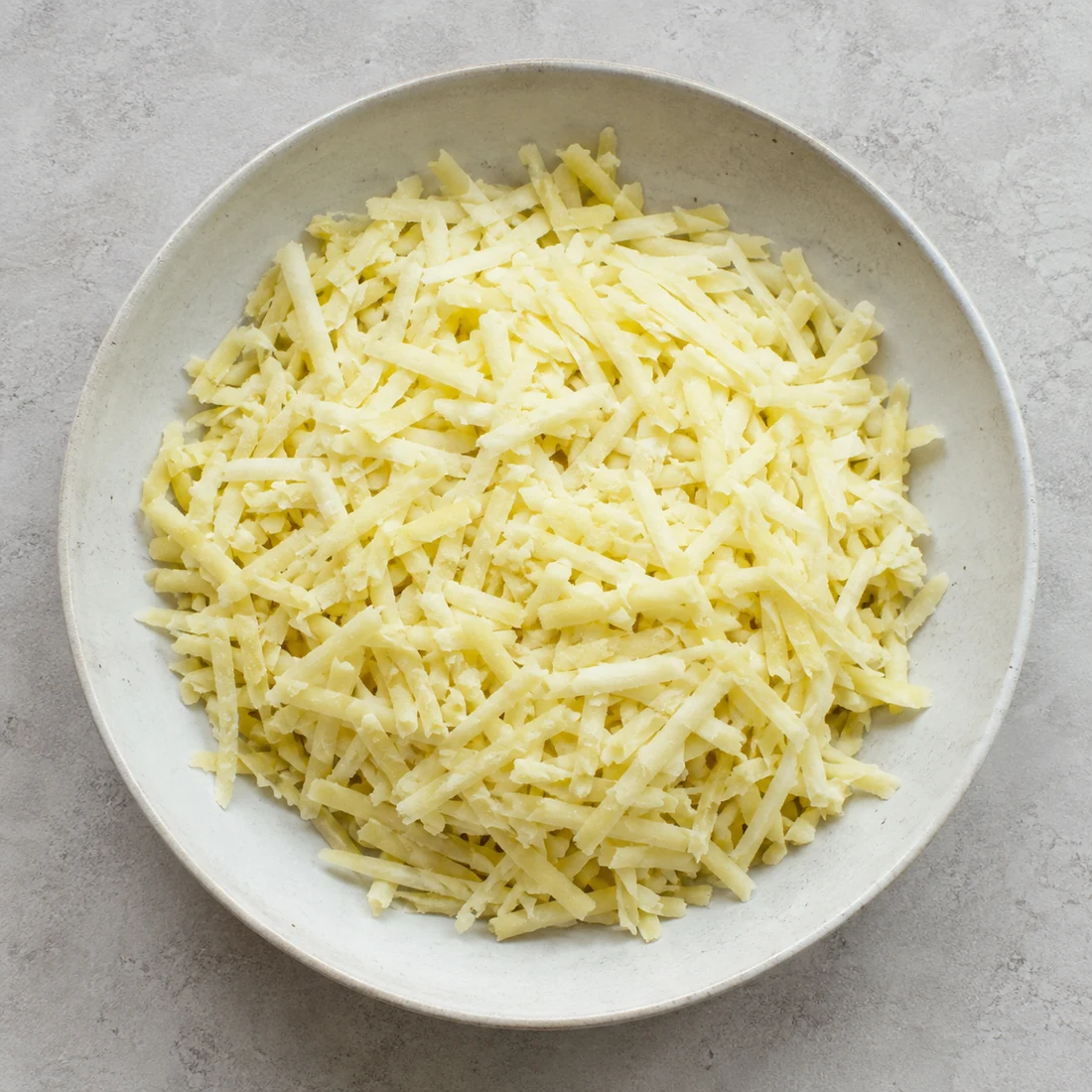
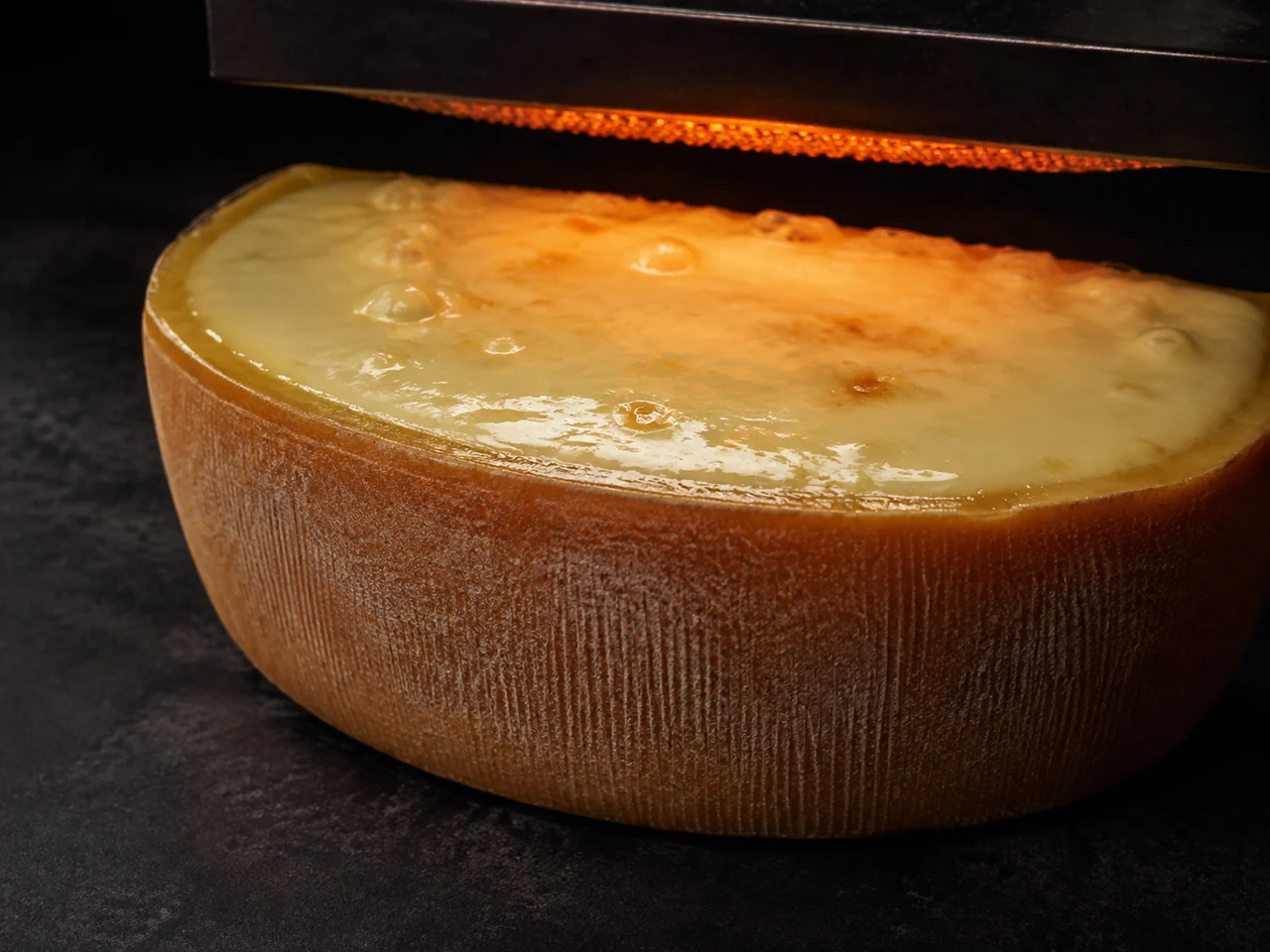
Before the pan
Two textures prepared to transform
Cooling preserves the shape of the grated potato; controlled heat turns a semi-hard cheese's cut face glossy and mobile.
Documented, not legendary
Two histories arrive at the same modern table
The sequence shows why a plate can feel completely Swiss without pretending its exact assembly is centuries old.
- 1574
Melted cheese described in Valais
A written account describes travelers melting soft, rich cheese near a fire in the Valais Alps. Culinary Heritage Switzerland treats it as the earliest detailed local evidence for the practice behind raclette.
- 1697 onward
The potato finds a difficult foothold
The Swiss National Museum places an early Swiss arrival in Glarus in 1697. Acceptance accelerated after the hunger crises of 1770–71 and 1816–17, before potato cultivation expanded strongly in the nineteenth century.
- 19th century
Rösti rises; raclette gets its name
Rösti grew from a substantial farmers' breakfast into a broader Swiss classic. Written uses of raclette for the melted-cheese dish appear from the 1870s, drawing on a Franco-Provençal word related to scraping.
- 1909 and 1964
Raclette becomes a public emblem
The 1909 cantonal exhibition in Sion promoted raclette as a Valais national dish. Its service at Switzerland's 1964 national exhibition in Lausanne helped carry it to a much wider national and international audience.
- 2007
The Valais cheese receives protected status
Raclette du Valais entered Switzerland's AOP register, protecting a geographic cheese name while leaving the general term raclette available for cheeses and the dish beyond Valais.
A real fork in the method
Raw or pre-cooked potatoes can both make rösti
Swiss sources recognize both methods. The choice changes planning and texture more than it changes the dish's identity.
Start raw
Raw potato makes a same-day rösti. Both waxy and floury varieties can work, but the shreds need even heat long enough to cook through while the exterior browns.
- No advance cooking
- Dry the grated potato well
- Judge the tender center as carefully as the crust
Start with Gschwellti
Cooked jacket potatoes, fully cooled before grating, are another established base. Waxy potatoes are especially easy to grate and keep more distinct strands.
- Plan for cooling time
- Coarse strands stay defined
- Chosen for the recipe below
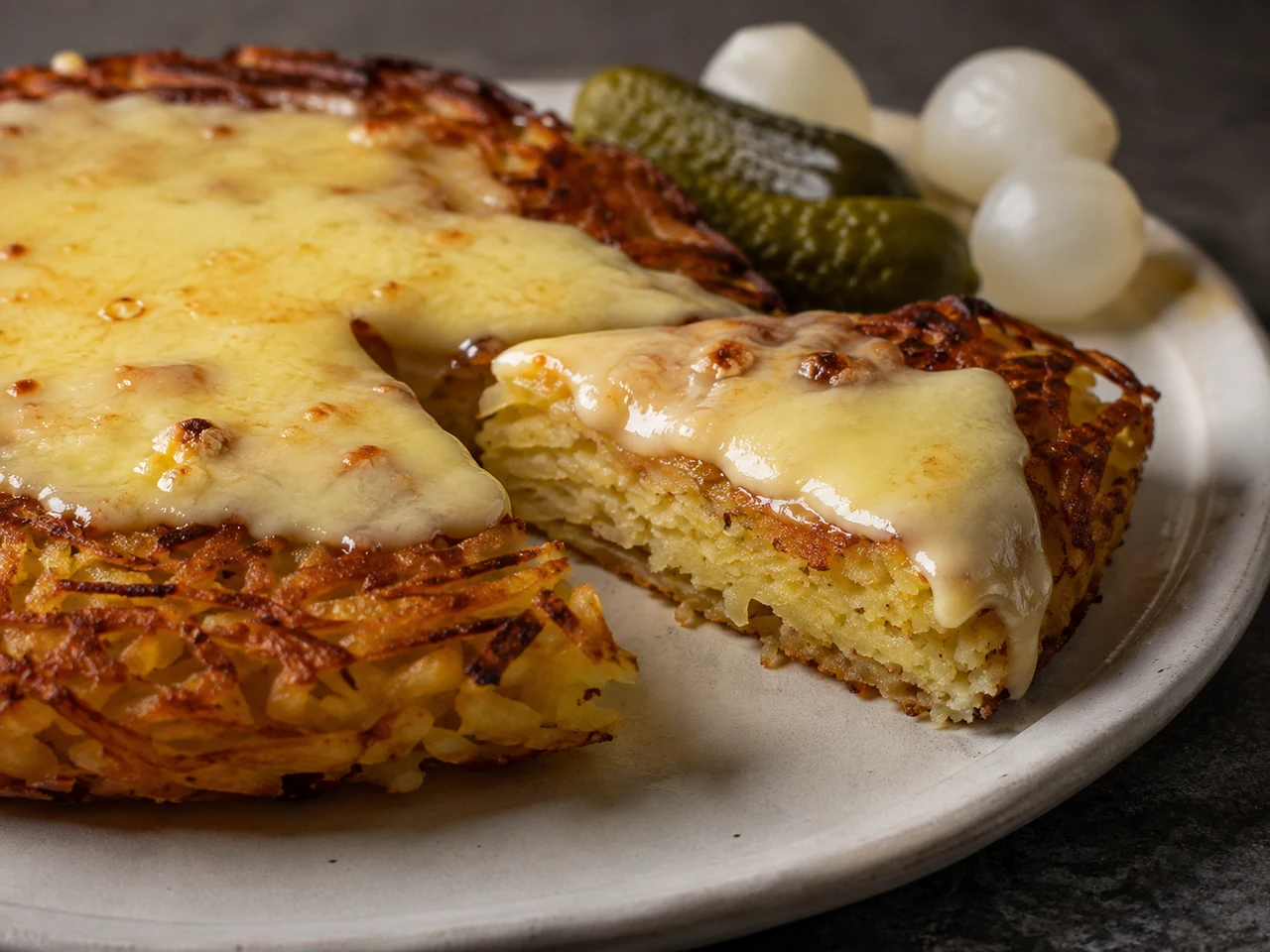
The useful cues
Build the crust before asking the cheese to melt
The two components want different treatment, so they meet only at the end.
- 01
Cool for clean strands
Par-cook whole potatoes only until just tender, then chill them thoroughly. Coarse grating should produce separate ribbons rather than warm fragments collapsing into mash.
- 02
Set the cake in stages
Begin with several minutes of gentle turning so the potato heats evenly. Shape it only then, press lightly, and leave it alone long enough for a continuous amber crust to form.
- 03
Flip with commitment
A flat plate turns the whole cake in one movement. Slide it back into the pan and wait for the second face to brown before adding any cheese.
- 04
Melt late and serve at once
Apply thin raclette slices to the already crisp rösti and use brief overhead heat. The cheese should glisten and bubble lightly, not split into oil or sit long enough to soften the crust.
Practical adaptation
Rösti with raclette cheese
This complete home recipe deliberately joins two Swiss preparations: a rösti based on cooled jacket potatoes and the cheese, pickles, and onions associated with raclette service. Use a well-seasoned, broiler-safe 28 cm / 11-inch skillet.
Ingredients
Rösti
- 1 kg / 2 lb 3 oz medium waxy potatoes, scrubbed but not peeled
- 1 tsp fine salt
- 3 tbsp clarified butter, divided
- ¼ tsp freshly ground black pepper
Cheese and accompaniments
- 400 g / 14 oz raclette cheese, cut into slices about 5 mm / ¼ inch thick; choose pasteurized cheese for higher-risk diners
- 120 g / 4 oz cornichons, drained
- 120 g / 4 oz pickled pearl onions, drained
Method
- 1
Par-cook the potatoes.
Set the whole unpeeled potatoes in a steamer over simmering water. Cover and steam for 18–25 minutes, depending on size, until a thin knife enters the outer flesh but meets clear resistance at the center. They must remain firmer than fully cooked table potatoes.
- 2
Cool completely.
Spread the potatoes in one layer. Once the surface steam has gone, refrigerate them within two hours and chill for at least 4 hours or overnight. Cooling firms the flesh so it can be grated rather than mashed.
- 3
Grate and season.
Peel the cold potatoes if desired, then grate them on the coarse holes of a box grater. Toss lightly with the salt and pepper without squeezing or compacting the strands.
- 4
Start the rösti loosely.
Heat 2 tablespoons clarified butter in the skillet over medium-low heat. Add the potato and cook for 5 minutes, lifting and turning sections two or three times so the strands heat evenly.
- 5
Form the first crust.
Draw the potato into an even cake about 2 cm / ¾ inch thick and press only enough to make it cohere. Cook undisturbed for 10 minutes. The underside should be a deep, even gold and release when the pan is gently shaken.
- 6
Flip and brown the second side.
Set a large flat plate over the skillet and invert both together so the rösti lands browned-side up on the plate. Return the pan to the heat, add the remaining tablespoon of clarified butter, and slide the rösti back in with its pale side down. Cook over medium-low heat for 12–15 minutes without moving it, until crisp and browned.
- 7
Melt the raclette.
Heat the broiler. Arrange the cheese slices in one slightly overlapping layer over the browned rösti, leaving a narrow rim of crust visible. Broil 10–15 cm / 4–6 inches from the heat for 2–4 minutes, watching continuously, until the cheese is fully molten and lightly blistered.
- 8
Serve immediately.
Move the pan to a heatproof surface, cut the rösti into four wedges, and serve at once with the drained cornichons and pickled onions. The cheese should still be fluid and the potato edge crisp.
Research notes
Sources behind this article
Swiss institutional and culinary sources establish the separate histories, terms, techniques, and protected-origin rules. None located this exact rösti-and-raclette assembly as an old canonical dish, so the recipe labels the pairing as an editorial home adaptation.
- Swiss National Museum — The rise of the potato Provides the chronology of the potato's adoption in Switzerland and describes rösti's movement from farmers' breakfast to national symbol.
- SWI swissinfo.ch — The rösti divide Documents rösti's association with German-speaking Switzerland while emphasizing that the cultural boundary it names is neither fixed nor absolute.
- Switzerland Tourism — Typical Swiss food Defines rösti and records the customary jacket potatoes, gherkins, onions, and pickled fruit served with raclette.
- Culinary Heritage Switzerland — Raclette du Valais AOP Documents terminology, early Valais evidence, the dish's public promotion, production changes, and the distinction between raclette and the protected cheese name.
- Living Traditions Switzerland — Raclette as a social practice Frames raclette as a communal practice rooted in Alpine pastoral life and especially developed in Valais, while noting a wider Alpine context.
- Swiss Federal Office for Agriculture — AOP and IGP register Confirms the federal registration history and current official documentation for Raclette du Valais AOP.
- Swiss Federal Office for Agriculture — Raclette du Valais specification Specifies the production area, raw cow's milk, permitted ingredients, sensory profile, and minimum maturation conditions for the protected cheese.
- Swissmilk — Rösti recipe Supports the cooled jacket-potato method, coarse grating, staged pan cooking, plate flip, and two-sided browning cues used in the adaptation.
- Swissmilk — Choosing potatoes for rösti Explains that raw and pre-cooked methods are both valid and compares waxy and floury potato textures.
- FoodSafety.gov — Guidance for pregnant people Provides current public-health guidance on raw-milk cheeses and heating guidance for people at elevated risk of foodborne illness.
- U.S. Food and Drug Administration — People at risk Extends raw-milk food precautions to older adults and people with weakened immune systems as well as pregnant people.
Keep exploring
More stories for your table
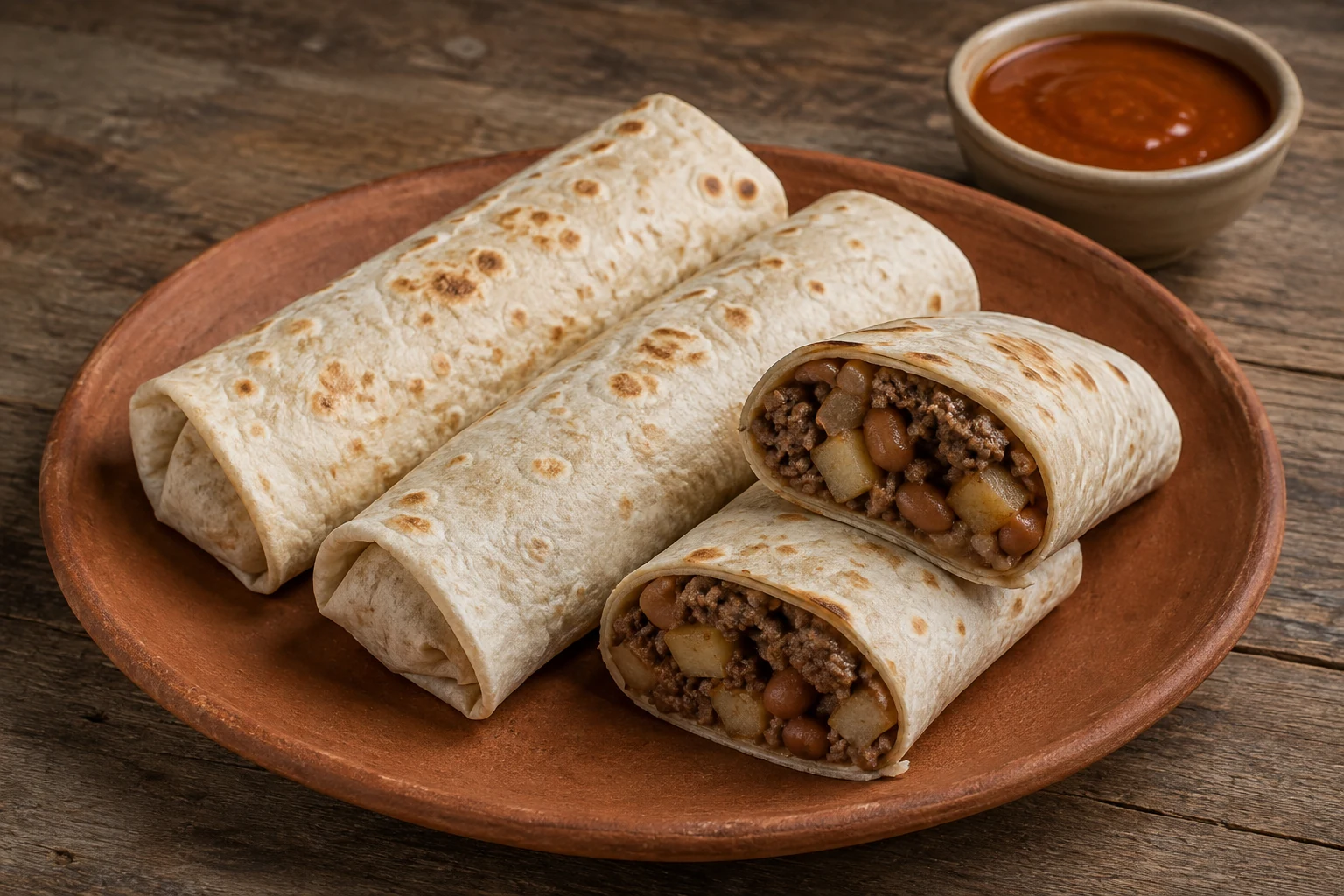
MexicoFilled tortilla
Mexican Burrito
A guide to the slender flour-tortilla burritos of northern Mexico, their varied regional fillings, and a practical beef, potato, and bean recipe.
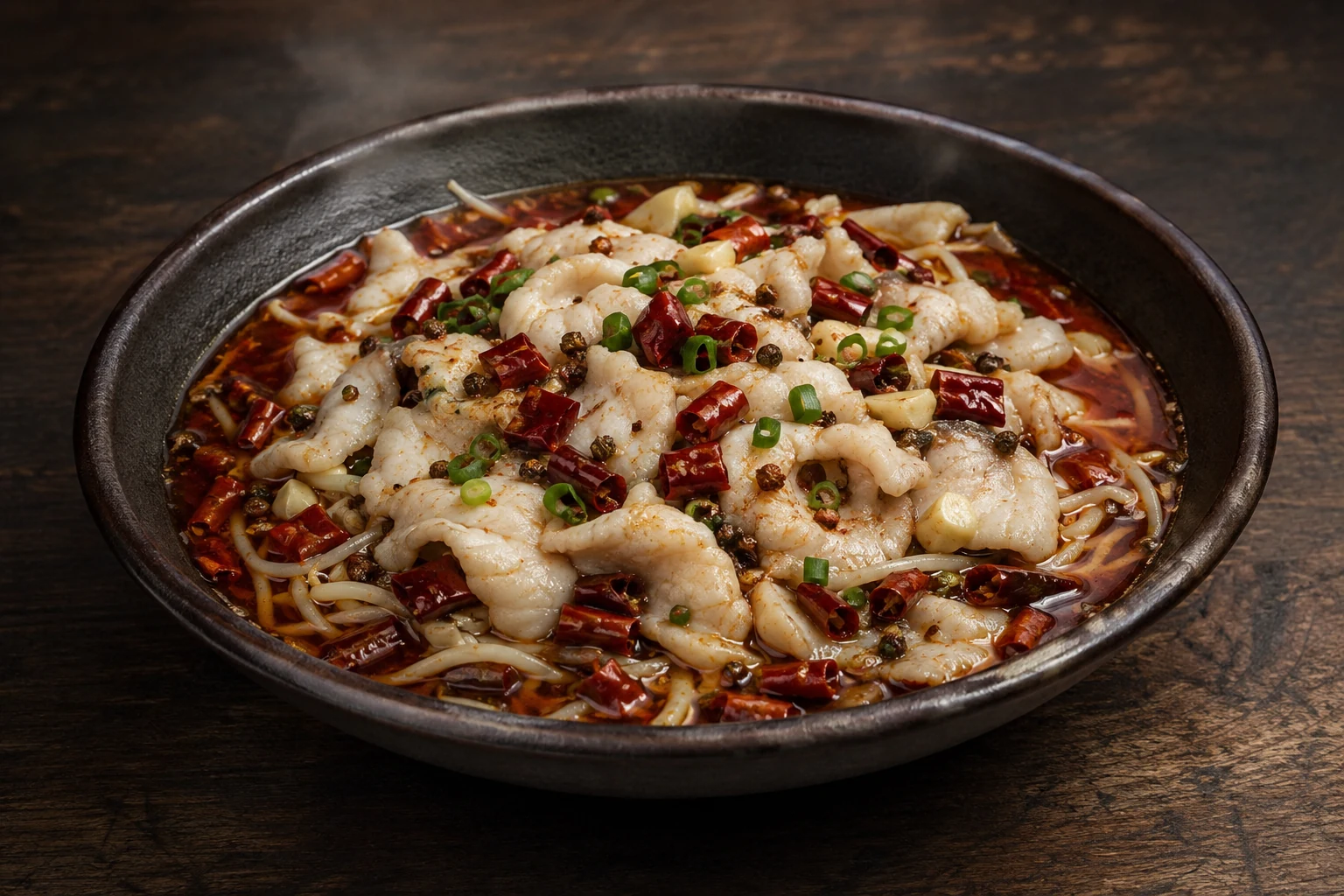
ChinaFish dish
Shui Zhu Yu (Sichuan Water-Boiled Fish)
Why Sichuan water-boiled fish stays tender beneath its dramatic mala finish: a close look at the broth, hot-oil bloom, Chongqing context, and a practical home method.
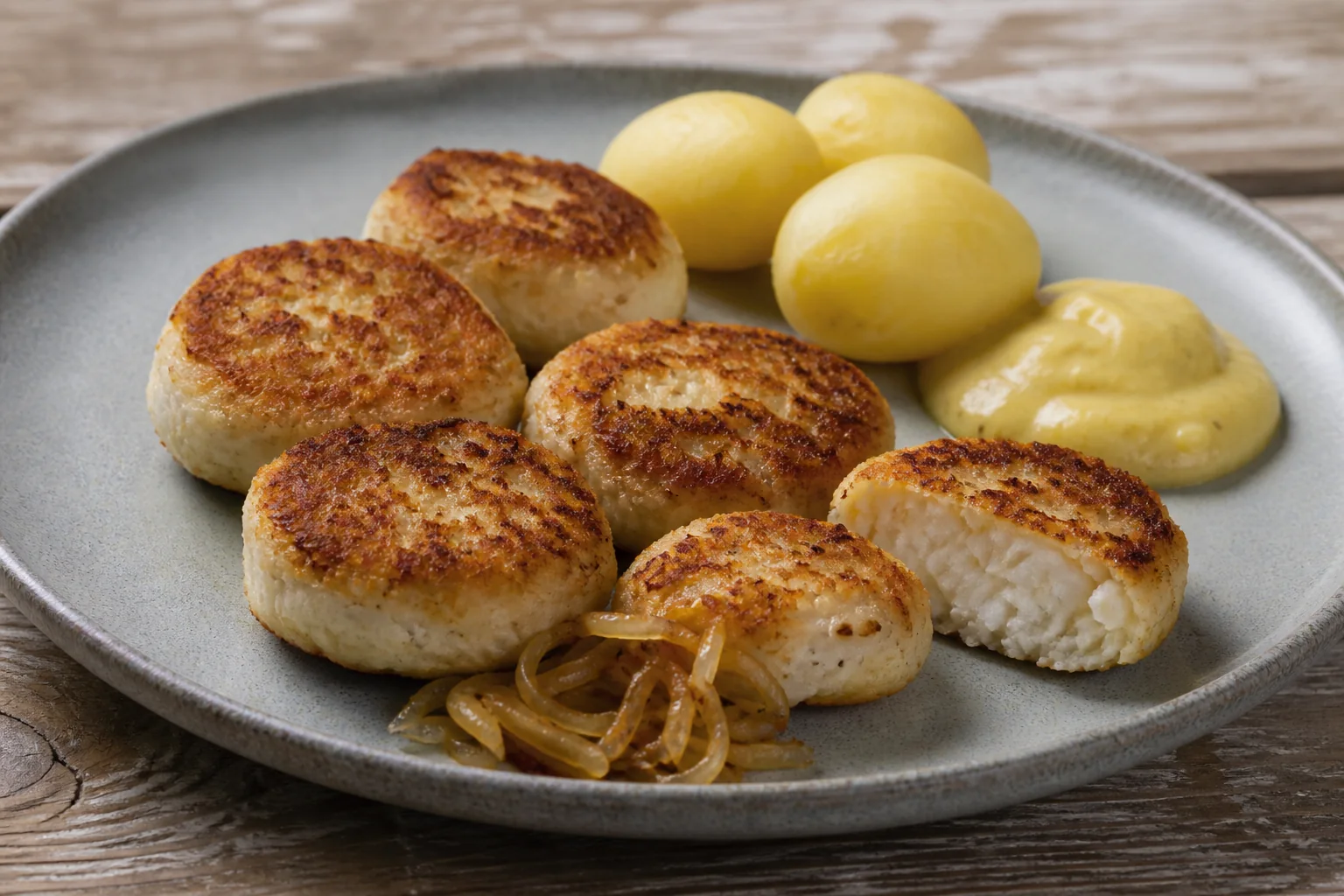
IcelandEveryday cooking
Icelandic fish balls
A crisp, golden crust around tender white fish, served with boiled potatoes, soft onions, and mild curry sauce.