
Sega Wot: Build the Sauce Before the Beef
Sega wot
The work starts before the beef goes in. Soft onions give this Ethiopian stew its body; berbere gets time to cook in that base; a gentle simmer brings the meat and sauce together.
The useful order
Start with the part that surrounds the meat
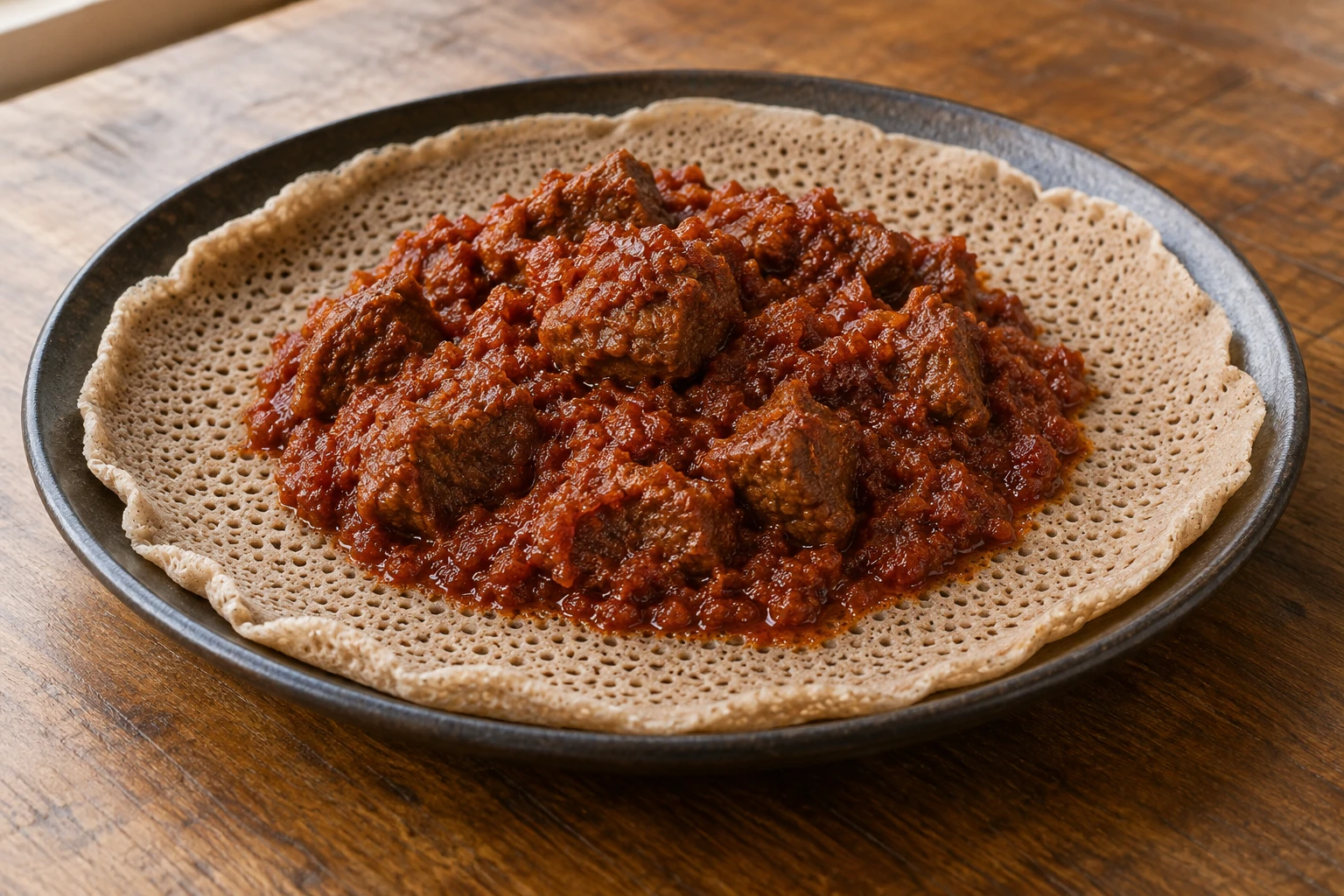
Sega wot, also written siga wot, is an Ethiopian beef stew seasoned with berbere. Its sauce deserves as much attention as the beef. Finely chopped onions soften into the body of the stew, carrying a red spice blend that cooks before the meat is added. Injera, the spongy sourdough flatbread served alongside it, gives that thick sauce somewhere to go.
The published methods offer more than one route to the onion base. The Eastleigh Voice’s account and Lizet Bowen’s recipe begin by cooking onions without fat; Demand Africa’s Expresso recipe starts them in oil. Both approaches give the onions a head start. The common lesson is the sequence: develop the onions, cook the berbere, then bring in the beef.
The recipe here chooses a dry onion start, beef added directly to the sauce, and a finish of niter kibbeh, Ethiopian spiced clarified butter. It is a home adaptation assembled from those documented methods.
Before the beef
Two stages in the same sauce
What to watch
Control softness, moisture and tenderness
Use these cues alongside the recipe’s quantities. The clock helps you plan; the condition of the food tells you when to move on.
- 01
Let the onions lose their shape.
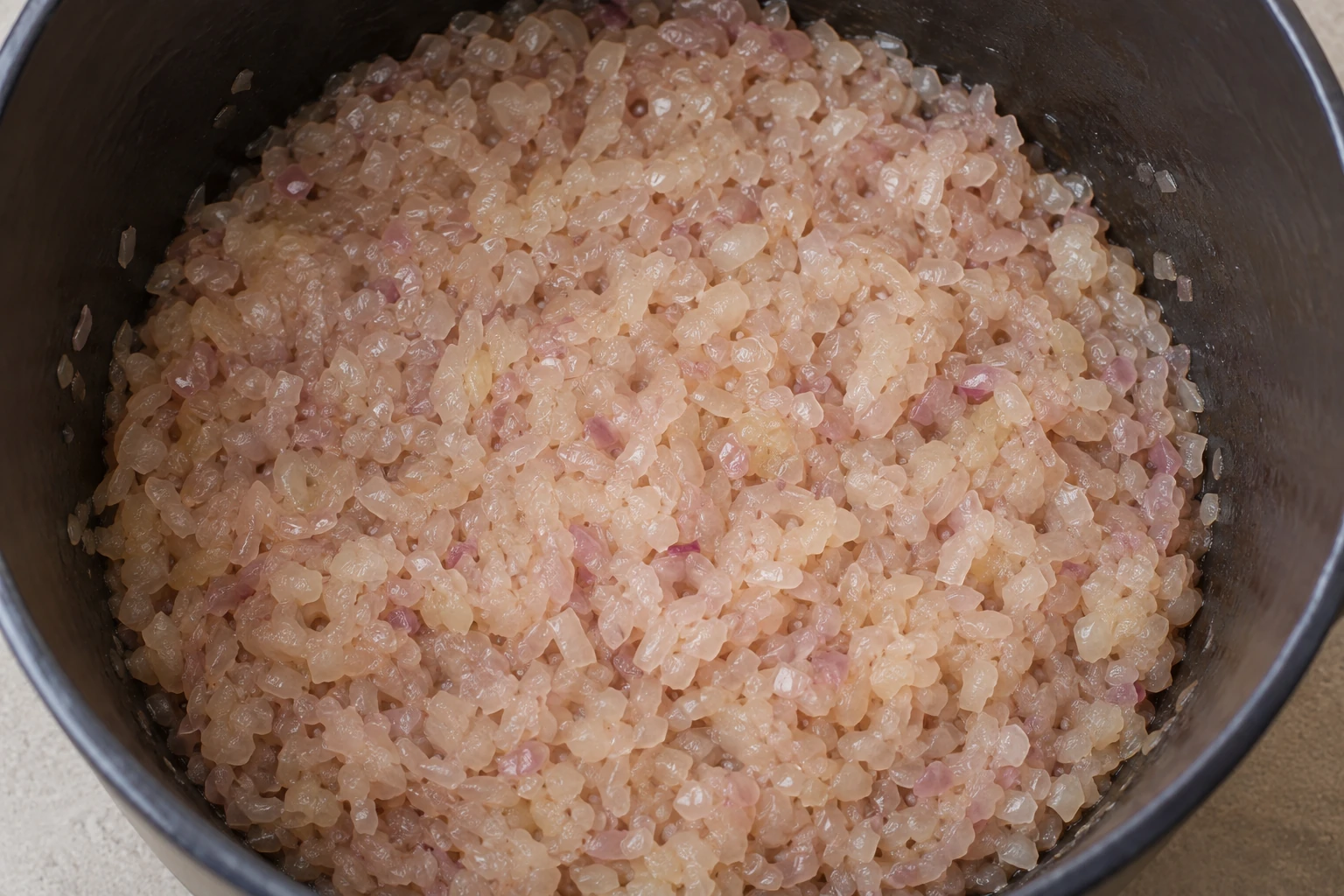
Chop them finely so the pieces can soften into the sauce. With a dry start, lower the heat as their released water evaporates and keep stirring. The aim here is a soft, collapsed base, not a crisp onion garnish. The recipe adds fat only after this first stage.
- 02
Cook the blend in a moist base.
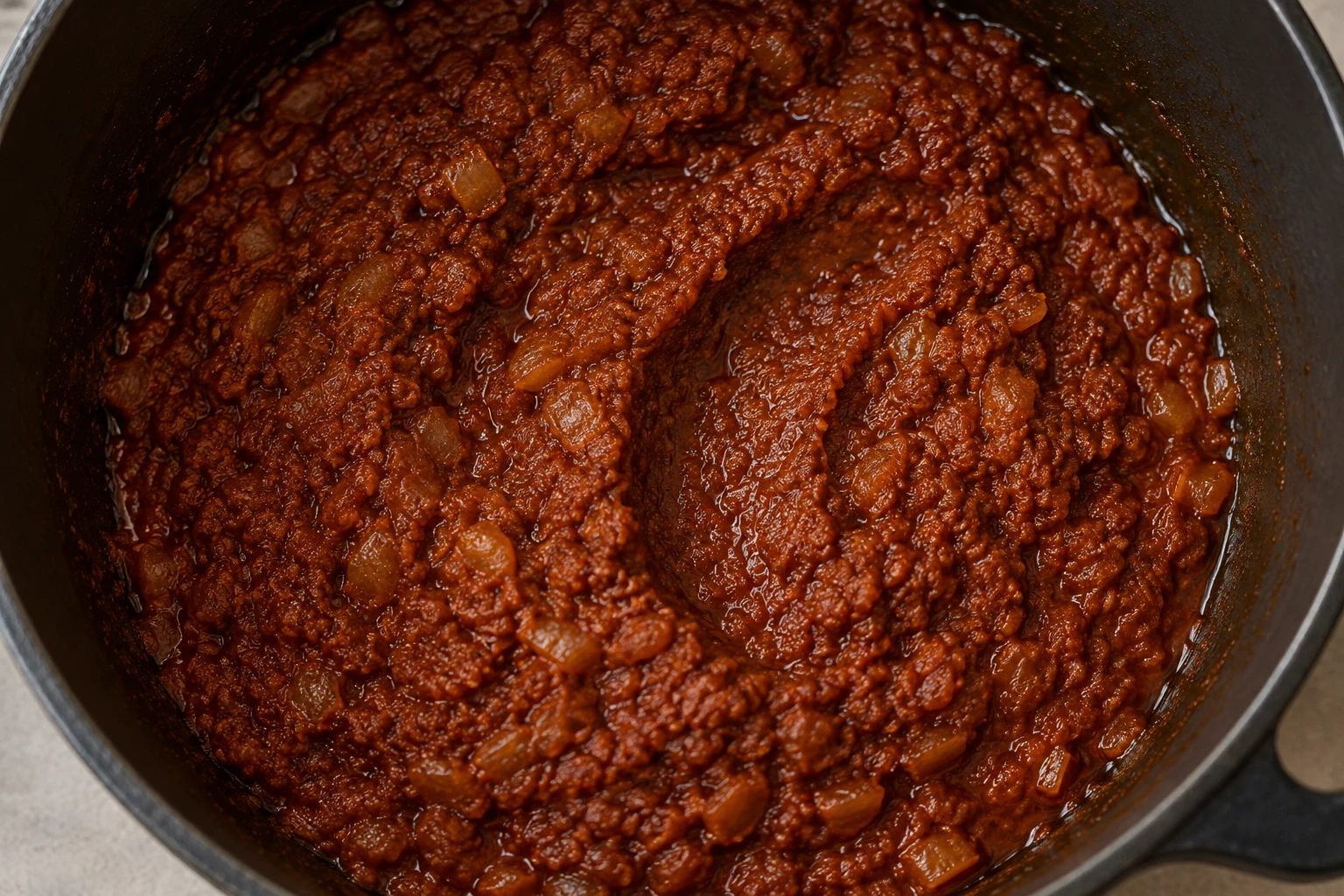
Berbere is more than ground chile: EthiopianSpices.com’s blend, for example, includes fenugreek, garlic and ginger. Blends differ, so check the one you have rather than assuming a fixed heat level. Demand Africa and EthiopianSpices.com both give the berbere a sustained cooking stage before the beef; Demand Africa specifies adding water to prevent burning. Keep the paste gently moving and moist, rather than frying dry powder hard.
- 03
Give the beef time without drying the sauce.
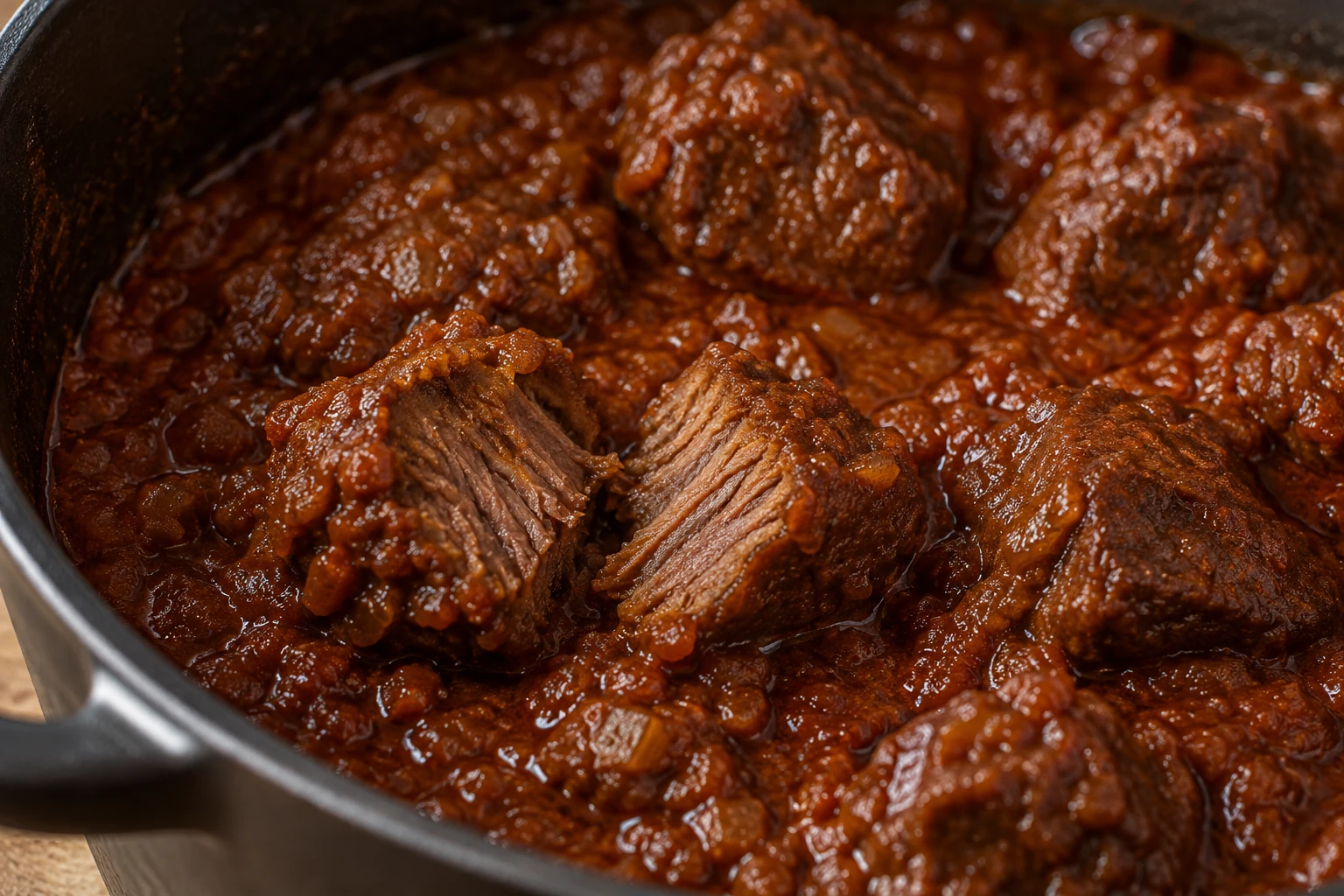
Chuck needs a gentle simmer until it yields easily. If the sauce becomes thick while the meat is still firm, add a little hot water and continue with the lid on. Once the meat is tender, uncover briefly if there is excess liquid. This separates the tenderness decision from the thickness decision. The final spiced butter is an aromatic finish, as in Expresso’s method.
Cook the sequence
Sega wot for four
A home adaptation of the onion-first methods below, using beef chuck, prepared berbere and prepared niter kibbeh. Allow about 3 hours 20 minutes: 20 minutes to prepare and roughly 3 hours to cook, depending on the meat. This version has not been kitchen-tested. Serve four main-course portions with prepared injera.
Ingredients
For the stew
- 800 g boneless beef chuck, cut into 2.5 cm / 1-inch cubes
- 600 g peeled red onions, very finely chopped
- 40 g prepared niter kibbeh (spiced clarified butter), divided into two 20 g portions
- 15 g garlic, finely minced
- 15 g fresh ginger, peeled and finely grated
- 4 tbsp berbere blend, about 30 g; check its chile heat and salt content
- 500 ml, plus extra as needed hot water: 100 ml for the spice base, 300 ml for the beef and 100 ml reserved for adjustments
- ¾ tsp, or less for a salted blend fine salt, with a little more to taste at the end
To serve
- 4 large prepared injera flatbreads, warmed according to their package instructions
Method
- 1
Cook down the onions.
Put the finely chopped onions in a heavy 3–4 litre pot over medium-low heat, without fat. Cook for about 25 minutes, stirring often, until they have collapsed, their released liquid has mostly evaporated and no crisp raw pieces remain. Reduce the heat as the pot dries. If they stick, loosen with a teaspoon or two from the reserved 100 ml water; do not let them scorch.
- 2
Add the first butter and aromatics.
Stir in 20 g niter kibbeh, all the garlic and all the ginger. Cook gently for 5 minutes, stirring frequently, until the aromatics have softened.
- 3
Give the berbere its own cooking time.
Add all the berbere and the measured 100 ml hot water. Stir well and cook on low for 15 minutes. Keep the mixture a moist, thick paste: stir frequently and add small splashes of the reserved water if it catches or dries. It should deepen to a brick-red sauce without blackened patches.
- 4
Coat the beef, then add liquid.
Add the beef and the salt, using less salt if the berbere already contains it. Turn the meat through the paste over medium-low heat for 5 minutes. Add the measured 300 ml hot water, scrape the base of the pot and bring to a gentle simmer.
- 5
Simmer until the meat yields.
Cover, lower the heat and simmer gently for about 1½–2 hours, or longer if the chuck still resists a fork. Stir from the bottom and turn the meat every 20 minutes. The sauce must stay wet enough to simmer, not fry: add the remaining reserved water in small amounts, then extra hot water as needed. Keep cooking until a piece breaks apart easily under fork pressure; a thick sauce alone does not mean the beef is ready.
- 6
Finish the sauce and serve.
Once the beef is tender, uncover and simmer gently for 5–10 minutes if the sauce needs thickening, stirring to prevent sticking. Stir in the remaining 20 g niter kibbeh during the final 3 minutes of this reduction. If the sauce is already thick, simply add the butter and cook gently for 3 minutes. Taste and adjust the salt. Warm the prepared injera as directed on its package and divide the stew into four portions. Serve with the injera and no additional garnish.
Research notes
Sources behind the method
These sources support the dish’s identity, the onion-and-berbere sequence and injera service. They vary in fat, browning and seasoning choices; the recipe above states its own quantities and method as an adaptation.
- The Eastleigh Voice — Margaret Wanjiru on sega wat Kenyan reporting identifies the Ethiopian beef stew and describes a dry onion start, berbere, spiced butter and injera service.
- Demand Africa / Expresso — Kai Sega Wot A published cooking method that cooks berbere with moisture for 10–15 minutes before beef, targets a thick sauce and finishes with spiced butter.
- EthiopianSpices.com — Sega Wot and injera recipes The specialist’s red beef stew recipe independently supports onions, a separate berbere cooking stage, beef and injera; its injera formula includes wheat flour.
- EthiopianSpices.com — berbere ingredient list One documented blend contains chile peppers, garlic, ginger and fenugreek among other seasonings; it is an example, not a universal formula.
- Chipa by the Dozen — Lizet Bowen’s Siga Wot Documents the sega/siga spellings, dry-started onions, their contribution to sauce body, beef chuck and variation between berbere blends. Its separate meat-browning step is not used here.
- Chipa by the Dozen — Niter Kibbeh Explains niter kibbeh as clarified butter flavored with spices, the prepared ingredient used in this recipe.
- FoodSafety.gov — Four Steps to Food Safety Official guidance on shallow containers, prompt refrigeration and keeping the refrigerator at 40°F or below.
- FoodSafety.gov — Safe Minimum Internal Temperatures Official 165°F / 74°C reheating temperature for leftovers.
Keep exploring
More stories for your table
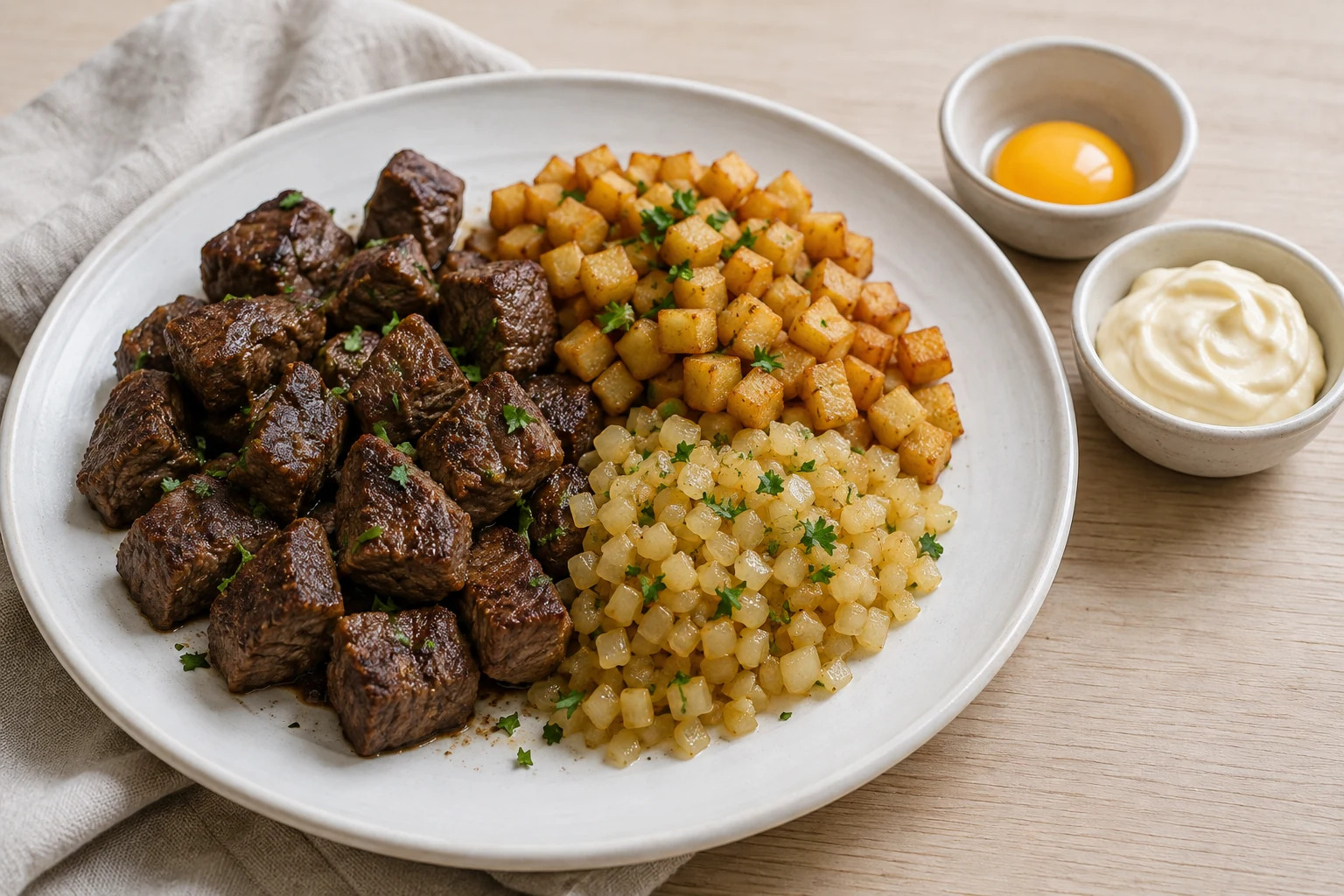
SwedenBeef and potatoes
Biff Rydberg: A Swedish Lesson in Timing
Crisp potatoes, soft onions and browned beef need different treatment. Learn the timing behind Sweden’s Biff Rydberg, compare two mustard creams and cook a home adaptation.
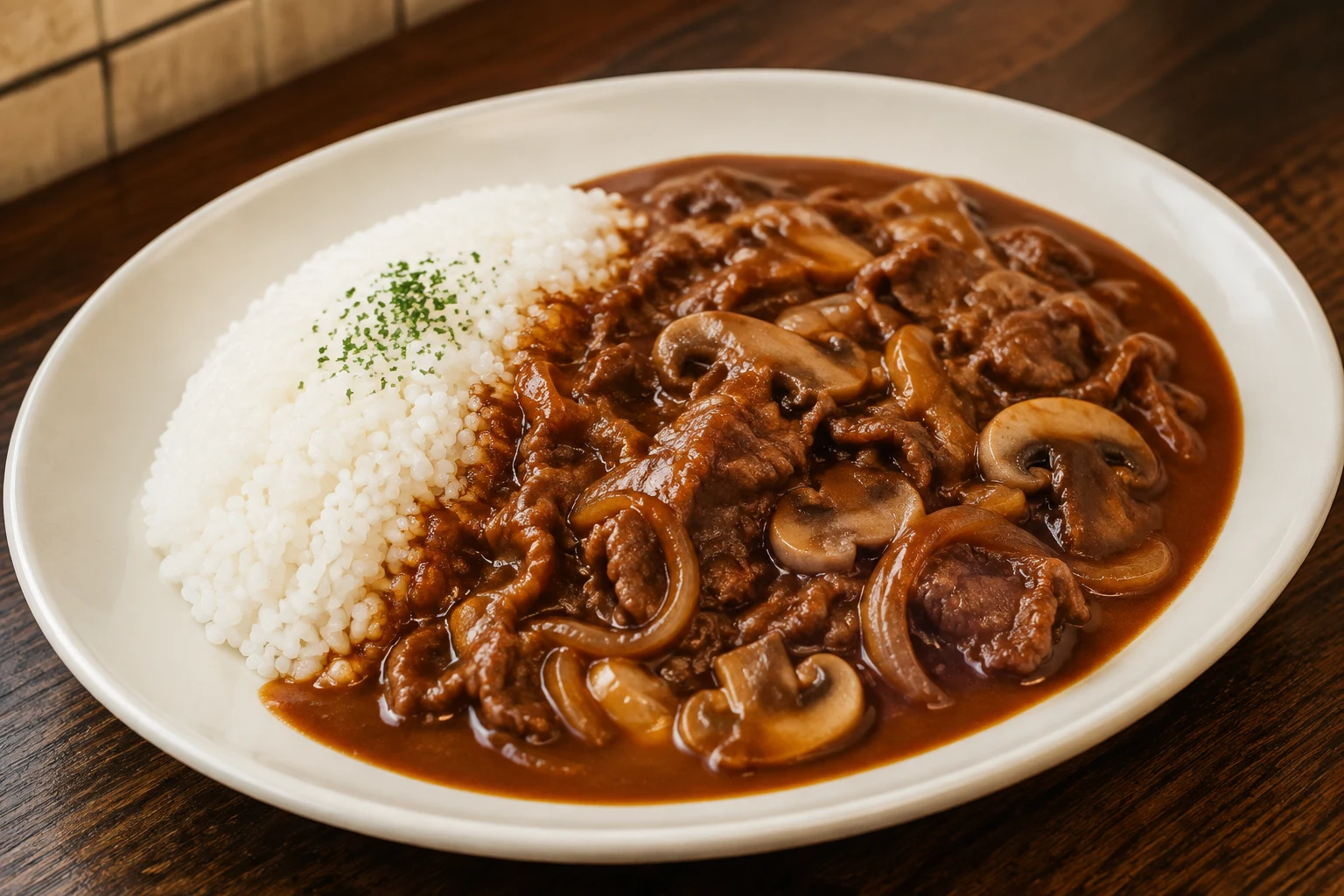
JapanYōshoku rice dish
Hayashi Rice: A Sauce Translated for Rice
Hayashi rice turned a Western-style brown meat sauce into Japanese yōshoku by changing the plate, the seasoning, and eventually the home pantry.
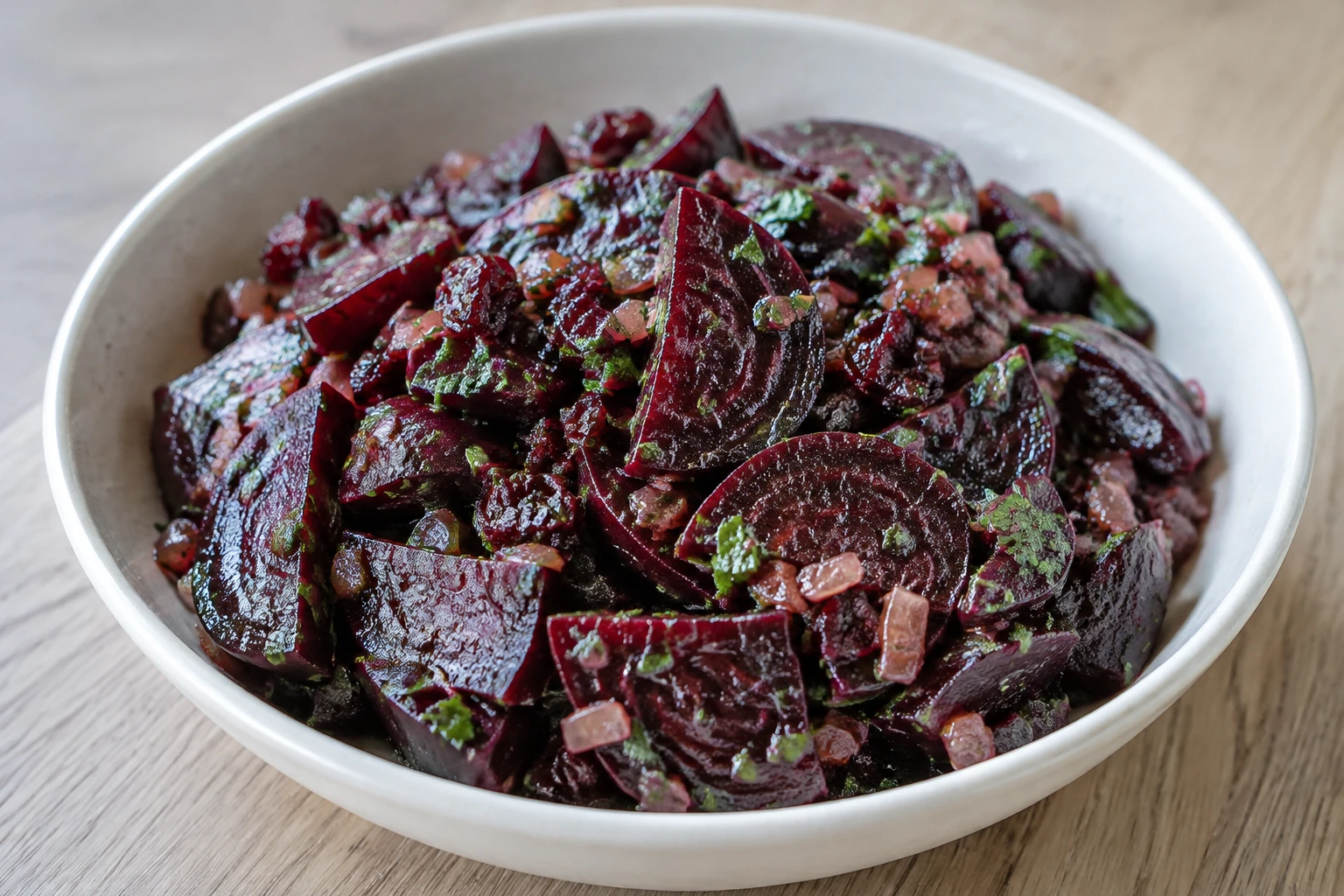
GeorgiaBeet salad
Charkhlis Chogi: When Tart Fruit Dresses Beets
Roasted beets, tart fruit and fresh herbs make Georgian charkhlis chogi. Explore two sauce textures, then cook a complete dried-sour-cherry adaptation.