
Jamaican Roast Suckling Pig
Jamaican roast suckling pig
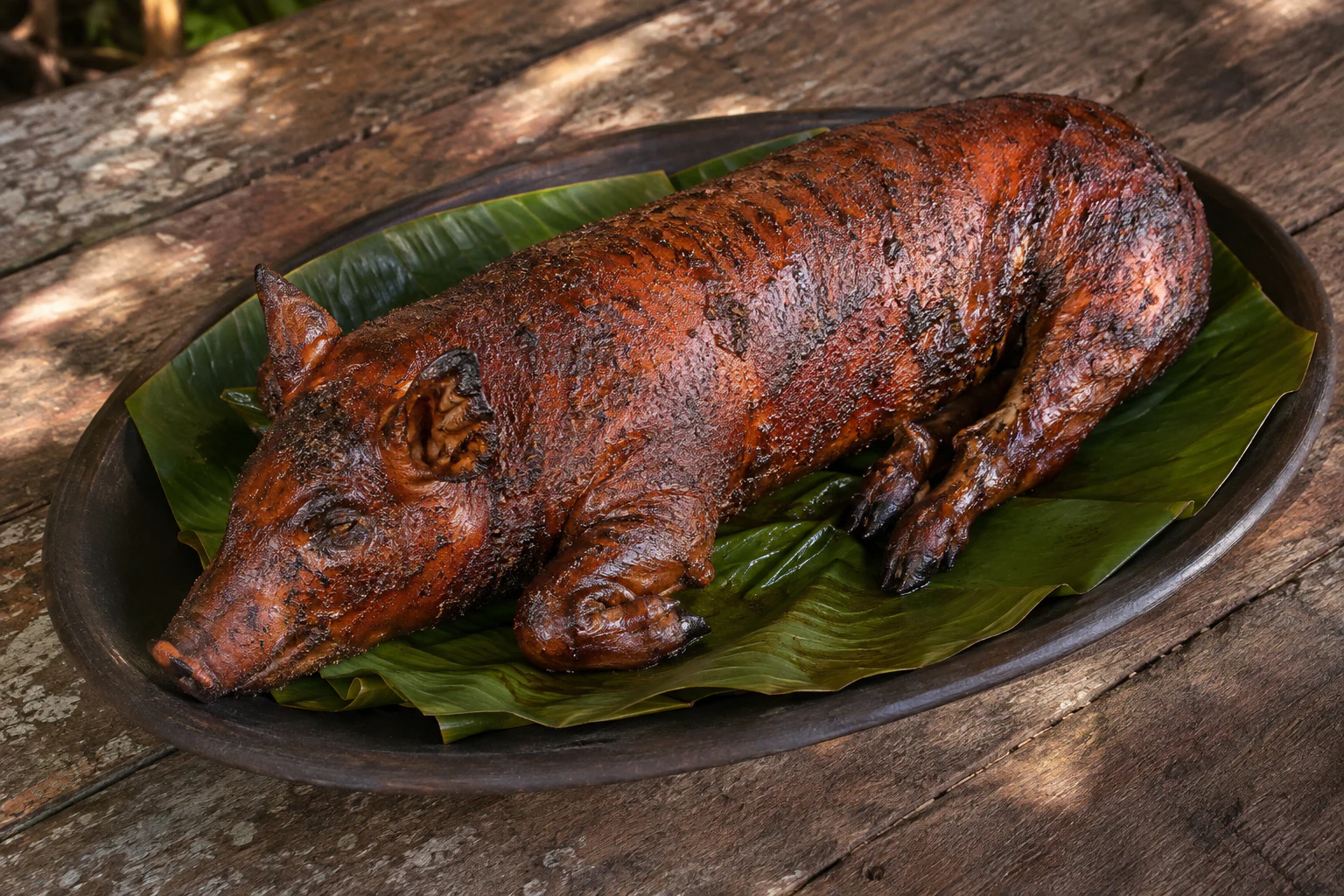
The whole roast is a shared global form. Jamaica gives this centerpiece a more particular identity through jerk: pimento, pepper, smoke, place and the people who keep the fire.
Read the name closely
One centerpiece, two different histories
The glossy whole animal has the theatrical force of a feast before anyone lifts a carving knife. Yet the name bundles together two ideas. A suckling pig is a young, unweaned animal; roasting one whole is a form found in many cuisines. The specifically Jamaican story is better located in jerk—a method, flavor system and cultural practice long anchored in pork, aromatic wood and the island's pimento.
That distinction is more than semantics. A Jamaican tourism ministry speech set Puerto Rico's lechón asado and Jamaica's jerked pork side by side as different Caribbean signatures. Contemporary Jamaican kitchens also bring the forms together: Half Moon's Jamaican beach barbecue lists jerked suckling pig, while a GoldenEye menu reported by the Jamaica Observer paired spit-roasted suckling pig with Scotch bonnet. This is therefore a living Jamaican expression, not evidence that every whole roast pig began on the island.
Three layers
Animal, method and menu expression
Separating these layers keeps a modern dish legible without flattening its history.
Suckling pig
The term describes a young animal that has not been weaned. It does not specify a country, seasoning or cooking apparatus.
- Whole-animal centerpiece
- Tender meat and a high skin-to-meat ratio
- A format shared across cuisines
Jamaican jerk
Jerk joins seasoning to cooking. Jamaican sources emphasize pimento, Scotch bonnet and thyme, with pimento or sweet wood supplying a defining smoky dimension.
- Historically associated with pork
- Seasoned, smoked and grilled
- Strongly linked with Boston, Portland
The contemporary crossing
Jamaican chefs apply jerk seasoning, local peppers, aromatic wood or other island accents to a whole young pig, creating a recognizably Jamaican menu expression.
- Documented on Jamaican menus
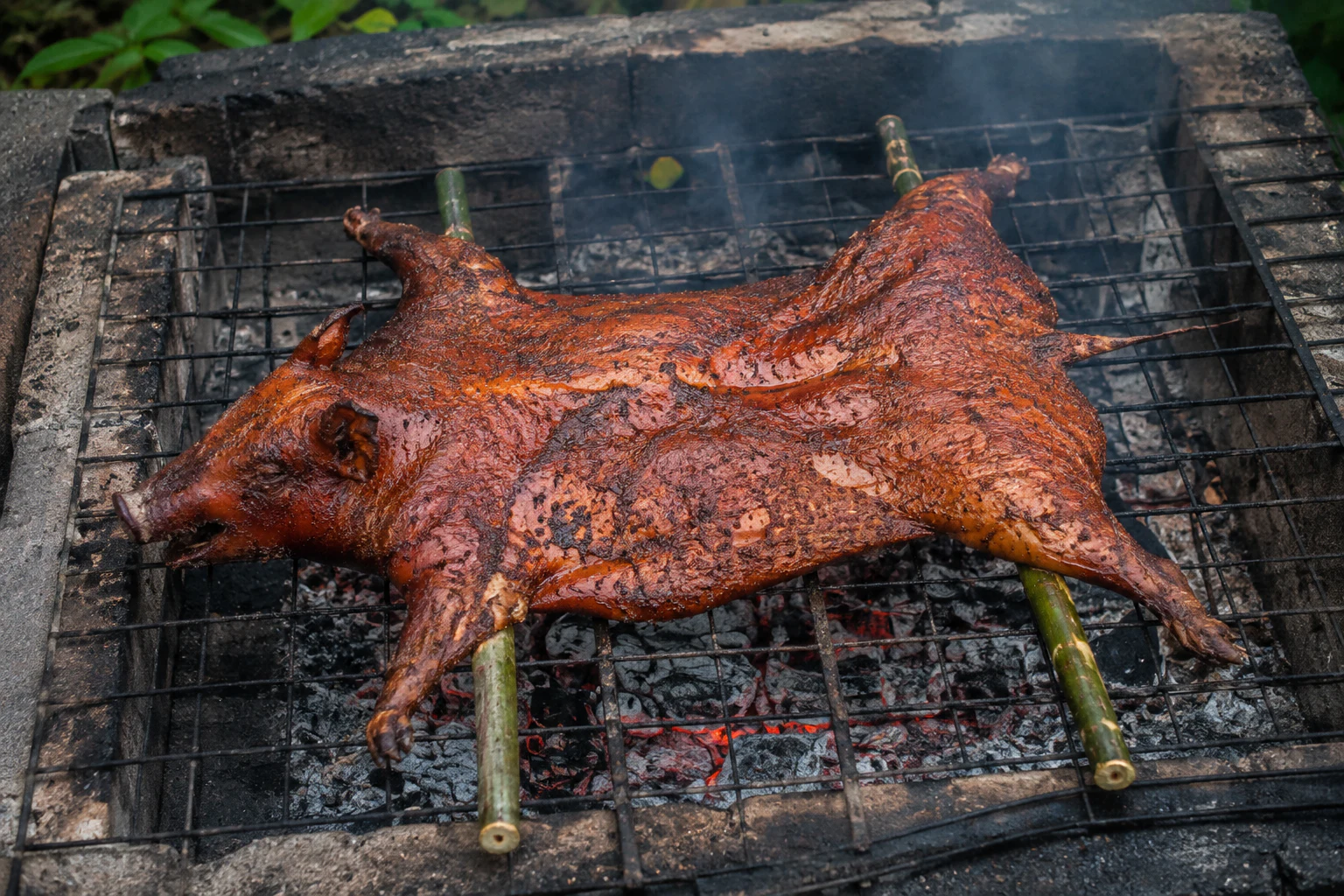
- Can be pit-roasted, grilled or spit-roasted
- No single universal formula
The sensory argument
From perfume to pit
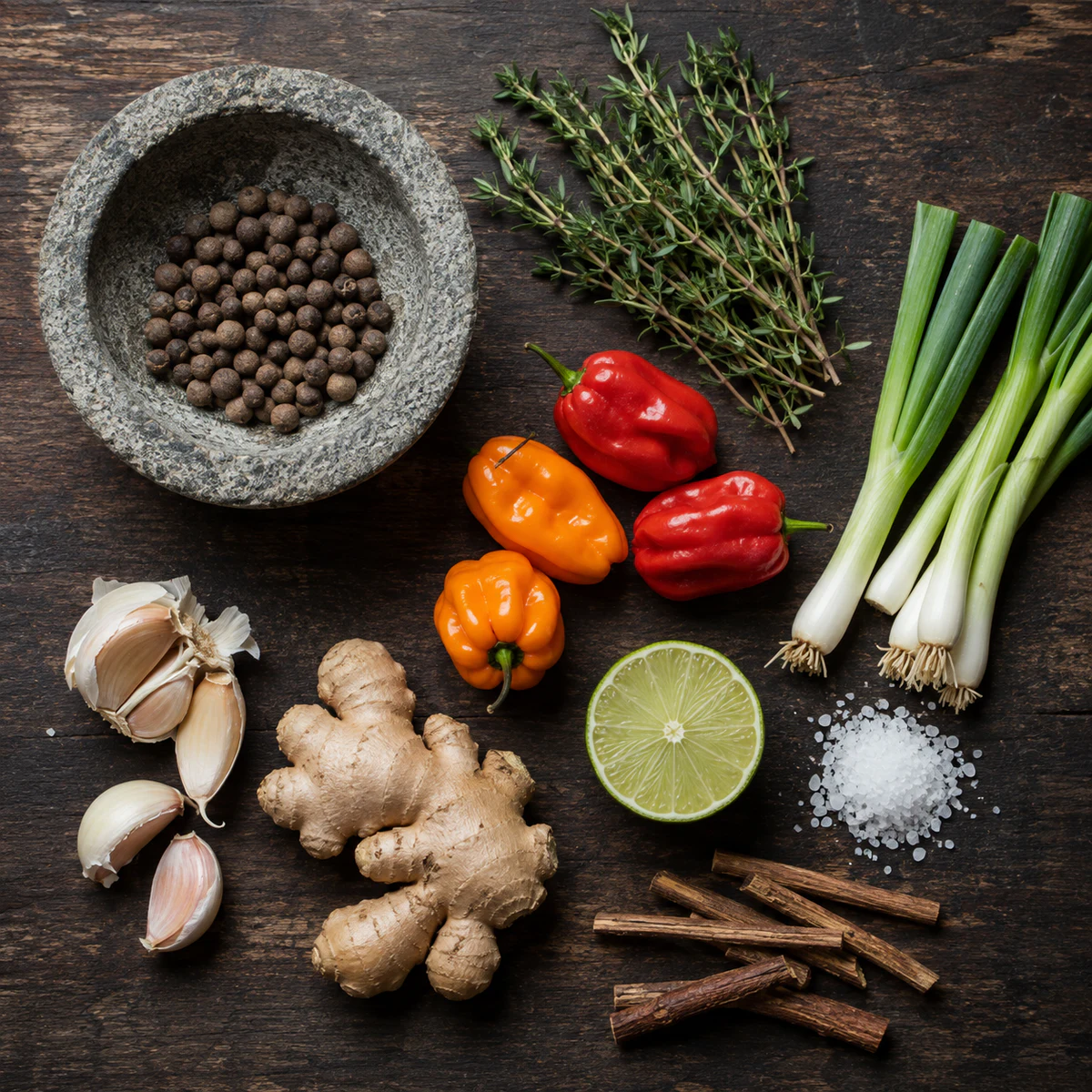
The ingredient mix can shift from cook to cook, but allspice, pepper, herbs and controlled smoke explain more than a generic coat of barbecue sauce ever could.
Four useful clues
Where Jamaican identity enters the roast
- Pimento, twice
- Berry and wood
- Pepper and herbs
- Scotch bonnet, thyme, scallion
- A place on the map
- Boston, Portland
- A historic protein
- Pork before the wide menu
Allspice berries season the meat; official Jamaican tourism guidance also treats pimento-wood smoke as a defining part of jerk.
Their balance varies, but the fruity heat of Scotch bonnet and the savory herbal base recur across contemporary accounts.
Jamaica's tourism board credits Boston with the island's earliest commercial jerk pits in the 1940s, while older practice belongs to a deeper history.
Jamaican heritage accounts place pork at the center of older jerk practice; today's jerk counters extend the method to chicken, fish and more.
What the cook is solving
A whole animal turns one fire into many heat zones
This is a framework for understanding the work, not a universal cook schedule. Animal size, preparation, equipment and fuel all change the path.
- 01
Name the method before the flavor
Jerk is more than a spice label. Jamaican sources describe seasoned meat cooked with smoke and live fire; without that cooking dimension, an oven roast with jerk spices is more accurately a Jamaican-style adaptation.
- 02
Let pimento and pepper stay distinct
Pimento berry supplies warm, clove-like depth, while Scotch bonnet brings aromatic heat. Thyme, scallion, garlic and ginger can round the paste without erasing those two leading notes.
- 03
Read thick and thin sections separately
Hams and shoulders do not heat like belly and ribs, and crisp skin asks for a drier finish than meat needs. An experienced whole-hog cook manages distance, ember intensity and exposure rather than trusting one spot.
- 04
Verify, rest and serve safely
USDA guidance sets 145°F (62.8°C) with at least a three-minute rest as the minimum for pork roasts. Check a large, irregular roast in several thick places away from bone, move cooked meat to clean platters and refrigerate leftovers within two hours.
What the evidence can hold
Jamaican does not mean every whole roast began here
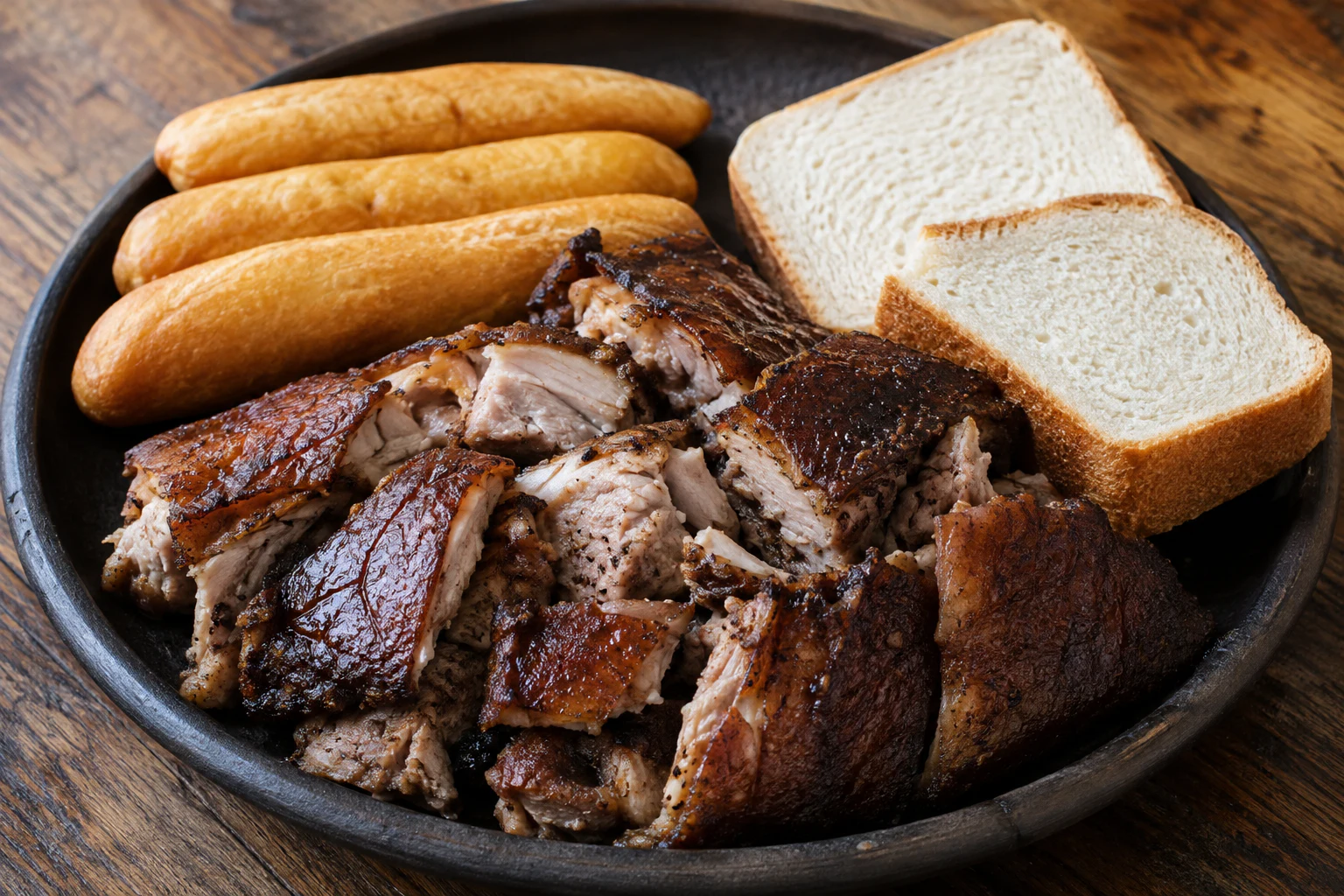
Institutional accounts do not tell the story in exactly the same way. Jamaica's National Library and official culinary-heritage material describe Taíno barbacoa alongside African or Coromantee cooking knowledge; Smithsonian reporting emphasizes Maroon survival, exchange with Indigenous people and the need to cook without betraying mountain refuges. These are layered origin accounts, not a clean single-inventor claim.
The most defensible conclusion is also the most useful at the table. The young whole pig supplies the scale and spectacle. Jamaica enters through jerk's flavor, smoke, geography and living practice—and through cooks who continue to make an old method speak in new feast forms.
Research notes
Sources behind this article
Jamaican institutional sources sometimes compress a layered history into simple origin lines. This article reads them alongside local reporting and museum scholarship, treating Taíno, African or Coromantee and Maroon contributions as overlapping accounts rather than a settled single-inventor story.
- National Library of Jamaica: History Notes Documents Jamaican culinary heritage, including Taíno cooking methods, African or Coromantee influence on jerk, pork over coals and pimento branches, and Boston in Portland.
- Government of Jamaica: Culinary Heritage Describes Jamaican cuisine as a layered cultural inheritance and connects jerk to Taíno barbacoa, African cooking knowledge, pork, pimento and Portland.
- Jamaica Ministry of Tourism: Caribbean culinary tourism address Useful official evidence that distinguishes Puerto Rican lechón asado from Jamaica's world-renowned jerked pork rather than treating the traditions as interchangeable.
- Visit Jamaica: Iconic Jamaican Meals Summarizes the contemporary jerk flavor system—Scotch bonnet, thyme and pimento—and the importance assigned to pimento-wood smoke.
- Visit Jamaica: Boston, Portland Connects Boston with jerk pork, roast breadfruit and the early commercial jerk pits that developed there during the 1940s.
- Smithsonian Magazine: A Brief History of Jamaican Jerk Provides a Jamaican writer's evidence-led account of Maroon and Indigenous exchange, historic and modern seasoning, underground cooking and contemporary jerk culture.
- The Jamaica Star: Boston Bay Keeps Jerk Culture Cooking Local reporting records present-day Boston cooks using pimento, sweetwood and wild coffee branches and passing methods through families.
- Jamaica Observer: A GoldenEye lunch Documents a contemporary Jamaican menu serving spit-roasted suckling pig with Scotch bonnet and local accompaniments.
- Half Moon Jamaica: Beach BBQ menu A current Jamaican menu that explicitly lists jerked suckling pig alongside jerked chicken and sausage, confirming the modern combination.
- Merriam-Webster: Suckling Establishes the narrow definition of a suckling as a young unweaned animal, separate from cuisine or cooking method.
- USDA FSIS: Safe Minimum Internal Temperature Chart Current official guidance for cooking pork roasts to at least 145°F with a three-minute rest and refrigerating perishable food promptly.
- USDA FSIS: Food Thermometers Explains thermometer placement away from bone, fat and gristle and the need to check large irregular foods in multiple locations.
Keep exploring
More stories for your table
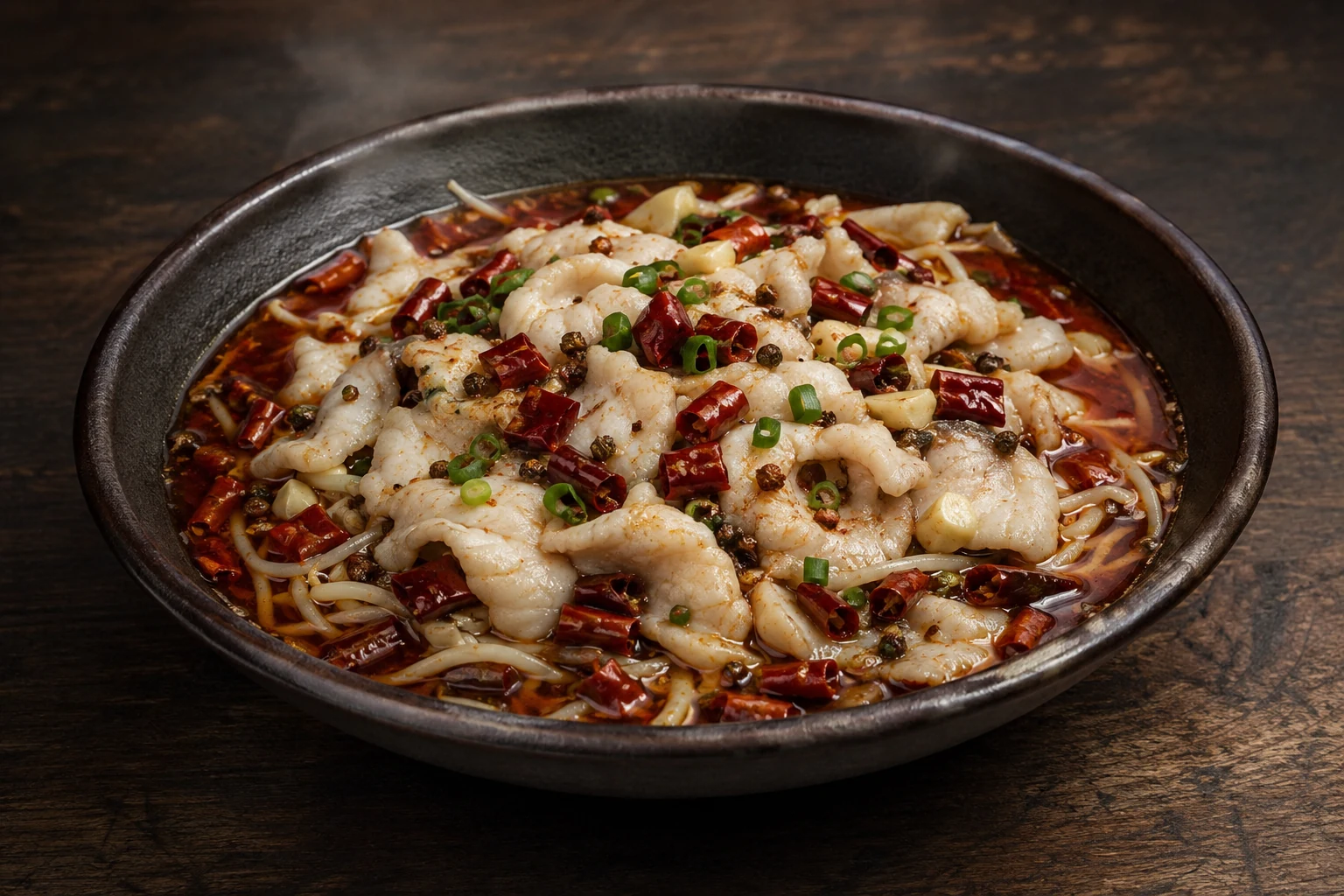
ChinaFish dish
Shui Zhu Yu (Sichuan Water-Boiled Fish)
Why Sichuan water-boiled fish stays tender beneath its dramatic mala finish: a close look at the broth, hot-oil bloom, Chongqing context, and a practical home method.
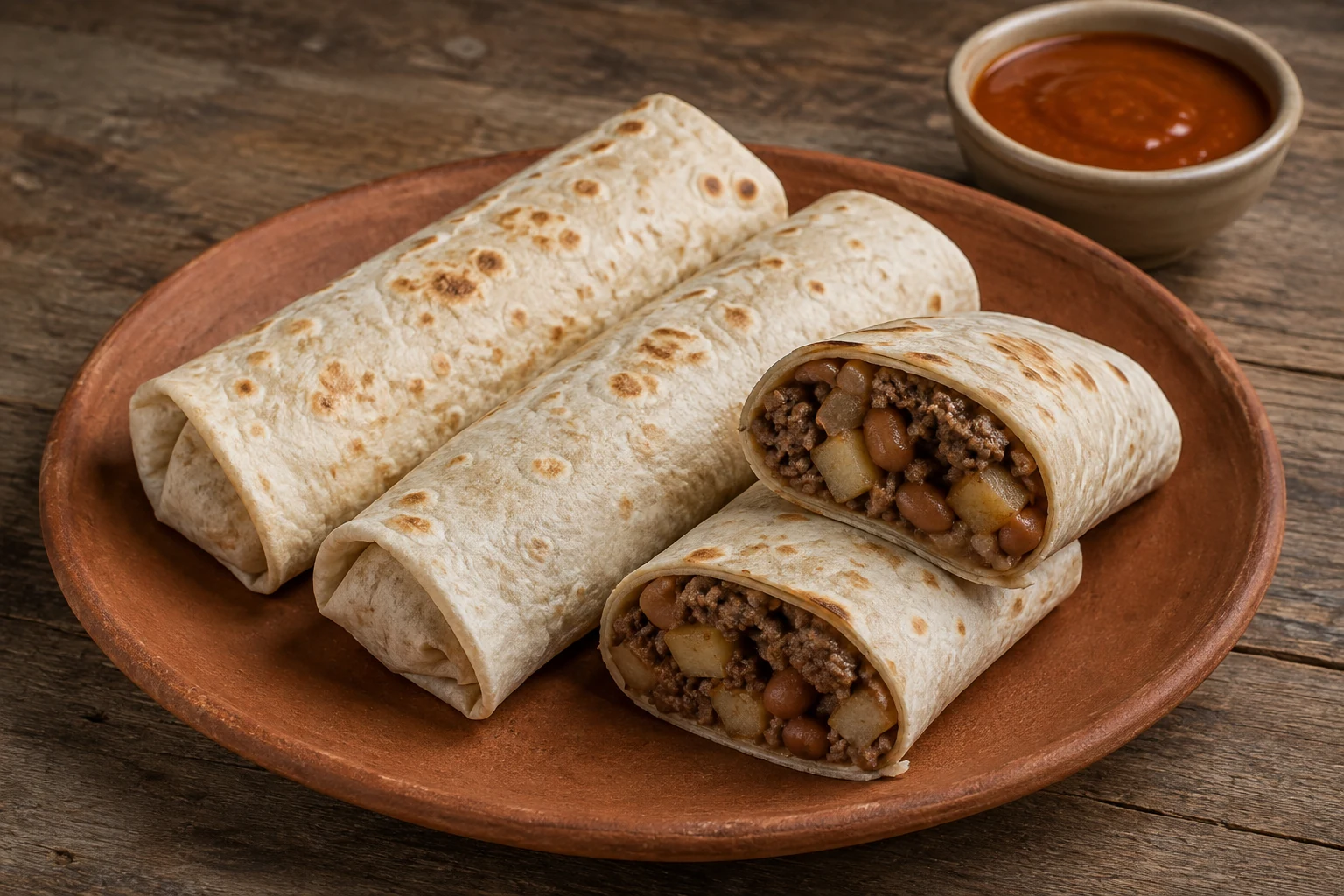
MexicoFilled tortilla
Mexican Burrito
A guide to the slender flour-tortilla burritos of northern Mexico, their varied regional fillings, and a practical beef, potato, and bean recipe.
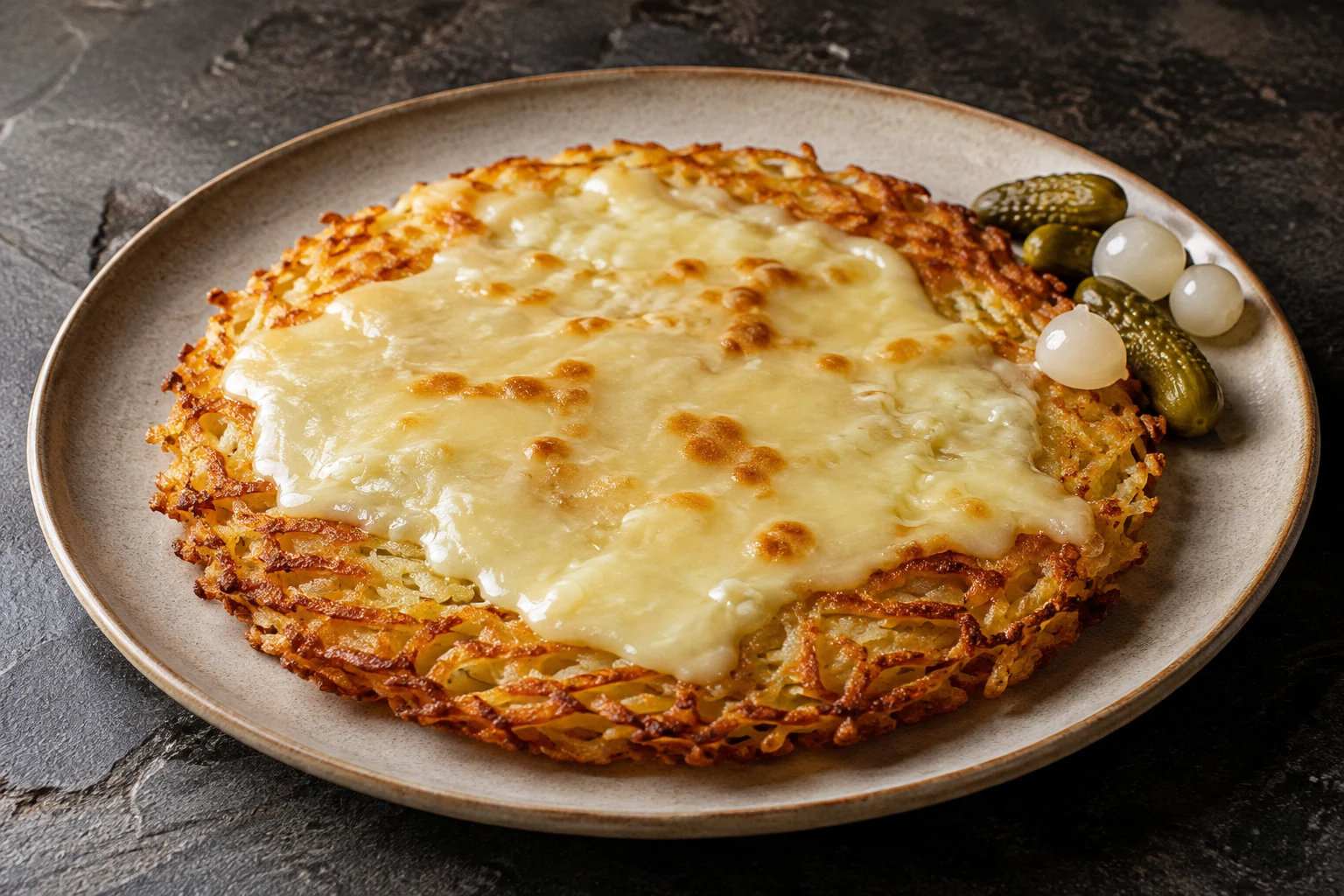
SwitzerlandPotato dish
Rösti with Raclette Cheese
A crisp Swiss potato cake meets molten raclette in a cross-regional pairing that separates documented tradition from a practical home adaptation.