
Kolak Pisang Ubi: A Sweet Bowl, Cooked in Stages
Kolak pisang ubi
Banana and sweet potato meet in a fragrant broth of coconut milk and palm sugar. This Indonesian favourite of the Ramadan table has a useful kitchen lesson: each ingredient needs its own turn in the pot.
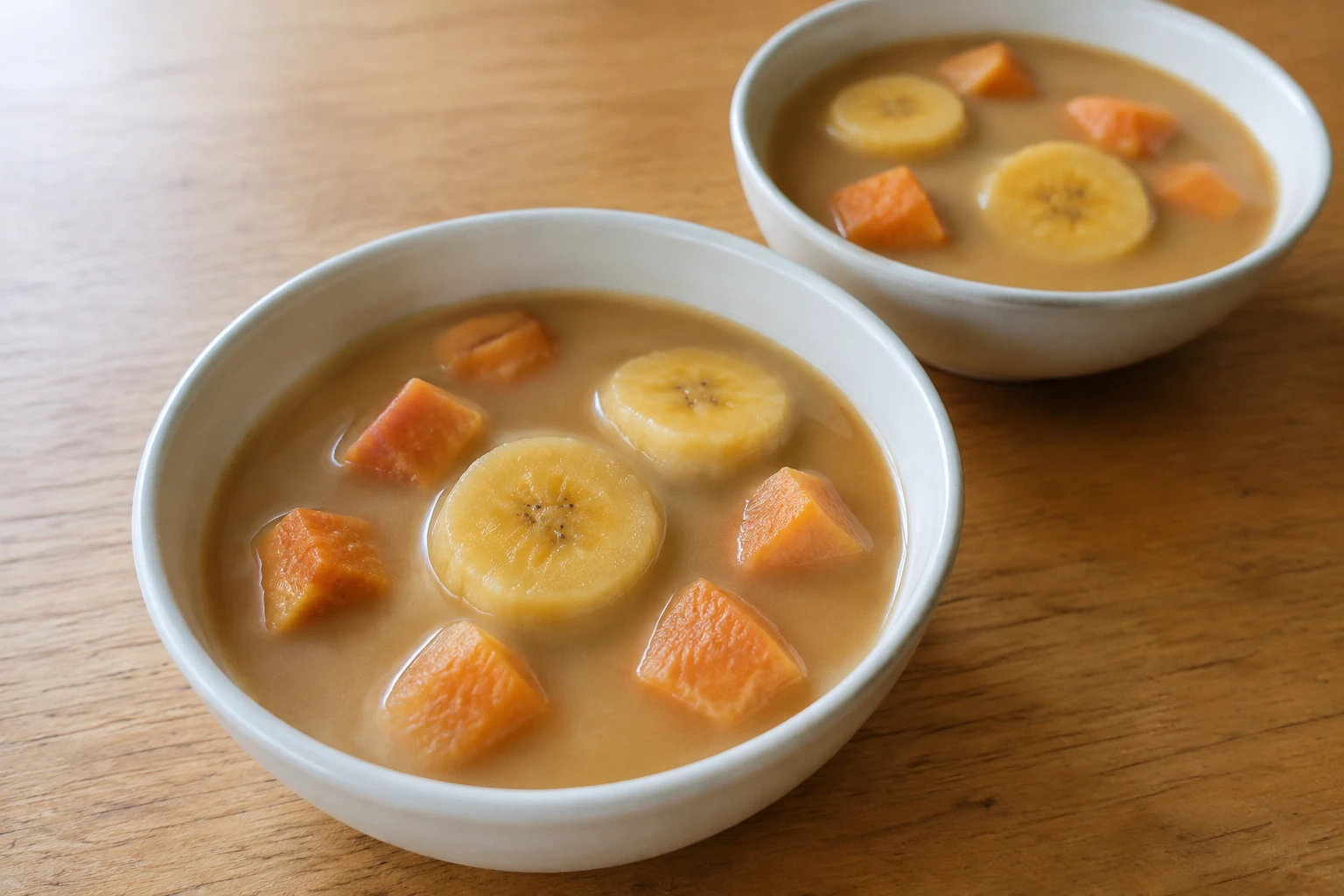
A familiar bowl at buka puasa
A sweet beginning, with room for variation
Kolak belongs to the lively choice of foods for buka puasa, the breaking of the fast. Reporting from East Jakarta’s Banjir Kanal Timur on February 19, 2026, ANTARA described families and friends gathering before the evening call to prayer, with kolak pisang among the foods at the stalls. That scene places the dessert in a shared evening routine, alongside many other choices.
The base is coconut milk, palm sugar and pandan; the pieces within it can vary. Chinese Indonesian cook Anita Jacobson lists cooking bananas, sweet potatoes and other additions, and notes that kolak is eaten beyond Ramadan too. Here, pisang is banana and ubi is the sweet potato in our bowl. The focus is a manageable pairing with two different textures: soft banana slices and tender cubes of sweet potato.
Build tenderness in three stages
Indonesia Travel’s banana-and-sweet-potato recipe gives the root a head start. Sasa’s banana version also reserves coconut milk for the end. Together they suggest a useful approach for this home adaptation.
- 01
Start with the firmest pieces
Sweet potato needs time before the softer fruit goes in. Cut the cubes to a similar size, then give them their first simmer in water. A partly tender outside and resistant centre leave room for the cooking that follows.
- 02
Let the banana keep its shape
Jacobson names pisang kepok and pisang tanduk among her choices. Our recipe uses ripe but firm plantain. Add the rounds later and stir sparingly; lift out any sweet-potato pieces that finish ahead of them.
- 03
Treat coconut milk as the finish
Sasa warns against a vigorous boil after adding coconut milk. Lower the heat, fold it through and let the broth come together gently. The aim is a flowing sweet broth surrounding intact pieces, with no added starch thickener.
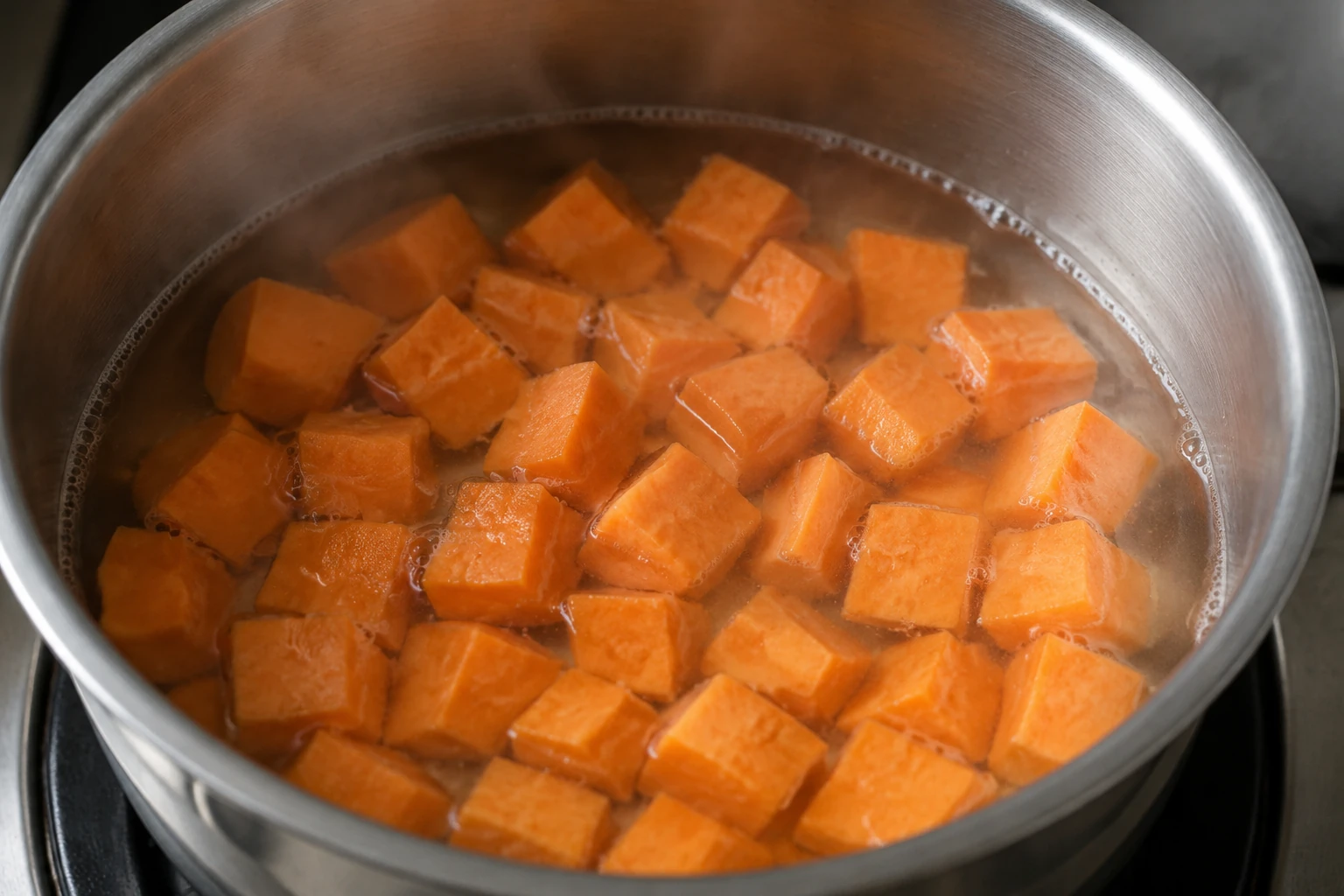
A home adaptation
Banana and sweet-potato kolak
This six-bowl adaptation draws on Indonesia Travel’s staged banana-and-sweet-potato method and Sasa’s strained sugar syrup and gentle coconut finish. The measured quantities and timing are our home version, using ripe plantain and canned coconut milk. Allow about 10 minutes to prepare, 30 minutes to cook and 5 minutes to stand; chilling takes extra time. These are estimates, and the recipe has not been kitchen tested.
Ingredients
Fruit and root
- 300 g peeled ripe but firm plantain, cut into rounds about 2 cm thick
- 300 g peeled orange sweet potato, cut into roughly 2–2.5 cm cubes
The sweet coconut broth
- 600 ml water, divided: 500 ml for the sweet potato and 100 ml for the sugar syrup
- 80 g dark palm sugar, finely chopped
- 200 ml unsweetened full-fat canned coconut milk, stirred smooth before measuring
- 1 fresh or thawed frozen culinary pandan leaf, rinsed and tied in a loose knot
- 1.5 g / ¼ tsp fine salt
Method
- 1
Give the sweet potato a head start.
Put the sweet-potato cubes and 500 ml of the water in a small saucepan, about 18–20 cm wide. Bring to a simmer, then lower the heat and cook for about 5–7 minutes. The outside should begin to soften while the centre still resists a thin skewer. Keep the simmer gentle so the cubes do not knock against one another.
- 2
Dissolve and strain the sugar.
While the sweet potato cooks, heat the palm sugar with the remaining 100 ml water in a second small pan, stirring until dissolved, about 2–3 minutes. Pour the syrup through a fine sieve into a heatproof jug to catch any grit. When the sweet potato reaches the stage above, add all the strained syrup, the pandan leaf and the salt to its pan.
- 3
Add the plantain.
Add the plantain rounds and bring the liquid back to a very gentle simmer. Cook for roughly 8–12 minutes, checking the pieces rather than relying only on the clock. The plantain should be tender all the way through but hold its shape. If the sweet potato becomes fully tender first, lift those cubes into a bowl with a slotted spoon and reserve them for the next step. Avoid vigorous stirring.
- 4
Finish with coconut milk.
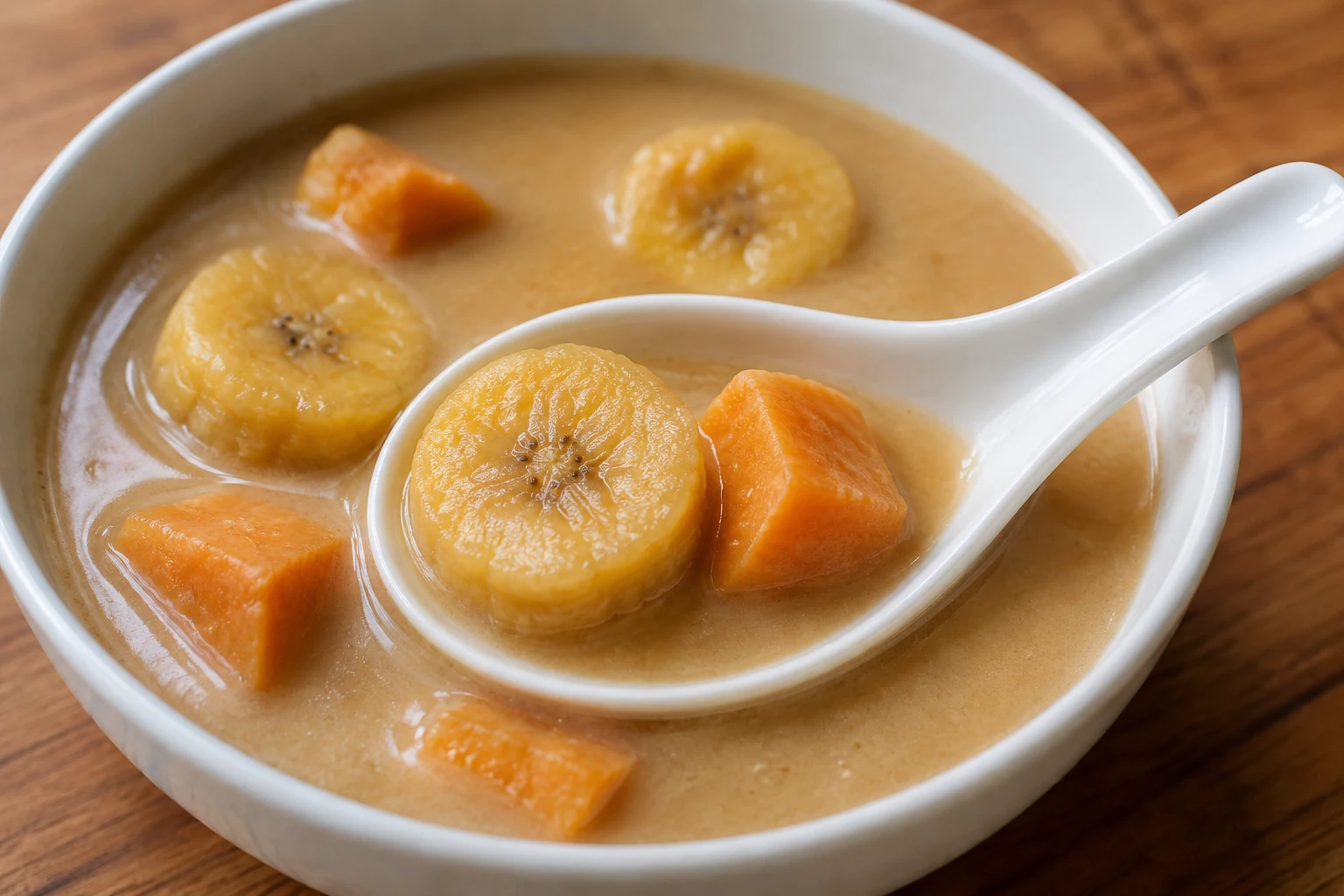
Reduce the heat to low. Return any reserved sweet potato, pour in all the coconut milk and fold gently through the fruit and syrup. Heat for about 3 minutes, until the broth is steaming with only small bubbles at the edge. Keep it below a rolling boil. The coconut milk should blend into a smooth, pourable light brown broth, and both plantain and sweet potato should be tender; continue gently if either still needs time.
- 5
Rest briefly and portion.
Remove and discard the pandan leaf. Turn off the heat and let the kolak stand for 5 minutes. Gently distribute the fruit and sweet potato among six small bowls, then ladle the broth around them. Serve warm, or follow the chilling guidance below for a cold serving. Palm sugars vary in colour, so the exact shade of the finished broth will vary.
Research notes
Sources behind the bowl
Indonesian reporting and recipes establish the occasion and cooking practice. The recipe’s quantities and schedule are a home adaptation; the cooling guidance comes from the FDA.
- Indonesia Travel — kolak pisang and ubi for takjil The official tourism site documents banana and sweet-potato kolak for Ramadan and a sequence that starts the sweet potato first and adds coconut milk last.
- ANTARA — takjil at East Jakarta’s Banjir Kanal Timur Siti Nurhaliza’s February 19, 2026 reporting places kolak pisang among the foods sold as people gathered before breaking the fast.
- Anita Jacobson, Daily Cooking Quest — kolak An Indonesian cook’s recipe establishes the coconut-milk, palm-sugar and pandan base, cooking-banana choices, a barely simmering method and year-round warm or cold service.
- Sasa — kolak pisang kepok The Indonesian coconut-milk producer’s recipe strains the sugar liquid and adds coconut milk after the banana, using low heat to avoid separation.
- Marvellina, What To Cook Today — kolak ubi pisang The author recalls eating cold kolak during childhood market visits. Used for that personal serving context, rather than as an origin account or a guide to every regional variation.
- FDA — refrigeration and prompt cooling Current official guidance supports shallow containers, prompt refrigeration, a fridge at 40°F or below, and the two-hour limit shortened to one hour above 90°F.
Keep exploring
More stories for your table
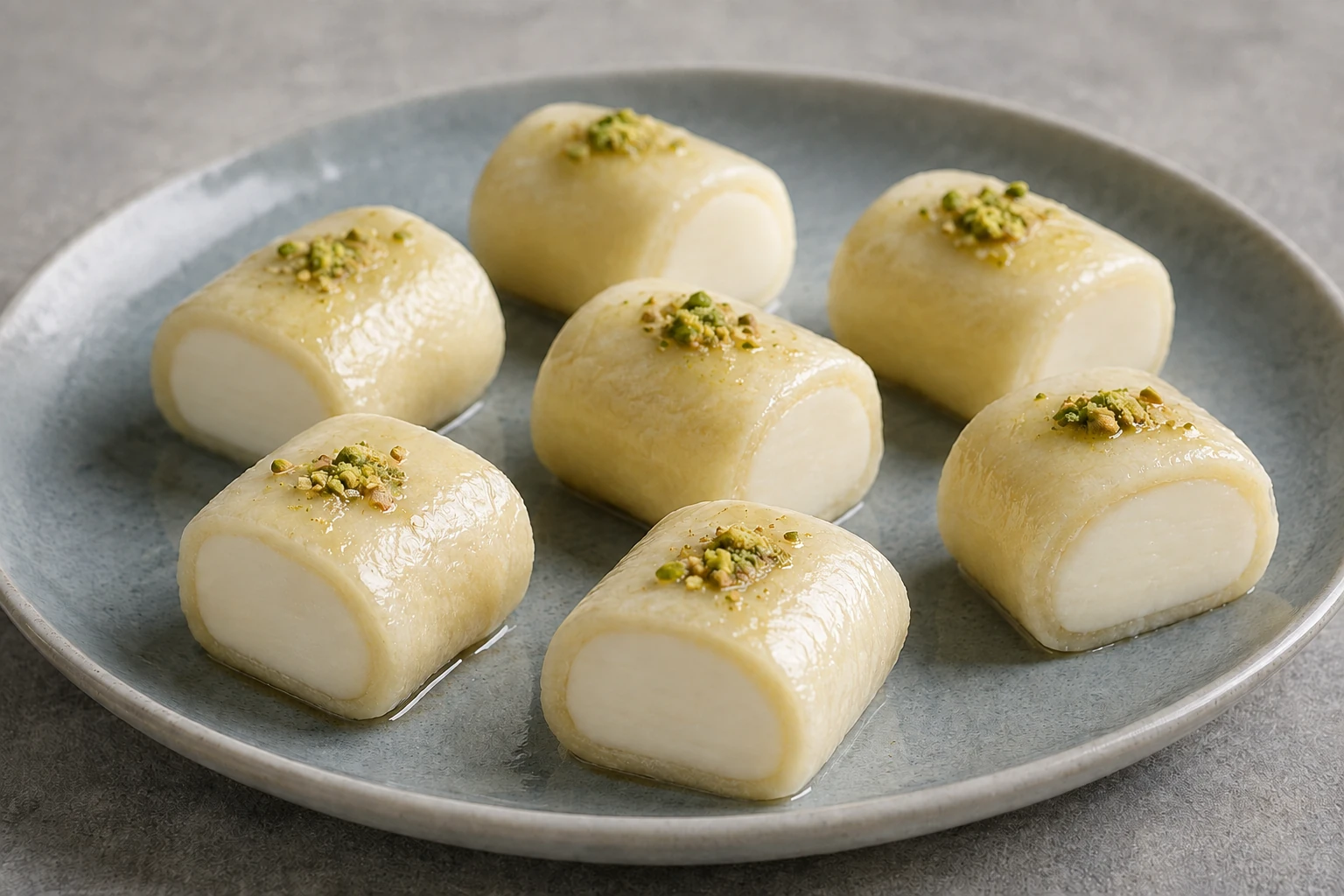
LebanonSweet cheese dessert
Halawet el Jibn: When Cheese Becomes the Wrapper
How halawet el jibn turns cheese and semolina into a cream-filled sheet, with documented Tripoli serving styles and a practical mozzarella adaptation.
SpainSweet fritters
Buñuelos de Viento: How Spain’s Airy Fritters Rise
Why buñuelos de viento puff, when to serve them plain or filled, and how to make a small batch of Spain’s airy lemon fritters at home.
JapanYōshoku rice dish
Hayashi Rice: A Sauce Translated for Rice
Hayashi rice turned a Western-style brown meat sauce into Japanese yōshoku by changing the plate, the seasoning, and eventually the home pantry.