
Karedok: Build the Dressing Before the Salad
Karedok
A thick peanut dressing, sharpened with kencur and tamarind, meets crisp raw vegetables. Control the grind and the water first; bring the salad together at the last moment.
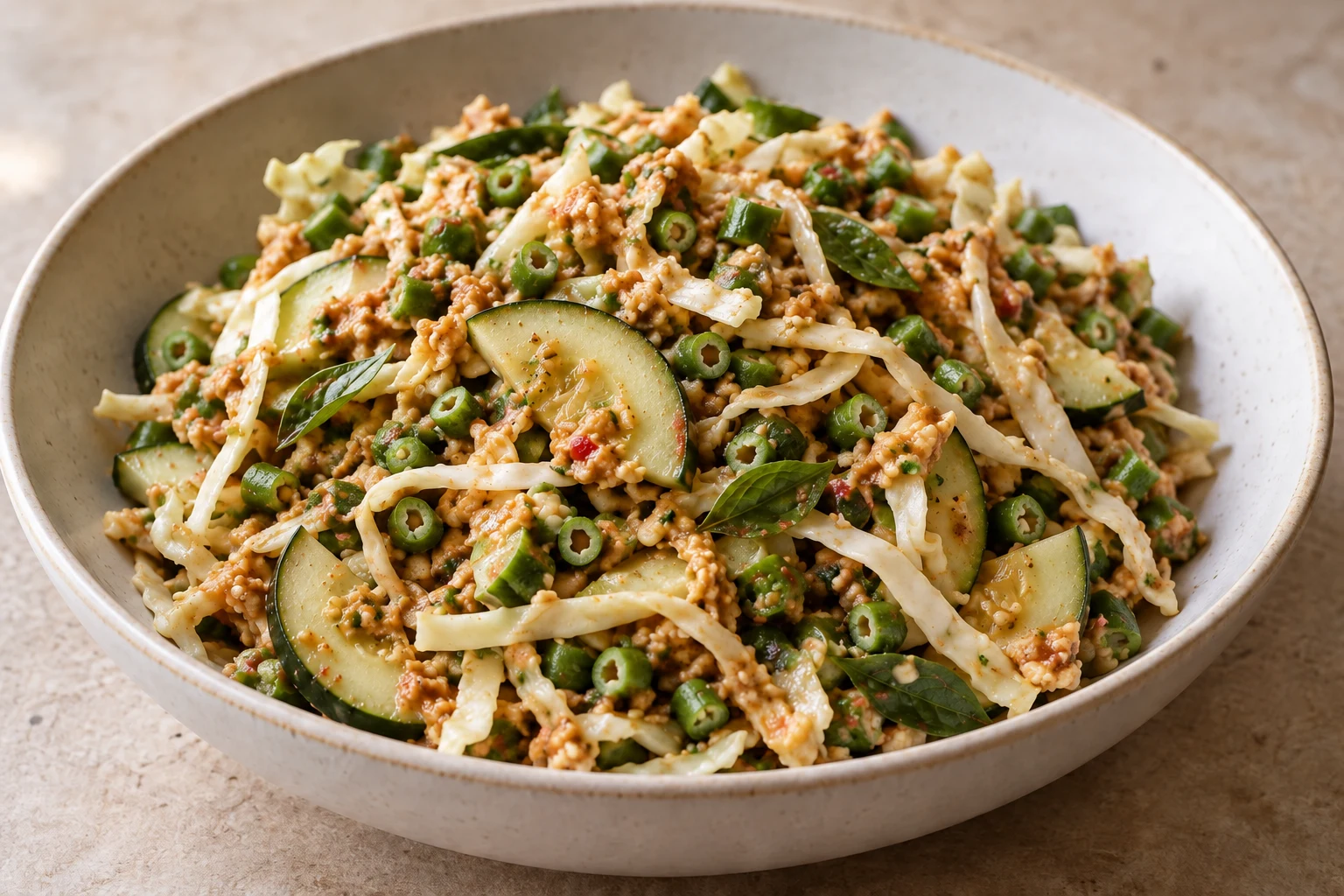
Sunda, West Java
The peanuts are only part of the dressing
Karedok is a Sundanese preparation of raw vegetables. Indonesia’s tourism site describes the familiar mixed salad with a thick peanut dressing seasoned with garlic, kencur and tamarind. Cucumber brings a juicy bite; finely cut cabbage and yardlong beans give the bowl several kinds of crunch. The home version below asks a practical question: how do you coat those vegetables without flooding them?
Keep the kencur in view when shopping. Mustajab’s ministry-published Koki Kumis dan Lima Cerita Kuliner records its Sundanese name, cikur, and calls kemangi surawung. The book also describes karedok variations centred on different vegetables, with different seasonings. Our peanut-dressed mix is one adaptation within that wider family, not a claim that every karedok has an identical ingredient list.
Three decisions before the first toss
- 01
Give the aromatics their own turn.
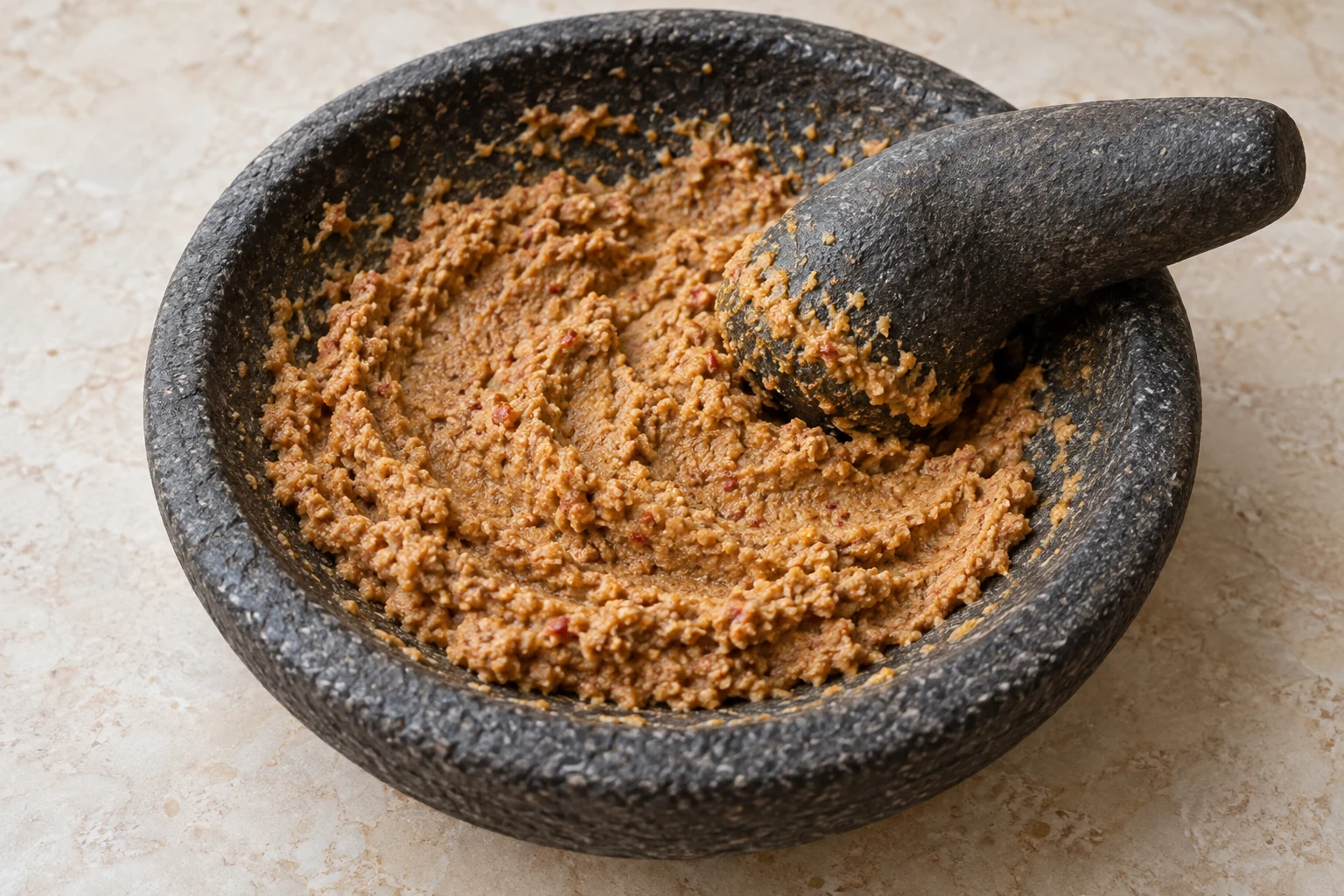
Rasabunda and Nining Prikasih’s recipe excerpted by Kompas both grind the aromatics before adding the peanuts. Use that order to work the garlic and kencur into a fine base before the mortar fills with nuts.
- 02
Add water by the spoonful.
Both recipes loosen the ground mixture gradually. In the adaptation below, use a cucumber slice to judge it: the dressing should spread and cling. The listed water is an allowance, not a command to pour it all in.
- 03
Keep rinse water out of the bowl.
Dry the washed vegetables before cutting and mixing. FDA guidance recommends drying produce after rinsing; here it also keeps that unmeasured water out of the dressing. Toss only when ready to serve, so the cut vegetables spend less time sitting in the sauce.
A home adaptation
Karedok with cucumber, cabbage and yardlong beans
Makes 4 side-dish servings. Allow about 35 minutes of preparation; no stovetop cooking is needed. This untested adaptation draws on Rasabunda’s dressing sequence and the small vegetable cuts described in Indonesian sources. It uses ready-roasted peanuts instead of frying them, keeps the dressing free of shrimp paste, and omits sprouts and eggplant. Have a sturdy mortar and pestle, a small strainer and a mixing bowl ready. Weigh the vegetables after trimming.
Ingredients
Raw salad
- 200 g cucumber
- 150 g green cabbage, tough core removed
- 100 g tender yardlong beans (kacang panjang), ends trimmed
- 5 g kemangi leaves, picked from their stems
Ground dressing
- 120 g unsalted roasted peanuts, skins removed
- 8 g fresh kencur, peeled and thinly sliced
- 1 small clove garlic, peeled and sliced
- ½–1 small fresh red chili, sliced; use less for a milder dressing
- 25 g palm sugar, finely shaved
- ½ tsp fine salt, plus more to taste
- 10 g tamarind pulp from a pressed block; not concentrated tamarind extract
- 75–120 ml drinking water: 45 ml warm for the tamarind, then 30–75 ml cool for thinning
Method
- 1
Prepare the tamarind.
Put the tamarind pulp in a small bowl with the 45 ml warm water. Leave it for 5 minutes while preparing the vegetables, then mash well with a spoon. Press it through a small strainer, collecting the liquid and soft pulp; discard seeds and coarse fibres. Reserve all the strained tamarind liquid for the dressing.
- 2
Wash, dry and cut.
Start with clean hands, utensils and a clean preparation surface. Remove the cabbage’s outermost leaves. Rinse all fresh produce under running water before peeling or cutting, scrub the cucumber with a clean produce brush, then drain and dry with a clean towel. Use no soap or produce wash. Slice the cucumber into thin half-moons or quarters, about 3 mm thick; shred the cabbage into narrow ribbons and cut the yardlong beans across into roughly 5 mm pieces. Keep the kemangi leaves whole. Prepare the kencur, garlic and chili as listed.
- 3
Make the aromatic base.
Pound the sliced kencur, garlic, chili and ½ tsp salt in the mortar until there are no obvious pieces of garlic or kencur. Work in all the palm sugar, then add the peanuts in two or three additions. Grind and press until the nuts form a thick, finely textured paste with the seasonings; stop when no large peanut pieces remain.
- 4
Thin to a coating consistency.
Stir all the strained tamarind liquid into the peanut paste. Add 30 ml of the cool water and mix thoroughly. If the dressing remains too stiff to spread over a cucumber slice, add more of the remaining 45 ml water a teaspoon at a time. It should cling to the slice in a textured coating, rather than run straight off. You may not need all the water. Taste and adjust salt.
- 5
Dress just before serving.
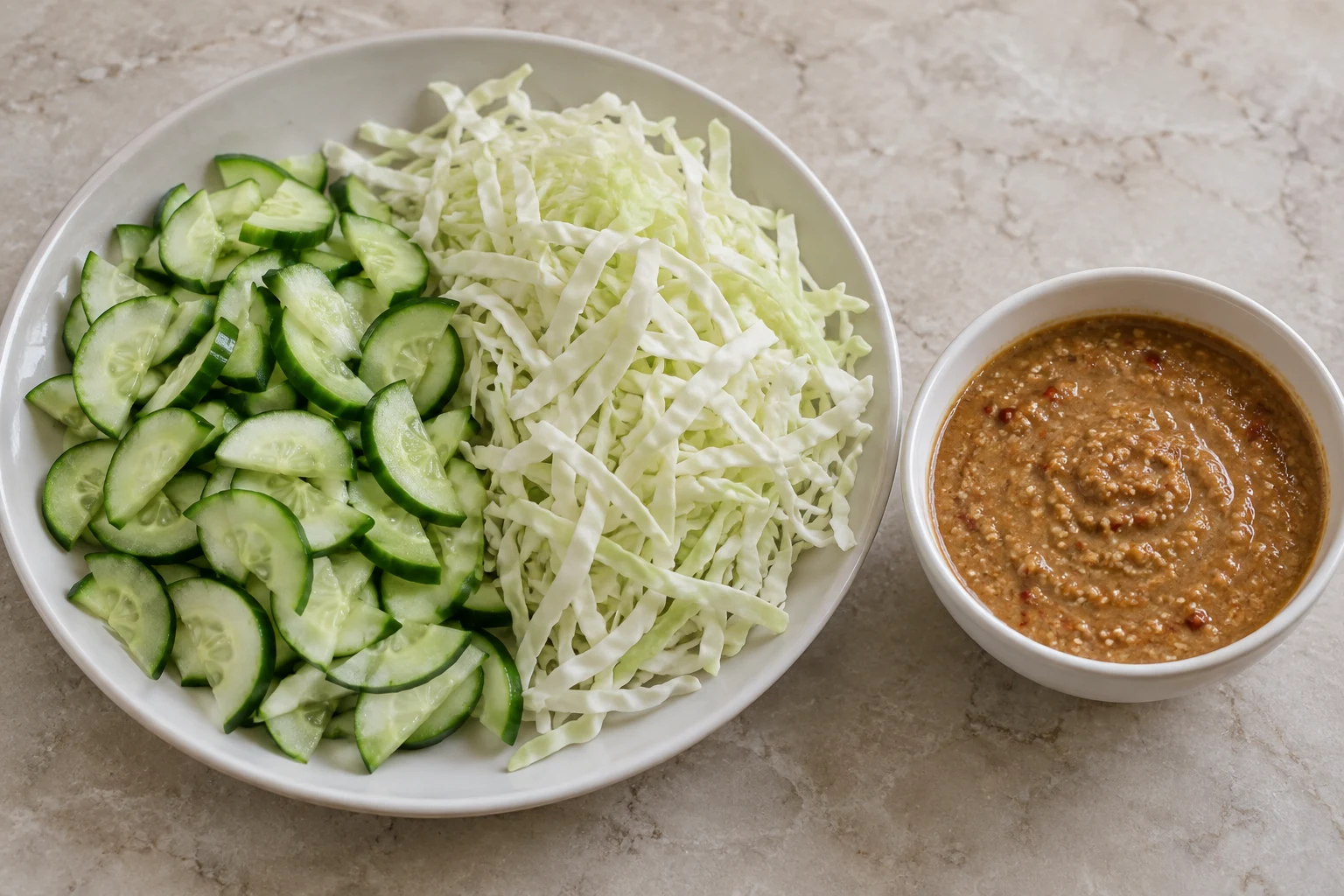
Put the cucumber, cabbage, yardlong beans and kemangi in the mixing bowl. Scrape in the dressing and toss gently until evenly coated. Divide among four side-dish portions and serve promptly. If preparing components ahead of the meal, refrigerate the cut vegetables and dressing separately at 4°C / 40°F or below; combine them when ready to eat.
Research notes
Sources and adaptation notes
Four Indonesian culinary sources establish the dish and its preparation. Two FDA pages inform produce handling. Quantities, the selected vegetables and the cucumber-slice consistency check are editorial choices for the untested home adaptation.
- Indonesia Travel — Karedok Official tourism description of the Sundanese raw-vegetable preparation and its peanut, garlic, kencur and tamarind dressing. The body text is Indonesian.
- Rasabunda — Resep Karedok A dressing without listed shrimp paste; aromatics are ground first, peanuts follow, then tamarind liquid and additional water. Basis for the adaptation’s sequence.
- Kompas — Resep Karedok, Sayur Bumbu Kacang Khas Sunda An excerpt from Nining Prikasih’s 24 Resep Praktis Masakan Sunda; independently supports grinding order and restrained thinning. Its potato and terasi are not used here.
- Mustajab — Koki Kumis dan Lima Cerita Kuliner Published by Badan Pengembangan dan Pembinaan Bahasa in 2017. Printed pages 22–23 describe karedok variations, small vegetable cuts and the words cikur and surawung.
- FDA — Selecting and Serving Produce Safely Raw-sprout risks, the limits of washing, separation from raw animal foods and refrigeration of cut produce.
- FDA — 7 Tips for Cleaning Fruits, Vegetables Rinsing before cutting, brushing cucumber, drying with a clean towel and removing outer cabbage leaves.
Keep exploring
More stories for your table

IndonesiaVegetable sides
Plecing Kangkung: Greens First, Sambal Last
Cook the stems before the leaves, drain thoroughly, then add coarse tomato sambal. A guide to Lombok’s plecing kangkung, with a peanut-topped home adaptation.
NepalPotato salad
Aloo ko Achar: Dress the Potatoes in Two Stages
Make Nepali potato achar with toasted, ground sesame and a final spice-oil dressing. Learn the sequence, then try a complete potato-and-cucumber adaptation.
GeorgiaBeet salad
Charkhlis Chogi: When Tart Fruit Dresses Beets
Roasted beets, tart fruit and fresh herbs make Georgian charkhlis chogi. Explore two sauce textures, then cook a complete dried-sour-cherry adaptation.