
Túrós Csusza: Crisp Pasta, Soft Curds
Túrós csusza
The pasta can have browned edges while the cheese stays soft and crumbly. Hungarian cooks achieve that contrast by deciding when the curds and sour cream meet the heat—and where the crisp bacon goes.
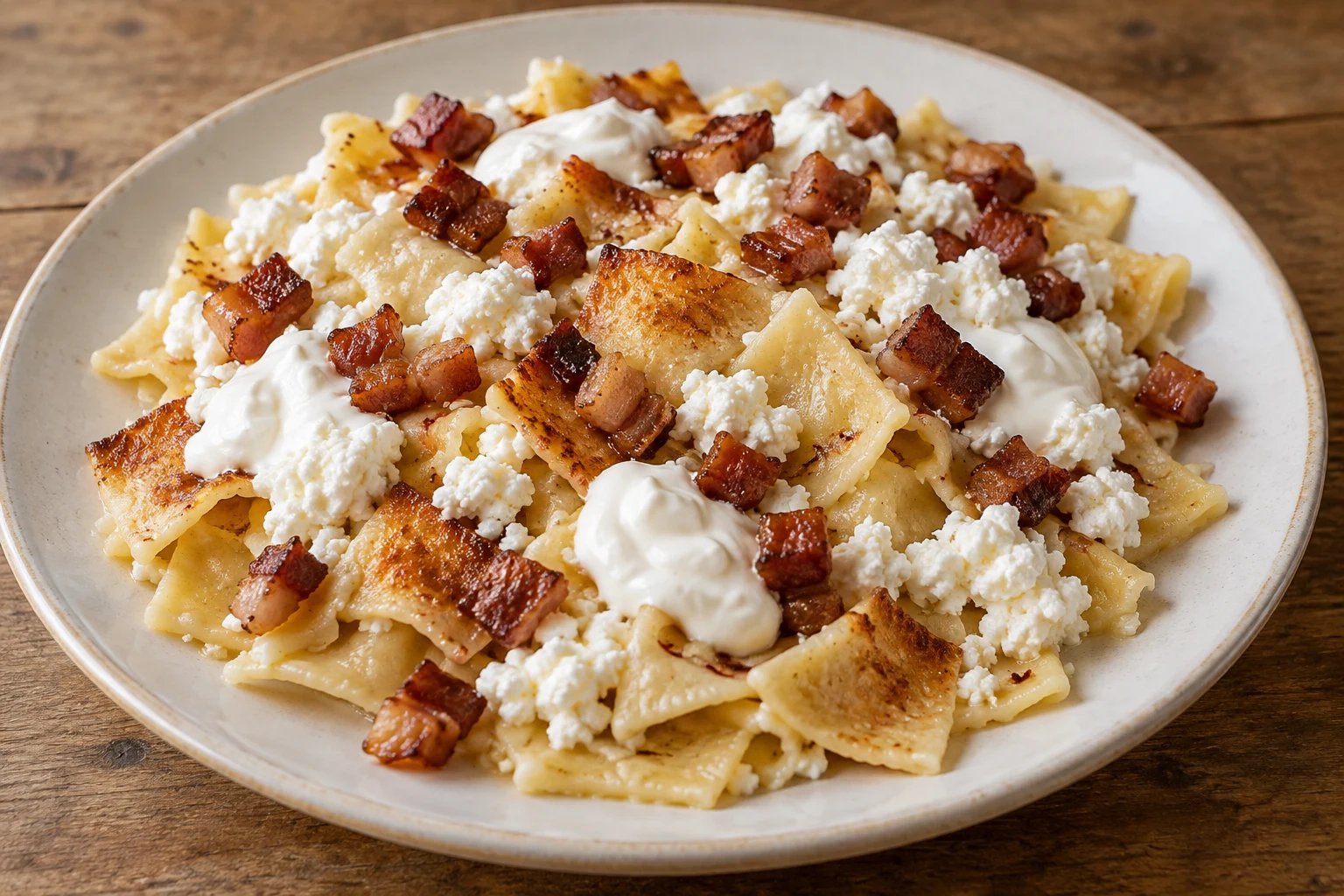
Texture before toppings
A short ingredient list with different jobs
Hungary’s tourism guide introduces túrós csusza as pasta with curd cheese and bacon. In the kitchen, the important detail is how those ingredients meet. Chef Bíró Lajos’s recipe in Magyar Konyha separates the crisp bacon from its rendered fat, uses the fat to brown the cooked pasta, then adds crumbled cheese. Sour cream and the reserved bacon finish the plate.
That sequence keeps several sensations in one forkful: a browned pasta surface, yielding curds, a smooth dairy coating and a crisp piece of bacon. A useful way to choose a csusza recipe is to ask two questions: where does the pasta brown, and when does the dairy arrive?
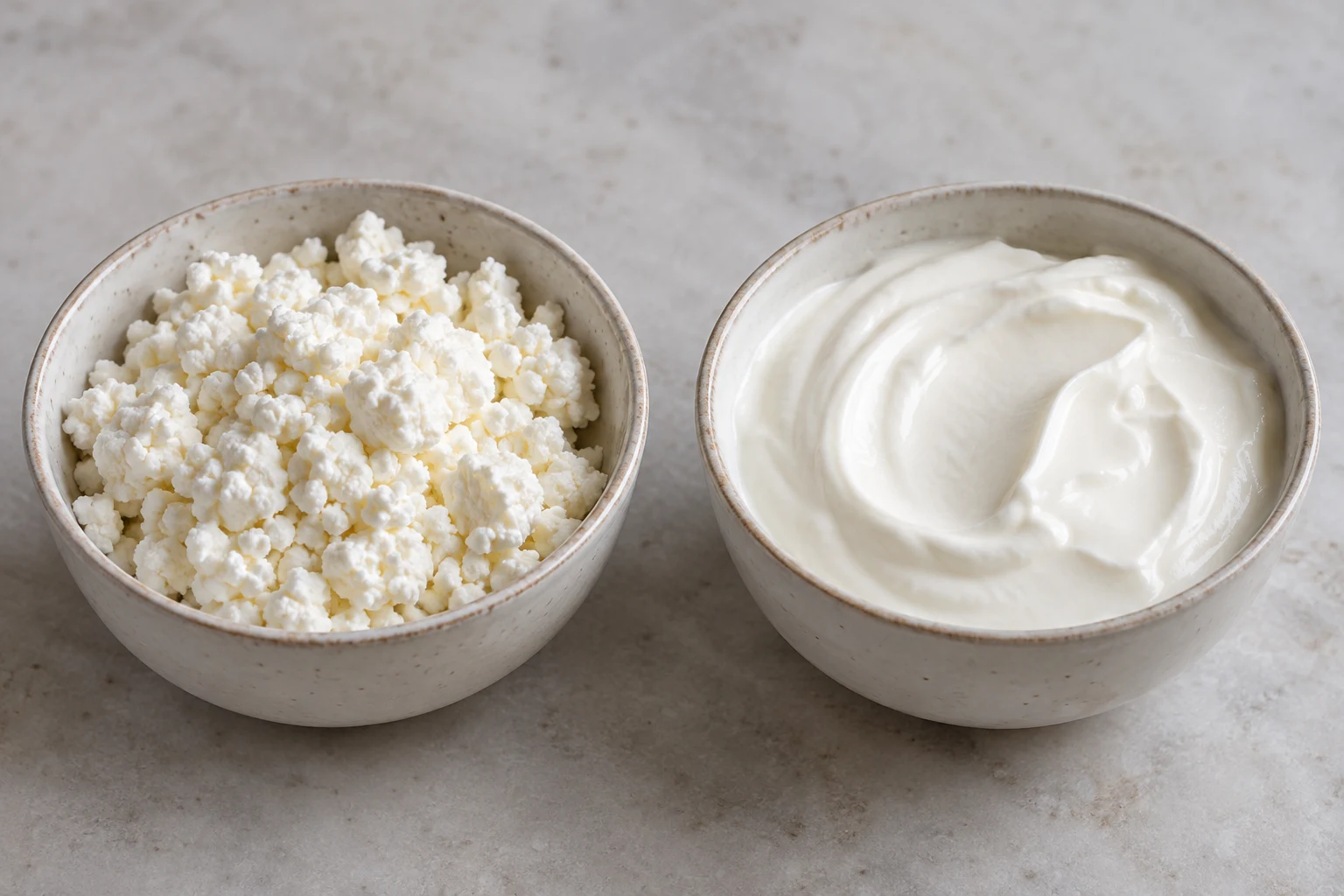
The cheese deserves particular attention. The official Rögös túró specification describes a fresh, mildly sour cheese whose gentle whey removal preserves loose, uneven clumps. The curds remain moist inside. For a plate built around that texture, crumbling the cheese preserves something that blending it into the sour cream would erase.
What each component contributes
- Csuszatészta
- Broad pasta pieces
- Túró
- Soft, loose curds
- Tejföl
- Smooth sour cream
- Szalonna
- Fat and crisp pieces
A substantial surface for browning, with folds that hold curds and sour cream.
The cheese supplies small, distinct clumps and a gently sour dairy flavour.
Spoonfuls coat the pasta and sit between the curds; they perform a different job from the cheese.
Rendering smoked bacon provides both cooking fat and the browned pieces reserved for the finish.
Two ways to bring it together
Hungarian recipes use both pan contact and heat from above. The difference changes when the dairy enters, so follow the sequence of the preparation you choose.
Brown in the pan; add dairy at the end
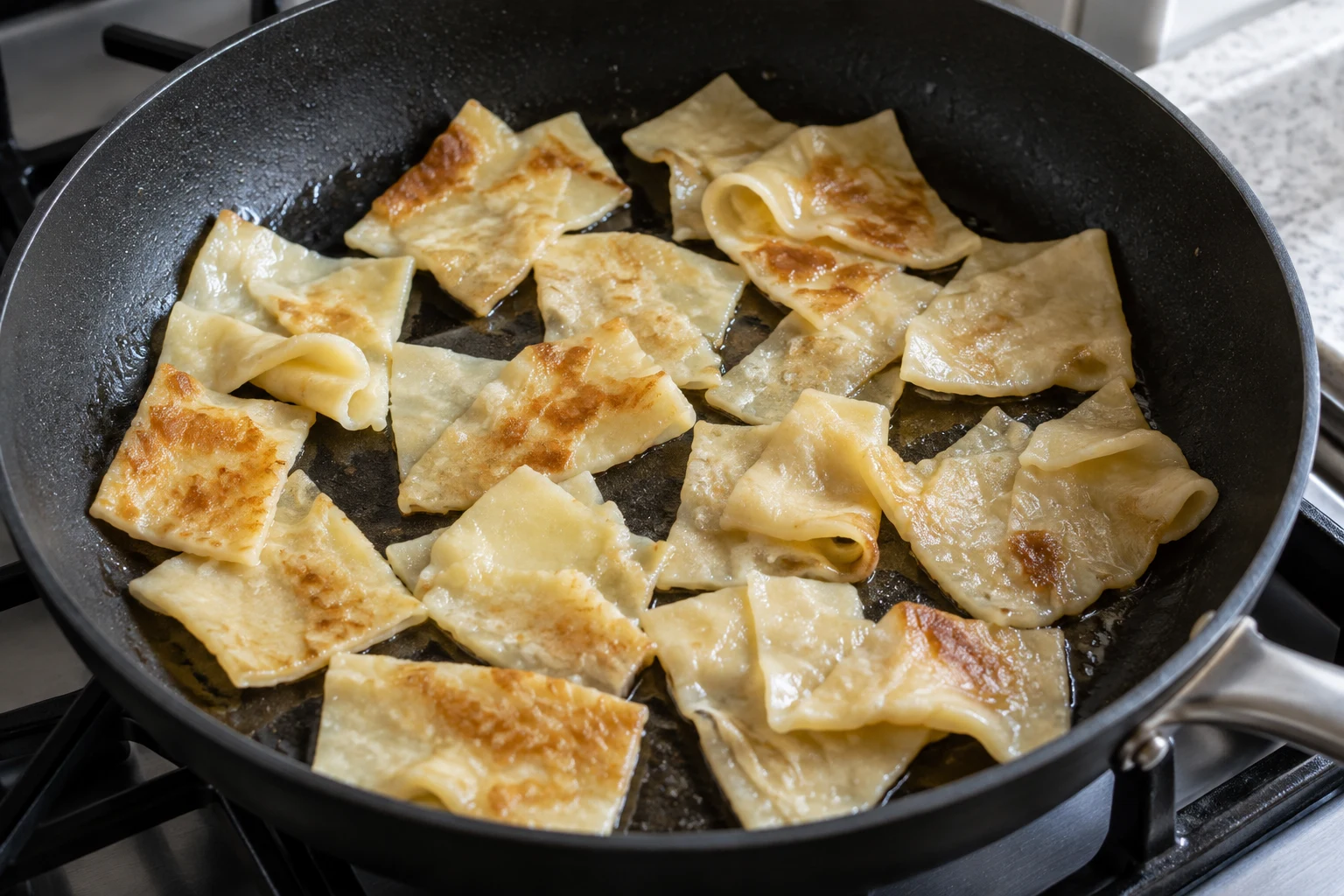
Street Kitchen cooks broad pasta pieces until just firm, drains them and browns them in the fat left after crisping bacon. The heat is then switched off before garlic-seasoned sour cream, crumbled túró and the bacon are added. The pasta gets direct contact with the pan; the dairy is only warmed through. Bíró Lajos’s shorter ingredient list follows the same broad idea, with sour cream on top at serving.
Warm in stages; brown under the grill
Magyar Konyha’s longer technique essay combines hot pasta with warmed sour cream and bacon fat, then adds part of the curd cheese. After a brief spell under an overhead grill or in a very hot oven, the pasta is turned and receives the remaining curds, bacon and more sour cream. A final short exposure browns its edges. In the grill version, the finishing heat reaches the assembled dish from above.
Give the pasta a broad surface
The shape is part of the method. Receptek Könyve describes rolling dough thin, drying it until it can be broken, then breaking it into pieces roughly half a palm across. Bíró Lajos instead tears freshly rolled dough directly into the cooking water. These are two documented routes to broad, irregular pieces; you do not need a perfectly uniform square.
Ready-made csuszatészta is also an option in Receptek Könyve’s preparation. Its recipe notes that the amount of fat rendered from bacon varies, so a cook can use only part of it. That is a helpful distinction: the bacon supplies fat for the pasta and crisp pieces for the top, without requiring every drop of fat to reach the plate.
For complete quantities and instructions, use the linked Bíró Lajos recipe for fresh pasta or Street Kitchen for a pan finish with garlic-seasoned sour cream. These savoury versions contain pork and milk products; egg pasta also brings wheat and egg. The choice of finish is about texture, while the product labels determine any additional allergens.
Research notes
Sources and complete preparations
The Hungarian recipes document different finishing choices. The official cheese specification explains the curd texture; the tourism guide supplies the broader culinary context.
- Bíró Lajos, Magyar Konyha — Túrós csusza Fresh torn pasta browned in rendered bacon fat, with crumbled curds and a sour-cream and bacon finish.
- Street Kitchen — Túrós csusza Pan-browned pasta followed by dairy off the heat; this version seasons its sour cream with garlic.
- Magyar Konyha — Túrós csusza technique essay The serving section describes staged curds and sour cream with a brief overhead-grill or hot-oven finish.
- Receptek Könyve — Túrós csusza Dried, broken pasta or purchased csuszatészta, plus a practical note on using only as much rendered fat as wanted.
- European Commission — Rögös túró product specification Pages 2–3 describe the fresh cheese’s loose, moist curds and gently sour character. Hosted with DEFRA’s product record.
- Hungarian Tourism Agency — Treasures of Hungary PDF page 8, “The Classics of Hungarian Cuisine,” identifies túrós csusza with curd cheese and bacon.
Keep exploring
More stories for your table
HungaryFilled dumplings
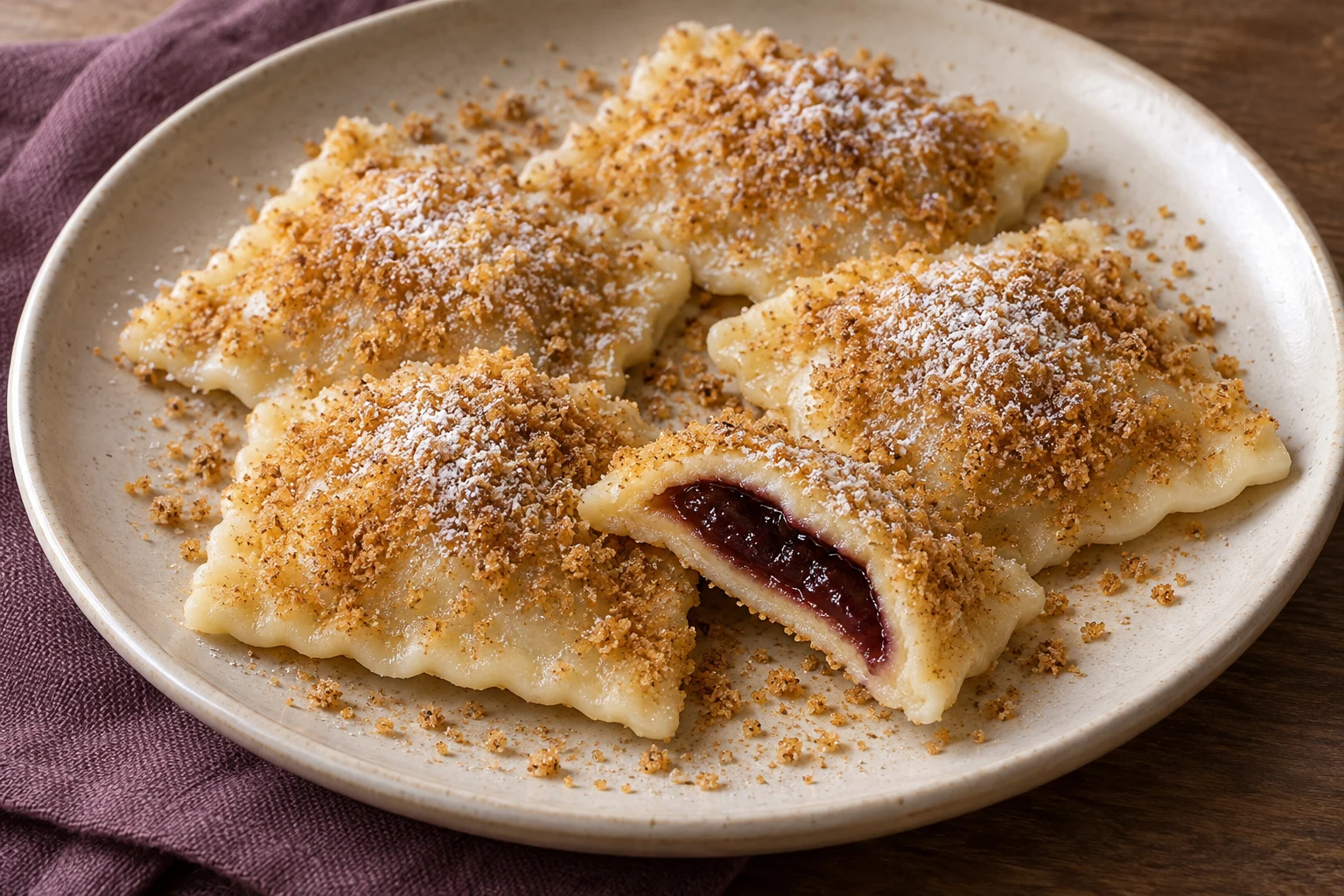
Derelye: Two Doughs Around Plum Jam
Compare Hungarian derelye made with thin egg dough or thicker potato dough, and see how firm plum jam, sealed edges and separate coatings shape the dish.
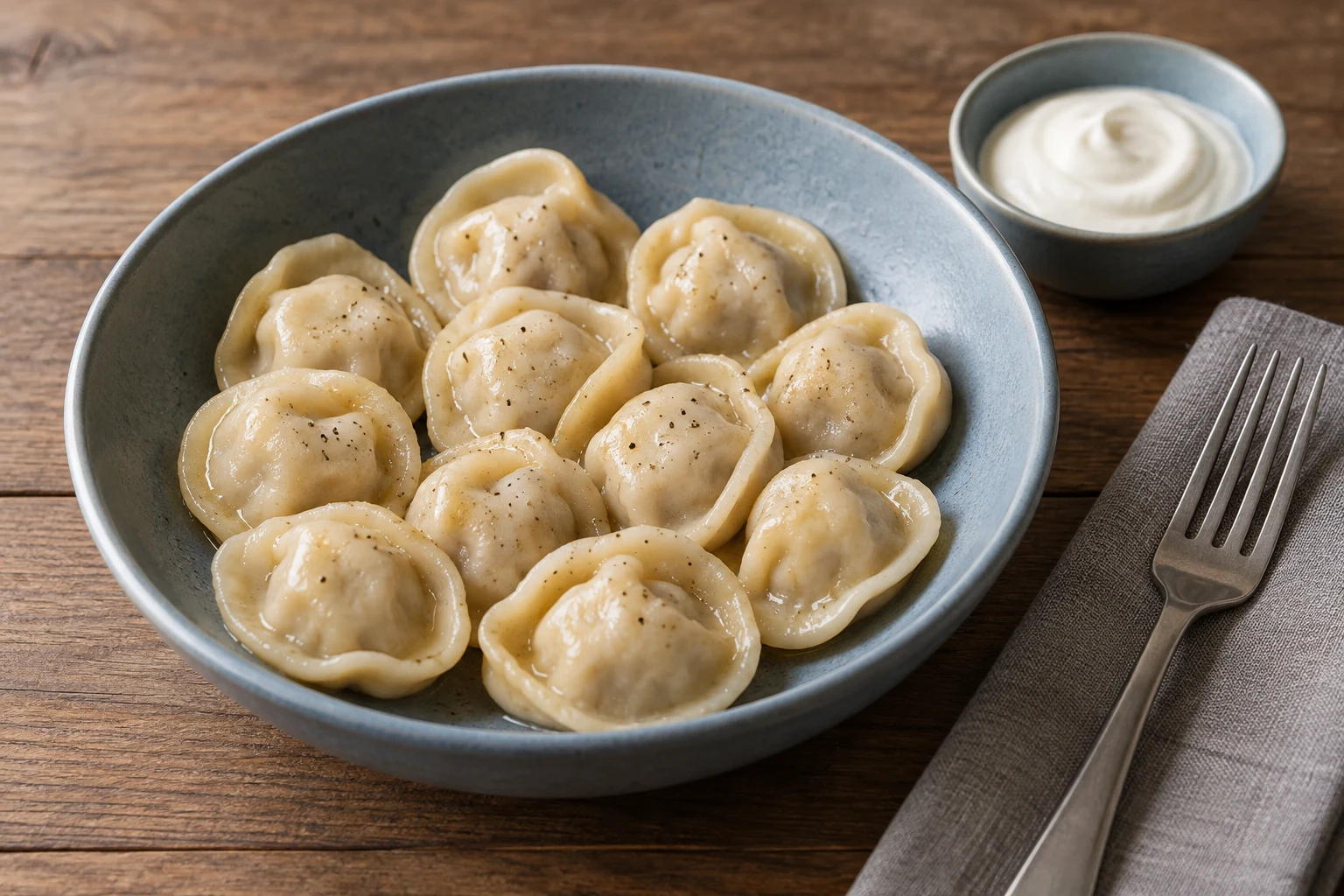
RussiaDumplings
Pelmeni: The Shared Work Behind a Quick Meal
Pelmeni turn a session of rolling, filling and folding into meals for later. Explore their regional context, how to freeze a batch, and two ways to serve it.
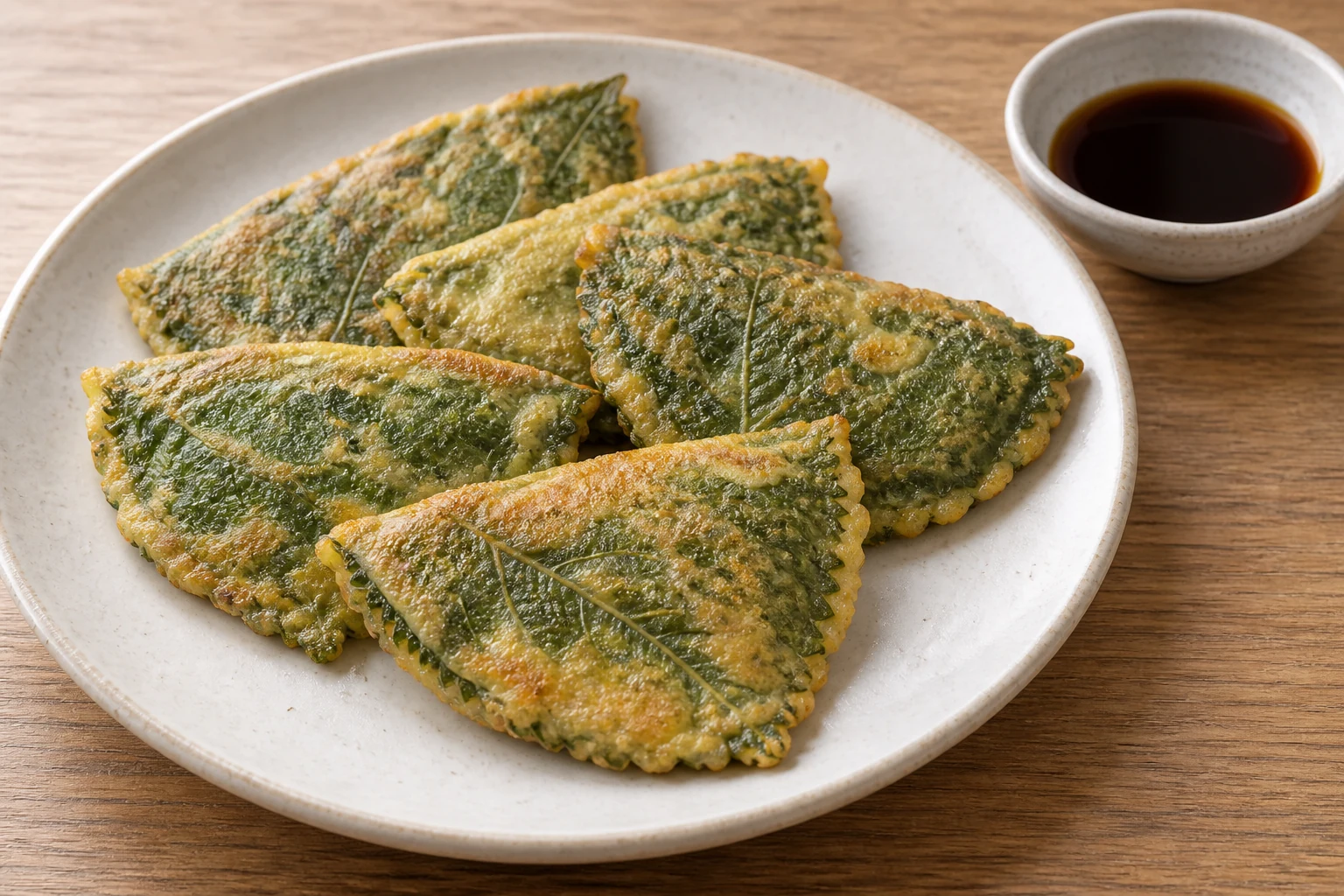
South KoreaStuffed perilla leaves
Kkaennip Jeon: Keep the Filling Thin
How thin filling, well-drained tofu and gentle pan heat work together in Korean perilla-leaf jeon, with a complete pork-and-tofu home adaptation.