
Derek Tibs: Brown the Beef First
Derek tibs
The first task is to give the beef a browned surface. Onion, tomato and green chili come later in this home adaptation, once the meat has had the pan to itself.
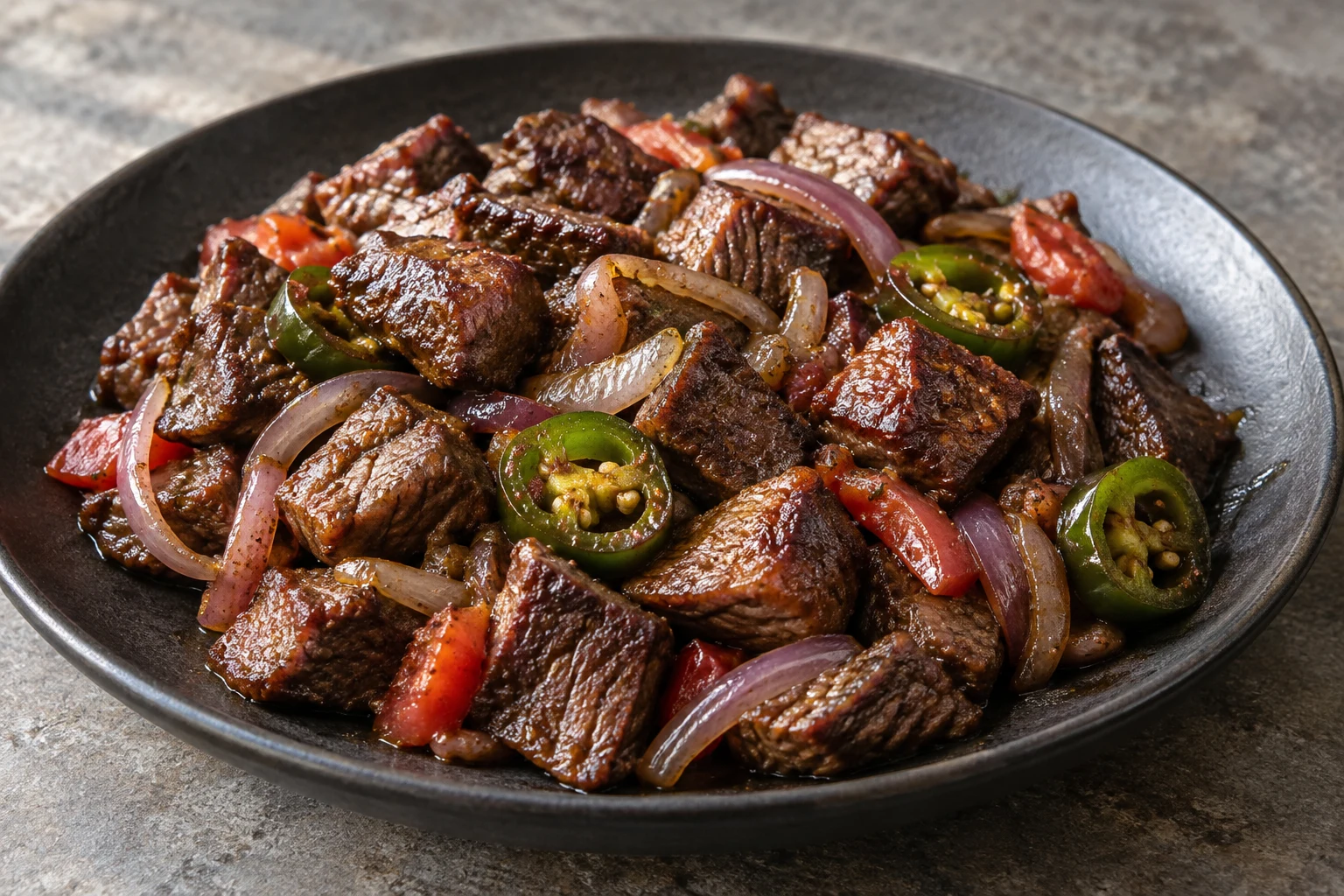
The finish to aim for
Give the beef time to brown
Derek means “dry,” writes Ethiopian-food author Harry Kloman. He describes beef fried with spiced butter, onion and jalapeño, without the generous onion sauce, or kulet, of a wot. Mark Wiens’s firsthand account from Addis Ababa adds a useful texture cue: some of the seared meat has crunchy edges. Dry describes the finish; it does not require a bare, unseasoned plate.
Tsige Gidey’s recipe at AbyssiniaEats makes the sequence explicit. The meat releases liquid; that liquid evaporates; browning follows. Only then do onion, tomato and jalapeño join it. Her version uses oil and garlic powder. The adaptation below keeps that short seasoning list and gives a smaller batch of beef room to brown before the vegetables release more moisture.
Patting the beef dry and cooking it separately are also standard tools in the Beef Checkoff’s stir-fry guidance. In this adaptation, use those tools to control the pan: brown two batches, briefly soften the vegetables, then bring everything together for the final cook.
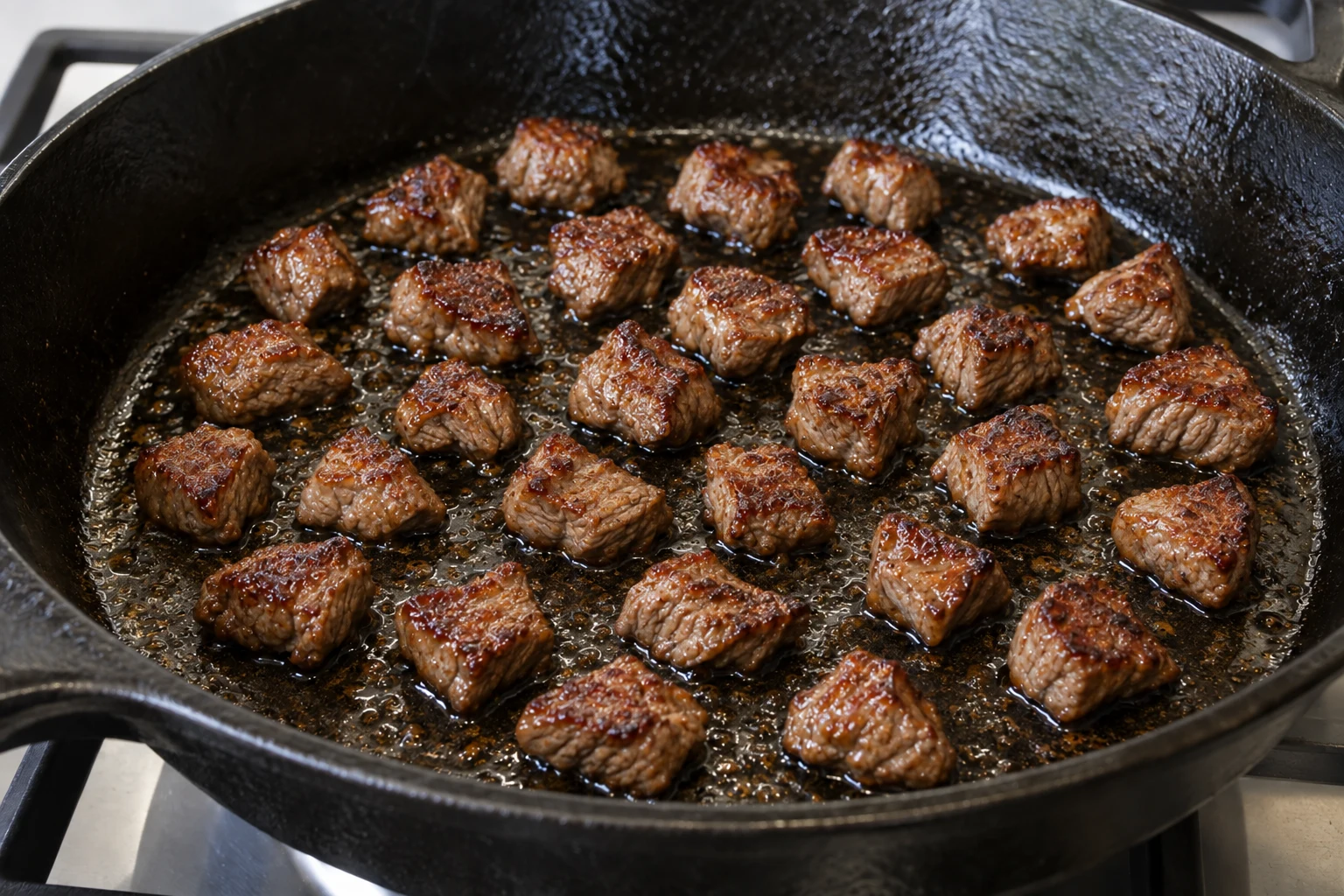
An oil-based home adaptation
Beef-first derek tibs with onion and tomato
Makes 4 servings as part of a shared meal. Allow about 45 minutes: 20 minutes preparation, 20 minutes cooking and 5 minutes resting. This untested adaptation follows Tsige Gidey’s beef-before-vegetables sequence, using a specified steak cut and two batches for a home skillet. Have a heavy 30 cm frying pan and a thin-tip food thermometer ready.
Ingredients
For the sauté
- 600 g boneless center-cut top sirloin steak, heavy surface fat and gristle trimmed
- 45 ml / 3 tbsp neutral vegetable oil, divided into three 15 ml portions
- 100 g red onion, thinly sliced
- 150 g tomato, cut into small bite-size pieces
- 1–2 jalapeños, sliced into rings; use fewer for less heat
- ½ tsp garlic powder
- ½ tsp fine salt, plus more to taste
To serve
- 4 purchased injera flatbreads, or enough for four diners
- 60 ml / ¼ cup, optional prepared awaze, served separately as a dip
Method
- 1
Prepare everything first.
Wash and prepare the onion, tomato and jalapeños. On a separate board, cut the beef into roughly 2 cm pieces and pat the surfaces dry with paper towels. Divide the beef into two equal batches. Wash hands and clean surfaces and utensils that touched raw beef. Set out the measured oil, salt and garlic powder. Check the purchased injera’s package directions and plan any warming so it is ready when the beef has rested.
- 2
Brown two batches.
Heat the pan over medium-high heat, then add the first 15 ml oil. Spread half the beef in one layer with space between pieces. Leave it for about 2 minutes, then turn and cook for another 2–3 minutes until several faces are browned. If liquid pools, let it evaporate so the meat can brown. Transfer to a holding plate. Repeat with the second 15 ml oil and remaining beef; put it on the same holding plate.
- 3
Soften the vegetables.
Add the last 15 ml oil to the pan, followed by the onion, tomato, jalapeños, garlic powder and ½ tsp salt. Toss for 3–4 minutes until the onion softens and the tomato begins to release its juice. Scrape up the browned bits with a wooden spoon; lower the heat a little if they start to burn.
- 4
Reunite and finish dry.
Return all the beef and any juices from the holding plate to the pan. Toss over medium-high heat for about 2–4 minutes, until the vegetables are tender and little loose liquid remains. Check several of the largest beef pieces with the thermometer inserted from the side into their centres: they must reach at least 63°C / 145°F. Continue cooking if necessary; browned surfaces alone do not establish doneness.
- 5
Rest, then serve.
Transfer to a clean serving plate and rest for 5 minutes before eating, exceeding the minimum 3-minute rest recommended for steak cuts. Taste and adjust salt. Put the optional awaze in a small bowl. Serve the beef and bread with the dip alongside.
Choose the beef and the method together
The cut matters more than a promise that every plate of tibs will be ready in minutes.
A steak cut for this short method
The Beef Checkoff lists center-cut top sirloin as suitable for skillet cooking and stir-frying. That is the specified cut in our adaptation. Small pieces can brown in batches and finish with the vegetables; keep checking temperature and texture rather than extending the cook indefinitely.
Short ribs need their own route
Saba Alemayoh’s derek tibs recipe in Gourmet Traveller uses short ribs cut into 5–6 cm pieces. They brown first, then simmer very gently with rosemary, berbere and a little water for 2–2½ hours. Separately cooked onion and capsicum join the meat before its juices reduce. Follow that longer recipe if choosing ribs; they are not a direct swap into the timing above.
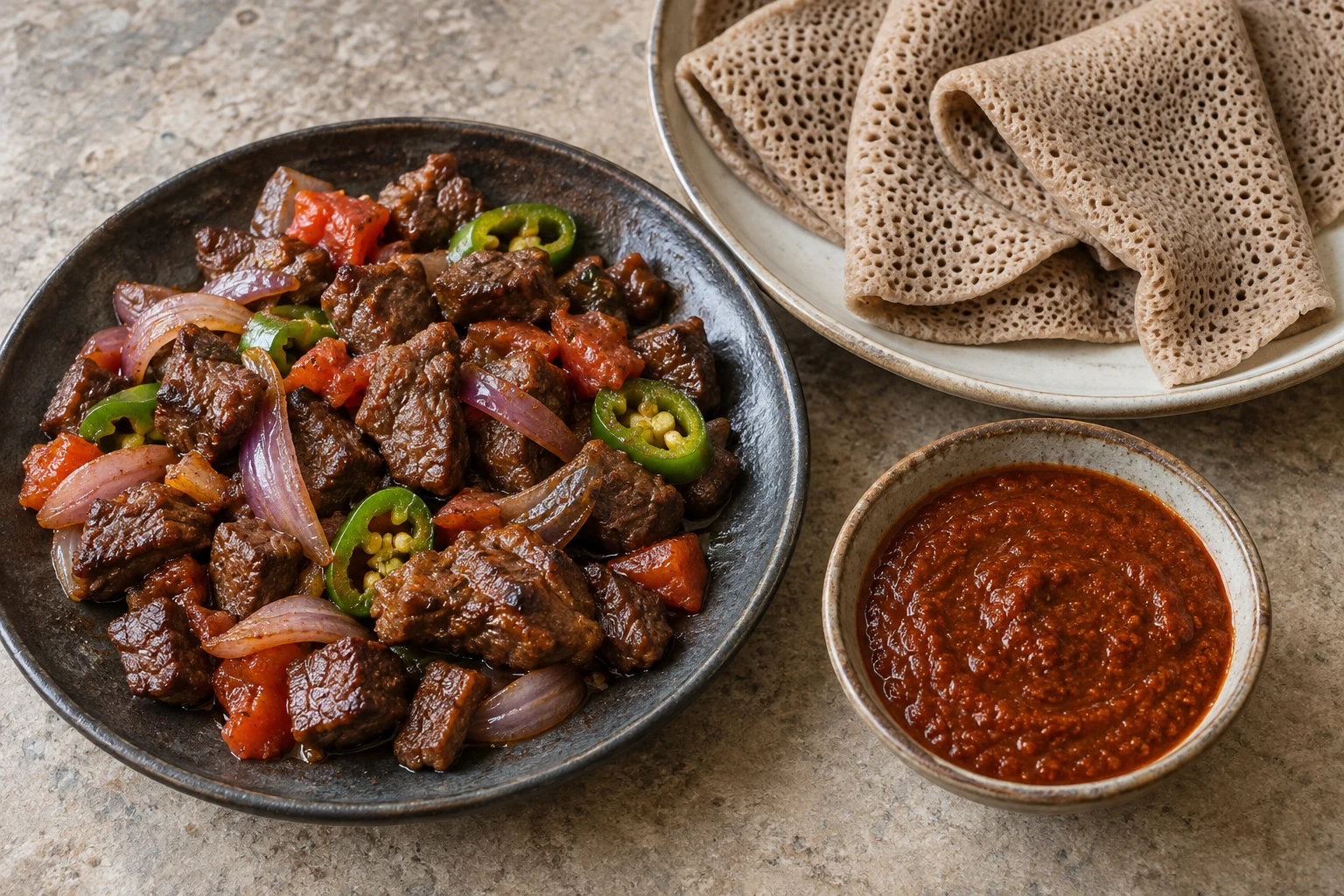
Put the dip beside the meat
Wiens describes his Addis Ababa meal arriving with injera and a separate awaze sauce. That arrangement lets each bite carry its own amount of heat. For the home version, serve prepared awaze alongside the plate instead of mixing it through the whole batch; the browned beef remains the focus.
Research notes
Sources and recipe notes
These culinary accounts describe derek tibs and its variations. Beef Checkoff guidance informs the home cut and pan method; FoodSafety.gov supplies the temperature and minimum rest. Quantities and batch handling are an editorial adaptation.
- Harry Kloman — Ribs & Tibs: The Story of Ethiopian Beef Specialist account defining derek and distinguishing dry tibs from meat in a thick onion sauce.
- Tsige Gidey — Derek Tibs Recipe The main sequence: evaporate released moisture, brown the meat, then add onion, tomato and jalapeño; an oil-based version with garlic powder.
- Mark Wiens — Derek tibs, Ethiopia’s flaming hot meat treat Firsthand Addis Ababa account of browned, sometimes crunchy meat, injera and a separate awaze accompaniment.
- Saba Alemayoh — Derek tibs with beef short ribs and capsicum A distinct, longer preparation: browned ribs, gentle simmering and a final reduction with separately cooked vegetables.
- Beef Checkoff — Top Sirloin Steak, Center Cut Industry cut reference supporting the steak selected for the short home adaptation.
- Beef Checkoff — Stir-Fry Basics Surface drying and the option to brown beef separately before finishing it with vegetables.
- FoodSafety.gov — Safe Minimum Internal Temperatures Steak cuts: at least 63°C / 145°F measured with a thermometer, followed by a minimum three-minute rest.
Keep exploring
More stories for your table
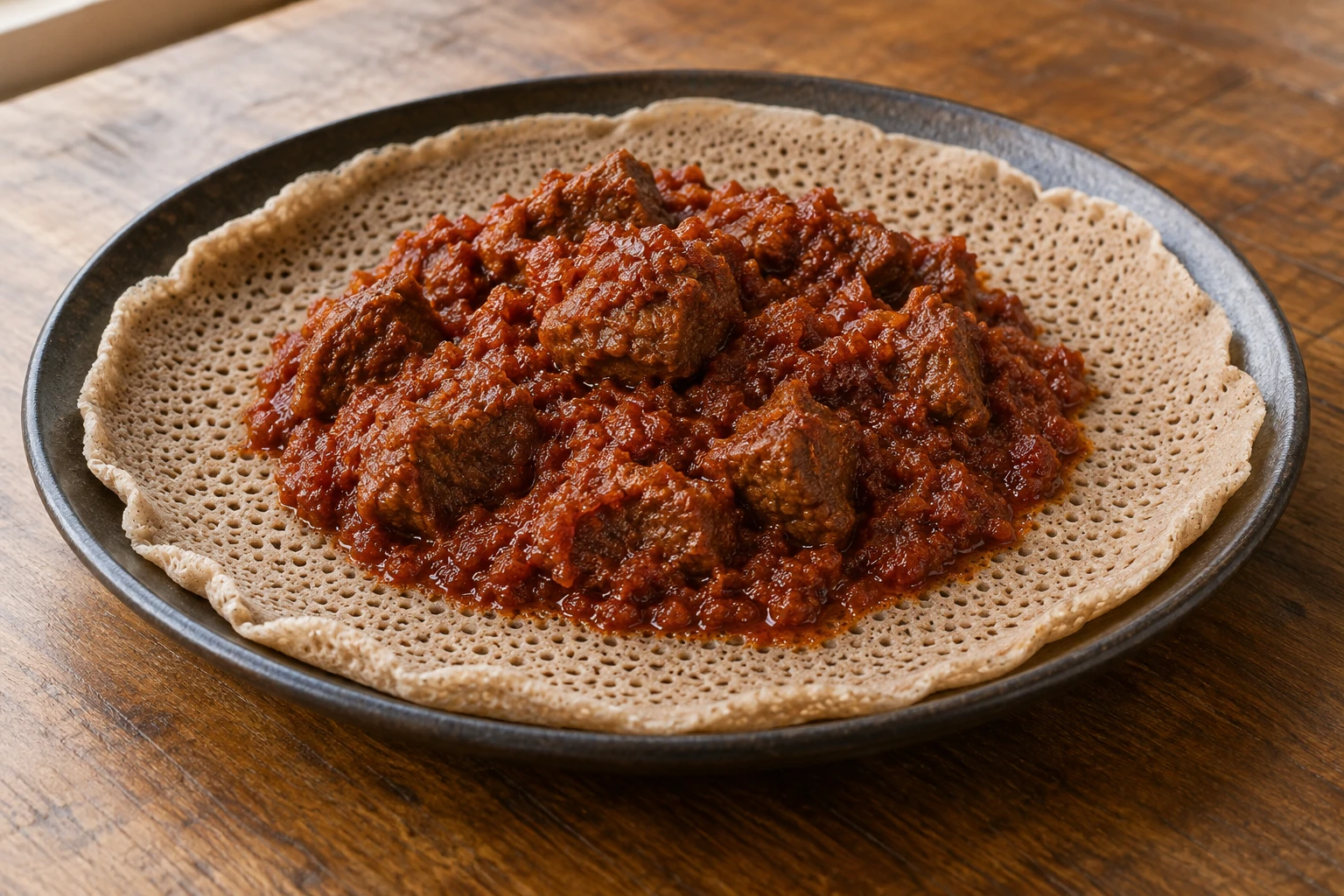
EthiopiaBeef stew
Sega Wot: Build the Sauce Before the Beef
Learn how cooked onions, gently heated berbere and a patient simmer build sega wot, with a home adaptation of Ethiopia’s spicy beef stew.
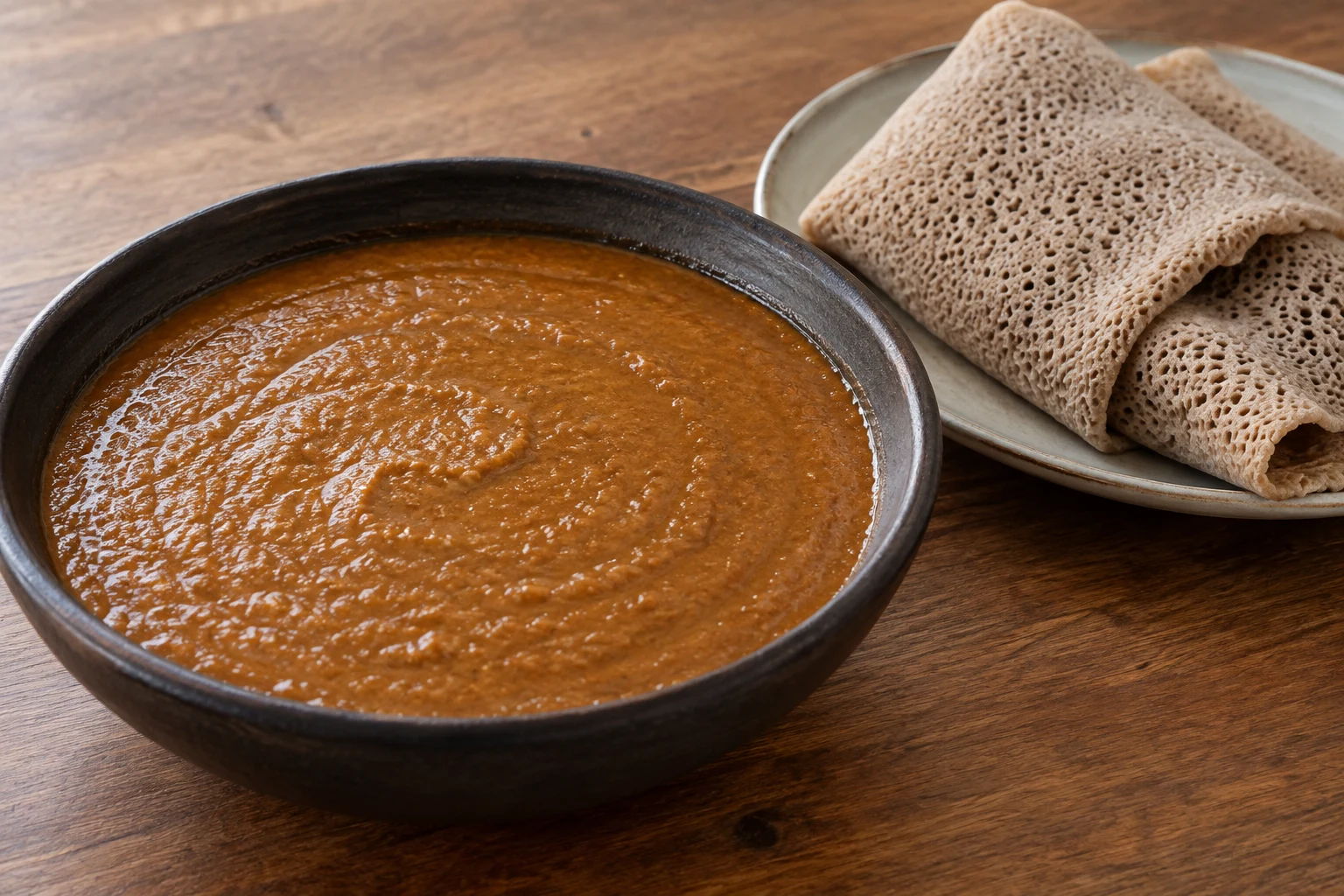
EthiopiaLegume stew
Shiro: Three Ways to Turn Flour into Stew
Choose seasoned shiro flour, compare three documented ways to combine it with water, and cook a smooth Ethiopian stew with a complete home adaptation.
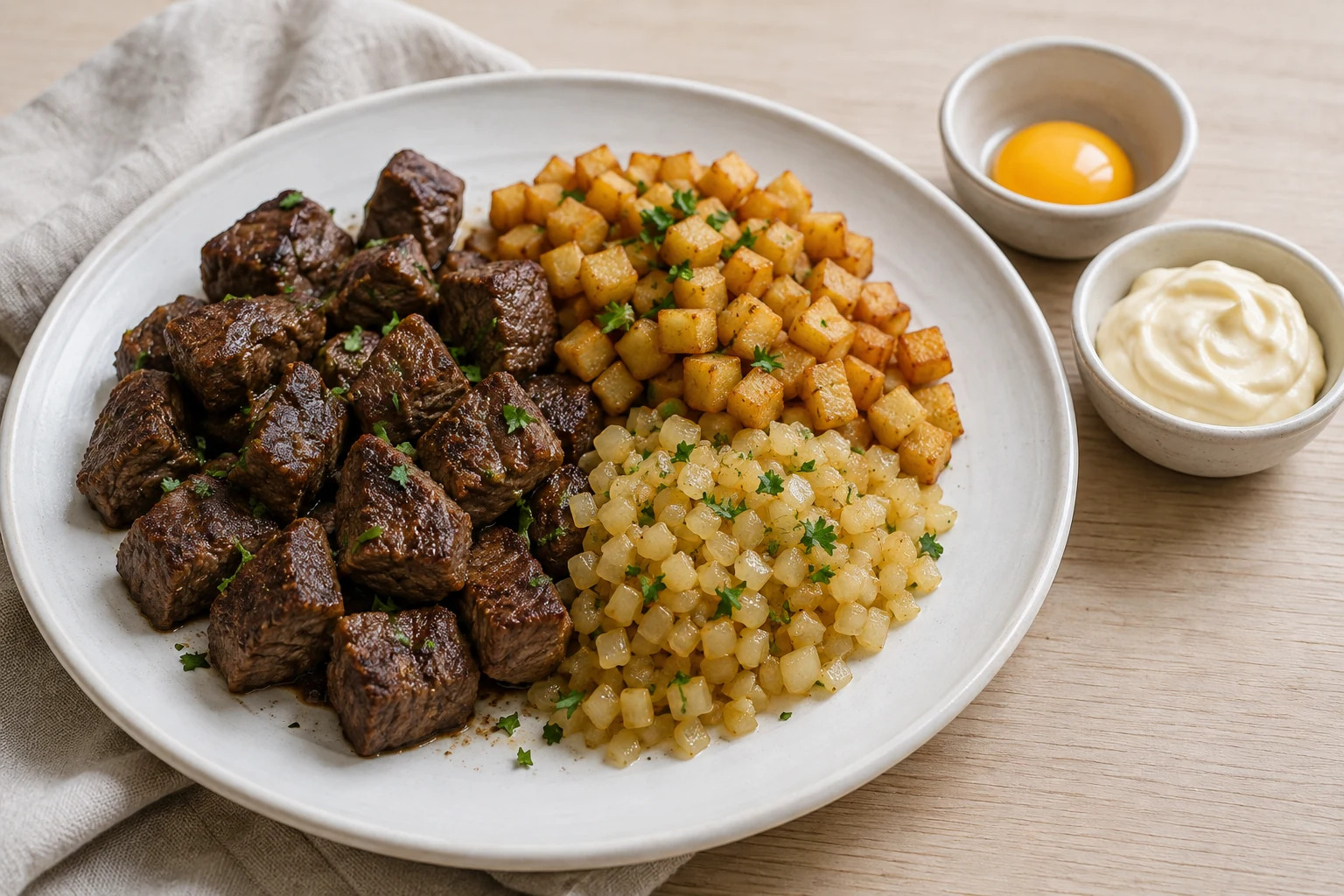
SwedenBeef and potatoes
Biff Rydberg: A Swedish Lesson in Timing
Crisp potatoes, soft onions and browned beef need different treatment. Learn the timing behind Sweden’s Biff Rydberg, compare two mustard creams and cook a home adaptation.