
Belgian Chocolate Truffles, Beneath the Cocoa
Truffes au chocolat
Two Belgian chocolatiers call a cocoa-dusted chocolate a classic truffle, yet describe different fillings. What does that familiar brown surface actually tell you? Follow the center, shell and finish separately, and a box of truffles becomes much easier to read.
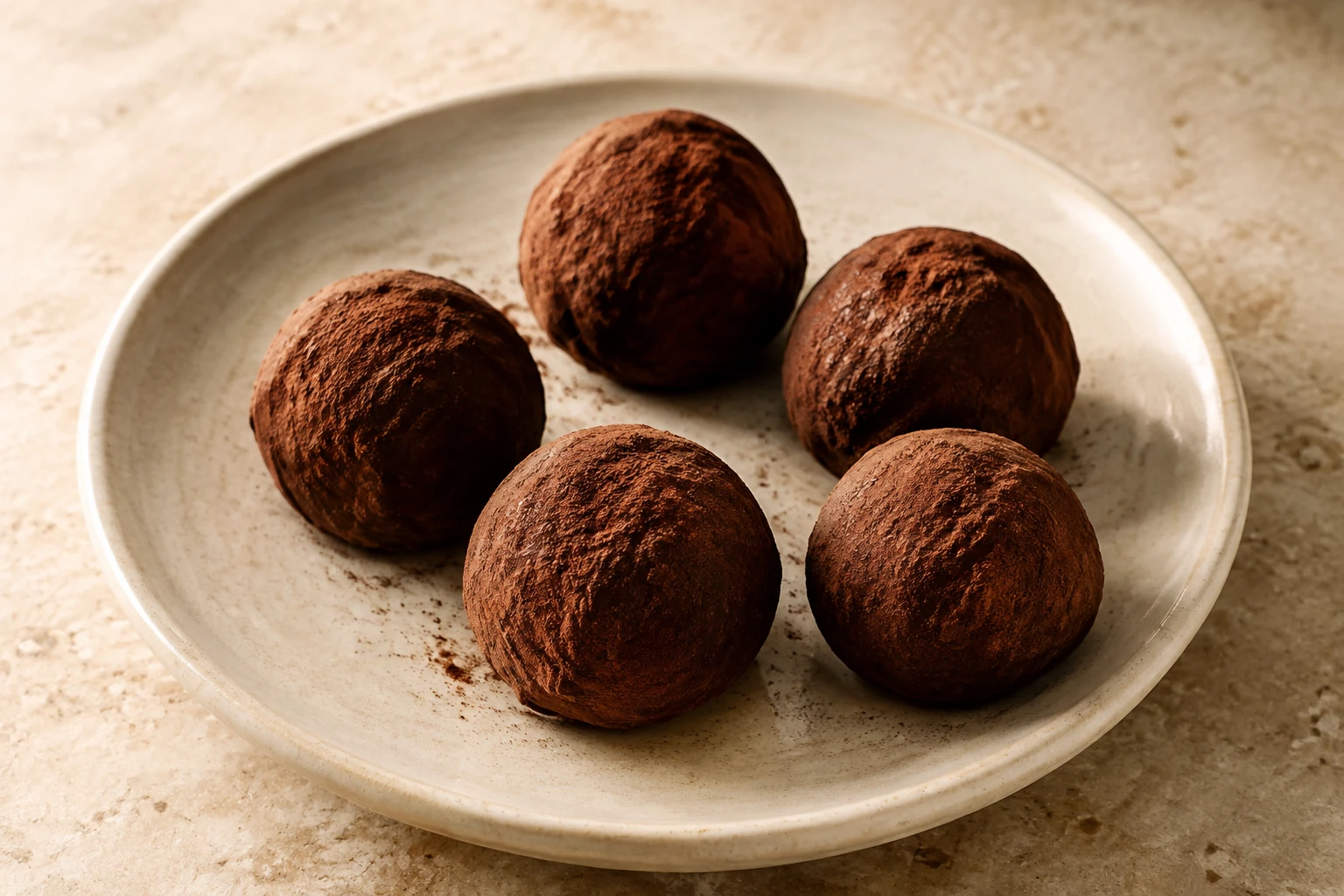
The anatomy
Read a coated truffle from outside in
- Finish
- Powder or flakes
- Shell
- A separate chocolate layer
- Center
- The filling has its own recipe
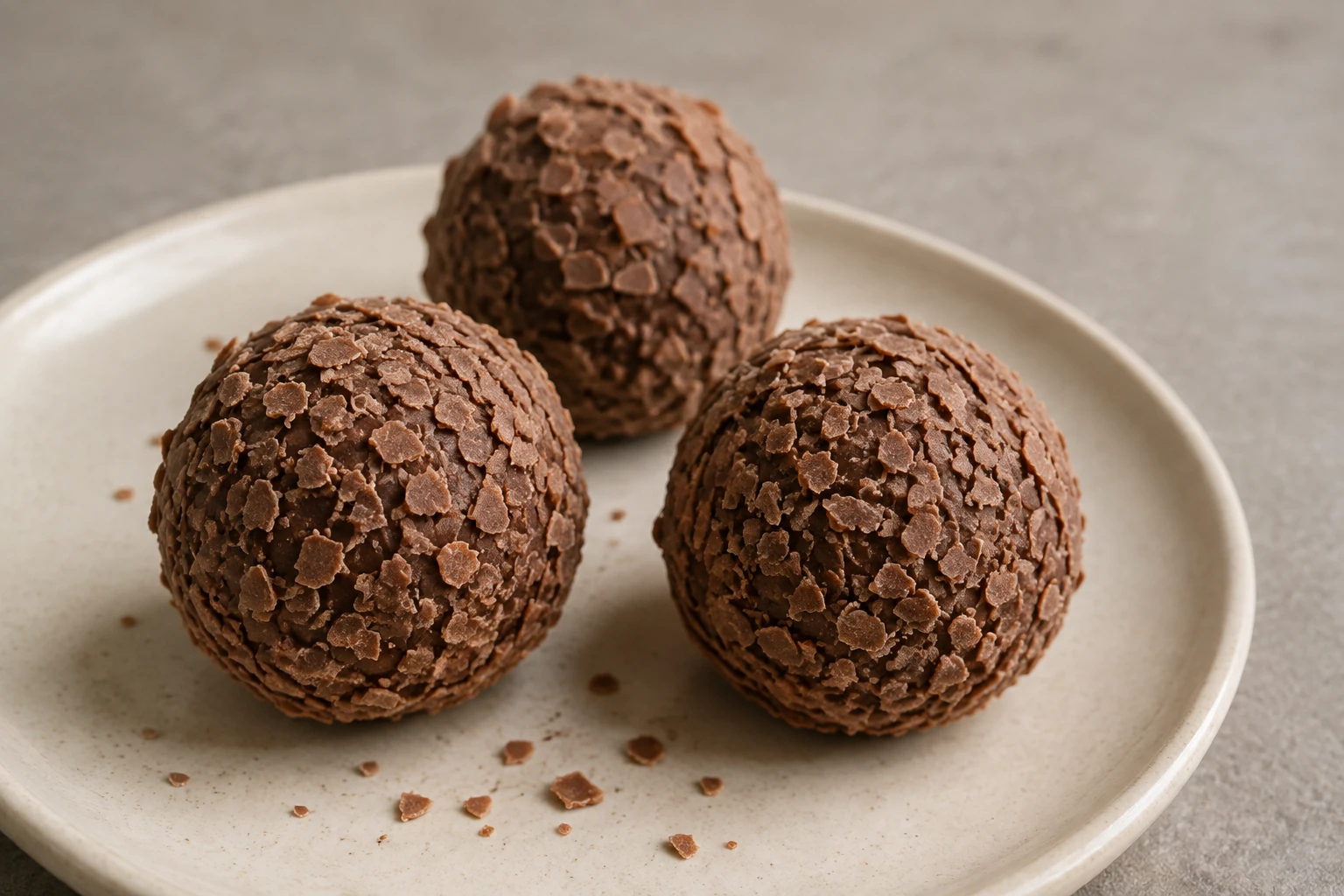
Cocoa gives the two classic truffles below their dusty surface. Small chocolate flakes provide another documented finish.
Both Neuhaus and Leonidas describe a dark-chocolate coating beneath the cocoa. The powder is only the outermost layer.
The center may be described as buttercream or ganache. Matching exteriors do not establish matching fillings.
The makers’ descriptions
One familiar name, two centers
Neuhaus and Leonidas provide a particularly useful comparison: both products are called Truffle Classic, both have dark chocolate beneath cocoa powder, and the filling is where their descriptions diverge.
Neuhaus: chocolate buttercream
Neuhaus names chocolate buttercream as the center of its classic Belgian truffle. It describes the filling as melting in the mouth, then specifies the dark coating and cocoa finish. The maker’s description identifies the filling more precisely than the truffle’s appearance can.
Leonidas: dark-and-milk ganache
Leonidas describes a ganache combining dark and milk chocolate. Its ingredient list includes both milk cream and anhydrous butter. That matters when reading a box: the presence of butter does not, by itself, make a center buttercream.
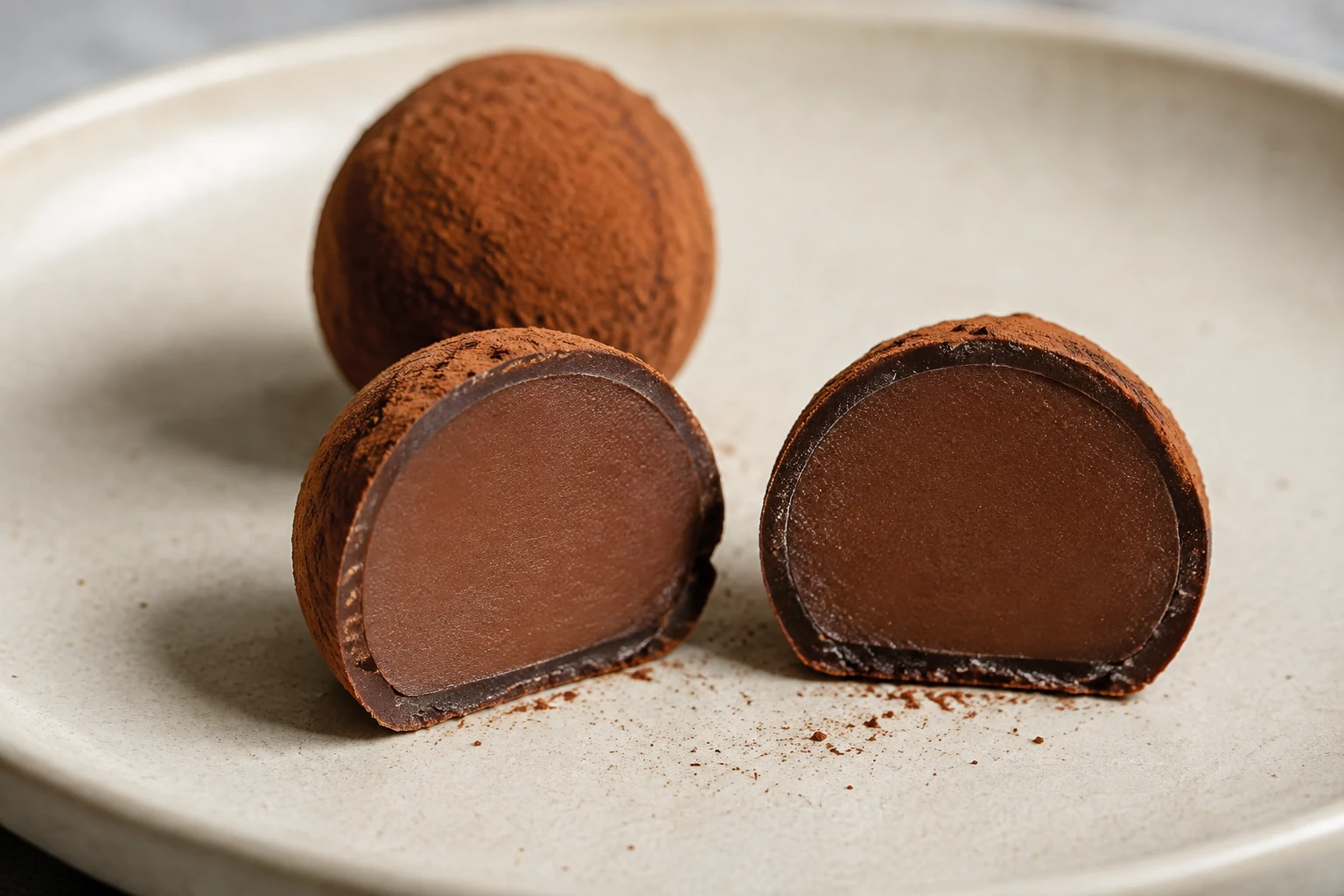
Butter can belong in a ganache
Callebaut’s Bonbon Masterclass explains ganache as an emulsion: the recipe brings its watery and fatty components together into a uniform mixture. In the classic method it describes, hot cream or another liquid is mixed with chocolate; extra butter or cocoa butter may be incorporated afterward. Ganache names a preparation, not a promise that the ingredient list contains only chocolate and cream.
The company’s 823 Truffles method puts that principle into a concrete sequence. Cream and glucose are heated, combined with chocolate and emulsified, then soft butter is folded in. The filling is piped into a truffle shell. Coating and rolling in milk-chocolate splitters follow as separate operations.
That sequence explains why a rough, flaked exterior can conceal the same broad architecture as a cocoa-dusted truffle: finish, shell, center. It also gives you a better way to compare an assortment. Identify what coats the outside, then read how the maker describes the filling. A dark shell can surround a center containing milk chocolate, as the Leonidas example shows.
Research notes
Sources and further reading
The comparison follows the makers’ own product descriptions. Callebaut supplies the technical explanation; the industry code supplies the manufacturing-origin distinction.
- Neuhaus — Truffle Classic Identifies chocolate buttercream, dark-chocolate coating and cocoa powder; documents the maker’s Belgian production.
- Leonidas — Truffle Classic Identifies dark-and-milk chocolate ganache and cocoa over dark chocolate; lists milk cream and anhydrous butter.
- Callebaut — Bonbon Masterclass preview The Ganache lesson on printed page 9 explains emulsification and the optional incorporation of additional fats.
- Callebaut — 823 Truffles Documents a cream, chocolate and butter filling piped into shells, then coated and rolled in milk-chocolate splitters.
- Choprabisco — Protection of Belgian chocolate The Belgian industry association explains its code of conduct and links to the agreement used here.
- Belgian Chocolate Code — definitions and origin criteria Section IV.1 distinguishes chocolate production, the covering of filled chocolates and their fillings; the final table addresses products made abroad.
Keep exploring
More stories for your table
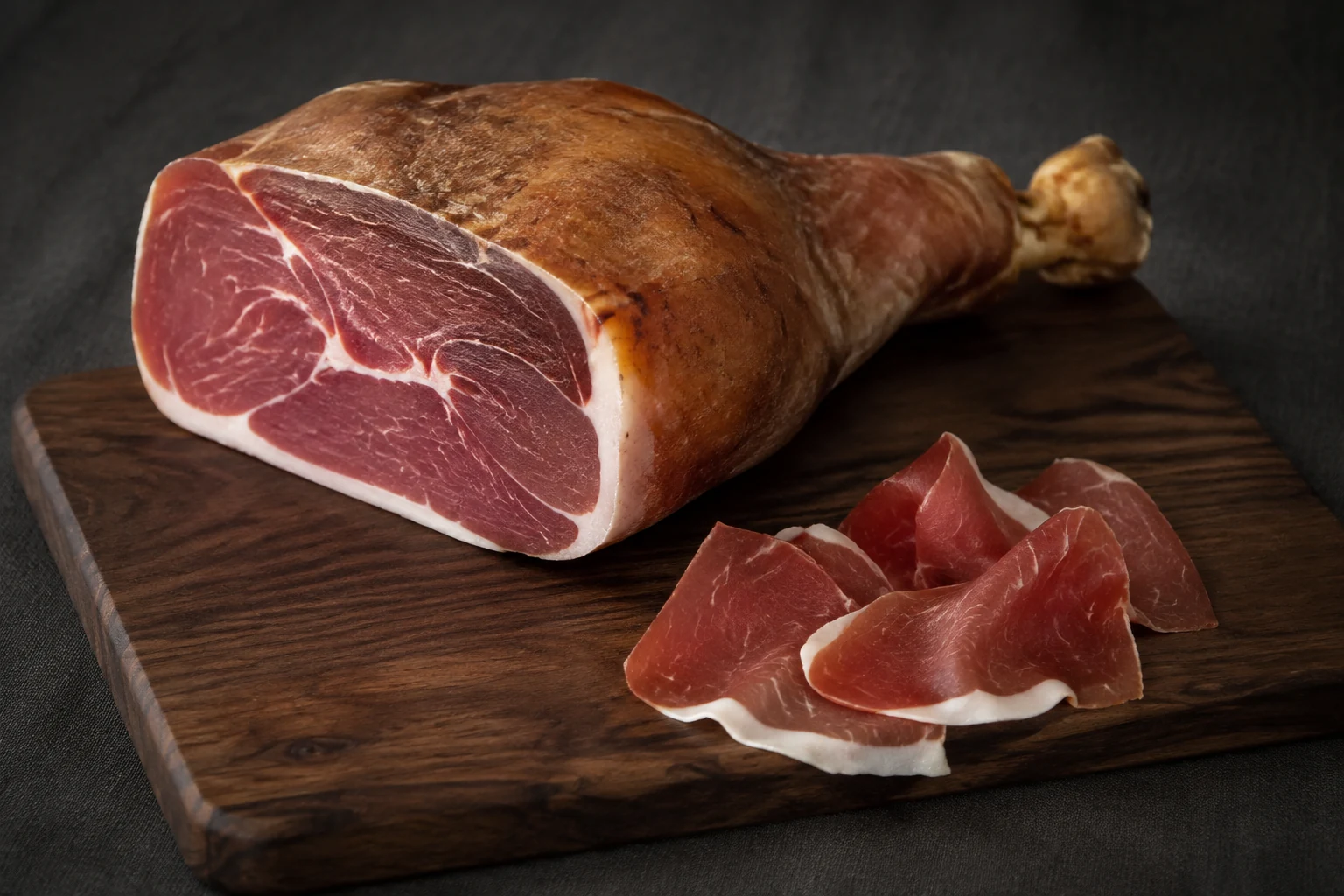
BelgiumDry-cured ham
Jambon d’Ardenne: A Name Made by Place
Belgium’s protected Ardennes ham is defined less by where the pig was raised than by where salt, cold air, optional smoke, and patient maturation turn pork into charcuterie.
SpainSweet fritters
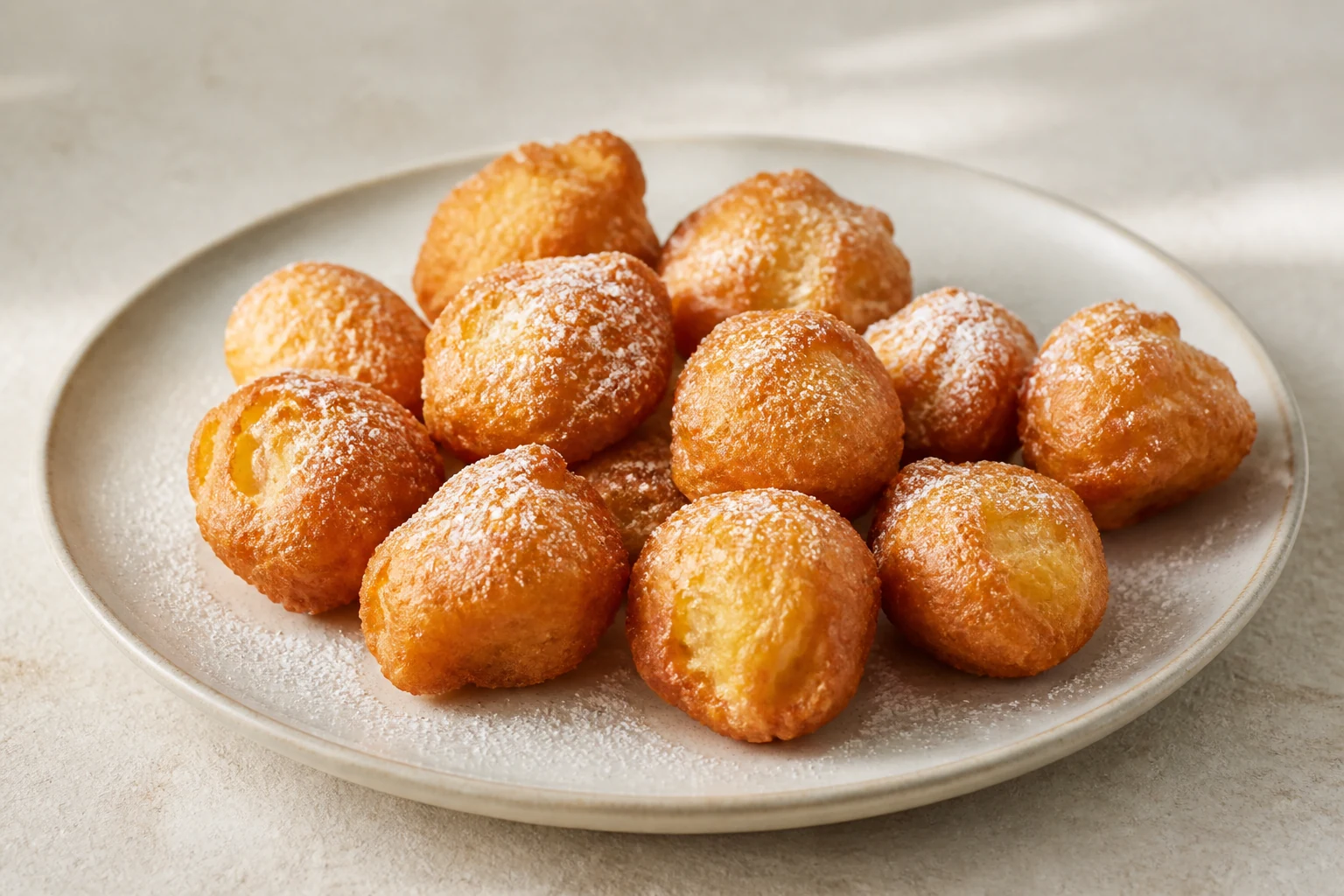
Buñuelos de Viento: How Spain’s Airy Fritters Rise
Why buñuelos de viento puff, when to serve them plain or filled, and how to make a small batch of Spain’s airy lemon fritters at home.
ChinaFish dish
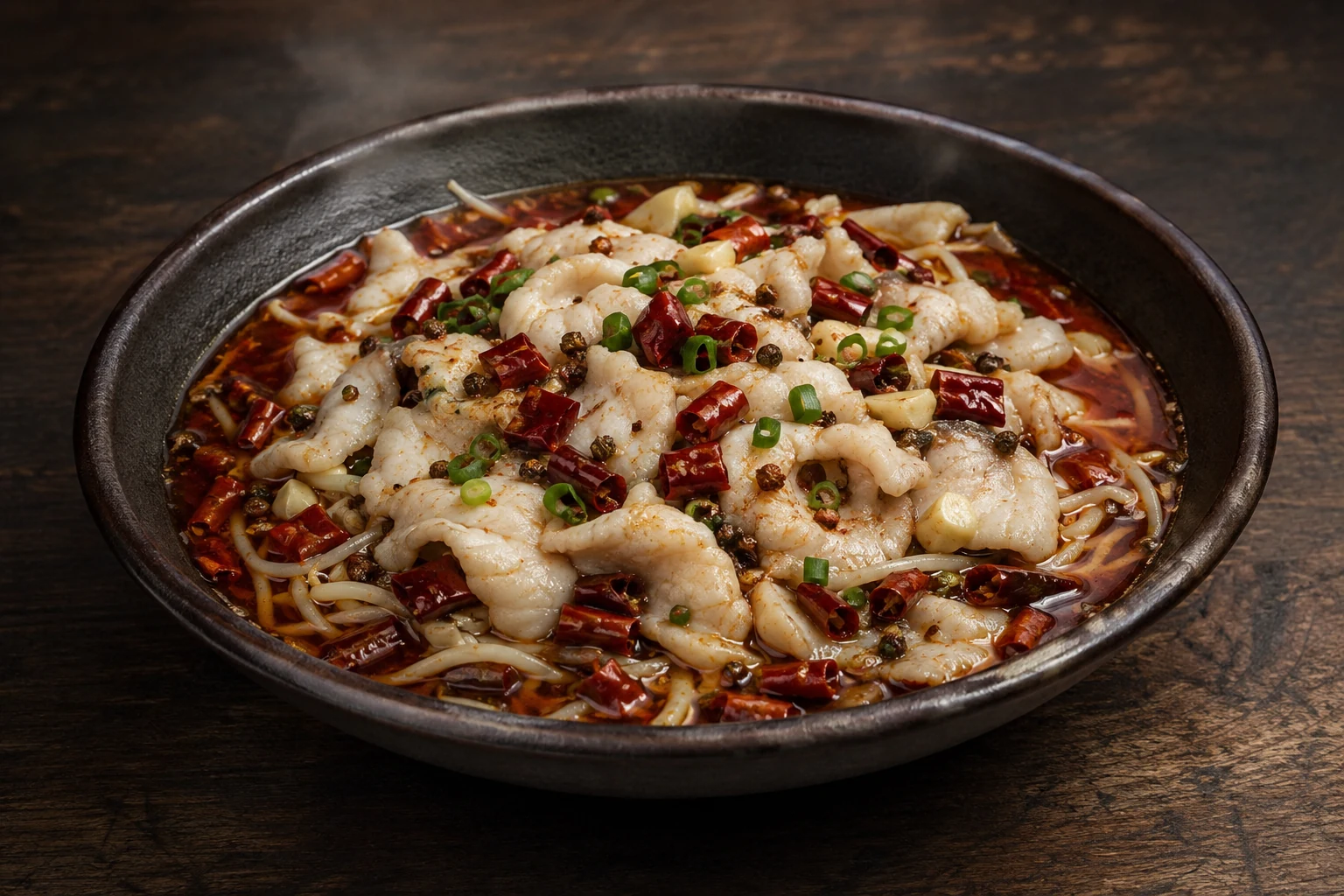
Shui Zhu Yu (Sichuan Water-Boiled Fish)
Why Sichuan water-boiled fish stays tender beneath its dramatic mala finish: a close look at the broth, hot-oil bloom, Chongqing context, and a practical home method.