
Jambon d’Ardenne: A Name Made by Place
Jambon d’Ardenne IGP
The Belgian PGI does not promise that the pig was raised in the Ardennes. It protects a chain of curing work in a defined Walloon landscape—salt, cold maturation, optional smoke, drying, and time.
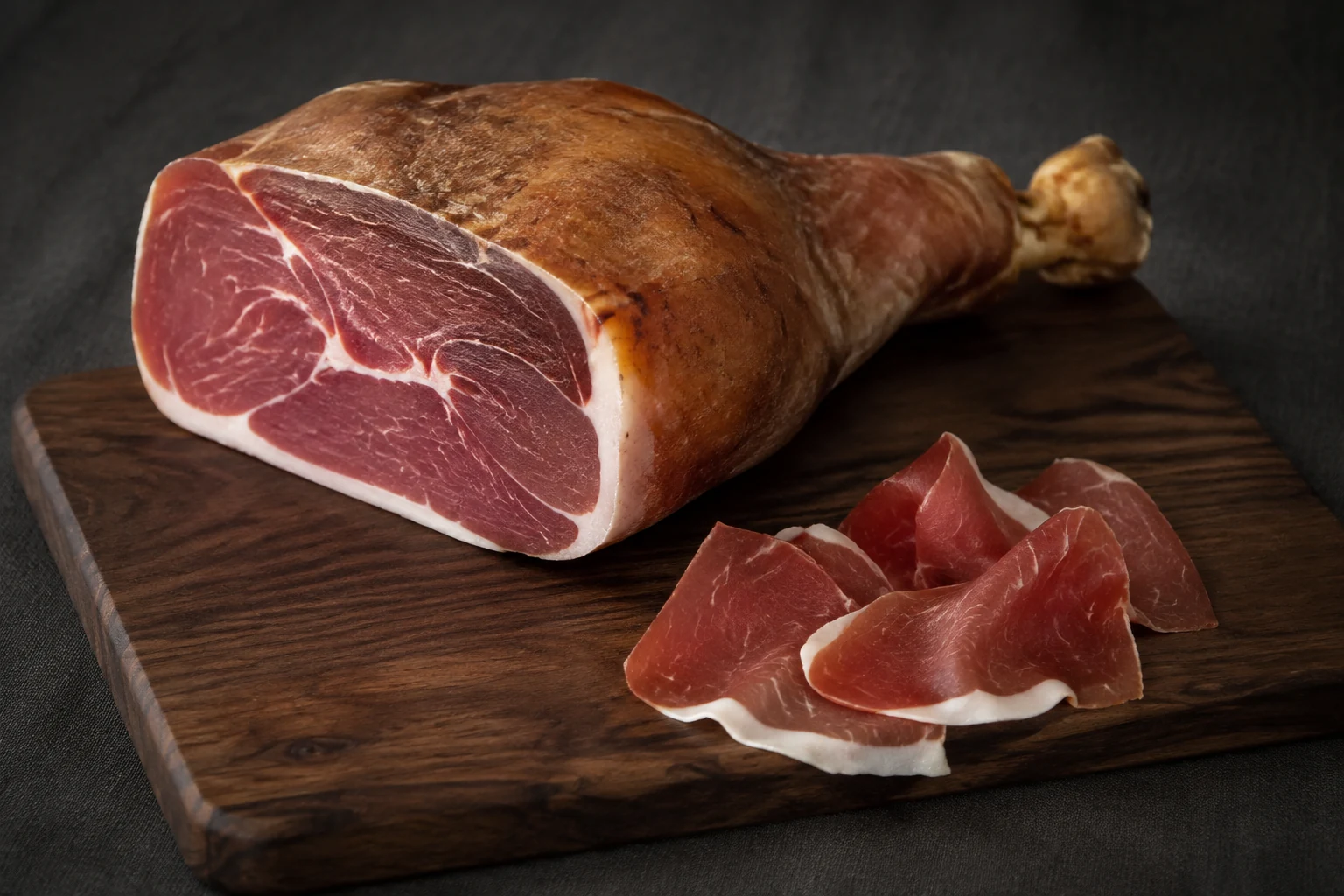
Read the slice
A landscape written in process
A thin slice of Jambon d’Ardenne can hold several textures at once: firm lean, a yielding edge of fat, and a dry-cured aroma that may carry smoke—but need not. Smoking is permitted, not compulsory, so an unsmoked ham can still bear the protected name.
That small qualification opens the larger story. The word Ardenne does not function as a simple birthplace for every ingredient. It marks a defined part of southern and southeastern Wallonia where producers salt, mature, optionally smoke, dry, and age pork according to the protected method.
It is also a name that needs its country attached. Across the border, France protects Jambon sec des Ardennes and Noix de Jambon sec des Ardennes separately. Shared landscape language does not make the Belgian and French products interchangeable.
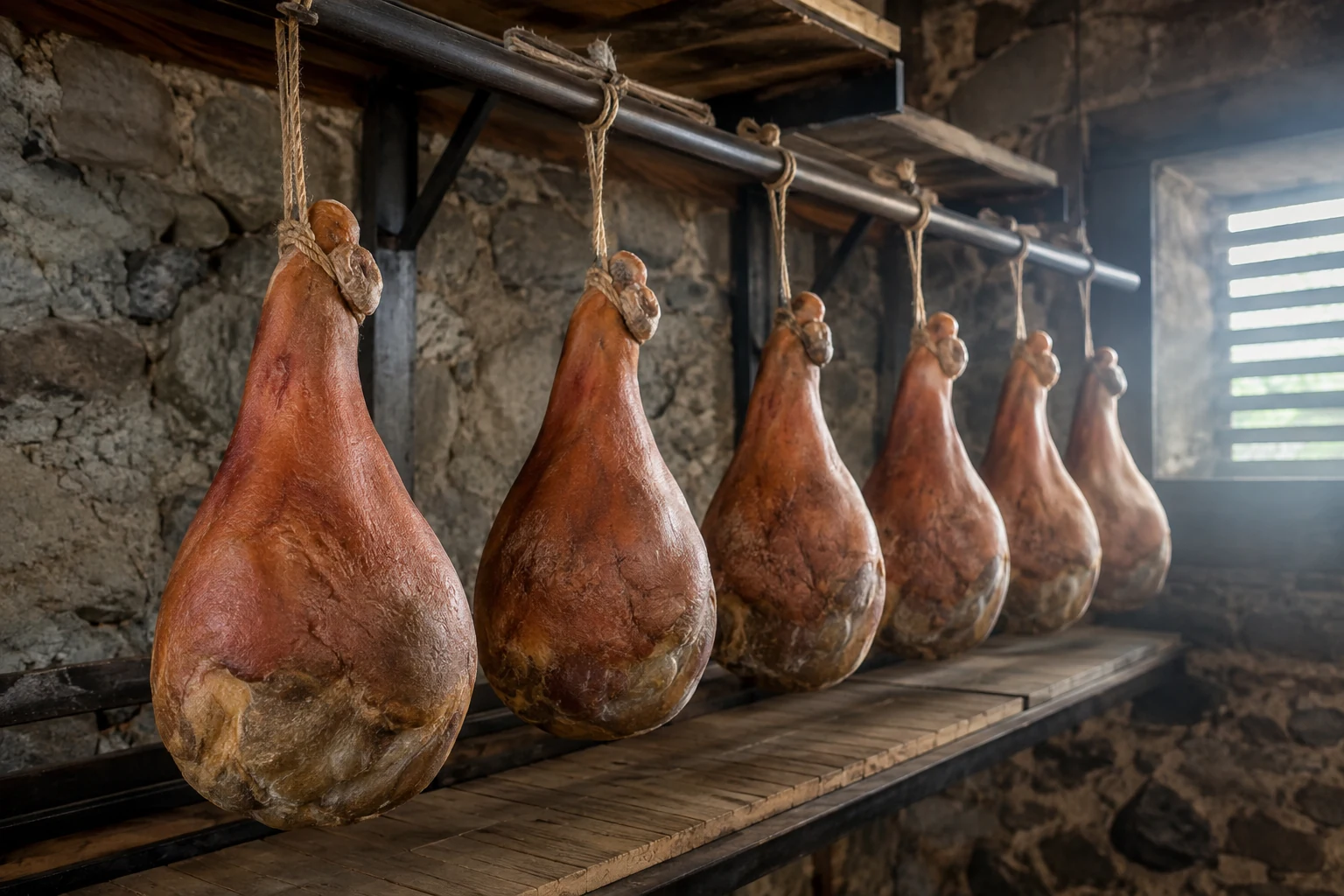
The work behind the name
Four movements, each governed by time
The European Commission and the producers’ association describe a sequence whose variables depend on the size and form of the ham; it is not one fixed recipe or one compulsory flavor profile.
- 01
Salt establishes the cure
The starting cut is a pig’s hind leg. Producers may dry-salt it—by burying it in salt or applying a measured amount—or immerse it in brine. Salting time changes with the mass of the piece.
- 02
Cold maturation evens the interior
A cold resting phase continues the movement of salt through the meat. The producers’ association also identifies this stage with the beginning of fat and protein breakdown that develops aroma and flavor.
- 03
Smoke remains a choice
When used, smoke is applied cold so the ham is not cooked. The rules exclude coniferous and reused wood or sawdust; oak and beech are customary choices described by the producers, but a ham does not have to be smoked.
- 04
Drying and aging finish the change
The final rest lets moisture fall and the bouquet deepen. The association’s current explainer gives an overall range from at least six weeks for a noix to at least nine months for a bone-in ham, while the Commission stresses that minimum production time varies by form.
One word, two registrations
Keep the Belgian and French hams distinct
The Ardennes cross a national border, and the protected names on either side are precise. Reading the complete registered wording prevents a geographical resemblance from becoming a false equivalence.
Jambon d’Ardenne IGP
The Belgian PGI is produced in the province of Luxembourg and specified neighboring districts of Liège and Namur. Smoking is optional, and the pork leg need not originate inside the PGI area.
- Belgian protected name
- Walloon production zone
- Smoked or unsmoked
Jambon sec des Ardennes IGP
France’s INAO lists Jambon sec des Ardennes and Noix de Jambon sec des Ardennes under a separate French PGI. These are distinct registered products, not translations or alternate labels for the Belgian ham.
- French protected name
- Includes the word sec
- Separate specification
A reputation becomes a rule
The dates the evidence can support
Grand origin stories are easy to repeat; the useful record begins with documented service, then moves through national and European protection.
- Early 19th century
Ham appears in the travel record
The European Commission says period documents record ham served to travelers across the Ardennes, while public and private menu collections used the name Jambon d’Ardenne.
- February 4, 1974
Belgium protects the name nationally
A Belgian royal decree set a regional and technical frame: salting, maturation, and smoking when chosen had to take place in the Ardennes according to the traditional method.
- June 1996
European PGI registration follows
Commission Regulation (EC) No 1107/96 registered Jambon d’Ardenne as a protected geographical indication across the European system.
- Current register work
The specification is not frozen in time
Wallonia’s agriculture portal currently lists a modification request for Jambon d’Ardenne. The existing PGI remains registered while that formal process continues.
Two ways to look
Texture first, then the table
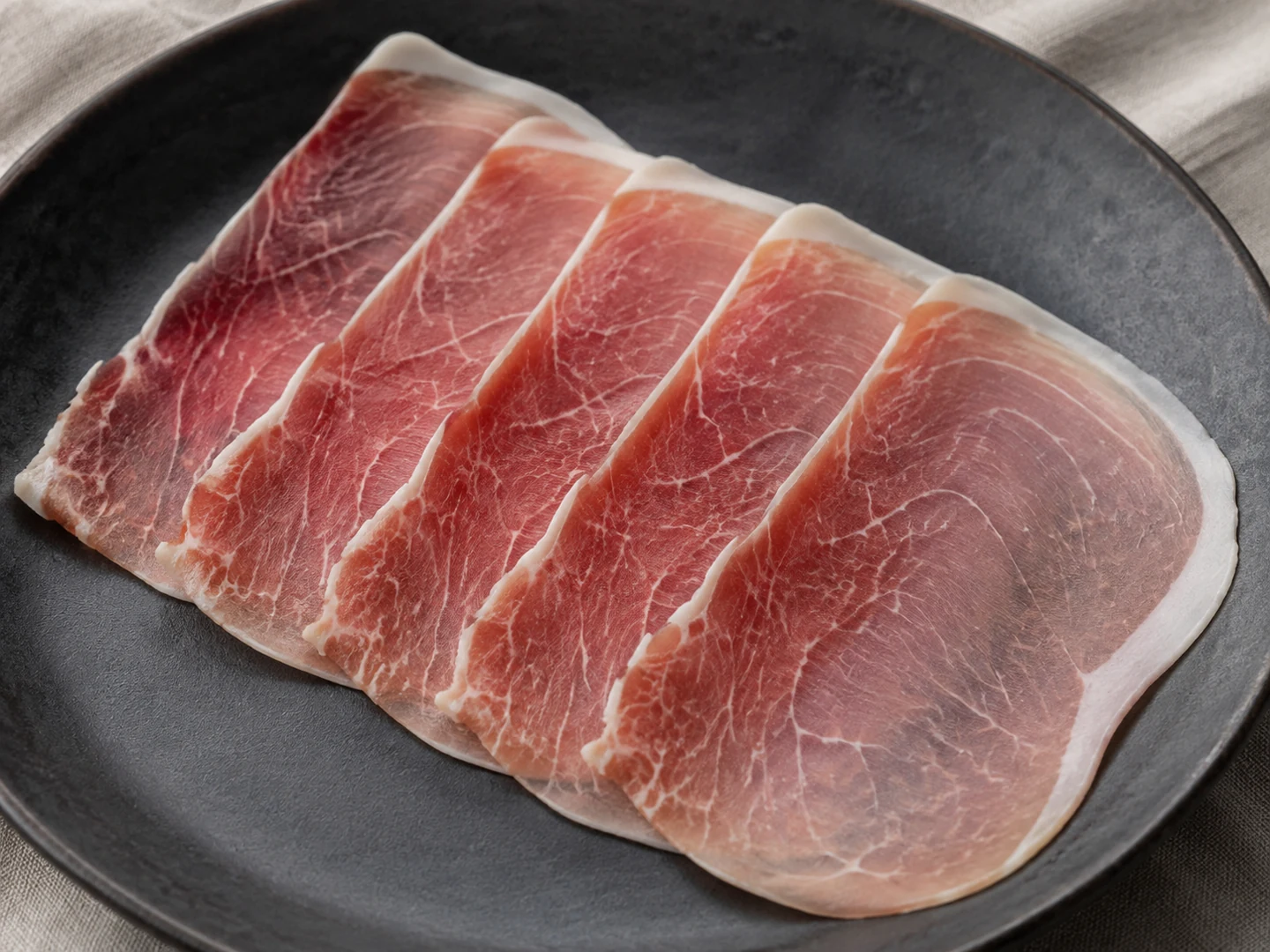
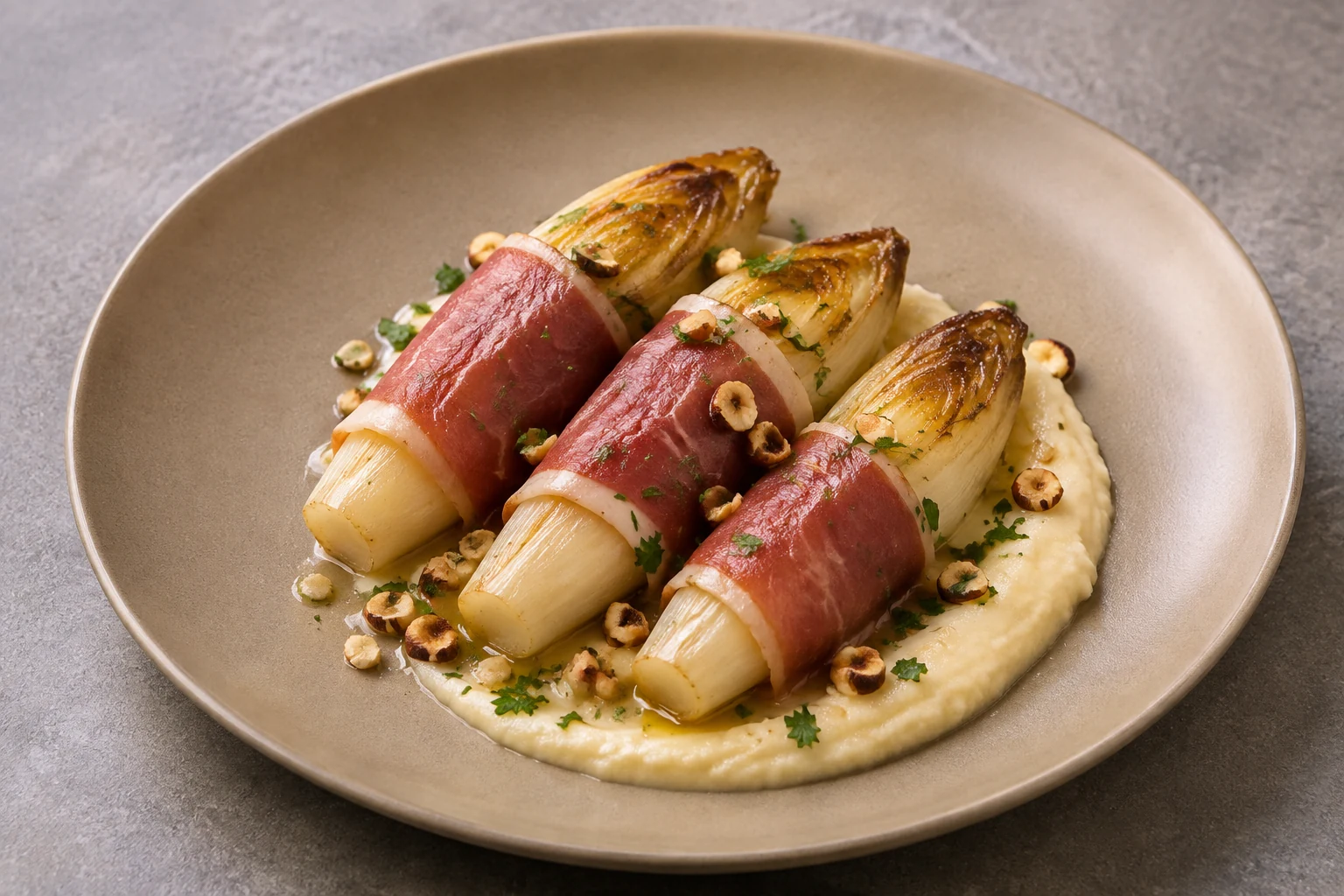
A close slice shows what curing changes; a composed plate shows how contemporary Belgian cooking can use the ham without pretending there is only one canonical serving.
Label reader
Four details behind the initials IGP
- Protected status
- Belgian PGI since 1996
- Production area
- Belgian Ardenne
- Three forms
- Bone-in, cœur, noix
- Smoke
- Optional, not defining
The European registration followed national Belgian protection introduced in 1974.
The defined zone covers Luxembourg province and specified neighboring districts in Liège and Namur.
The form changes the mass of the piece and therefore the timing of salting, maturation, and aging.
When producers smoke the ham, the permitted fuel excludes coniferous and reused wood or sawdust.
At the counter
Let the full label do the locating
Look for the complete name Jambon d’Ardenne IGP and the European PGI mark. A certified producer and the registered wording establish the protected process; they do not, by themselves, claim that the pig was raised locally. If local pork matters to you, that needs its own traceable statement on the product.
For a direct tasting, thin slicing is an editorial recommendation rather than a rule of the specification: it lets the lean, fat, salt, and any smoke register without one element dominating. A plain plate keeps that comparison clear.
The ham also moves comfortably into cooking. The European Commission’s published pairing with chicory, celeriac, hazelnuts, parsley, and butter is best understood as a documented contemporary serving idea—not proof that every Ardennes table treats the ham in exactly the same way.
Research notes
Sources behind this article
Official European and Walloon records establish the protection and geography; producer and tourism sources clarify current practice and service. The queued legacy URL had no usable Internet Archive capture, so it supplied no factual claims.
- European Commission — Jambon d’Ardenne PGI Official overview of the Belgian production area, early documented reputation, 1974 protection, curing sequence, optional smoking, forms, and climate link.
- Wallonia Agriculture — geographical indications and traditional specialities Official explanation of PGI rules, registration year, certification controls, raw-material geography, and the pending amendment request.
- Association of Jambon d’Ardenne Producers — product overview Producer association account of the protected production zone, certified manufacture, and the distinction between process location and pork-leg origin.
- Association of Jambon d’Ardenne Producers — specification explainer Detailed public explanation of the three forms, salting, cold maturation, cold smoking, aging, and current minimum production range.
- European Commission — chicory with Jambon d’Ardenne PGI Official contemporary serving idea and corroboration of the pork cut, curing choices, optional smoking, and maturation context.
- VISITWallonia — Ardennes cured meats Regional tourism context for Jambon d’Ardenne as Walloon charcuterie and for its presence at restaurants, markets, tastings, and producers.
- French INAO — Jambon sec des Ardennes PGI Official French listing showing that Jambon sec des Ardennes and Noix de Jambon sec des Ardennes form a separate protected registration.
- EUR-Lex — Commission Regulation (EC) No 1107/96 European legal record for the June 1996 registration of geographical indications and designations of origin, including Jambon d’Ardenne.
Keep exploring
More stories for your table
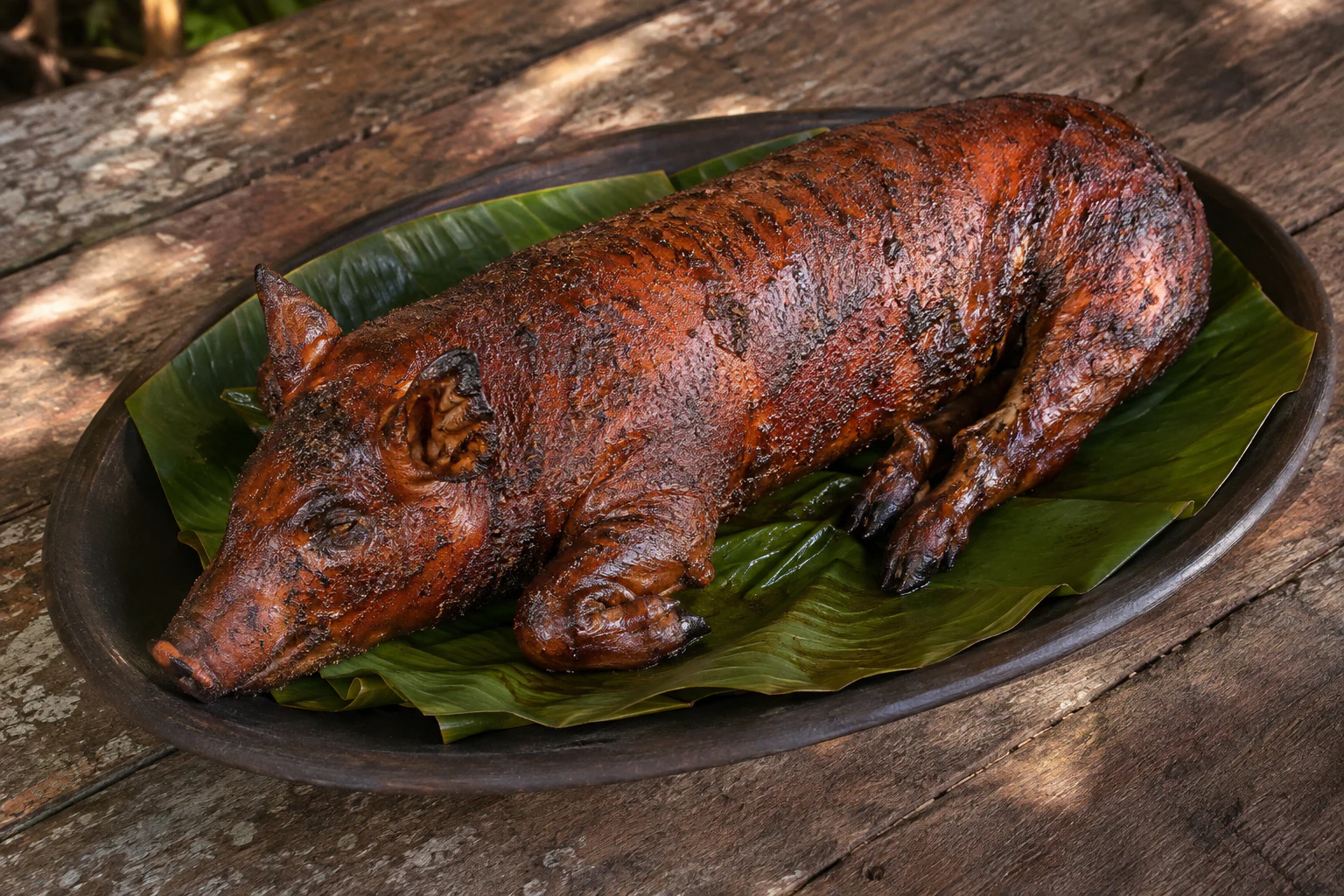
JamaicaPork & fire
Jamaican Roast Suckling Pig
A careful look at how a widely shared whole-pig centerpiece becomes Jamaican through jerk's layered history, pimento smoke, Scotch bonnet heat and living cooks.
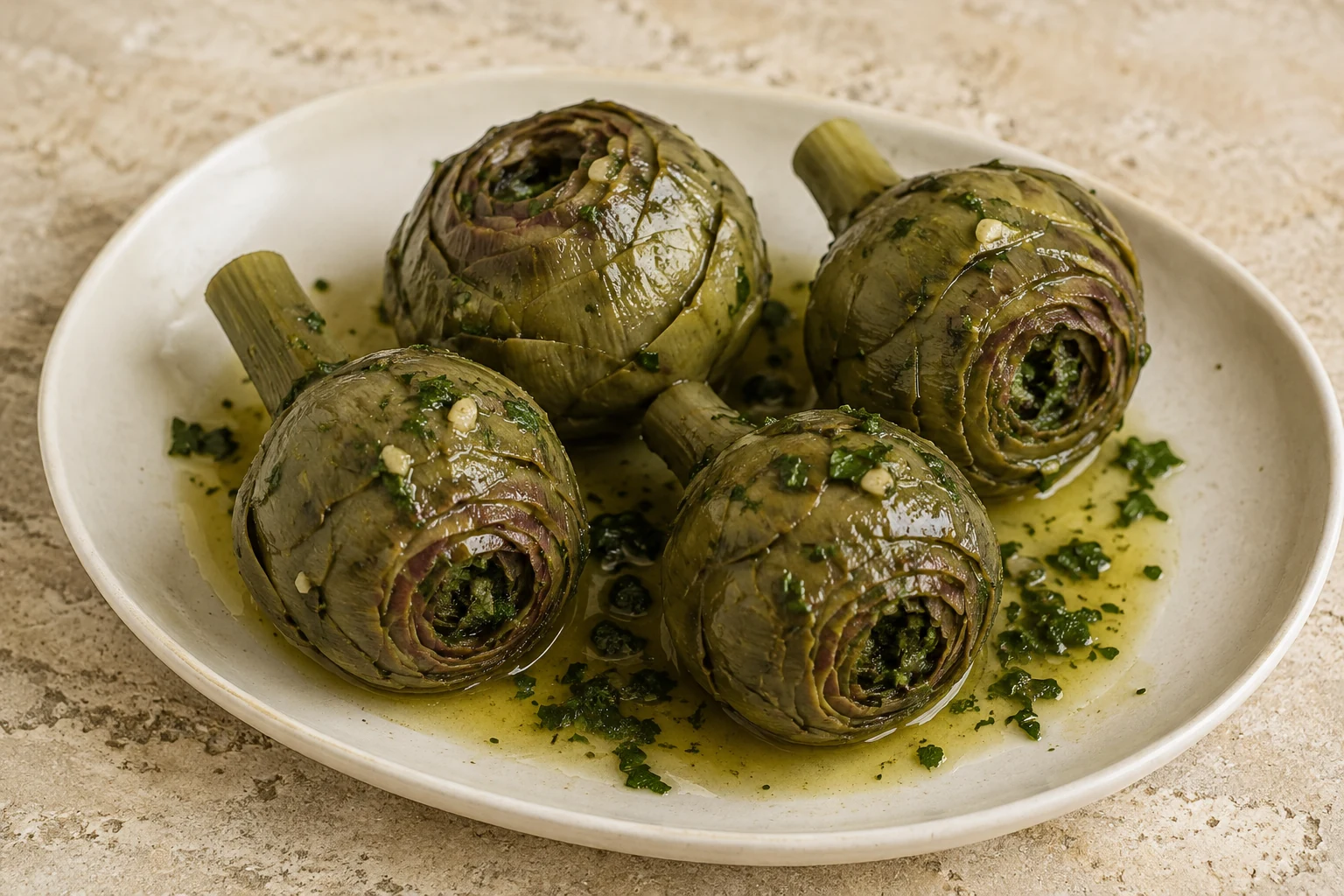
Lazio, ItalyBraised vegetable
Carciofi alla Romana (Roman-Style Artichokes)
Roman-style artichokes turn a short list of spring ingredients into a lesson in cultivar, mentuccia, careful trimming, and a gentle heads-down braise.
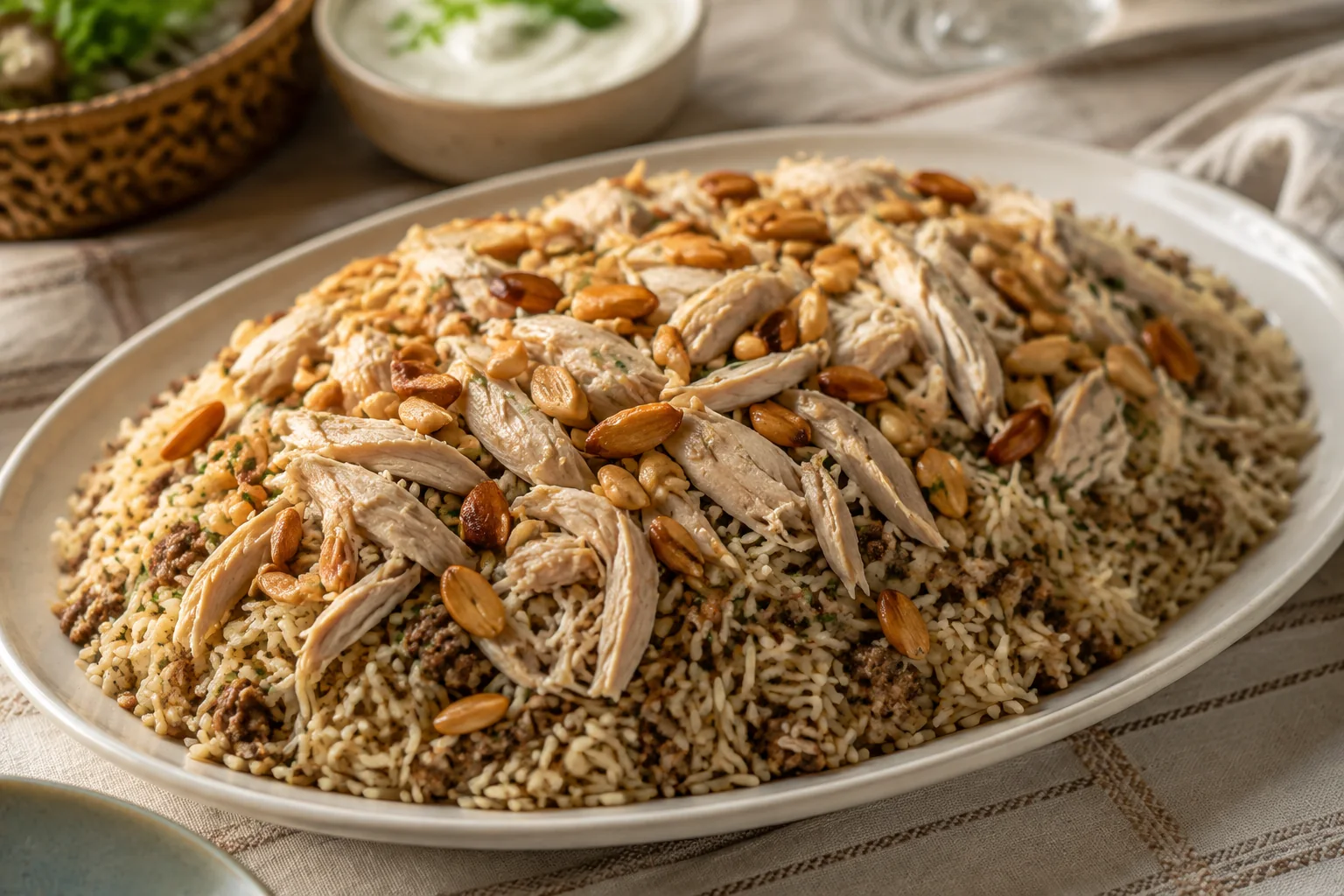
LebanonGathering table
Riz bi Djej
Fragrant rice and finely browned meat, crowned with tender chicken and a generous scatter of toasted nuts.