
Kkaennip Jeon: Keep the Filling Thin
깻잎전
An aromatic leaf, a thin layer of filling and a delicate egg coating: kkaennip jeon asks you to bring all three to the finish together. The crucial adjustment happens before the packet reaches the pan.
The cooking question
How does the middle catch up with the outside?
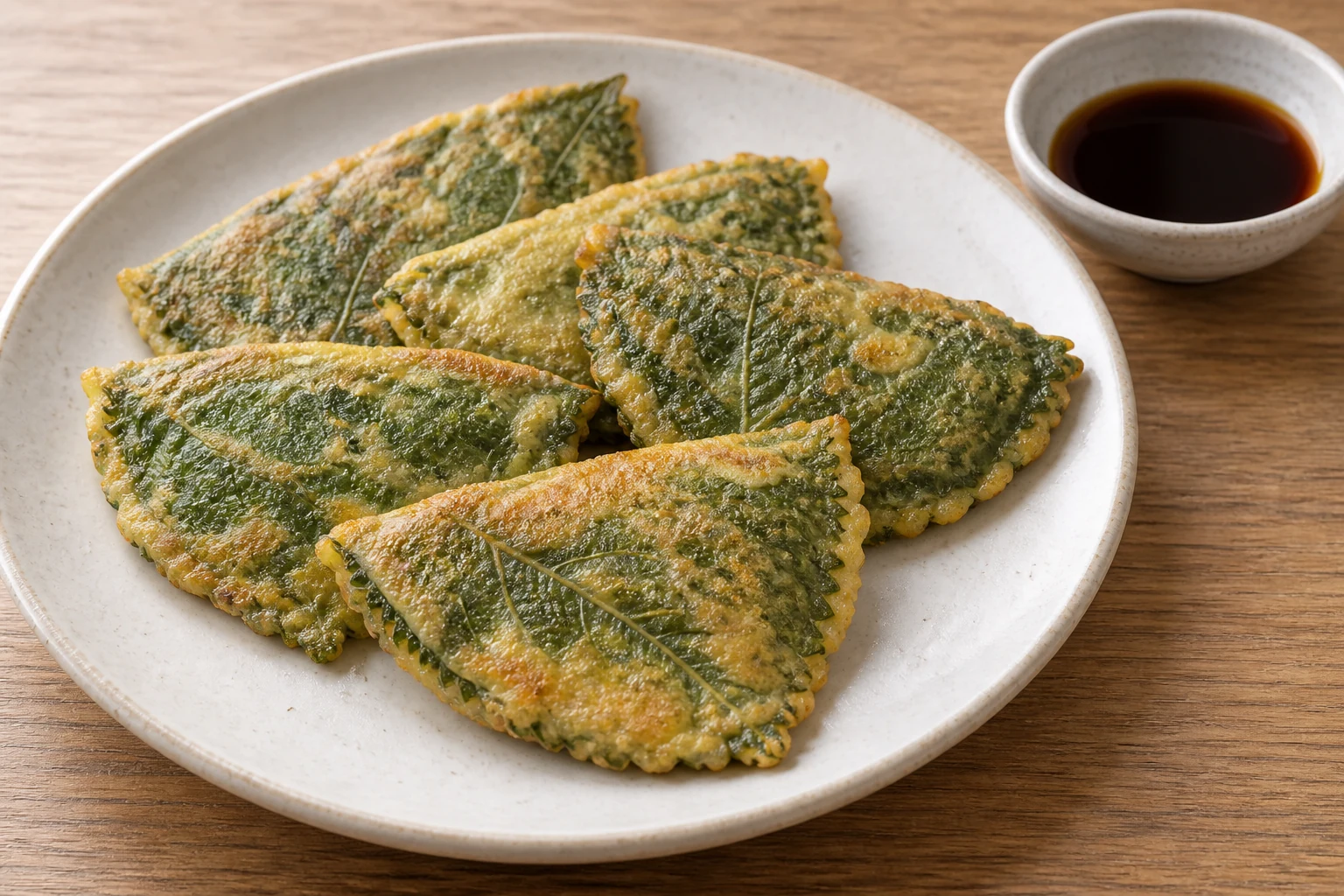
Kkaennip jeon (깻잎전) is Korean perilla-leaf jeon: leaves enclosing a seasoned filling, coated with flour and egg, then pan-fried. The leaf remains part of each bite. Korea’s KOREA magazine documents a pork-and-tofu version; Korean cooks also publish fillings with beef or additional vegetables. There is room for variation within the same folded form.
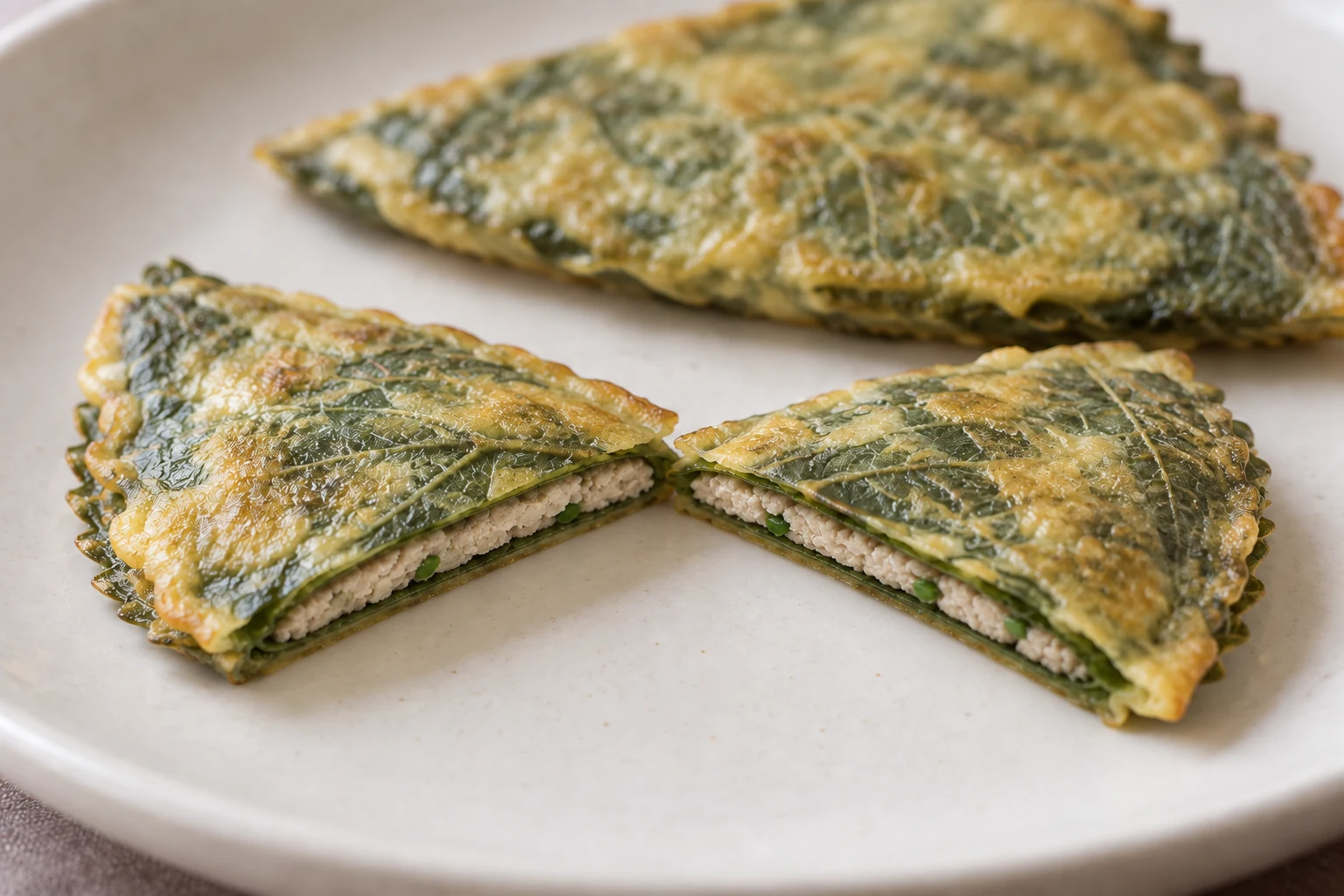
A generous mound is tempting, but it changes the cooking problem. Maangchi makes the point directly: thick meat needs longer in the pan, while the egg outside can brown too far. Thin filling gives the two a better chance of finishing together. Hyosun Ro’s Korean Bapsang method reinforces that approach with a gentle, medium-low fry.
The version below uses raw ground pork mixed with squeezed tofu. Sue Pressey’s My Korean Kitchen offers a different route, sautéing the meat before assembling the filling. Those methods have different starting points; the recipe here follows the raw-meat route and checks its final internal temperature.
Before and during frying
Give the leaf a filling it can hold
Thickness matters, but the texture of the mixture helps you achieve it.
- 01
Squeeze, then crumble
The KOREA recipe squeezes moisture from the tofu before mixing it with pork. Do that before weighing the tofu for this adaptation. A crumbly mixture is easier to distribute than one carrying loose liquid.
- 02
Mince rather than dice
Pressey warns that large vegetable pieces can tear the leaf or make the filling uneven. Cut the onion and scallion finely, then spread the mixture over half the leaf in a low, even layer.
- 03
Protect the egg coating
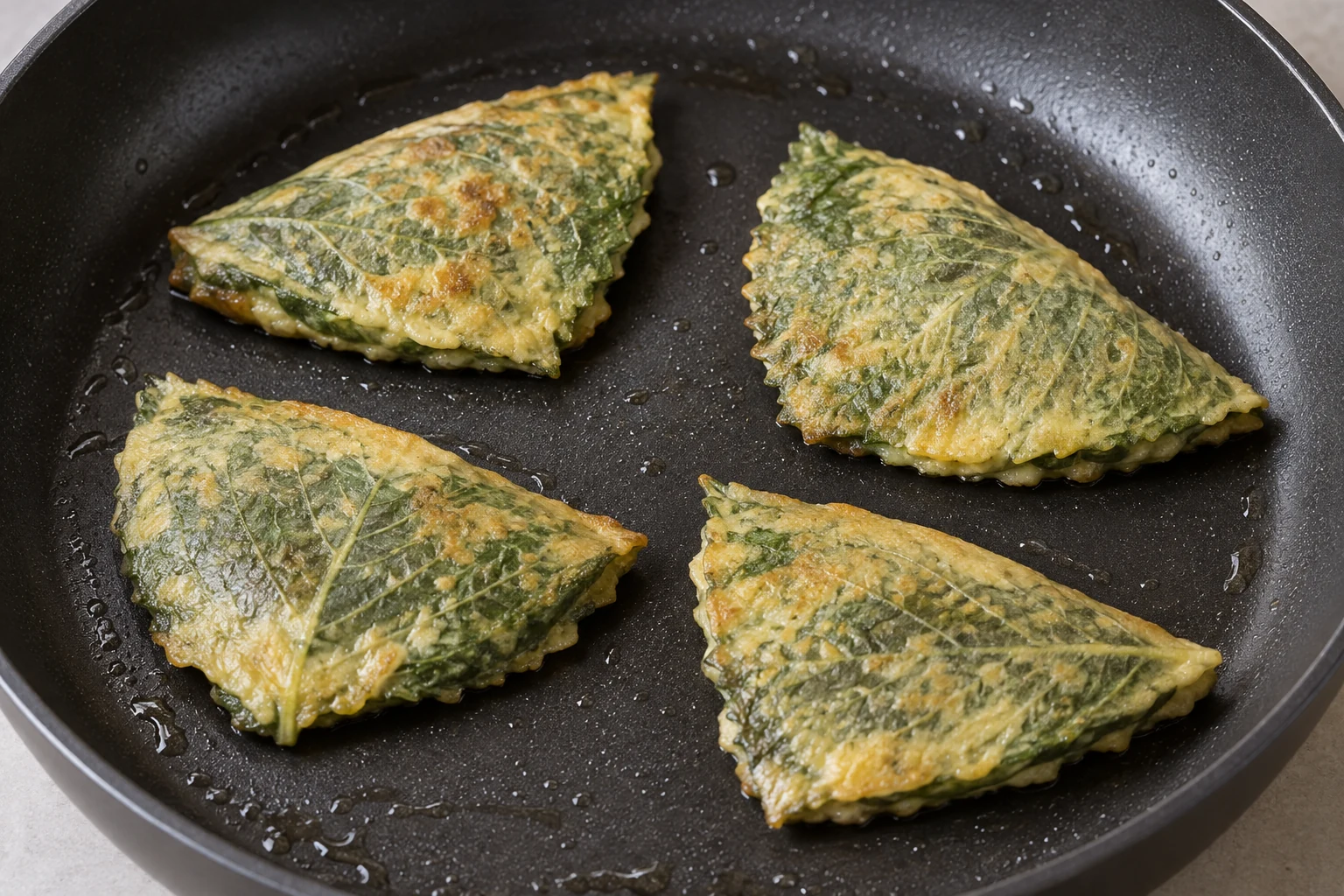
Flour goes on first, followed by beaten egg just before frying. Ro calls for medium-low heat and a lightly golden result. If the coating darkens quickly, lower the heat; keep cooking until the filling reaches its safe temperature.
Look closely
A light surface and a flat middle
Cook it at home
Perilla-leaf jeon with pork and tofu
An editorial home adaptation of the documented pork-and-tofu approach, with proportions chosen for about 20 thin packets. This recipe has not been kitchen-tested. Allow about 30 minutes to prepare and 25 minutes to fry in batches; temperature, rather than the clock, determines doneness. You will need a roomy nonstick skillet and a thin-tip food thermometer suitable for thin foods.
Ingredients
Leaves and filling
- 20 large edible Korean perilla leaves (kkaennip), bought as a food ingredient
- 150 g raw ground pork
- 75 g firm tofu, weighed after squeezing out excess water
- 40 g onion, very finely minced
- 15 g scallion, very finely minced
- 5 g garlic, minced
- 2 tsp soy sauce
- 1 tsp toasted sesame oil
- ⅛ tsp ground black pepper
Coating and frying
- 40 g plain all-purpose flour
- 3 large eggs
- ⅛ tsp fine salt
- 3 tbsp / 45 ml neutral cooking oil, divided between batches
Dipping sauce
- 2 tbsp / 30 ml soy sauce
- 1 tbsp / 15 ml unseasoned rice vinegar
- 1 tbsp / 15 ml water
Method
- 1
Prepare the leaves and tofu.
Rinse the leaves under running water, trim their stems close to the leaf and gently blot away surface water. Squeeze the tofu firmly in a clean cloth, then weigh out 75 g and crumble it finely. Stir together the dipping-sauce ingredients in a separate serving bowl.
- 2
Mix the filling.
Combine the raw pork, crumbled tofu, onion, scallion, garlic, the filling’s 2 teaspoons soy sauce, sesame oil and pepper. Mix until cohesive. Keep the mixture refrigerated while setting up a plate of flour and a shallow bowl with the eggs beaten together with the salt.
- 3
Fill and fold.
Lightly dust both sides of each leaf with flour and shake off the excess. Divide the filling among the 20 leaves, about 15 g or a scant tablespoon each. Spread it thinly over one half, leaving a small clear border, then fold the other half over it and press gently flat. Choose large leaves that close without bulging; keep assembled packets chilled while you work on the first batch.
- 4
Coat and pan-fry.
Warm a large nonstick skillet over medium-low heat with 2 teaspoons of the measured cooking oil. Dip each packet in beaten egg, let the excess drip off and lay it in the pan. Cook about five at a time with space between them, roughly 2–3 minutes per side as an initial guide. The egg should set and become lightly golden. Lower the heat if it colors rapidly.
- 5
Check the filling and finish the batches.
Lift each packet onto a clean spatula and insert a thin-tip thermometer sideways into the center of its filling, following the probe’s insertion-depth instructions. Cook until the pork filling reaches 160°F (71°C); return any under-temperature packet to the pan over gentle heat and check again. Wash the probe and spatula after checking an under-temperature filling. Use a clean serving plate. Between batches, remove browned crumbs and replenish the oil from the remaining measured amount. Repeat the coating, frying and temperature check for all packets.
- 6
Serve and put away leftovers.
Serve warm with the prepared dipping sauce. Discard leftover coating egg and flour that have contacted raw filling. Refrigerate leftover cooked jeon promptly in a shallow container, within 2 hours, or within 1 hour above 90°F (32°C). Reheat leftovers to 165°F (74°C).
Research notes
Sources and cooking guidance
Four independent culinary accounts establish the dish and explain its preparation. The recipe proportions are an editorial adaptation; current FoodSafety.gov guidance supplies the cooking and chilling limits.
- KOREA, April 2025 — kkaennip and kkaennipjeon Korea Ministry of Culture, Sports and Tourism: a pork-and-tofu filling, squeezed tofu and flour-and-egg coating.
- Maangchi — Kkaennip-jeon The thin-filling explanation and a raw-meat method for folded perilla leaves.
- Hyosun Ro, Korean Bapsang — Kkaennip Jeon Finely prepared filling, flour then egg, and gentle frying to a lightly golden coating.
- Sue Pressey, My Korean Kitchen — Stuffed Perilla Leaves Small vegetable cuts and restrained filling; a distinct method that sautés the meat before assembly.
- FoodSafety.gov — Safe Minimum Internal Temperatures Ground pork: 160°F (71°C). Reheated leftovers: 165°F (74°C).
- FoodSafety.gov — Four Steps to Food Safety Separate raw and cooked foods, wash produce and refrigerate perishable leftovers promptly.
- USDA FSIS — Kitchen Thermometers (PDF) Thin-food probe placement guidance, including checking sideways off the pan; temperature limits above come from the current chart.
Keep exploring
More stories for your table
ArgentinaSteak sandwich
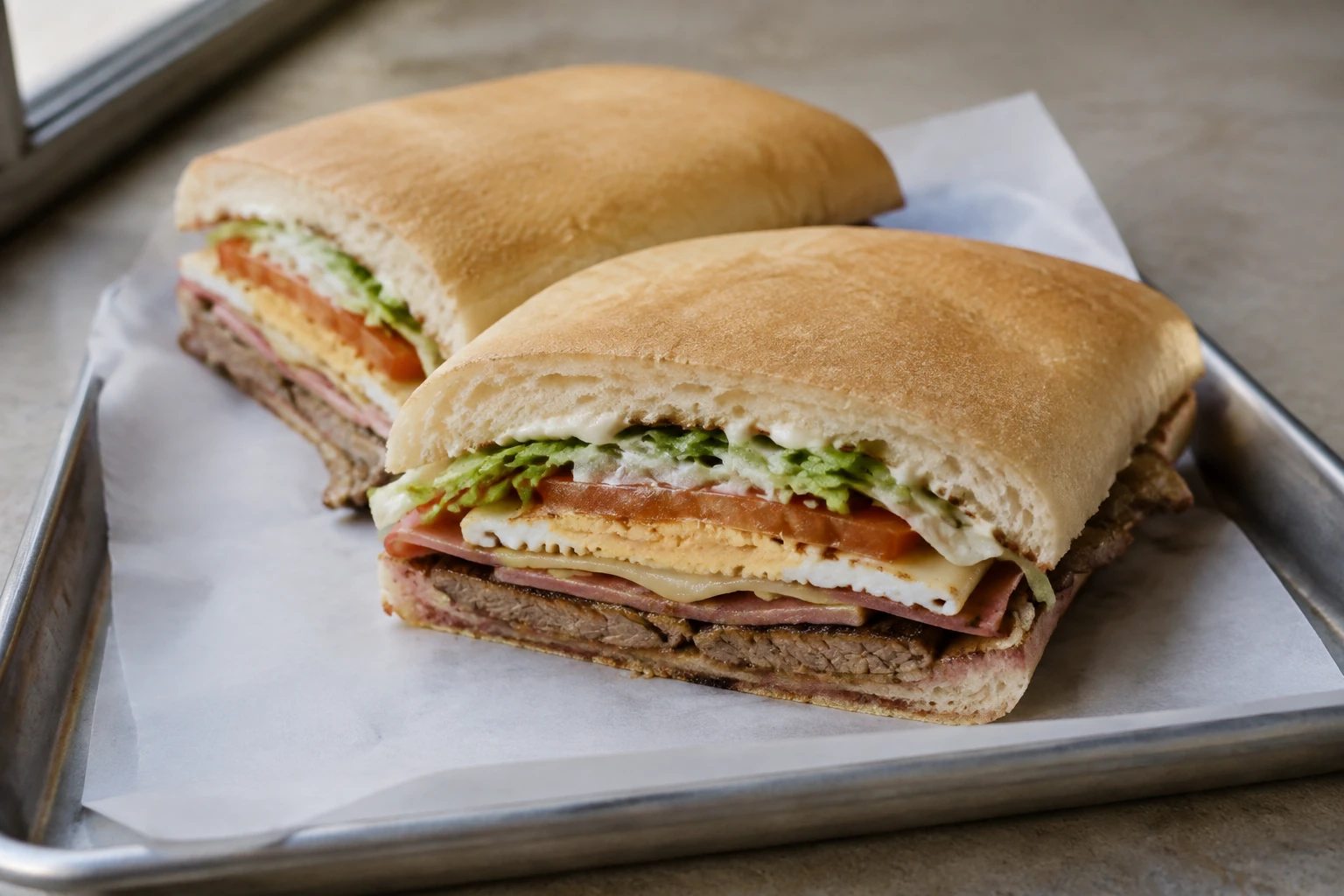
Córdoba’s Lomito: Start with the Bread
Explore Córdoba’s Argentine steak sandwich through its soft bread, thin beef and complete filling, with a practical lomito recipe for two.
GeorgiaBeet salad
Charkhlis Chogi: When Tart Fruit Dresses Beets
Roasted beets, tart fruit and fresh herbs make Georgian charkhlis chogi. Explore two sauce textures, then cook a complete dried-sour-cherry adaptation.
BelgiumDry-cured ham
Jambon d’Ardenne: A Name Made by Place
Belgium’s protected Ardennes ham is defined less by where the pig was raised than by where salt, cold air, optional smoke, and patient maturation turn pork into charcuterie.