
Córdoba’s Lomito: Start with the Bread
Lomito cordobés
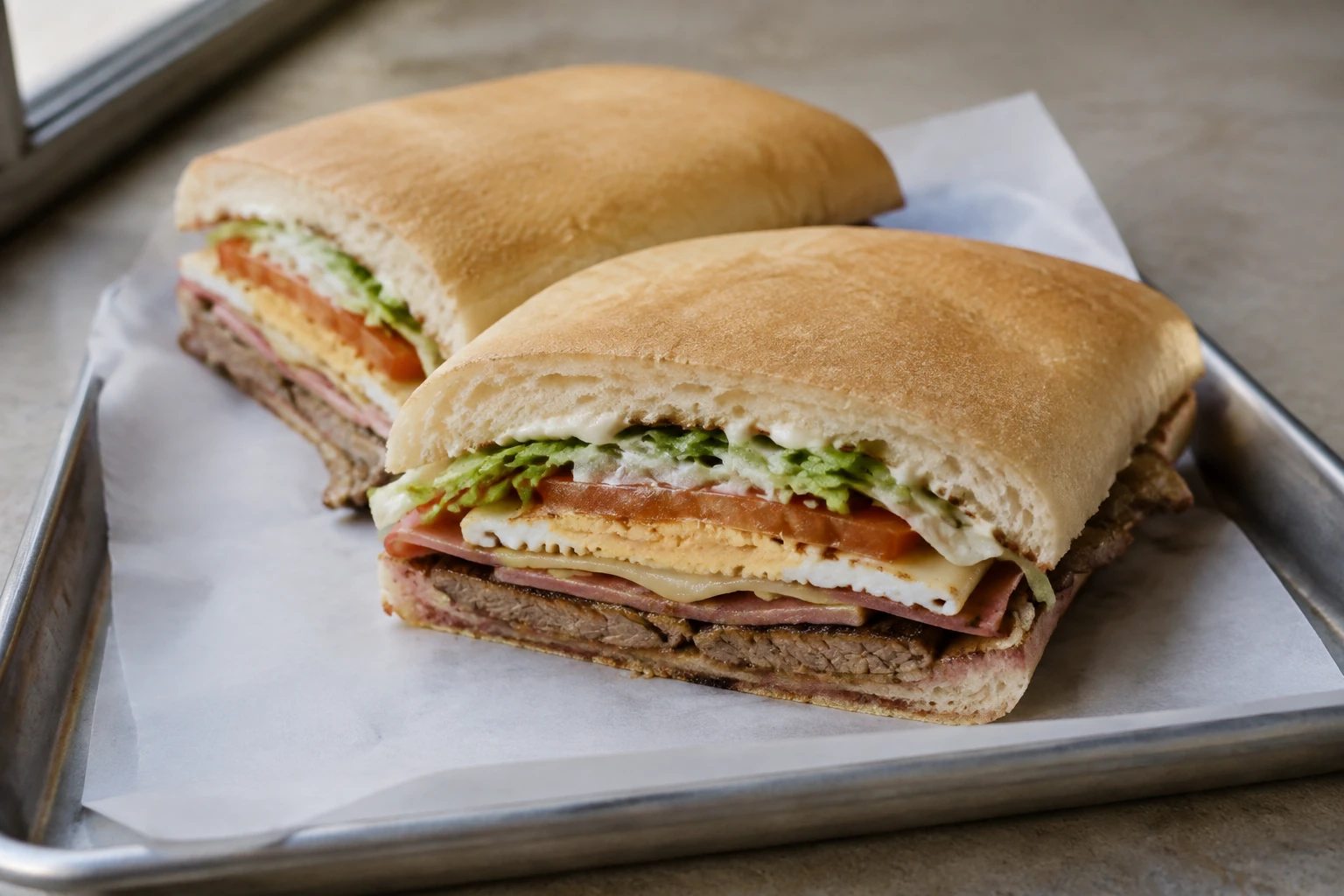
Thin beef gives this Argentine sandwich its name. In Córdoba, the light, yielding roll deserves equal attention: it has to carry a hot filling and cool salad through the same bite.
Argentina, through Córdoba
How much can a roll hold?
A lomito can bring a remarkable amount to the table: beef, ham, cheese, egg, tomato, lettuce and mayonnaise. The interesting question is how all of that becomes a comfortable bite. In Córdoba, the answer starts with a bread roll that is broad, light and willing to give way.
The sandwich’s place in the city is well documented. Agencia Córdoba Turismo recognizes Lomitos 348 among its emblematic food businesses, while Betos describes building its Córdoba sandwich business from 1983. These are traces of an established local culture. Neither a shop’s opening date nor a baker’s family account settles who invented the lomito.
The revealing ingredient
A soft roll with a long argument behind it
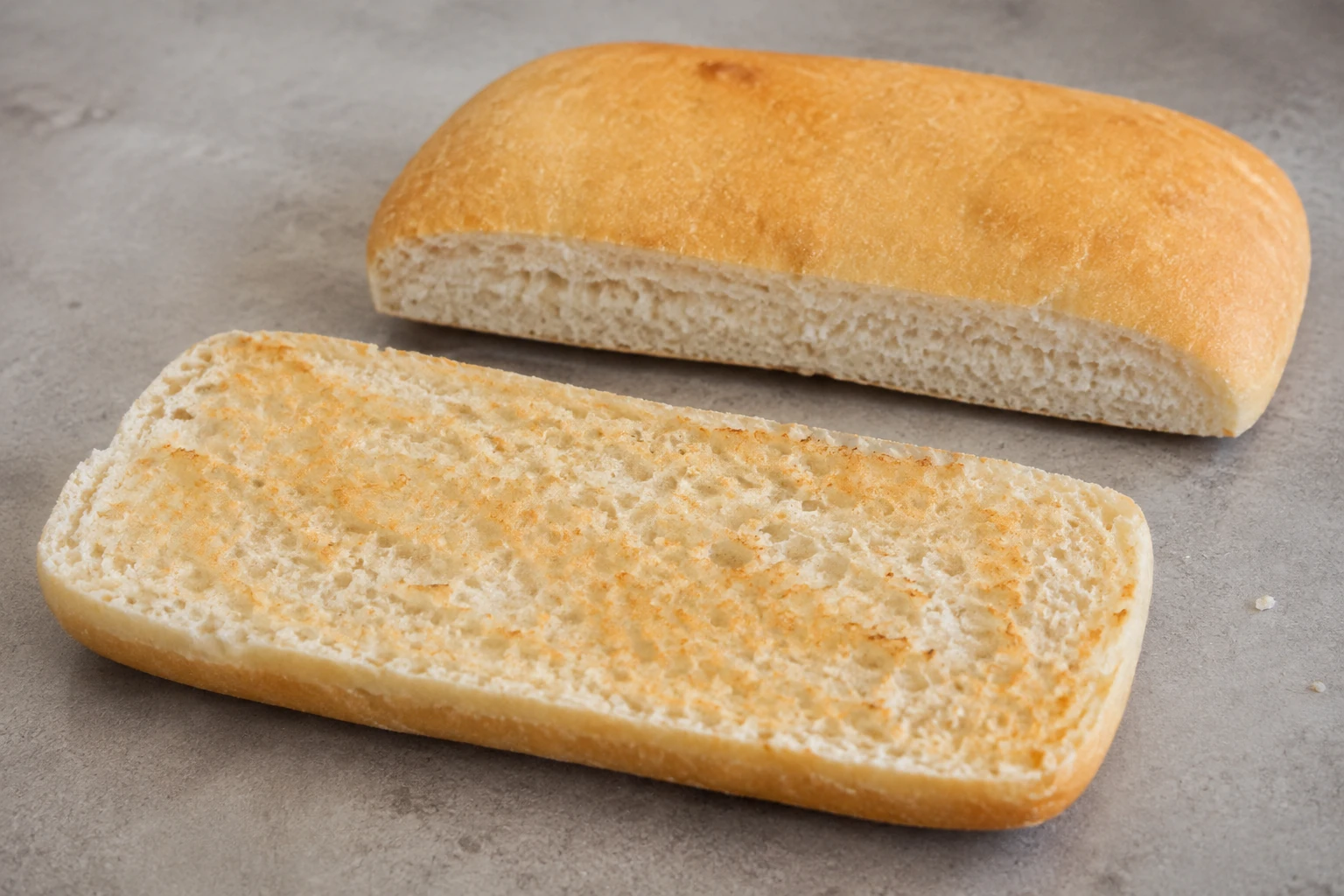
For Circuito Gastronómico in 2024, Lara Cejas Boco and Nicolás Marchetti interviewed Córdoba’s chefs, bakers and lomiterías. Chef Andrés Chaijale described a low rectangular roll with light crumb. El Candil and Chetapys emphasized bread that absorbs juices without disintegrating.
The recollections differ: Chaijale recalled some sweetness; Miguel Turello of Lomitos 348 preferred French-style dough without a hard crust or Vienna-style sweetness. For a home version, the useful shared clue is a yielding texture. Our practical advice is to choose a low roll and toast its cut faces, keeping the bread easy to bite through while the centre carries the filling.
Three terms that help you build it
- Lomo
- The beef cut
- Completo
- The fuller filling
- A la plancha
- On a flat griddle
IPCVA’s Argentine Beef reference translates lomo as tenderloin or fillet. Here it is cut into thin pieces that can cover the roll and cook on a flat hot surface.
Betos lists ham, cheese and egg alongside beef, tomato, lettuce and mayonnaise. Foodit’s simpler lomito makes those additions optional: the fuller version is a choice, not a requirement of every sandwich.
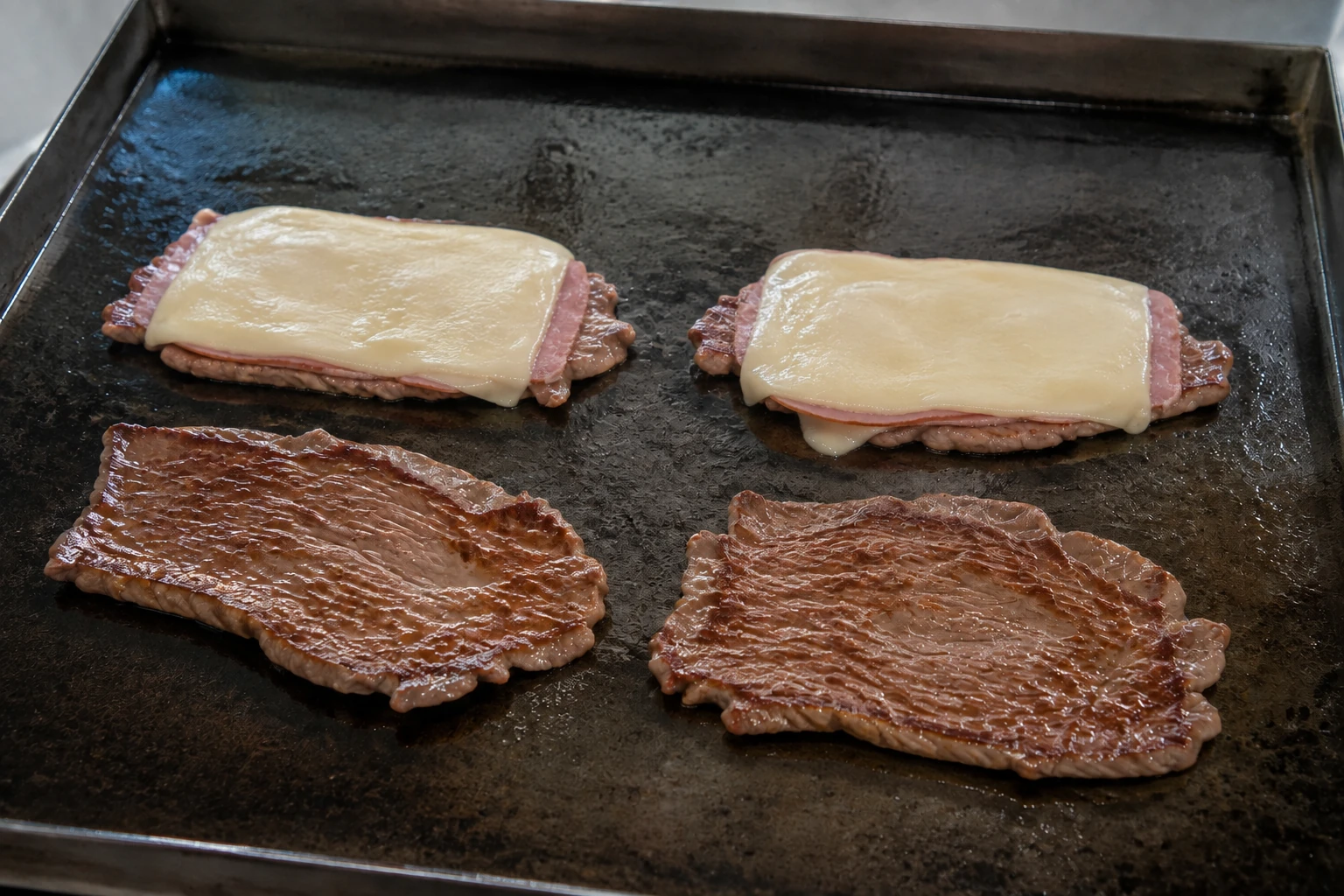
Cocineros Argentinos browns the beef, warms the ham and cheese over it, cooks the eggs separately and heats the bread. The hot ingredients meet the cold vegetables at assembly.
Cook it at home
Lomito completo for two
This home adaptation follows the beef, ham, cheese, egg and salad combination documented at Betos, with griddle staging informed by Cocineros Argentinos. A soft locally available roll and mild Gouda are our practical home choices. Makes two large sandwiches; allow about 15 minutes to prepare and 20 minutes to cook and assemble, including the beef’s rest. These are estimated timings; the recipe has not been kitchen tested.
Ingredients
Bread and cold filling
- 2 low, soft rectangular white rolls, about 18–20 cm long and 90–110 g each
- 30 g commercial mayonnaise
- 150 g ripe tomato, thinly sliced
- 40 g iceberg lettuce, washed, thoroughly dried and finely shredded
Hot filling and seasoning
- 300 g beef tenderloin, trimmed and cut across the grain into 4 pieces of about 75 g
- 40 g thinly sliced ready-to-eat cooked ham, divided into 4 portions
- 40 g thinly sliced mild Gouda cheese, divided into 4 portions
- 2 large eggs
- 15 ml / 1 tbsp sunflower oil, divided: 10 ml for beef and 5 ml for eggs
- 3 g / ½ tsp fine salt, divided: 2 g for beef and 1 g for tomato
- ¼ tsp ground black pepper
Method
- 1
Prepare before heating.
Set the lettuce aside in a clean bowl. Lay the tomato slices on a separate plate, sprinkle with 1 g of the salt and leave while you prepare the beef; drain away released liquid before assembly. On a separate board, place the beef pieces between sheets of food-safe wrap and gently flatten to about 6 mm thick. Pat dry, then season with the remaining 2 g salt and all the pepper. Wash hands and clean the board and utensils after handling raw beef.
- 2
Toast the bread.
Split the rolls horizontally. Heat a large heavy frying pan or flat griddle over medium heat and toast the cut faces, without oil, for about 1–2 minutes until lightly golden. Work in batches if needed and set the bread aside, cut faces up. Have the ham and cheese portions ready before cooking the meat.
- 3
Brown the beef and melt the topping.
Increase the heat to medium-high. Use the 10 ml oil allocated to the beef in two batches of 5 ml, cooking two cutlets at a time without crowding. Brown the first side for roughly 1–2 minutes, turn, and put one portion of ham followed by one portion of cheese on each piece. Cook the second side for roughly 1–2 minutes, until the cheese softens and the beef reaches at least 63°C / 145°F. Check the centre with a thin-tip thermometer inserted from the side; keep cooking if needed. Transfer to a clean warm plate and cover loosely. Rest every piece for at least 3 minutes after it leaves the pan.
- 4
Cook the eggs during the rest.
Heat the remaining 5 ml oil in a separate nonstick pan over medium heat. Crack in the eggs, break each yolk gently and spread it slightly for a flatter filling. Cook for about 2–3 minutes, turn carefully, and continue until both white and yolk are fully firm, about 2–3 minutes more. Adjust the heat to avoid scorching; doneness takes priority over these estimates.
- 5
Assemble and serve.
Spread the mayonnaise across all four toasted bread faces. Put two topped beef pieces on each roll base, overlapping slightly to cover the bread, then add one egg, half the drained tomato and half the lettuce to each. Close, press gently and cut each sandwich across the middle if desired. Serve immediately, once every beef piece has had its full rest. Refrigerate leftovers within 2 hours, or within 1 hour when the temperature is above 32°C / 90°F; the salad and toasted bread are best assembled fresh.
Research notes
Sources and kitchen references
Local institutions, interviews and recipes establish the Córdoba context and preparation. The home quantities and assembly schedule are editorial adaptations; official guidance supplies the safety limits.
- Agencia Córdoba Turismo — Los Emblemáticos Official recognition of Lomitos 348 as an established part of Córdoba’s food culture; the 1974 date concerns that business, not proof of the sandwich’s invention.
- Circuito Gastronómico — the bread of the lomito Lara Cejas Boco and Nicolás Marchetti’s July 2024 interviews with local chefs, bakers and sandwich shops document bread dimensions, texture and differing recollections of sweetness.
- Betos — history and menu The Córdoba business describes its beginnings in 1983 and lists beef, tomato, lettuce, ham, cheese, egg and mayonnaise in its Betos Lomo.
- IPCVA / Argentine Beef — lomo The Argentine beef institute’s cut reference identifies lomo as tenderloin or fillet.
- La Nación Foodit — sándwich de lomito A simpler beef, mayonnaise, lettuce and tomato preparation treats egg, sliced cheese and cooked ham as additions.
- Cocineros Argentinos — lomitos a lo Pablo y Pachu Demonstrates browning beef, warming ham and cheese over it, cooking eggs separately and warming the bread. Its extra bacon and onion are not used in this home adaptation.
- FoodSafety.gov — safe minimum cooking temperatures Current official guidance for beef steaks: 63°C / 145°F followed by a three-minute rest; eggs should have firm whites and yolks.
- FDA — egg safety Official preparation and serving guidance: fully firm eggs, prompt service and the two-hour refrigeration limit, shortened to one hour above 90°F.
Keep exploring
More stories for your table
SwedenBeef and potatoes
Biff Rydberg: A Swedish Lesson in Timing
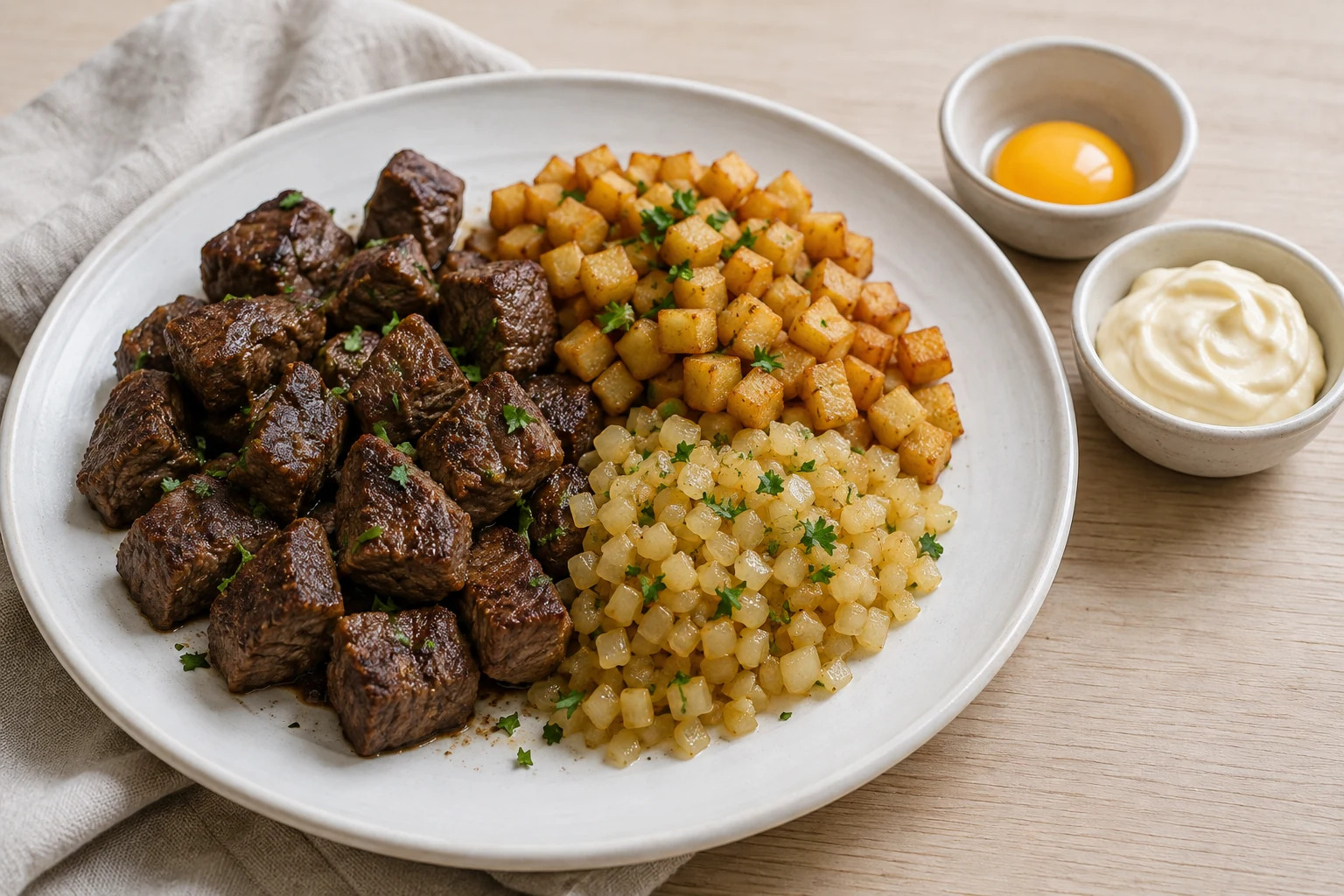
Crisp potatoes, soft onions and browned beef need different treatment. Learn the timing behind Sweden’s Biff Rydberg, compare two mustard creams and cook a home adaptation.
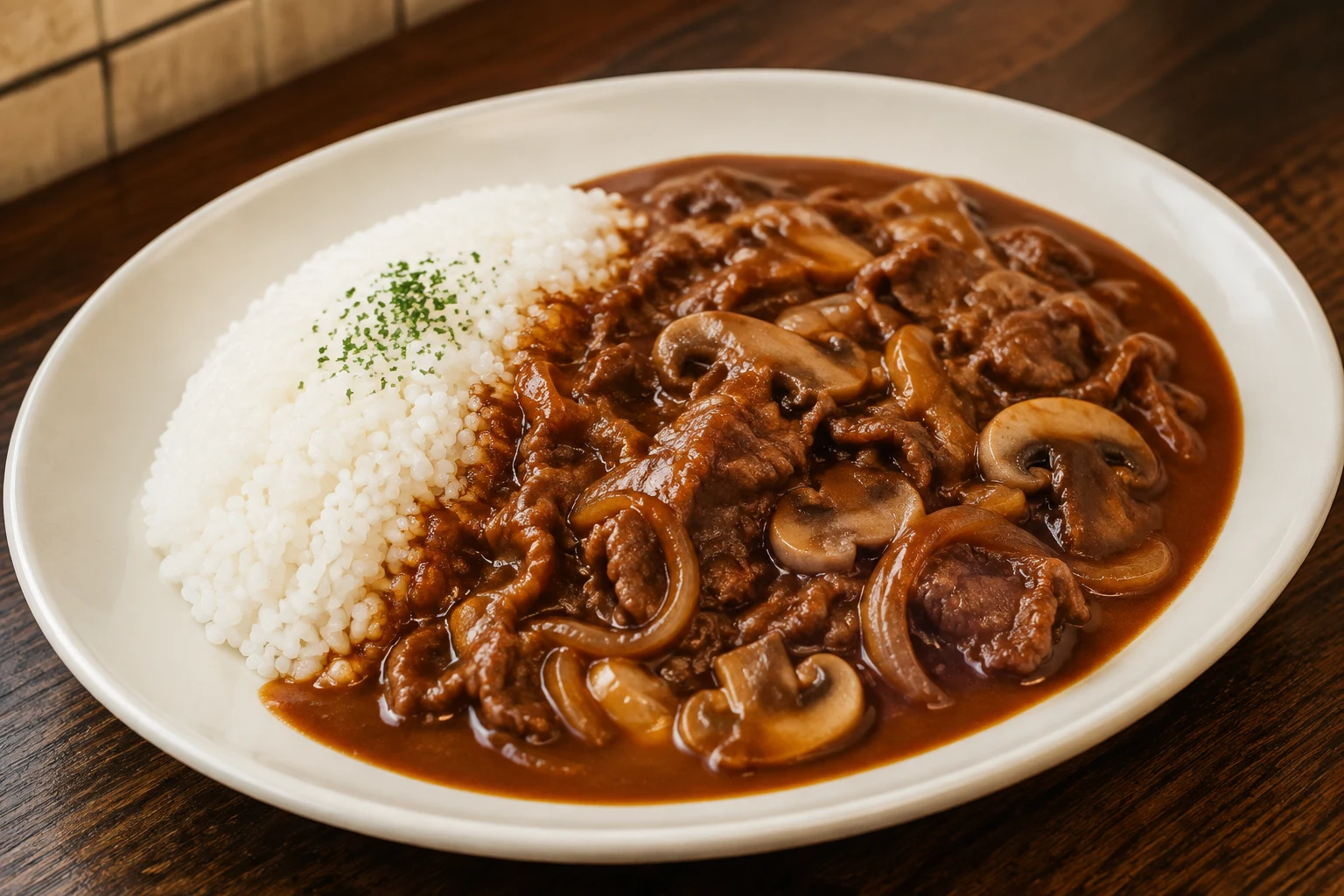
JapanYōshoku rice dish
Hayashi Rice: A Sauce Translated for Rice
Hayashi rice turned a Western-style brown meat sauce into Japanese yōshoku by changing the plate, the seasoning, and eventually the home pantry.
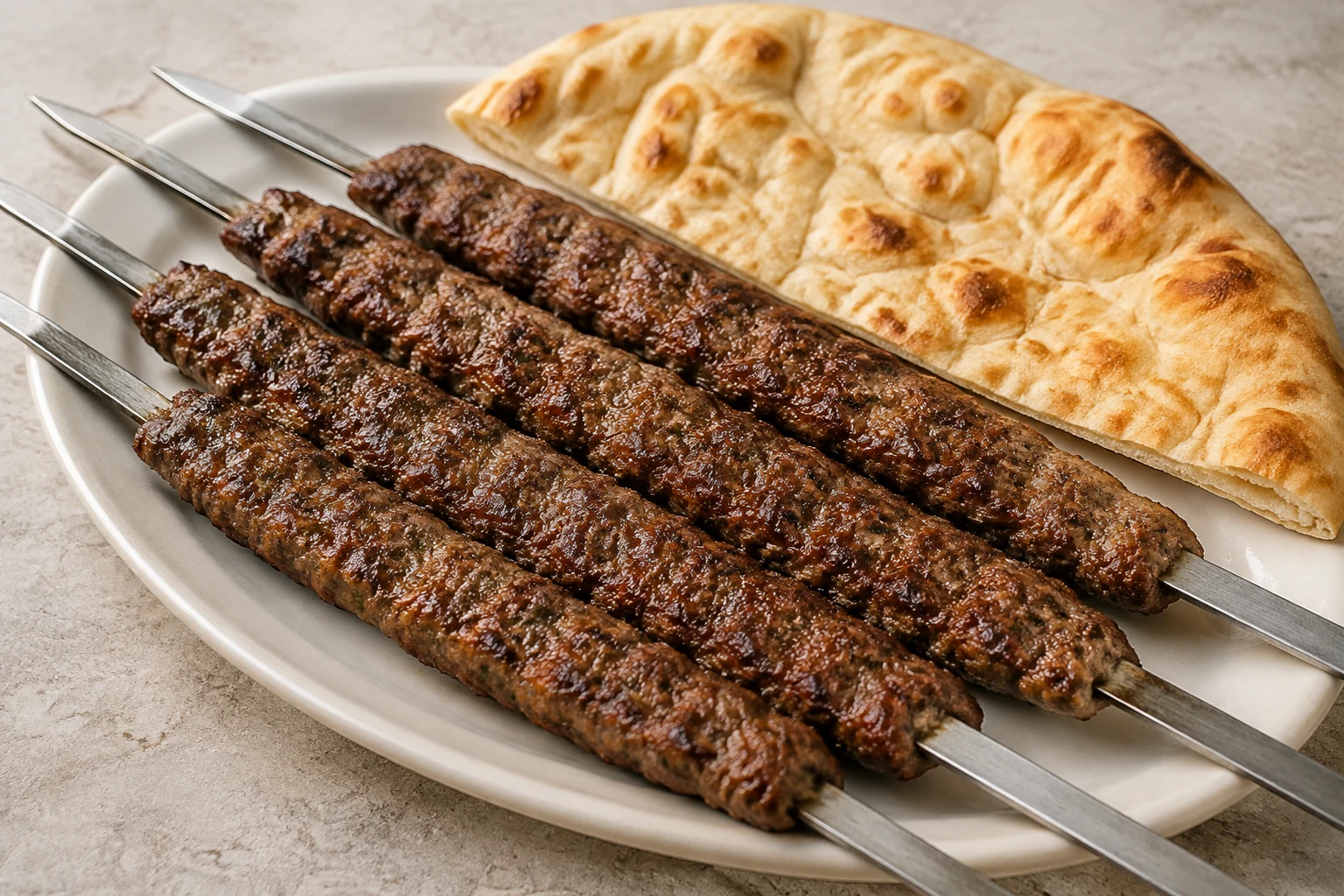
AfghanistanKebab techniques
Afghan Lula Kebab: Grilled Skewers, Fried Rolls
Afghan lula and lola kebab recipes take two distinct paths. Compare grilled mince with fried meat-and-potato rolls, their ingredients, texture and cooking order.