
Butter Chicken (Murgh Makhani)
Murgh makhani
Charred, yogurt-marinated chicken meets a smooth tomato-butter sauce in this Delhi restaurant classic. Its broad history is well established, even as rival family accounts dispute who first made it and when.
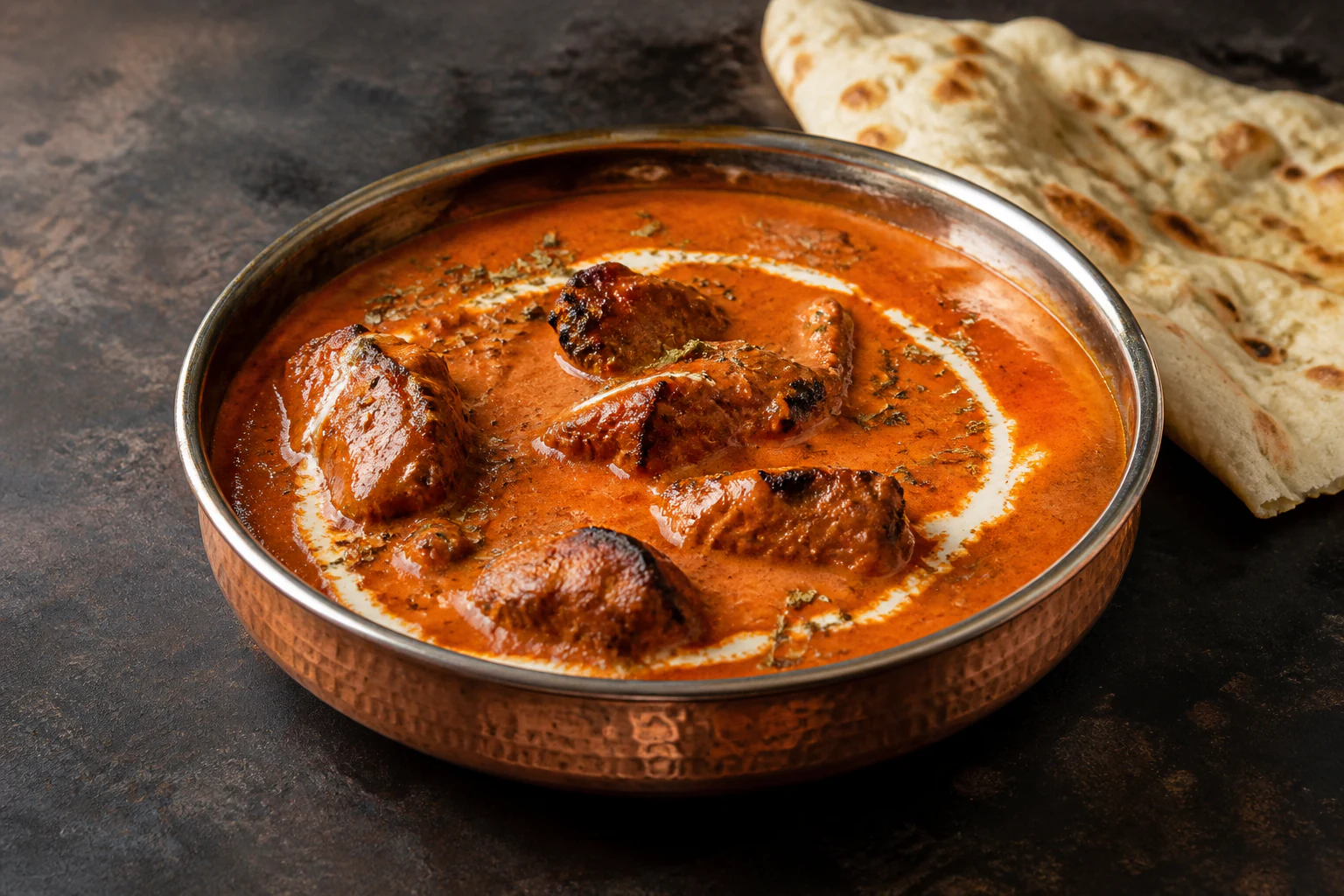
Butter chicken, or murgh makhani, is built around contrast: pieces of chicken acquire browned, smoky-tasting edges under fierce heat, then settle into a smooth red-orange sauce of tomato, butter, cream, and warm spices. The finished gravy should cling rather than sit like soup, with enough acidity to keep its dairy richness lively.
Delhi tourism presents the familiar story that cooks at Moti Mahal in Daryaganj combined tandoori chicken with tomato, butter, and cooking juices in the 1950s. That account is useful cultural context, not a settled inventor record. Descendants of Moti Mahal's original business partners have advanced competing versions in a legal dispute, and Old Delhi oral historian Sohail Hashmi has cautioned that much of the story rests on memory and restaurant lore.
A Delhi restaurant classic with a contested origin
The strongest common thread is the dish's connection to the Moti Mahal restaurant tradition and to cooks who moved from Peshawar to Delhi around Partition. Accounts diverge on whether the decisive tomato-butter gravy began before Partition in Peshawar or afterward at Moti Mahal in Daryaganj, and on whether Kundan Lal Gujral or his partner Kundan Lal Jaggi deserves individual credit. The surviving evidence does not justify flattening those rival claims into one tidy invention tale.
What the competing stories share is a practical kitchen idea: roasted chicken can be refreshed in a moist, rich tomato gravy. That pairing also helps explain the dish's enduring structure. The roasted chicken supplies concentrated savory flavor and char; the sauce restores succulence and gives the plate its signature polish.
What makes the sauce makhani
Makhani signals a buttery preparation. Here, ripe tomatoes are cooked until pulpy, blended smooth, and reduced before butter and cream are incorporated over gentle heat. Kashmiri chilli contributes a deep red color with moderate heat, while ginger, garlic, cardamom, garam masala, and dried fenugreek build aroma without obscuring the tomato.
Restaurant and home versions do not follow one fixed formula. Alfred Prasad's published version cooks and strains fresh tomatoes, then finishes the sauce with butter, cream, and kasoori methi. An SBS home recipe includes onion and cashew paste. This recipe keeps the base nut-free and onion-free for a clean tomato profile; the optional onion-cashew direction is documented below as a variation, not presented as the sole authentic style.
Roast first, sauce second
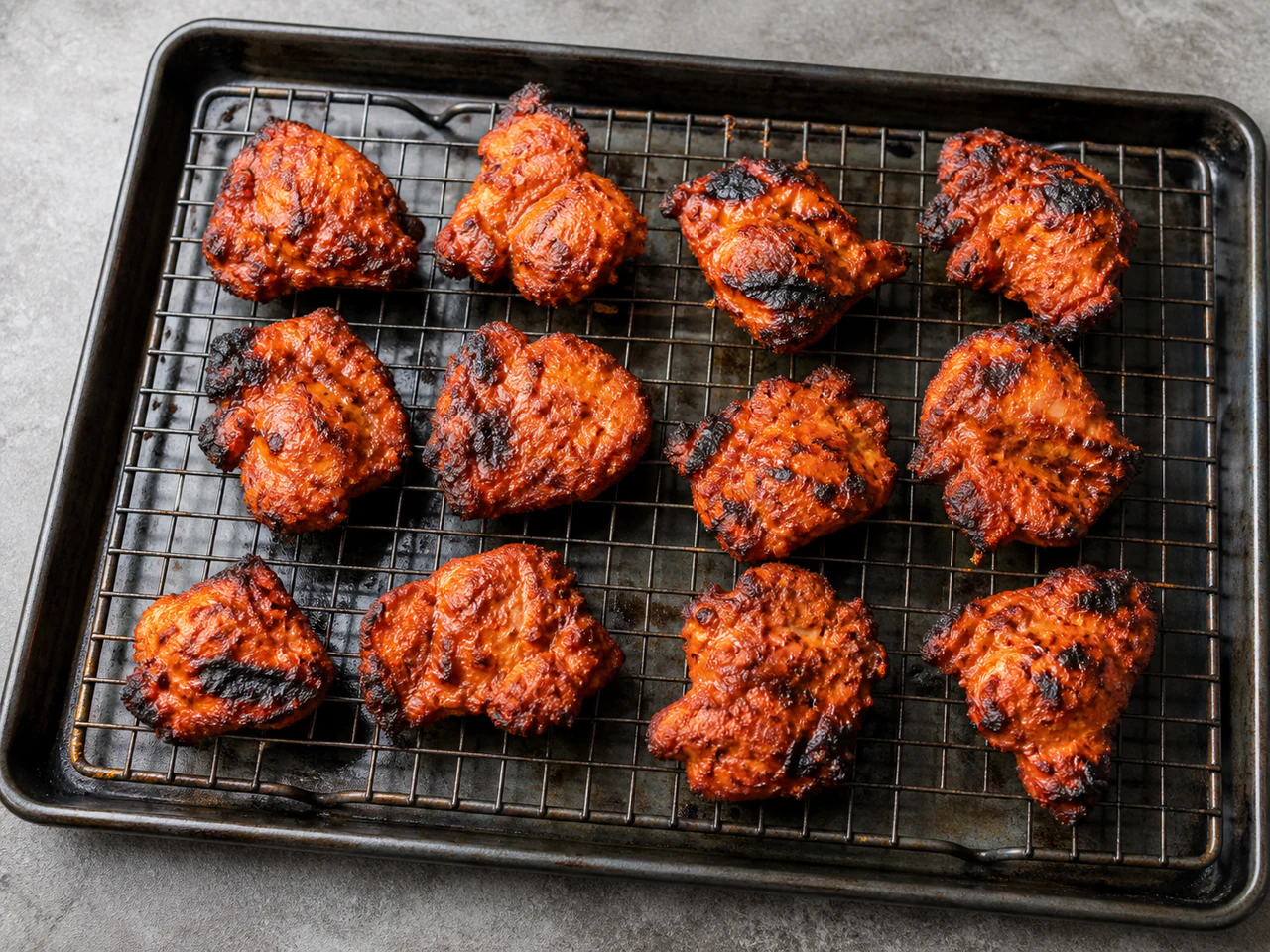
A yogurt, ginger, garlic, chilli, and garam masala marinade seasons the chicken and helps it brown. A tandoor supplies the traditional restaurant heat; at home, a preheated broiler and a wire rack expose more surface to direct heat. Leave space between the pieces so they roast instead of steaming, and accept a few dark blisters as flavor rather than chasing an even orange coating.
The chicken is cooked before it enters the gravy, so the final simmer can be brief. Use a food thermometer rather than color as the safety test: USDA guidance sets 165°F (74°C) as the safe minimum internal temperature for all poultry. Once the chicken is hot and the sauce coats it, take the pan off the heat and add the final butter so the gravy stays glossy rather than greasy.
Texture and serving
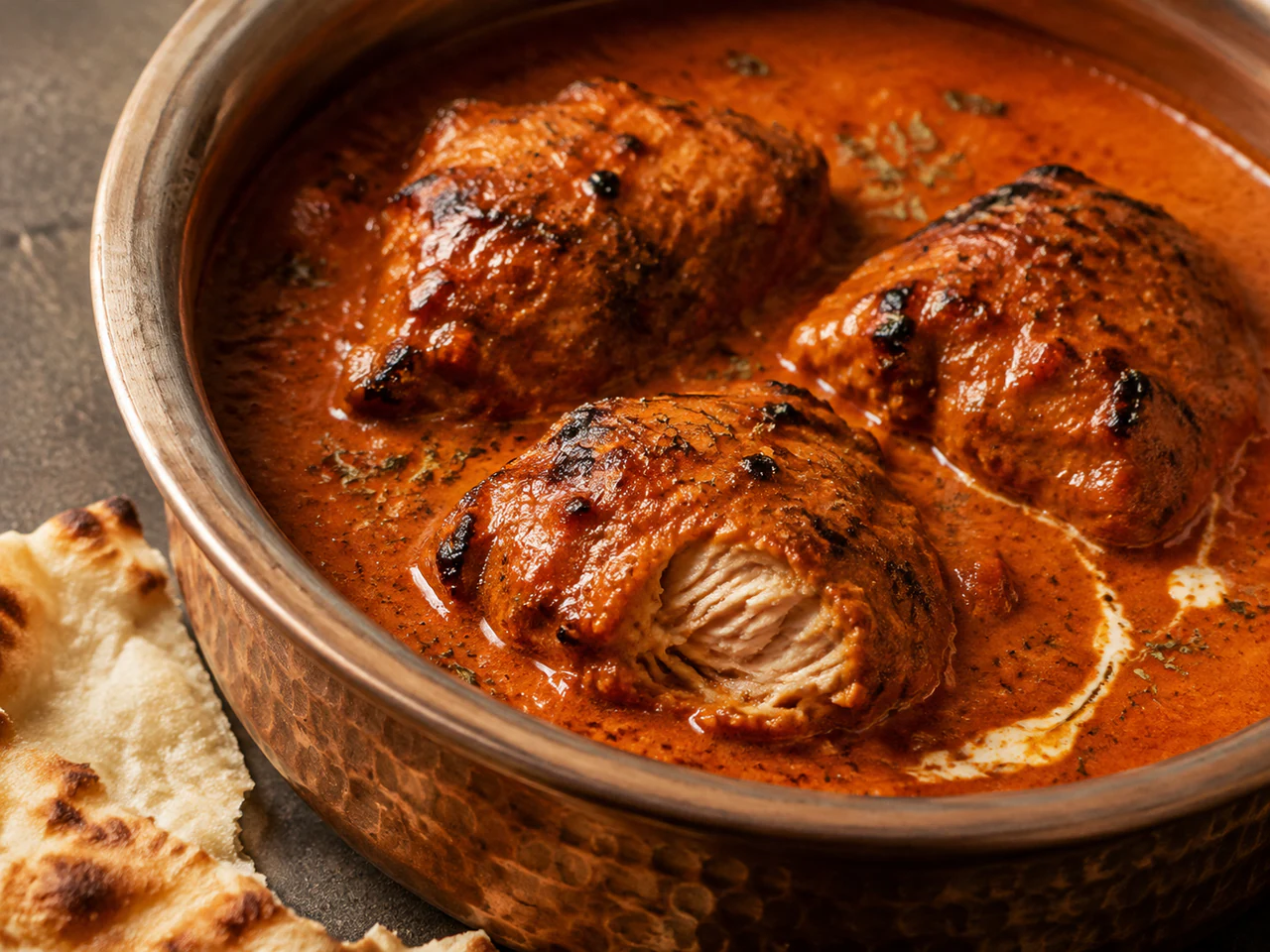
The ideal sauce is silken but not heavy, and the charred edges of the chicken should remain visible beneath a thin coating. Crushed dried fenugreek is assertive, so rub just a teaspoon between your palms and add it near the end. A small cream ribbon is enough for contrast; a thick white layer would mute both color and flavor.
Delhi's tourism guide recommends tandoori roti or naan, both well suited to gathering the clinging sauce. Plain steamed basmati rice is another practical accompaniment. Serve immediately after the final butter is incorporated, while the sauce is fluid and the roasted edges are still distinct.
Cook it at home
Broiler butter chicken
This four-serving method preserves the dish's roast-then-simmer structure with a home broiler. Marinate the chicken in the refrigerator, use a thermometer for doneness, and lower the heat before adding dairy for a smooth sauce.
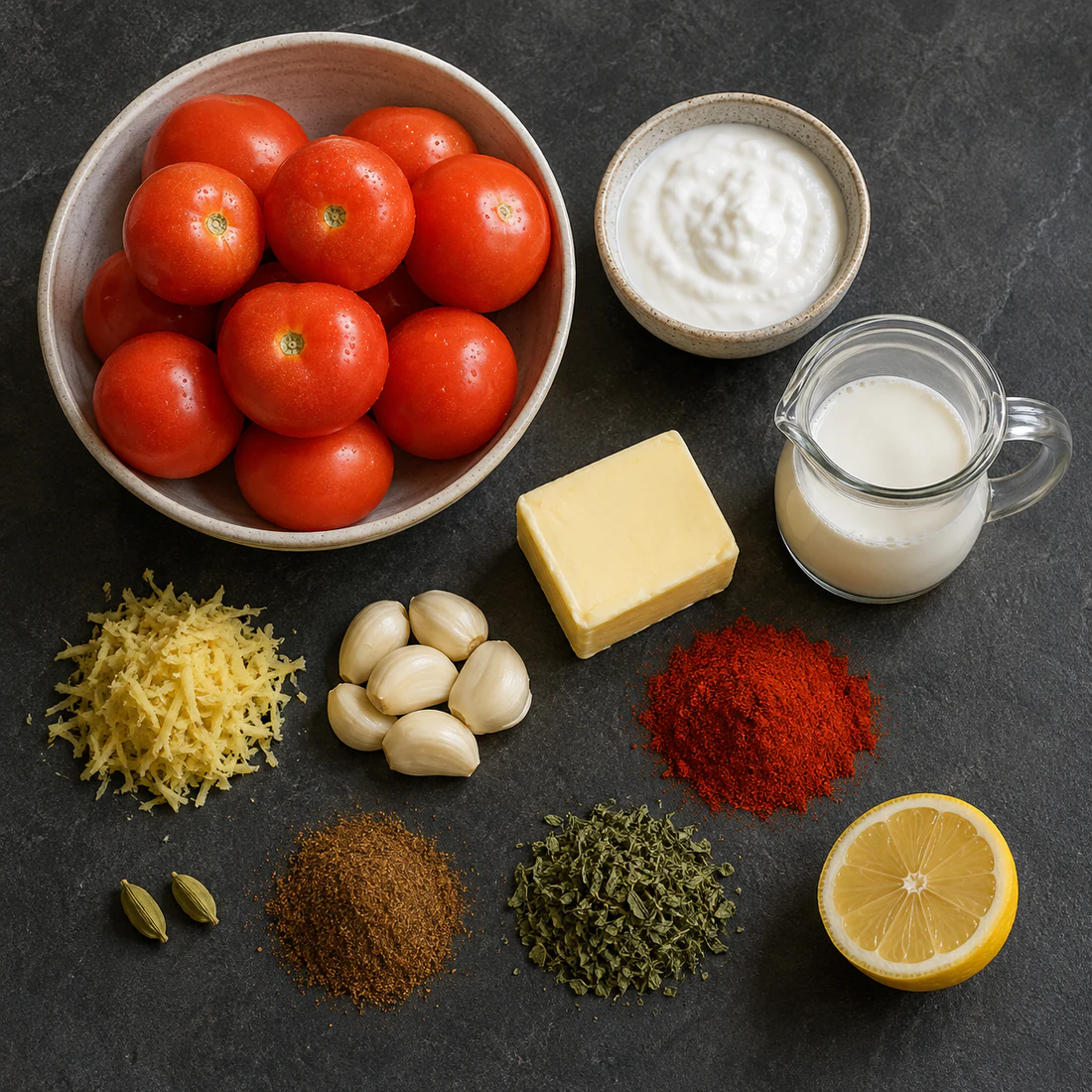
Ingredients
For the chicken
- 700 g boneless, skinless chicken thighs, cut into 4 cm pieces
- 120 g plain whole-milk yogurt
- 1 tbsp fresh lemon juice
- 1 tbsp finely grated fresh ginger
- 3 cloves garlic, finely grated
- 1 tsp Kashmiri chilli powder
- 1 tsp garam masala
- 3/4 tsp fine salt
- 1 tbsp neutral oil, for the rack
For the makhani sauce
- 2 tbsp neutral oil
- 3 green cardamom pods, lightly crushed
- 20 g fresh ginger, thinly sliced
- 3 cloves garlic, sliced
- 800 g ripe tomatoes, cored and quartered
- 120 ml water, plus more only as needed
- 1 tsp Kashmiri chilli powder
- 1/2 tsp garam masala
- 1 tsp honey
- 1 tsp fine salt, plus more to taste
- 60 g unsalted butter, cubed and divided
- 80 ml heavy cream, divided
- 1 tsp kasoori methi (dried fenugreek leaves), crushed
To serve
- As desired warm plain naan, tandoori roti, or steamed basmati rice
Method
- 1
Marinate the chicken.
Mix the yogurt, lemon juice, grated ginger, grated garlic, chilli powder, garam masala, and 3/4 teaspoon salt in a nonreactive bowl. Add the chicken and coat every piece. Cover and refrigerate for at least 4 hours and no more than 24 hours.
- 2
Prepare the broiler setup.
Set an oven rack about 15 cm below the broiler and preheat the broiler on high. Line a rimmed sheet pan with foil, set a wire rack on it, and brush the rack with the tablespoon of oil. Arrange the chicken in one layer with space between pieces; discard the used marinade.
- 3
Roast until charred and safely cooked.
Broil the chicken for 6 minutes, turn each piece, and broil for 5 to 7 minutes more. Look for dark blisters at the edges, then check the thickest piece with an instant-read thermometer; continue cooking as needed until it reaches 165°F (74°C). Set the cooked chicken aside on a clean plate.
- 4
Cook the tomato base.
Heat 2 tablespoons oil in a wide saucepan over medium heat. Add the cardamom, sliced ginger, and sliced garlic and cook for 1 minute without browning the garlic. Add the tomatoes and 120 ml water. Cover and simmer for 20 minutes, then uncover and cook for about 10 minutes, stirring occasionally, until the tomatoes collapse and excess water has evaporated.
- 5
Blend the sauce smooth.
Remove the cardamom pods. Blend the tomato mixture with an immersion blender until completely smooth, keeping the blade submerged to prevent splashes. For an especially fine restaurant-style texture, press the puree through a mesh sieve; this optional straining changes texture, not flavor.
- 6
Season and enrich the gravy.
Return the puree to medium-low heat. Stir in the chilli powder, garam masala, honey, and 1 teaspoon salt and simmer for 8 minutes, stirring as it thickens. Reduce the heat to low, then whisk in 45 g of the butter, 60 ml of the cream, and the crushed fenugreek until the sauce is glossy. Do not let it boil hard after adding the dairy.
- 7
Finish and serve.
Fold the cooked chicken and any collected juices into the sauce and simmer gently for 3 to 5 minutes, until piping hot. If the gravy is too tight to coat the pieces easily, add water 1 tablespoon at a time. Take the pan off the heat, stir in the remaining 15 g butter, taste for salt, and drizzle with the remaining 20 ml cream. Serve at once with naan, roti, or rice.
Kitchen notes
Details that make the recipe work
Give the pieces room
Crowded chicken traps steam and prevents the yogurt coating from blistering. Use two racks if necessary rather than packing the pieces together.
Reduce before adding dairy
The tomato puree should be thick enough to leave a brief trail when stirred. Reducing it first concentrates flavor and prevents a watery finished sauce.
Measure, do not judge by color
Chilli and charring make visual doneness unreliable. Check the thickest chicken piece with a food thermometer and reach 165°F (74°C).
Finish over low heat
Butter and cream emulsify most smoothly below a hard boil. If the sauce looks oily, remove it from the heat and whisk in a spoonful of warm water.
Research notes
Sources behind this article
- Delhi Tourism — Old Delhi Food Official Delhi tourism overview for the city's familiar Moti Mahal origin narrative, sauce profile, and naan or roti service.
- The Indian Express — the butter chicken origin dispute New Delhi reporting on the competing Gujral and Jaggi family claims, the court dispute, oral-history limits, and the original restaurant's cooking process.
- Alfred Prasad — murgh makhani recipe Chef-authored reference for yogurt-marinated grilled chicken, cooked and strained tomato sauce, butter, cream, and kasoori methi.
- SBS Food — creamy butter chicken Published home recipe supporting onion and cashew paste as a documented variation, along with naan or rice service.
- USDA FSIS — Safe Minimum Internal Temperature Chart Current official food-safety guidance establishing 165°F (73.9°C, rounded here to 74°C) for all poultry.
Keep exploring
More stories for your table
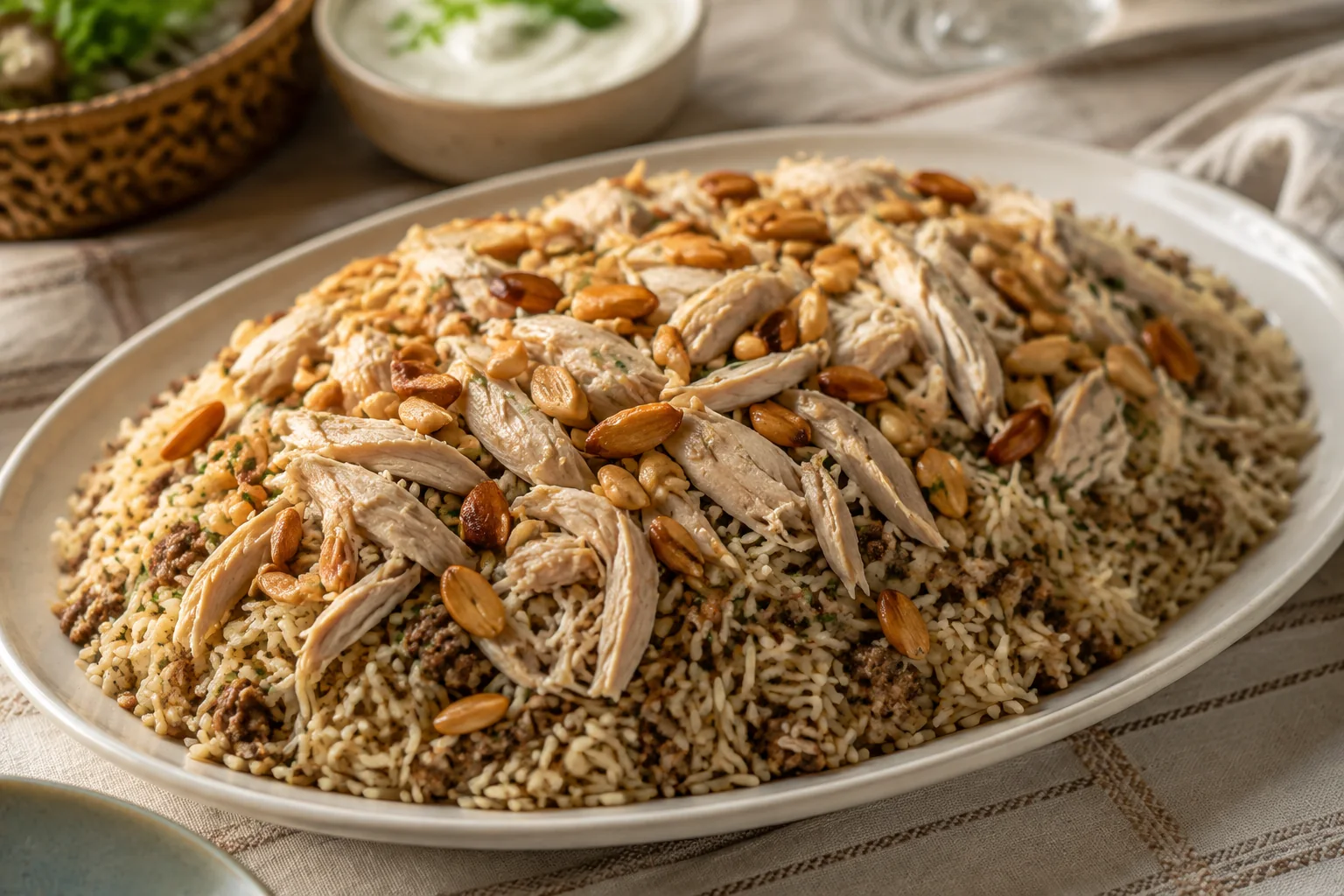
LebanonGathering table
Riz bi Djej
Fragrant rice and finely browned meat, crowned with tender chicken and a generous scatter of toasted nuts.
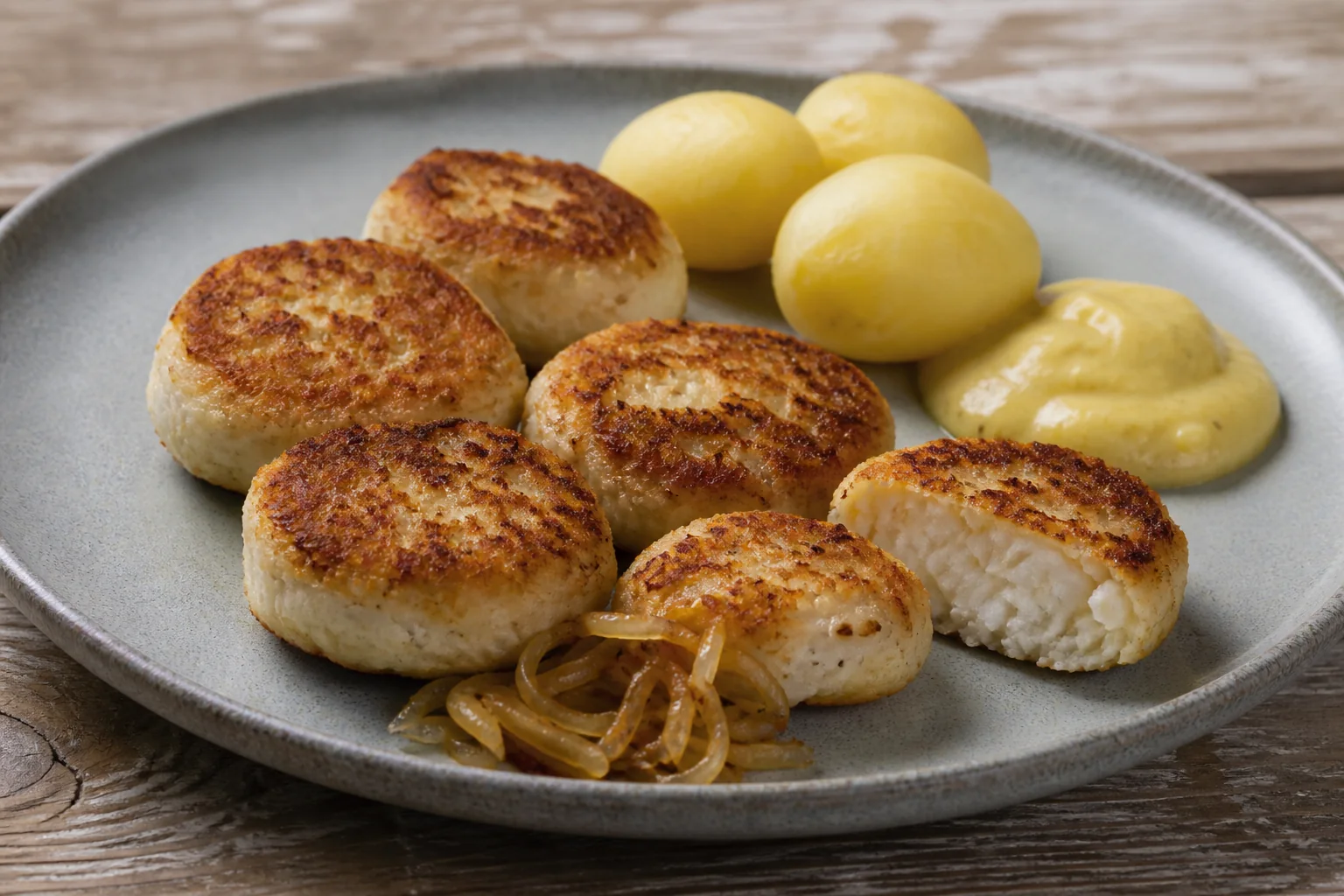
IcelandEveryday cooking
Icelandic fish balls
A crisp, golden crust around tender white fish, served with boiled potatoes, soft onions, and mild curry sauce.